
Every firewood burner knows the moment—the wedge bounces off a knot, the log laughs at your best swing. That is when a proper splitting maul becomes non-negotiable. Unlike an axe, a true maul uses a blunt, wedge-shaped head (typically 6 to 12 pounds) to burst wood fibers apart rather than slice through them, making it the right tool for tough, knotted, or large-diameter rounds.
I’m Rikta — the co-founder and writer behind Lawn Gear Lab. I analyze hundreds of owner reports, compare head-weight-to-handle ratios, study steel-hardness specs (HRC), and cross-reference handle material durability to find the tools that deliver reliable, safe, and efficient splitting session after session.
To cut through the noise and find a real workhorse, you need a deliberate axe maul for splitting wood that matches your strength, the wood you typically tackle, and your tolerance for handle shock. Below, I profile seven top contenders across different weight classes and price tiers.
How To Choose The Best Axe Maul For Splitting Wood
A maul lives or dies by its head weight, handle length, and handle material. Choosing blindly leads to fatigue, blisters, or a broken tool after a single season. Here are the three specs that separate a pleasure-to-swing maul from a painful mistake.
Head Weight: Light vs. Heavy
Six pounds is the sweet spot for most adults—enough mass to split average oak rounds without exhausting you after a half-hour. Eight pounds delivers more force on contact but demands better technique and conditioning. Twelve-pound mauls are specialist tools for huge, knotty stumps; they require a controlled lift-and-drop motion, not a full swing.
Handle Length and Material
A 36-inch handle gives taller users the leverage to generate speed without bending their back. Shorter handles (27 to 30 inches) offer more control for seated splitting or handling smaller logs. Fiberglass handles with a rubber grip absorb shock far better than raw wood, and steel-core handles are virtually indestructible but can transfer more vibration if the grip is thin.
Blade Geometry and HRC Hardness
Look for a convex grind—it spreads the splitting force outward, pushing fibers apart rather than getting stuck. Chisel-edge mauls (flatter profile) drive deeper but can be harder to remove. A head hardened to at least 45 HRC ensures the edge stays sharp through hundreds of splits; 50–55 HRC is ideal for impact tools.
Quick Comparison
On smaller screens, swipe sideways to see the full table.
| Model | Category | Best For | Key Spec | Amazon |
|---|---|---|---|---|
| Fiskars Pro IsoCore 6 lb | Splitting Maul | Shock-free long sessions | 6 lb head, 36″ handle, IsoCore dampening | Amazon |
| Estwing 8 lb 36″ | Splitting Maul | Stubborn fibrous woods | 8 lb head, 50–55 HRC forged steel | Amazon |
| Hooyman 8 lb 36″ | Splitting Maul | Wet grip security | 8 lb head, 45–60 HRC, H-Grip handle | Amazon |
| Fiskars 36″ Super Splitting Axe | Splitting Axe | Lightweight portability | ~3.5 lb head, 36″ FiberComp handle | Amazon |
| Estwing 8 lb Sledge | Sledge Hammer | Driving wedges and stakes | 8 lb head, 36″ Dual-Injection fiberglass | Amazon |
| Performance Tool M7103 8 lb | Sledge Hammer | Budget demolition work | 8 lb head, 33.5″ fiberglass handle | Amazon |
| Truper 12 lb 27″ | Splitting Maul | Massive knotty stumps | 12 lb head, 27″ steel handle | Amazon |
In‑Depth Reviews
1. Fiskars Pro IsoCore 6 lb Splitting Maul
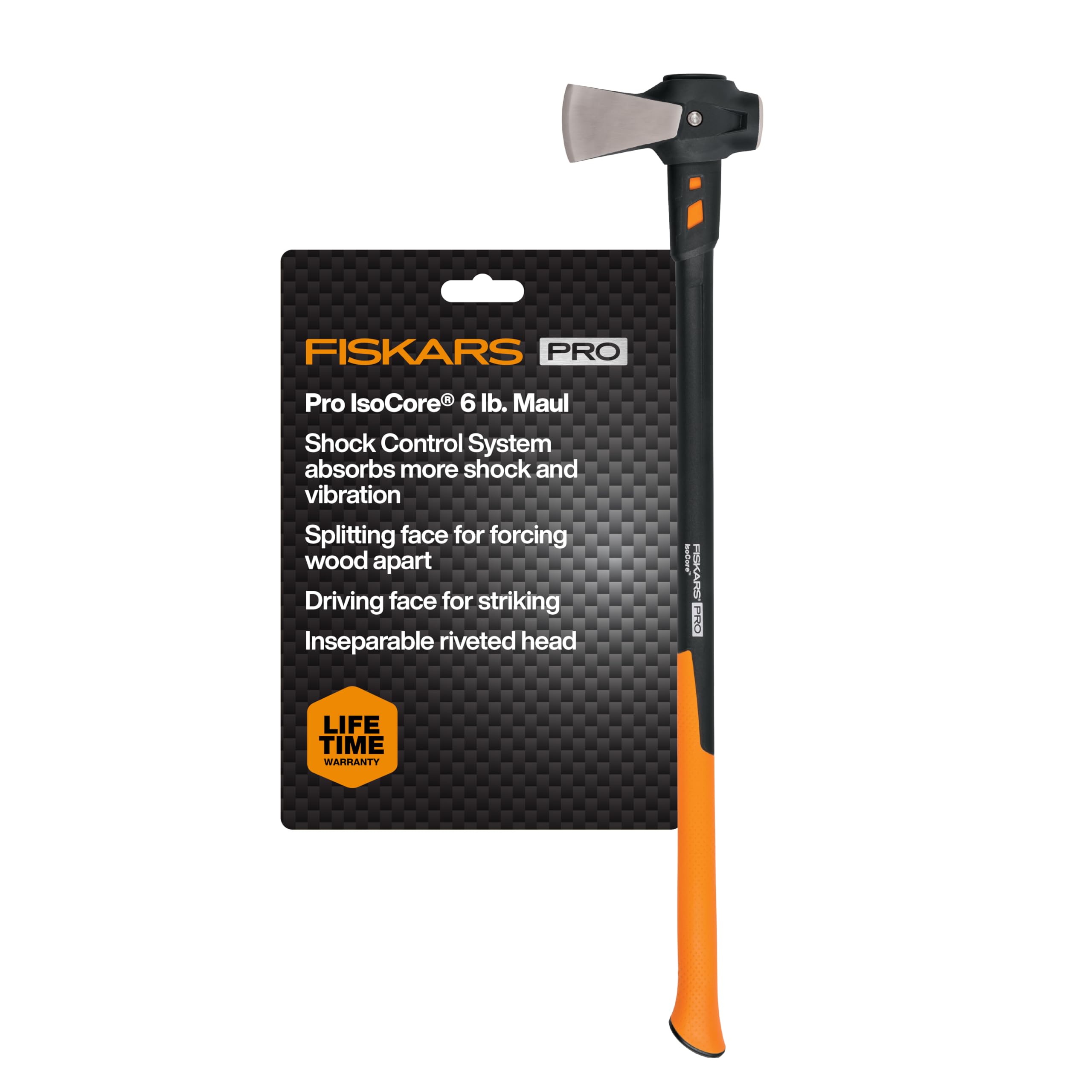
The Fiskars Pro IsoCore 6 lb maul is the most complete package for anyone who splits wood regularly without wanting to sound like a jackhammer. Its IsoCore Shock Control System transfers roughly half the vibration of a wood-handled maul, meaning you can split two cords without feeling it in your elbows the next day. The forged, heat-treated steel head carries a rust-resistant coating and an optimized wedge profile that blasts through oak and maple with fewer swings.
What sets the IsoCore apart is the integrated driving face on the back of the head—you can whack a metal splitting wedge without damaging the maul, then flip it around to continue splitting. The 36-inch sculpted SoftGrip handle provides a natural fit for taller users, and the steel-reinforced overstrike sleeve protects the handle from accidental misses. Owners report that the edge resharpens easily with a puck or file, and the head shows no signs of loosening even after processing an entire maple tree.
At 8.6 pounds overall, this maul feels lighter than its weight class thanks to the vibration-dampening handle. It is the clear first choice for someone who wants a premium, long-term tool that balances power with user comfort. The lifetime warranty backs the claim.
What works
- Excellent shock absorption reduces joint fatigue
- Integrated driving face for wedges
- Overstrike reinforcement protects handle
What doesn’t
- Some users find the grip design polarizing
- Heavier than a standard splitting axe
2. Estwing 8 lb Wood Splitting Maul with 36-Inch Fiberglass Handle

When you need to split elm, ironwood, or wet, stringy rounds that make lighter mauls bounce, the Estwing 8 lb maul is the answer. Its head is forged from alloy steel and hardened to 50–55 HRC, giving it the toughness to withstand repeated impacts against dense grain without deforming. The 36-inch dual-injection fiberglass handle is infused with over 70 percent fiberglass for rigidity, while the rubber overlay provides a secure hold even in cold weather.
The head shape is optimized for high-force splitting—it penetrates just enough to burst fibers apart rather than burying itself deep, which means fewer stuck-maul moments. Owners consistently call it “perfectly balanced” and note that it stays sharp through roughly two cords of oak without needing a touch-up. The broad, comfortable handle is a standout feature for those with larger hands, giving you confident control during the swing.
This is not a tool for beginners or occasional splitters—the 8-pound head will wear you out if your technique is wild. But for anyone who regularly faces gnarly wood and has the strength to swing it properly, this Estwing is a durable, top-tier choice that will likely outlast you.
What works
- Excellent balance for an 8 lb maul
- Edge retention on tough, fibrous woods
- Broad handle reduces hand fatigue
What doesn’t
- 8 lb head is heavy for smaller users
- Rubber grip may wear over extended use
3. Hooyman Splitting Maul 8 lb 36″

The Hooyman maul stands out for its H-Grip handle—a sculpted, no-slip rubber profile that actually becomes tackier when wet. This is a huge advantage for splitting in rain, snow, or sweaty summer heat, where a slippery handle can lead to dangerous mishaps. The 8-pound head is forged from 1045 high-strength steel with a convex grind and hardness ranging from 45 to 60 HRC, giving it a versatile edge that handles both splitting and light wedge driving.
The handle is interlocked and epoxy-sealed into the head eye, and a solid fiberglass core runs through the center for added strength. Owners report a near-100 percent split rate on accurate strikes, and the flat poll on the back works well for starting cracks or driving a wedge into a stubborn round. The weight is well-centered, making the maul feel accurate during controlled lifts rather than unwieldy.
Some owners note that the rubber near the head can show wear after a full cord of splitting, though the general consensus is that it holds up well for the price. The Limited Lifetime Warranty provides extra peace of mind for a tool in this range.
What works
- H-Grip improves control in wet conditions
- Convex grind delivers high split rate
- Well-balanced at 8 lb
What doesn’t
- Rubber near head may show early wear
- Not ideal for axe-style full swings
4. Fiskars 36″ Super Splitting Axe
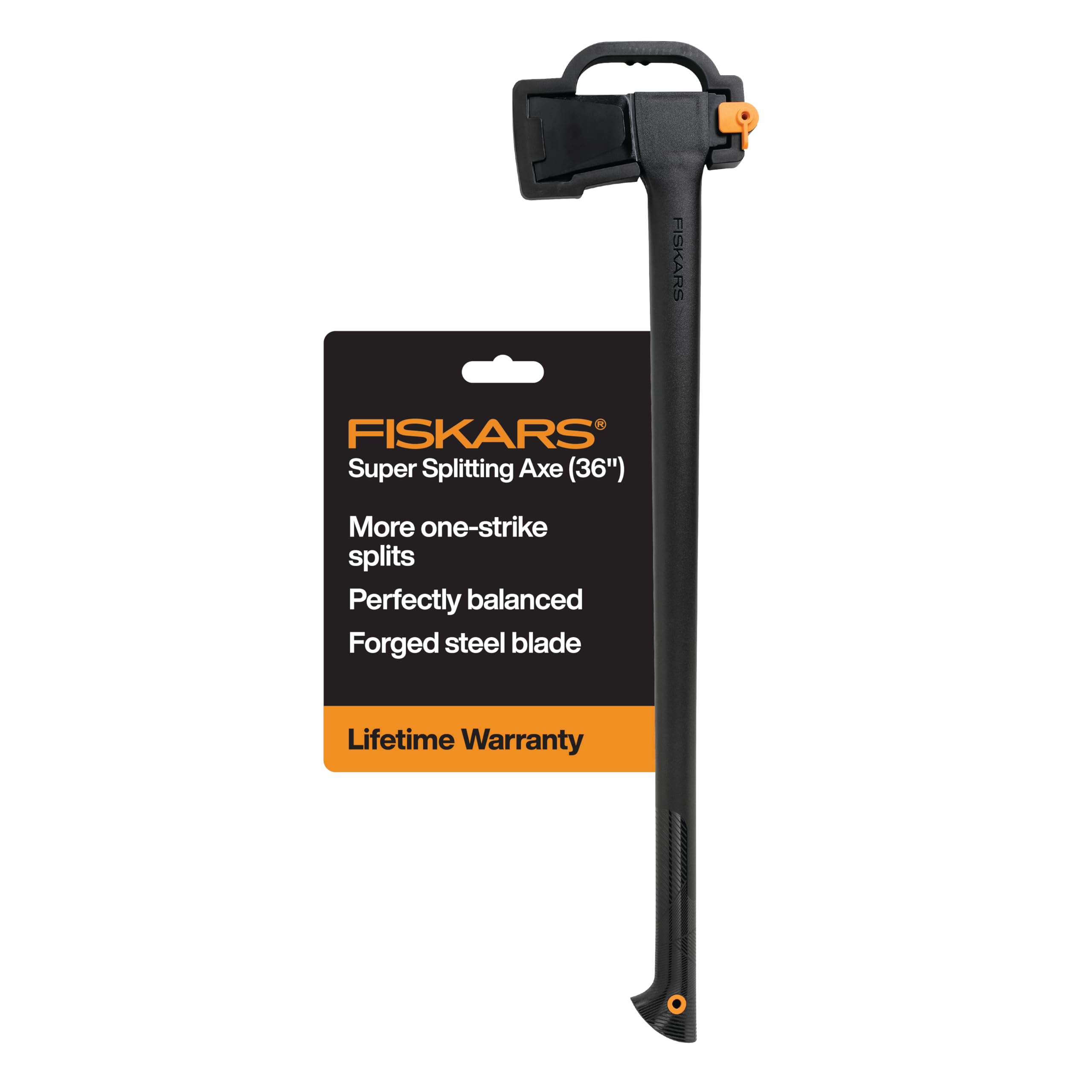
If your splitting sessions involve medium logs, kindling, and backpack-friendly weight, the Fiskars 36-inch Super Splitting Axe is the light, fast option to beat. Weighing only about 6 pounds, this is technically a splitting axe rather than a true maul, but its convex bevel blade and optimized weight distribution let it punch above its weight class. The FiberComp handle is virtually unbreakable and dampens vibration much better than wood.
The head design bites deep and releases easily, which is the hallmark of Fiskars’ splitting geometry. Owners note that it handles seasoned ash and maple much better than their old traditional mauls, and the lightweight construction makes it a favorite for packing into a vehicle or carrying to a remote split site. The forged steel blade retains its edge well and requires less frequent sharpening compared to lower-end axes.
This tool is not intended for huge, knotty rounds that need 8+ pounds of force—the lighter head will bounce off gnarly elm or wet pine. But for the majority of medium firewood tasks and for users who value swing speed over raw mass, this Fiskars is a superb, budget-friendly choice.
What works
- Light enough for extended sessions
- Convex blade releases easily from cuts
- Lifetime warranty on handle
What doesn’t
- Underpowered for large, knotty rounds
- Shorter length available, but 36″ is ideal
5. Estwing 8-Pound Hard Face Sledge Hammer 36″

While technically a sledge hammer, this Estwing 8 lb model is frequently used as a splitting maul by those who already own a separate splitting axe or wedge. Its forged alloy steel head is induction-hardened to 50–55 HRC, making it tough enough to drive splitting wedges into the toughest rounds or to break apart large, cracked logs by direct impact. The 36-inch dual-injection fiberglass handle provides a long arc for maximum velocity on each swing.
The textured rubber grip offers a two-handed hold position, which is crucial for controlled sledge swings. Owners report that this tool splits 10-inch-diameter logs into quarters with ease and outperforms traditional hickory-handled sledges by reducing vibration. The overstrike protection—a thicker handle section with rubber below the head—adds confidence when you miss the wedge.
This is a niche pick for the dedicated wood splitter who already has a dedicated maul for direct splitting but needs a heavy driving tool for wedges or for breaking apart already-cracked logs. The rubber grip can tear if you abuse it on rough surfaces, but the overall build quality is excellent for the price.
What works
- Versatile for wedges, stakes, and log breaking
- Excellent vibration dampening for a sledge
- Overstrike protection on handle
What doesn’t
- Not a dedicated splitting maul profile
- Rubber grip may tear with rough use
6. Truper 12 lb Splitting Maul 27-Inch Steel Handle
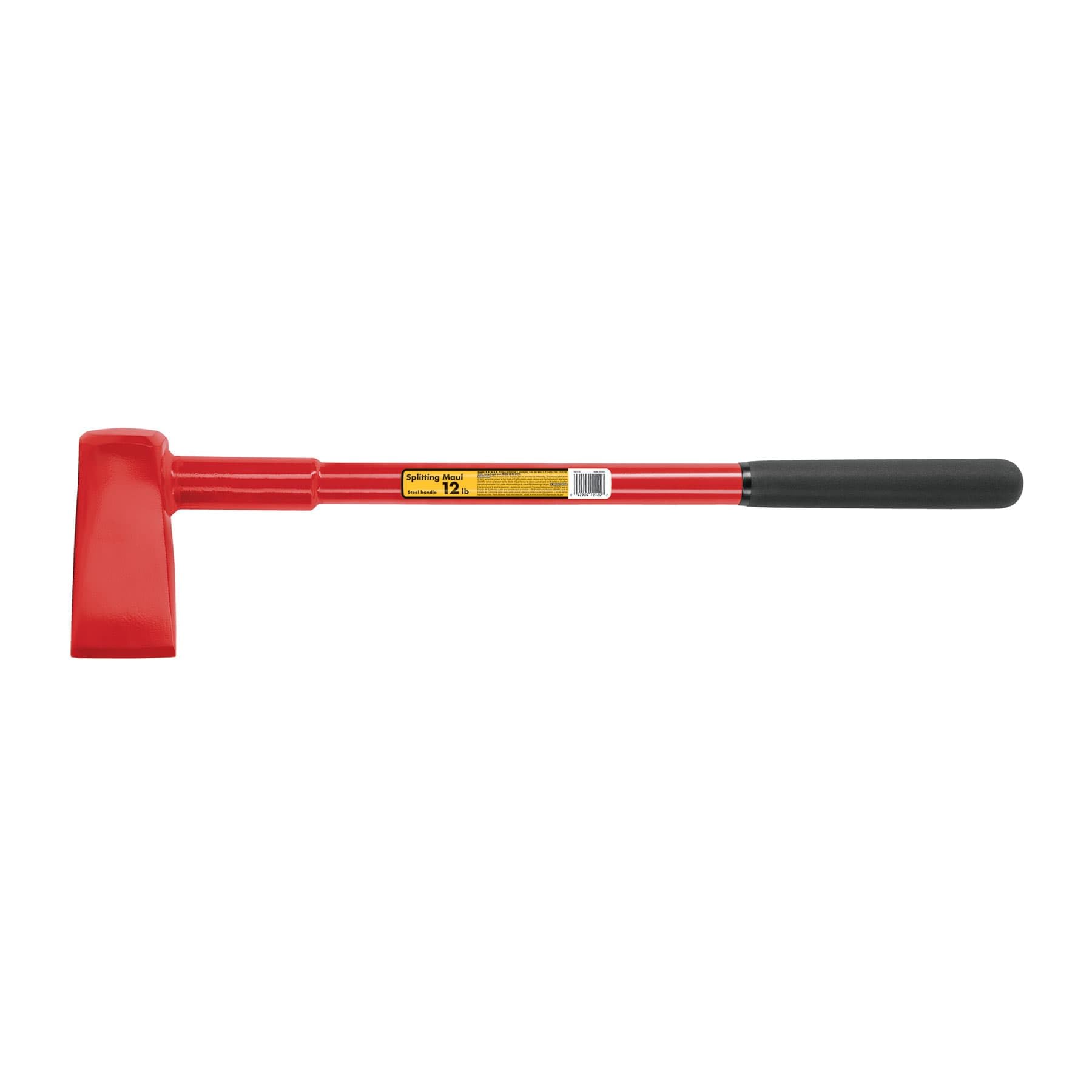
The Truper 12 lb maul is a specialist tool for the biggest, most stubborn rounds—the kind that laugh at 6- and 8-pound heads. Its 27-inch high-strength steel handle is short and stout, designed for a controlled lift-and-drop motion rather than a full baseball swing. The convex blade edge is thick and durable, and the 12-pound head delivers enough kinetic energy to split massive logs that smaller mauls simply bounce off.
The head is forged from alloy steel and exceeds ASME Standard B107.54M for impact tools. Owners report that it splits large, twisted logs that other mauls couldn’t touch, and the short handle makes it manageable for users who are not tall or who prefer to split from a seated position. The rubber cushion grip provides reasonable comfort despite the extreme weight.
This tool is not for everyone—the 12-pound head will exhaust a typical user quickly if swung improperly, and the short handle limits reach. The rubber butt cap can develop a hole if dropped on a hard surface. But for the specific job of conquering monster stumps, the Truper is virtually indestructible and very effective.
What works
- Splits massive, knotty logs in one drop
- Steel handle is virtually unbreakable
- Good grip despite extreme weight
What doesn’t
- Very heavy—fatiguing for most users
- Short handle limits reach and swing arc
7. Performance Tool M7103 8-Pound Sledge Hammer
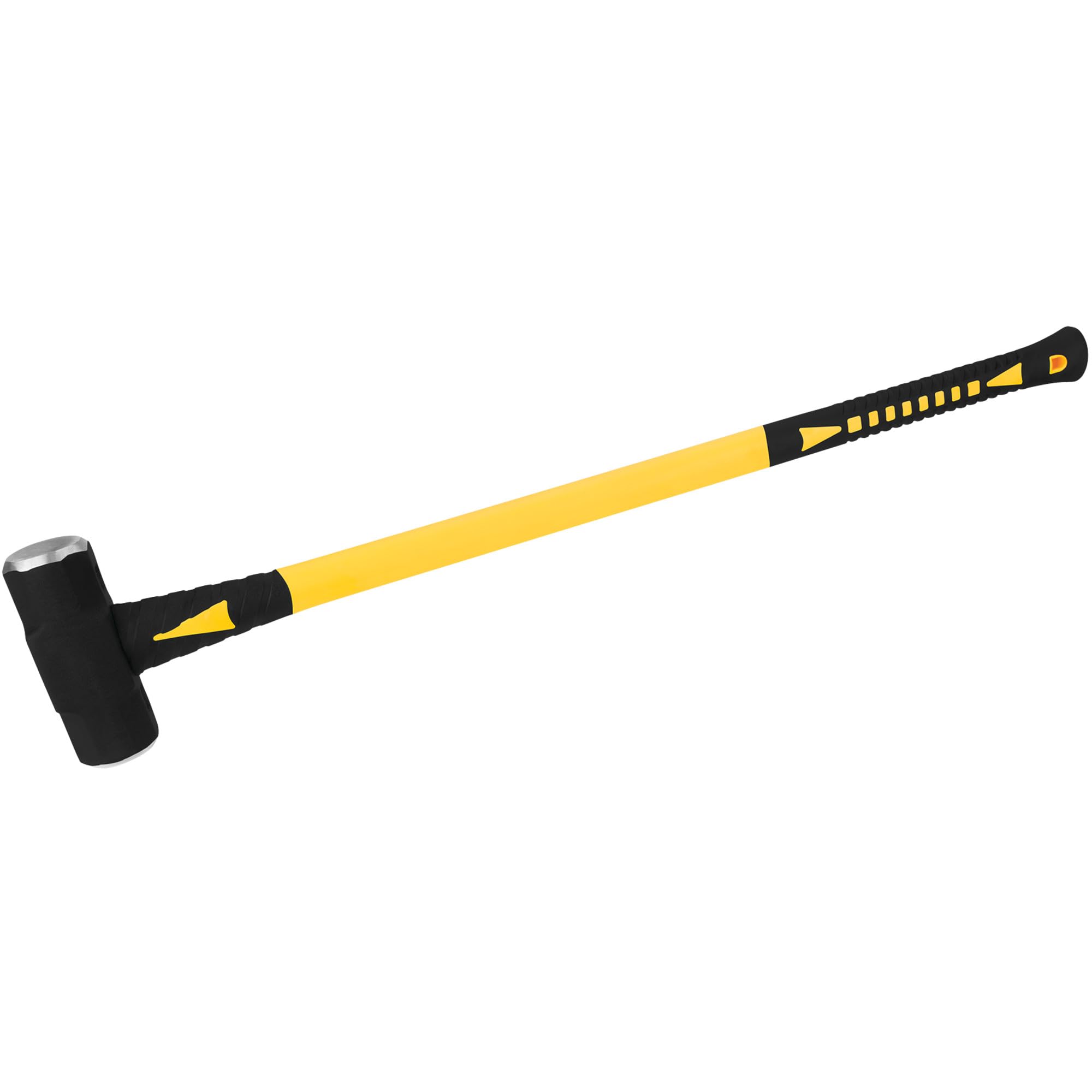
The Performance Tool M7103 is a budget-level 8-pound sledge hammer that works as a passable splitting maul in a pinch, particularly for breaking apart already-cracked logs or driving wedges. Its heat-treated forged steel head is durable enough for light demolition and stake driving, and the 33.5-inch fiberglass handle provides decent reach for the price. The rubber cushion grip offers basic shock absorption.
Owners find it well-balanced for a budget sledge and note that it handles demolition tasks like breaking brick or tent stake driving without issue. The anti-shock fiberglass core is a step up from pure wood handles in terms of durability. A few users mention that the rubber grip can feel a bit smooth and slippery during heavy use, which is a common complaint at this entry-level price point.
This is the most affordable option in this lineup, and it shows in the grip quality and overall refinement. For serious weekly splitting, spending a bit more on a purpose-built maul is advisable.
What works
- Affordable entry price for a heavy sledge
- Fiberglass handle resists breaking
- Versatile for demolition and stakes
What doesn’t
- Grip can feel slippery during heavy swings
- Not a dedicated maul profile for splitting
Hardware & Specs Guide
Head Hardness (HRC)
HRC (Rockwell Hardness Scale) measures a maul head’s resistance to deformation. For splitting mauls, 45–55 HRC is ideal—soft enough to avoid chipping on knots, hard enough to hold a working edge. Below 45 HRC, the edge deforms quickly; above 55 HRC, the head becomes brittle and can chip under hard impacts. Premium models like the Estwing and Fiskars Pro hit the 50–55 HRC sweet spot.
Handle Material Trade-Offs
Fiberglass handles (Estwing, Hooyman) offer the best vibration dampening-to-weight ratio and are nearly unbreakable, but the rubber grip can wear over time. Steel handles (Truper) are indestructible but transfer more shock unless well-padded. Composite handles (Fiskars FiberComp) provide excellent durability and low vibration, but can be more expensive to replace if broken.
FAQ
What head weight should I choose for splitting seasoned oak?
How do I maintain the edge on a splitting maul?
Can I use a sledge hammer as a splitting maul?
Final Thoughts: The Verdict
For most gardeners and firewood burners, the axe maul for splitting wood winner is the Fiskars Pro IsoCore 6 lb because its IsoCore dampening system makes long splitting sessions comfortable while the integrated driving face adds versatility. If you need to defeat tough, fibrous wood swing after swing, grab the Estwing 8 lb Maul. And for massive, knotty stumps that demand brute force, nothing beats the Truper 12 lb Steel Maul.