
Few pests trigger a faster lawn panic than armyworms. These inch-long caterpillars stage feeding frenzies that turn a green lawn brown in 48 hours, stripping turf down to the soil line and leaving you with a dead, straw-like mess. The challenge is that many broad-spectrum lawn insecticides list armyworms on the label but lack the residual power to stop a true infestation when it hits.
I’m Rikta — the co-founder and writer behind Lawn Gear Lab. For this guide, I compared application methods, active ingredient profiles, residual control windows, and coverage rates across seven armyworm-specific and armyworm-labeled products, cross-referencing hundreds of verified buyer reports against the label data.
Whether you need a fast-acting granular for a full-yard rescue or a neem-based spray for vegetable beds, this breakdown of the best armyworm insecticide options will match the right chemistry and format to your specific lawn stage and garden layout.
How To Choose The Best Armyworm Insecticide
Armyworm control demands speed and residual power because the larvae feed in simultaneous waves that conventional one-shot sprays often miss. The three decisions that matter are active ingredient class, application format, and the product’s ability to penetrate thatch where young larvae hide.
Active Ingredient Strategy: Contact vs Systemic
Pyrethroid-based products (permethrin, bifenthrin) deliver fast knockdown and work well on visible surface-feeding armyworms, but they degrade faster under direct sun and require thorough coverage. Systemic products using imidacloprid or neem oil move through the plant tissue, which protects new growth for several weeks but takes longer to kill existing surface caterpillars. The best approach for an active armyworm outbreak is a pyrethroid granule with water-in activation, followed by a systemic if reinfestation is likely from surrounding grassland.
Format Fit: Granules vs Concentrate vs Ready-to-Spray
Granules, especially 20-pound bags, cover large turf areas quickly with a broadcast spreader and need water to release the active ingredient. For spot treatment or garden beds, a liquid concentrate like permethrin or neem oil spray reaches under leaves and into tight spaces. Ready-to-spray hoses are the fastest for small lawns but cost more per square foot. Choose granular for whole-yard preventative coverage and concentrate for targeted rescue or ornamental beds.
Quick Comparison
On smaller screens, swipe sideways to see the full table.
| Model | Category | Best For | Key Spec | Amazon |
|---|---|---|---|---|
| Ortho BugClear Granules | Pyrethroid Granule | Fast yard rescue | 20 lb / up to 20,000 sq ft | Amazon |
| Bayer Merit 0.5 G | Systemic Granule | Long grub control | 30 lb / Imidacloprid 0.5% | Amazon |
| Talstar PL Granules | Sand-Core Granule | Mulch & slope areas | 2-4 month residual | Amazon |
| Sevin Lawn Granules | Carbaryl Granule | Budget yard coverage | 20 lb / 30+ listed pests | Amazon |
| Fertilome Triple Action | Neem Oil Spray | Organic garden beds | 32 oz / 3-in-1 formula | Amazon |
| Martin’s Permethrin | Pyrethroid Concentrate | Spot & perimeter spray | 32 oz / 13.3% concentrate | Amazon |
| BioAdvanced Complete Granules | Multi-target Granule | Season-long prevention | 20 lb / 25,000 sq ft | Amazon |
In‑Depth Reviews
1. Ortho BugClear Lawn Insect Killer Granules
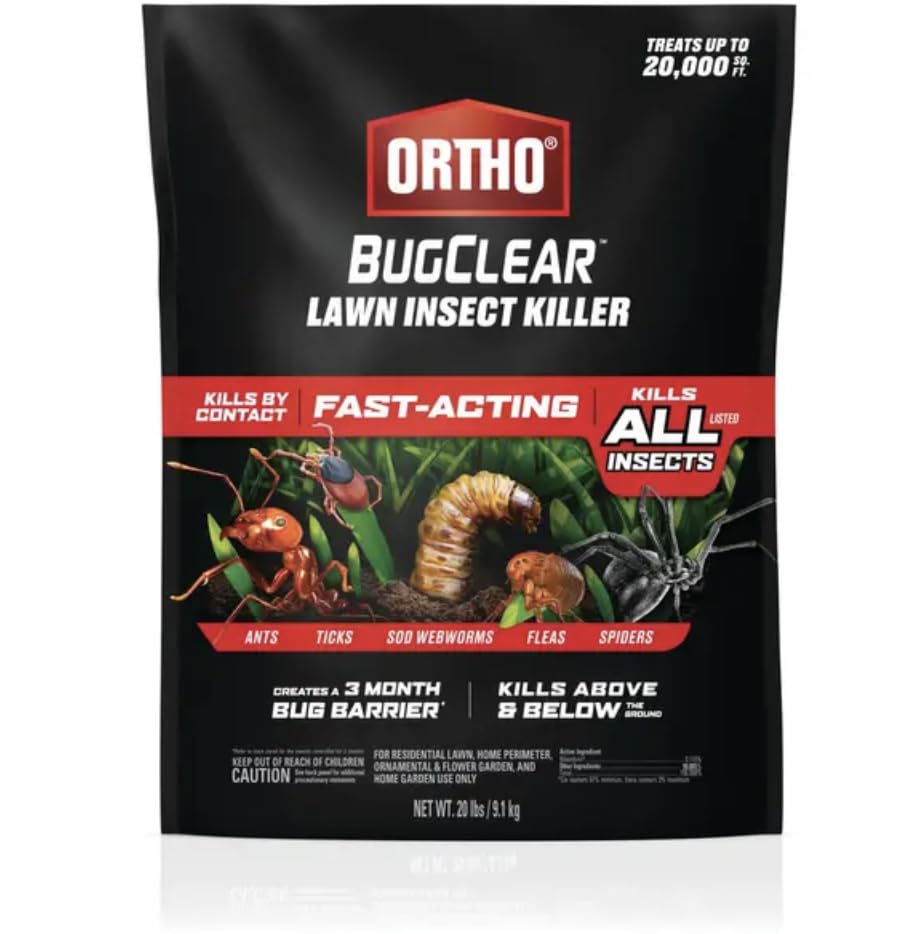
This 20-pound granular bag targets armyworms directly, both on the label and in practice, with a dual-pyrethroid base that delivers fast knockdown above ground while the water-in activation drives active ingredient to the thatch line. The 20,000 square foot coverage per bag puts it in the sweet spot for the typical quarter-acre lawn, and the spreader-friendly granules flow evenly through a Scotts drop spreader without bridging or clogging.
Users report seeing dead caterpillars within 24 to 48 hours of an evening application, followed by a visible reduction in new damage for three to four weeks. The barrier effect also handles sod webworms and fleas, which makes it a versatile one-bag solution for lawns that host multiple pest species. It needs thorough watering to work, so plan around your irrigation schedule.
The main drawback is that grazers that eat poisoned insects (lizards, birds) can be affected secondarily, so avoid overapplying near vegetable beds. Also, the active ingredient degrades faster in heavy sun, so shaded lawn sections may see longer residual than hot southern expositions.
What works
- Fast visible knockdown by 48 hours
- Large coverage for the average lawn
- Also stops sod webworms and fleas
What doesn’t
- Needs heavy watering to activate
- Wears faster in full-sun exposures
2. Bayer Merit 0.5 Granular Systemic Insecticide

Merit’s 0.5% imidacloprid granules deliver systemic control that moves into the root zone and translocates through the turf’s vascular tissue, making it lethal to armyworm larvae that feed on grass blades regardless of where they start chewing. This 30-pound bag covers a larger area than most consumer granular products, making it a top choice for acreage or heavy clay soils where foliar sprays struggle to reach larvae in the crown.
Users consistently report that correct spring timing prevents the first generation of armyworms from reaching the third instar where they cause visible lawn thinning. The systemic action also handles grubs, mole crickets, and spittle bugs, which extends the value well beyond armyworms alone. It works best when applied with a push spreader and watered in with half an inch of rain or irrigation within a week.
The catch is the longer activation window — it takes ten days to two weeks for the imidacloprid to fully distribute in the grass tissue, so this product is a preventative rather than a rescue tool. It is also costlier per pound than pyrethroid granules, though the 30-pound size brings the per-square-foot cost down on large properties.
What works
- Systemic protection through root zone
- 30-pound bag covers large acreage
- Long residual against grubs
What doesn’t
- Slow activation, not for rescue
- Higher cost per pound initially
3. Talstar PL Granules
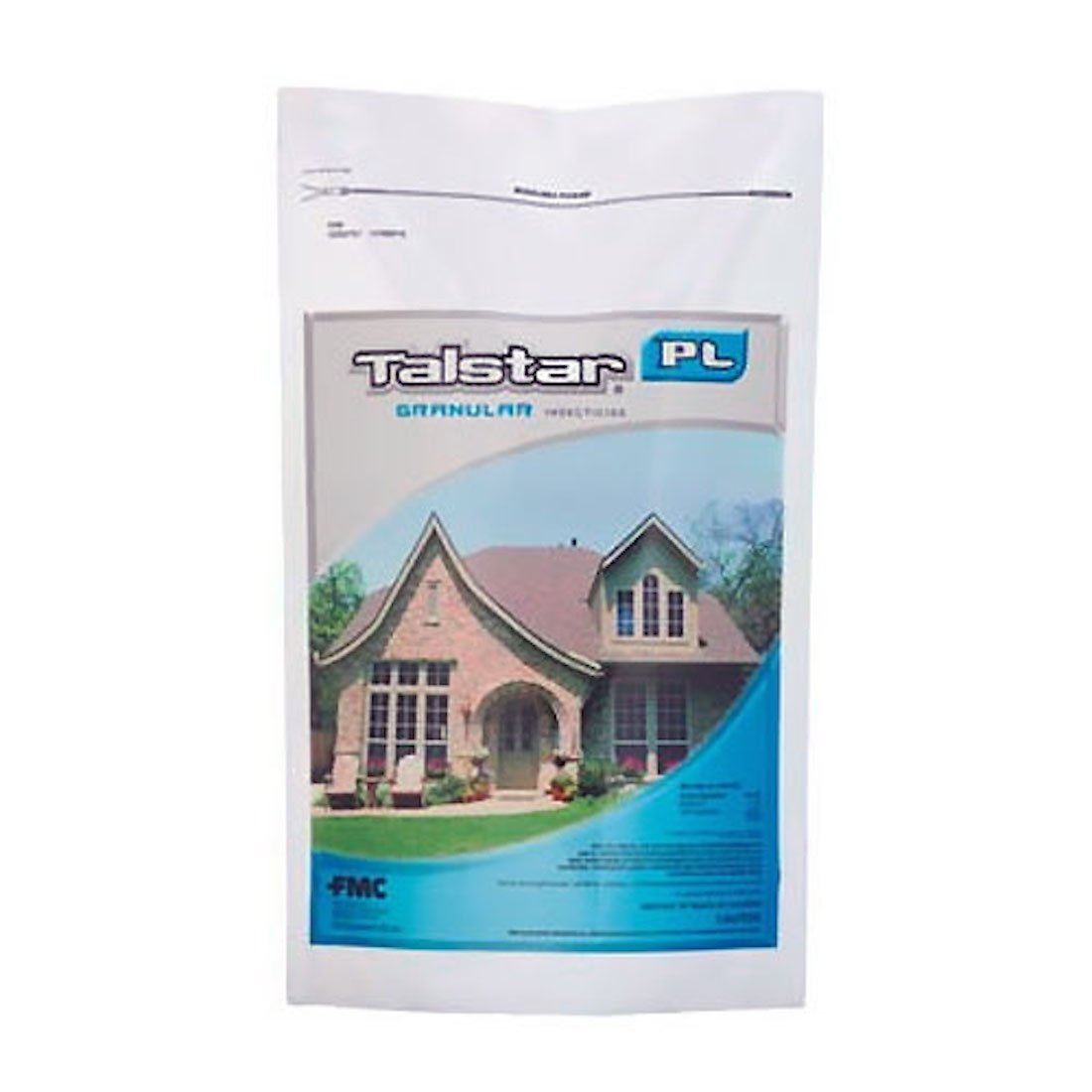
Talstar PL’s sand-core granule structure is unique because it does not dissolve immediately; it releases bifenthrin gradually over two to four months, making it the longest residual granule on the market. This slow-release design works especially well in mulched planting beds and sloped lawns where runoff normally carries away faster-dissolving granules, because the sand core stays in place and keeps the active ingredient in the target zone.
Owner reports from the southern states, where armyworm pressure runs continuously from April through October, indicate that a single spring application of Talstar PL suppresses armyworm forage for the entire season. It also does not require watering in, which saves time on properties without irrigation. The granules penetrate thick mulch and grass thatch without clogging the spreader.
The drawback is that bifenthrin is a contact pyrethroid, so it kills only insects that walk across treated surfaces. For armyworms deep in the soil crown, the systemic reach is limited. And while it is highly effective on fire ants and fleas, the residual slows down in extreme drought conditions where the granule sits dry on the soil surface.
What works
- 2-4 month slow-release residual
- No watering needed for activation
- Penetrates thick mulch and thatch
What doesn’t
- Contact-only kill on surface
- Slower in drought without moisture
4. Sevin Lawn Insect Granules

Sevin’s carbaryl-based granules are a veteran choice for broad-spectrum lawn protection, killing over 30 listed insects including armyworms, ticks, fleas, and ants. The 20-pound bag is spreader-ready and works across lawns, ornamental beds, and foundation perimeters, making it the most versatile option in the mid-range price tier for mixed-property use.
Users report that ants eating at tree root collars and fleas in shady lawn corners both disappear within a week of broadcasting Sevin granules and watering in. For armyworms specifically, the carbaryl chemistry provides fast contact-kill that stops surface feeding within 24 hours, particularly on younger larvae. The Carbaryl molecule also has decent residual activity, lasting roughly two to three weeks in most soil types before degrading.
A recurring buyer complaint is that some insect populations, particularly stink bugs and heavy flea infestations in humid zones, show reduced susceptibility. Also, the strong odor immediately after application is noticeable, though it dissipates after the first watering. Performance is inconsistent in thatchy lawns where the granule sits on top of dead grass rather than reaching the soil.
What works
- Kills over 30 listed pests
- Fast contact knockdown on larvae
- Versatile for lawns and ornamentals
What doesn’t
- Stink bugs show resistance
- Strong odor at application time
5. Fertilome Triple Action Spray
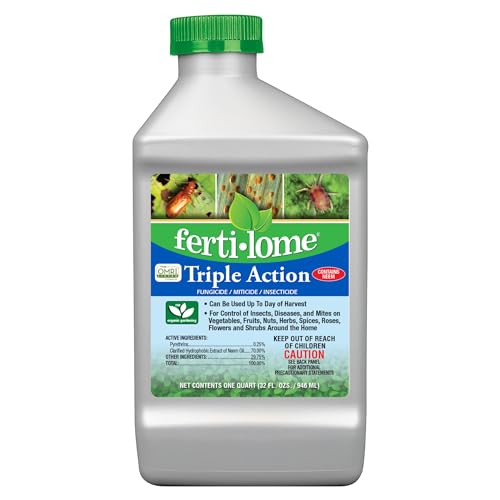
Fertilome Triple Action combines neem oil, insecticidal soap, and pyrethrins to deliver a three-mode attack against armyworms, aphids, spider mites, and fungal diseases like powdery mildew — all from a single bottle. This 32-ounce liquid concentrate dilutes to several gallons of ready-to-spray solution, and the neem oil base provides a protective coating on leaf surfaces that deters armyworm feeding for up to seven days before needing reapplication.
Users who grow fruits, vegetables, and herbs appreciate that neem oil breaks down faster than synthetic pyrethroids, allowing harvest the same day if the label’s pre-harvest interval is followed. The spray also suppresses rust and leaf spot, which is a common secondary problem in vegetable beds stressed by armyworm damage. It works well on cool-season greens, peppers, and fruit trees where granular treatments cannot be used.
The downside is that heavy armyworm infestations — visible larvae densely clustered — require a higher concentration and more frequent spray schedules (every 5-7 days) than pyrethroid-based products. It also generates the classic neem oil odor that some find unpleasant, and the soap component can cause leaf burn on sensitive plants if applied in direct midday sun.
What works
- Organic neem oil base
- Controls insects plus fungal disease
- Safe for vegetables and herbs
What doesn’t
- Frequent reapplication needed
- Strong neem oil odor
6. Martin’s Permethrin 13.3% Concentrate
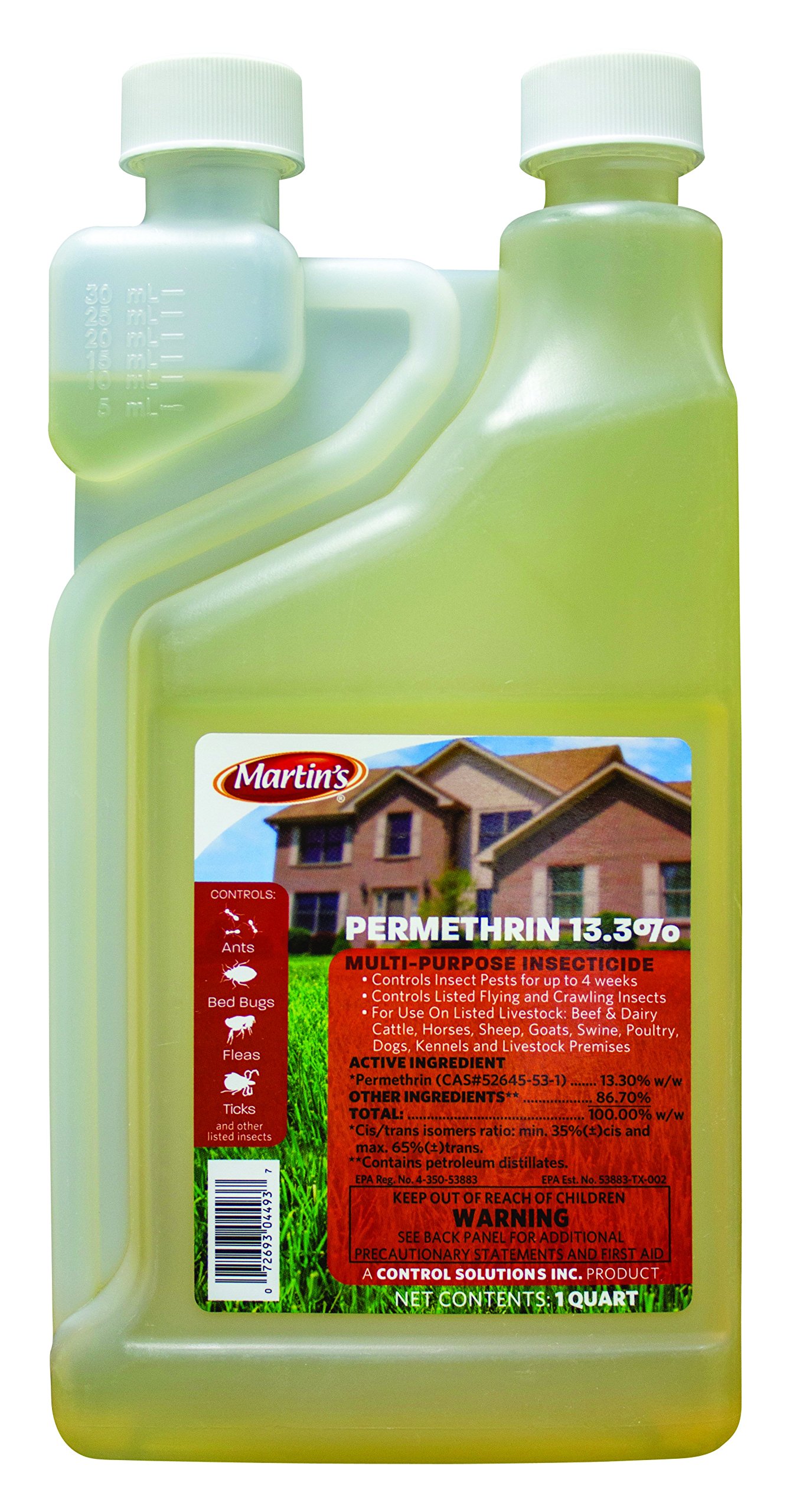
Martin’s 13.3% permethrin concentrate is a professional-grade liquid that mixes at a ratio of roughly 1.5 ounces per gallon for lawn application, making each bottle yield over 20 gallons of finished spray. That dilution ratio gives it the lowest cost-per-gallon of any product in this roundup, which matters when you need to treat a large lawn perimeter or fence line where armyworms typically migrate in from adjacent fields.
Owners who mix their own spray confirm that permethrin delivers a neurotoxic knockdown on caterpillars within hours of contact, and the residual activity on fence lines and mulch edges lasts around four weeks if not washed off by heavy rain. The concentrate also works for tick and mosquito control on clothing and gear, which makes it a dual-use buy for anyone who hikes or works outside after applying.
The downsides are serious: permethrin is highly toxic to bees, cats, and aquatic life, so it must be applied strictly at dawn or dusk when pollinators are inactive, and never near ponds or streams. The solvent smell is also stronger than any granular product, and users should wear gloves and a respirator during mixing. It is not a product for organic gardens.
What works
- Lowest cost per gallon mixed
- Fast knockdown on caterpillars
- Also works for tick and mosquito control
What doesn’t
- Highly toxic to bees and cats
- Strong chemical odor at spray
7. BioAdvanced Complete Insect Killer Granules
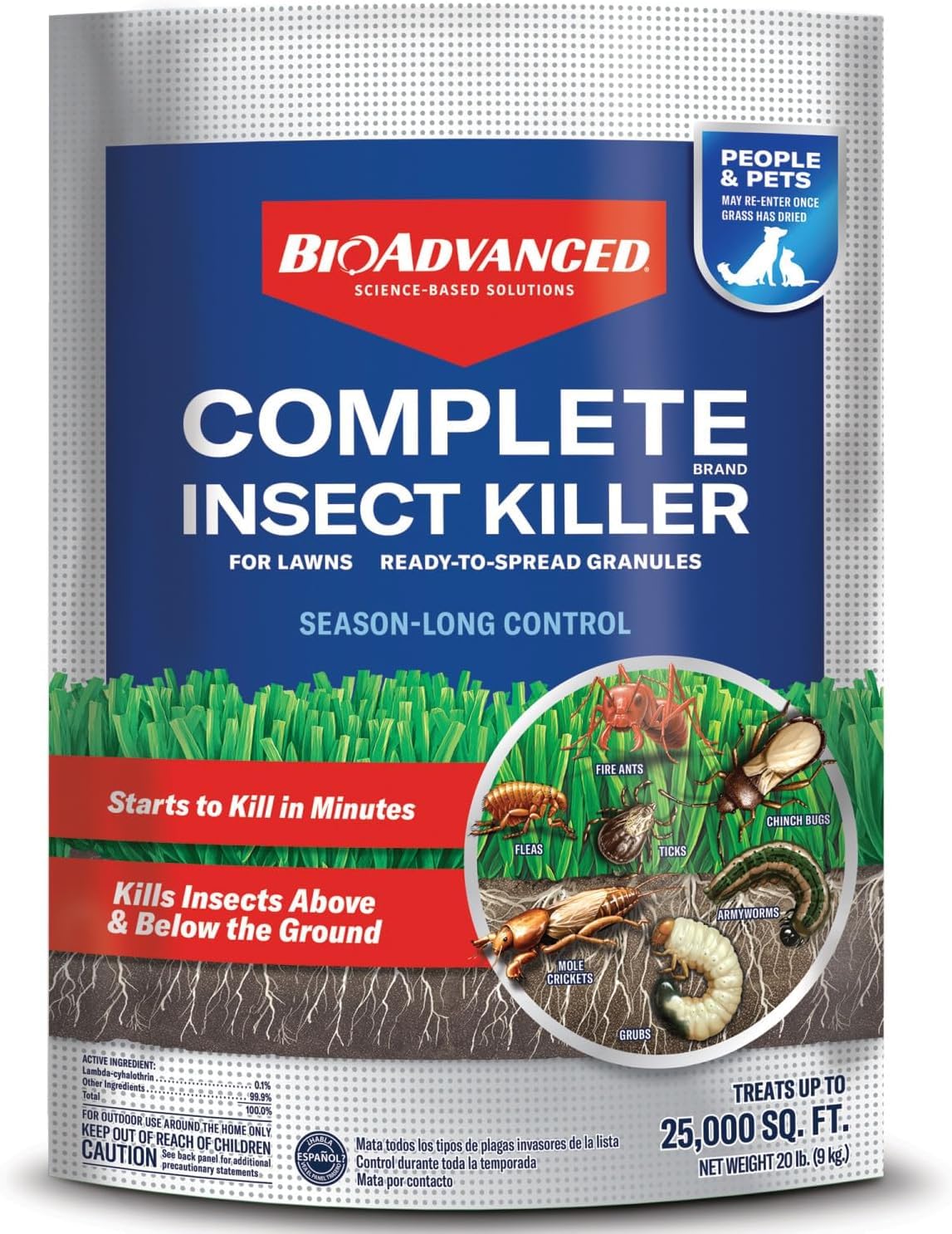
BioAdvanced Complete combines bifenthrin and lambda-cyhalothrin, a dual-pyrethroid blend designed for both contact kill on surface pests and extended residual control in the soil thatch. The 20-pound bag covers up to 25,000 square feet — more than most competitors — making it the best option for large lawns, golf course edges, or horse pastures where armyworm pressure comes in waves.
Users report that a single early-summer application provides roughly three months of armyworm suppression in warm climates, with active ingredient remaining detectable through two or three rain events. The granular form also kills chinch bugs, mole crickets, and grubs, which reduces the number of separate treatments needed during the growing season. It is safe for St. Augustine and Bermuda grass varieties, which are the turf types most vulnerable to armyworm defoliation.
On the negative side, the dual-pyrethroid load makes this product especially dangerous to beneficial pollinators if granules drift into flower beds during spreading. It also fails against stink bugs, so it will not fill an all-bugs gap. Some users report that heavy thatch layers (over half an inch) block the granules from reaching the soil, reducing the residual effect by about two weeks.
What works
- 25,000 sq ft coverage per bag
- Three months of warm-weather control
- Safe for St. Augustine grass
What doesn’t
- High toxicity to pollinators
- Weak on stink bug populations
Hardware & Specs Guide
Active Ingredient Classes
Pyrethroids (bifenthrin, permethrin, lambda-cyhalothrin, zeta-cypermethrin) provide fast contact kill but degrade in 2-4 weeks under sun. Systemic neonicotinoids (imidacloprid) take longer to activate but last months within plant tissue. Carbaryl offers medium residual at low cost. Neem oil is the only OMRI-listed option but requires weekly reapplication during active armyworm hatches.
Granule vs Liquid Coverage Math
A 20-pound granular bag typically covers 20,000-25,000 square feet when measured with a rotary spreader at the medium setting. Liquid concentrates: 32 ounces of 13.3% permethrin makes over 20 gallons of spray, treating 8,000-10,000 square feet per gallon depending on spray rate. Mixed formats allow combining a granule barrier around the lawn perimeter with a targeted liquid spray on visible hot spots.
FAQ
How fast should an armyworm insecticide kill visible caterpillars?
Can I use a granular insecticide on armyworms in my vegetable garden?
Final Thoughts: The Verdict
For most gardeners, the best armyworm insecticide winner is the Ortho BugClear Lawn Insect Killer because it combines a fast-acting dual-pyrethroid with 20,000 square feet of coverage and direct armyworm labeling. If you need systemic prevention for large turf areas, grab the Bayer Merit 0.5 G. And for organic garden beds where chemical residue is a concern, nothing beats the Fertilome Triple Action Spray for armyworm control coupled with fungal protection.