
A planted aquarium is a living canvas, but the foundation—the soil beneath your substrate—determines whether your aquatic garden thrives or slowly declines. Choosing the wrong aquatic plant soil means fighting chronic algae, stunted root systems, and unstable water chemistry that stresses both your plants and your fish. The goal is a substrate that delivers consistent nutrient availability while buffering pH to the slightly acidic range that most aquatic plants demand.
I’m Rikta — the co-founder and writer behind Lawn Gear Lab. I analyze hundreds of hours of owner feedback and manufacturer data to compare how each soil formulation handles ammonia release, particle durability, and long-term nutrient exhaustion across real planted tank setups.
This guide breaks down seven top-tier formulations so you can confidently select the right best aquatic plant soil for your aquascape.
How To Choose The Best Aquatic Plant Soil
Aquatic plant soil is not gravel. It is a functional medium designed to lower pH, buffer KH, supply nutrients, and host nitrifying bacteria. Three factors separate an effective soil from a problematic one: its ammonia profile, its buffering capacity duration, and its physical durability under water.
Ammonia Leaching and the Cycling Window
Most active aquasoils release a burst of ammonia during the first one to three weeks. This is intentional—it feeds the nitrogen cycle to establish your biological filter quickly. However, the intensity varies dramatically. Some soils spike above 4 ppm and require daily 50% water changes, while others release a gentle 0.5 ppm that disappears within days. Beginners should look for “low ammonia” formulations or plan to cycle the tank fishless.
Buffering Lifespan and KH Softening
Active soils use organic matter and clay to bind alkaline ions, dropping pH to the 5.5–6.8 range ideal for most aquatic plants. This buffering capability is finite—typically six to twelve months depending on water change frequency and source water KH. Once exhausted, the soil becomes inert and pH will drift upward. Premium soils from ADA, UNS, and Fluval maintain buffering longer because of higher organic content and denser granule structure.
Particle Integrity and Root Anchoring
Softer soils break down into mud over time, clouding water and smothering root systems. Durable sintered or fired granules maintain their shape for years. Lightweight porous soils offer excellent root penetration but make planting difficult because stems float upward. Heavier clay-based soils like Seachem Flourite anchor plants but provide zero nutrients without root tabs. Match particle density to your planting style—carpet plants need lightweight porous soil, while heavy stem plants prefer a denser cap.
Quick Comparison
On smaller screens, swipe sideways to see the full table.
| Model | Category | Best For | Key Spec | Amazon |
|---|---|---|---|---|
| ADA Aqua Soil Amazonia Ver 2 | Active Aquasoil | High-tech planted tanks with CO2 injection | 9L bag, 7 kg weight | Amazon |
| FZONE Aquarium Soil 8L | Active Aquasoil | Dry-start carpet setups and root-feeders | 8L volume, 3mm granules | Amazon |
| Ultum Nature Systems Controsoil | Volcanic Ash Soil | Low-ammonia cycling and bottom dwellers | 3L volume, 6.8 pH target | Amazon |
| LANDEN Aqua Soil 5L | Budget Active Soil | Community tanks needing pH 6.0–6.5 | 5L volume, 3–5mm size | Amazon |
| Fluval Plant and Shrimp Stratum | Active Granule Soil | Shrimp breeding and nano tanks | 8.8 lbs, 4 kg weight | Amazon |
| CaribSea Samurai Soil | Cyclic Active Soil | Shrimp-only tanks with immediate stocking | 9 lbs, ready-to-use | Amazon |
| Seachem Flourite Black | Inert Clay Gravel | Root-tab fertilized planted tanks | 7.7 lb, fired clay | Amazon |
In‑Depth Reviews
1. ADA Aqua Soil Amazonia Ver 2 (9L)

ADA Amazonia Ver 2 is the gold standard in active aquasoil, built from rare Japanese plant-based black soil enriched with a separate Amazon concentrate supplement. Its irregular granules create a natural-looking bed while providing ideal density for aggressive root systems. In high-tech tanks with CO2 injection and strong lighting, this soil produces the fastest carpet growth and the most vibrant leaf coloration among any formulation currently available.
The ammonia spike during the first two to four weeks is significant, often exceeding 4 ppm, which demands daily water changes or a fully cycled filter before adding livestock. However, that aggressive cycle establishes biological filtration faster than lower-ammonia soils. The buffering capacity drops KH to near zero and holds pH in the 5.5–6.0 range for approximately 8–10 months depending on water change frequency, making it ideal for demanding species like Utricularia graminifolia and dwarf baby tears.
Ver 2 reduces the organic load compared to the original Amazonia to minimize algae outbreaks while still providing ample nutrients for root-feeders. The included concentrate allows localized enrichment, which is especially useful for layout patterns where some zones receive more root tabs than others. Experienced aquascapers consistently cite this soil as the foundation of award-winning layouts, though beginners must respect its cycling requirements.
What works
- Fastest plant growth in high-tech setups with CO2 injection
- Long buffering lifespan maintaining pH 5.5–6.0 for months
- Separate concentrate supplement for localized nutrient boosts
What doesn’t
- Heavy ammonia spike requires careful cycling or daily water changes
- High price per bag limits use in larger tanks
- Granules crush easily if excessive pressure applied during planting
2. FZONE Aquarium Soil 8L
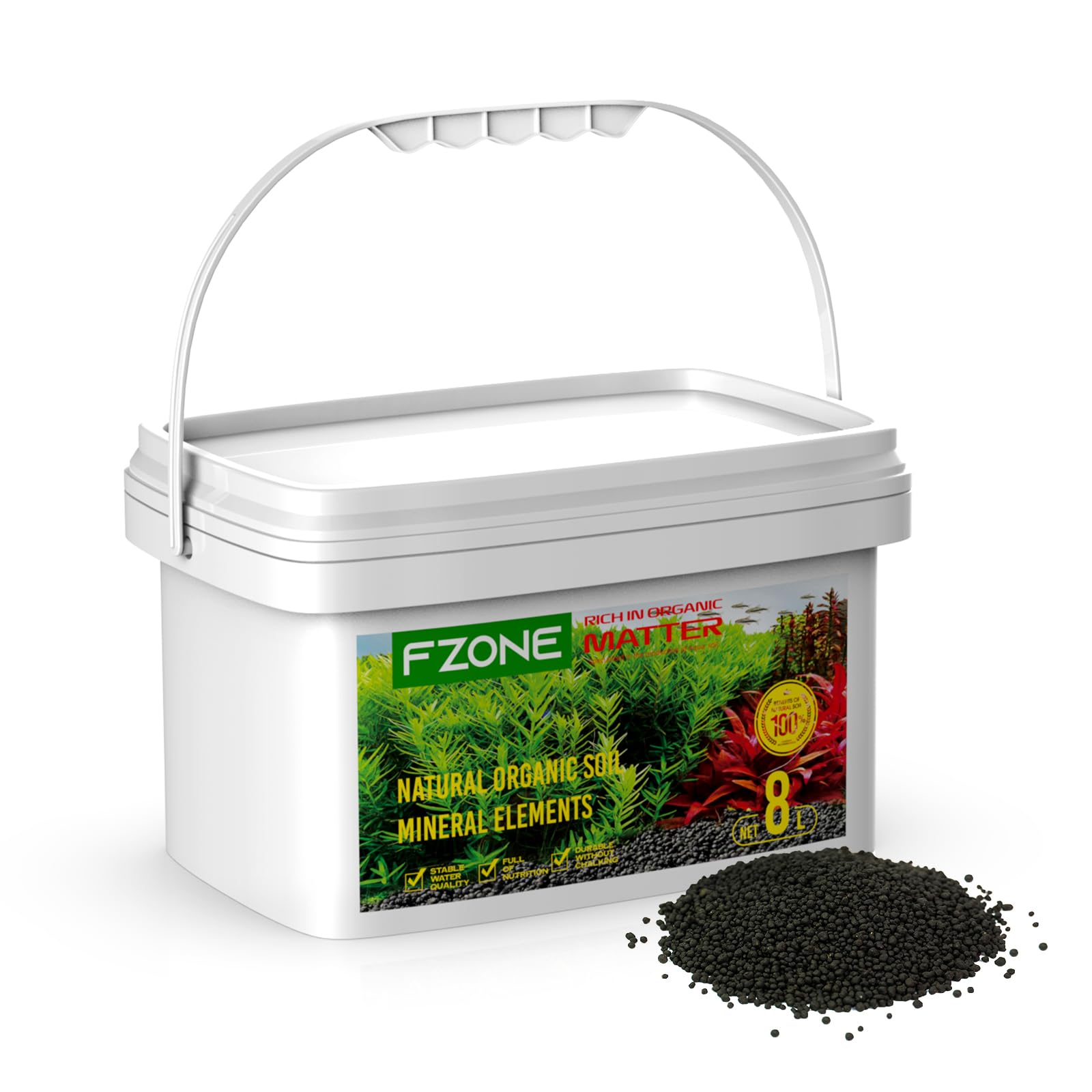
FZONE Aquarium Soil combines high-temperature sintered granules with a nutrient-rich organic blend that includes activated carbon, silica, and soil minerals. The 3mm porous structure stays intact under water without breaking into dust, eliminating the cloudiness that plagues softer soils. Multiple owners confirm that Monte Carlo carpets grow faster and bigger in FZONE compared to Fluval Stratum during dry-start methods, with noticeably stronger root systems by week three.
The ammonia release is substantial—measuring 4–8 ppm during the first 17 days—making it unsuitable for immediate stocking unless you have a cycled filter ready. During this period daily 50% water changes are necessary, but once the nitrogen cycle completes, the soil supports aggressive stem plant growth with visible root zone development. The buffering action gently lowers pH by absorbing alkaline ions, though it is less aggressive than ADA Amazonia, settling around pH 6.4–6.8 in most source waters.
The reusable solid container packaging is a practical upgrade over flimsy bags, and the granules are less crumbly than Fluval Stratum, making planting easier without muddy sediment. FZONE performs comparably to ADA and UNS soils at a lower per-liter cost, bridging the gap between budget and premium tiers. This soil excels in dry-start aquascapes where the substrate must remain stable during the flooding transition.
What works
- Dust-free sintered granules maintain water clarity from setup
- Excellent for dry-start Monte Carlo carpets with rapid root growth
- Reusable container and better value per liter than premium competitors
What doesn’t
- Heavy ammonia spike lasts 17+ days demanding vigilant water changes
- Nutrient richness can melt sensitive species like Bucephalandra
- Lightweight granules make planting difficult without saturating first
3. Ultum Nature Systems Controsoil (3L)

UNS Controsoil is engineered from volcanic ash, producing a lightweight, porous granule that excels at oxygen exchange while absorbing impurities from the water column. Its standout feature is the low ammonia release profile—typically cycling a tank in 2–3 weeks with the help of starter bacteria, compared to the month-long spikes of richer soils. This makes it the safest active soil for hobbyists who want to introduce livestock quickly without risking ammonia burns.
The 6.8 pH target buffers to the slightly acidic side without crashing KH, providing a stable environment for tropical fish and shrimp while still supporting healthy plant nutrient consumption. However, the soil is not nutrient-dense; crushed root tabs are necessary to sustain heavy root-feeders like Cryptocoryne and Echinodorus long-term. The soft, lightweight texture is gentle on bottom-dwellers like cory catfish but makes initial planting tricky—stems can float until roots anchor.
Granule color shifts from brown/tan to nearly black over several months, maturing into a natural underwater aesthetic. Owners highlight that the soil works exceptionally well with Purigen for crystal-clear water and that the low ammonia profile eliminates the risk of melting sensitive mosses and foreground plants during cycling. For hobbyists balancing a community tank with moderate plant growth, Controsoil offers the most forgiving cycling window among active aquasoils.
What works
- Lowest ammonia release among active aquasoils—safe for early stocking
- Volcanic ash composition absorbs impurities and supports bio-filtration
- Gentle on bottom-dwellers and shrimp while buffering pH effectively
What doesn’t
- Low inherent nutrient content requires root tabs for heavy plant growth
- Lightweight granules make planting difficult—stems float without anchors
- 3L bag insufficient for 2-inch depth in tanks above 15 gallons
4. LANDEN Aqua Soil 5L

LANDEN Aqua Soil delivers active buffering performance at a per-liter cost that undercuts most competitors, making it the go-to option for budget-conscious aquascapers building medium-to-large tanks. The 3–5mm black granules are processed from natural earth material and provide fundamental minerals and trace elements that promote healthy root systems. In community tanks between 20 and 55 gallons, owners report crystal-clear water after a brief floating-debris removal and fish thriving within the first week.
The soil buffers pH to 6.0–6.5 while fixing KH, closely mimicking the performance of Controsoil at roughly half the price. However, multiple owners note that the bag contains dried grass, leaves, and some larger gravel chunks that require manual removal during setup. Rinsing is necessary despite the “no rinse” claim—skipping it leads to dusty water that takes 24 hours to clear with filter assistance. The porous, lightweight texture hides fish waste effectively but causes plants to float until roots establish.
Nitrate spikes appear minimal compared to richer soils, and ammonia levels stabilize after about one week with partial water changes. The soil works well as a budget alternative to UNS Controsoil for planted community tanks, but the inconsistent particle quality and occasional debris mean you pay in preparation time what you save in money. For a 55-gallon tank that needs 3–4 bags, the savings add up without sacrificing fundamental water chemistry.
What works
- Lowest per-liter cost among active aquasoils with reliable pH buffering
- Stabilizes at pH 6.0–6.5 quickly with no prolonged ammonia issues
- Works well in larger tanks where premium soils become cost-prohibitive
What doesn’t
- Requires manual removal of dried grass and debris before setup
- Dusty when dry—rinsing recommended despite package claiming otherwise
- Lightweight grains make stem plant anchoring difficult without caps
5. Fluval Plant and Shrimp Stratum (8.8 lbs)

Fluval Stratum is the most widely recommended active substrate for shrimp tanks, and for good reason—its porous structure provides micro-shelter for newborn shrimp while facilitating robust colonization of beneficial nitrifying organisms. The 4 kg bag covers a 10-gallon tank to approximately 2 inches of depth, which is the minimum recommended for healthy root development. Owners consistently report shrimp breeding within weeks of setup, with water chemistry stabilizing faster than most active soils.
The granules are extremely lightweight, which creates two practical challenges: plants tend to float until roots establish, and a single bag is rarely enough to achieve a proper 3-inch slope without anchors. The pH buffering targets a neutral to slightly acidic range, typically settling around 6.5–6.8 in most source water, which is ideal for Neocaridina shrimp and low-light plants like Anubias and Java fern. The soil does not cloud water significantly if filled gently, though some cloudiness appears during the first 6–48 hours before the filter clears it.
Nutrient content is moderate—adequate for low-tech planted tanks but insufficient for demanding root-feeders without supplemental fertilizers twice weekly. The soil lasts approximately 6–8 months before nutrient exhaustion, after which root tabs become necessary. For nano tanks and shrimp breeding projects, Fluval Stratum offers the most reliable, beginner-friendly cycling experience among active soils, though its price per pound places it above budget alternatives.
What works
- Porous granules provide essential shelter for newborn shrimp
- Gentle pH buffering suits Neocaridina and Caridina shrimp species
- Minimal water clouding when filled slowly over a bowl or bag
What doesn’t
- Lightweight pellets cause plants to float—anchoring or multiple bags needed
- Moderate nutrient content depletes in 6–8 months requiring root tabs
- Expensive per bag relative to fill volume for larger aquariums
6. CaribSea Samurai Soil (9 lbs)
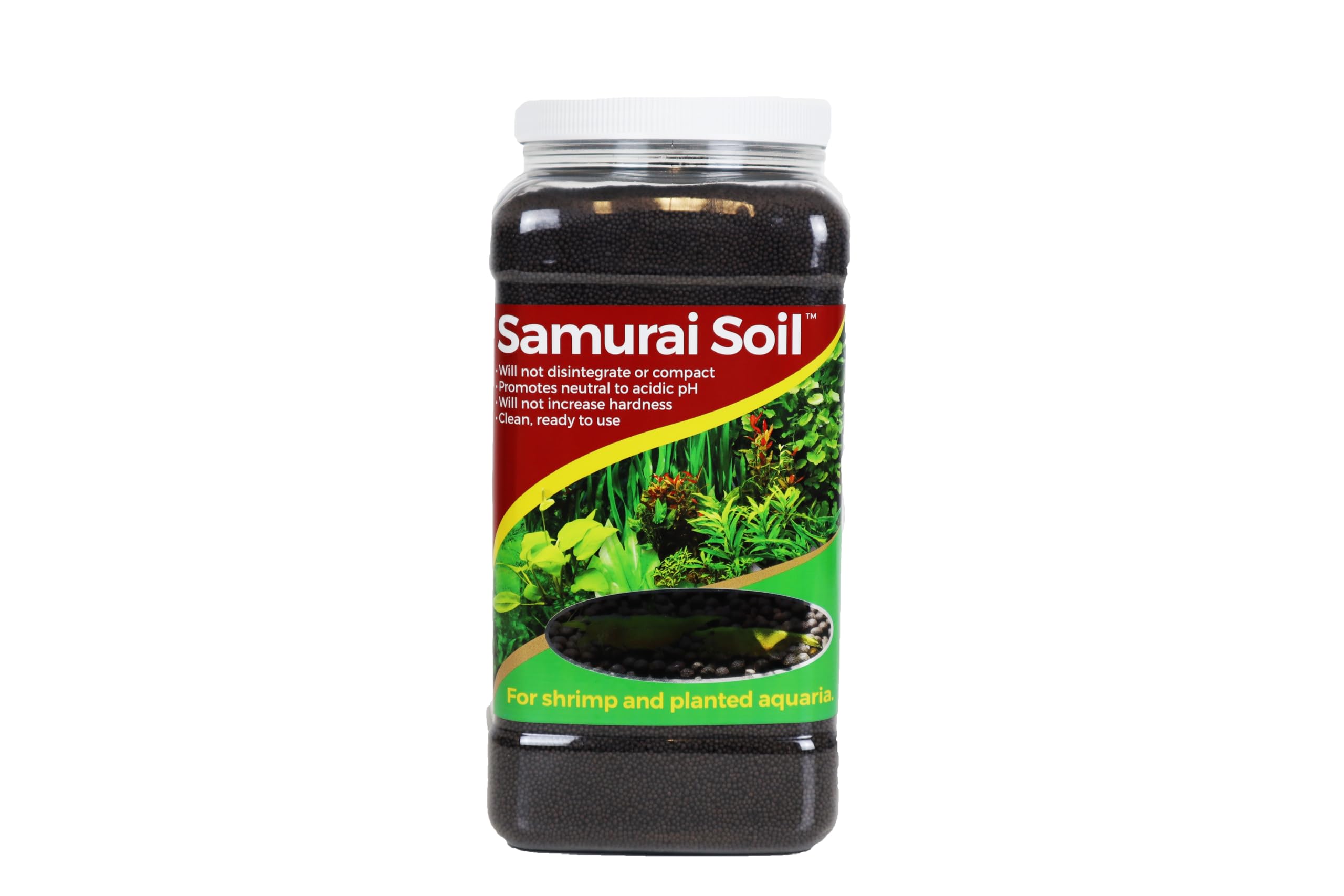
CaribSea Samurai Soil differentiates itself by containing a dose of biologicals designed to accelerate the cycling process while virtually eliminating the ammonia spike that plagues other active soils. Owners confirm that Bettas and shrimp can be introduced almost immediately after setup with no signs of stress, a massive advantage for hobbyists who lack the patience or space for a month-long fishless cycle. The soil maintains neutral to slightly acidic pH without increasing hardness, preserving the water chemistry that soft-water species demand.
The granules are pre-cleaned and ready to use straight from the bag, with no rinsing required and no cloudy water reported during initial filling. The material does not disintegrate or compact over time, maintaining its structure for years without turning into mud. However, the 9-pound bag is relatively small for larger aquascapes—it provides approximately 1.5 inches of depth in a 10-gallon tank, which means deeper planted substrates require multiple purchases at a premium per-pound cost.
The biological additive appears to accelerate the maturation of the tank’s nitrogen cycle, but the soil itself provides minimal inherent nutrition for plants. Root tab supplementation becomes necessary within weeks for anything beyond low-light hardy species. For shrimp-only tanks or Betta setups where immediate stocking is the priority, Samurai Soil offers the safest and fastest path to a stable, crystal-clear environment without the cycling headaches typical of richer aquasoils.
What works
- Near-zero ammonia spike allows almost immediate livestock introduction
- Pre-cleaned, no rinse required—water stays crystal clear from day one
- Granules resist disintegration and compaction over years of use
What doesn’t
- Minimal nutrient content demands immediate root tab supplementation
- High per-pound cost makes covering large tanks uneconomical
- Bag size insufficient for 2-inch depth in tanks above 15 gallons
7. Seachem Flourite Black Clay Gravel (7.7 lb)

Seachem Flourite Black is not an active soil—it is an inert, fired-clay gravel that provides zero nutritional value and zero pH buffering on its own. Instead, it offers a permanent, non-disintegrating substrate layer that serves as a stable physical foundation for planted tanks that rely on root tabs and liquid fertilizers. The fired clay granules are heavier than sand and water, making them ideal for anchoring heavy stem plants without the floating issues common to lightweight aquasoils.
The black coloration is genuine fired-through material, not painted, so it will not fade or chip over years of use. A 7.7-pound bag provides a 1.5–2 inch layer in a 6-gallon tank, and owners report plants, fish, and snails thriving long-term when combined with an under-gravel filter. The major drawback is the substantial dust produced during the first rinse—the clay releases fine particulate that clouds water severely if not rinsed thoroughly in a tray under running water before installation.
Flourite is inert, which means pH and KH stay exactly at your source water levels. For hard-water keepers trying to maintain alkaline conditions for African cichlids or brackish plants, this neutrality is an advantage. For planted tank enthusiasts chasing soft, acidic water for carpet plants, this substrate will frustrate without aggressive CO2 injection and chemical pH adjustment. It functions best as a cap over active aquasoil or as a long-term inert bed for root-tab-fertilized setups where substrate stability matters more than water chemistry manipulation.
What works
- Heavy fired-clay granules anchor plants securely without floating
- Never disintegrates, compacts, or leaches anything into the water column
- Genuine black color is fired through—no paint to fade or chip
What doesn’t
- Produces heavy dust during rinsing—requires thorough pre-washing
- Zero nutrient content makes root tabs mandatory for plant growth
- No pH or KH buffering—source water chemistry remains unchanged
Hardware & Specs Guide
Particle Size and Porosity
Granule diameter typically ranges from 2 mm to 5 mm across active aquasoils. Smaller particles (2–3 mm) provide better root contact and are ideal for carpet plants like Monte Carlo and dwarf baby tears, but they compact more easily over time. Larger particles (4–5 mm) promote water flow through the substrate bed, reducing anaerobic pockets, but make planting delicate stems more difficult. Porosity—the ratio of open space within each granule—determines how much surface area is available for nitrifying bacteria. Volcanic ash soils (UNS Controsoil) and sintered soils (FZONE) offer the highest porosity, while fired clays (Seachem Flourite) are nearly non-porous.
Buffering Capacity and Lifespan
Active aquasoil buffers pH by exchanging hydrogen ions for alkaline ions (calcium and magnesium) present in the water. This finite capacity is measured in terms of KH consumption; each time you add alkaline tap water, you consume a portion of the soil’s buffering reserve. ADA Amazonia holds the longest buffering lifespan (8–12 months in typical usage), while budget soils like LANDEN last 4–6 months. Once exhausted, the soil can be recharged with root tabs or replaced entirely, but pH will drift upward toward source water levels. Inert substrates like Flourite never buffer at all—they pass water chemistry unchanged.
FAQ
Why does my aquatic plant soil release ammonia during the first weeks?
How deep should I layer aquatic plant soil in my tank?
Can I reuse aquatic plant soil after breaking down a tank?
Final Thoughts: The Verdict
For most gardeners, the best aquatic plant soil winner is the ADA Aqua Soil Amazonia Ver 2 because its unmatched buffering lifespan and nutrient density produce the fastest, most vibrant plant growth in high-tech setups. If you want low ammonia release and immediate livestock safety, grab the Ultum Nature Systems Controsoil. And for budget-conscious community tanks that still demand active pH buffering, nothing beats the LANDEN Aqua Soil 5L for value.