
Dead twigs, hardened stems, and dry branches demand a different cutting philosophy. Unlike bypass pruners that require a clean, scissor-like alignment, anvil pruners crush the material against a flat metal plate, delivering the raw force needed to sever the toughest wood without jamming or bending the blade. The trade-off is a slightly rougher cut on the branch face, but for clearing out old growth, winter-killed shrubs, and orchard cleanup, the anvil design wins on power and leverage.
I’m Rikta — the co-founder and writer behind Lawn Gear Lab. I’ve spent hundreds of hours combing owner feedback and cross-referencing steel grades, ratchet mechanisms, and handle ergonomics to sort the real contenders from the also-rans in the anvil pruner category.
This breakdown of the best anvil pruners on the market focuses on which models deliver the highest crushing power per squeeze, the sharpest edge retention, and the most comfortable long-session grip so you can stop fighting your tools and get back to the actual work.best anvil pruners
How To Choose The Best Anvil Pruners
Choosing an anvil pruner isn’t complicated once you understand that the blade crushes the stem against a flat anvil rather than slicing past a second blade. That single design decision changes every spec that matters.
Blade Steel & Edge Retention
High carbon steel (SK5 or equivalent) with a hardness of 58–60 HRC resists dulling longer than standard stainless, especially when cutting gritty, dry, or sap-heavy wood. A non-stick or anti-friction coating helps the blade slide through, reducing the squeeze force you need to apply. Without good steel, even the best ratchet mechanism will leave you making ragged cuts.
Ratchet vs. Standard Leverage
Ratchet mechanisms multiply your hand force across two or three distinct clicks, letting you cut through branches up to ¾ inch with noticeably less exertion. This is critical for older hands, gardeners with arthritis, or anyone tackling a large volume of thick stems. Standard single-action anvil pruners rely purely on the lever ratio of the handles, so you need more raw grip strength for the same cut.
Handle Ergonomics & Grip Comfort
Look for cushioned, non-slip grips that fill the palm without forcing a wide hand spread. A grip-adjustment slider or contoured lower handle can make the difference between a comfortable hour of pruning and a hand cramp after ten minutes. The best handles also house the spring internally to prevent rust, debris accumulation, and accidental spring pop-outs.
Quick Comparison
On smaller screens, swipe sideways to see the full table.
| Model | Category | Best For | Key Spec | Amazon |
|---|---|---|---|---|
| DUROX DGR-01 | Ratchet Anvil | Reducing hand strain on thick stems | 3-click ratchet, 7.8″ length | Amazon |
| LeafLux LFXP1108S | Heavy Duty Anvil | All-metal durability in wet conditions | SK5 steel, 58-60 HRC blade | Amazon |
| Woodland Tools 2004 | Adjustable-Grip Anvil | Matching fit to smaller hand spans | Grip slider, 5/8″ cut cap | Amazon |
| TONMA TP-4 | Japanese SK5 Anvil | Precision cuts on bonsai & shrubs | 1″ cut capacity, Japan steel | Amazon |
| LÖWE 1.104 | German Forged Anvil | Dry, old wood and heavy orchard cuts | Carbon steel, German forged | Amazon |
| LÖWE 10.107 | Bypass-Geometry Anvil | Gentle cuts on live wood up to 1.18″ | 1.18″ diameter, bypass geometry | Amazon |
| Felco F31 | Pro-Grade Anvil | Long-term daily pro use & repairability | Forged aluminum, alloy steel blade | Amazon |
In‑Depth Reviews
1. DUROX DGR-01 Ratchet Pruning Shears
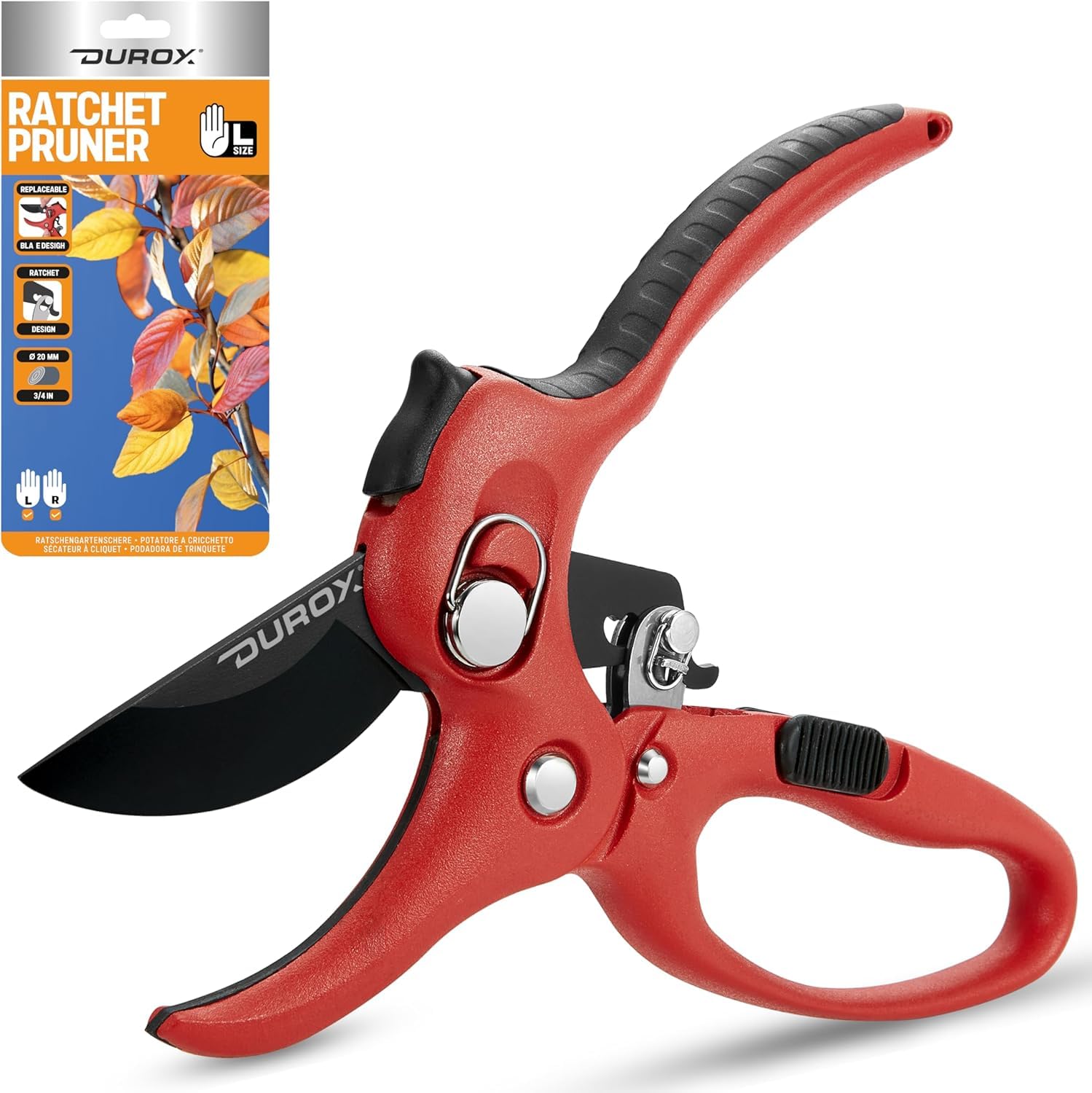
The DUROX DGR-01 stands apart because of its three-click ratchet mechanism that multiplies your squeezing power, letting you cut branches up to 20mm without the hand fatigue that normally follows a dozen thick cuts. The SK5 high carbon steel blade arrives laser-sharp, and the replaceable blade system means you don’t toss the whole tool when the edge eventually dulls — just swap and keep working.
At just 8.5 ounces with a cast-aluminum body and TPR grips, this pruner feels nearly weightless in the hand. The built-in sponge blade cleanser is an unusual but appreciated detail: a quick wipe clears sap and debris right at the cutting zone, which extends the blade’s useful life between sharpenings. The safety lock is ambidextrous, so left-handed users get the same secure storage.
Multiple verified owners in their 70s report that the ratchet action allowed them to continue pruning without pain, and several noted that the tool handled semi-dry oak and rose canes with zero blade deflection. The only real trade-off is the moderate 20mm cut cap, but for the vast majority of garden pruning, that range covers dead stems, small branches, and woody perennials without strain.
What works
- Ratchet multiplier makes thick cuts feel effortless
- Replaceable blade saves money long-term
- Very lightweight at 8.5 ounces
What doesn’t
- Cut capacity limited to 20mm (3/4 inch)
- Rachet clicks slow down rapid sequential cuts
2. LeafLux LFXP1108S Heavy Duty Anvil Pruning Shears
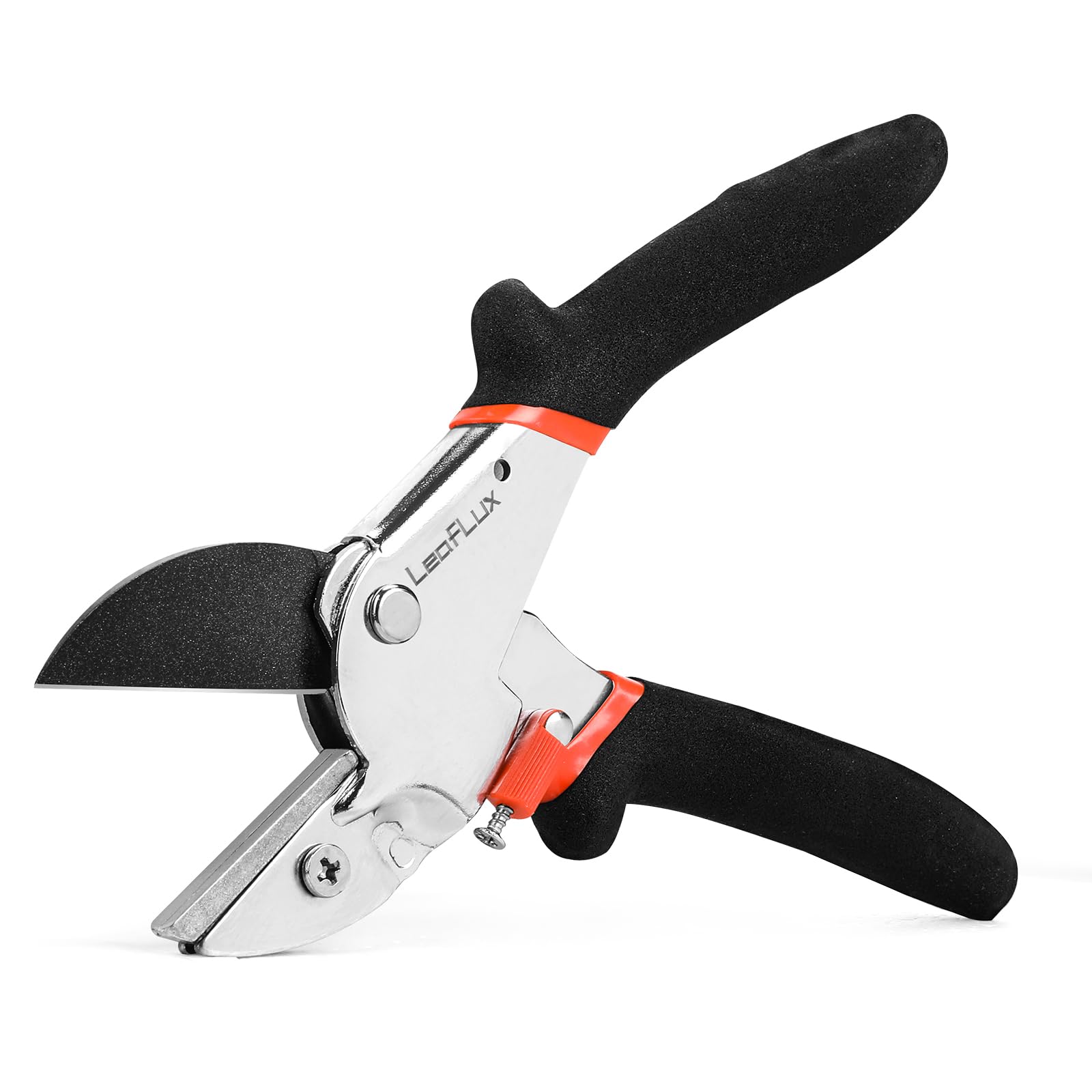
LeafLux takes a distinctly different approach from the DUROX: no ratchet, just pure mechanical leverage from an all-metal body and a precision lever system. The SK5 blade is heat-treated to 58-60 HRC, then coated with an anti-friction lacquer that reduces drag through wet or resinous wood. That hardness means the edge stays sharp for dozens of cuts on dry hardwood without needing a touch-up.
The design emphasizes stability — the spring is housed internally so it cannot pop out and get lost, and the metal body eliminates any flex during cuts. Owners consistently mention that the shears handle 1-inch branches with surprising ease, and the PVC grips offer a steady, non-slip hold even when hands are sweaty or gloved.
If you prefer a simple, non-ratcheting tool that relies on a solid lever ratio and a high-quality edge, this is the strongest contender in its tier. The replaceable blade design adds longevity, and the straight blade edge works well for both stems and small branches. A few users noted that the initial break-in felt stiff, but after a few cuts the hinge loosened to a smooth action.
What works
- Hardened SK5 blade holds edge impressively long
- All-metal frame with no plastic flex
- Replaceable blade extends tool lifespan
What doesn’t
- No ratchet — requires more hand strength for thick cuts
- Initial hinge stiffness reported by some owners
3. Woodland Tools Co. 2004 Heavy Duty Anvil Pruner
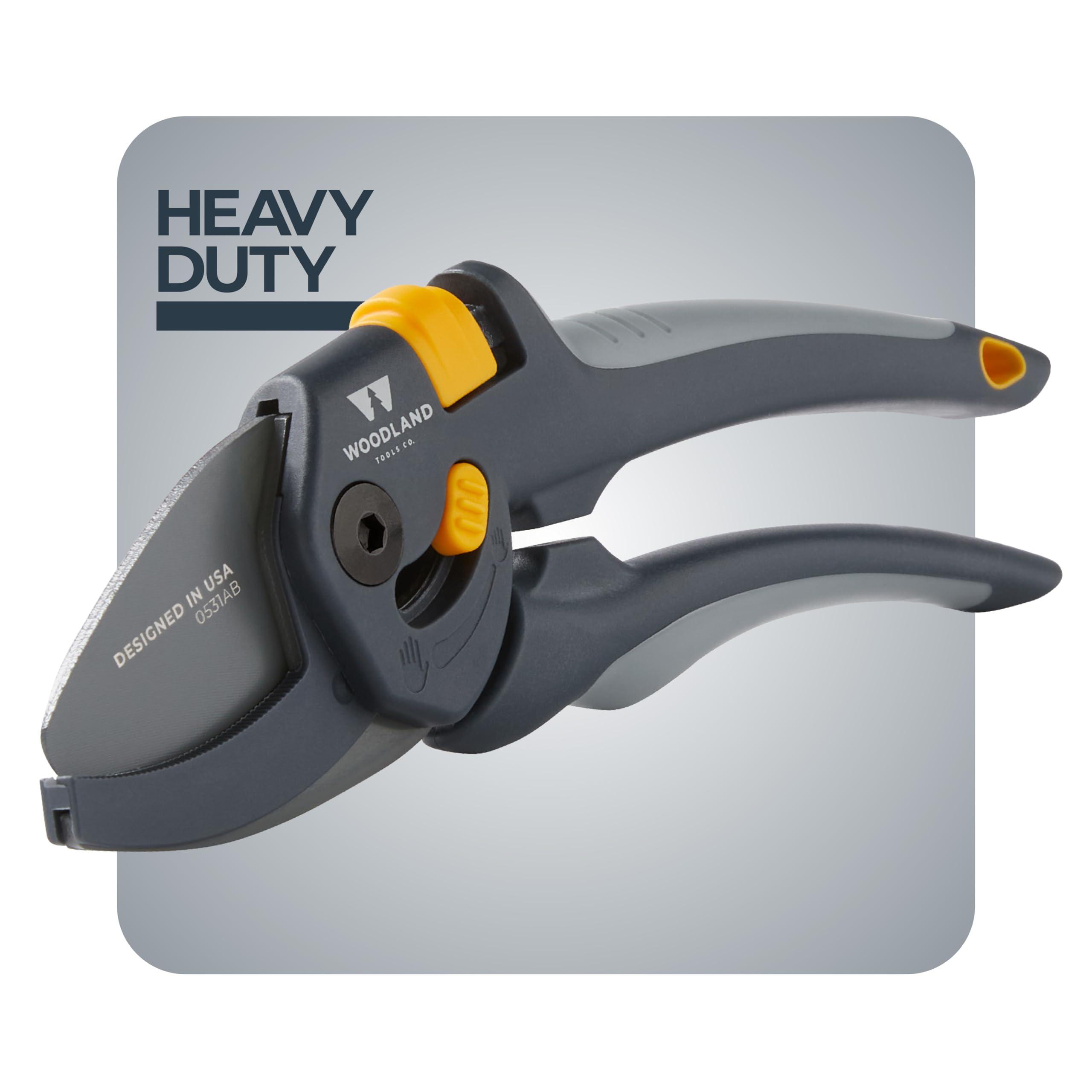
Woodland Tools built the 2004 around a simple insight: not every hand fits the same span. The built-in grip adjustment slider lets you reduce the handle spread, which is a game-changer for gardeners with smaller hands, arthritis, or carpal tunnel. Combined with a serrated high carbon steel blade and an internal spring that stays clean, this pruner cuts dry, dead stems up to 5/8 inch with solid authority.
The glass-filled polypropylene handle with a soft top grip delivers excellent control, and the non-stick coating on the blade resists sap buildup during extended sessions. Verified owners with older hands report that the adjustable spread makes this the most comfortable anvil pruner they have used, and the blade stayed sharp through multiple pruning sessions on frost-damaged shrubs and woody perennials.
One long-term owner noted that the plastic anvil surface showed wear after about a year of heavy use, and it does not appear to be a replaceable part despite the tool’s adjustability. For seasonal home-garden pruning rather than daily professional work, that anvil lifespan is still reasonable, but it is worth factoring in if you plan to prune several hours a week.
What works
- Adjustable grip slider fits smaller hands perfectly
- Internal spring stays protected from rust and debris
- Serrated blade bites into dry wood without slipping
What doesn’t
- Plastic anvil surface may wear after heavy use
- Cut capacity stops at 5/8 inch
4. TONMA TP-4 Anvil Pruning Shears

The TONMA TP-4 is made in Japan from Japanese SK5 stainless steel with a nano-spray anti-rust treatment that provides double-layer corrosion protection. The blade geometry uses a golden-ratio edge angle that allows the pruner to cleanly cut branches up to 1 inch in diameter while leaving a smooth surface — important for live-wood pruning where jagged cuts invite disease.
The ergonomic handle design reduces hand pain during extended trimming sessions, and the safety lock uses a tight clip that stays engaged in the pocket. Owners consistently mention that the lightweight feel and sharp edge make quick work of rose bushes, bonsai, shrubs, and small fruit tree branches. The lifetime service backing adds confidence that the investment is protected.
A handful of users noted that the lock clip can release too easily when carried in a pocket, and the initial opening angle was very narrow until a silicone lubricant was applied. Once broken in, the action smooths out and the cutting precision rivals tools costing significantly more. For anyone who prioritizes a clean, plant-healthy cut over raw crushing force, this is the top choice.
What works
- Japanese SK5 steel holds a refined edge well
- Nano anti-rust coating protects in humid conditions
- Smooth cut face promotes plant healing
What doesn’t
- Lock clip can disengage in a pocket
- Initial tight action may need lubrication
5. Original LÖWE 1.104 Professional Anvil Pruner

LÖWE’s 1.104 is a no-compromise German-built anvil pruner that feels noticeably heavier and more solid than most competition. The long-lasting carbon steel blade is coated with a sliding lacquer that reduces friction and resists corrosion, and the tool is designed specifically for hard, dry, and old wood. Owners who have switched from mainstream brands describe it as feeling like a precision instrument compared to flimsier alternatives.
The one-hand safety lock is simple and effective, and all parts are replaceable — a key feature for anyone who plans to keep a tool in service for years rather than seasons. The handle is optimized for medium to large hands, with a comfortable grip that transmits cutting force efficiently. The cutting width of 22mm covers most dry wood encountered in home orchards and landscapes.
Multiple long-term reviewers praised the LÖWE for cutting through rose stems and thick branches with zero looseness, and several emphasized that the German build quality justifies the premium price. The only real downside is the weight — at 290 grams it is heavier than aluminum-handled alternatives, but that mass contributes directly to its cutting stability and durability.
What works
- Solid German construction with no handle play
- All parts replaceable for decades of use
- Excels at cutting dry, old, or hard wood
What doesn’t
- Heavier than aluminum-handled rivals
- Premium price requires committed investment
6. Original LÖWE 10.107 Professional Anvil Pruning Shears

The LÖWE 10.107 is a hybrid that combines an anvil cutting surface with bypass blade geometry, designed to deliver the crushing power of an anvil while leaving a cleaner cut closer to what a bypass pruner produces. The curved blade resists slipping, and the cutting capacity reaches an impressive 1.18 inches — the widest on this list — making it the go-to option for orchard work and forestry tasks.
The inward-curved lower handles reduce the open spread, making this an excellent fit for medium-sized hands that struggle with wide-grip tools. At just 10.05 ounces, it is lighter than the standard LÖWE 1.104, and the corrosion-protected blade holds up well in wet or humid pruning environments. Professional users in orcharding praise the effortless cutting action that feels like gliding through the branch.
Owners consistently mention that the first few cuts feel startlingly smooth — some thought they had missed the branch entirely because there was so little resistance. The tool is fully maintainable with replaceable parts, and the German build quality ensures the hinge stays tight over years of use. The hybrid geometry does mean you pay a premium, but for anyone pruning live wood in addition to dead stems, this single tool covers both scenarios.
What works
- Hybrid geometry cuts live wood cleaner than standard anvils
- 1.18-inch capacity handles the thickest branches
- Inward-curved handles reduce spread for smaller hands
What doesn’t
- Premium price may exceed casual gardener budgets
- Hybrid design is specific — not a pure anvil or bypass
7. Felco F31 Pruning Shears

Felco is the gold standard for a reason, and the F31 anvil model carries that reputation into the dry-wood category. The forged aluminum handles are light yet rigid, and the alloy steel blade delivers high-torque cutting power with excellent edge retention. The micrometric adjustment mechanism lets you dial in the blade gap precisely, which keeps the cutting action clean even after the blade has been sharpened multiple times.
All parts are replaceable and maintainable — Felco supports its tools with a full parts ecosystem, so you can keep the F31 in service for a decade or more. The rubberized grip reduces vibration and provides a secure hold, and the right-handed orientation ensures the blade alignment is optimized for the majority of users. Owners who have used Felco bypass pruners for years report that the F31 anvil matches the same build quality.
The biggest advantage of the F31 is its repairability and support structure. If you damage a spring, lose a screw, or wear out a blade, you can find and install the exact replacement part without sending the tool back. For professional landscapers and dedicated home gardeners, that serviceability justifies the investment. Some users noted that the F31 is a right-hand-only tool, and the price places it firmly in the professional tier.
What works
- Fully repairable with factory replacement parts
- Forged aluminum handles are light and strong
- Micrometric adjustment keeps blade alignment precise
What doesn’t
- Right-hand only — not ambidextrous
- Premium price reflects pro-grade build
Hardware & Specs Guide
Blade Steel Hardness (HRC)
The HRC (Rockwell Hardness) scale measures how resistant the blade steel is to deformation. Anvil pruners in the 58-60 HRC range, such as the LeafLux LFXP1108S, hold an edge significantly longer than softer blades when cutting dry or gritty wood. Softer steel dulls faster but is easier to sharpen in the field. For high-volume pruning, a harder blade reduces downtime between sharpening sessions.
Ratchet Mechanisms vs. Straight Leverage
Ratchet pruners use a stepped gear that locks the blade at each squeeze point, multiplying your hand force across the full cut. The DUROX DGR-01 exemplifies this approach with three distinct clicks per cut, which effectively reduces the peak force required. Straight-leverage anvil pruners like the Felco F31 rely on the handle length ratio and blade sharpness — they cut faster per stroke but demand more grip strength on thick stems.
FAQ
Can anvil pruners damage live branches?
How does a ratchet mechanism reduce hand fatigue?
What is the best blade material for anvil pruners?
Final Thoughts: The Verdict
For most gardeners, the best anvil pruners winner is the DUROX DGR-01 because its ratchet mechanism removes the hand strain that discourages consistent pruning, and the replaceable blade extends the tool’s life well beyond the budget tier. If you want pure mechanical leverage and a blade that cuts 1-inch branches without any plastic parts, grab the LeafLux LFXP1108S. And for professional orchard work where you need a clean cut on both live and dead wood, nothing beats the Original LÖWE 10.107.