
Whether you are cleaning up spent perennials or shaping a fruit tree, the wrong pruner tears bark, pinches stems, and leaves ragged wounds that invite disease. An anvil and blade pruner combines a sharp-edged blade that slices against a flat anvil, delivering the brute shearing force needed for dead, dry, or tough wood without the lateral flex that plagues standard bypass designs. The geometry matters here: the anvil absorbs the impact, so the blade can push through hardened material with less hand effort, but the trade-off is a slight crush mark on the remaining stub. The best models minimize that crush through precision gap alignment and hardened-steel anvil faces, making the distinction between a clean cut and a ragged one entirely dependent on the tool’s build quality.
I’m Rikta — the co-founder and writer behind Lawn Gear Lab. I have spent many hours breaking down blade steels, ratcheting mechanisms, handle ergonomics, and cutting capacities across dozens of anvil-style pruners to understand which design elements actually prevent hand fatigue and which are marketing fluff.
After combing through owner reports and comparing leverage ratios, blade geometries, and component durability, I have narrowed the field to the seven most distinct anvil and blade pruners that solve real cutting problems. This is the best anvil and blade pruner guide built for gardeners who need predictable, low-effort cuts on everything from brittle twigs to half-inch deadwood.
How To Choose The Best Anvil And Blade Pruner
An anvil pruner is not a one-size-fits-all tool. The cutting action relies on a stationary lower jaw (the anvil) and a moving upper blade that closes against it. This design can shear through dry, dead, or knotty wood that would snap a bypass blade, but it also compresses the remaining stub more. Choosing the right one means evaluating blade coating, cutting capacity, handle ergonomics, and whether you need a ratcheting assist for heavy-duty work.
Blade Geometry and Anvil Material
The blade’s edge angle and the anvil’s surface hardness determine whether the cut is a clean shear or a ragged crush. Look for a hardened or replaceable anvil face — soft anvils deform over time and create a gap that pinches rather than cuts. A non-stick or fluorine-coated blade resists sap buildup, which matters if you prune resinous pines, cherry, or walnut. Some premium models use bypass geometry on an anvil frame, blending the slicing action of a bypass with the brute force of an anvil, reducing the crush mark significantly.
Cutting Capacity and Leverage
Most hand-held anvil pruners handle branches up to 1 to 1.25 inches in diameter. Larger capacities require longer handles or a ratcheting mechanism that multiplies force through incremental clicks. Ratcheting anvil loppers are ideal for dead limbs up to 2.5 inches but are heavier. For everyday garden cleanup, a 0.75- to 1-inch capacity in a lightweight, 7-to-9-inch frame is the sweet spot. Check the pivot pin — a riveted joint offers consistent alignment, while a bolt allows adjustment as the blade wears.
Handle Design and Hand Fit
Anvil pruners require more closing force than bypass pruners of the same capacity because the blade must push material against the anvil. Ergonomic handles with inward-curved lower grips reduce the spread distance, making the tool easier for smaller or medium-sized hands to operate. Rubberized or textured grips prevent slipping when hands are sweaty or covered in sap. Some handles use wood or plastic composites; wood absorbs shock better but requires more maintenance, while plastic stays lightweight and weatherproof.
Quick Comparison
On smaller screens, swipe sideways to see the full table.
| Model | Category | Best For | Key Spec | Amazon |
|---|---|---|---|---|
| Original LÖWE Profi 8.107 | Premium Anvil | Pro orchard pruning | Bypass geometry, 0.98″ cut | Amazon |
| Original LÖWE 10.107 | Premium Hybrid | Dry wood & tight spaces | Anvil + bypass geo, 1.18″ cut | Amazon |
| Bahco BAHPX-M2 | Pro Bypass | Precision slicing cuts | Slicing Cut blade, 0.75″ capacity | Amazon |
| ARS HP-VS9Z Signature | Heavy Duty Bypass | Large hands, thick branches | 60mm blade, 1″ cut capacity | Amazon |
| Kings County Tools Lopper | Ratcheting Anvil | High branches & kindling | Double ratchet, 2.5″ cut capacity | Amazon |
| SUIZAN Bypass Pruner | Entry-Level JPN | Light garden & harvesting | Japanese steel, 0.625″ cut | Amazon |
| Saboten Japanese Bypass | Budget-Friendly | Price-conscious & arthritic hands | Fluorine coating, 0.8″ cut | Amazon |
In‑Depth Reviews
1. Original LÖWE Profi Anvil Prunner 8.107

The Original LÖWE Profi 8.107 sits at the top because it solves the core problem of anvil pruners — the crush mark — by blending bypass cutting geometry into an anvil frame. The curved upper blade slices through yew, cherry, and walnut branches up to 0.98 inches with far less compression than a standard anvil, leaving a wound that heals faster. The 8.27-inch length and 250-gram weight make it light enough for extended orchard sessions, yet the hardened steel anvil face withstands repeated impacts without developing the gap that ruins lesser pruners.
The ergonomic plastic handles are inward-curved, which reduces the spread distance for small to medium-sized hands, and the tool weighs only 8.82 ounces. Owners report that the blade stays sharp through seasons of regular use and that the pivot maintains alignment without loosening. The anvil does still leave a minimal crush mark compared to a pure bypass, but on dead wood and thick stems, the trade-off is negligible. The lock mechanism is simple and engages without fumbling.
What sets this apart from other anvil designs is the precision of the bypass-style blade edge combined with the anvil’s ability to handle deadwood without flex. For the gardener who prunes a mix of live green stems and dry, hardened branches, this is the most versatile single tool. It outperforms cheaper anvil models by maintaining a consistent gap through hundreds of cuts, which directly translates to less hand force required per snip.
What works
- Bypass-anvil hybrid cuts dead wood with less crush than standard anvil designs
- Lightweight frame reduces fatigue during long pruning sessions
- Ergonomic inward-curved handles fit smaller hands comfortably
- Made in Germany with high-quality heat-treated steel
What doesn’t
- Blade may stick on very resinous wood without frequent cleaning
- Higher price point than most anvil hand pruners
- Not ideal for cutting branches over 1 inch in diameter
2. Original LÖWE 10 Professional Anvil Pruning Shears 10.107

The LÖWE 10.107 pushes cutting capacity to a generous 1.18 inches — significantly more than most hand-held anvil pruners — while retaining the bypass-geometry hybrid that makes the LÖWE line stand out. The curved, corrosion-protected blade prevents slipping on smooth bark, and the non-stick coating helps sap slide off rather than gumming the action. This model is built for orchardists and forestry workers who regularly face mixed material: green shoots, dead twigs, and semi-dry hardwood all in the same session.
At 285 grams and 8.07 inches long, it is slightly heavier than the Profi 8.107, but the extra weight comes from a larger anvil and a more robust pivot. The inward-curved lower handles open less widely, which helps medium-sized hands get a full grip without overextending the palm. Owners consistently report that the cutting action feels effortless — several reviewers noted they thought they missed the branch because the resistance was so low. The wooden handle accents add a traditional feel while also absorbing some vibration.
The main consideration is that the non-stick coating requires care; scraping it against hard soil or grit will wear it down faster. The anvil face is replaceable, which extends the tool’s life considerably. For anyone who prunes thick, dry wood regularly and wants to minimize the hand strain of repeated cuts, the 10.107 delivers the highest leverage-to-weight ratio in this price tier.
What works
- Largest hand-pruner cutting capacity at 1.18 inches
- Bypass-geometry hybrid reduces crush on green stems
- Non-stick coating reduces sap buildup significantly
- Replaceable anvil face extends tool lifespan
What doesn’t
- Heavier than standard anvil pruners of similar length
- Non-stick coating can wear off if used on gritty plant matter
- Not Ambidextrous — the handle shape favors right-handed grip
3. Bahco BAHPX-M2 Pruner PX Medium
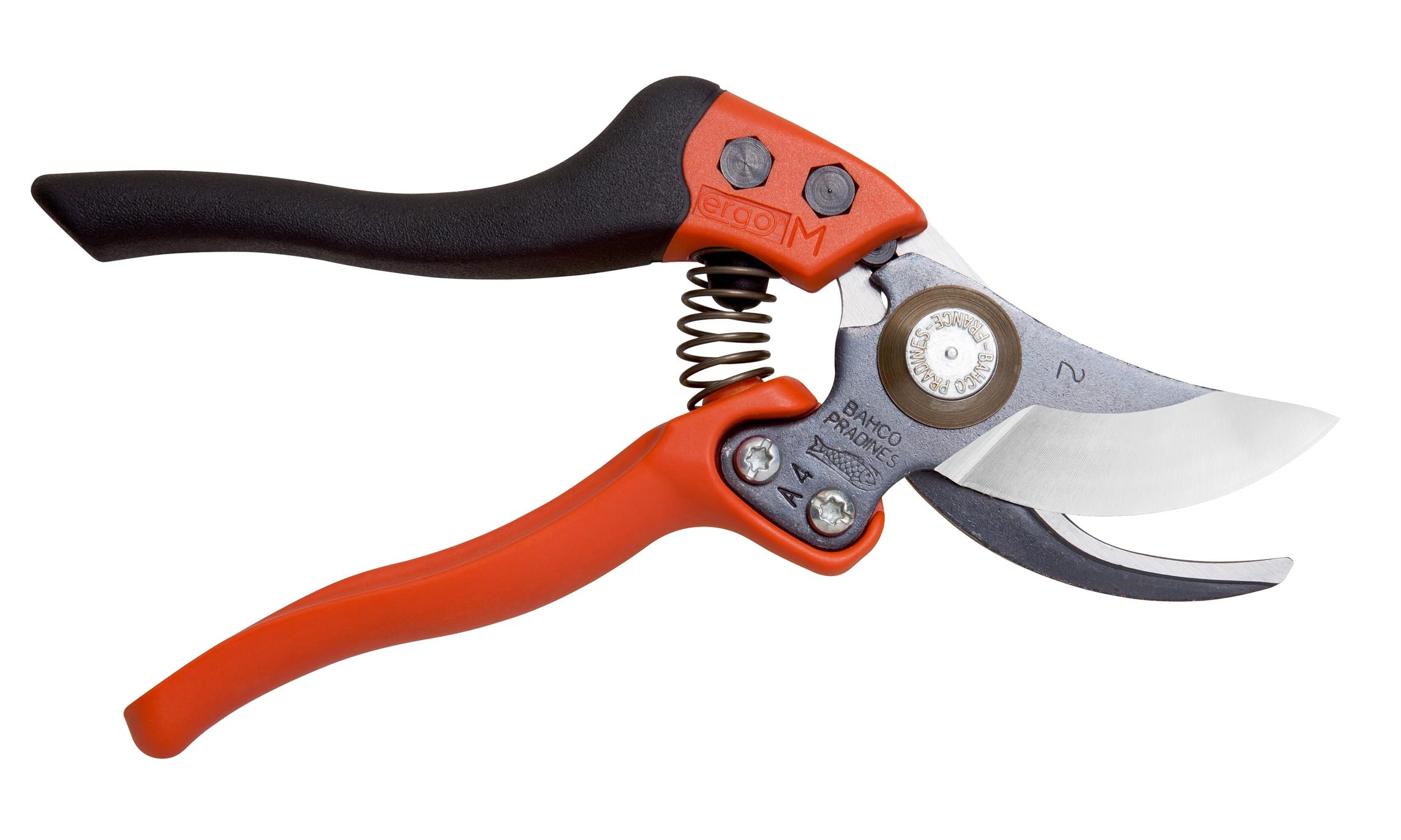
Bahco’s PX-M2 is a bypass pruner, but its #2 Slicing Cut blade technology is directly relevant to anvil-style buyers who want the same low-crush performance on live wood. The blade channels energy into a clean shear rather than a compression cut, and the PX handle design supports a natural wrist angle that reduces strain. The medium-sized PX-M2 fits medium to large hands comfortably and includes a replaceable blade and spring — an important feature for those who prune professionally and need to restore sharpness without buying a whole new tool.
With a 0.75-inch cutting capacity on soft wood and roughly 0.5-inch on hard dead wood, the Bahco handles the majority of garden pruning tasks. The high-carbon steel blade takes and holds an edge well, and owners report that cleaning it with silicone lubricant after each use keeps the action smooth. The angled head is a standout ergonomic feature; it allows the wrist to remain straight while the blade reaches into tight branch crotches.
The main downside is that this tool requires more frequent cleaning and adjustment than anvil models because bypass blades must maintain a tight tolerance to avoid tearing. The powder-coated finish on the handles can trap dirt, though this does not affect functionality. For the gardener who prunes live plants almost exclusively and wants the absolute lowest wrist fatigue, the Bahco PX-M2 is a top-tier choice.
What works
- Angled head reduces wrist strain on extended pruning sessions
- Replaceable blade and spring extend tool life
- Slicing Cut geometry prevents tissue crush on green stems
- Lightweight design minimizes arm fatigue
What doesn’t
- Needs frequent cleaning and pivot lubrication to stay smooth
- 0.75-inch max capacity may not handle thicker dead wood
- Packaging is notoriously difficult to open without damaging the tool
4. ARS HP-VS9Z Signature Heavy Duty Pruner

The ARS HP-VS9Z is a 9-inch bypass pruner built for larger hands and heavier branches. The 60mm blade length and squeeze-to-open handle design deliver more leverage than typical 8-inch pruners, with owners reporting the ability to cut saplings and branches up to 1 inch in diameter. The blade is made from high-carbon Japanese steel that holds its edge longer than most, and the top-mounted lock tab disengages naturally as you grip — no accidental locking mid-cut.
The tool is balanced perfectly around the pivot point, so the 0.26-kilogram weight feels lighter than it is. This matters when reaching overhead or working in dense brush. Owners who have used the VS-9Z for years note that as long as you wipe the blade clean and store it dry, the sharpness lasts through multiple seasons. The auto-open spring feature returns the blades to an open position after each cut, which speeds up repetitive pruning work.
The one real caveat is hand size — at 9 inches, this tool is specifically designed for larger palms. Gardeners with small hands will find the grip spread too wide for comfortable use. Additionally, the plain carbon steel blade needs oil to prevent rust in humid environments. For heavy-duty pruning where hand fatigue is less of a concern than raw cutting power, the ARS is a proven contender.
What works
- Long blade and handle deliver excellent leverage on thick branches
- Made in Japan with premium high-carbon steel for lasting sharpness
- Auto-open spring speeds up repetitive cutting
- Comfortable for large hands — no cramping after extended use
What doesn’t
- Too large for small to medium-sized hands
- Plain steel requires regular oiling to prevent rust
- Wood fibers occasionally get stuck between blades in bypass design
5. Kings County Tools Double Ratcheting Anvil Lopper

The Kings County Tools Double Ratcheting Anvil Lopper is a different breed — it is a two-hand anvil lopper, not a one-hand pruner — but it fills the anvil-and-blade category for serious heavy lifting. The double ratcheting mechanism multiplies hand force through incremental clicks, allowing a single hand to close the blades on branches up to 2.5 inches thick without straining. The telescoping handles extend from 26 inches to 40 inches, giving you the reach to trim high branches from the ground without a ladder.
The cutting jaw is a classic anvil design, with a serrated upper blade that bites into dry wood and prevents the branch from slipping out during the ratchet cycle. At 4.4 pounds, it is heavier than any hand pruner, but the ratcheting action means you are not fighting the weight with every cut — the tool does the work. Owners report that the lopper handles dead limbs, kindling prep, and heavy pruning with authority, though it is too bulky for detailed shaping or tight spaces.
The biggest trade-off is that the serrated blade leaves a rougher cut surface than a smooth anvil or bypass blade, which matters less on dead wood but is not ideal for live pruning. The anvil face is not replaceable, so if you cut against soil or rocks, the face will wear over time. For the gardener who needs to reach high deadwood or trim thick branches on the ground, this is the most powerful tool in the roundup.
What works
- Double ratchet multiplies force dramatically — cuts 2.5 inches with minimal hand strength
- Telescoping handles provide up to 40 inches of reach
- Serrated blade grips dry wood and prevents slipping
- Lightweight aluminum construction for a lopper this size
What doesn’t
- Serrated blade leaves rough cut unsuitable for live pruning
- Heavy compared to one-hand pruners at 4.4 pounds
- Anvil face is not replaceable; wear from dirty cuts shortens lifespan
6. SUIZAN Bypass Pruning Shears 8”

SUIZAN brings traditional Japanese blade craftsmanship to a bypass pruner at a remarkably low price. The 8-inch, 0.46-pound design is light enough for extended harvesting and detail work, with a blade that is hardened and honed to cut branches up to 0.625 inches. The steel is layered and hardened using methods that trace back to the blade district of Seki, and it arrives sharp enough to clean through bean stalks, rose canes, and small fruit tree branches with a single squeeze.
The handles are PVC with a comfortable rubberized texture, and the return spring is a heavy-duty steel coil that snaps the blades open reliably. The lock mechanism is simple and engages with a thumb push. For the price, the blade quality is exceptional — owners consistently note that the SUIZAN outperforms pruners costing twice as much in terms of initial sharpness and smoothness of the pivot action.
The main limitation is the cutting capacity. At 0.625 inches, it cannot handle the thicker deadwood that an anvil or a hybrid model can. The carbon steel requires careful drying after use to prevent rust. This is an ideal entry-level or secondary pruner for light garden work and precision trimming. For the gardener who needs a backup tool or who prunes mostly soft green growth, the SUIZAN offers outstanding cut quality per dollar.
What works
- Authentic Japanese steel delivers razor-sharp initial edge
- Extremely lightweight at 0.46 pounds — easy on hands during harvest work
- Comfortable PVC grip for smaller hands
- Excellent cut quality for the price point
What doesn’t
- 0.625-inch capacity limits use on thicker branches
- Carbon steel rusts quickly if not dried and oiled after use
- PVC handles may crack if left in direct sun for extended periods
7. Saboten Japanese Bypass Pruning Shears 7.9 in

The Saboten 7.9-inch bypass pruner comes from the same Japanese tradition of blade-making as the SUIZAN but uses a fluorine-coated carbon steel that actively repels sap and reduces rust formation. The 20mm (0.8-inch) cutting capacity is slightly better than the SUIZAN, and the rubber grip is specifically molded to provide a secure hold for hands with arthritis or reduced strength. The Duracon safety lock engages with a positive click and stays in place during storage.
The fluorine coating is a real advantage for anyone pruning resinous trees like pine or fruit trees where sticky sap accumulates on the blade within minutes. The coating also makes the blade easier to wipe clean with a damp cloth after use. Owners report that the Saboten cuts cleanly through soft pine and hard dead wood up to 0.75 inches in a single pass, and the serrated edge option on some variants helps grip the branch without slipping.
The trade-offs are subtle but real. The coating can wear off over time, especially if used on gritty plant matter. The build quality, while good for the price, uses a plastic and rubber handle that is not as durable as the wood or fiberglass-reinforced grips on premium options. For the budget-conscious gardener or for anyone who wants a dedicated sap-zone tool for sticky pruning tasks, the Saboten is the most practical choice.
What works
- Fluorine coating resists sap buildup and simplifies cleanup
- Rubber grip is easy on arthritic or weak hands
- Cuts up to 0.8-inch branches with minimal effort
- Secure Duracon lock prevents accidental opening
What doesn’t
- Fluorine coating wears off with heavy use on gritty plant matter
- Plastic handle components may not survive years of heavy-duty use
- Not designed for branches over 0.8 inches thick
Hardware & Specs Guide
Anvil vs. Bypass Geometry
Anvil pruners feature a sharp blade that closes against a flat metal anvil, crushing the branch against it. This design excels on dead, dry, or knotty wood because the anvil absorbs the impact, but it leaves a slight crush mark on the remaining stub. Bypass pruners use two curved blades that slide past each other like scissors, producing a cleaner cut ideal for live wood. Some premium designs, like the Löwe hybrids, blend bypass geometry into an anvil frame, achieving the crushing power of an anvil with the cleaner cut of a bypass.
Ratcheting Mechanisms
Ratcheting anvil pruners use a multi-step gear that closes the blade in incremental clicks. This mechanism multiplies the user’s hand force, making it possible to cut 2.5-inch branches with a compact lopper. Ratcheting tools are heavier and produce a slower cut, but they dramatically reduce hand grip strength needed — essential for anyone with arthritis or for clearing thick deadwood. Non-ratcheting tools are faster and lighter but require more force per cut.
Blade Coatings and Materials
Fluorine-coated blades (like on the Saboten) actively repel sap and moisture, reducing rust and making cleanup a quick wipe. Plain high-carbon steel holds a sharper edge longer but rusts quickly if left damp after pruning resinous plants. Japanese laminated steel (seen in SUIZAN and ARS) sandwiches a hard edge layer between softer support layers, producing a blade that is very hard yet not brittle. Coated blades may wear with abrasive use; plain steel is easier to sharpen repeatedly.
Cutting Capacity and Leverage
Cutting capacity is measured as the maximum branch diameter the pruner can sever. Hand pruners typically range from 0.6 to 1.2 inches. Higher capacity usually requires longer handles or a ratcheting design. Leverage is determined by handle length relative to pivot distance — longer handles provide more mechanical advantage but reduce agility. The sweet spot for garden pruning is 0.75 to 1 inch of capacity in a tool that weighs under 10 ounces.
FAQ
Does an anvil pruner damage live wood more than a bypass pruner?
How do I maintain the blade-to-anvil gap on my anvil pruner?
Final Thoughts: The Verdict
For most gardeners, the best anvil and blade pruner winner is the Original LÖWE Profi 8.107 because its bypass-geometry design delivers the cleanest cut on live wood while still providing the brute force needed for dead branches, all in a lightweight, ergonomic frame. If you need maximum cutting capacity for thick, dry wood, grab the Original LÖWE 10.107 with its 1.18-inch capacity. And for high-reach deadwood or heavy brush clearing, nothing beats the Kings County Tools Double Ratcheting Anvil Lopper for pure power per squeeze.