
Anthuriums are epiphytic by nature, meaning their roots crave constant airflow and will suffocate in dense, waterlogged dirt. Standard potting soil holds too much moisture, leading to the browning leaf tips and root rot that frustrates so many owners. A proper mix needs to mimic the open, chunky structure of a tropical forest floor while still retaining enough moisture between waterings to sustain those iconic blooms.
I’m Rikta — the co-founder and writer behind Lawn Gear Lab. I’ve spent countless hours analyzing ingredient ratios, pH levels, and drainage properties across dozens of bagged blends, cross-referencing them against verified owner experiences to isolate what actually works for finicky Anthurium root systems.
If you want healthy roots, vibrant spathes, and consistent new leaf growth, you need a mix that prioritizes aeration above all else. This guide breaks down the top contenders for the best anthurium potting mix so you can repot with confidence.
How To Choose The Best Anthurium Potting Mix
Selecting the right medium is the single most important decision for Anthurium health. Unlike generic houseplants, Anthuriums evolved clinging to tree bark, not sitting in compacted earth. The wrong mix starves roots of oxygen and traps water against sensitive tissue. Focus on four criteria to ensure your plant thrives.
Prioritize Chunky Aeration Over Fine Texture
An Anthurium’s thick, fleshy roots need air pockets to breathe and expand. A mix dominated by fine peat or coir dust compacts quickly, suffocating the root system. Look for visible chunks of pine bark, pumice, perlite, or lava rock. If the bag feels heavy and dense, it is unsuitable for Anthuriums. The ideal mix should look light and porous, with particles ranging from ¼ to ½ inch in size.
Demand Fast Drainage Without Bone-Dry Results
Water should flow through the pot and out the drainage hole within seconds, not pool on the surface. Ingredients like horticultural charcoal, coarse perlite, and coco chips create channels for water to exit while the coir or peat fraction holds just enough moisture for the roots to drink. Avoid mixes that list “sphagnum peat moss” as the primary ingredient without coarse amendments, as this leads to a soggy, anaerobic environment.
Check for Organic Matter and pH Modifiers
Anthuriums prefer a slightly acidic pH between 5.5 and 6.5. Some premium blends include lime or dolomite to buffer pH, while others rely on ingredients like New Zealand tree fern fiber which naturally neutralizes acidity. Organic components such as worm castings or mycorrhizae provide a slow-release nutrient base without the risk of chemical burn. Avoid mixes with synthetic, time-release fertilizer granules that can accumulate in a closed container.
Don’t Ignore Ingredient Transparency
Reputable brands list every component on the bag or product page. If a mix simply says “premium organic potting soil” without specifics, assume it is too dense. Trustworthy blends name their aeration ingredients—pine bark fines, pumice, perlite, charcoal, coco chips—and often disclose sourcing details. This transparency is a direct signal that the manufacturer understands the unique demands of epiphytic aroids.
Quick Comparison
On smaller screens, swipe sideways to see the full table.
| Model | Category | Best For | Key Spec | Amazon |
|---|---|---|---|---|
| Top Tier Genetics AROID | Premium Aroid | Rapid root & foliage growth | 4 Quart bag with mycorrhizae | Amazon |
| Grow Queen Craft Aroid | Elite Organic | Peat & perlite-free blend | 4 Quart with NZ tree fern fiber | Amazon |
| rePotme Imperial Aroid | Handcrafted | Botanic garden-grade quality | 4 Quart resealable pouch | Amazon |
| Soil Sunrise Anthurium | Species-Specific | First-time Anthurium owners | 4 Quart with charcoal & sand | Amazon |
| DUSPRO 7-in-1 Tropical | Multi-Use | Budget-friendly general aroid use | 2 Quart handcrafted 7-ingredient | Amazon |
| DUSPRO 8-in-1 Recycle | Chunky Aroid | Open, airy structure with LECA | 2 Quart with coco chips & zeolite | Amazon |
| Midwest Hearth African Violet | Value Standard | Emergency repotting on a tight budget | 4 Dry Quarts with vermiculite | Amazon |
In‑Depth Reviews
1. Top Tier Genetics Premium AROID Soil Blend
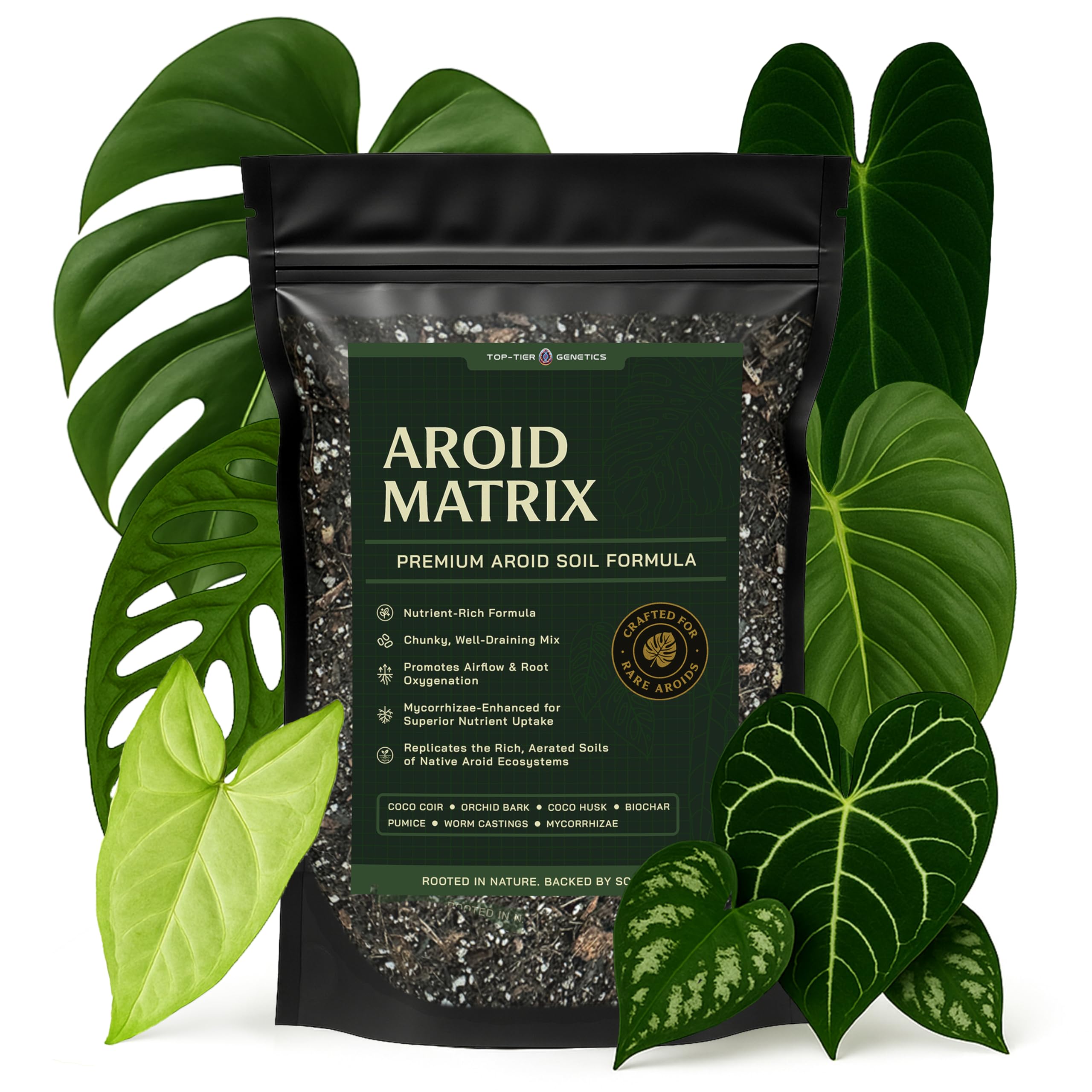
This blend checks every box for serious Anthurium culture. The inclusion of mycorrhizae and worm castings provides a biological boost that fuels rapid root colonization, while orchid bark, coco husk, and pumice create a chunky, open matrix that water can pass through freely. Biochar adds a long-term carbon reservoir that enhances microbial activity and nutrient cation exchange, making the mix more resilient over multiple growing seasons.
Owners report that plants “perk up in a couple days” after repotting, with explosive root growth and healthier foliage emerging within weeks. The texture is consistently described as light, airy, and perfectly balanced for moisture retention—enough to keep roots hydrated for several days but never soggy. The 4-quart bag is ideal for repotting two to three medium-sized Anthuriums or one large specimen.
The only potential drawback is the bag size for users with a large collection. For a single mature Anthurium or a few smaller ones, this is the most complete ready-to-use formulation available. The premium ingredient list justifies the cost for growers who prioritize long-term plant health over upfront savings.
What works
- Mycorrhizae and biochar support sustained root health
- Chunky texture provides excellent drainage and airflow
- Ready to use with no amendments needed
What doesn’t
- Single 4-quart bag may not suffice for multiple large pots
2. Grow Queen Craft Aroid Potting Mix
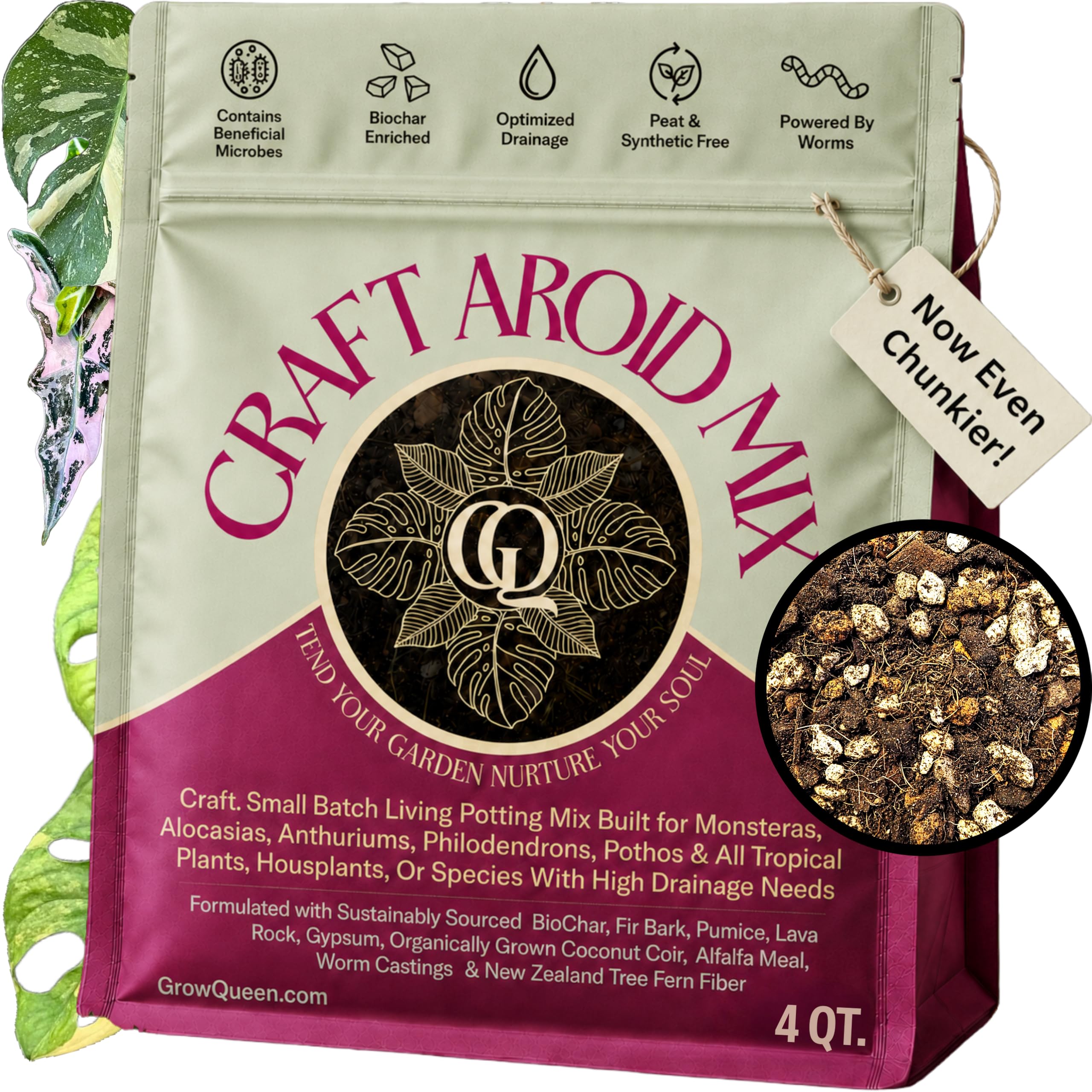
Grow Queen has crafted a truly unique mix that eliminates both peat and perlite—two ingredients that many environmentally conscious growers want to avoid. Instead, they rely on New Zealand tree fern fiber to neutralize pH down to 6.0, which perfectly mimics the slightly acidic conditions Anthuriums prefer. Douglas fir bark fines, lava rock, and pumice form the backbone of this chunky, well-draining formula.
Customer feedback is overwhelmingly positive, with multiple buyers noting that after five separate orders the quality remains consistently high—no mold, no pests, and a pleasant earthy smell. The texture is described as “light yet chunky” with excellent drainage that makes overwatering almost impossible. The inclusion of certified organic coco coir, washed extra times for salt removal, ensures even sensitive roots won’t experience salt burn.
At a premium price point, this mix is best for collectors who value ingredient purity and environmental ethics over cost. The 4-quart bag is suitable for several medium pots, and the mix works well with supplemental organic fertilizers. For growers concerned about the carbon footprint of peat mining, this is the standout choice.
What works
- Peat-free and perlite-free formulation
- NZ tree fern fiber optimizes pH for Anthuriums
- Consistent quality reported over multiple purchases
What doesn’t
- Higher cost per quart than standard blends
3. rePotme Philodendron and Aroid Imperial Mix
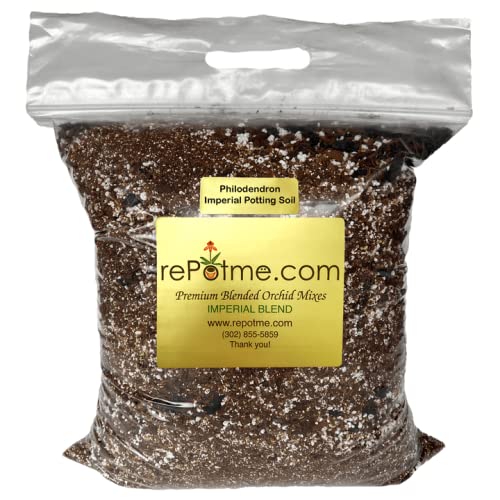
rePotme’s Imperial Houseplant Mix is made in small, handcrafted batches and used by some of the largest conservatories and botanic gardens in the world. This pedigree alone signals a level of quality control that mass-produced bags simply cannot match. The blend contains bark chips, coarse peat, and other fine ingredients that create a light, fluffy texture ideal for Anthurium root systems.
Users consistently praise the resealable pouch design, which is a practical touch for apartment dwellers who don’t need to use an entire bag at once. The mix drains readily but holds onto just enough moisture for healthy root uptake. Long-term owners report using this mix for years without issues, noting that African violets and snake plants also thrive in it, which speaks to its balanced composition.
The primary downside is the cost. This is one of the most expensive options per quart, and some buyers found that a single bag wasn’t enough for larger pots. However, for a single high-value Anthurium or a small collection, the quality and consistency justify the investment. Botanic garden-grade reliability is hard to argue with.
What works
- Botanic garden-tested formulation
- Resealable pouch keeps unused mix fresh
- Light, well-draining texture
What doesn’t
- High cost per quart; bag size may be insufficient for big repots
4. Soil Sunrise Anthurium Plant Potting Soil Mix
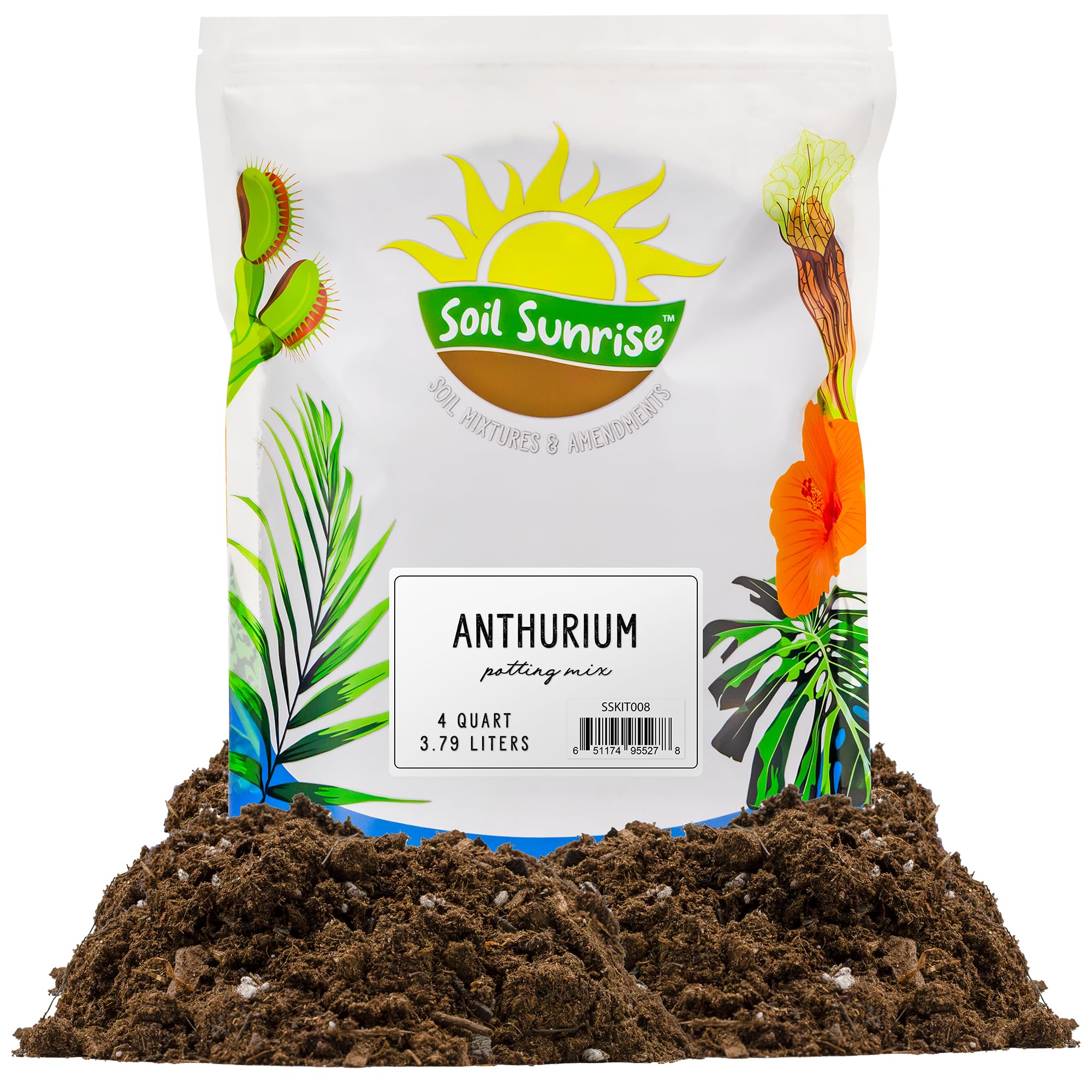
Soil Sunrise created this mix specifically for Anthuriums, listing them by their common names—tailflower, flamingo flower, laceleaf—which immediately signals focused research. The ingredient list includes peat moss, pine bark, horticultural charcoal, perlite, sand, and lime, each serving a distinct purpose: charcoal pulls impurities, sand and perlite ensure drainage, and lime buffers the pH into the ideal 5.5–6.5 range.
Verified buyers report a direct cause-and-effect improvement: “Before using this soil our plants were getting brown leaves and I thought it might be due to the oil remaining too wet. I switched to this soil and now all of our anthuriums are doing great.” This is exactly the feedback that matters—a mix that solves the most common Anthurium ailment. The texture is light and well-draining, preventing the waterlogging that causes browning.
The only criticism from users is the bag size; several wish they had bought the 8-quart option instead of the 4-quart bag. For a single plant, 4 quarts is adequate, but for a modest collection, plan on ordering more. At its price point, this is a focused, effective solution for any Anthurium owner.
What works
- Formulated specifically for Anthurium species
- Charcoal and sand improve drainage and purity
- Directly addresses root rot and brown leaf issues
What doesn’t
- Bag size may be too small for larger collections
5. DUSPRO 7-in-1 Pre-Mixed House Plant Soil Aroid Potting Mix
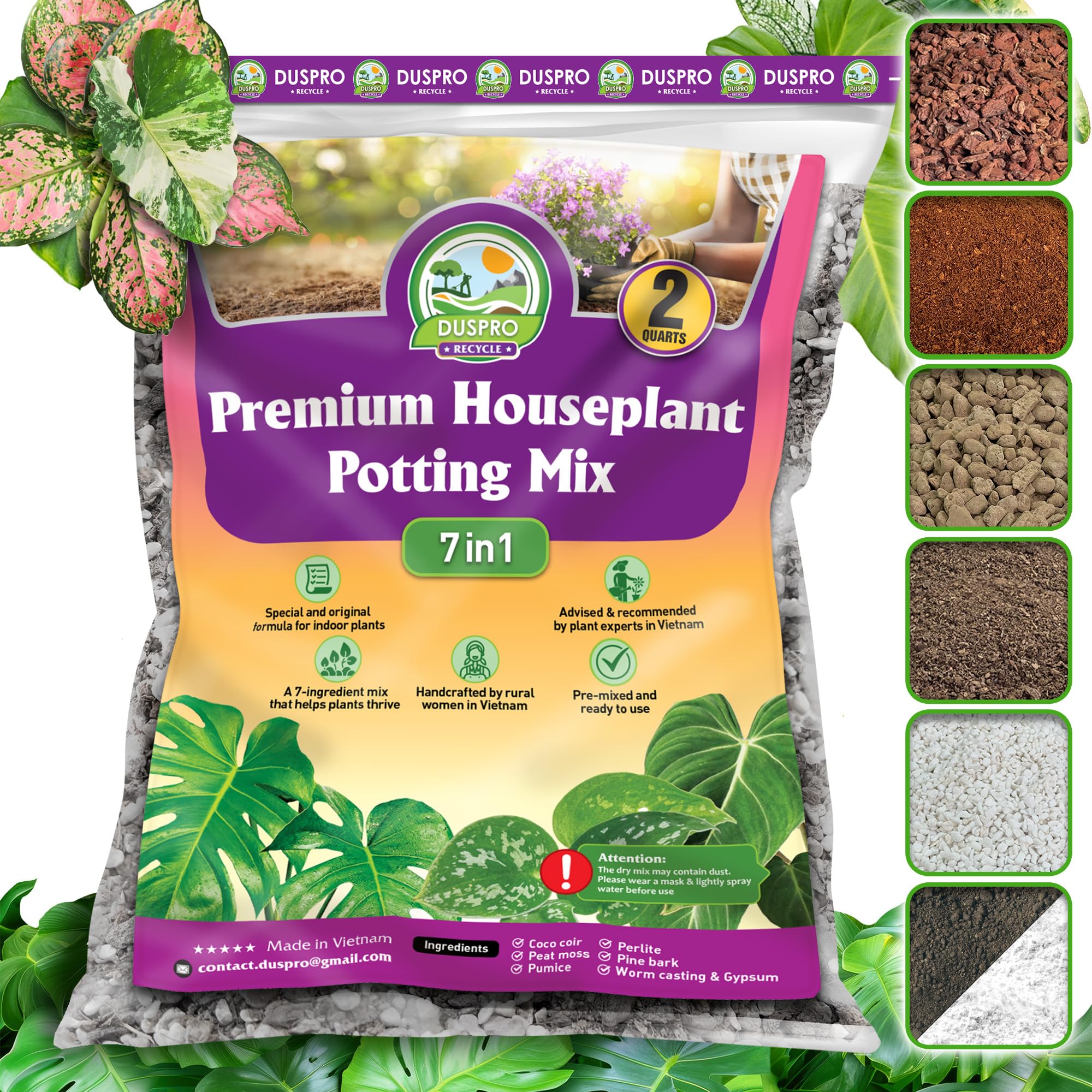
DUSPRO’s 7-in-1 blend brings together coco coir, peat moss, perlite, pumice, worm castings, pine bark, and gypsum in a formula developed by Vietnamese plant specialists. The inclusion of gypsum adds calcium and sulfur while helping to flocculate clay particles, improving overall soil structure. This hand-crafted mix is designed for a wide range of aroids, including Anthuriums, Philodendrons, and Monsteras.
Long-term testing feedback is compelling: one reviewer noted “no mold/mildew in 6 months” and that plants showed new growth within weeks. The texture is described as “light, airy, and balanced,” with enough chunkiness to prevent compaction. The 2-quart size is practical for smaller projects or a single Anthurium repot, while larger sizes are available for those with more extensive collections.
Some users mention that the mix is dusty when first opened, but this resolves after the first watering. For the price, this is a strong mid-range option that delivers a well-thought-out ingredient profile without the premium markup. It’s a solid, “no regrets” choice for any mixed aroid collection.
What works
- 7 diverse ingredients for balanced structure
- Gypsum improves pH and mineral content
- No mold or mildew reported after extended use
What doesn’t
- Dusty upon opening; needs shaking before use
6. DUSPRO 8-in-1 Aroid Potting Mix Recycle Blend
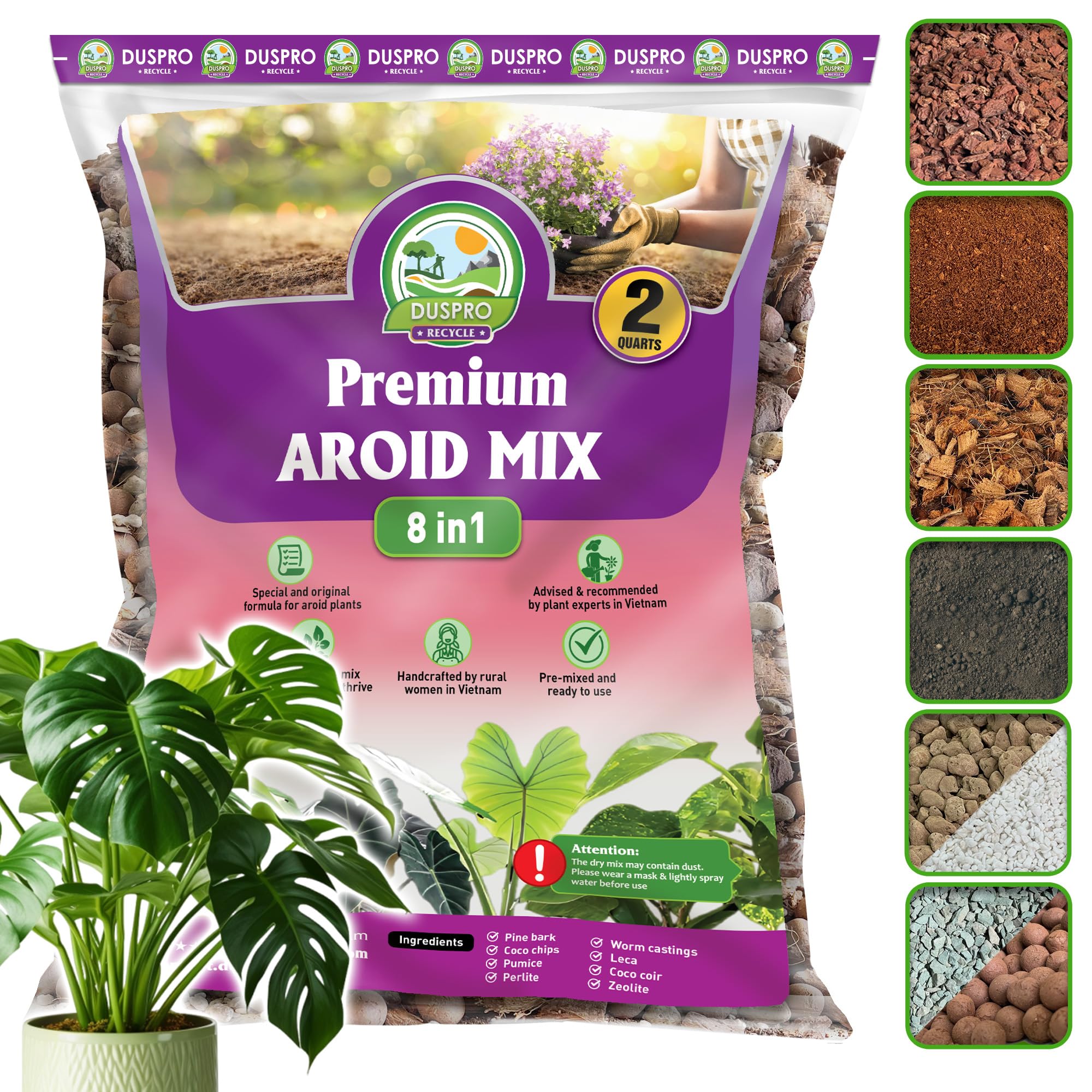
This 8-ingredient Recycle Blend from DUSPRO takes chunkiness to another level. It includes pine bark, coco chips, pumice, LECA (clay pebbles), fine perlite, coir, worm castings, and zeolite. The LECA and coco chips create large air pockets that are especially beneficial for Anthuriums with thick, aerial root systems. Zeolite acts as a slow-release cation exchanger, holding onto nutrients until the roots need them.
Users report that this mix works exceptionally well for plants beyond aroids, including money trees and citrus trees, which speaks to its versatility. The open structure allows water to pass through rapidly, reducing the risk of overwatering for those who tend to be generous with the watering can. One reviewer successfully repotted 4 eight-inch and 2 four-inch pots with half a bag remaining, demonstrating good value despite the smaller 2-quart package.
The main trade-off is the same as its sibling product: dustiness when first handled. Additionally, the 2-quart size is best suited for small to medium repotting jobs. For growers who want an ultra-chunky, air-porous medium, this blend delivers exactly that.
What works
- LECA and coco chips create large air pockets
- Zeolite provides slow-release nutrient exchange
- Versatile enough for aroids and other houseplants
What doesn’t
- Dusty when dry; 2-quart bag is small
7. Midwest Hearth African Violet Natural Potting Soil Mix

Midwest Hearth’s African Violet mix might seem out of place in an Anthurium guide, but its composition—peat moss, perlite, and vermiculite—creates a light, well-aerated medium that is surprisingly close to what Anthuriums need. The pH is balanced specifically for flowering houseplants, which lands in the slightly acidic range suitable for tailflowers. The 4-dry-quart bag offers generous volume at a very accessible price point.
While this mix lacks the chunky bark and charcoal that premium aroid blends include, it is a competent starting point for growers on a tight budget or those who need soil immediately. Users praise the high-quality texture, noting it is “soft and light without big pieces of material,” which works well for Anthuriums that don’t have extremely aggressive root systems. The value proposition is clear: you get a lot of soil for a minimal investment.
The critical limitation is that this mix is not designed for epiphytic aroids. It retains more moisture than an ideal Anthurium blend, so pot size and watering discipline become paramount. If you choose this option, compensate by using a very porous pot (terra cotta) and letting the soil dry out more between waterings to prevent root rot.
What works
- Excellent value for the volume provided
- Light, fluffy texture with good initial aeration
- Balanced pH for flowering houseplants
What doesn’t
- Lacks chunky bark and charcoal for long-term aeration
- Higher moisture retention requires careful watering
Hardware & Specs Guide
Chunky Organic Matter: Pine Bark & Coco Chips
Pine bark fines and coco chips provide the physical structure that prevents soil compaction. Pine bark breaks down slowly, maintaining air pockets for months, while coco chips absorb water quickly and release it gradually. For Anthuriums, a minimum of 20–30% of the mix should consist of these chunky components to ensure roots can breathe.
Mineral Aeration: Pumice, Perlite & LECA
Pumice and LECA (lightweight expanded clay aggregate) are superior to standard perlite because they resist floating to the surface over time and provide better particle-to-particle contact for water wicking. These volcanic and clay aggregates create rigid, permanent air channels. A good Anthurium mix includes a 15–25% fraction of these minerals.
Water Management: Coco Coir & Sphagnum Peat
Coco coir is the preferred water-holding component because it rehydrates easily and has a neutral pH, unlike sphagnum peat which is acidic and can become hydrophobic when dry. Coir also has a looser fiber structure that resists compaction. Look for washed coco coir to avoid salt issues that can damage Anthurium roots.
Biological Boosters: Worm Castings & Mycorrhizae
Worm castings provide a gentle, slow-release source of nitrogen, phosphorus, and potassium without the risk of burning roots. Mycorrhizae are beneficial fungi that form a symbiotic relationship with plant roots, increasing the root system’s surface area for water and nutrient absorption. These components are markers of a premium, long-term blend.
FAQ
Can I use regular potting soil for my Anthurium?
How often should I repot my Anthurium into fresh mix?
What is the ideal pH range for Anthurium potting mix?
Should I add extra perlite to a pre-made anthurium blend?
Final Thoughts: The Verdict
For most gardeners, the best anthurium potting mix winner is the Top Tier Genetics Premium AROID Soil Blend because it combines mycorrhizae, biochar, and a chunky bark-pumice matrix in a ready-to-use formula that fuels explosive root and foliage growth with zero guesswork. If you want a peat-free, environmentally conscious option, grab the Grow Queen Craft Aroid Mix with its New Zealand tree fern fiber that naturally optimizes pH. And for a focused, species-specific solution that directly addresses brown leaf issues at a straightforward price, nothing beats the Soil Sunrise Anthurium Blend.