
Knee-high rubber boots trap heat, restrict movement, and make you wrestle with stiff shafts every time you bend over. That is why a growing number of gardeners, anglers, and outdoor workers are switching to a shorter cut. Ankle wellington boots give you waterproof protection without the bulk, letting you crouch, kneel, and walk for hours without that heavy, sweaty feeling creeping up your calves.
I’m Rikta — the co-founder and writer behind Lawn Gear Lab. I’ve spent hundreds of hours comparing rubber formulations, neoprene thicknesses, sole lug patterns, and owner feedback to find the ankle boots that actually earn their spot in your shed.
Whether you are mucking out stalls, wading a trout stream, or just stepping into dewy grass, the right pair changes your day. This guide breaks down the features that matter so you can confidently pick best ankle wellington boots for your specific outdoor routine.
How To Choose The Best Ankle Wellington Boots
The market is stuffed with rubber boots that look the same but perform very differently once you hit mud or spend four hours on your feet. Focus on these five specs to cut through the noise.
Neoprene Thickness & Lining
A boot made entirely of solid rubber is heavy and clammy. The best ankle boots use a neoprene upper (usually 3‑5mm) bonded to a rubber lower. Neoprene adds flexibility at the ankle and insulates without trapping sweat. Look for a breathable lining that wicks moisture so your feet stay warm in cold water and comfortable in warmer weather.
Sole Construction & Tread Pattern
Not all rubber soles grip the same way. A deep, multi-directional lug pattern sheds mud and bites into soft ground, while a flat or shallow tread works on hard, dry surfaces. For barn work or gardening in wet clay, you want aggressive lugs spaced wide enough to self-clean. For fishing on slick rocks, look for a soft rubber compound with smaller, sharper edges.
Fit, Ankle Height & Closure
Ankle Wellington boots should fit snugly around the calf and heel without pinching. A pull-on tab and a slightly elasticized collar make a huge difference when your hands are muddy or gloved. Check whether reviewers report the boot is true to size or if you need to size up for thick socks or down for a secure barefoot feel.
Durability at Flex Points
The most common failure on rubber boots is cracking where the foot bends — at the vamp and the heel seam. Thicker rubber reinforcement in those areas, plus a protective toe cap, extends the life from a single season to multiple years. Read owner reviews for mentions of cracking, tearing, or punctures from briars or barbed wire.
Quick Comparison
On smaller screens, swipe sideways to see the full table.
| Model | Category | Best For | Key Spec | Amazon |
|---|---|---|---|---|
| MUCK Wetland | Premium | All‑day wet work & winter warmth | 4.5 lb, neoprene + rubber, thick sole | Amazon |
| Foxelli Wading Boot | Fishing | Rough river & rocky stream wading | 10 in shaft, 1.3 lb, aggressive rubber sole | Amazon |
| SUREWAY Women’s Deck Boot | Garden | Festival, gardening, & light chores | Neoprene upper, slip‑resistant sole | Amazon |
| FROGG TOGGS Rana Elite | Wading | Budget steelhead & bay wading | Thick rubber sole, side drain ports | Amazon |
| Tingley Airgo Ultralight | Farm Chore | Daily farm & fence work | Knee height, self‑cleaning tread, ultralight | Amazon |
| HISEA Duck Chelsea | Value | Light barn chores & egg collecting | 2 lb, chelsea pull‑on, rubber shell | Amazon |
| Trudave Garden Shoe | Budget | Light yard work & wet grass | 4.5mm neoprene, protective toe cap | Amazon |
In‑Depth Reviews
7. MUCK Women’s Wetland Boot
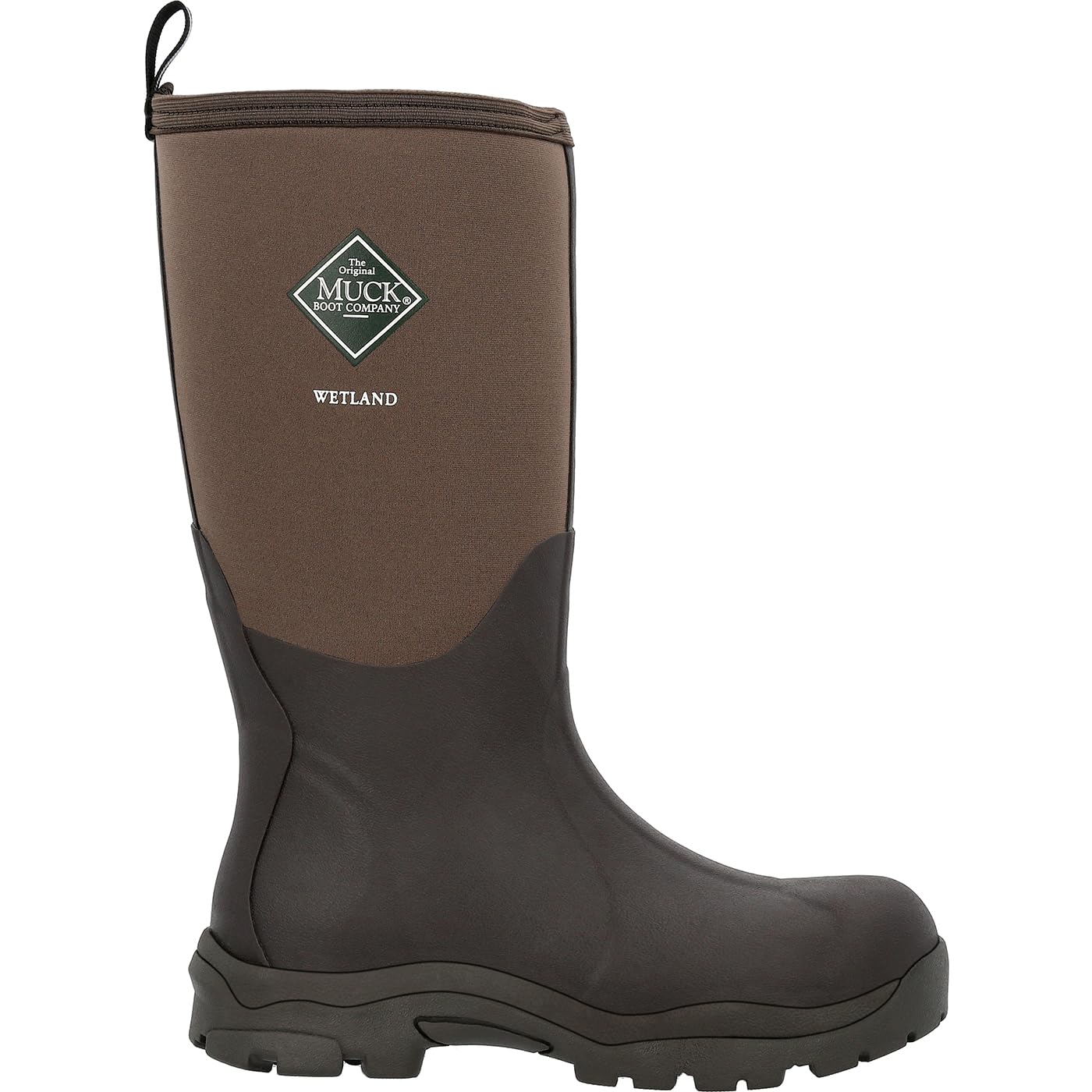
The MUCK Wetland is the class leader in ankle Wellington boots for anyone who works in wet, cold conditions all winter. Its thick neoprene shaft and rubber bottom deliver genuine waterproofing and insulation that keeps feet warm when you are standing in icy mud or slush. The sole is noticeably thicker than most ankle boots, providing excellent cushioning over roots, sticks, and sharp rocks — owners consistently report it feels sure-footed on snow, ice, and uneven barnyard terrain.
Users note the boot runs about a half size large, especially for those with narrow feet, so ordering down a half size is common advice. The wide shaft fits bulky calves comfortably, and the slip-on design is genuinely easy with the pull tab. One trade-off is the sole pattern collects mud and needs a stiff brush to clean, but the rubber holds up season after season without cracking. Multiple reviewers have worn this boot for years without leaks or delamination, which is rare at this price tier.
If your daily routine involves standing in wet grass for hours, feeding animals in freezing rain, or metal detecting along a muddy creek, the MUCK Wetland is the boot that justifies its cost by lasting through multiple winters. It is heavy compared to ultralight models, but the trade-off is real durability and warmth that cheap boots cannot match.
What works
- Excellent warmth and waterproofing in cold, wet conditions
- Thick, cushioned sole protects feet from rocks and sticks
- Durable construction holds up for years without cracking
What doesn’t
- Sole tread packs with mud and is difficult to clean
- Runs large — sizing down a half size is necessary for many
- Heavier than most ankle-height competitors
6. Foxelli Wading Boots – Lightweight Fly Fishing Boots for Men

The Foxelli Wading Boot is purpose-built for anglers who need ankle support, drainage, and traction on slick riverbeds. Weighing just 1.3 pounds per boot, it is dramatically lighter than traditional neoprene wading boots, which reduces fatigue during full-day trips. The rubber sole uses an aggressive lug pattern that outperforms felt on mud, gravel, and mossy rocks according to owners who fish the rough terrain of the American West.
Sizing is critical — users consistently say to order a full size up from your normal shoe size to accommodate neoprene waders and thick socks. The boot has a snug fit at the forefoot with waders on, but still offers room for a sock when worn alone. Several long-term reviewers report the boot has survived five years of heavy use with no delamination or sole separation, which is exceptional for a wading boot at this price point. The lace system is standard and requires retying when wet, but the toe cap provides good protection against oyster shells and sharp rocks.
One limitation is that water resistance above the sole is modest — these boots are designed to drain, not keep your foot dry if you step deeper than the shaft. But for their intended job — wading in rivers and streams where water routinely enters the boot — the quick-draining design is actually a feature, not a flaw. If your use case is exclusively dry land or shallow puddles, look at a sealed neoprene boot instead.
What works
- Extremely lightweight for all-day wading comfort
- Aggressive sole grips well on mud, gravel, and mossy rocks
- Durable construction withstands years of rugged use
What doesn’t
- Must size up significantly to fit waders and thick socks
- Limited waterproofing above the sole — drains rather than seals
- Laces loosen when wet and need retying
5. SUREWAY Women’s Ankle Fishing Deck Boots
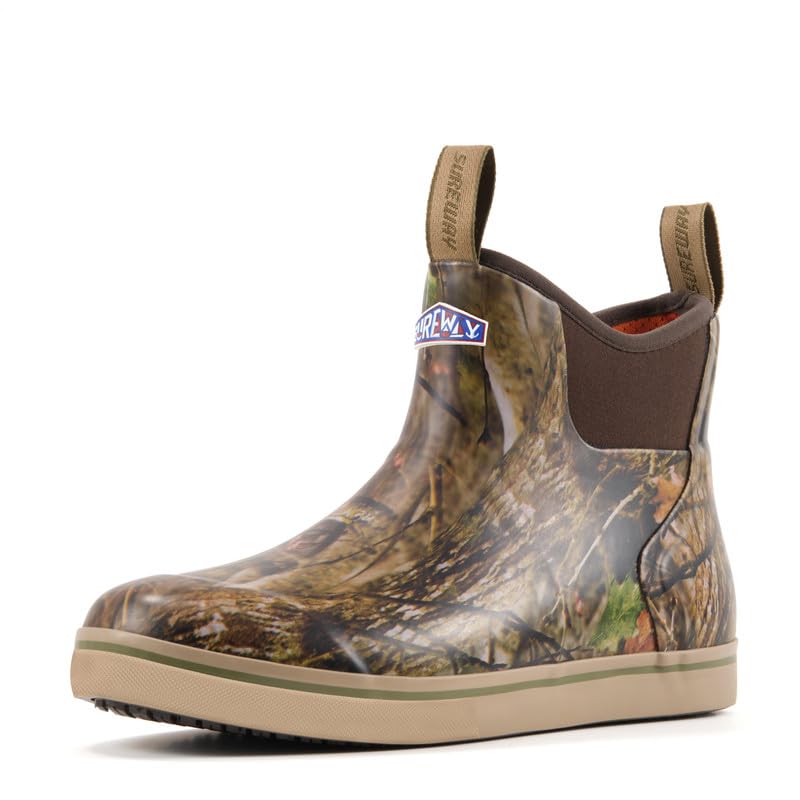
SUREWAY’s deck boot strikes a rare balance between genuine waterproof protection and easy on/off convenience that gardeners and festival-goers love. The neoprene upper is flexible enough to slip on without a fight, while the rubber lower and slip-resistant sole keep you stable on wet grass, muddy paths, and slick decks. Owners who wore these for 10+ hours a day at outdoor festivals report zero rubbing, blistering, or foot pain — a testament to the boot’s well-designed ankle profile and cushioned insole.
Sizing is generally true to size, though a few users with wide feet recommend going up one size for a comfortable fit with light socks. The boot is available in a brown neutral color that looks more like a rugged chore boot than a traditional rain boot, which matters if you wear them beyond the garden. Several reviewers mention this boot was a lifesaver after knee replacements or other mobility issues because they could step in and out without bending or tugging.
The main downside reported is that the boot runs slightly small for some foot shapes — true size 7 users found a size 7 too tight, while size 8.5 users found a size 9 slightly roomy but still functional. If you are between sizes or have a high instep, consider sizing up. The neoprene material is also less abrasion-resistant than a full rubber boot, so avoid walking through briars or barbed wire.
What works
- Easy slip-on design works well for those with limited mobility
- Slip-resistant sole performs reliably on wet grass and mud
- Comfortable for long wear without blisters or foot fatigue
What doesn’t
- Sizing can be inconsistent — some users need to size up
- Neoprene upper is less resistant to punctures and tears
- Limited color and size run compared to larger brands
4. FROGG TOGGS Men’s Rana Elite Fishing Wading Boot

FROGG TOGGS built the Rana Elite to handle serious wading without the serious price tag. The boot features a thick, firm rubber sole that handles jagged rocks and oyster shells with confidence, making it a favorite among Texas saltwater bay anglers and steelhead fishermen alike. The sole design is more like a hiking boot than a traditional wading boot, providing good support on uneven ground without the clunkiness of a full felt-bottomed boot.
Owners consistently say the boot is true to size for fitting neoprene wading booties and thick socks — a size 10 fits a 9.5 shoe with room for insulation. The lace system is effective but soft enough to require retying once the laces get wet, which is a minor nuisance on long days. The boot’s side drain ports let water escape quickly when you step out of the river, but they also allow fine silt to enter, so this is not a boot for muddy barnyards or standing water.
Drying time is slower than some competitors because the thick sole and lining hold moisture. Still, for the price, the Rana Elite delivers toughness that rivals boots costing twice as much. It is heavier than the Foxelli and not as lightweight for hiking long distances to a spot, but it is more protective on sharp, abrasive bottoms. If your wading is on rocky terrain or shell beds, this boot is the smart budget-friendly choice.
What works
- Thick, aggressive sole protects feet from sharp rocks and shells
- True to size with waders — no complicated sizing math
- Highly durable construction for the price point
What doesn’t
- Side drain ports let in silt and mud from standing water
- Takes longer to dry than lighter, more breathable boots
- Laces soften and need retying once wet
3. Tingley Airgo Ultralight Knee Boot

The Tingley Airgo is famously lightweight — owners describe it as feeling like wearing nothing at all, which is a huge advantage during long farm chores that involve climbing fences, shoveling, and walking. The sole tread is designed to shed mud rather than pack it, so you are not dragging clumps of clay into the barn or truck. Multiple reviewers report getting three to four years of daily use before needing a replacement, which is impressive for an ultralight boot.
The main compromise is puncture protection. The thin rubber material that makes the boot so light also makes it vulnerable to nails, barbed wire, and sharp rocks. One owner noted the material can melt if left in direct sunlight or near a heat source, so storage matters. The shaft is also quite narrow — users with larger calves or those who wear heavy jeans may find it too tight to slip on comfortably over thick pants.
Despite those caveats, the Airgo is beloved by farmers and contractors who need a boot they can move in all day. The self-cleaning tread is genuinely better than most competitors at staying functional in wet clay or heavy mud. If your work is on relatively clean terrain — mowed fields, barn aisles, paved lots — and you prioritize weight above all else, this is your boot. Just do not stomp through a construction site or briar patch expecting it to shrug off punctures.
What works
- Extremely lightweight reduces foot fatigue during long shifts
- Sole tread sheds mud effectively without packing
- Comfortable for climbing, bending, and kneeling all day
What doesn’t
- Thin rubber is vulnerable to punctures from nails and wire
- Narrow shaft does not accommodate large calves or heavy pants
- Material can degrade in direct sunlight or near heat sources
2. HISEA Women’s Duck Chelsea Rain Boot
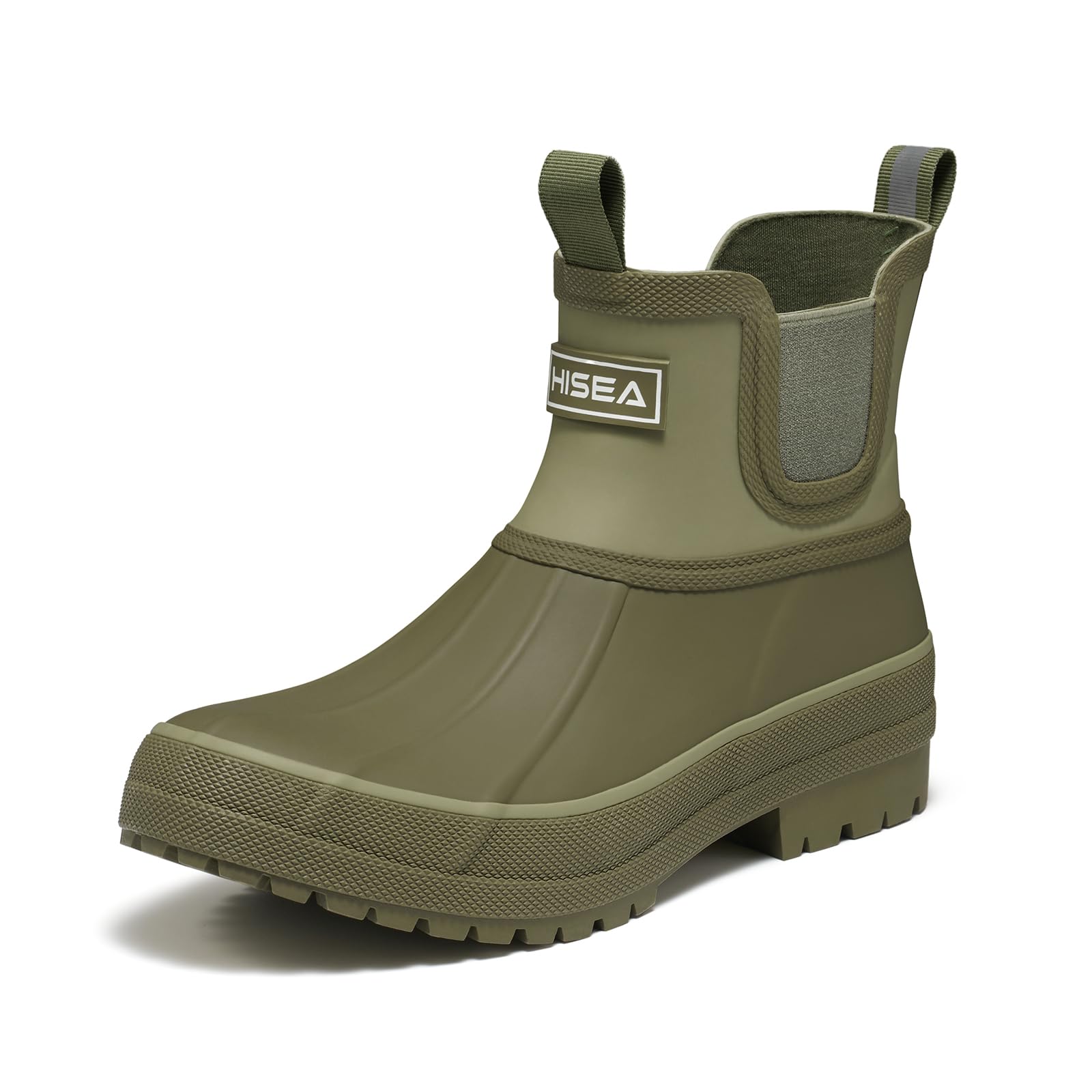
HISEA’s Duck Chelsea boot hits a sweet spot for light farm chores, egg collecting, and casual gardening where you need waterproof coverage but not the weight of a full rubber boot. At just two pounds, these boots feel more like sturdy sneakers than rain boots, which makes them easy to slip on for quick trips to the coop or garden. The chelsea pull-on style eliminates laces and zippers — just step in and go. Owners rave about the availability of a lovely green color that looks less utilitarian than standard black or brown.
The main feedback across reviews is that sizing runs slightly small. Users with wide feet or those who want to wear thick winter socks should plan to go up a full size. Several reviewers who are normally a size 7.5 found that an 8 accommodated inserts without being sloppy. The boot provides decent arch support for a flat rain boot, though owners with high arches may want to add their own insole. The rubber shell is lightweight but holds up well against mud, manure, and shallow water — and rinses clean with a hose in seconds.
The one consistent complaint is ankle support — or rather, the lack of it. Because the boot is short and made of flexible rubber, it does not stabilize the ankle the way a taller or more structured boot would. If you are walking on uneven, rocky ground or carrying heavy loads, you may want a boot with a stiffer shaft or a lace-up design. But for flat terrain like farmyards, lawns, and barn aisles, this is a terrific value that performs far above its price tier.
What works
- Very lightweight and easy to slip on for quick chores
- Hoses off easily — mud and manure do not stick
- Good value for the price with solid waterproofing
What doesn’t
- Minimal ankle support on uneven or rocky terrain
- Runs slightly small — sizing up is recommended
- Not insulated for cold winter conditions
1. Trudave Garden Shoes for Men & Women
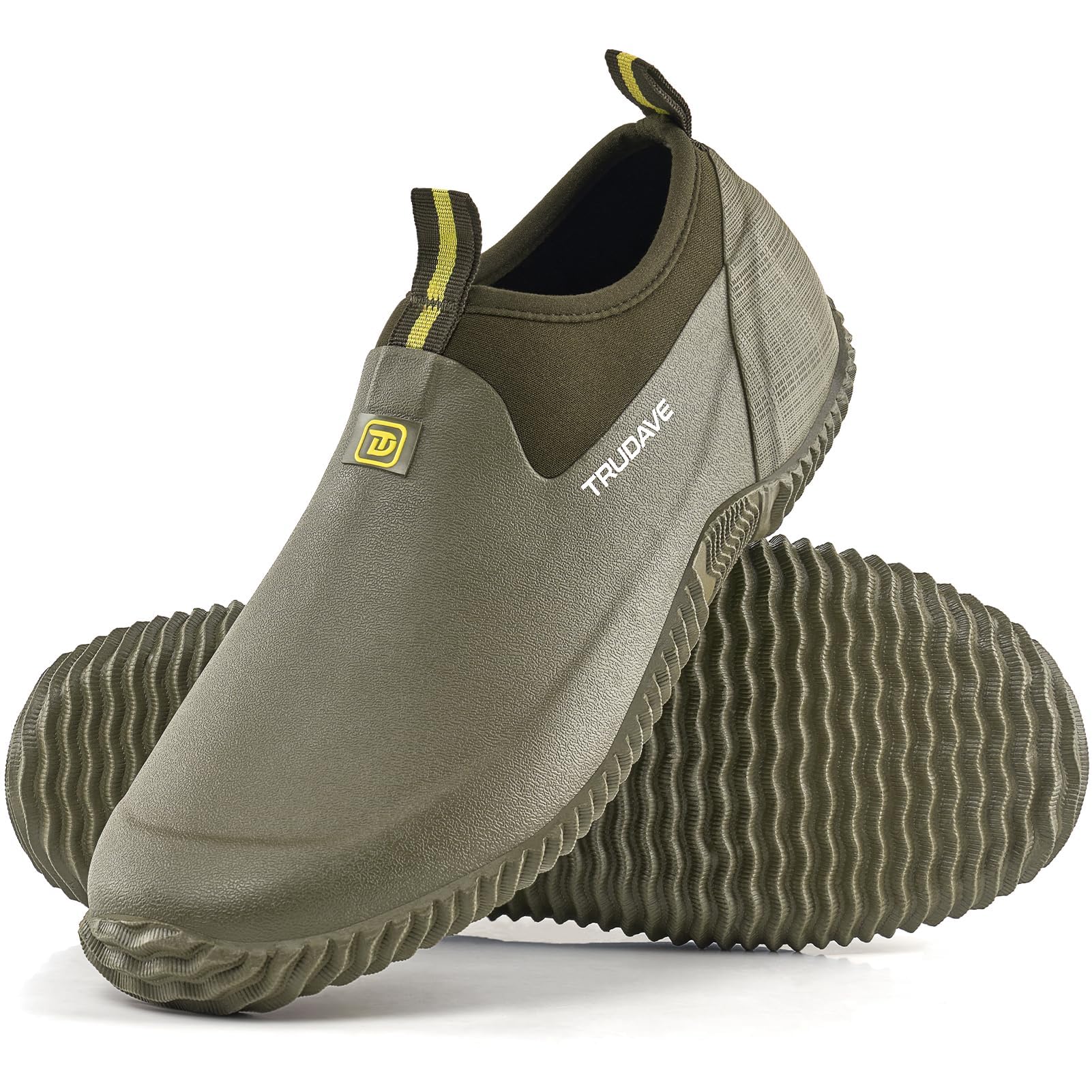
Trudave’s garden shoe combines the comfort of a low-cut sneaker with the full waterproofing of a Wellington boot. The 4.5mm neoprene upper wraps the foot in flexible, breathable protection, while the rubber lower and protective toe cap handle the scuffs and bumps of daily yard work. A pipefitter who wore these for ten months on hospital floors reported they stayed fully waterproof and slip-resistant — the only wear was some cosmetic cracking on the side where the foot bends, but performance never suffered.
Fit feedback is generally positive, though a few owners with wide feet or high insteps recommend sizing up. The boot runs slightly large, so users who are between sizes should size down for a snug fit. The pull-on tabs at the heel and the elasticized collar make getting in and out easy, even with muddy hands. Several owners specifically praised the boot for farm use in wet Florida sand and mud, where the combination of neoprene flexibility and rubber toe protection kept feet dry and blister-free.
The most common negative note is that the top edge of the boot can rub against the shin and cause blisters if worn for hours with thin socks or bare legs. The cuff is not as soft as some competitors, so wearing a crew sock above the boot line solves this problem. For the price, Trudave delivers a level of all-around performance — waterproofing, comfort, durability — that makes it the obvious first choice for anyone who needs an ankle-height boot that can handle real outdoor work.
What works
- Excellent waterproofing with flexible 4.5mm neoprene upper
- Protective toe cap and abrasion-resistant rubber lower
- Easy on/off with pull tabs and elasticized collar
What doesn’t
- Cuff edge can rub and cause blisters with low-cut socks
- Runs slightly large — sizing down helps for narrow feet
- Limited color and style options
Hardware & Specs Guide
Neoprene Thickness & Insulation
The thickness of the neoprene upper directly affects flexibility, warmth, and breathability. A 3mm neoprene boot is more flexible and breathable for warm-weather use, while a 4.5mm boot provides more insulation for cold, wet conditions. Thicker neoprene also adds durability against snags, but reduces ankle mobility slightly. For all-season use, a boot with 4mm neoprene and a breathable lining offers the best balance.
Sole Lug Depth & Material
Deeper lugs (6–8mm) are necessary for mud and soft ground where you need bite to prevent slipping. Shallow lugs (3–4mm) work better on hard, flat surfaces like concrete or boat decks. The rubber compound also matters — softer rubber (40–50 durometer) grips wet rock but wears faster; harder rubber (60–70 durometer) lasts longer but can be slippery on slick surfaces. Many premium boots use a multi-compound sole for both grip and longevity.
FAQ
How should ankle Wellington boots fit compared to regular shoes?
Can I wear ankle Wellington boots for heavy farm work or just light gardening?
How do I clean and maintain ankle rubber boots to extend their life?
Final Thoughts: The Verdict
For most gardeners and outdoor workers, the best ankle wellington boots winner is the Trudave Garden Shoe because it delivers full waterproofing, protective toe coverage, and all-day comfort at a price that does not punish a tight budget. If you need maximum warmth in wet, cold conditions, grab the MUCK Wetland. And for anglers who spend hours wading rocky rivers, nothing beats the Foxelli Wading Boot for lightweight traction and durability.