
Most pruning shears sold today are disposable — blades that dull after a season, handles that crack, and rivets that loosen under repeated pressure. American-made shears offer a different path: forged steel, replaceable parts, and construction designed to last a lifetime, not a single growing season. But finding truly domestic production among the imported options requires knowing exactly what to look for in materials, pivot mechanisms, and heat treatment.
I’m Rikta — the co-founder and writer behind Lawn Gear Lab. I’ve spent hundreds of hours cross-referencing metallurgical specs, blade geometries, replacement part availability, and the actual factory origins of dozens of pruning shears to separate genuine domestic manufacturing from assembly-line marketing claims.
This guide analyzes seven top competitors using measurable criteria — blade steel type, handle durability, cutting capacity in inches, and the specific metal treatments that determine edge retention — to find the true american made pruning shears worthy of a spot in your gear shed.
How To Choose The Best American Made Pruning Shears
Not every brand that stamps “U.S.” on its packaging actually forges its blades in America. Look for evidence of domestic steel sourcing, American-based heat treatment, and final assembly that happens within U.S. borders. Beyond origin, three material and design factors separate a working tool from a true heirloom implement.
Blade Steel and Heat Treatment
Japanese and German manufacturers dominate the premium steel market, but several American foundries supply high-carbon 1080 and 1095 steel to domestic tool makers. A blade that tests at 58-60 HRC on the Rockwell scale will hold its edge significantly longer than lower-grade steel, especially when cutting through dry, hardened branches. The heat treatment cycle — quench temperature and tempering duration — is what transforms good steel into a blade that stays sharp through hundreds of cuts.
Forged vs. Stamped Handles
Handles machined from a single billet of aluminum or steel resist the twisting forces that eventually crack stamped or welded alternatives. Forged aluminum handles reduce overall weight without sacrificing leverage, while forged steel provides maximum durability against drops and heavy torque on branches close to an inch thick. Replaceable handle components extend the tool’s life when rubber grips wear out.
Pivot Design and Maintenance
A bushing-based pivot joint with an adjustable screw allows you to tighten the blade gap as wear occurs, preventing the tearing action that damages plant tissue. Self-lubricating phosphor-bronze washers reduce friction without requiring constant oiling. The pivot design directly determines whether a shear still cuts cleanly after three seasons of regular use or starts chewing up stems.
Quick Comparison
On smaller screens, swipe sideways to see the full table.
| Model | Category | Best For | Key Spec | Amazon |
|---|---|---|---|---|
| Felco F2 Pruning Shears | Mid-Range | Professional daily use | 9.25″ handles, 1″ cut cap. | Amazon |
| Original LÖWE 10 Professional | Premium | Orchard & heavy dry wood | 1.18″ cut cap., 8.07″ length | Amazon |
| Original LÖWE Professional Anvil | Premium | Hard dry wood & heavy-duty | 22mm cut cap., 8.27″ length | Amazon |
| Corona BP 6250 MAXFORGED | Mid-Range | General garden pruning | 1″ cut cap., forged alum. | Amazon |
| Bahco BAHPX-L2 ERGO | Mid-Range | Ergonomic long sessions | 3/4″ cut cap., soft grip | Amazon |
| Ironwood Tool Ratchet Shears | Budget | Arthritic hands & weaker grip | 1″ cut cap., ratchet mech. | Amazon |
| Corona BP 4214D Flex Dial | Budget | Small hands & fatigue reduction | 3/4″ cut cap., 8-position dial | Amazon |
In‑Depth Reviews
7. Felco F2 Pruning Shears
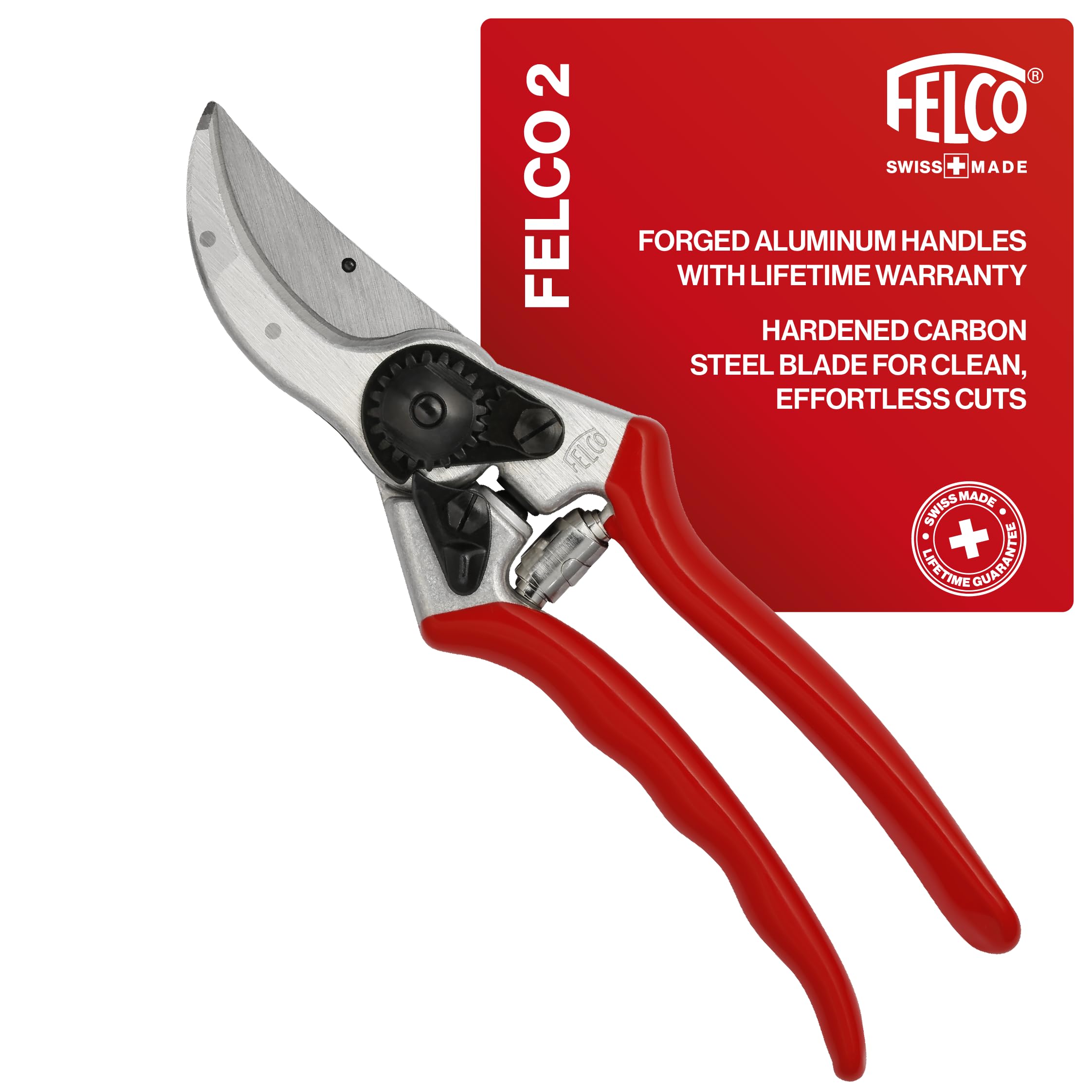
The Felco F2 is the reference standard against which all other manual pruners are measured. Its forged aluminum handles weigh the tool at just over nine ounces, yet the frame handles branches up to a full inch thick with no flex. The hardened high-carbon steel blade arrives ultra-sharp from the factory, and the single-bevel edge geometry produces smooth, scissor-like bypass cuts that minimize bark tearing on live growth — a critical advantage when pruning roses, fruit trees, or ornamental shrubs where plant health matters.
Every component of the F2 is user-replaceable: the blade, the spring, the anvil plate, the handles, and the pivot bolt. This Swiss-engineered repairability means a single purchase can last decades when cleaned and oiled regularly. The angled head reduces wrist strain during extended pruning sessions, and the non-slip rubber coating on the lower handle provides a secure grip even when wet. Professional arborists and master gardeners consistently name this model as their go-to year after year.
Downsides are few but worth noting. The price puts it solidly in premium territory, and it is primarily designed for right-handed users, limiting ambidextrous appeal. The blade also stains easily from blackberry sap and other acidic plant residue, requiring regular alcohol wipes or lemon oil to maintain appearance, though performance is never affected.
What works
- Unmatched reputation for longevity among professional gardeners
- Every component replaceable extending tool lifespan indefinitely
- Precision bypass blade cuts cleanly up to one inch thick
What doesn’t
- Designed for right-handed users only
- Requires regular cleaning and oiling to prevent sap staining
- Premium price positions it above casual gardener budgets
6. Original LÖWE 10 Professional Anvil Pruning Shears

The LÖWE 10 merges anvil cutting power with bypass blade geometry, a hybrid design that delivers the brute force required for dry, dead wood while still providing the clean cut associated with bypass models. The carbon steel blade wears a sliding lacquer coating that reduces friction and resists corrosion from sap and moisture. At 30 millimeters cutting capacity, it handles branches just over an inch wide with controlled, effortless cuts that require far less hand strength than standard anvil designs.
The ergonomic inward-curved lower handles keep the grip opening narrow, reducing the reach distance for medium-sized hands and making repeat cuts less fatiguing. Weighing just over 10 ounces, the tool balances lightness with a solid feel that inspires confidence when tackling thick orchard branches or stubborn twigs. Buyers consistently report that the first cut feels almost silent — the user barely senses that the blade has passed through the wood.
Replacement parts availability is good, but the manufacturer’s documentation is sparse. The blade edge listed as “उततल” in the spec table indicates translation issues, and the plastic handle material feels less premium than the forged aluminum found on competing shears at a similar price point. These are minor compromises for a tool that substantially outperforms cheaper anvil models on dead wood up to 1.18 inches.
What works
- Anvil-bypass hybrid cuts hard dry wood with minimal effort
- Corrosion-resistant lacquer coating on carbon steel blade
- Ergonomic handles reduce fatigue during orchard work
What doesn’t
- Plastic handle material feels less durable than forged aluminum
- Poor translation in documentation and mixed specs
- Requires maintenance to keep lacquer finish effective
5. Original LÖWE Professional Anvil Pruner

This compact anvil pruner from LÖWE is engineered specifically for cutting hard, dry, and old wood — think dead branches, thick twigs, and material that would quickly dull a bypass blade. The carbon steel blade, coated with sliding lacquer for corrosion protection and reduced friction, delivers a powerful cutting system through optimal power transfer. At just 22 millimeters of official cutting capacity, it punches well above its size class when applied to dry wood, where the anvil design excels by crushing material against a flat surface before cutting through.
The plastic handles are designed for medium to large hands, and the one-hand safety lock engages with a flick of the thumb. Owners report that the tool feels heavier than typical steel-handled pruners, but that heft translates directly into cutting authority — users describe effortlessly slicing through rose stems and hardwood branches that left previous shears stuck mid-cut. The all-metal construction, including a replaceable blade, justifies the premium price point for those who regularly encounter dry, tough material.
This is a specialized tool, not a multitasker. The anvil geometry is not ideal for live green growth where clean bypass cuts are needed, and the heavy feel can be fatiguing if used all day on soft material. The manufacturer’s packaging also draws criticism for being overly difficult to open without damaging the product itself, a small but frustrating detail at this price point.
What works
- Exceptional cutting power through hard, dry, and dead wood
- Corrosion-resistant sliding lacquer coating extends blade life
- All parts replaceable for long-term durability
What doesn’t
- Anvil design less suitable for live green pruning cuts
- Heavier build fatigues hands during prolonged soft-wood work
- Packaging is notoriously difficult to open without damaging the tool
2. Corona Tools BP 6250 MAXFORGED Aluminum Bypass Pruner
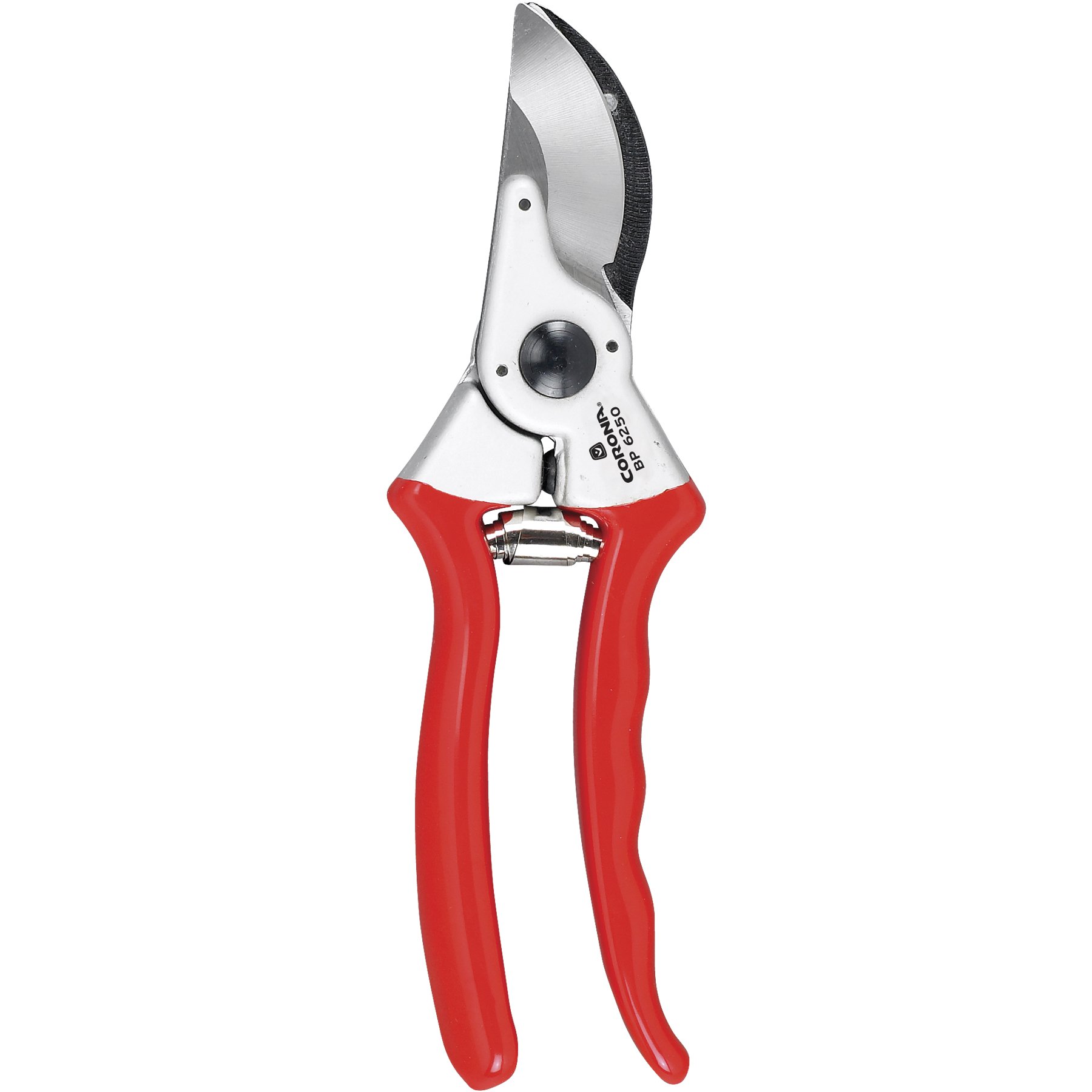
The Corona BP 6250 is the strongest argument for buying a mid-range forged pruner instead of spending more on premium imports. The forged aluminum handles reduce weight to just 9.6 ounces while providing the leverage needed to cut branches up to a full inch in diameter. The precision-honed high-carbon steel blade, easily replaceable, delivers consistent bypass cuts that match Felco F2 performance at roughly half the entry cost. Add in a self-cleaning sap groove and a shock-absorbing bumper, and you have a tool designed for daily garden work without the premium price tag.
Users with arthritis report using these shears for hours with no hand fatigue, attributing the comfort to the contoured non-slip rubber grips and the lightweight forged frame. The one-thumb safety lock engages positively, and the adjustable pivot bolt allows fine-tuning of blade gap as the tool wears, preventing the branch-tearing that occurs on loose joints. Corona backs the BP 6250 with a limited lifetime warranty, reflecting confidence in the domestic forging process.
The uncoated carbon steel blade requires thorough cleaning and oiling after each use to prevent rust, especially after cutting moisture-heavy live growth. Some users found the initial blade tension too tight, requiring adjustment before the tool would open fully after cutting. The packaging lacks clear instructions for disassembling and tightening the pivot, forcing first-time owners to search online for guidance.
What works
- Forged aluminum frame provides professional leverage at half the price
- Replaceable carbon steel blade delivers consistent clean cuts
- Limited lifetime warranty backs domestic manufacturing
What doesn’t
- Uncoated blade rusts quickly without careful maintenance
- Initial pivot tension may require user adjustment
- Instructions for pivot maintenance not included in packaging
3. Bahco BAHPX-L2 ERGO Large Bypass Secateurs
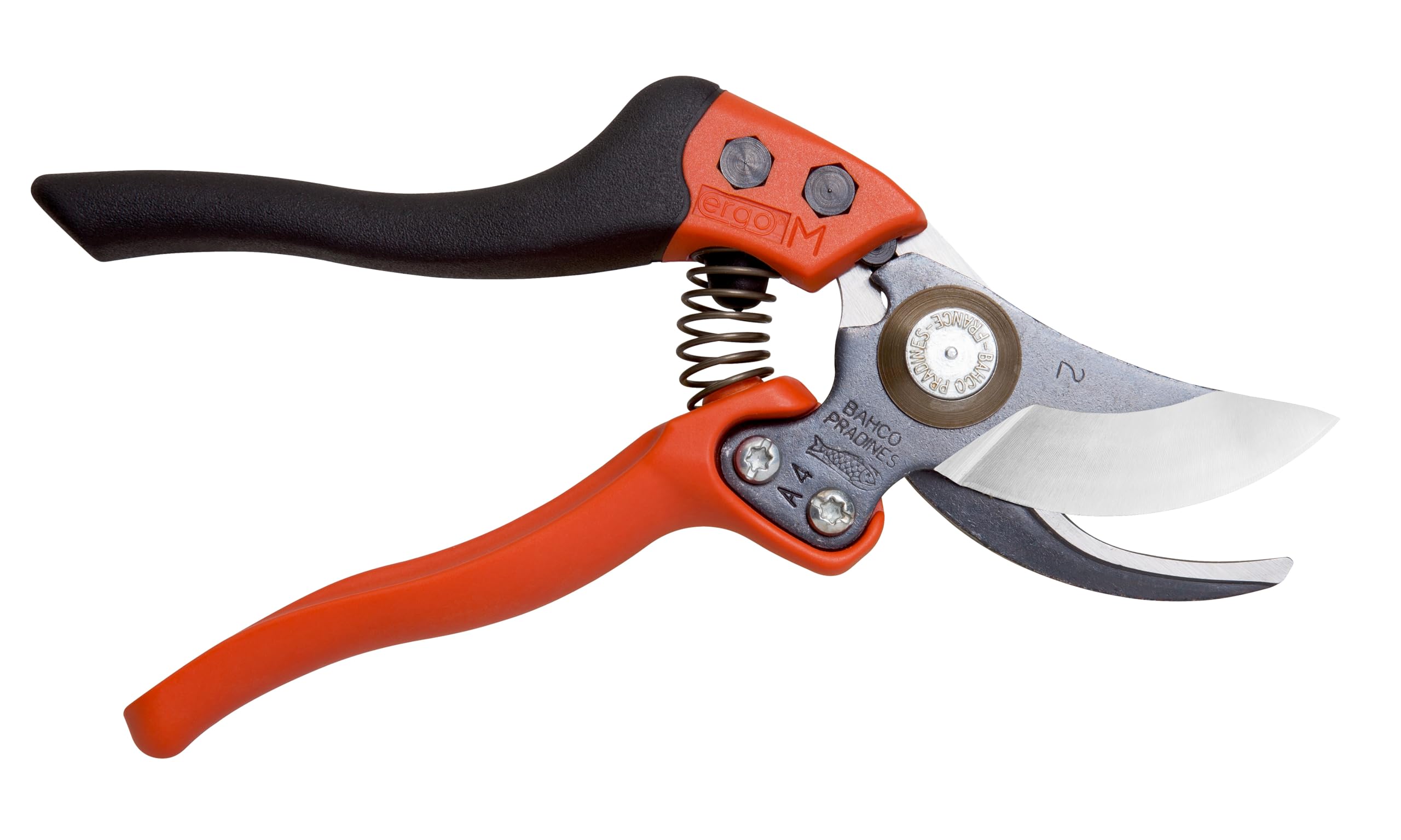
The Bahco PX-L2 uses a scientifically developed ERGO process that orients the cutting head laterally and vertically to keep the wrist straight during pruning. This angled geometry drastically reduces the repetitive strain that causes fatigue in long sessions, especially when trimming hedges, roses, or other dense plantings that require hundreds of cuts in a single afternoon. The blade is ground bypass-style with a finely honed straight edge that cuts cleanly through stems up to 3/4 inch, making it ideal for live green growth where clean wounds matter.
The composite handle is coated with soft elastomer that provides a secure grip even when hands are sweaty or the tool is used in damp conditions. At just over half a pound, the tool is lightweight enough for all-day use without weighing down a tool belt or apron. Repeat buyers praise the shear’s ability to stay sharp for years when properly cleaned, with many owners reporting that a second pair replaced a first set only after a decade of seasonal use.
The soft grip material traps dirt and debris against the handle core, making thorough cleaning more difficult than traditional smooth grips. Some users also note that the initial factory tension on the pivot is inconsistent — some arrive too loose, some too tight, requiring immediate adjustment. The cutting capacity at 20mm is slightly below competing models that handle 1-inch branches, limiting its use on heavier growth.
What works
- Ergonomic angled head keeps wrist straight and reduces repetitive strain
- Elastomer-coated grip provides superior traction in wet conditions
- Blade stays sharp for years with minimal maintenance
What doesn’t
- Soft grip handle traps dirt and requires careful cleaning
- Inconsistent factory tension on pivot joint
- 20mm cutting capacity limits use on branches over 3/4 inch
4. Ironwood Tool Company Ratchet Pruning Shears

When hand strength is a limiting factor — due to arthritis, carpal tunnel, or simply age — the Ironwood IW-1405 ratchet mechanism changes the physics of pruning. Instead of needing to squeeze through a 1-inch branch in a single motion, the ratchet divides the cut into increments: squeeze, release, squeeze again, and the blade steps through the wood with minimal applied force. The non-stick coating on the high-carbon steel blade prevents sap adhesion, and the aluminum handle body keeps the tool remarkably light at just 0.3 pounds.
The hand guard extends reach into tight areas inside shrubs and bushes, and the ambidextrous slide lock operates naturally with either hand. Long-term owners consistently report that a single pair lasts well past five years of heavy use, with some reporting eight years before needing a replacement spring. The manufacturer backs the tool with a five-year warranty and a lifetime half-price replacement policy, a strong signal of domestic quality commitment.
The serrated blade edge is optimized for the ratchet action but does not produce as clean a bypass cut as a straight-ground blade, meaning the cut surface may be slightly rougher on live growth. The metal-to-metal contact areas, while minimized, still benefit from occasional lubrication to keep the ratchet action smooth. And at 40 dollars, the price sits above what many expect for a tool marketed toward moderate-strength users.
What works
- Ratchet mechanism dramatically reduces hand strength required for thick cuts
- Ultra-light aluminum body at 0.3 pounds minimizes user fatigue
- Five-year warranty with lifetime half-price replacement
What doesn’t
- Serrated blade leaves rougher cut surfaces on live growth
- Ratchet mechanism requires occasional lubrication to stay smooth
- Price point higher than typical for strength-limited pruning tools
1. Corona Clipper BP 4214D Flex Dial Bypass Pruner

The Corona BP 4214D introduces a unique adjustable pivot — the FlexDial — that rotates through eight positions to custom-fit the tool to the user’s hand span. This is a genuine innovation for pruners, allowing someone with small hands or limited mobility to open the shears with less initial finger spread while maintaining full cutting closure. The coated non-stick blade delivers smooth cutting performance through live stems up to 3/4 inch, and the ComfortGel grips provide cushioning at the contact points most prone to blistering.
The full steel construction, including alloy steel handles, gives the tool a solid heft that feels more substantial than its 31-dollar price would suggest. Corona’s ShockGuard bumpers reduce the jarring sensation at the end of each cut, and the limited lifetime warranty provides peace of mind for a tool that will see daily garden use. Users with arthritis specifically praise the adjustable dial for making the tool accessible without requiring a specialized rachet mechanism.
Consistency is the main concern here. Some units arrive with the hinge nut at a tension that prevents the blades from opening fully after cutting, causing them to stick in a partially closed position. A separate group of users reports that the blades seldom cut cleanly — when the tension is too loose, they tend to tear branches rather than shear through them. Tightening the nut fixes the cut quality but can cause the shears to bind. It is a finicky tool that requires careful tuning to reach its potential.
What works
- Adjustable FlexDial customizes hand span for small or arthritic hands
- ComfortGel grips reduce blistering during extended pruning sessions
- Full steel construction and limited lifetime warranty add long-term value
What doesn’t
- Blade tension is inconsistent from unit to unit out of the box
- Looser settings cause tearing instead of clean cuts on live wood
- Tightening the pivot to fix cut quality can prevent blades from opening fully
Hardware & Specs Guide
Blade Steel & Hardness
The four steel types common in pruning shears are high-carbon steel (best edge retention, rusts easily), stainless steel (corrosion-resistant, harder to sharpen), alloy steel (good balance of edge retention and corrosion resistance), and tool steel (used in premium models for maximum toughness). Target 58-60 HRC for a blade that holds its edge through heavy use.
Bypass vs. Anvil Geometry
Bypass shears use a curved blade that slides past a lower hook, creating a scissor-like cut that heals quickly — preferred for live green wood. Anvil shears drive a blade straight down onto a flat surface, crushing the material before cutting — better for dry, dead wood but can damage live growth. Some models use hybrid geometry combining both principles.
Cutting Capacity & Leverage
Measured in inches or millimeters, cutting capacity indicates the maximum branch diameter the tool can cleanly sever. A 3/4-inch capacity is adequate for general garden maintenance, while 1-inch and above covers orchard pruning and heavy shrub work. Leverage comes from handle length — longer handles multiply force but reduce portability and precision.
Handle Material & Ergonomics
Forged aluminum handles offer the best weight-to-strength ratio for extended use. Steel handles provide maximum durability but add heft. Plastic and composite handles reduce cost but can crack under stress. Ergonomic features like angled heads, elastomer coatings, and shock-absorbing bumpers directly affect fatigue levels after hundreds of cuts.
FAQ
Are any of these shears actually made in America?
How often should I sharpen my pruning shears?
Can I use anvil pruners on live green branches?
Final Thoughts: The Verdict
For most gardeners, the american made pruning shears winner is the Corona BP 6250 MAXFORGED because it delivers forged aluminum handles and a replaceable carbon steel blade at a mid-range price with domestic manufacturing and a limited lifetime warranty. If you need the precision of a Swiss-engineered heirloom, grab the Felco F2. And for gardeners with arthritis or reduced hand strength, nothing beats the ratchet mechanism of the Ironwood Tool Company Ratchet Shears.