
The differences between a thriving indoor garden and a collection of struggling plants often come down to a single variable: what you feed them. Generic fertilizers can push foliage at the expense of roots or flowers, while the wrong concentration risks burning sensitive root systems.
I’m Rikta — the co-founder and writer behind Lawn Gear Lab. I’ve spent countless hours studying horticultural data, digging through soil science publications, and analyzing thousands of owner experiences across every major plant food formulation on the market.
This guide cuts through the marketing to help you select the best all purpose plant food based on real NPK ratios, release mechanisms, and application fit for your specific growing environment.
How To Choose The Best All Purpose Plant Food
The best all purpose plant food for your garden depends on three core factors: the NPK ratio that matches your plants’ growth stage, the form that suits your watering routine, and whether you prioritize immediate green-up or steady release.
Understand NPK ratios and what they mean for your plants
Nitrogen drives leafy growth, phosphorus supports root and flower development, and potassium boosts overall health and disease resistance. A balanced 20-20-20 formulation provides equal parts of each, making it suitable for general maintenance. A lower ratio like 3-1-2 is often better for foliage-focused houseplants where root burn is a concern.
Liquid, granular or powder: Which form works for you?
Liquid fertilizers deliver nutrients immediately and are easy to dilute, but require frequent application. Water-soluble powders like 20-20-20 offer flexibility and long shelf life. Slow-release granules require minimal effort and provide consistent feeding for months, but you cannot adjust the dosage mid-season.
Check for micronutrients and organic certification
Beyond the main NPK numbers, trace elements such as iron, zinc, manganese, and kelp extract significantly impact plant vigor. Organic formulations reduce the risk of salt buildup and are safer for beneficial soil microbes, but may work more slowly than synthetic alternatives.
Quick Comparison
On smaller screens, swipe sideways to see the full table.
| Model | Category | Best For | Key Spec | Amazon |
|---|---|---|---|---|
| Espoma Indoor Organic | Organic Liquid | Indoor foliage houseplants | 8 oz liquid, 2-pack | Amazon |
| Peter’s Professional 20-20-20 | Water-soluble powder | Orchids and indoor gardens | 2 lbs, micro nutrients | Amazon |
| Houseplant Resource Center 3-1-2 | Organic Liquid | Sensitive indoor houseplants | 8 oz, urea-free formula | Amazon |
| GS Plant Foods 20-20-20 | Water-soluble powder | Large gardens and turf | 3 lbs, contains kelp | Amazon |
| Nelson ColorStar | Slow-release granules | Flowering plants and shrubs | 2 lbs, feeds 4-5 months | Amazon |
| GreenView 10-10-10 | Granules | Large lawns and vegetable gardens | 33 lb bag, covers 10k sq ft | Amazon |
| Gaia Green 4-4-4 Organic | Organic Granules | Organic vegetable and flower gardens | 2 kg, long-lasting release | Amazon |
In‑Depth Reviews
1. Houseplant Resource Center 3-1-2 Organic Liquid Fertilizer
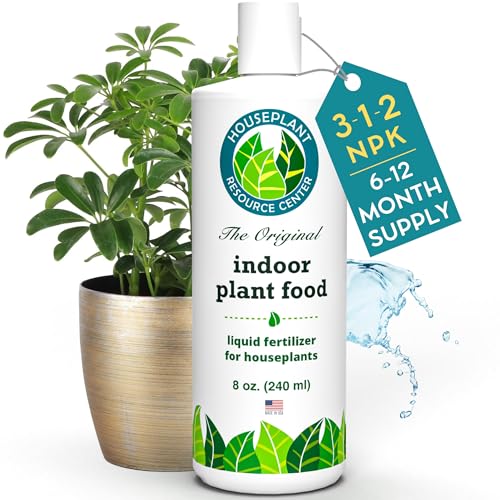
The 3-1-2 NPK ratio in this liquid fertilizer is specifically calibrated for indoor foliage plants that need more nitrogen for leaf growth without the phosphorus overload common in balanced 20-20-20 blends. Chelated micronutrients ensure long-term bioavailability, and the urea-free formulation eliminates the risk of nitrogen burn even with regular use.
Users report visible results within two weeks on species like pothos, peace lily, monstera, and fiddle leaf fig. The 8-ounce bottle requires only a few drops per quart of water, making it economical despite the higher per-ounce cost. The family-owned brand produces the formula in the USA with zero-waste manufacturing.
This product works best for indoor gardeners with mixed collections who want a gentle, consistent feed that supports root development and foliage density. The mild formula is safe for delicate seedlings and sensitive species like ferns and calatheas.
What works
- Perfect 3-1-2 ratio for houseplants
- No urea means zero burn risk
- Immediate visible results on foliage plants
What doesn’t
- Higher price per ounce than synthetic alternatives
- Only 8 ounces per bottle
- Not ideal for flowering plants needing higher phosphorus
2. Peter’s Professional 20-20-20 Water Soluble Fertilizer

Peter’s Professional delivers a classic 1:1:1 NPK ratio in a fine water-soluble powder that dissolves instantly and provides balanced nutrition for a broad range of indoor and outdoor plants. The 2-pound bag stretches far — a half tablespoon per gallon of water is sufficient for houseplants, making this one of the most cost-effective synthetic fertilizers available.
This formula is especially popular among orchid and bromeliad enthusiasts who need precise control over feeding strength. Users have reported decades of consistent results with African violets blooming continuously and cannabis growers using targeted schedules. The powder stores indefinitely in a dry container, unlike liquid fertilizers that degrade over time.
The lack of organic certification and the presence of synthetic salts mean careful dilution is essential; overfeeding can lead to salt buildup in containers. That said, at a half tablespoon per gallon every one to two months, it is forgiving enough for casual indoor gardeners.
What works
- Extremely cost-effective per feeding
- Instant dissolution with no clumping
- Long shelf life in powder form
What doesn’t
- Synthetic salts can accumulate in pots
- Not suitable for organic gardening
- Requires measuring and mixing
3. Nelson ColorStar Slow-Release Fertilizer
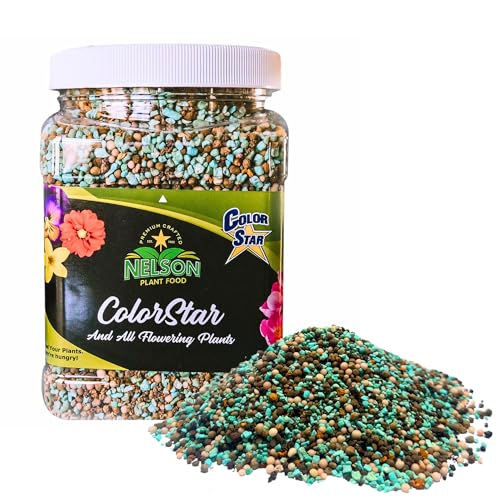
ColorStar uses six different nitrogen sources with staggered release rates to provide consistent feeding for four to five months from a single application. The granule formulation contains 25% bone meal and blood meal, plus a full suite of micronutrients including iron, zinc, copper, and manganese sulfates specifically targeting bloom production.
Gardeners report a dramatic increase in bloom size and quantity after spring application, particularly on hydrangeas, flowering shrubs, and perennials. The slow-release mechanism minimizes the risk of overfeeding compared to water-soluble options, making it ideal for low-maintenance gardeners who want set-it-and-forget-it performance.
The downside is the jar size — the 2-pound container looks small for the price, and the granules are not suitable for precise feeding of container plants where you might want more control over the dose. It works best when broadcast over flower beds or mixed into potting soil at planting time.
What works
- Single application feeds all season
- Significant bloom size improvement
- Six nitrogen sources for even release
What doesn’t
- High price for the quantity
- Not ideal for container plants needing precise feeding
- Slow onset of visible results
4. Espoma Organic Indoor Plant Food (Pack of 2)

The two-pack of Espoma organic liquid delivers eight fluid ounces of concentrated organic plant food per bottle, formulated specifically for indoor houseplants like pothos, monstera, snake plants, and palms. The organic formula is safe around kids and pets, with a manure-like odor that dissipates quickly after watering.
Users with decades of gardening experience report this as their exclusive indoor fertilizer, praising its ability to produce lush growth without burning sensitive roots. The recommended dosage is a half cap per quart of water every two to four weeks, making each bottle last for months of regular feeding.
The organic base means it works more slowly than synthetic fertilizers, and the smell during application can be unpleasant indoors. It is also less concentrated than some competitors, requiring more product per feeding for large collections.
What works
- Certified organic and pet-safe
- Gentle enough for weekly use
- Two bottles provide extended supply
What doesn’t
- Strong manure odor during mixing
- Slow-acting compared to synthetics
- Less concentrated than other liquids
5. GS Plant Foods 20-20-20 with Kelp
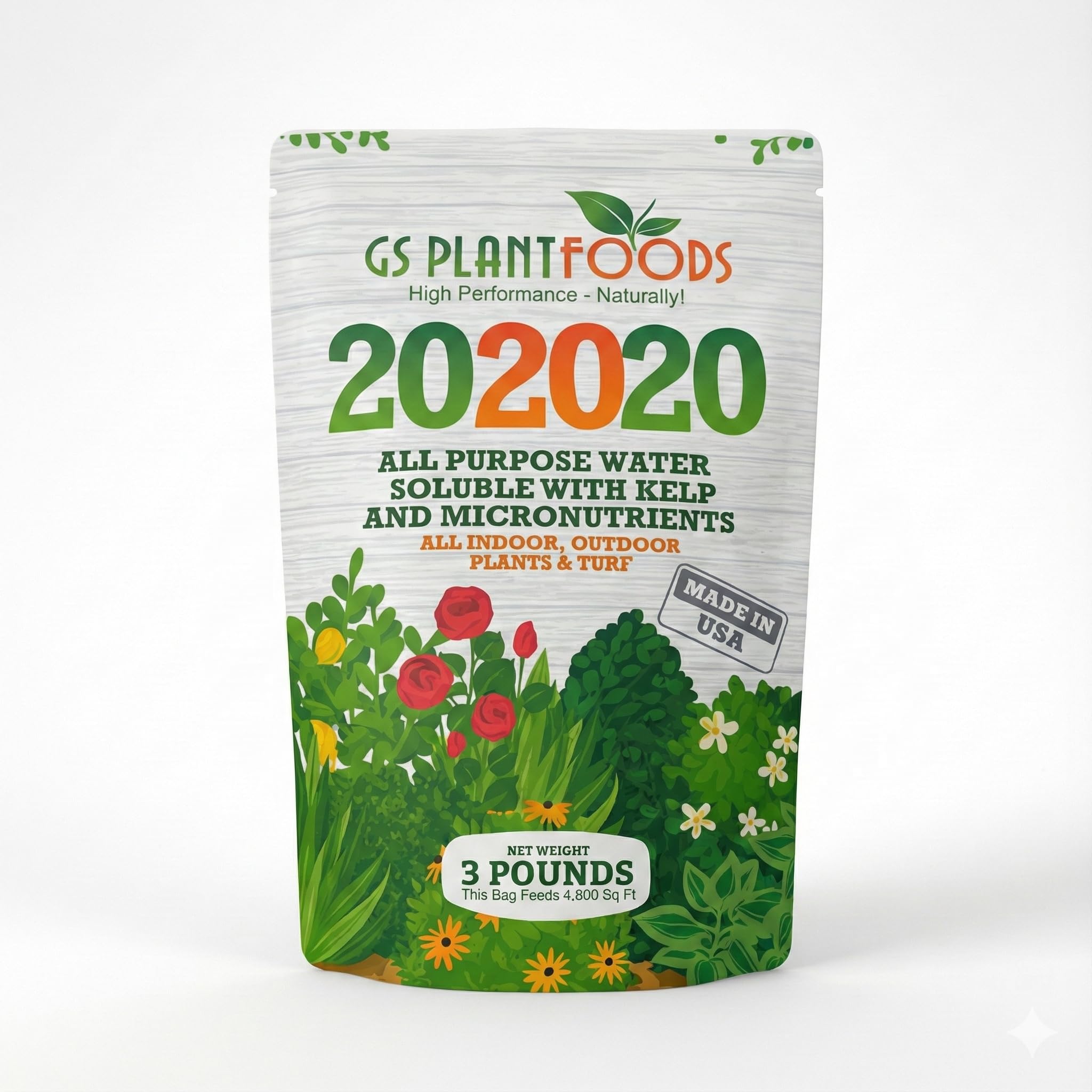
The 3-pound bag of GS Plant Foods 20-20-20 covers up to 4,800 square feet of turf or provides months of feeding for indoor and outdoor containers. The formulation includes Ascophyllum nodosum kelp extract to supplement the balanced NPK with natural growth hormones and trace minerals often missing in synthetic-only fertilizers.
Users consistently report rapid greening of lawns and quick recovery of struggling trees and shrubs. The powder dissolves completely with no residue, making it suitable for hose-end sprayers and backpack sprayers. The combination of synthetic NPK and kelp provides both immediate green-up and long-term soil conditioning benefits.
This is not an organic fertilizer, and the industrial production process means it lacks organic certification. Gardeners looking for a purely natural product should look elsewhere, but for large-scale feeding where cost and coverage matter, this offers excellent value per square foot.
What works
- Kelp additive enhances micronutrient profile
- Covers large areas efficiently
- Dissolves completely with no clogging
What doesn’t
- Not certified organic
- Must store in completely dry environment
- Strong odor when mixed
6. GreenView 10-10-10 Multi-Purpose Fertilizer

The 33-pound bag of GreenView 10-10-10 is the heavyweight option for gardeners maintaining large vegetable plots, flower beds, trees, and shrubs. The lower NPK concentration compared to 20-20-20 reduces the risk of burn while still providing balanced nutrition across a wide variety of plants. The granule form is easy to broadcast with a spreader.
Users in the Midwest report consistent results on everything from hostas to tomatoes, appreciating that the granules are well-formed and resist clumping even in humid conditions. The 10-10-10 ratio is particularly effective for root development and seed production, making it a strong choice for annual vegetable gardens.
The main drawback is that you need a large area to justify a 33-pound bag, and the lower nitrogen concentration means you need more product per application compared to higher-ratio fertilizers. It also requires manual incorporation into soil for best results.
What works
- Excellent value per pound for large areas
- Lower burn risk than 20-20-20
- Non-clumping granules spread easily
What doesn’t
- Too much product for small gardens
- Requires soil incorporation
- Lower nitrogen means more product per feeding
7. Gaia Green 4-4-4 Organic All Purpose Fertilizer
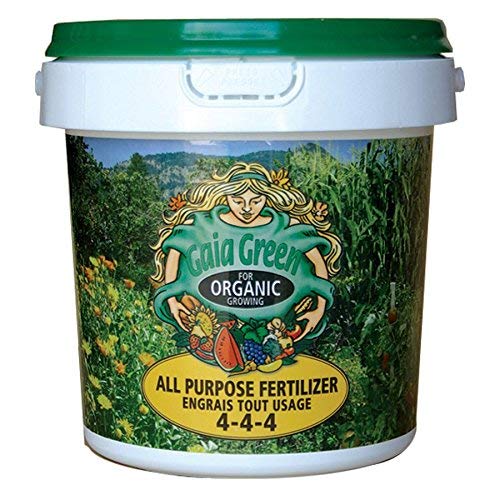
Gaia Green 4-4-4 is a truly all-purpose organic granular fertilizer that works for vegetables, flowers, trees, shrubs, and lawns. The low 4-4-4 NPK ratio is specifically designed to improve soil quality over time rather than just delivering a quick nutrient hit. The variable release rates from different organic ingredients ensure feeding throughout the season.
Indoor gardeners report that one tablespoon per 5-gallon pot at transplant time doubles seedling size within a week, while outdoor users praise its ability to revitalize tired soil. The organic formulation builds microbial activity in the soil, reducing the need for synthetic inputs over time. It works well in combination with worm castings or bat guano for enhanced results.
The 2-kilogram bag is relatively small for gardeners with large outdoor spaces, and the organic release is slower than synthetic alternatives, so results are not immediate. It also has a noticeable earthy smell that some users find unpleasant indoors.
What works
- Builds long-term soil health
- Safe for all plant types including seedlings
- Variable release feeds all season
What doesn’t
- Slow visible results compared to synthetics
- Small 2 kg bag for the price
- Earthy odor during application
Hardware & Specs Guide
NPK ratio and what it actually means
The three numbers on any fertilizer label represent nitrogen, phosphorus, and potassium by weight. A 20-20-20 formula contains 20% of each nutrient, delivering heavy feeding suitable for outdoor gardens. A 3-1-2 formula provides more nitrogen relative to phosphorus, matching the needs of foliage-focused houseplants. Higher numbers generally require more careful dosing to avoid burn.
Release mechanisms explained
Water-soluble powders like 20-20-20 release all nutrients immediately upon watering, giving you control but requiring regular reapplication. Slow-release granules use coatings or organic matter to meter nutrients over weeks or months, suiting low-maintenance gardeners. Organic liquids release nutrients as soil microbes break them down, supporting soil biology at the expense of speed.
FAQ
Can I use 20-20-20 fertilizer on indoor houseplants?
What is the difference between 3-1-2 and 20-20-20 NPK ratios?
How often should I apply slow-release granular fertilizer?
Final Thoughts: The Verdict
For most gardeners, the best all purpose plant food winner is the Houseplant Resource Center 3-1-2 Organic Liquid because its calibrated ratio and urea-free formula eliminate burn risk while delivering fast visible results on indoor foliage plants. If you need a budget-friendly synthetic that covers large areas, grab the Peter’s Professional 20-20-20. And for organic gardeners who prioritize long-term soil health, nothing beats the Gaia Green 4-4-4 Organic.