
Walking into a garden center aisle stacked with bags of colored granules is a fast ticket to decision fatigue. The wrong all purpose fertilizer for vegetable garden can scorch tender tomato roots, stunt pepper growth, or simply wash away before doing any good. The right one, however, turns a patch of soil into a nonstop producer of crisp lettuce, heavy squash, and sweet corn that tastes nothing like the grocery store version.
I’m Rikta — the co-founder and writer behind Lawn Gear Lab, where I’ve spent hundreds of hours cross-referencing NPK ratios, reading third-party soil test analyses, and mapping owner-reported outcomes against label claims across dozens of balanced granular and water-soluble blends.
Below, I break down seven standout contenders by their actual nutrient delivery mechanism, ingredient transparency, and suitability for different garden stages — the goal is ending the guesswork so your harvest matches the effort you put in. This is your complete guide to the best all purpose fertilizer for vegetable garden use, built from spec sheets and real-world grower feedback.
How To Choose The Best All Purpose Fertilizer For Vegetable Garden
Selecting a fertilizer is not about picking the bag with the prettiest label or the biggest number. It is about matching the nutrient profile to what your soil lacks and what your crop demands. Most vegetable gardens benefit from a balanced or slightly phosphorus-forward formula, but the release speed, ingredient source, and application frequency are just as critical.
Understand the NPK ratio
The three numbers on the bag represent Nitrogen (N), Phosphorus (P), and Potassium (K) in that order. Nitrogen drives leafy, green growth — essential for spinach, kale, and lettuce but counterproductive in excess for fruiting crops. Phosphorus supports root development and flower formation, making it vital for tomatoes, peppers, and squash. Potassium strengthens overall plant health and disease resistance. A balanced 10-10-10 works as a general tonic, while a 5-7-3 or 4-6-2 provides extra phosphorus for heavy fruiting.
Granular vs. water-soluble release
Granular, slow-release fertilizers feed the soil over weeks or months with a single application, making them ideal for setting and forgetting at planting time. Water-soluble powders like a 20-20-20 dissolve instantly and deliver nutrients directly to the root zone — perfect for container plants, foliar feeding, or correcting a mid-season deficiency. The tradeoff is frequency: water-soluble formulas require reapplying every one to two weeks during active growth.
Organic vs. synthetic ingredients
Organic fertilizers such as fish bone meal, blood meal, kelp, and rock phosphate build soil microbial life and release nutrients slowly as microbes break them down. They are gentler and less likely to burn roots, but they also require soil temperatures above 50°F to activate. Synthetic granular blends provide immediate, measurable nutrition and are more predictable in controlled conditions, but they do nothing for long-term soil structure.
Quick Comparison
On smaller screens, swipe sideways to see the full table.
| Model | Category | Best For | Key Spec | Amazon |
|---|---|---|---|---|
| Escoma 10-10-10 Garden Food | Granular Synthetic | All-around garden feeding | 13.5 lbs total (2 bags) | Amazon |
| GS Plant Foods 20-20-20 | Water-Soluble | Quick green-up & containers | 3 lbs covers 4,800 sq ft | Amazon |
| FoxFarm Happy Frog 5-7-3 | Organic Granules | Tomato & pepper fruiting | 5-7-3 with calcium | Amazon |
| Down To Earth 4-6-2 | Organic Granules | Gentle all-purpose organic | 4-6-2 OMRI listed | Amazon |
| GreenView 10-10-10 | Granular Synthetic | Large area coverage | 33 lbs covers 10,000 sq ft | Amazon |
| Escoma Garden-Tone 3-4-4 | Organic Granules | Herb & leafy green feeding | 3-4-4 with Bio-tone | Amazon |
| FoxFarm Happy Frog 6-4-5 | Organic Granules | Versatile OMRI feeding | 6-4-5 with soil microbes | Amazon |
In‑Depth Reviews
1. Escoma 10-10-10 Garden Food
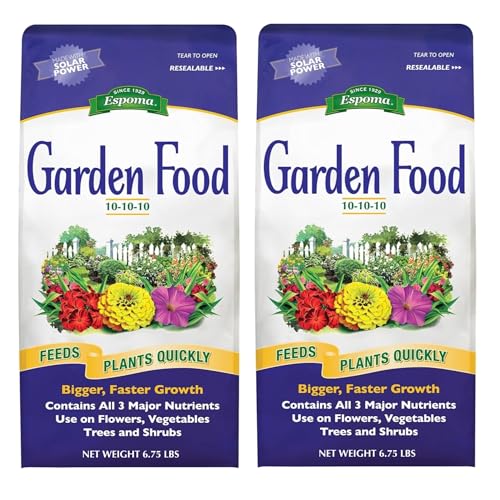
This two-pack of Escoma 10-10-10 Garden Food delivers 13.5 total pounds of balanced, agricultural-grade granular nutrition with a perfect 1:1:1 NPK ratio. The formulation is built for immediate availability — it feeds plants quickly after watering, making it ideal for spring kick-start applications on trees, shrubs, flowers, and vegetables alike. The bag instructions recommend monthly use during the growing season for roses and vegetables, with spring and fall applications for woody ornamentals.
Grower reports consistently highlight the fast visual response: yellowing sweet potato vines in hot zone 8a/7b rebounded to dark green leaves within a week after mixing this into the topsoil. One fig tree owner recorded an estimated 5,000 fruits in a single season after switching to this formula. The 10-10-10 ratio is general-purpose, so it works across the entire garden without needing separate blends for different crop types.
The agricultural-grade ingredients are straightforward — no mycorrhizae or organic matter, just pure NPK feeding. This means it works fast but does not build soil biology the way an organic blend would. Users in Washington state appreciate that Escoma meets their state’s strict certification standards, and the granular form requires no mixing, just scattering and watering in. For gardeners who want one bag that handles everything from the flower border to the vegetable row, this is a reliable, high-volume solution.
What works
- Fast-acting granules green up plants within a week of application
- High total weight (13.5 lbs) covers multiple seasons of feeding
- Balanced 1:1:1 ratio works for flowers, shrubs, trees, and vegetables
What doesn’t
- No organic or OMRI certification for strict organic gardeners
- Synthetic formulation does not improve long-term soil microbial life
2. GS Plant Foods 20-20-20 Water Soluble
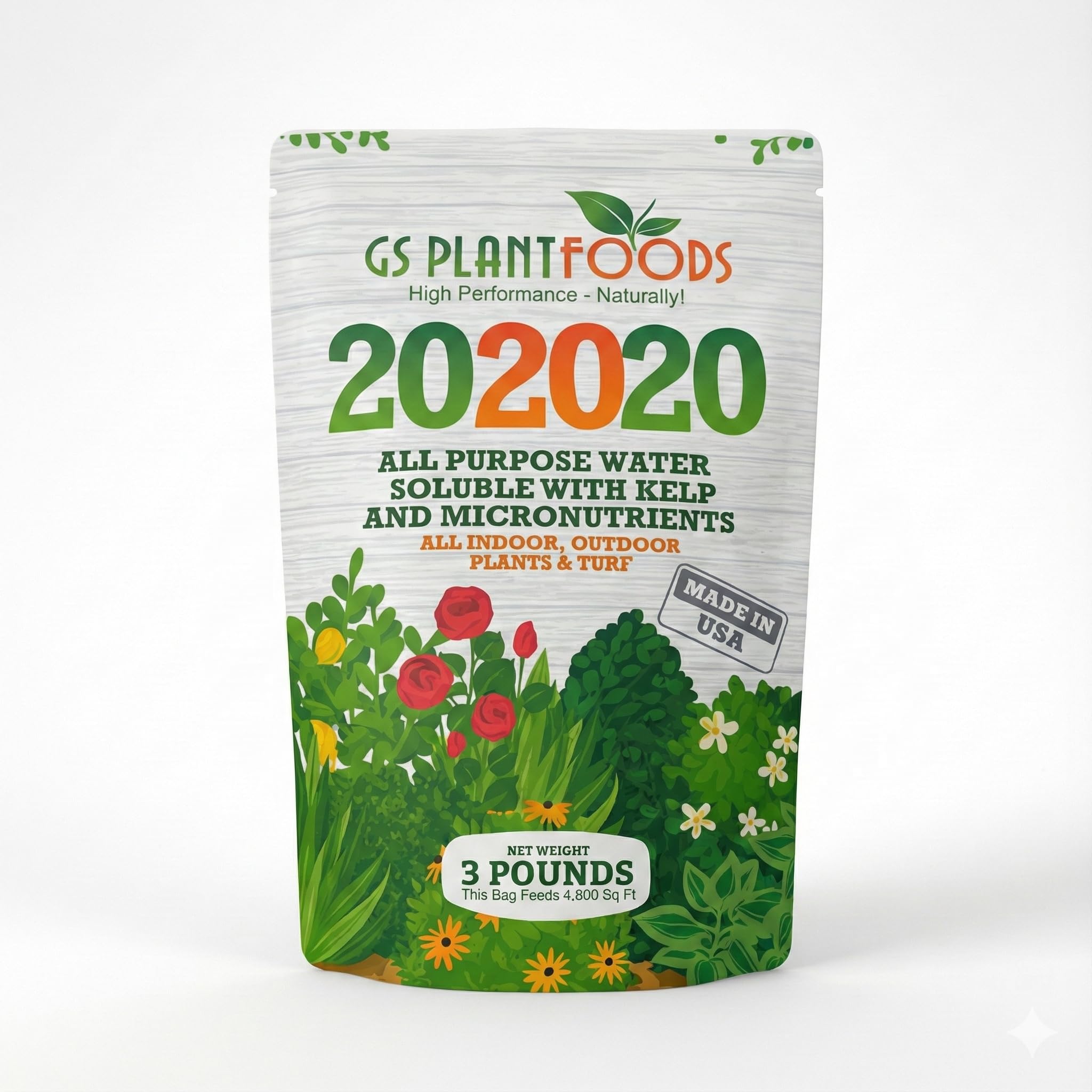
GS Plant Foods 20-20-20 delivers a balanced NPK at three times the concentration of standard 10-10-10 blends, making it one of the most potent water-soluble options on this list. The 3-pound bag dissolves completely in water — no residue, no sediment — and can be applied via watering can, hose-end sprayer, or backpack sprayer. The label claims coverage of up to 4,800 square feet of turf, which translates to dozens of full-strength feedings for a typical vegetable patch.
The formula includes kelp extract (Ascophyllum nodosum) alongside chelated micronutrients like iron, manganese, and zinc. Users report dramatic turnarounds: one grower reversed yellowing on purple orchid trees within a week, and another noted treated plants developed darker, larger leaves than they had seen in three years. The 20-20-20 ratio is ideal for leafy greens, lawns, and early vegetative growth, but fruiting crops may benefit from a phosphorus boost during flowering.
This is a synthetic-mineral blend with kelp added, not a certified organic product. The fast-release nature means it can burn plants if over-concentrated, so following the mixing instructions precisely is essential. The water-soluble format is best suited for gardeners who want to control feeding frequency and respond quickly to deficiency symptoms. For those already comfortable with mixing liquid feeds, this is a versatile and highly efficient option.
What works
- Dissolves completely with no residue for clog-free sprayer use
- High 20-20-20 concentration provides fast, measurable green-up
- Contains kelp extract and chelated micronutrients for comprehensive feeding
What doesn’t
- Not OMRI listed; unsuitable for certified organic gardening
- Requires careful measuring to avoid root burn from high salt content
3. FoxFarm Happy Frog Tomato & Vegetable 5-7-3

FoxFarm Happy Frog Tomato & Vegetable Fertilizer earns the top spot because it directly addresses the two most common problems vegetable gardeners face: insufficient phosphorus for fruit set and calcium deficiency that causes blossom end rot. The 5-7-3 NPK ratio is phosphorus-forward, exactly what tomatoes, peppers, squash, and berries need during flowering and fruiting stages. The added calcium acts as a direct preventive measure against blossom end rot — a frustrating condition that ruins perfectly good tomatoes at the peak of ripeness.
Beyond the macro numbers, this formula includes mycorrhizal fungi that colonize root systems to enhance water and nutrient absorption. Growers report that tomatoes fed with Happy Frog 5-7-3 began fruiting within days of application and produced noticeably heavier yields compared to generic balanced feeds. The organic ingredients — listed by OMRI — mean no synthetic chemicals, and the granules are dry enough to avoid the strong fishy odor common to many organic fertilizers.
The 4-pound bag is moderately sized, so larger gardens may need multiple bags per season. Some users note the price per pound is higher than commodity 10-10-10 blends, but the targeted NPK and added calcium represent genuine value when it prevents crop loss. This is the fertilizer to reach for if you grow heavy-fruiting vegetables and want to minimize the risk of end rot without resorting to separate calcium supplements.
What works
- Phosphorus-forward 5-7-3 ratio promotes heavy flowering and fruit set
- Added calcium prevents blossom end rot in tomatoes and peppers
- Includes mycorrhizal fungi for improved root efficiency and uptake
What doesn’t
- Higher cost per pound compared to general-purpose synthetic blends
- 4-pound bag covers only a moderate-sized garden per season
4. Down To Earth 4-6-2 Organic Mix

Down To Earth All Natural Fertilizers 4-6-2 is a five-pound box of organic granules formulated from fish bone meal, blood meal, feather meal, rock phosphate, langbeinite, greensand, humates, and kelp meal. The 4-6-2 NPK ratio is phosphorus-dominant, making it well-suited for tomatoes, peppers, herbs, and flowering annuals. The ingredients are OMRI listed for certified organic production, and the formula is designed to be gentle enough that it will not burn roots even if applied more heavily than recommended.
Users consistently describe it as a “no-brainer” alternative to mixing multiple organic amendments. A 15-pound bag lasts a full year for an avid home gardener, and users report that pale, flimsy tomato plants rebounded to deep green within two weeks of application. The blend includes kelp meal for trace minerals and greensand for potassium, creating a complete nutrient profile in a single box. The main sensory drawback is the smell — organic meals produce a noticeable odor that dissipates after a few days in the soil.
The granular consistency is fine enough to work into the top inch of soil easily, and the non-burning nature makes it beginner-friendly. This is an excellent choice for organic gardeners who want a single, all-in-one blend without having to buy bone meal, blood meal, and kelp separately. Just be prepared for a few days of earthy aroma after application, and store the box in a sealed container to avoid attracting wildlife.
What works
- Non-burning formula safe for transplants and direct seeding
- Comprehensive organic ingredient list with no synthetics
- OMRI listed for certified organic vegetable production
What doesn’t
- Strong organic smell for the first few days after application
- Slow nutrient release requires warmer soil temperatures for activation
5. GreenView 10-10-10 Multi-Purpose

GreenView Multi-Purpose Fertilizer comes in a 33-pound bag — the largest single-container option on this list — with a balanced 10-10-10 NPK formulation designed to cover up to 10,000 square feet. This makes it the obvious choice for gardeners with substantial vegetable plots, multiple raised beds, or ornamental gardens that all need feeding at once. The granules are well-formed, non-clumping, and uniform in size, which makes spreading with a broadcast spreader accurate and even.
The 10-10-10 ratio is a general-purpose workhorse: enough nitrogen for leafy growth, phosphorus for root establishment, and potassium for overall vigor. Users in the Midwest apply it throughout the growing season on everything from hostas to tomatoes to trees, and they report consistent, reliable results. One reviewer in Hawaii noted that the cost per nutrient unit was lower than the locally available 16-16-16 alternative, making this a budget-savvy pick for large-scale feeding.
The synthetic formulation feeds plants quickly but does not contain organic matter or soil microbes. It is not OMRI listed, so certified organic growers will need to look elsewhere. The 33-pound bag is heavy, but delivery via Prime eliminates the need to haul it from the store — a genuine plus for older gardeners or anyone without a truck. For pure coverage volume at the lowest cost per square foot, this is the most economical solution here.
What works
- 33-pound bag provides the best cost-per-square-foot coverage
- Clean, uniform granules spread evenly with a broadcast spreader
- Balanced 10-10-10 works across vegetables, trees, shrubs, and flowers
What doesn’t
- Not OMRI listed; unsuitable for certified organic gardening
- Heavy bag requires careful handling or delivery instead of in-store carry
6. Escoma Garden-Tone 3-4-4

Escoma Garden-Tone 3-4-4 comes as a two-pack of 4-pound bags, giving you 8 total pounds of organic granular fertilizer formulated specifically for both cool-season (lettuce, kale, cabbage) and warm-season (tomatoes, peppers, squash, melons) vegetables. The 3-4-4 NPK ratio is lower in nitrogen than most general-purpose blends, which is intentional — it provides steady, gentle feeding without pushing excessive foliage at the expense of fruit and root development.
The formula is enriched with Escoma’s exclusive Bio-tone, a proprietary blend of beneficial microbes and mycorrhizae that improve nutrient cycling and root colonization. The calcium content sits at 5%, offering another layer of protection against blossom end rot. Gardeners who use this as their primary feed report that plants grow with “explosive growth” and that even accidental over-application does not burn roots — a strong testament to the gentle organic formulation.
Users note a noticeable organic smell, which is common with bone meal and feather meal-based fertilizers, but the results speak for themselves. Monthly application throughout the growing season, watered in after spreading, keeps vegetables producing from spring through fall. The 3-4-4 ratio is slightly phosphorus and potassium forward, making it a solid choice for gardeners who prioritize fruit quality over sheer vegetative mass.
What works
- Bio-tone microbes improve soil biology and root colonization
- Lower nitrogen ratio prevents excessive foliage at cost of fruit
- Non-burning formula safe even with heavier-than-recommended applications
What doesn’t
- Organic smell may be off-putting during storage and application
- Slow-release requires consistent soil moisture and warmth to activate
7. FoxFarm Happy Frog All Purpose 6-4-5

FoxFarm Happy Frog All Purpose Fertilizer 6-4-5 is the sibling to the Tomato & Vegetable formula, offering a slightly different NPK profile better suited for a broader range of plants including ornamentals, flowers, and general vegetable production. The 6-4-5 ratio provides a moderate nitrogen boost for leafy growth while still supporting flowering and fruiting. It is OMRI listed and packed with beneficial soil microbes and mycorrhizal fungi to enhance nutrient and water uptake.
Users report dramatic results: one gardener applied it to yellowing tomato and zucchini plants and saw them turn green within a week. Another exclusively uses Happy Frog products and worm castings in their soil mix, describing the growth as “explosive.” The OMRI listing gives organic growers confidence, and the versatility means one bag can feed everything from monstera houseplants to outdoor vegetable beds. The granular form is easy to apply around the drip line of established plants.
The primary drawback reported by multiple users is the strong smell — one reviewer described it as “manure” and noted it required ventilation if applied to indoor plants. Another cautioned that sprinkling too thickly can lead to white mold or mildew after watering, requiring careful, even distribution. These issues are manageable with proper technique but are worth noting for first-time users. Overall, this is a high-quality, versatile organic option for gardeners who want microbial benefits in a single bag.
What works
- OMRI listed for use in certified organic vegetable production
- Beneficial soil microbes and mycorrhizae improve long-term soil health
- Balanced 6-4-5 ratio works across vegetables, ornamentals, and houseplants
What doesn’t
- Strong manure-like odor requires ventilation, especially for indoor use
- Thick application can lead to surface mold or mildew if not watered in properly
Hardware & Specs Guide
NPK ratio meaning
Each fertilizer is identified by three numbers representing the percentage by weight of Nitrogen (N), Phosphorus (P), and Potassium (K). A 10-10-10 contains 10% of each. Higher nitrogen favors leaf growth; higher phosphorus promotes flowers and fruit; higher potassium supports overall hardiness and disease resistance. Matching the ratio to your crop’s growth stage is the single most impactful decision you can make.
Organic vs synthetic NPK delivery
Organic fertilizers release nutrients as soil microbes break down the ingredients, which requires soil temperatures above 50°F and consistent moisture. Synthetic fertilizers provide immediately available salt-based nutrients regardless of temperature, but they do not feed soil biology. The tradeoff is speed versus long-term soil building.
FAQ
What NPK ratio is best for tomatoes and peppers?
Can I use a 10-10-10 fertilizer on organic vegetables?
How often should I apply granular fertilizer to my vegetable garden?
Does water-soluble fertilizer work better than granular for containers?
Final Thoughts: The Verdict
For most gardeners, the all purpose fertilizer for vegetable garden winner is the FoxFarm Happy Frog Tomato & Vegetable 5-7-3 because its phosphorus-forward ratio with added calcium directly targets the two biggest yield-limiting factors: poor fruit set and blossom end rot. If you want fast, water-soluble feeding for containers and mid-season correction, grab the GS Plant Foods 20-20-20. And for large-scale, budget-conscious coverage across a whole garden or landscape, nothing beats the GreenView 10-10-10 in the 33-pound bag.