
If your African violet has yellowing leaves, failed to bloom, or simply gave up a few weeks after you brought it home, the soil is almost certainly the culprit. These plants are fussy about what their roots sit in — they demand a mix that stays damp but never soggy, with plenty of air pockets and just the right acidity (pH, a measure of how acidic or alkaline the soil is). The wrong bag from the garden center can trap water, suffocate the roots, and send your plant into a slow decline.
I’m Rikta — the co-founder and writer behind Lawn Gear Lab. This guide is built by comparing the manufacturers’ published specifications and the patterns across verified customer reviews, so you get each pick’s real strengths and trade-offs instead of marketing spin.
Below you’ll find six of the most talked-about options, from budget-friendly staples to premium blends, all designed for African violets. This is the best place to find the right african violet potting soil for your plant’s specific needs.
How To Choose The Best African Violet Potting Soil
African violets grow in rocky, fast-draining soil in their native East Africa. The key is to mimic that loose, chunky texture. Here’s exactly what to look for in a bag.
Texture and Aeration are Everything
The number one reason African violets die is root rot from soil that holds too much water. You want a mix that feels coarse and light, not like mud. Perlite (little white volcanic glass beads) or pumice are the main ingredients that create air pockets so oxygen reaches the roots. Look for a bag that lists perlite, coco coir, or coarse sand high on the ingredient list.
pH Balance: The Slightly-Acidic Sweet Spot
African violets thrive in soil with a pH between 6.0 and 6.5 (that measures how acidic or alkaline the soil is). If the pH is too high, the plant can’t absorb iron and other nutrients, which shows up as yellow leaves. Some mixes add dolomite lime to balance the pH—this is a good sign in the ingredients.
Fertilizer: Pre-Mixed vs. DIY
Some soils come with fertilizer already added. This is convenient for beginners, but it means you need to stop adding your own plant food for the first few weeks to avoid burning the roots. Other mixes are “sterile” or “inert,” expecting you to add water-soluble African violet fertilizer yourself. There is no right answer here—just pick the approach that matches your habits.
Quick Comparison
On smaller screens, swipe sideways to see the full table.
| Model | Category | Best For | Key Spec | Amazon |
|---|---|---|---|---|
| Perfect Plants African Violet Potting Soil | Best Overall | Large repotting jobs and multiple plants | 8 Quarts volume | Amazon |
| Miracle-Gro African Violet Potting Mix (2 Pack) | Top Performer | Consistent blooms with minimal effort | 8 Quarts (per bag) | Amazon |
| rePotme African Violet Imperial Potting Soil Mix | Premium Pick | Small-space repotting with top quality | 2 Quarts volume | Amazon |
| Premium African Violet Soil (Top Tier Genetics) | Best Value | Gardeners wanting pH-balanced, ready-to-use mix | 4 Quarts volume | Amazon |
| Professional African Violet Soil Mix (Leaves and Soul) | Compact Pick | Single-plant repotting and beginners | 2.2 Quarts volume | Amazon |
| Hoffman Organic African Violet Soil Mix (2 Pack) | Budget Champion | Cost-conscious gardeners with multiple violets | 4 Dry Quarts (per bag) | Amazon |
In‑Depth Reviews
1. Perfect Plants African Violet Potting Soil 8qt.
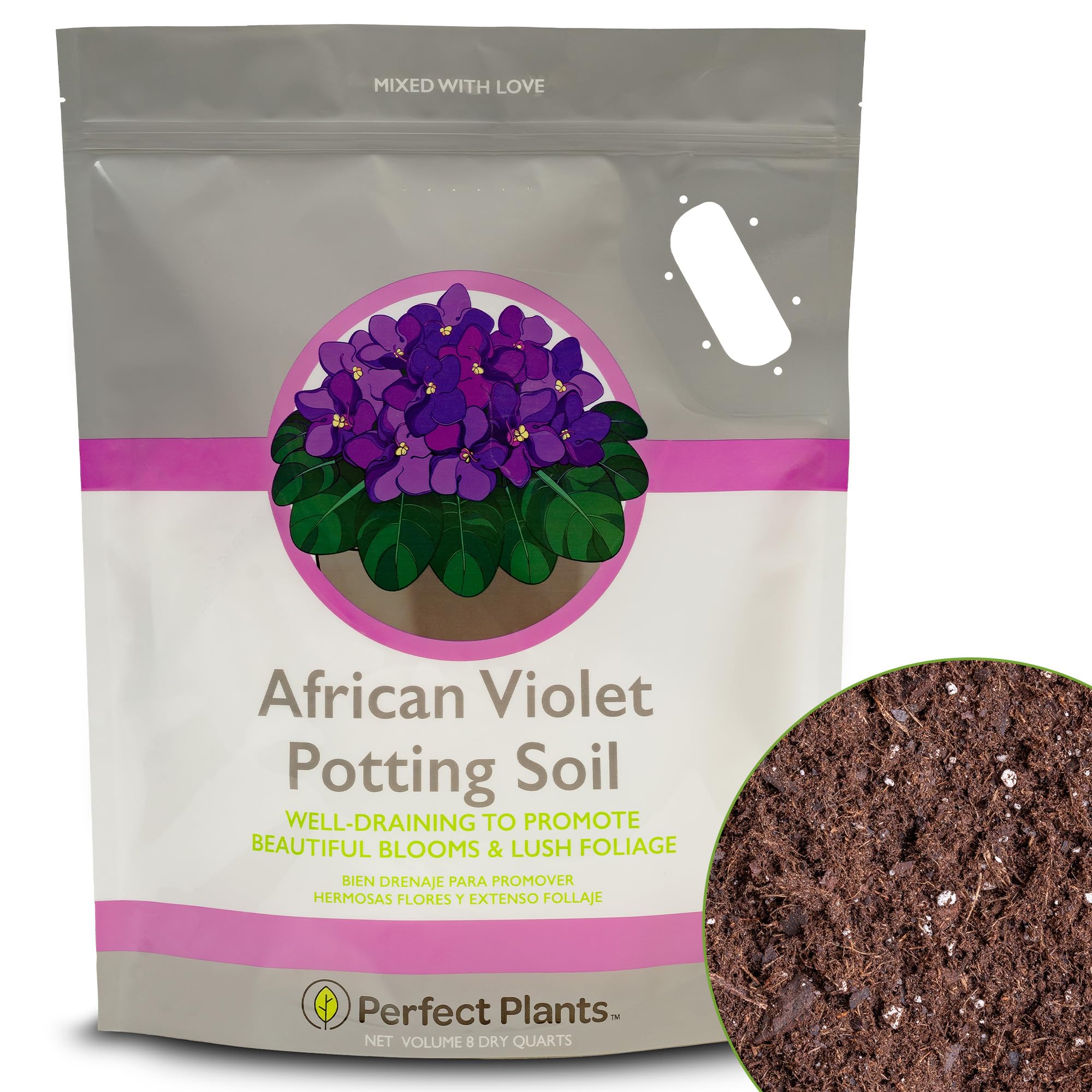
8 quarts — the largest single bag in this guide — makes the Perfect Plants African Violet Potting Soil the top pick for anyone refreshing soil across a whole collection without buying multiple bags. The blend uses pine bark compost, peat moss, perlite, and garden lime, with no added chemical fertilizer, giving you full control over feeding. One reviewer noted their dying violet “is making a come back! So alive and healthy now,” praising the nutrients in the mix, and because it drains quickly, it handles small decorative pots well too.
Compared to the Top Tier Genetics bag, which is pH-balanced and ready-to-use at 4 quarts, this Perfect Plants bag gives you double the volume and zero fertilizer for the same price bracket. Some experienced growers note the mix is basic, and if you tend to overwater, you may want to add extra perlite.
For the combination of 8 quarts of volume and simple, solid ingredients, this is the most practical place to start.
Why it’s great
- Best value for volume — 8 quarts covers many pots
- No chemical fertilizer added, so you control feeding
- Buyers report it revived nearly dead violets quickly
Good to know
- Some experienced growers find the mix basic
- May need extra perlite if you tend to overwater
2. Miracle-Gro African Violet Potting Mix (2 Pack)
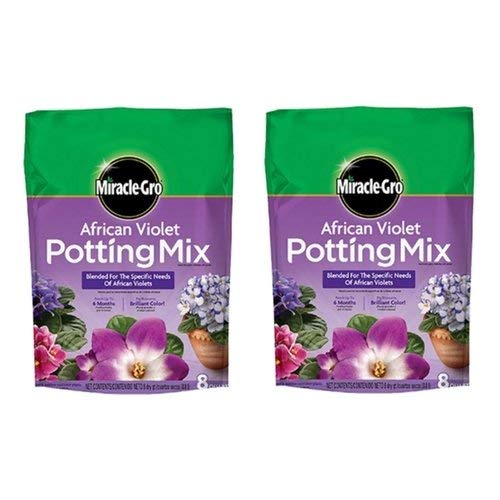
Against the top pick’s 8-quart fertilizer-free bag, Miracle-Gro’s single bag is also 8 quarts but comes with plant food already mixed in, which is why owners mention their violets “bloom like crazy” and one long-time user says they have flowers almost all the time. The texture is lightweight and drains well, holding moisture without turning into a soggy brick.
Because it already contains nutrients, you cannot add your own fertilizer immediately — wait a few weeks or you risk burning the roots. It ships as a 2-pack, so you get 16 quarts total at a reasonable price per bag.
If you want the most reliable path to constant blooms with minimum decisions, choose this over the top pick.
Where it shines
- Pre-mixed fertilizer supports heavy blooming
- Trusted brand with decades of consistent results
- Comes as a 2-pack giving you plenty of soil
Worth noting
- Fertilizer included means you cannot add more immediately
- Not suitable for strict organic growers
3. rePotme African Violet Imperial Potting Soil Mix – Mini Bag
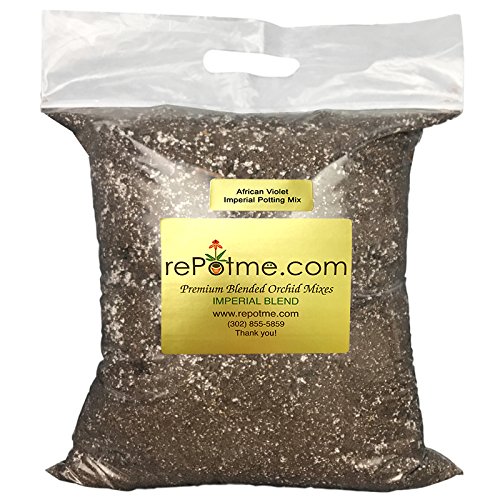
If you live in an apartment and own just one or two African violets, the rePotme Imperial mix ships in a 2-quart mini bag — a fraction of the 8-quart Perfect Plants bag — but the quality is noticeably higher. The bag is resealable, so you can use a cupful and store the rest without the soil drying out. Inside you get bark chips, coarse peat, and perlite, giving a chunkier texture that drains more sharply than most competitors. One buyer mentioned flowers “returned quickly” after repotting with good sun.
The standout spec is the texture: those bark chips create air pockets that generic soil cannot match. The price per quart is notably higher than the Perfect Plants or Miracle-Gro options, and one owner reported needing more soil than the bag provided but could not justify buying another. If you have a single violet and want the best ingredients in a no-mess package, this bag delivers apartment-friendly quality.
For the grower who values ingredient purity over volume, the rePotme Imperial mix proves that a 2-quart bag can outperform an 8-quart competitor.
What stands out
- Chunky bark and perlite create excellent aeration
- Resealable bag keeps leftover mix fresh
- Customers note flowers came back quickly after repotting
The trade-offs
- Small 2-quart bag may not be enough for larger pots
- Higher cost per quart than many alternatives
4. Premium African Violet Soil – Organic, Nutrient-Rich Potting Mix (Top Tier Genetics)
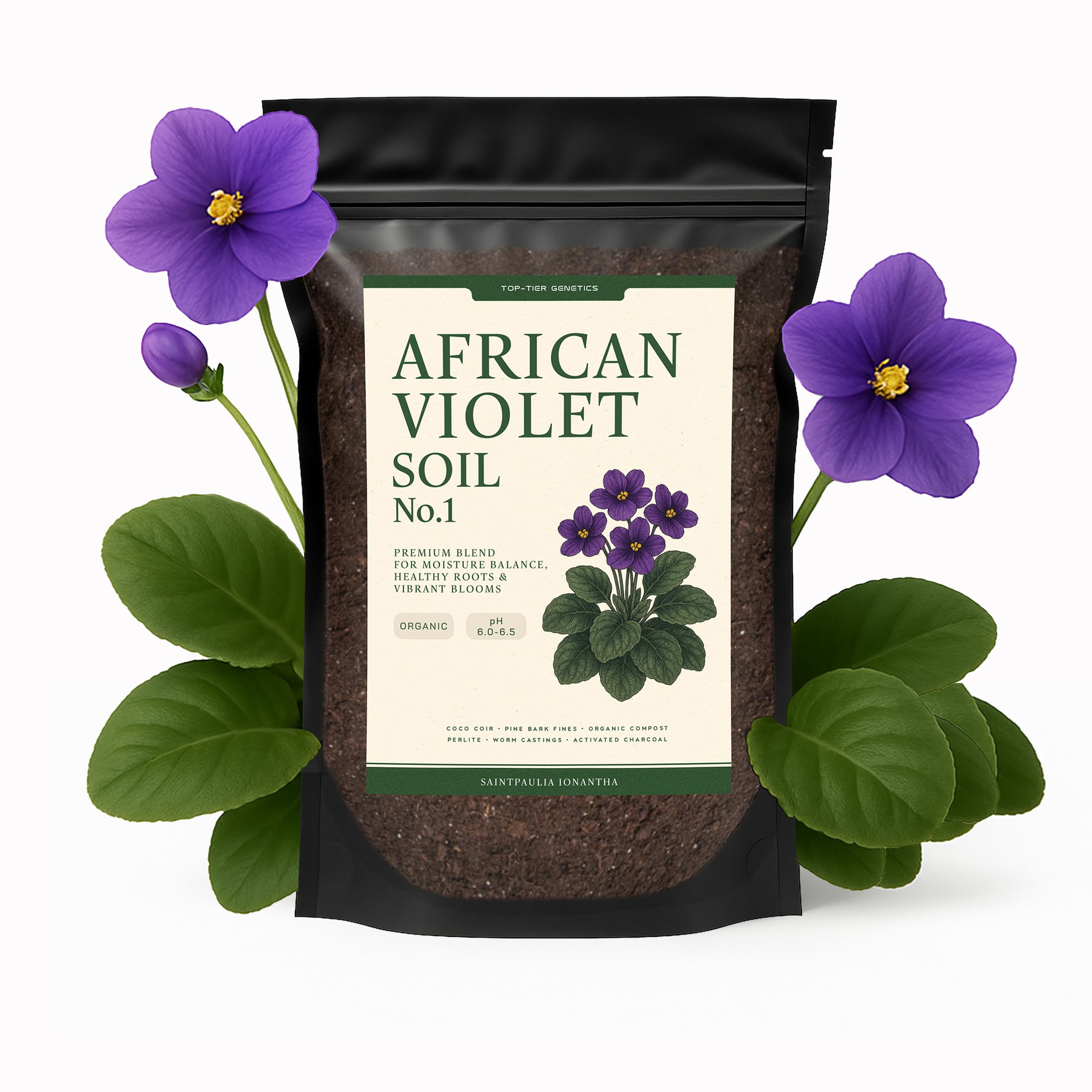
The single number that matters most in this category is pH balance, and this mix scores a precise 6.0–6.5 range so the plant can absorb iron and other nutrients. The 4-quart size is a practical middle ground, using peat moss, perlite, and limestone to keep acidity in range. The resealable zip-lock bag works like the rePotme’s, so you can scoop and store without mess. One customer observed “my African violet is extremely happy and thriving again.”
It beats the rePotme on volume per dollar and beats the budget options on ingredient quality. The catch: this is a newer brand with fewer total reviews than older names, so the long-term track record is less established.
For the 4-quart size with pH balance and ready-to-use convenience that reviewers praise, this is the bag to buy — delivering a strong price-to-value read.
The upsides
- pH-balanced with lime for optimal acidity
- 4 quarts is a practical middle size
- Reviewers point out happy, thriving plants
Keep in mind
- Newer brand with a shorter review history
- No added fertilizer — you must feed the plant separately
5. Professional African Violet Soil Mix Large (Leaves and Soul)
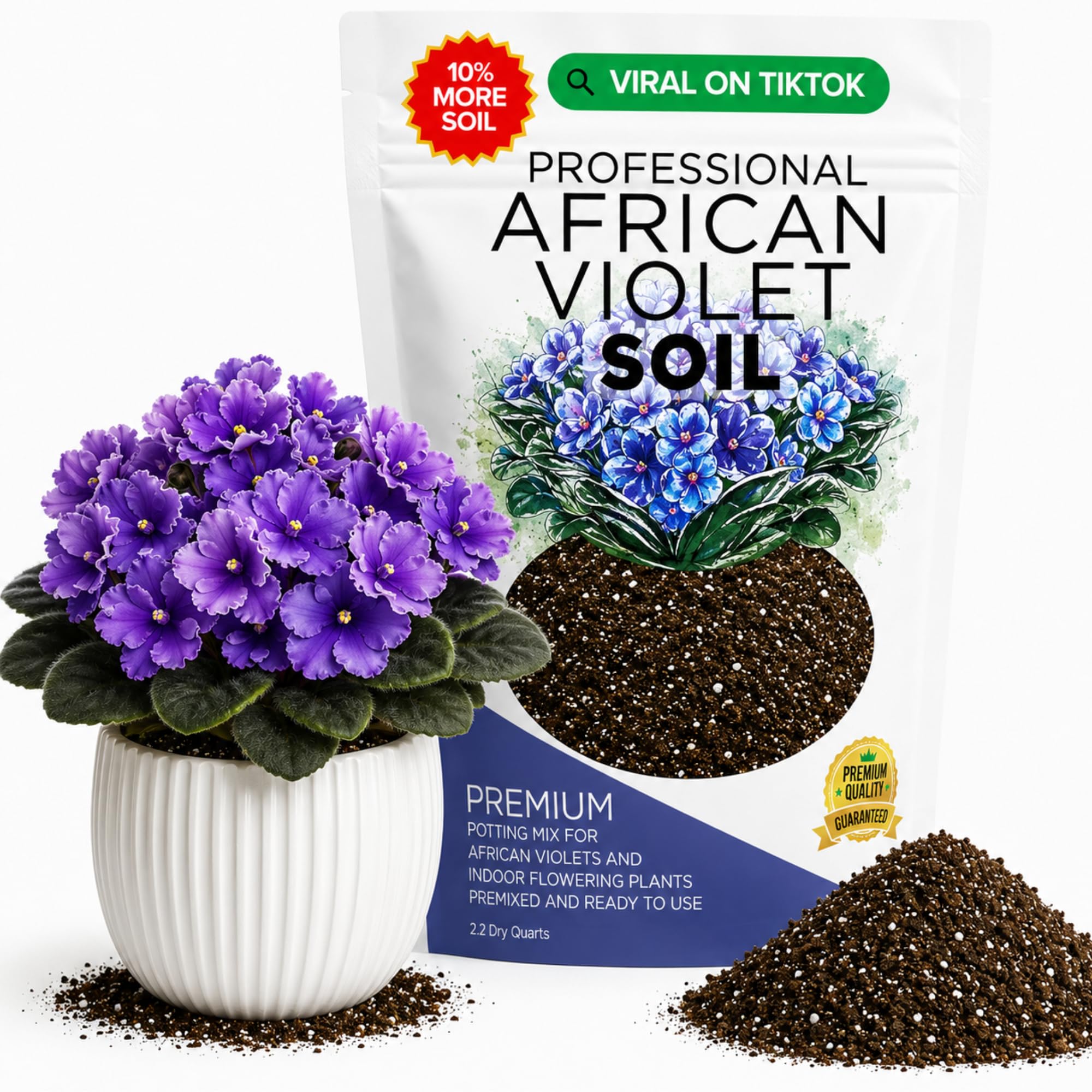
At this lower price you get a 2.2-quart bag of peat moss, coco coir, perlite, and dolomite lime — a slightly oversized mini bag that holds about the same usable volume as a standard 2-quart bag. It covers the basics for aeration and pH balance, making it a solid entry point for new African violet owners who want a small, affordable bag to try before committing to a larger size.
Compared to the Perfect Plants bag at 8 quarts, this is only enough for one to two small pots. One first-time owner said “this soil had everything included in it” and the plant was doing well, though they added extra perlite to improve drainage. The bag is resealable, but given the small size, you will likely use it all in one go. If you have more than two violets or want a larger pot, buy the Perfect Plants or Top Tier Genetics bag for better value per quart.
This mix is perfect for the budget buyer who owns one or two African violets in small pots and wants the lowest-cost way to try a dedicated violet soil without leftover waste.
Why we’d pick it
- Contains coco coir and perlite for good drainage
- Small bag size is ideal for testing a new brand
- Resealable packaging for storage
A few caveats
- Only 2.2 quarts — small for larger collections
- Some buyers add extra perlite for better aeration
6. Hoffman Organic African Violet Soil Mix (2 Pack)
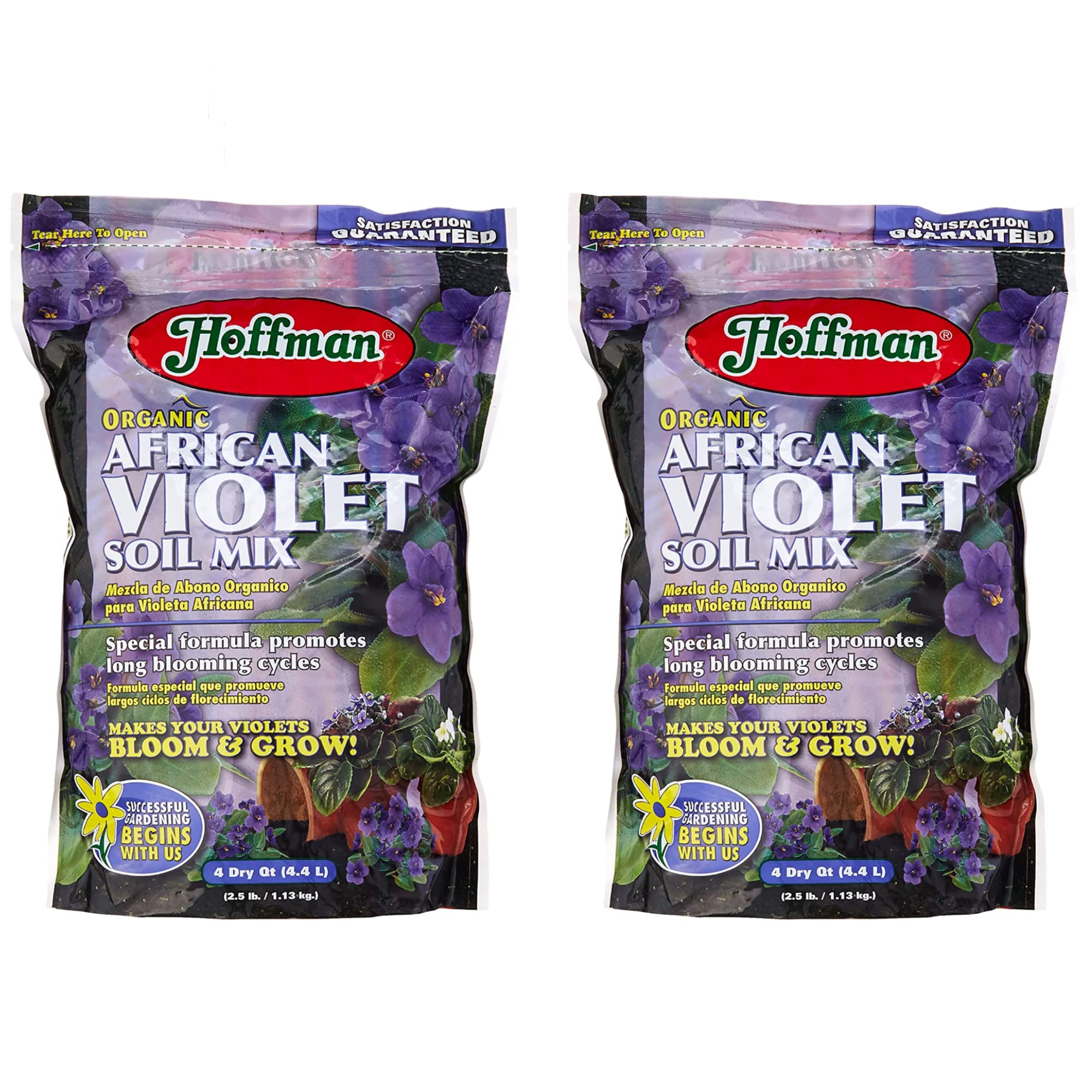
This budget-friendly two-pack is perfect for the DIY grower who already keeps perlite on hand and doesn’t mind customizing their mix for better drainage.
The Hoffman Organic mix is the most budget-friendly option here when you consider the price for two 4-quart bags. That gives you 8 quarts total, matching the Perfect Plants bag on volume for a lower cost. The mix uses sphagnum peat moss and vermiculite (a mineral that holds water and nutrients) instead of perlite, which takes a different approach to aeration.
Several buyers found this mix too dense on its own. One said “I had to add more perlite to it so it would not compact.” Another long-time owner mixes it 50/50 with perlite to get the right texture. If you are willing to mix your own, this is a great way to save money. If you want to open the bag and pour it in, you may be disappointed with how heavy it feels in the pot—so be aware that this mix typically needs extra perlite to prevent compaction.
Strong points
- Lowest cost per quart of the entire lineup
- Comes as a 2-pack for good total volume
- Good base to customize with your own perlite
Before you buy
- Tends to compact on its own without added perlite
- Not ideal for beginners who want a ready-to-use mix
Understanding the Specs
Perlite and Aeration
Perlite is the small, white, popcorn-like volcanic glass you see scattered through potting soil. For African violets, it is non-negotiable because it creates air channels that let oxygen reach the roots. Without enough perlite, the soil compacts and water fills all the gaps, suffocating the plant. Look for a mix where perlite is one of the top three ingredients.
pH Level
The pH scale runs from 0 (very acidic) to 14 (very alkaline). African violets need a pH between 6.0 and 6.5 — that is slightly acidic. If the pH is too high (alkaline), the plant cannot absorb iron, and its leaves turn yellow. Some mixes include dolomite lime to stabilize the pH. If the bag does not mention pH, it is a risk unless you know the brand.
FAQ
Can I use regular potting soil for African violets?
How often should I repot my African violet?
Why is my African violet soil getting mold on top?
Final Thoughts: The Verdict
When it comes down to it, the african violet potting soil winner is the Perfect Plants African Violet Potting Soil 8qt because it delivers the largest bag at a great value, with clean ingredients and no added fertilizer so you stay in control. If you want the easiest path to heavy blooms, grab the Miracle-Gro African Violet Potting Mix (2 Pack). And if you only have one plant and want the best possible aeration in a neat package, the standout is the rePotme African Violet Imperial Potting Soil Mix – Mini Bag.