
Compacted soil strangles grass roots by blocking the air, water, and nutrients they need to thrive. A dedicated aerator physically fractures that hard layer, and the difference between tools that merely poke holes and those that remove actual cores of soil determines whether your lawn recovers or stays suffocated.
I’m Rikta — the co-founder and writer behind Lawn Gear Lab. I’ve spent hundreds of hours comparing the tensile strength of hollow tines, the geometry of self-clearing core designs, and the real-world depth penetration data buried in owner feedback for every type of manual and rolling aerator on the market.
After sifting through technical specifications and long-term usage reports, I’ve isolated the models that actually deliver measurable decompaction. This guide breaks down the critical differences in tine material, core ejection design, and soil penetration weight to help you buy the right aerator for soil on your first try.
How To Choose The Best Aerator For Soil
The wrong aerator either bounces off hard ground or clogs within minutes. You must match the tool’s tine design, weight, and mechanism to your specific soil type and lawn size. Here are the three non-negotiable criteria.
Core Removal vs. Spike Poking
Spike aerators push solid tines into the ground, which can actually compact the soil around each hole. Core (plug) aerators extract a 2-4 inch cylinder of soil, physically relieving compaction. For clay-heavy or high-traffic lawns, a core aerator provides the only meaningful decompaction. Any tool described here that lacks hollow tines is not performing real aeration.
Tine Material & Self-Clearing Geometry
Stainless steel or alloy steel tines resist bending and rust. The critical secondary spec is the ejection design. Cheaper models have straight hollow tubes that clog with wet clay after a few plunges, forcing you to stop and dig out each core. Advanced designs use side ports, ramps, or open-backed tines that let the soil core slide out as you lift. If you value uninterrupted workflow, prioritize models with a proven self-clearing mechanism.
Working Weight & Leverage System
Manual step aerators rely on your body weight and a foot plate. The plate width (3.5-4.5 inches) and the handle height (36-42 inches) determine how much force transfers into the tines. Rolling aerators like the Landzie or Senvert depend on their drum weight—usually 30-55 pounds—to drive hollow spikes into the turf. A lightweight roller will ride over dry soil; a heavy roller will sink in. Always factor in whether the drum can be ballasted with sand to increase penetration pressure.
Quick Comparison
On smaller screens, swipe sideways to see the full table.
| Model | Category | Best For | Key Spec | Amazon |
|---|---|---|---|---|
| Landzie AeroCore | Rolling Core | Large lawns with heavy clay | 50.8 lbs / 7 hollow tines | Amazon |
| Rolling Lawn Aerator (Senvert) | Rolling Spike | Medium lawns, loamy soil | 55 lbs max ballast / 32 lbs empty | Amazon |
| Xuperace Core Aerator | Manual Step Core | Targeted spot aeration | 3 hollow tines / side-eject ports | Amazon |
| Dolibest 4-Plug Storage Tray | Manual Step Core | Small yards, tidy cleanup | 4 SUS304 tines / steel tray | Amazon |
| EEIEER 3-Tine Basket | Manual Step Core | Moist, soft soil lawns | 38″ height / integrated basket | Amazon |
| MEIIOFS Core Aerator | Manual Step Core | Budget entry, dead spots | 3 tines / soil storage tray | Amazon |
| Dolibest 4 Open-Plug | Manual Step Core | Dense clay, anti-clog priority | 4 semi-open SS tines / 37.2″ | Amazon |
In‑Depth Reviews
1. Landzie AeroCore Rolling Lawn Aerator
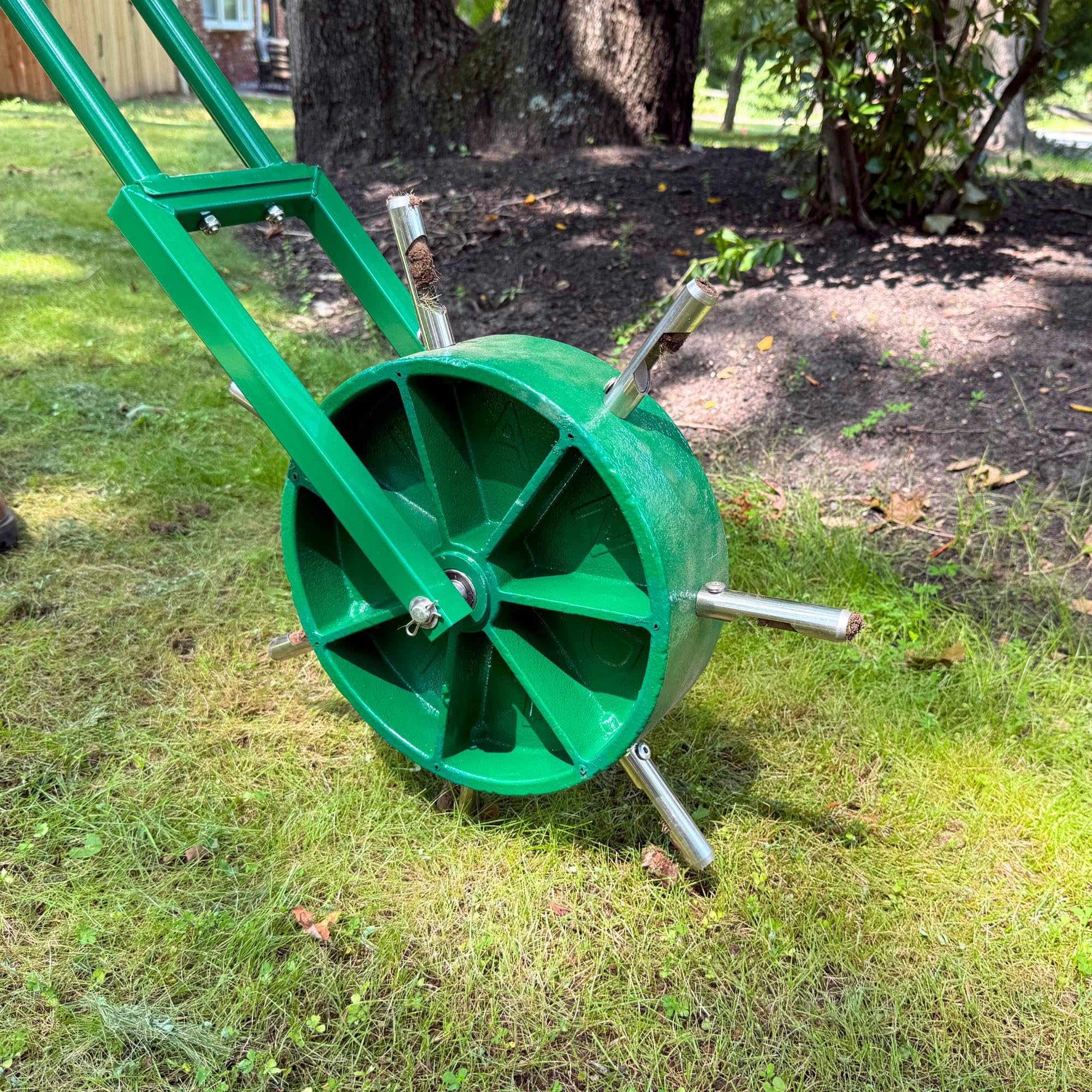
The Landzie AeroCore sets the benchmark for manual core aeration with a 50.8-pound steel drum that drives seven chamfered hollow tines into the turf without needing sand ballast. Its rolling design covers ground far faster than any step tool, and the wide-diameter tines eject soil cores continuously as the drum rotates. Owner reports confirm it pulverizes compacted clay in lawns up to 5,000 square feet while delivering a legitimate full-body workout.
Assembly requires about 30 minutes, and the tines are secured with nuts that benefit from a thread-locking compound—several users noted that screws loosened during the first session without it. The unit is heavy enough to require deliberate effort on inclines, but the trade-off is consistent 2-3 inch plug depth even in dry soil. The non-clogging chamfered edge is a genuine differentiator; owners report zero stoppages to clear packed tines.
This is a premium investment that pays for itself inside three seasons compared to renting a gas-powered aerator. You cannot match its coverage rate with a manual step aerator, and the build quality—powder-coated heavy-gauge steel throughout—suggests it will outlast cheaper rolling models by years. The only caveat is physical stamina: at nearly 51 pounds dry, you will feel every pass on a half-acre lot.
What works
- Self-weight penetration eliminates need for sand ballast
- Chamfered hollow tines eject plugs without clogging
- Covers large lawns faster than any step tool
- Replaceable tines extend service life indefinitely
What doesn’t
- Extremely heavy; tough on slopes and for smaller users
- Tine bolts require thread locker or aftermarket through-bolts
- Transport over pavement needs a cart to avoid spike damage
2. Senvert Rolling Lawn Aerator (Push Spike)
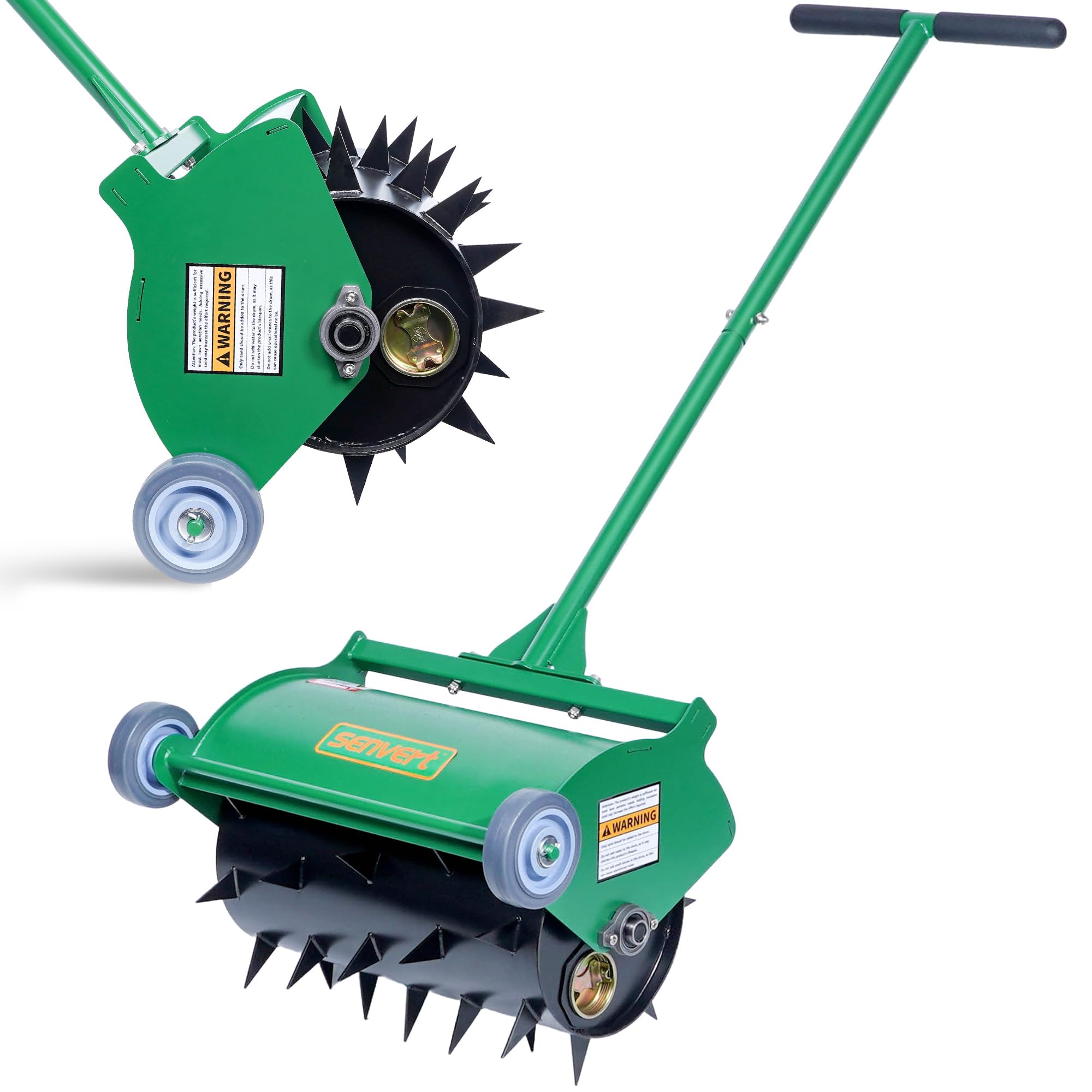
The Senvert rolling aerator fills the critical gap between a cheap step tool and a premium roller. It arrives fully assembled except for the handle, and the 32-pound empty drum can be filled with sand through a covered opening to reach 55 pounds. The spiral-spiked tread pattern uses solid spikes—not hollow tines—so this is a spike aerator, not a core plugger, but the heavy ballast allows the spikes to penetrate significantly deeper than any sub-30-pound roller.
Owner feedback confirms the sand ballast is essential for dry soil; running it empty will leave shallow divots on compacted lawns. The TPR auxiliary wheels are a thoughtful addition for moving the unit across driveways without scuffing concrete. Users with medium-sized lawns (3,000-5,000 sq ft) report finishing in under an hour with moist soil, and the two-handle design provides solid directional control.
This is a mid-range solution that works best for loamy, moderately compacted soil where spike aeration is sufficient. It does not remove cores, so it will not relieve deep compaction the way the Landzie does, but for routine annual aeration on healthy turf, it delivers the best balance of speed, value, and ease of use. Do not add water to the drum—sand only.
What works
- Ballastable drum reaches 55 lbs for solid spike penetration
- Transport wheels protect driveway surfaces from spikes
- Fully assembled drum—just attach the handle
What doesn’t
- Spike-only design does not remove soil cores
- Requires sand fill to be effective on dry soil
- Heavy with ballast; pulling is easier than pushing
3. Xuperace Core Aerator (3 Tine, Side-Eject)
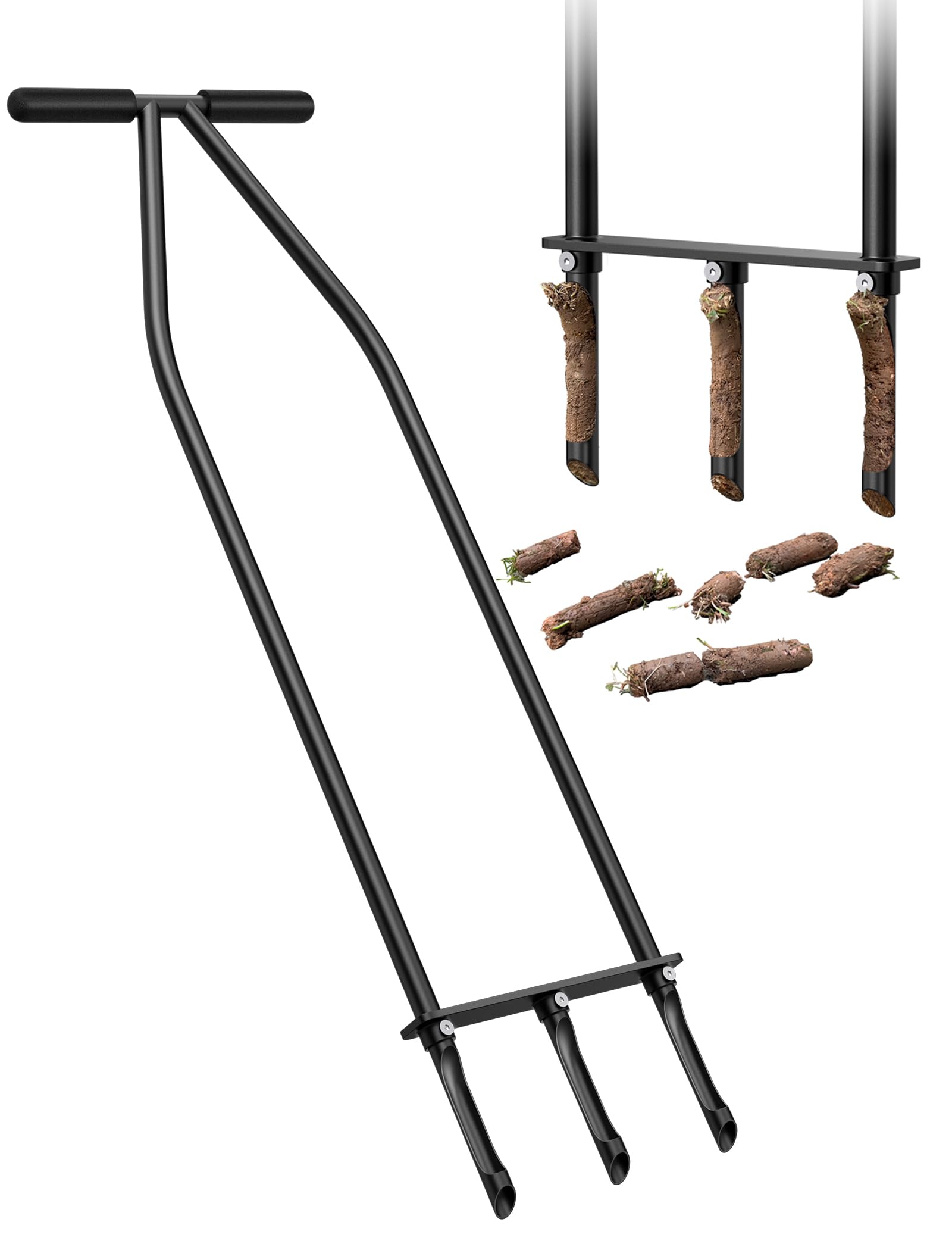
The Xuperace step aerator solves the single biggest frustration of manual coring: clogged tines. Its patented side-eject port routes soil plugs out through a ramp rather than forcing them up through a straight tube, and owner tests confirm this eliminates stoppages even in wet clay. The frame is integrally formed from high-strength alloy steel, and the 42-inch handle provides good leverage for users standing upright.
Each of the three hollow tines is replaceable via screws, and the manufacturer even suggests removing the center tine for ultra-hard spots to reduce resistance. Owner reports show consistent 3-4 inch plug depth in compacted clay when the soil is moist. The double-bar steel handle proved stronger in field use than single-bar competitors, and the design allows a natural knee-free stepping motion that reduces joint strain.
This is a premium manual step tool that warrants the higher price through superior engineering. The side-eject mechanism and replaceable tines mean it will outlast and outperform cheaper 3-tine models in dense soil. Assembly requires checking screw tightness after the first session, but pre-applied thread locker and included extras make that easy. It is not designed for whole-lawn coverage—target about 25 square feet per minute.
What works
- Side-eject ramp prevents all tine clogging
- Replaceable hollow tines with pre-applied thread locker
- Integrally formed alloy frame resists cracking
- Removable middle tine for hard soil spots
What doesn’t
- Slow for large lawns—roughly 3 minutes per 25 sq ft
- Screws need retightening after first heavy use
4. Dolibest 4-Plug Coring Aerator with Storage Tray
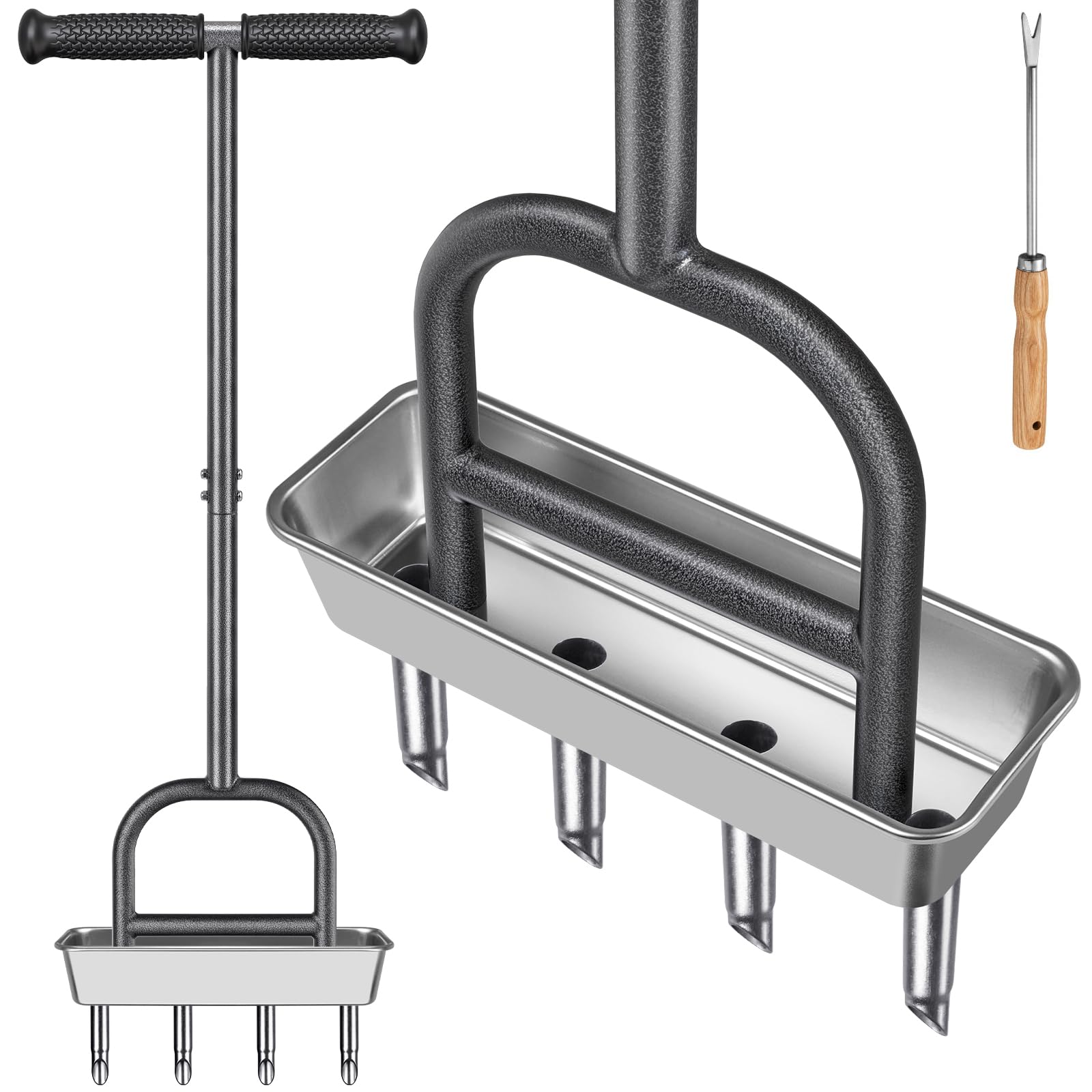
The Dolibest coring aerator with storage tray solves the mess problem: ejected soil cores fall directly into a stainless steel container instead of scattering across your lawn. The four hollow tines are made from SUS304 stainless steel, ensuring they will not rust even in consistently wet conditions. Owner feedback highlights the convenience of the tray for quick disposal—you can dump collected cores into a compost pile instead of raking afterward.
The handle includes a soft rubber grip that reduces hand fatigue, and the elevated crossbar prevents your shoes from blocking core ejection. Assembly takes about two minutes with three main pieces, though the single-bolt handle connection drew comments about long-term wobble. The cleaning tool broke immediately for one owner, but the tines themselves did not clog because the hollow design allows cores to push through freely.
This model occupies a value sweet spot for owners of small to medium yards who prioritize clean operation and stainless durability. It does not penetrate as deeply as the Xuperace in ultra-dry clay, and the handle height is better suited to users under 5’10”. But at its price point, the all-stainless construction and integrated tray make it a compelling choice for tidy work.
What works
- Stainless steel tray collects cores—no lawn cleanup
- SUS304 tines resist rust in damp storage
- Two-minute assembly with simple bolt connections
What doesn’t
- Included cleaning tool broke early for some users
- Handle height may cause back strain for taller users
- Tines could be sharper for dense clay penetration
5. EEIEER Manual Lawn Aerator with Soil Basket

The EEIEER step aerator incorporates a soil storage basket that catches ejected cores, eliminating the post-aeration raking step that many manual tool owners dread. Its patented one-piece bottom frame is thicker (2mm vs. the common 1.2mm) than typical welded designs, reducing the risk of breakage at the joint where step tools often fail. The 38-inch handle provides decent leverage for upright use, and the 4.3-inch foot pedal offers a solid platform for applying force.
Owner reports are mixed but honest: the tool works well in moist, soft soil and can transform a small lawn in a single session, but dry or sandy soil causes clogging that the included cleaning stick can only partly mitigate. The foam handle grips are comfortable but may degrade over seasons of sun exposure. Several users noted the advertised tine depth of 2.6 inches measures closer to 2 inches after installation.
This is a budget-adjacent option that becomes a great value if your soil is regularly moist and your lawn is under 3,000 square feet. The integrated basket and thicker frame are real upgrades over the cheapest no-name models, but the clogging tendency in sandy soil and the less aggressive tine length limit its versatility for heavy compaction.
What works
- Thicker 2mm one-piece frame resists weld breakage
- Soil storage basket saves cleanup time
- Includes cleaning stick for minor tine clearing
What doesn’t
- Actual tine penetration is only ~2 inches
- Clogs significantly in dry or sandy soil
- Foam handle grips may degrade over time
6. MEIIOFS Lawn Core Aerator with Tray

The MEIIOFS core aerator is a simple, no-frills step tool designed for homeowners who need to aerate a few dead spots or a very small lawn without spending on premium engineering. It uses three hollow tines with a soil storage tray to catch the plugs, and the T-handle includes a cushioned grip. The high-density alloy material resists rust and keeps the tool light enough for easy handling.
Customer feedback consistently notes the tool is smaller than product photos suggest—the overall dimensions are compact, which makes it maneuverable but means it covers ground slowly. Owners praised its sturdy feel and ease of assembly (bolt-together with included wrench and Allen key), and several reported it works well for targeted reseeding area prep. The plastic bolt covers are a minor detail that tend to fall off quickly.
This is a pure budget-tier option for the occasional user. It will not survive heavy clay compaction repeated over multiple seasons—the frame is not as robust as the Xuperace or Dolibest stainless models—but for a small, soft-soil lawn under 1,500 square feet, it gets the job done at the lowest possible entry point. Expect to replace it after two or three seasons of moderate use.
What works
- Lowest-cost entry into core aeration
- Lightweight and easy to maneuver
- Storage tray prevents soil plug mess
What doesn’t
- Smaller than expected—slow coverage
- Not built for repeated heavy clay use
- Plastic bolt covers fall off quickly
7. Dolibest Manual Aerator with Semi-Open Plugs
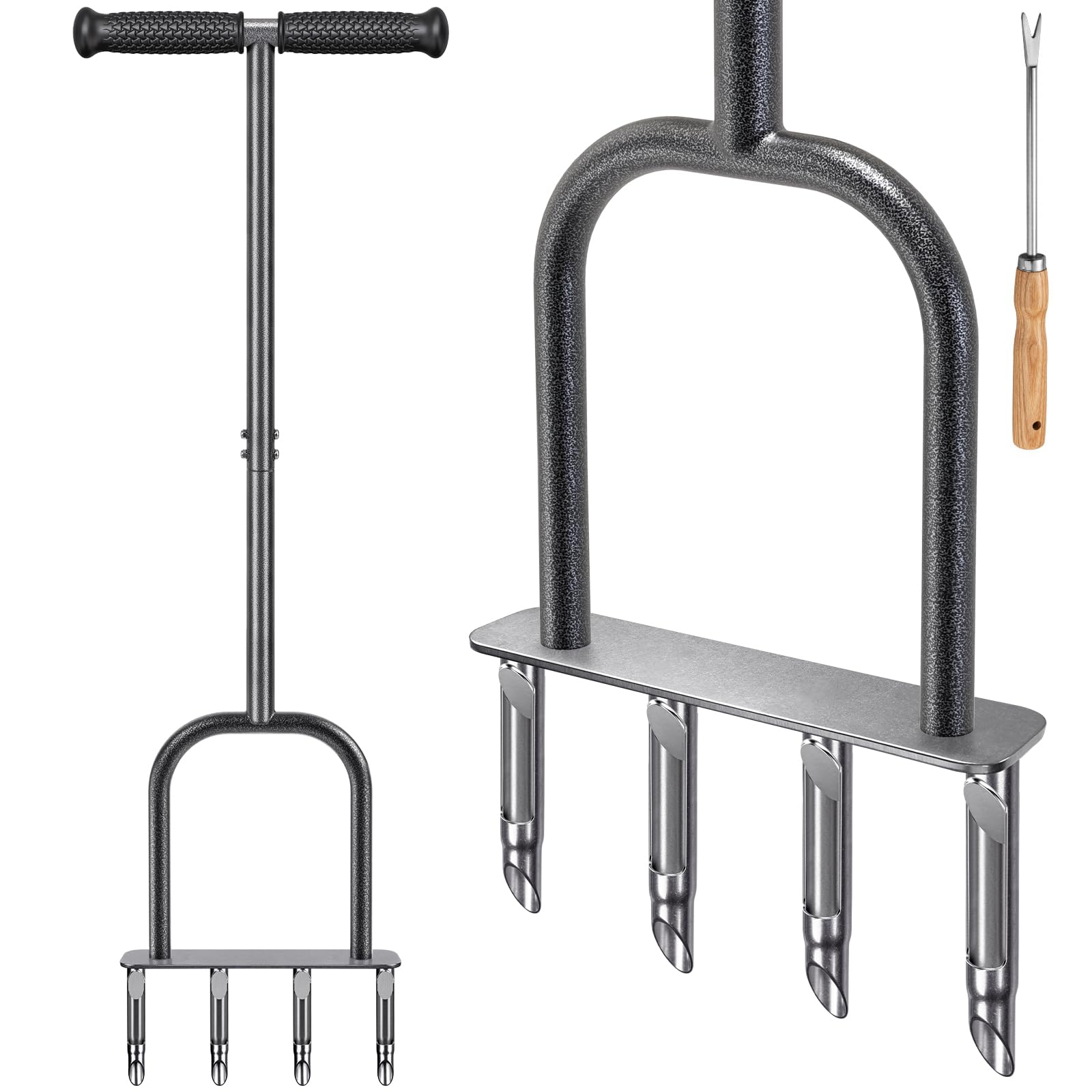
The Dolibest manual aerator with semi-open plugs delivers the best anti-clog performance in the budget tier. Each of the four stainless steel tines has an open-backed design that prevents soil from packing inside, a feature that owners of dense clay lawns consistently praise. The 37.2-inch handle and non-slip grip allow standing operation, and the tool arrives pre-assembled—no setup required beyond attaching the included 12-inch cleaning/weeding tool.
Owner feedback confirms the self-clearing tines work exactly as advertised: plugs drop out as you lift, eliminating the downtime that plagues straight-tube aerators. The tool covers roughly 25 square feet in three minutes and excels in small, high-traffic areas where compaction is worst. The three-piece bolt design drew minor complaints about loosening during extended sessions, but the trade-off is tool-free disassembly for storage.
This is the top pick for anyone dealing with dense, sticky clay on a modest budget. The semi-open tine design is genuinely superior to any fully enclosed competitor at this price level, and the stainless base ensures longevity in damp environments. It lacks a soil storage tray, so cores deposit on the lawn, but the speed of self-clearing operation more than compensates for the rake cleanup.
What works
- Semi-open tines never clog—even in wet clay
- Stainless steel base and hollow tubes resist corrosion
- Pre-assembled design saves setup time
What doesn’t
- Three-piece handle loosens during heavy use
- No storage tray—cores scatter on lawn
- Dry, rocky soil slows penetration significantly
Hardware & Specs Guide
Tine Material (Stainless vs. Alloy Steel)
Stainless steel tines (SUS304 or similar) resist rust indefinitely and maintain their edge longer in wet clay and acidic soil. Alloy steel with a powder coating is cheaper and often stronger in tensile terms, but the coating can chip on rocky ground, exposing bare metal to corrosion. For aerators that see seasonal storage in damp sheds, stainless is the low-maintenance choice. For extreme-force applications like rolling aerators, alloy steel’s higher fatigue resistance can justify the corrosion trade-off.
Self-Clearing Mechanism Types
Three dominant designs exist: open-backed tines (Dolibest semi-open), side-eject ramps (Xuperace), and chamfered hollow tines (Landzie). Open-backed tines release soil as you lift but can drop cores on your shoes. Side-eject ramps route plugs away from the user and work in the widest soil moisture range. Chamfered hollow tines on rolling aerators eject continuously during rotation but require a minimum travel speed. Avoid straight hollow tubes—they clog in any soil above 20% moisture.
Weight-to-Penetration Ratio for Rollers
Rolling aerators must achieve a minimum spike loading of roughly 5-7 pounds per spike to penetrate dry compacted soil. The Senvert (up to 55 lbs ballasted across its spike ring) loads each spike at roughly 4-5 lbs, adequate for moist loam. The Landzie (50.8 lbs across 7 tines) loads each hollow tine at about 7.3 lbs, enabling penetration into hard clay without ballast. Spike count matters: you want fewer, heavier spikes for dry soils and more, lighter spikes for soft turf.
Handle Height & Leverage Math
Manual step aerators should have a handle height that matches the user’s hip joint. A 36-38 inch handle works for users 5’6″ to 5’10”; taller users need 40-42 inches to avoid stooping. The foot plate width also affects leverage: wider plates (4+ inches) spread the stepping load but reduce potential force per square inch. Narrower plates concentrate body weight into the tines, which helps in hard soil. Always prioritize a design where the foot plate sits directly above the tine cluster.
FAQ
Should I water the lawn before using a manual core aerator?
How deep do hollow tines need to penetrate for effective aeration?
Can I use a spike aerator instead of a core aerator for clay soil?
Final Thoughts: The Verdict
For most gardeners, the aerator for soil winner is the Senvert Rolling Lawn Aerator because its ballastable design bridges the gap between speed and affordability for medium lawns. If you want true core removal without engine maintenance, grab the Landzie AeroCore. And for targeted spot aeration on dense clay, nothing beats the Xuperace Core Aerator with side-eject tines.