
Compacted soil strangles your lawn’s roots, blocking water, air, and nutrients from reaching where they’re needed most. A dedicated aerator physically removes plugs of soil or punches deep channels to break up that density, revitalizing your turf without heavy machinery.
I’m Rikta — the co-founder and writer behind Lawn Gear Lab. For this guide, I’ve compared seven aerators across different operating styles, analyzing their tine materials, penetration depth, build durability, and hundreds of verified owner experiences to separate the efficient tools from the frustrating ones.
Whether you’re spot-treating bare patches or doing a full-yard renovation, understanding the difference between core and spike aeration will lead you to the best aerator for garden that matches your soil type and physical effort tolerance.
How To Choose The Best Aerator For Garden
Selecting the right aerator comes down to your lawn size, soil composition, and how much physical effort you’re willing to invest. Manual step tools give you precise control for small areas, while rolling push designs cover more ground faster but require more storage space.
Core (Hollow Tine) vs Spike Aeration
Core aerators physically extract a plug of soil, which relieves compaction and creates space for organic matter to fill in. Spike aerators simply push soil aside, which can actually compact the edges of the hole in heavy clay. For serious compaction relief, hollow tine tools are the better investment.
Tine Material and Depth
Stainless steel tines resist rust and maintain their sharpness far longer than basic carbon steel. Look for tines that penetrate at least 2 to 3 inches. Shallower holes don’t reach the root zone of most grasses, so depth directly correlates with how much benefit your lawn receives.
Rolling vs Step Tool Ergonomics
Step aerators require you to stomp on a foot bar with your full body weight, which can be punishing on larger lawns. Rolling aerators use the drum’s weight and your forward motion to drive spikes or tines into the ground. If your yard exceeds 5,000 square feet, a rolling model reduces the repetitive strain.
Quick Comparison
On smaller screens, swipe sideways to see the full table.
| Model | Category | Best For | Key Spec | Amazon |
|---|---|---|---|---|
| Landzie Hollow Tine | Manual Core | Precision in tight spots | 3 stainless steel tines, no assembly | Amazon |
| Senvert Rolling Spike | Rolling Spike | Small to medium lawns | 32 lb drum, 55 lb max fill weight | Amazon |
| AVVA Rolling Coring | Rolling Core | Full-yard aeration | Spring-loaded hollow tines, sand fill | Amazon |
| 21″ Rolling Spike | Rolling Spike | Quick setup on soft lawns | 45 preassembled carburized spikes | Amazon |
| Dolibest 4-Corer w/ Tray | Manual Core | Clean core collection | SUS 304 tray, 4 stainless steel plugs | Amazon |
| Dolibest 4-Corer Plug | Manual Core | Medium-sized lawns | 4 stainless steel plug tubes, 3.5″ deep | Amazon |
| EEIEER Manual 3-Tine | Manual Core | Budget entry-level use | Soil storage basket, cleaning stick | Amazon |
In‑Depth Reviews
1. Landzie Hollow Tine Lawn Aerator Tool
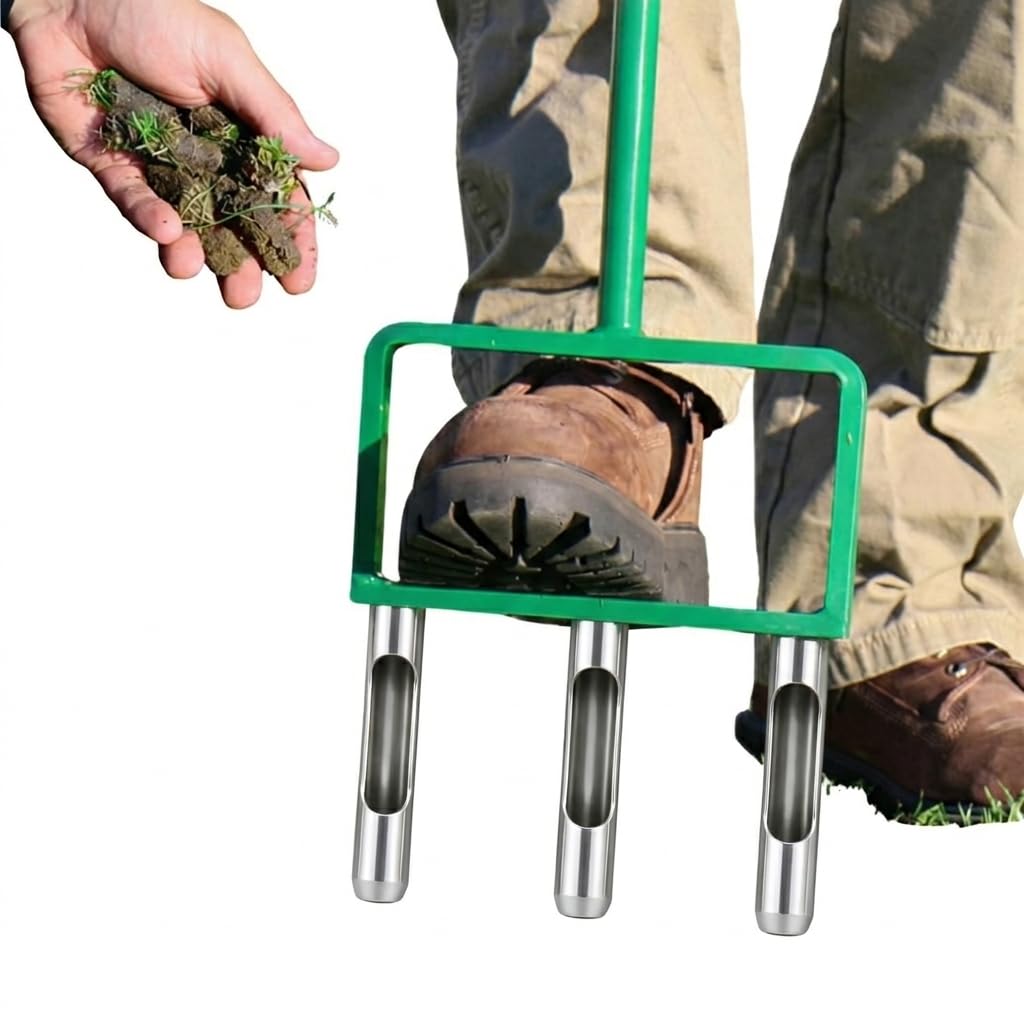
The Landzie arrives fully assembled with three stainless steel hollow tines that are beveled to resist clogging — a design that genuinely works across multiple soil types. At just over 5 pounds, it’s light enough to carry for spot treatments but sturdy enough to handle hours of repetitive use, as confirmed by owners who logged 50+ hours without structural failure.
The 42-inch handle reduces back strain, but the foot bar can feel slippery when wet. Moist soil is mandatory for effective penetration; dry or heavily compacted clay will stop the tines at around 2 inches. Owners recommend using a backward rocking motion for deeper plugs and watering the night before to achieve consistent 3-inch cores.
While it’s undeniably a workout — one owner measured cross-fit level exertion on a 2200 sq ft lawn — the build quality and clog-free tines make it the most reliable manual core aerator for patient homeowners. The ability to replace individual tines extends its lifespan far beyond budget step tools.
What works
- Clog-free hollow tine design even in damp soil
- Fully assembled out of the box — zero setup time
- Replaceable stainless steel tines for long-term service
What doesn’t
- Foot bar offers minimal traction when wet
- Requires significant upper body effort on compacted lawns
- Price point may feel steep for a manual step tool
2. Senvert Rolling Lawn Aerator (Heavy Duty)
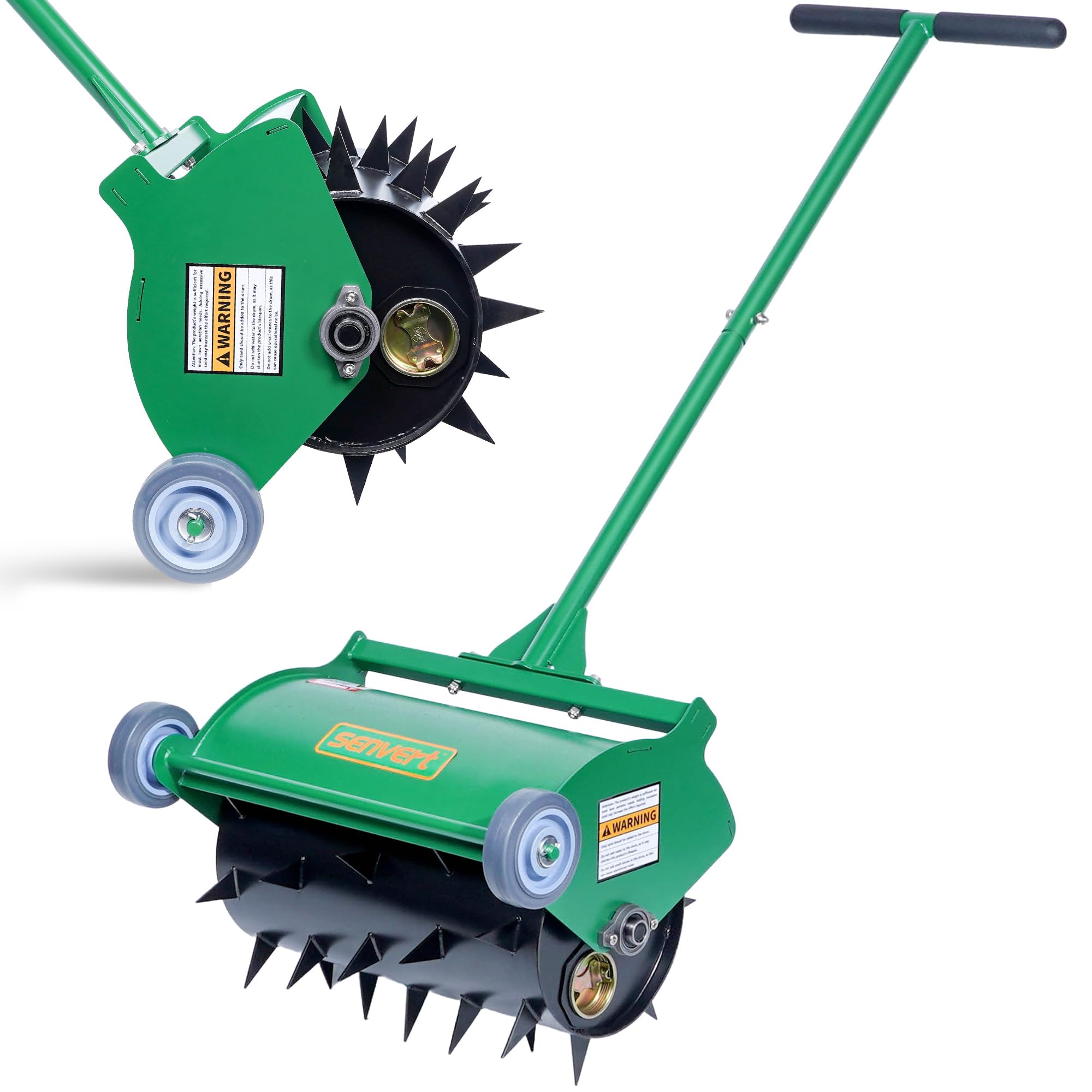
The Senvert uses a 32-pound drum that can be filled with sand or stones up to 55 pounds, giving you adjustable penetration depth depending on your soil’s resistance. The spiral-spiked tread pattern rolls smoothly and makes directional control predictable on flat terrain, which owners found superior to step tools for covering 5,000 sq ft lawns.
Assembly is limited to attaching the handle, and the auxiliary TPR wheels allow you to roll the unit to storage without dragging bare spikes across the driveway. For softer lawns, the drum’s base weight alone produces visible holes, but heavy clay requires the maximum sand fill and still may need multiple passes or a rocking motion.
The main drawback is noise — dry sand or stones inside the drum create a loud rattling sound during operation. Owners also note that the drum’s weight makes pushing uphill strenuous. For small to medium properties with moderately compacted soil, this is a solid middle-ground between manual step tools and powered machines.
What works
- Adjustable weight from 32 lb to 55 lb for different soil types
- Transport wheels protect hard surfaces from spike damage
- Wide spiral drum covers ground quickly on soft turf
What doesn’t
- Audible rattle from sand or stones inside the drum
- Struggles to penetrate heavy clay even at max fill weight
- Pushing uphill with a full drum demands serious effort
3. Patented Rolling Lawn Coring Aerator (AVVA VISION)
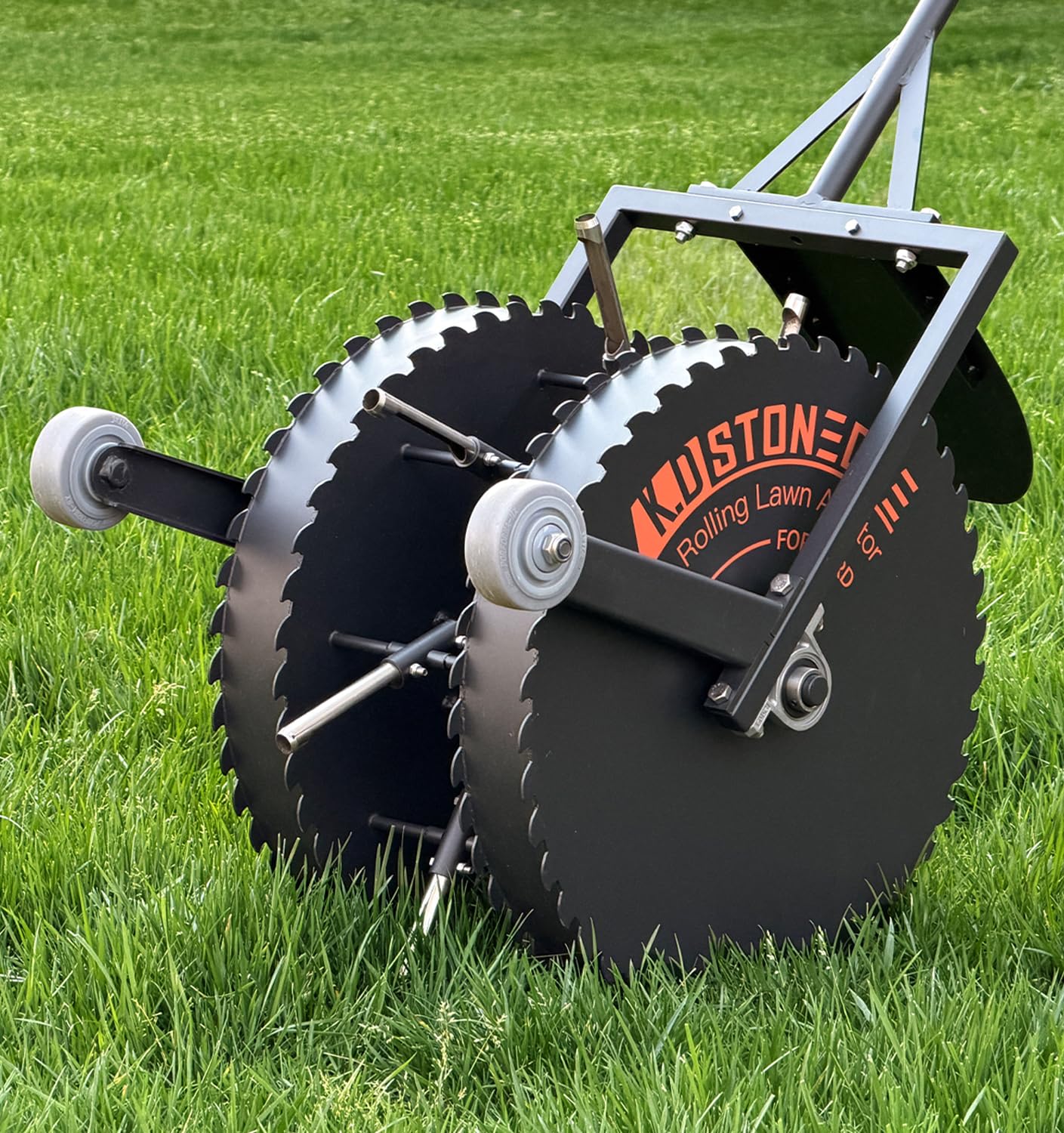
This rolling coring aerator uses spring-loaded hollow tines that punch into the soil and extract plugs as you push forward — the only rolling model in this list that physically removes soil cores instead of just spiking. Owners report consistent 2 to 3 inch deep holes on moist soil, with the spring mechanism breaking cores cleanly to prevent tearing.
The drum is designed to be filled with sand (up to 40 pounds recommended) to increase penetration force. Assembly takes about 20 minutes, though the instructions are sparse and require metric tools. The axle uses Allen screws that can loosen during operation, so applying thread-locker is a practical step that experienced owners suggest.
At roughly 38 pounds empty and around 80 pounds fully loaded, this is a bulky tool. Maneuvering it around flower beds and turning it on concrete takes practice. However, for owners willing to invest the assembly time and weight management, it produces real coring results across a quarter acre in about two hours — far faster than any step tool.
What works
- Actual hollow tine coring in a rolling format — unique in this price band
- Spring-loaded mechanism prevents tine clogging in wet conditions
- Sand-ballasted drum provides deep, consistent plugs
What doesn’t
- Assembly instructions are poorly written; metric tools required
- Axle screws need thread-locker to stay tight during use
- Heavy and awkward to transport or turn on hard surfaces
4. 21″ Rolling Lawn Aerator (Senjoys)
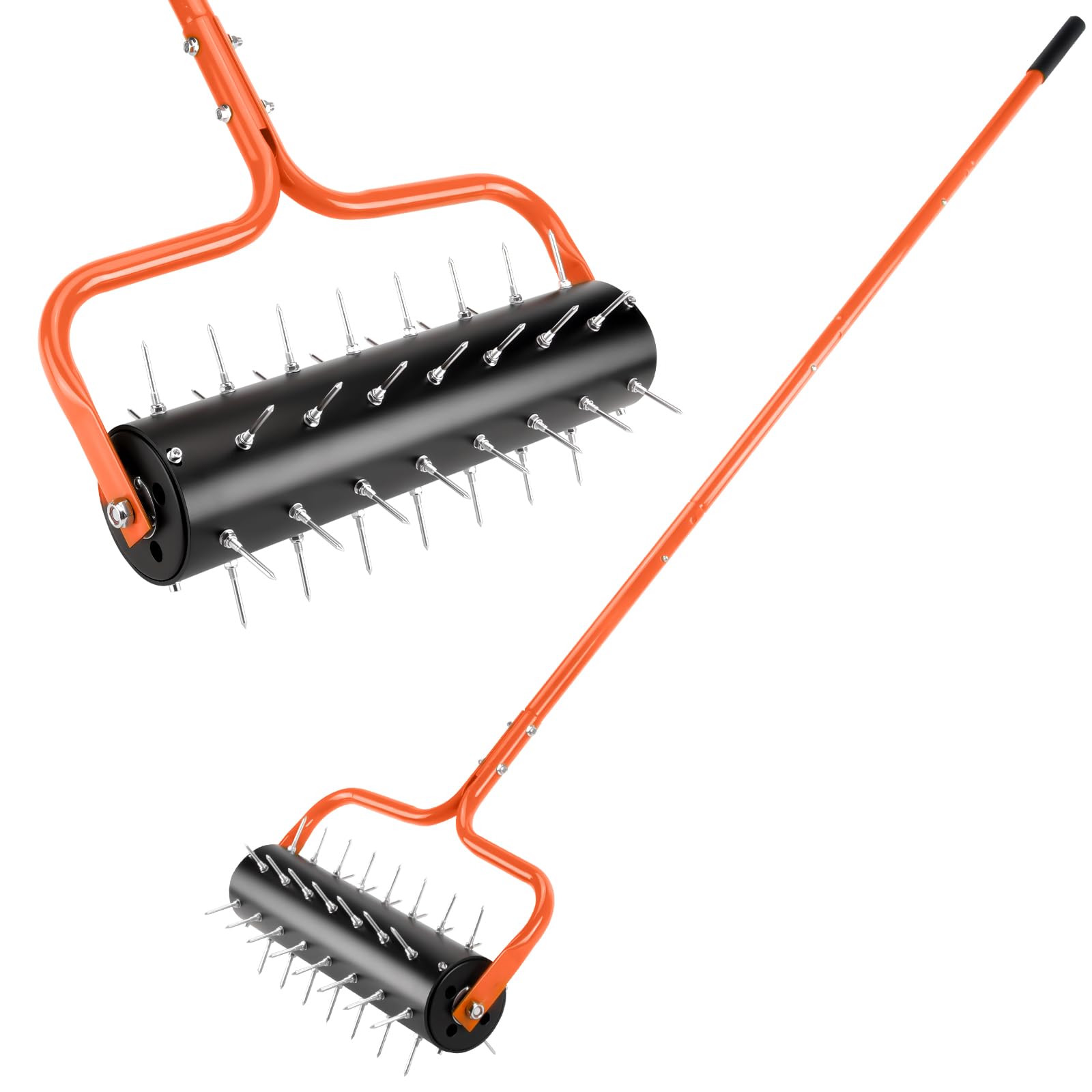
This 21-inch rolling spike aerator comes almost fully preassembled — the handle attaches with spring-pin quick clips in under five minutes. The 45 carburized spikes are noticeably harder than basic steel, resisting bending even when rolling over hidden rocks or roots in soft soil. The 75-inch handle is one of the longest in this category, reducing stooping for taller users.
The drum itself needs weight to penetrate effectively. Owners add rocks or sand into the cylinder, but the drum is not sealed, so contents can shift and create noise. On soft, well-watered lawns, this unit aerates quickly with minimal effort. On hard clay or dry soil, even adding weight often results in shallow surface marks rather than real holes.
A notable safety concern: the exposed spike drum has no storage guard. Owners with children or pets must box the unit or store it out of reach. The package arrives well-protected, and the carburized spikes do hold their edge, but this is strictly a tool for already-loose lawns rather than a compaction fix.
What works
- Carburized spike provides 30% more resistance to bending
- Quick-clip handle assembly — truly 3-5 minute setup
- Extra-long 75″ handle reduces back strain
What doesn’t
- Ineffective on compacted clay even with added barrel weight
- No storage guard — exposed spikes are a hazard
- Drum noise from shifting rocks or sand during operation
5. Dolibest 4-Corer Plug Aerator with Storage Tray
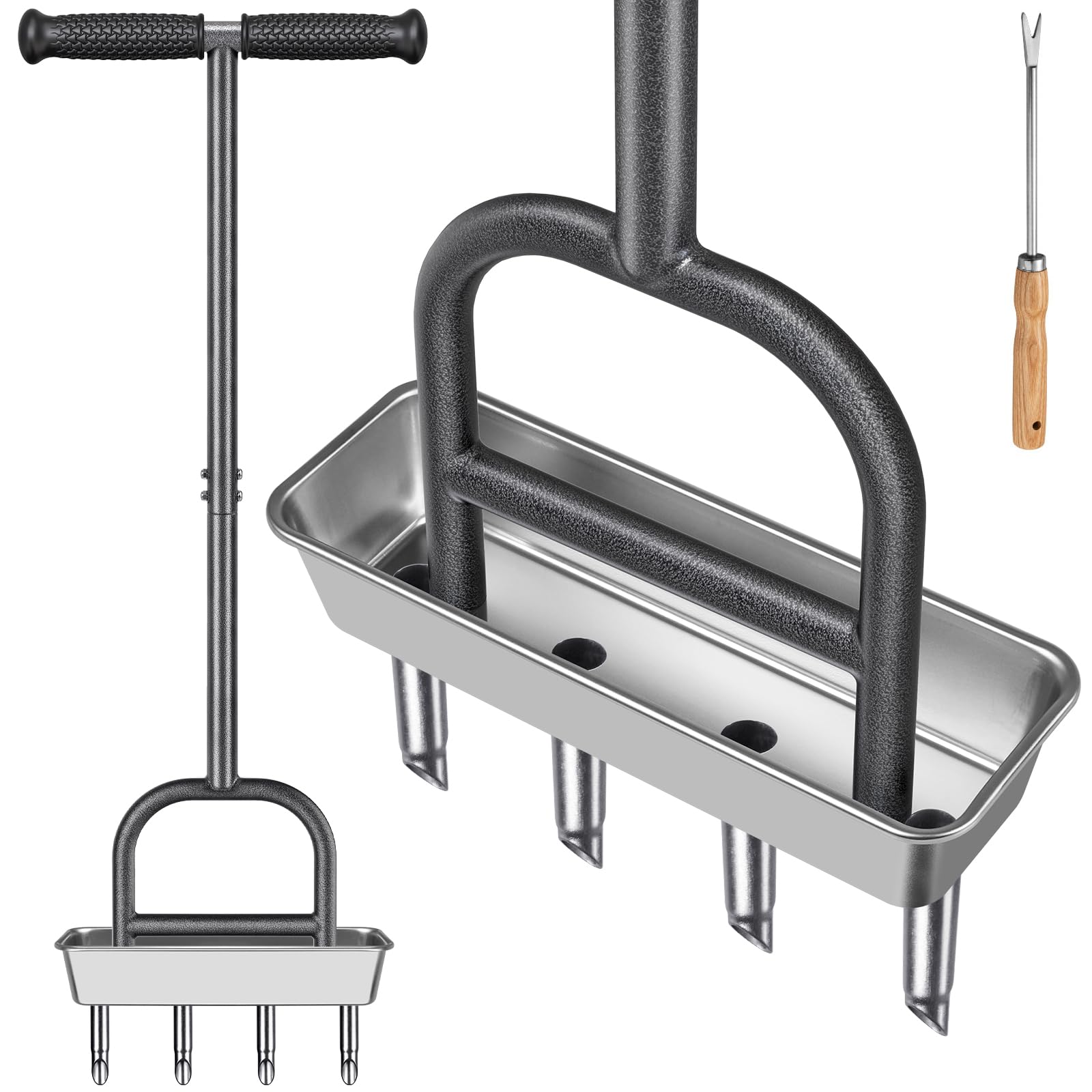
This Dolibest model combines four stainless steel coring plugs with a SUS 304 stainless soil collection tray — a rare combination at this price point. The tray catches the soil cores as they eject, saving you from raking or sweeping plugs off the lawn afterward. The 3.5-inch hollow tines produce deep, narrow cores that relieve compaction without tearing the turf surface.
The tool requires about two minutes of assembly — three parts secured with center screws. The rubber grip on the handle is comfortable even during extended sessions, and the elevated crossbar keeps your shoes clear of the plug exit path. Owners emphasize that moist soil is critical; dry conditions cause the tines to clog and the tray to fill with dust rather than clean plugs.
Build quality is solid for the price, with powder-coated steel rod and welded tine housing. Some owners note the tines could be sharper for denser soils, but on typical lawn conditions after a rain, the Dolibest extracts clean plugs consistently. The included weeding tool doubles as a cleaning rod, adding utility beyond aeration.
What works
- Stainless steel tray collects soil cores — no post-aeration cleanup
- SUS 304 tine material resists rust and deformation
- Quick 2-minute assembly with only a center screw
What doesn’t
- Tines could be sharper for cutting into denser clay soils
- Moisture level must be precise — too wet clogs, too dry dust
- Step action can be awkward on steep slopes
6. Dolibest Lawn Coring Aerator (4-Corer Plug)
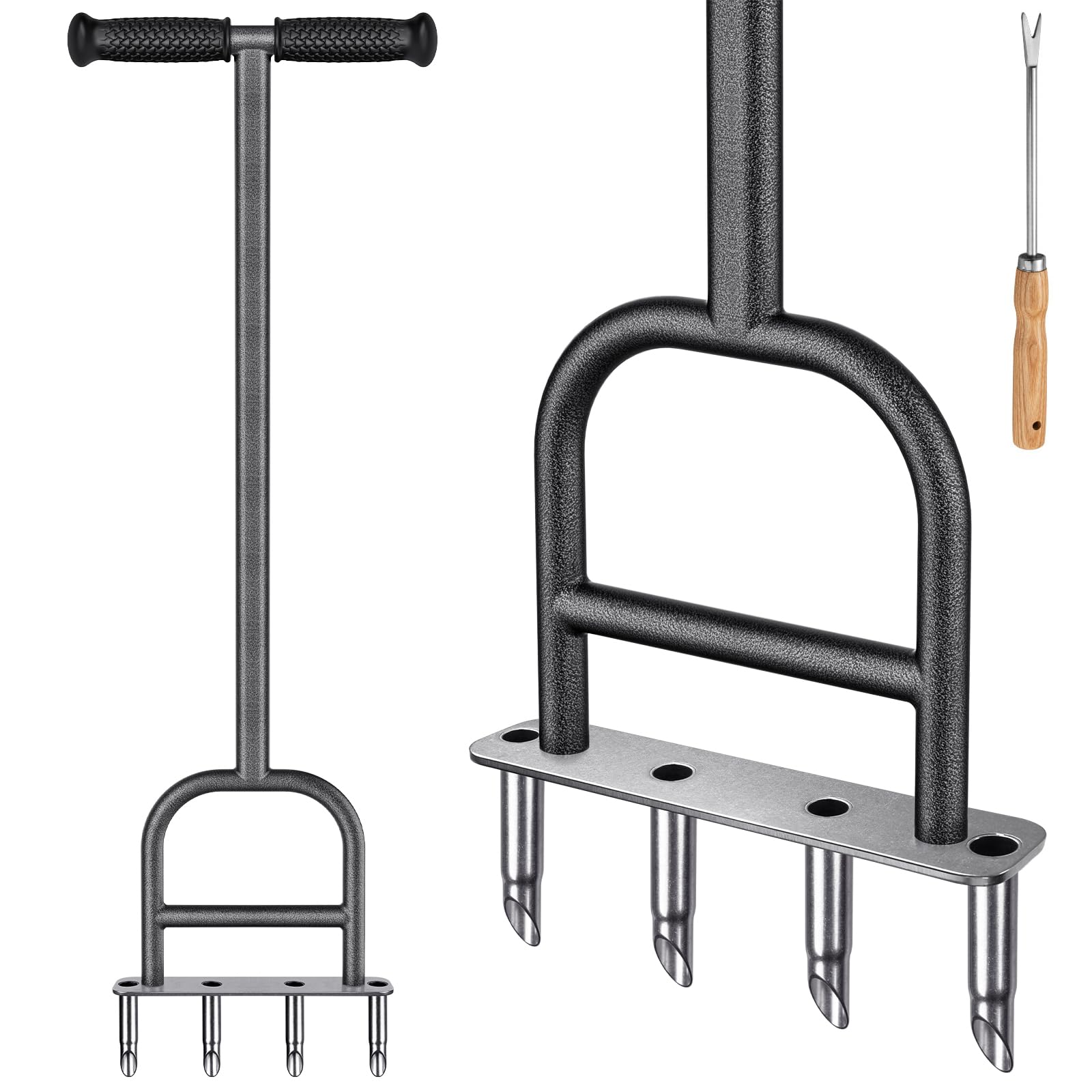
This plug aerator uses four stainless steel coring tubes with a black powder-coated steel frame, offering a heavier build than budget alternatives. The 5.54-pound weight helps the tines sink into soil with less body weight required. Each corer is 3.5 inches long and 0.5 inches in diameter, producing narrow plugs that leave minimal surface disruption.
The foot bar design is flat, which provides stable leverage but some owners found it limits depth to around 2 inches on hard ground. A rocking side-to-side motion helps achieve deeper penetration, and pre-soaking the lawn is strongly recommended. The soft rubber grip reduces hand fatigue, and the 12-inch weeding tool is included for cleaning tines and transplanting seedlings.
Owners praise the welded single-piece construction for durability, though the lack of a soil collection tray means you’ll be picking up plugs manually. For medium-sized lawns where you want quality coring without the cleanup convenience of a tray, this is a tough, corrosion-resistant tool that outperforms cheaper spike alternatives.
What works
- Welded all-steel construction with no weak solder joints
- Stainless steel tines resist rust even in humid storage
- Comfortable rubber grip reduces hand fatigue over long sessions
What doesn’t
- Rounded foot bar design limits penetration depth to ~2 inches
- No soil collection tray — plugs scatter and require manual pickup
- Requires rocking motion for deeper cores, slowing pace
7. EEIEER Manual Lawn Aerator with Soil Storage Basket

The EEIEER manual aerator uses three hollow tines with a soil storage basket that captures expelled cores directly, preventing mess on the lawn. The 38-inch handle and 4.3-inch foot pedal provide decent leverage for a budget tool, though the overall weight of 5.4 pounds is light enough to carry around beds and borders. A cleaning stick is included to unclog tines when damp soil sticks.
The bottom uses a patented one-piece structure instead of welded joints, which improves durability at the most stress-prone point. However, the 2mm thick metal walls and foam handles have drawn mixed feedback — owners report the foam grip may not survive multiple seasons, and the basket fills quickly on larger lawns, requiring frequent emptying.
This tool works best on small lawns under 3,000 sq ft with non-compact soil. Pre-soaking is essential for penetration. The three-tine design means each step covers less area than four-tine models, making it a slower option. For the price-conscious homeowner tackling a modest yard, it’s a functional entry point into core aeration.
What works
- Integrated soil storage basket keeps cores contained
- One-piece bottom construction resists breakage better than welds
- Included cleaning stick doubles as a weeding tool
What doesn’t
- Foam handle grip may degrade faster than rubber equivalents
- Small basket capacity requires frequent stops to empty
- Three tines per step cover less area than four-tine competitors
Hardware & Specs Guide
Tine Material & Durability
Stainless steel (SUS 304 or equivalent) resists rust and maintains a sharp cutting edge through dozens of uses. Budget tools often use carbon steel with powder coating that can chip over time, leading to rust and dulling. For longevity, prioritize models that list stainless steel for the actual tines, not just the frame.
Soil Moisture Sweet Spot
Every manual aerator works best when soil is moist but not saturated. Water the lawn thoroughly the night before — the soil should clump slightly when squeezed but not release water. Dry soil resists tine penetration and causes clogging; overly wet soil turns the cores into mud that sticks inside hollow tines.
Foot Bar Design & Leverage
Flat, wide foot bars distribute your weight evenly and allow deeper penetration with less strain. Rounded or narrow foot bars concentrate pressure but can make it harder to achieve full depth without rocking. Taller users should also check the handle height — 38 inches is the minimum for comfortable standing.
Rolling Drum Weight & Fill Capacity
Rolling aerators rely on drum weight to drive spikes or tines into the ground. Lighter drums (under 30 lb) are easier to push but may not penetrate hard soil. Models that accept sand or stone filler up to 55 lb give you control over penetration force. Avoid filling with water, as it sloshes and can rust internal components.
FAQ
Should I use a spike or core aerator for my garden?
How deep should the tines penetrate for effective aeration?
Can I aerate my garden when the soil is dry?
How often should I aerate my garden lawn?
Final Thoughts: The Verdict
For most gardeners, the aerator for garden winner is the Landzie Hollow Tine because its clog-free stainless steel beveled tines and zero-assembly design deliver consistent 3-inch cores with minimal hassle — the best balance of build quality and real-world effectiveness. If you want rolling coverage for a medium lawn, grab the Senvert Rolling Aerator for its adjustable 32-to-55 lb drum weight and transport wheels. And for a budget-friendly entry into soil core collection, nothing beats the Dolibest 4-Corer with Storage Tray for its stainless steel tray that keeps plugs contained.