
Specs are compiled from manufacturer listings and verified buyer reviews and can change over time — please confirm the key details on the product page before buying.
Adeniums hold a grudge. You pamper them, water them on schedule, give them the sunniest window—and they still refuse to flower, year after year. That stubborn, bulbous-trunked diva usually just needs the right nutrient push, and the fertilizers here are chosen precisely because they solve that exact problem: getting a desert rose to finally bloom.
I’m Rikta — the founder and writer behind Lawn Gear Lab. This guide is built by comparing the manufacturers’ published specifications and the patterns across verified customer reviews, so you get each pick’s real strengths and trade-offs instead of marketing spin.
For a plant that stores water in its trunk, feeding means a delicate balance of nitrogen, phosphorus, and potassium — the three numbers you’ll see on every label. Your adenium needs the right adenium plant fertilizer to push out those trumpet-shaped flowers instead of just leaves.
Our Picks at a Glance
How To Choose The Best Adenium Plant Fertilizer
Feeding a desert rose is less about how much you give and more about the ratio you give. Adeniums are succulents, so they store everything in that swollen trunk, called a caudex — push nitrogen too hard and you get tall, leggy growth with no flowers at all.
Read the N-P-K ratio first
The three numbers on any fertilizer label stand for nitrogen, phosphorus, and potassium. For desert roses, phosphorus is the bloom driver — it’s the middle number. A balanced blend like 3-1-2 keeps leaves healthy while still pushing the plant toward flowering rather than just green growth.
Choose your form: mist, concentrate, or powder
A ready-to-use spray mist is the lazy gardener’s friend — you spritz and go with zero measuring. A liquid concentrate asks you to mix a teaspoon into a gallon of water, which stretches further for regular feedings. A dry powder gets mixed into the soil itself and releases slowly, so it suits a bigger garden or a plant you repot.
Quick Comparison
| Model | Best For | Form | N-P-K Ratio | Volume | Amazon |
|---|---|---|---|---|---|
| Desert Rose Fertilizer (TPS)★ Best Overall | All-around liquid feeding | Liquid | 1:32 mix | 32 fl oz | Amazon |
| Gardenera Spray Mist | No-mix quick feeding | Ready-to-use mist | 3-1-2 | 8 oz | Amazon |
| Gardenera Liquid Concentrate | Indoor potted roses | Concentrate | 3-1-2 | 8 fl oz | Amazon |
| Tank’s SuperMix | Big gardens & soil mix | Powder | OMRI organic | 10 lb / 160 oz | Amazon |
In-Depth Reviews
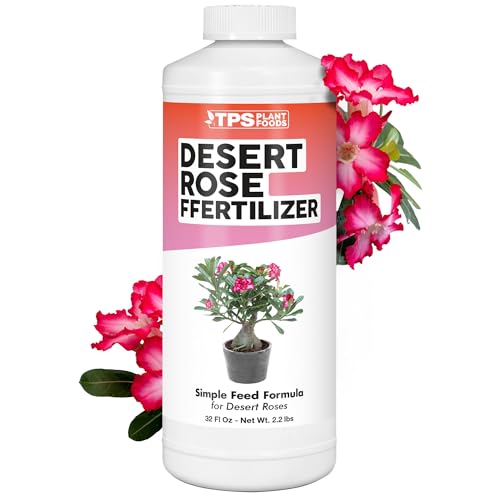
1. Desert Rose Fertilizer – Liquid Plant Food (TPS Nutrients)
Our pick — over 4.5★ from 100+ verified ratings; the strongest balance of quality and price.
The 32-ounce liquid that woke up a five-year-old bloom-less diva in days.
This is the bottle you reach for when your desert rose has given you nothing but leaves for years. It’s a liquid fertilizer engineered to support blooms and strong caudex development — that’s the swollen trunk you want thick — and it’s designed to feed without overstimulating or stressing the roots, which is exactly the gentle touch a succulent-type plant needs.
The volume is the headline here: 32 fluid ounces is four times the size of the 8-ounce Gardenera concentrate, so one bottle carries you through a whole season of weekly feedings. You dilute it at a 1:32 ratio — one part fertilizer to 32 parts water — and it works for potted plants on a patio or in a warm-climate garden, indoors or out.
Buyers report a five-year-old desert rose that had never bloomed pushed out new leaves within days of the first feeding. Owners praise the bloom response — richer flowers, sturdier plants, and even pothos responding well. It’s made in the USA and holds a 4.6-star owner average.
What Wins People Over
- Four times the volume of the 8-oz competitors at 32 fluid ounces
- Gentle 1:32 dilution protects sensitive succulent roots
- Visible new growth within days of the first feeding
The One Trade-Off
- You’ll need to measure and mix before each watering — no grab-and-go spray
- Made for desert roses, but some owners note it’s tempting to use on everything
Reach for this if: you want one big bottle of dependable liquid food that finally coaxes a stubborn adenium into blooming.
Look elsewhere if: you want zero measuring and a ready-to-use spritz instead of a mix-it-yourself concentrate.
2. Gardenera Professional Desert Rose Spray Fertilizer Mist
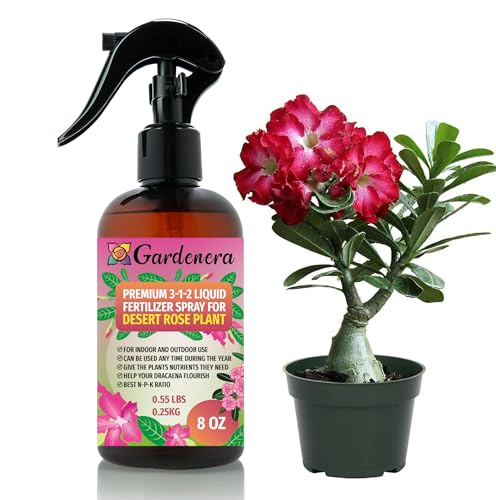
A no-mix mist that re-bloomed a desert rose that hadn’t flowered in years.
This 8-ounce spray mist is for the gardener who wants feeding to feel like watering. There’s no measuring cup, no dilution math — you just mist the plant, and the 3-1-2 gentle blend gets to work on healthy leaves and growth. The brand even pitches it as enhancing the plant’s resilience so it stands up better to pests and disease.
The convenience is the whole story here. The weekly ritual for many owners is simple: spray every Friday, no mixing, just mist all over the plant. It’s an organic-style, chemical-free nourishment approach, and the bottle is small at 8 ounces — but that’s the trade-off for the grab-and-go format. It suits gardeners of every experience level, from first-timers to old hands.
Owners mention a desert rose that hadn’t re-bloomed in years finally flowered again after this mist. Others say it worked fast, leaving the plant beautiful, healthy, and blooming. The one recurring tip is to go easy — a short spray is plenty, so you don’t oversaturate the plant. It holds a 4.4-star owner average.
The Lazy-Gardener Verdict: If the idea of mixing fertilizer makes you skip feedings entirely, this mist is the one that actually fits your routine — a 3-1-2 blend in a ready-to-use spray that owners say re-blooms plants that had given up.
Best for: anyone who wants feeding to be as simple as misting — a short spray each week with zero cleanup.
Think twice if: you feed several plants and want a bigger volume, since 8 ounces disappears fast with weekly sprays.
3. Premium Liquid Desert Rose Plant Fertilizer Concentrate (Gardenera)

The 8-ounce concentrate that triggered a first-ever bloom on a plant that refused for years.
This one is built specifically for indoor desert roses, and the feeding math could not be simpler: mix 1 teaspoon of the 3-1-2 concentrate into 1 gallon of water, then use it every other watering cycle. That tiny dose makes the 8 fluid ounces stretch surprisingly far for a potted plant on a windowsill.
The formula is an all-organic blend that balances nitrogen, phosphorus, and potassium — the three nutrients named in that 3-1-2 label — so the plant shows off its bulbous caudex stem instead of just stretching leaves. It’s formulated and sealed in the USA, and the brand pitches it as supporting every stage, from a fresh cutting to a mature rose.
Customers note a desert rose purchased in 2020 produced its first bloom after using this in the watering routine. Growth is the thing owners praise most — a young plant made a big difference in size with regular feeding, and some call it their ultimate favorite for desert roses.
Why It Earns Its Spot
- 1 teaspoon per gallon is the easiest dilution of the bunch — no guessing
- Organic 3-1-2 blend made for indoor potted desert roses
- Reviewers point out first blooms on plants that hadn’t flowered since 2020
The Catch
- Same 8-ounce size as the mist, so heavy feeders will reorder sooner
- Meant for every-other-watering, not a daily routine
Choose it for: the indoor desert rose that lives in a pot and needs a predictable, every-other-watering feed you can measure in seconds.
skip it if: you want a one-step spray — this concentrate needs a watering can and a teaspoon every time.
4. Tank’s Green Stuff 100% Organic SuperMix Fertilizer
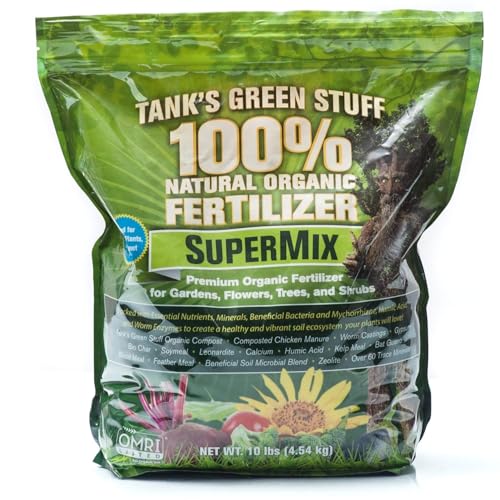
A 10-pound organic powder that feeds adeniums, veggies, and fruit trees alike.
Here’s the outlier: a dry powder instead of a liquid, and one with serious staying power. At 10 pounds — that’s 160 ounces — this bag dwarfs every liquid bottle on the list, which makes it the right call if you’re feeding a whole garden, not just one potted rose. The label says it plainly: great for adeniums, veggies, flowers, trees, fruits, and cactus.
The organic claim is the centerpiece here. It’s OMRI listed, which means it meets organic standards, and owners confirm there’s no manure smell — just complete nutrients in a fine powder. One clever technique from the review pages: mix it into a damp medium, store it for a month, let the microbes break it down, then transplant into that mix and the plants thrive.
Owners praise its raw effectiveness — healthier, bigger growth within months, plus high cherry tomato yields for one gardener. The trade-off is the format: it’s a fine powder that calls for a mask and gloves, and it can make soil silty and water-retentive, so adding perlite or sand helps. Despite that, it holds a 4.9-star owner average — the highest of any pick here. It also carries a 20x size advantage over the 8-ounce Gardenera mist, so the cost per feeding is dramatically lower.
Soil-Builder’s Pick: This isn’t a weekly watering additive — it’s a soil amendment you work into the mix once, then let microbes do the feeding for months, which is why it suits a garden-minded adenium owner rather than a one-plant windowsill hobbyist.
Best for: the gardener with a yard full of plants who wants one organic powder that covers everything from the desert rose to the vegetable patch.
Not for: the single-plant apartment grower who just wants to squirt something in the watering can — this is a bigger commitment than a liquid.
Understanding the Specs
The N-P-K ratio
Every fertilizer label shows three numbers: nitrogen, phosphorus, and potassium. For an adenium, the middle number — phosphorus — is what drives flowering and root health. A 3-1-2 blend keeps the ratio gentle so the plant produces those trumpet-shaped blooms instead of just pushing out more leaves.
Dilution and mixing ratio
Liquid feeds come with a mixing instruction — either a ready-to-use mist you spray directly, or a concentrate you dilute, like the 1:32 ratio on the TPS bottle or the 1 teaspoon per gallon on the Gardenera concentrate. The dilution protects the desert rose’s sensitive roots from getting scorched by too-strong food.
FAQ
Why won’t my desert rose bloom even with fertilizer?
What does the 3-1-2 on a desert rose fertilizer mean?
Is a spray mist or a liquid concentrate better for adeniums?
Can I use a general organic fertilizer on my desert rose?
How often should I feed my adenium plant?
Will desert rose fertilizer work on other houseplants?
How do I mix the Gardenera liquid concentrate?
Is organic fertilizer better for adeniums than synthetic?
Why is my fertilizer powder making the soil hold too much water?
Final Thoughts: The Verdict
Across the board, the adenium plant fertilizer winner is the Desert Rose Fertilizer from TPS Nutrients because its 32-ounce bottle and gentle 1:32 ratio give you the most food per bottle while still being easy on sensitive roots. If you want a zero-mixing routine, grab the Gardenera Spray Mist and just spritz each week. And for a whole garden of plants, the Tank’s Green Stuff SuperMix is the one to reach for — its 4.9-star owner average is the highest on this list, and 10 pounds of organic powder feeds everything from your adenium to your tomatoes.
How We Picked
We do not accept paid placement. Every pick is matched to a real buyer and a real use-case; we do not hands-on test units.
Sources & Methodology
Specifications: manufacturer listings and product documentation. Review insights: verified customer reviews, as of August 2026. Pricing: not shown on this page (it changes often); check the current price via the retailer link.
As an Amazon Associate, Lawn Gear Lab earns from qualifying purchases. This does not affect which products we feature.