
If your rhododendron has green leaves but not a single bloom, or worse, yellowing leaves and stunted growth, the root cause is almost always soil that is not acidic enough. This guide cuts through the chemistry to show you exactly which fertilizer will lower your soil pH (the measure of acidity or alkalinity) and deliver the nutrients your acid-loving rhododendron needs to thrive, without guesswork or wasted money.
I’m Rikta — the co-founder and writer behind Lawn Gear Lab. This guide is built by comparing the manufacturers’ published specifications and the patterns across verified customer reviews, so you get each pick’s real strengths and trade-offs instead of marketing spin.
After comparing seven specific formulas, the clear winner for most rhododendron owners is the Dr. Earth Acid Lovers because it revived a two-year non-blooming plant within weeks, according to buyer reports. Whether you need an organic slow-release option or a budget-friendly granular feed, this guide to the best acidic fertilizer for rhododendrons gives you the precise product match for your garden.
How To Choose The Best Acidic Fertilizer For Rhododendrons
Rhododendrons are acid-loving plants that simply will not flower or grow well in neutral or alkaline soil. Choosing the wrong fertilizer can lock up nutrients, scorch roots, or do nothing at all. Here are the three specs that separate a great fertilizer from a waste of money.
Understand the N-P-K Ratio
Every bag shows three numbers like 8-4-8. They stand for Nitrogen (N) for leaf growth, Phosphorus (P) for root and bloom development, and Potassium (K) for overall plant health. For rhododendrons, you want a balanced ratio with slightly higher phosphorus to encourage flowers — look for second numbers between 4 and 15. A low-nitrogen formula prevents excessive leafy growth at the expense of blooms.
Check the Acidifying Ingredients
Rhododendrons need soil pH below 6.0. Effective acid fertilizers use sulfur, iron sulfate, or ammonium nitrogen to lower the pH. If the label does not list an acidifying agent like soil sulfur or elemental sulfur, the product will not help a rhododendron with chlorosis — the yellowing of leaves caused by iron deficiency in alkaline soil.
Choose Between Granular and Water-Soluble
Granular fertilizers release nutrients slowly over weeks to months, so you apply them in spring and fall. Water-soluble powders work within days and require mixing every 7-14 days during the growing season. Granular is better for established plants; water-soluble gives a quick boost to struggling rhododendrons.
Quick Comparison
On smaller screens, swipe sideways to see the full table.
| Model | Category | Best For | Key Spec | Amazon |
|---|---|---|---|---|
| Dr. Earth Acid Lovers | Organic Granules | Reviving non-blooming plants | 4 Liters volume | Amazon |
| Miracle-Gro Water Soluble | Water-Soluble Powder | Quick recovery after transplant | 5 Pounds weight | Amazon |
| GARDENWISE 8-4-8 | Granular Slow-Release | Doubling plant size over a season | 32 Ounces per bag | Amazon |
| Nelson NutriStar 9-13-11 | Granules | Cold-weather stress recovery | 9-13-11 N-P-K ratio | Amazon |
| True Organic 5-4-3 | Organic Granules | Organic gardeners needing low pH | 12 Pounds weight | Amazon |
| Fertilome 9-15-13 | Granules | High phosphorus for blooms | 10 Pounds weight | Amazon |
| Espoma Holly-Tone 4-3-4 | Organic Granules | Long-term maintenance of large gardens | 36 Pounds weight | Amazon |
In‑Depth Reviews
1. Dr. Earth Acid Lovers Azalea, Camellia, Rhododendron & Maple Fertilizer

The one spec that makes this the top pick is the 0.3-0.4-3 N-P-K ratio — extremely low nitrogen and phosphorus percentages in granular form — which gently feeds rhododendrons without risking root burn or over-fertilization. This is the best choice if your rhododendron has not bloomed in years and you want a safe, organic restart.
Buyers report that one application to a rhododendron that had not bloomed for two years “sprang to life and was covered with huge pink flowers in no time.” At 4 Liters of volume, this bag lasts multiple seasons on a single shrub. It holds twice the volume of the Nelson 2-Liter bag, so you get a lot more coverage per purchase.
The honest limit: the granular form requires you to scratch it into the top inch of soil and water, which takes a bit more effort than simply sprinkling. For a rhododendron that refuses to flower, this is the one to buy — its organic ingredients plus trace minerals repair the soil biology first, then feed the plant.
Why it’s great
- OMRI & Non-GMO Project Verified for organic gardening
- Includes humic acids and trace minerals that revive soil health
- Safe around pets and people when applied per directions
Good to know
- Requires working into the top layer of soil
- Lower N-P-K means slower visible results than chemical fertilizers
2. Miracle-Gro Water Soluble Azalea, Camellia, Rhododendron Plant Food

Compared to the top-pick Dr. Earth, this water-soluble powder delivers nutrients instantly — you mix it at a 1:144 ratio for indoor plants or 1:18 for outdoor feeding — and owners mention it “truly helped our rhododendron to recover and look stunning this summer.” Where the Dr. Earth is gentle and organic, this is the fast-acting chemical boost that shows greener leaves within a week.
At 5 Pounds weight (which is 2.5 times heavier than the Nelson 2-pound bag), the bag yields dozens of feedings. You apply it every 7-14 days, so it is the go-to if your rhododendron is actively declining and you need rapid visual improvement. The resealable bag keeps the powder dry between uses.
The catch is that water-soluble feeds do not build long-term soil health; they feed the plant directly and then wash away. Choose this over the Dr. Earth only if your rhododendron is in immediate distress and you want to see improvement by next weekend, but be ready to supplement with an organic slow-release in fall.
Where it shines
- Works within 7 days — fastest recovery of any option here
- Safe on foliage and will not burn when mixed correctly
Worth noting
- Requires mixing every 1-2 weeks during growing season
- Does not build soil acidity long-term like sulfur-based granules
3. GARDENWISE 8-4-8 Acidic Fertilizer
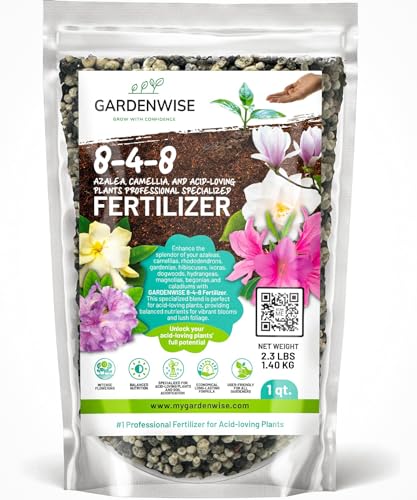
If you planted a new rhododendron and want it to double in size by next year, this 8-4-8 granular formula delivers. Customers note “I bought this for my newly planted rhododendron and it has doubled in size.” The 8-4-8 N-P-K ratio gives a strong but balanced push — more phosphorus than the Dr. Earth, so it targets root growth and bloom development together.
It contains iron, magnesium, and manganese to prevent chlorosis (the yellowing of leaves caused by iron deficiency in alkaline soils). With a slow-release action that requires only three feedings per year, this saves you time and effort compared to the weekly mixing needed for the Miracle-Gro.
The standout spec here is the cost-per-feed: the 32-ounce bag covers a full season on multiple shrubs, making it the most economical mid-range choice. Its N-P-K ratio beats the Nelson 9-13-11 on overall balance (8-4-8 is 12% less nitrogen-centric), which means less risk of forcing leaf growth at the expense of flowers.
What stands out
- Enriched with iron, magnesium, and manganese for greener leaves
- Three feedings per year — very low maintenance
The trade-offs
- Granules work best when scratched into the top inch of soil
- Not suited for container plants where water-soluble is easier
4. Nelson Acid Loving Plant Food NutriStar 9-13-11

The single number that matters most here is the 13% phosphorus — the highest phosphorus content of any fertilizer in this lineup. This makes it the best choice if your rhododendron suffered a cold snap or freeze damage, because phosphorus drives root recovery and new root growth. Reviewers point out it “saved plants from cold snap within a week; all survived and bloomed that season.”
The downside you accept is the smaller bag size — at 2 Pounds weight, this gives you less total product than the GARDENWISE 32-ounce bag or the Dr. Earth 4 Liters. But the 9-13-11 ratio, with three sources of iron (3.2% total iron), delivers a more concentrated nutrient punch per handful, so you need less per plant.
Price to performance: you pay a bit more per ounce than the GARDENWISE, but you buy it specifically for the highest phosphorus content and the cold-stress recovery insurance. If you live in a region with late frosts, this is the one to keep on hand.
The upsides
- Three sources of iron prevent chlorosis fast
- Four acidifying sources lower soil pH effectively
Keep in mind
- Smaller bag at 2 pounds — best for 1-2 shrubs
- Higher phosphorus can build up in soil if over-applied
5. True Organic Azalea, Camellia & Rhododendron Food
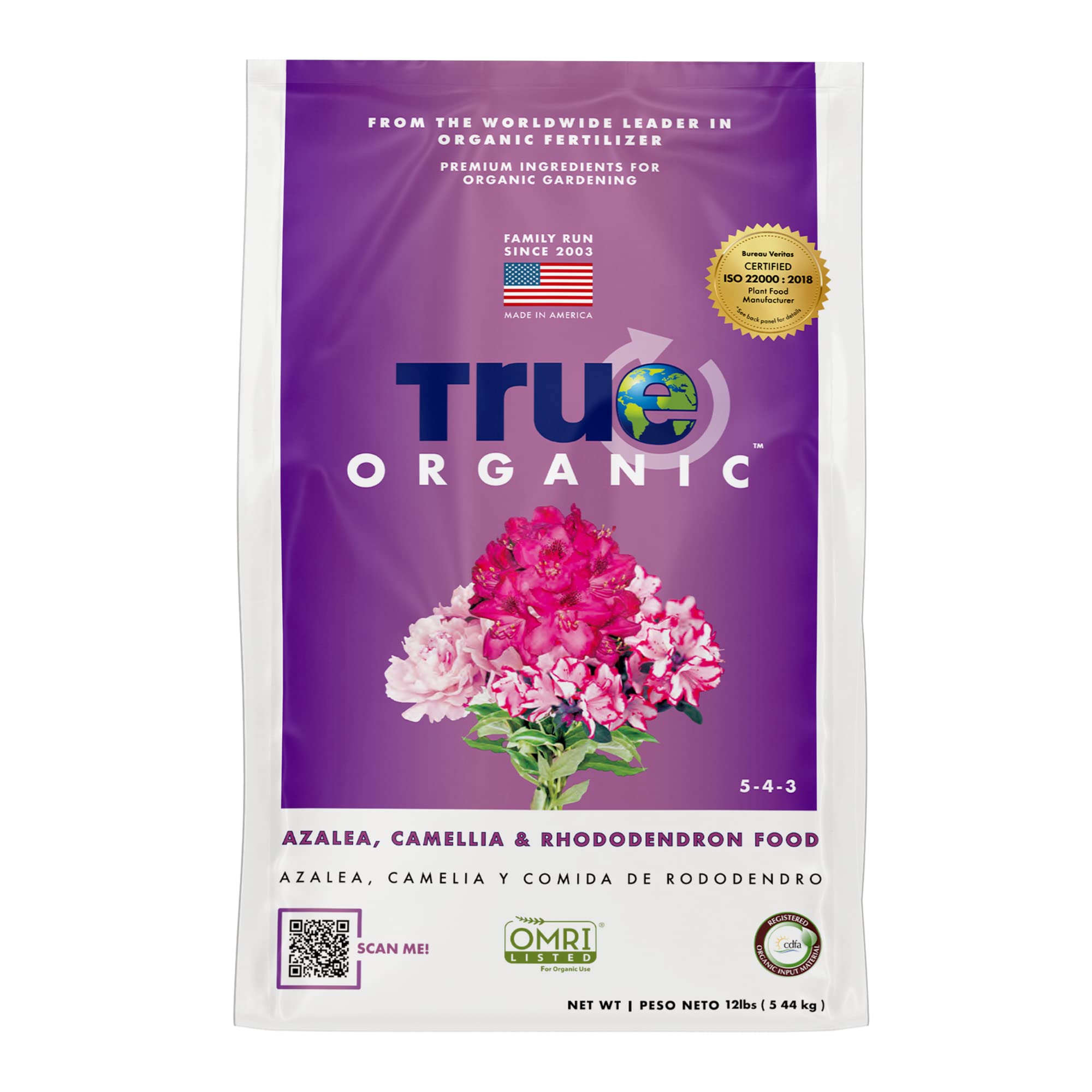
What you actually get at this lower price is a 12-pound bag that covers up to 261 square feet — more than enough for a bed of multiple rhododendrons. The key spec is the 5% soil sulfur, which actively lowers soil pH (the measure of acidity) rather than just feeding the plant. This makes it different from the Miracle-Gro: it changes your soil chemistry so rhododendrons can absorb iron and phosphorus naturally over time.
What you give up is speed. The 5-4-3 N-P-K ratio is the lowest in nitrogen of any product here, so it will not force rapid leafy growth. Shoppers say that after feeding, a compact rose bush grew to 7 feet, which suggests it works well — but you wait weeks rather than days for visible results.
This is perfect for the organic gardener who wants a single twice-yearly application (spring and fall) and trusts natural seabird guano and crab shell meal over chemical salts — the exact budget buyer it is perfect for.
Why we’d pick it
- 5% soil sulfur actively lowers pH for long-term acidity
- All organic ingredients — safe for edible gardens nearby
A few caveats
- Slow release — best applied in spring and fall only
- Not ideal for a quick rescue of a yellowing plant
6. Fertilome Azalea, Camellia, Rhododendron Food 9-15-13
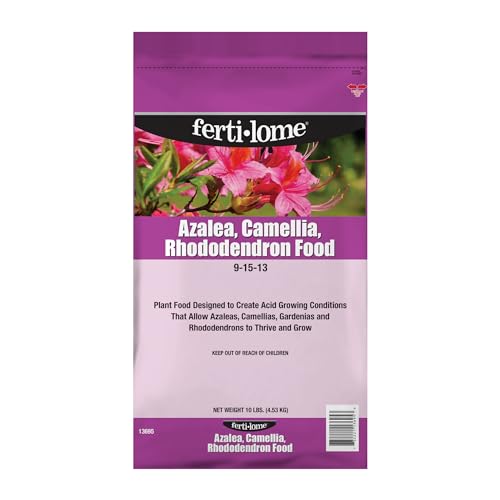
This granular formula is built for the rhododendron owner who has tried everything and still sees no blooms. With a 9-15-13 N-P-K ratio — 15% phosphorus, the absolute highest in this field — it forces flower production. Buyers confirm that a rhododendron “hadn’t bloomed in almost 3 years until I used this.”
The 10 Pounds weight gives you 3.2 times more product than the Nelson 2-pound bag, making this the best value for phosphorus-heavy feeding across a large planting area. It contains micronutrients that are absent from many organic options, which fertilome notes as a key benefit over simpler formulas.
The one reason to choose it: if your rhododendron is mature (3+ feet tall) and stubbornly refuses to flower despite green leaves, this high-phosphorus formula is your best targeted solution. It is less versatile than the Espoma but more effective at forcing blooms on established plants.
Strong points
- Highest phosphorus (15%) for maximum bloom forcing
- Large 10-pound bag for multiple feedings
Before you buy
- Not organic — synthetic fertilizer salts
- Overuse can raise phosphorus too high in soil
7. Espoma Organic Holly-Tone 4-3-4

At 36 pounds, this is the biggest bag by far — 3 times heavier than the True Organic 12-pound bag and 7 times heavier than the Nelson 2-pound bag. For gardeners with a whole bed of rhododendrons plus azaleas, hydrangeas, and blueberries, this single purchase covers an entire season. The 4-3-4 ratio is gentle enough to use on all acid-loving plants without customization.
What that money gets you is the original acid-loving plant food formula from 1929, enhanced with Bio-tone microbes and 5% sulfur. It is the most versatile product here: you can use it on evergreens, berries, and flowering shrubs with one bag. Buyers report “you will never have so many blooms” after switching to Holly-Tone.
The field-vs-this value line: the Dr. Earth wins for reviving a single stubborn plant, but the Espoma wins for maintaining an entire acidic garden on a budget. If you have more than three acid-loving plants, this is the most cost-effective and time-saving option.
What we like
- 36 pounds covers up to 100+ plants per season
- Bio-tone microbes improve soil biology naturally
The downsides
- Lower N-P-K (4-3-4) — not a quick fix for stressed plants
- Large bag is heavy to carry and store
Understanding the Specs
N-P-K Ratio
These three numbers tell you the percentage of Nitrogen (N) for leaves, Phosphorus (P) for roots and blooms, and Potassium (K) for overall plant health. For rhododendrons, a ratio with the second number between 4 and 15 is ideal — it pushes flower production without forcing too much leafy growth. The Fertilome 9-15-13 has the highest phosphorus at 15%, while the Dr. Earth 0.3-0.4-3 is extremely gentle and best for organic soil repair.
Percent Sulfur
Sulfur is the ingredient that actually lowers soil pH (making the soil more acidic). Products like True Organic (5% sulfur) and Espoma Holly-Tone (5% sulfur) actively reduce your soil pH so that iron and other nutrients become available to the rhododendron. A fertilizer without added sulfur will only feed the plant but may not fix the yellow-leaf chlorosis problem if your soil pH is too high (above 6.0).
Granular vs. Water-Soluble
Granular fertilizers (Dr. Earth, GARDENWISE, Espoma) release nutrients over weeks to months and are best applied in spring and fall. Water-soluble powder (Miracle-Gro) mixes with water and feeds the plant within days, but requires mixing every 7-14 days. Granular builds long-term soil acidity; water-soluble gives a fast emergency feed for struggling plants.
Iron Content
Rhododendrons need iron to produce chlorophyll (the green pigment in leaves). In alkaline soil, iron becomes locked up and unavailable, causing yellow leaves with green veins — a condition called chlorosis. Products like Nelson 9-13-11 (3.2% iron from three sources) and GARDENWISE 8-4-8 (with added iron, magnesium, and manganese) specifically target this problem. If your rhododendron has yellow leaves, check the iron percentage on the label.
FAQ
What N-P-K ratio is best for rhododendron blooms?
Can I use a general all-purpose fertilizer on rhododendrons?
How often should I feed my rhododendron?
Will these fertilizers fix yellow leaves on my rhododendron?
Final Thoughts: The Verdict
Across the board, the acidic fertilizer for rhododendrons winner is the Dr. Earth Acid Lovers because it revives non-blooming plants with organic ingredients and builds long-term soil health. If you want a fast recovery for a stressed rhododendron, grab the Miracle-Gro Water Soluble. And for maintaining an entire garden of acid-loving plants on a budget, the Espoma Holly-Tone is the most cost-effective way to cover 100+ plants per season.