
Specs are compiled from manufacturer listings and verified buyer reviews and can change over time — please confirm the key details on the product page before buying.
You want to grow your own vegetables and herbs without digging up your lawn or spending a fortune on lumber that rots in a couple of seasons. The real trick is finding a planter that holds enough soil, won’t rust through, and doesn’t make you wrestle with 50 fiddly bolts. This guide breaks down seven metal and wood above ground planters — from budget two-packs to modular systems — so you can pick the one that fits your garden space and your tolerance for assembly.
I’m Rikta — the founder and writer behind Lawn Gear Lab. This guide is built by comparing the manufacturers’ published specifications and the patterns across verified customer reviews, so you get each pick’s real strengths and trade-offs instead of marketing spin.
You save time, money, and back pain when you pick an above ground planter with the right depth and material for what you plan to grow — whether that is a massive 478-gallon bed for a family vegetable patch or a compact 7-cubic-foot box for a patio.
Quick Picks
- A ANLEOLIFE 8x4x2ft Galvanized Raised Garden — Best Overall
- AMERLIFE 7×2 Ft Raised Garden Bed — improve & Ergonomic
- Vego Garden 6 in 1 Raised Garden Bed Kit — Modular System
- DIIYIV 2PCS 12x4x1FT Galvanized Raised Garden — Massive Coverage
- BIRDSINYARD 4×2×1ft (2 Packs) Planter Raised — Best Value
- Land Guard 24″ Tall Galvanized Raised Garden — Extra Deep
- Gartist 2 pcs 4×2×1 ft Raised Garden Bed — Budget Starter
How To Choose The Best Above Ground Planters
Picking a planter is mostly about matching the soil depth and material to what you want to grow. A 12-inch deep bed is fine for lettuce and flowers, but you need at least 18 to 24 inches for tomatoes, peppers, and carrots.
Material: Galvanized Steel vs. Wood vs. Composite
Galvanized steel — steel coated with a layer of zinc — resists rust and lasts many seasons without needing replacement. Wood planters look natural but can rot, warp, or splinter after a few years unless you use a rot-resistant species like cedar. Composite materials blend wood fibers and plastic for durability, but they tend to cost more per square foot of planting space.
Depth and Soil Capacity
The volume of soil a planter holds, measured in cubic feet or gallons, tells you how many plants it can support. A deeper bed (17 to 24 inches) also lets roots spread downward, which means less watering and more stable soil temperature. If you are gardening in a raised bed over concrete or poor native soil, an open-bottom design lets roots grow into the ground below.
Assembly and Hardware Quality
Most metal planters use bolts or butterfly nuts that you tighten by hand. Look for rolled or rubber-covered edges that won’t cut your hands during installation or harvesting. Sturdy center support rods or braces keep the sides from bowing outward after you fill the bed with wet soil.
Quick Comparison
| Model | Best For | Soil Capacity | Depth (inches) | Material | Amazon |
|---|---|---|---|---|---|
| A ANLEOLIFE 8x4x2ft | Large family gardens | 478 gal | 24″ | Galvanized Steel | Amazon |
| AMERLIFE 7×2 Ft | No-bend improve gardening | 15.45 cu ft | 16″ | Fir Wood | Amazon |
| Vego Garden 6 in 1 | Modular & flexible layouts | 19 qt | 17″ | Metal (VZ 2.0) | Amazon |
| DIIYIV 2PCS 12x4x1FT | Maximum square footage | — | 12″ | Metal | Amazon |
| BIRDSINYARD 4×2×1ft (2 Packs) | Versatile backyard beds | — | 12″ | Galvanized Steel | Amazon |
| Land Guard 4×2×2ft | Extra-deep single bed | 144 gal | 24″ | Metal | Amazon |
| Gartist 2 pcs 4×2×1 ft | Budget-friendly starter set | 7.14 cu ft | 12″ | Alloy Steel | Amazon |
In‑Depth Reviews
1. A ANLEOLIFE 8x4x2ft Galvanized Raised Garden Bed Kit
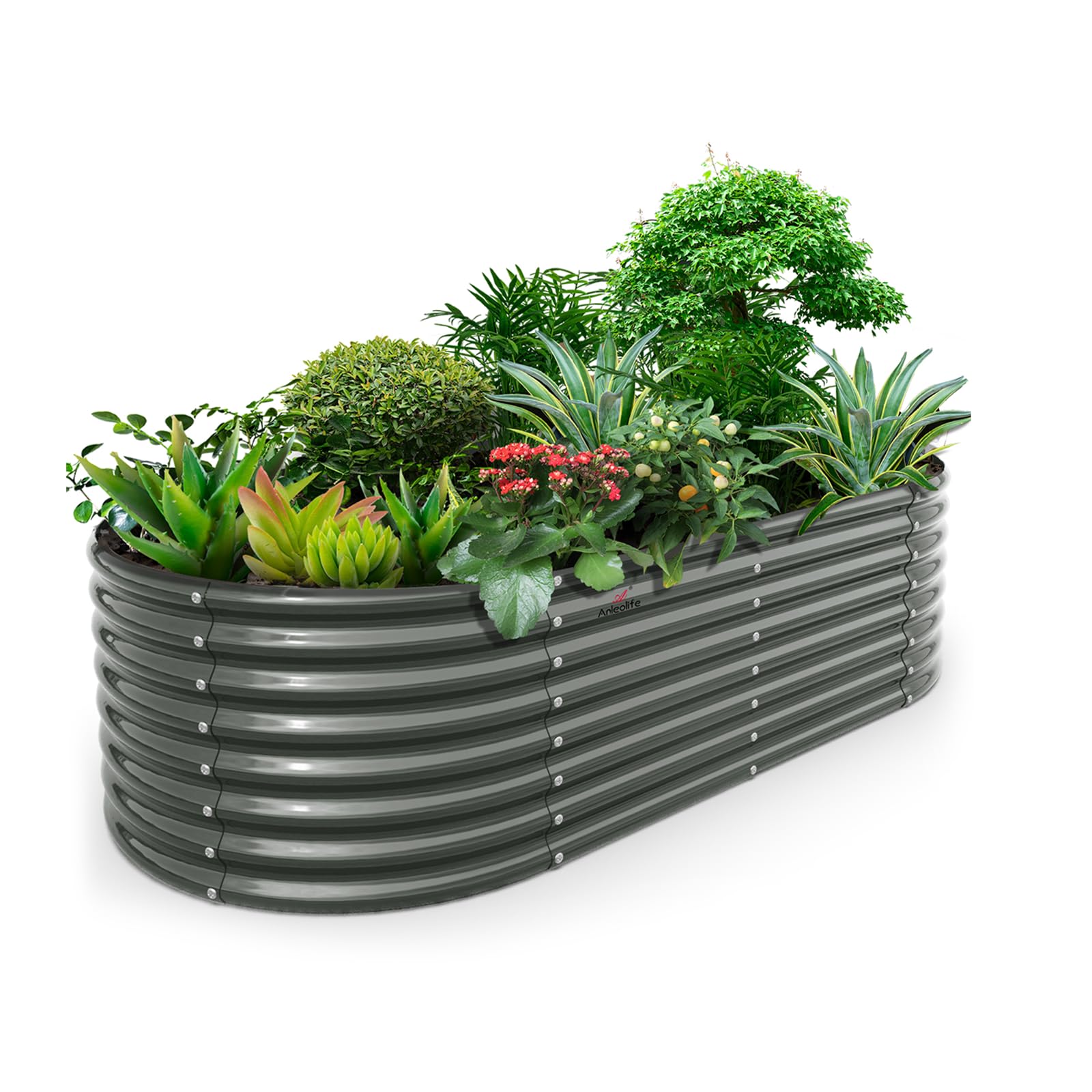
A massive 478-gallon bed that spares your knees and keeps out critters.
If you want one planter that grows enough vegetables for a whole household, this is it. The 8×4-foot footprint gives you 24 inches of growing depth — tall enough that you can sit on a stool while weeding instead of bending over. That depth also means you can grow carrots, potatoes, and tomatoes without root binding.
The walls are 22-gauge 0.8mm corrugated galvanized steel (a thick, rust-resistant metal) with an eco-friendly powder coating. Buyers report the rolled edges are safe to handle, and the center support rods — while not the most sturdy — keep the bed stable once filled. One reviewer who bought four of these to replace rotting wooden beds noted the assembly is straightforward and extra hardware is included.
The open bottom lets plant roots push into the native soil below, which improves drainage and reduces watering frequency. At 48 pounds empty, it is heavy enough to feel solid but light enough that two people can position it.
Top-tier capacity: At 478 gallons and 24 inches deep, this quartz-grey bed beats the smaller Land Guard by holding more than three times the soil volume and offering a deeper rooting zone.
The honest limit: The 21.98 kg (48.5 lb) shipping weight and 8-foot length make it a two-person job to move — not ideal for renters or frequent garden layout changes.
Perfect for: Gardeners with a large patch of sunny ground who want one durable bed that produces enough for preserving or sharing.
Consider something else if: You only have a narrow side yard or deck — an 8×4 bed needs real estate.
2. AMERLIFE 7×2 Ft Raised Garden Bed

A 30-inch tall wooden planter that saves your back, no squatting required.
Standing upright to tend your plants instead of kneeling on the ground is the main reason to buy this bed. The legs lift the 7×2 foot growing area to 30 inches high, making it comfortable for anyone with knee or back issues.
It is built from fir wood with support legs under the frame, so it stays stable even when you lean on the edge. Owners mention the assembly is manageable by one person in about an hour, and the drainage holes at the base prevent water from pooling. One 66-year-old reviewer said she put it together solo without any trouble.
The 15.45 cubic feet of planting space works well for flowers, peppers, and herbs. The unfinished wood will weather naturally over time, but sealing it with an outdoor wood preservative can extend its life.
Why it stands out
- 30-inch standing height is the tallest in this list — no bending needed
- Fir wood looks natural and blends into a garden setting
- Drainage holes at the base prevent soggy roots
What to consider
- 61.1 pounds is heavy to move once assembled
- Wood can warp or rot if left untreated in wet climates
Best for: Older gardeners or anyone with mobility issues who wants to garden standing up.
Not for you if: You prefer a long-lasting metal bed that won’t ever need repainting or sealing.
3. Vego Garden 6 in 1 Raised Garden Bed Kit
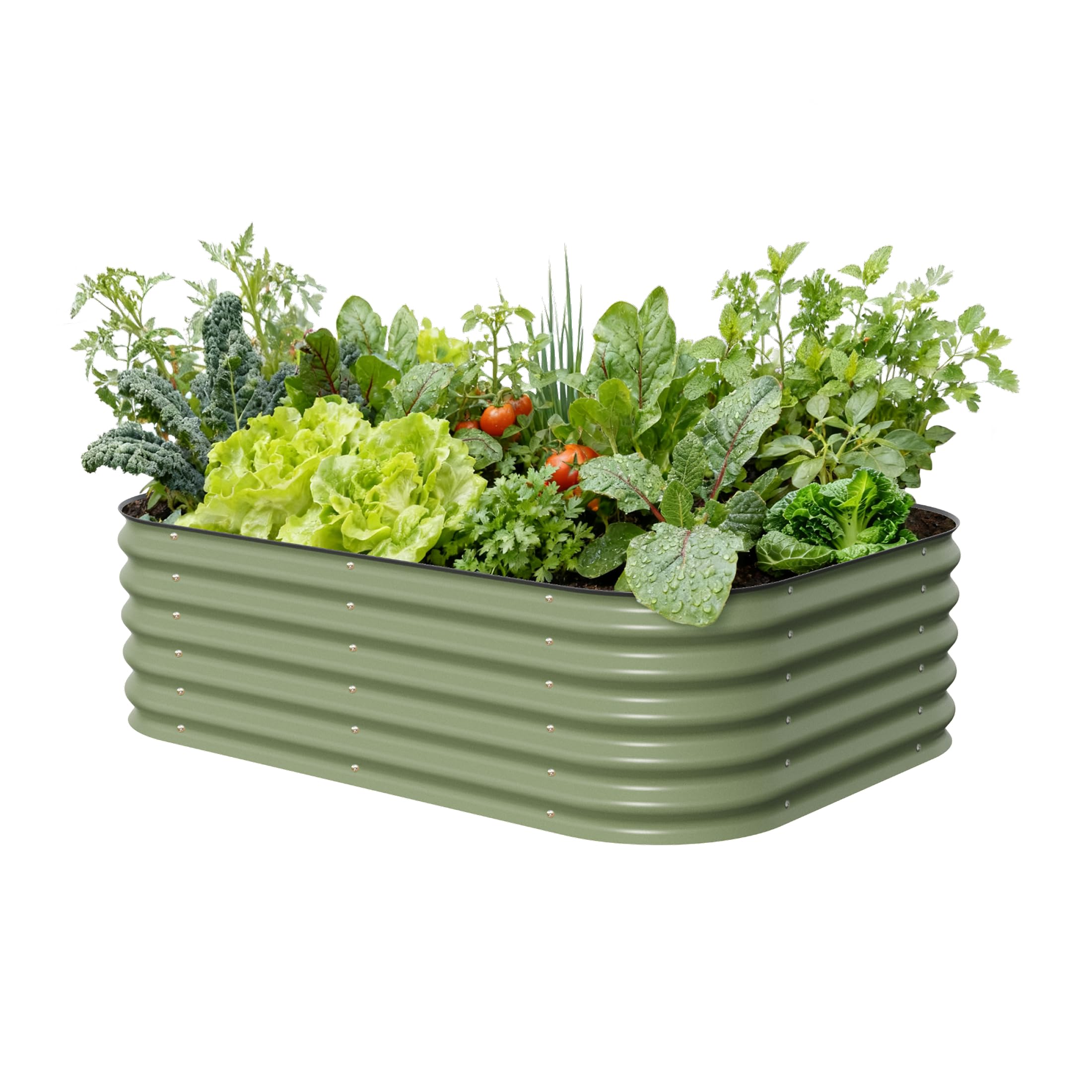
A clever kit that builds six different shapes so your garden layout stays flexible.
Most planters lock you into one rectangle. This one lets you rearrange the panels into six configurations — from a single large bed to separate smaller plots. The steel is coated with a USDA-approved paint over a zinc-magnesium-aluminum alloy called VZ 2.0, which the maker says resists corrosion for 20-plus years. Texas A&M’s corrosion lab verified the coating’s performance.
The 17-inch depth is high enough to sit on a stool or a kneeler while gardening, and customers note it takes about 12 to 13 bags of 1.5-cubic-foot soil to fill. Assembly requires a second pair of hands for the final fasteners, but the oval design has no sharp corners and the rubber edging covers the metal edges.
Reviewers point out the soft sage-green color looks attractive and one 77-year-old owner managed the build solo. The modular panels mean you can expand or reconfigure your garden next season without buying a whole new bed.
Flexibility first: Unlike the fixed rectangle of the A ANLEOLIFE or DIIYIV kits, the Vego lets you change the shape — a real bonus if your garden plan evolves year to year.
Smaller soil capacity: At 19 quarts total, this kit holds far less soil than most metal beds of similar depth; plan for a modest planting area.
Ideal for: Gardeners who like to experiment with layout and want a bed that adapts to different spaces.
skip it if: You need a huge growing area from a single kit — this one is for smaller or modular setups.
4. DIIYIV 2PCS 12x4x1FT Galvanized Raised Garden Bed Kit

Two 12-foot-long beds that cover a huge area for a very low weight.
If you want to line a long fence row or fill a large open patch without buying six separate planters, this two-pack gives you 24 feet of linear growing space. Each bed measures 144 inches long, 48 inches wide, and 12 inches deep — a 3.0x larger footprint than the BIRDSINYARD 4×2×1ft beds. The total square footage is enormous for the price.
The metal is thinner than some competitors, and shoppers say the bed feels wobbly before you add soil. Once filled, the weight of the dirt firms the structure. One reviewer advises filling the bottom two-thirds with mulch and topping with six inches of soil to reduce cost, noting the mulch helps retain moisture.
Corner pads cover the sharp edges after assembly, and the galvanized finish resists rust. Over time, the silver surface develops a matte patina that some owners like. At this length, plan for two people during assembly to manage the long panels.
Why buy this
- Massive 12-foot length covers a lot of ground in one kit
- Very lightweight for its size — easy to position
- Corner pads prevent sharp-edge injuries
Trade-offs
- Thin metal may bow or sag over time without soil support
- Only 12 inches deep — not enough for deep-rooted vegetables
Who wants this: A gardener with a long, narrow strip of land who needs maximum linear planting space on a budget.
Look elsewhere: If you want a sturdy bed you can lean on or one deep enough for root crops like carrots.
5. BIRDSINYARD 4×2×1ft (2 Packs) Planter Raised Beds
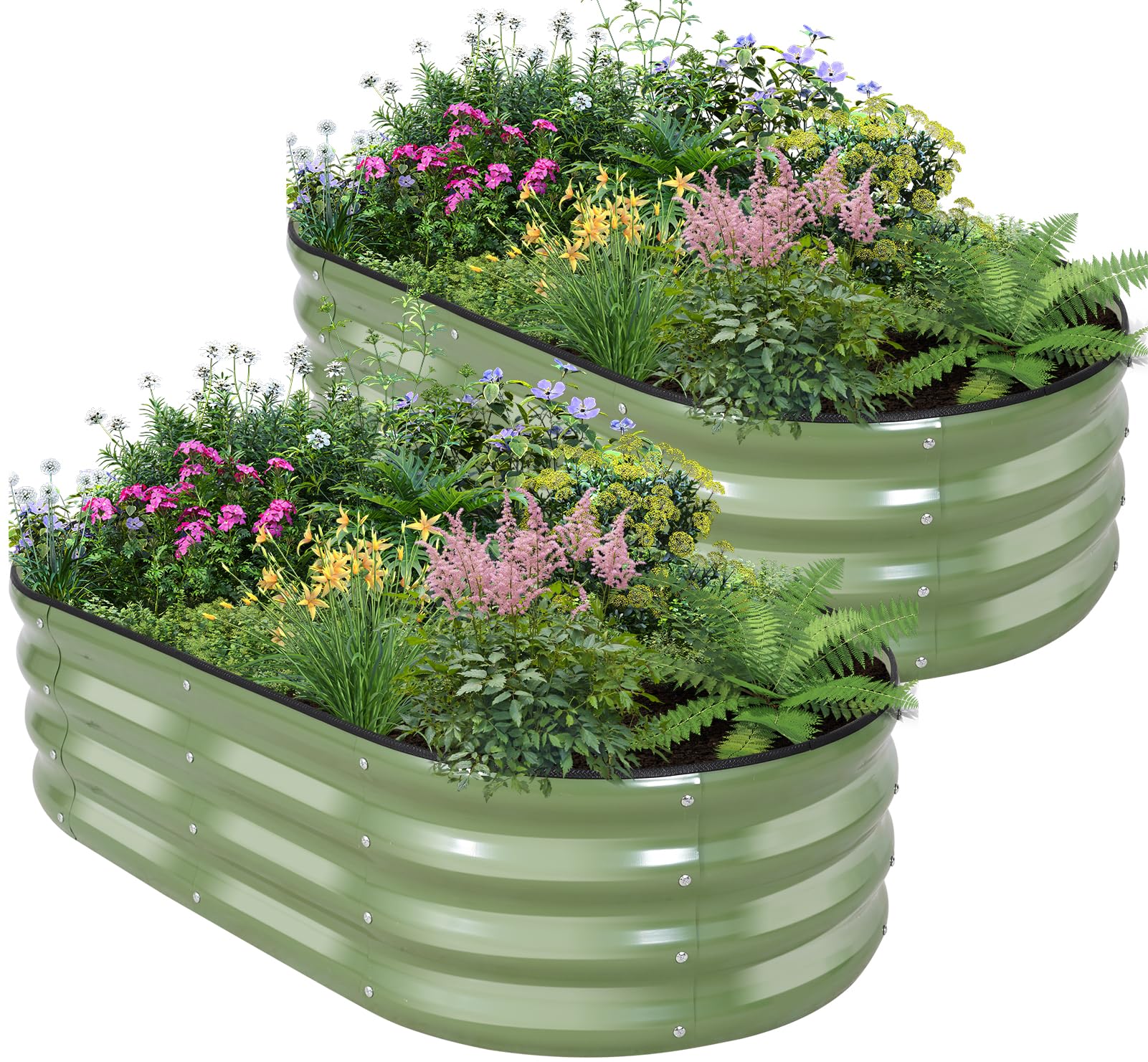
A two-pack with a handsome olive-green finish and rubber safety edging.
Each bed measures 47.24 by 23.62 by 11.81 inches — a 3.0x size gap compared to the DIIYIV 12-footers, but these feel sturdier due to the thicker galvanized steel. The olive-green powder coating resists rust, and the black rubber sealing strip on the top edge keeps fingers safe during handling and harvest.
Weighing 8.69 kilograms (about 19 pounds) per pack, this set is 45% heavier than the 6-kilogram Gartist two-pack, which translates to a more rigid frame that doesn’t wobble as much when empty. Buyers report the assembly is simple and the beds look tidy in a backyard setting. One owner noted that the 6x2x1 version is “a perfect size for backyard gardening,” confirming the brand’s sizing is practical.
The open bottom allows good drainage, and the sides stayed square without bowing when filled with soil and watered. Some reviewers mention minor cosmetic scratches on the panels from shipping, but the structure remains solid.
Build quality edge: At 8.69 kg this two-pack is 45% heavier than the Gartist kit, offering a more solid feel without being hard to move.
The catch: The 11.81-inch depth is shallow — fine for flowers and greens, but not deep enough for tall root vegetables.
Reach for this if: You want two attractive, durable beds that are easy to put together and safe for a family garden.
Better options exist for: Gardeners who specifically want extra-deep soil for long-root crops.
6. Land Guard 24″ Tall Galvanized Raised Garden Bed Kit

A 24-inch deep single bed that gives root vegetables the legroom they demand.
Potatoes, carrots, parsnips, and tomatoes all grow better when the soil is two feet deep. This Land Guard bed delivers exactly that with a 4×2-foot footprint and a powder-coated galvanized steel wall that is 1.0 mm thick — noticeably more rigid than the thinner metal on the DIIYIV kit. The 144-gallon capacity means you can pack in a serious crop without root crowding.
Owners mention the assembly is straightforward but time-consuming due to the number of screws. The instructions are illustration-only, which some found confusing for the center support rod placement. Once built, the bed feels heavy-duty and customers note it lasts well through rain and sun. One reviewer combined two kits to create an 8x4x2 bed, demonstrating the modular potential.
The open base prevents standing water, and the powder coating resists chipping. At 48 x 24 x 24 inches, it fits into a standard garden plot without dominating the space.
Standout features
- 1.0 mm thick galvanized steel resists dents and bending
- 24-inch depth supports deep-rooted vegetables
- 144-gallon volume is generous for a 4×2 footprint
Assembly headache
- Tedious assembly with many screws and unclear illustrations
- Center support rods are thin and may need reinforcement
Who should buy it: Anyone who grows root-heavy vegetables and wants a sturdy, deep bed that won’t rust out quickly.
Not ideal for: Someone who wants a quick 10-minute assembly — this one takes time to build properly.
7. Gartist 2 pcs 4×2×1 ft Raised Garden Bed
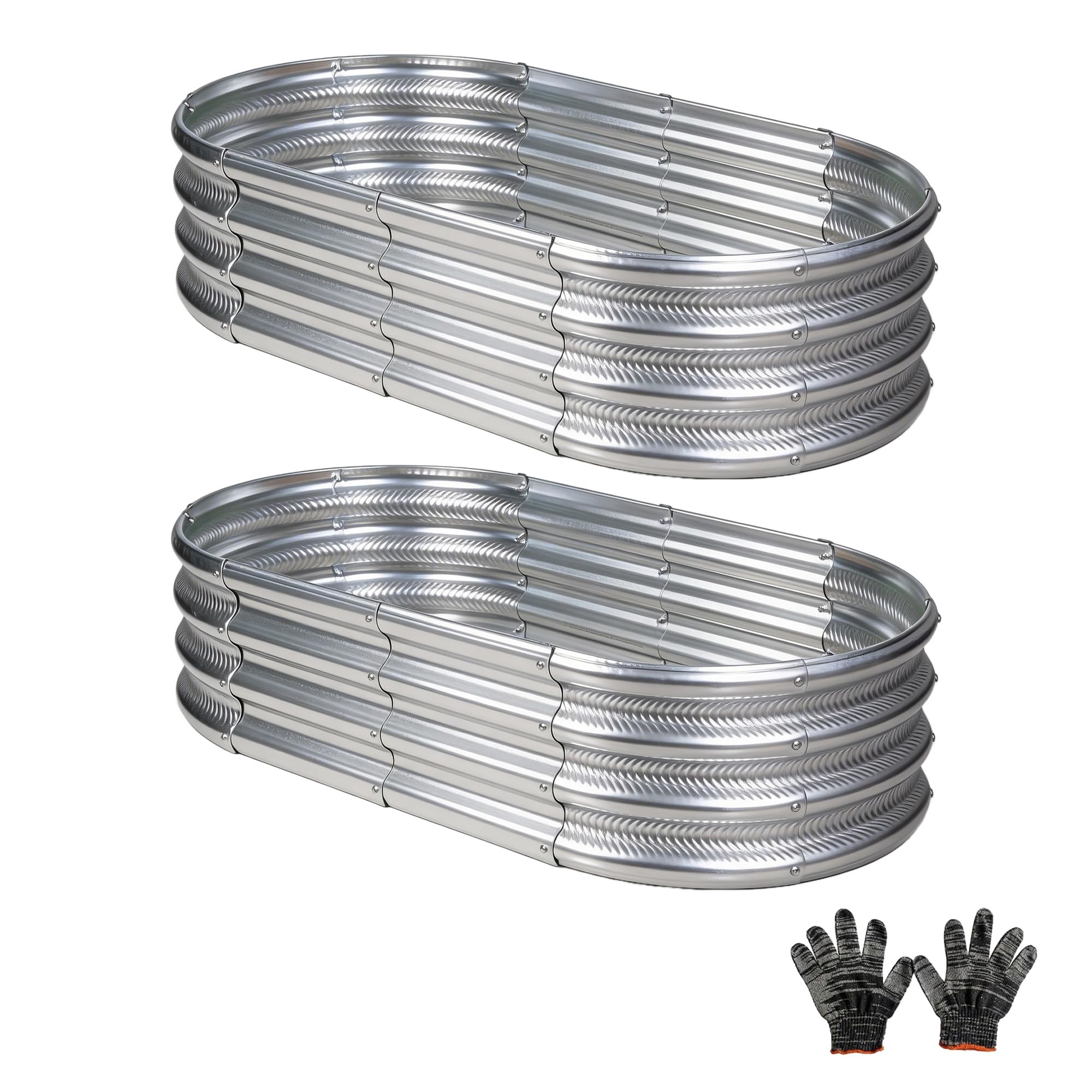
Two simple beds that go together with only your hands and a set of wing nuts.
If you want to start raised-bed gardening without spending much or wrestling with complex tools, this two-pack from Gartist gets you growing fast. The butterfly nuts tighten by hand, so no screwdriver or drill is required. Each bed measures 48 x 24 x 12 inches and holds 7.14 cubic feet of soil, which reviewers point out works out to about 2.5 cubic feet of potting soil per planter after accounting for the oval shape.
The alloy steel body is coated with a non-toxic, eco-friendly finish, and the open bottom lets excess water drain freely. Shoppers say that the assembly takes about 20 minutes per bed and the rolled edges are safe to handle. One buyer pointed out that the 2026 version of the beds felt thinner, with sharper edges and misaligned curved pieces — a quality variation to watch for.
At 6 kilograms (13.2 pounds) per two-pack, they are the lightest beds here. They do need soil to hold their shape; until filled, the panels are a bit floppy. For shallow-root crops like lettuce, herbs, and flowers, they work perfectly.
Lowest-effort assembly: Butterfly nuts and no tools make this the easiest build in the list — a 20-minute job per bed.
Quality fluctuation: Some recent buyers report thinner metal with sharp edges on newer production runs, so inspect your kit right away.
Ideal entry point: A first-time gardener or a budget-conscious shopper who wants two small beds for patio herbs and salad greens.
Skip if: You need a bed that keeps its shape when empty or one deep enough for root vegetables like carrots.
Understanding the Specs
Soil Capacity (cubic feet & gallons)
This number tells you how much growing medium the planter holds. More volume means more plants and better moisture retention. A 7-cubic-foot bed works for a few tomato plants, while a 144-gallon bed can support a full vegetable garden. Measure your available space and match it to the capacity so you don’t under- or over-fill.
Depth (inches)
Depth determines what you can grow. Shallow 12-inch beds are fine for lettuce, flowers, and herbs. At 16 to 17 inches you can grow peppers and bush beans. Once you hit 24 inches, you can plant deep-rooted vegetables like tomatoes, carrots, and potatoes without the roots hitting the bottom. Taller beds also spare your back during weeding and harvesting.
Material & Gauge
Galvanized steel is the most common material for outdoor planters. The zinc coating prevents rust. Thicker metal (measured in gauge or millimeters) resists bending. A 1.0 mm wall is noticeably sturdier than a 0.6 mm wall. Wood planters look natural but need sealing to avoid rot. Composite materials like VZ 2.0 blend metals for extra corrosion resistance and a longer lifespan.
Open Bottom vs. Solid Base
An open-bottom planter sits directly on the ground, letting plant roots grow into the native soil below. This also provides natural drainage so water never pools. Solid-base planters with drainage holes are better for decks, patios, or balconies where you cannot place a bed directly on the ground. Choose based on where the planter will live.
FAQ
What is the best depth for an above ground planter?
Can I use a galvanized steel planter for growing food?
How long do galvanized raised beds last?
Do I need to put a bottom on my raised planter?
How much soil do I need to fill a 4x2x1 foot planter?
Can I connect multiple raised beds together?
What is the difference between a raised bed and an improve planter?
How do I stop weeds from growing up through an open-bottom planter?
Final Thoughts: The Verdict
For the majority of shoppers, the above ground planters winner is the A ANLEOLIFE 8x4x2ft because it combines a massive 478-gallon capacity with 24 inches of depth and a sturdy powder-coated galvanized build. If you want a back-saving improve design, grab the AMERLIFE 7×2 Ft. And for a modular system that adapts to changing garden layouts, the Vego Garden 6 in 1 is the flexible choice.
How We Picked
We do not accept paid placement. Every pick is matched to a real buyer and a real use-case; we do not hands-on test units.
Sources & Methodology
Specifications: manufacturer listings and product documentation. Review insights: verified customer reviews, as of July 2026. Pricing: not shown on this page (it changes often); check the current price via the retailer link.
As an Amazon Associate, Lawn Gear Lab earns from qualifying purchases. This does not affect which products we feature.