
Specs are compiled from manufacturer listings and verified buyer reviews and can change over time — please confirm the key details on the product page before buying.
You watched your garden grow for months, only to wake up one morning and find it nibbled flat. An 8-foot deer fence is the only real answer — tall enough that a deer decides it is not worth the jump. But the choice between cheap netting that tangles on day one and a serious barrier that lasts years is where most buyers get stuck. This guide cuts through the confusion by sticking to the hard specs that actually stop deer.
I’m Rikta — the founder and writer behind Lawn Gear Lab. This guide is built by comparing the manufacturers’ published specifications and the patterns across verified customer reviews, so you get each pick’s real strengths and trade-offs instead of marketing spin.
After digging into the material weights, mesh sizes, and real buyer experiences, the top 8 foot deer fence choices here each serve a different kind of garden — from budget-friendly rolls for a berry patch to a massive premium run that covers an entire property line.
Quick Picks
- Tenax Deer Fence C-Flex Select 8’x330′ Black — Premium Pick
- FRUITEAM Deer Fence Netting — Best Value
- JUNKOGO Deer Fence Netting 8×100 FT — Budget Friendly
- Mklsit Deer Netting Fence — Accessory Pack
How To Choose The Best 8 Foot Deer Fence
Buying the first deer fence you see on a search result is a fast way to waste money. The netting that looks fine in the photo often tears when you pull it tight or lets a determined buck push through the mesh. You need to check a few specific things before you hit buy.
Material Weight and Density
The spec that separates flimsy netting from a real barrier is the material weight, measured in ounces per square yard (oz/yd²). Cheap netting comes in around 0.2 to 0.3 oz/yd² — it feels like a spider web and tears under tension. A heavier fence at 0.55 oz/yd² or more resists tearing, tangling, and general wear from wind and weather.
Mesh Size and Visibility
You want a mesh opening big enough for sunlight and bees but small enough to block a deer’s head and legs. The most common effective size is a 3/4-inch square. Some premium fences use a slightly smaller 0.7-inch hexagonal mesh — that tighter pattern also helps keep birds from getting tangled. The fence also needs to be visible enough that a deer recognizes it as a barrier, especially at 8 feet tall, because deer are less likely to jump when they cannot clearly see a landing spot.
Roll Length and Coverage Area
Measure your garden perimeter before you buy. A 100-foot roll covers a small vegetable patch or a row of fruit trees. A massive 330-foot roll (which works out to 2,640 square feet of coverage) handles a full property line or a large orchard. Buying a roll that is too short leaves you with an awkward splice, while an oversized roll wastes material you have to store.
Installation Hardware Included
Some rolls come with nothing but the netting. Others include U-staple nails and cable ties that save you a trip to the hardware store. If you are fencing a large area, plan on using 10-foot rebar or T-posts and a top wire to keep the fence taught and upright — the netting alone will sag without a support structure.
Quick Comparison
| Model | Best For | Material | Roll Length | Mesh Size | Amazon |
|---|---|---|---|---|---|
| Tenax C-Flex Select 8’x330′ | Large property lines | Plastic | 330 ft | — | Amazon |
| FRUITEAM 8FT x 100FT | Heavy-duty orchard protection | PP Coated | 100 ft | 0.7″ x 0.7″ | Amazon |
| JUNKOGO 8×100 FT HDPE | Budget-conscious gardeners | HDPE | 100 ft | 3/4″ | Amazon |
| Mklsit 8ft x 100ft | Included accessories value | Polypropylene | 100 ft | 3/4″ | Amazon |
In‑Depth Reviews
1. Tenax Deer Fence C-Flex Select 8’x330′ Black

The heavy-duty roll that covers entire property lines without breaking your back.
This is the fence for people who measure their garden in acres, not feet. The Tenax C-Flex Select gives you a massive 330-foot roll — that is 2,640 square feet of coverage — which means you can wrap a full orchard or a large yard in one continuous run without splicing scraps together. It is made from a light plastic material that one buyer described as “easy to work with,” and at around 8 feet tall, it gives deer a visual wall they are unlikely to challenge.
Buyers report installing it with 10-foot rebar and zip ties, and several noted that deer have bounced right off the fence without causing any damage — one owner mentioned two deer got trapped inside and threw themselves at the fence “as hard as they could” with zero damage to the mesh. The trade-off is that some buyers also recommend adding a chicken-wire layer along the bottom 24 inches because “deer are lazy and can find a way to slide under otherwise,” so you will want to budget for that extra step. At 330 feet, this roll offers 330 feet of coverage versus the 100-foot options below.
The manufacturer backs it with a 1-year warranty, and buyers consistently rate the build quality as excellent — one even said “it will last probably longer than I have to live.” If your garden is smaller than a quarter-acre, this much netting will be overkill and awkward to store.
Best for big properties: Go with the Tenax if you have a large orchard, multiple garden beds, or a full property line to enclose — the 330-foot roll means one purchase, one install, and no seams.
Skip it for small patches: If you only need to protect a single berry patch or a few raised beds, this much netting will sit in your garage coiled and unused.
Who it fits: Gardeners fencing a half-acre or more who want a single continuous barrier that has proven it can handle deer impacts without tearing.
One real catch: You will likely need to buy extra chicken wire and zip ties separately — the netting alone does not include ground-level animal proofing.
2. FRUITEAM Deer Fence Netting, 8FT x 100FT Heavy Duty Black PP Coated
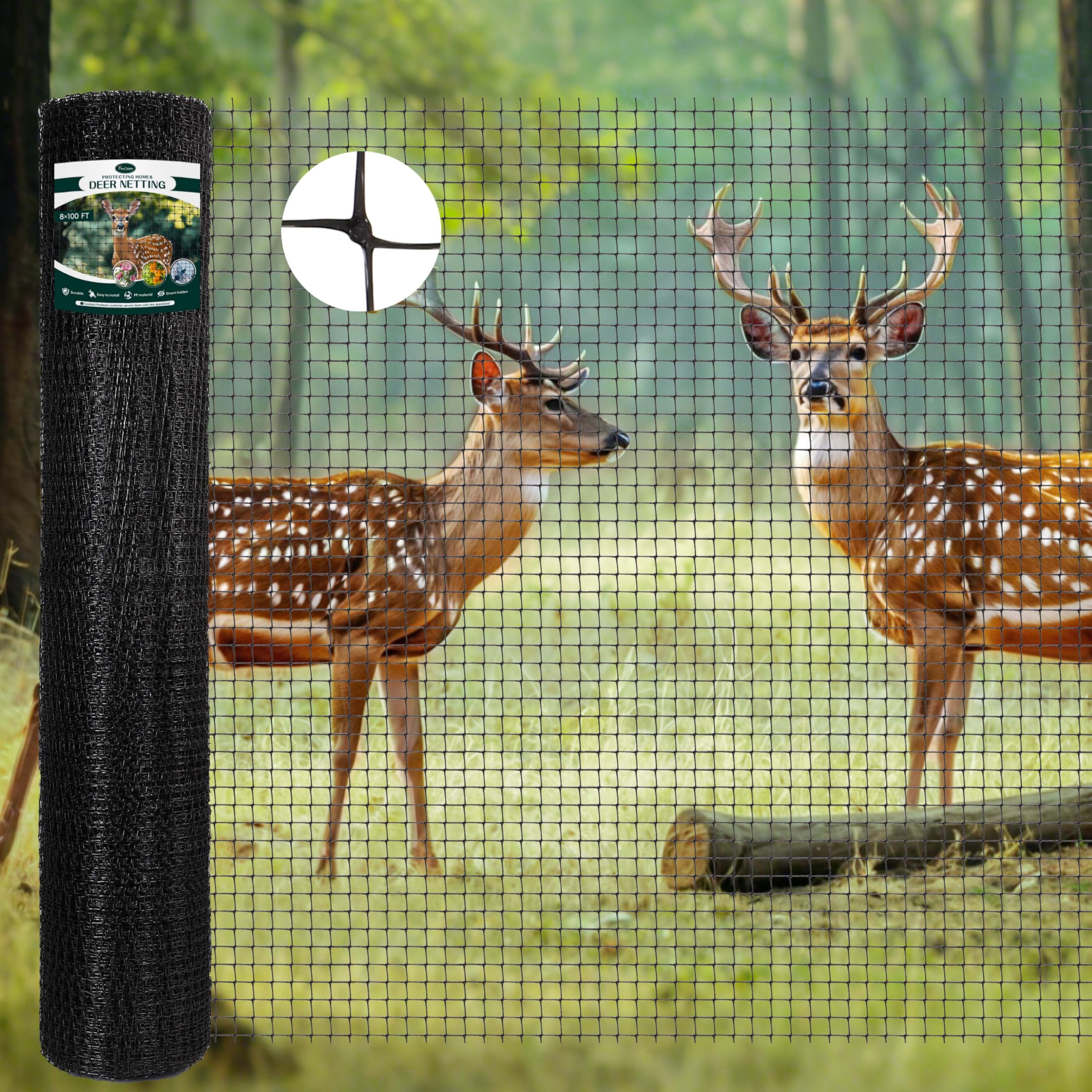
The PP-coated mesh that stands heavy and stops deer dead at 8 feet.
At 11 pounds for the roll, the FRUITEAM fence is noticeably heavier than the lightweight HDPE options — that extra heft comes from the PP (polypropylene) coating, which makes the mesh corrosion-resistant and anti-aging. The mesh pattern is hexagonal and measures 0.7 inches by 0.7 inches, which is tighter than the typical 3/4-inch square found on cheaper netting. This smaller opening does a better job keeping birds from getting tangled while still letting pollinators through.
Buyers are overwhelmingly positive: one reviewer noted it was “super easy to install and has worked perfectly, not a single deer has gotten through since we put it up.” Another installed it on a vegetable garden with 10-foot rebar and zip ties and reported being “very satisfied” with the sturdiness. A single critical review claimed the material did not hold up as advertised, calling it a waste of money, but the majority of buyers found it durable and effective. Unlike the Tenax roll, this 100-foot length is far more manageable for a standard suburban yard.
The fence comes in two sizes — 8FT by 100FT and 8FT by 165FT — so you can size up if your garden is larger than average. Just keep in mind that no staples or ties come included, so factor in those costs when planning your install.
What stands out
- Tight 0.7-inch hexagonal mesh is safer for birds and blocks small animals better than 3/4-inch netting.
- Corrosion-resistant PP coating is built for long outdoor seasons without degrading.
What to plan for
- No mounting hardware included — you will buy stakes, zip ties, or rebar separately.
- One buyer mentioned the material failed under tension, so check the weave for defects before full install.
Best suited for: Homeowners with a medium-sized vegetable plot or blueberry patch who want a dense, heavy mesh that lasts multiple seasons without rust.
Consider another option if: Your budget is tight — the FRUITEAM sits at a premium price point compared to basic HDPE netting.
3. JUNKOGO Deer Fence Netting 8×100 FT
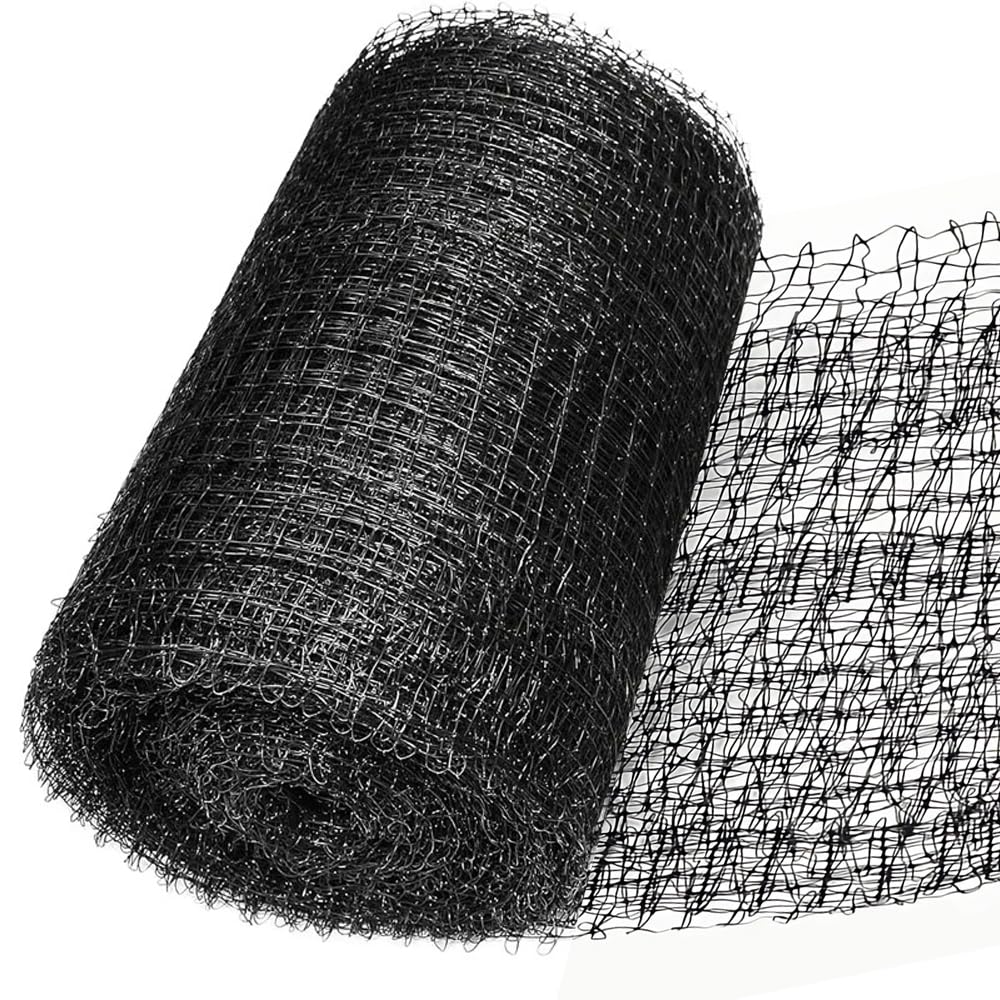
Nearly double the material weight of basic netting at a budget-friendly price.
The headline spec here is a material weight of 0.55 oz/yd² — the manufacturer states this is “at 0.55 oz/yd² versus the 0.2–0.3 oz/yd² typical of basic netting.” That extra density makes a real difference when you are stretching the netting over posts: it resists tearing and does not get tangled in its own folds as easily as the flimsy stuff. The netting is made from HDPE (High-Density Polyethylene), which means it resists rust and rot, a common problem with wire or wood fencing.
One owner reported “good netting kept deer outta my raspberries,” and another called it “much better than most flimsy bird netting sold on Amazon” because it is stronger and does not entangle. The mesh size is 3/4 inch, which lets sunlight, air, and bees pass through for natural pollination while keeping deer and small wildlife out. You can cut it to size with regular scissors and attach it to posts without any special tools.
The biggest difference between this and the FRUITEAM fence above is the material weight and mesh design — the JUNKOGO is lighter and uses a square grid, whereas the FRUITEAM is heavier with a hexagonal pattern. If you are protecting a small garden on a tight budget, this is the smarter buy.
Smarter spend for small gardens: Pick the JUNKOGO when your budget is the deciding factor — you still get a 8-foot by 100-foot barrier built from stronger HDPE than most entry-level netting on the market.
Not for heavy animal pressure: If you have large deer or elk that routinely push through fences, the lighter weight of this netting may not hold up as well as the premium coated options.
Ideal for: First-time deer-fence buyers who want proven protection (verified by real raspberry-growing customers) without spending premium money.
Watch out for: The netting arrives folded and compact — you will need to let it fully unfold and air out before you can measure the actual width accurately.
4. Mklsit Deer Netting Fence, 8ft x 100ft Heavy Duty Garden

The netting that comes with 10 U-staples and 50 cable ties ready to use.
Most deer fence rolls leave you scrambling for hardware. The Mklsit includes 10 U-staple nails and 50 cable ties right in the package, so if all you have is a hammer and a pair of scissors, you can start installing the same day. The netting itself is made from polypropylene (a durable plastic) and measures 8 feet tall by 100 feet long with a 3/4-inch square mesh — the same specs as the JUNKOGO above, but with a different material base and the included accessories.
Buyers were pleased with the ease of setup — one noted “the thickened area at the top and bottom edges” made it easier to work with, and another called it “light and easy to set up” and liked that it rolls up nicely for off-season storage. The weight is 1.53 kilograms (about 3.4 pounds), making it one of the lighter options here but still heavy enough to be called “heavy duty” by the manufacturer. One word of caution from a buyer: “be careful weedeating around it though, the weedeater will eat it up” — polypropylene netting can be cut by string trimmers, so plan your fence line accordingly.
Compared to the JUNKOGO, the Mklsit uses polypropylene rather than HDPE, and while both are strong plastics, the polypropylene option includes hardware that the JUNKOGO does not. If you value convenience and want everything in one box, the Mklsit saves you that second trip to the hardware store.
Box-opener bonus
- 50 cable ties and 10 U-staples included — install-ready out of the package.
- Thickened top and bottom edges help the netting hold its shape during installation.
Weakness to know
- Polypropylene is susceptible to damage from string trimmers — keep the fence line clear.
- At 3.4 lbs, it is lighter than the FRUITEAM and may not feel as substantial when handled.
Best for the convenience buyer: If you want to open the box, grab the cable ties, and start fencing in one afternoon, this is the most turnkey choice.
Not for permanent installations: If you need a fence that shrugs off weed eaters and general ground-level abuse, the heavier FRUITEAM or Tenax options are better bets.
Understanding the Specs
Material Weight (oz/yd²)
This spec tells you how heavy the fabric is per square yard. Cheap deer netting often falls between 0.2 and 0.3 oz/yd² — it feels thin and tears when you stretch it tight over a post. A better fence uses a weight of 0.55 oz/yd² or more, meaning it is nearly double the density and far less likely to rip or tangle during installation or in high wind.
Mesh Size (inches)
The opening size of the netting matters for two reasons: it has to be small enough to block a deer’s head and legs, but large enough to let bees and sunlight through for pollination. A 3/4-inch square is the standard balance. Some premium fences use a 0.7-inch hexagonal mesh — that tighter weave also helps keep birds and small animals from getting stuck or squeezing through.
FAQ
Will an 8-foot deer fence definitely keep deer out?
How does HDPE netting compare to polypropylene netting?
Can I cut the deer fence to a custom size?
How do I install a deer fence without it sagging?
What size mesh is best for keeping birds out too?
Will deer fence netting rust or rot over time?
How many feet of fence do I need for my garden?
Can I use deer netting to protect fruit trees individually?
Does the netting need to be taken down in winter?
What is the difference between PP coated mesh and standard plastic netting?
Final Thoughts: The Verdict
For most buyers, the best 8 foot deer fence is the FRUITEAM 8FT x 100FT because its heavy PP-coated mesh and tight 0.7-inch hexagonal pattern offer the best balance of durability, animal protection, and manageable roll length for a typical garden. If you need to fence a full property line or a large orchard in one run, grab the Tenax 8’x330′ for its massive 330-foot coverage and proven bounce-back strength. And for the budget-conscious gardener protecting a small berry patch, the JUNKOGO 8×100 FT HDPE gives you near-double the material weight of basic netting without the premium price tag.
How We Picked
We do not accept paid placement. Every pick is matched to a real buyer and a real use-case; we do not hands-on test units.
Sources & Methodology
Specifications: manufacturer listings and product documentation. Review insights: verified customer reviews, as of July 2026. Pricing: not shown on this page (it changes often); check the current price via the retailer link.
As an Amazon Associate, Lawn Gear Lab earns from qualifying purchases. This does not affect which products we feature.