
Specs are compiled from manufacturer listings and verified buyer reviews and can change over time — please confirm the key details on the product page before buying.
You have built or bought a greenhouse, and now you need a cover that will not rip in the first windstorm or crack after one season of sun. The right 6 mil plastic for greenhouse use needs to handle snow loads, UV rays, and wind without tearing or turning brittle. Picking the wrong roll wastes your money and your growing season.
I am Rikta — the writer behind Lawn Gear Lab. This guide compares the manufacturers’ published specs and what real buyers report in their reviews, so you see each pick’s true strengths and trade-offs.
You get UV-resistant films that survive snow loads and budget-friendly rolls that cover large hoop houses. Here is the breakdown of the best 6 mil plastic for greenhouse use you can buy right now.
Quick Picks
- Farm Plastic Supply – Clear Greenhouse Plastic Sheeting – 6 mil – (10′ x 50′) – 4 Year UV — Top Performer
- chicarry – Greenhouse Plastic Sheeting, 24 x 25ft 6 mil Clear Greenhouse Film, UV — Wide Coverage
- chicarry – 6 mil Greenhouse Plastic Sheeting, Clear Greenhouse Film, UV (20 x 25ft) — Best Value
- ToLanbbt – 10 x 50 FT Clear Greenhouse Plastic Sheeting, 6 Mil Polyethylene Film — Budget Champion
How To Choose The Best 6 Mil Plastic For Greenhouse
Buying greenhouse plastic is not just about grabbing a roll marked “6 mil.” The way the film is made, whether it includes UV stabilizers (additives that slow sun damage), and how it handles water condensation all determine if your plants thrive or the plastic fails after one season.
UV Resistance Is Your First Check
Without UV stabilizers, greenhouse plastic turns brittle and cracks within months of direct sun exposure. A 4-year UV rating, like the Farm Plastic Supply offers, means the film can handle full sun for multiple growing seasons. Budget films lack this treatment and often degrade by the end of the first year.
Drip Proof vs. Light Clarity
A drip-proof coating stops water from beading up and dripping onto leaves, which can cause burns when the sun hits the droplets. The catch is that this coating makes the plastic slightly hazy, so it reduces total light penetration. If you grow light-loving crops, you might sacrifice drip control for clarity.
Tensile Strength Predicts Tear Resistance
Look at the longitudinal (lengthwise) and transverse (widthwise) tensile strength numbers given in megapascals (MPa — a megapascal is a unit of pressure; 1 MPa equals about 10 standard atmospheres of pressure). A higher value means the film resists stretching and tearing in both directions, which matters when wind catches the sheeting or snow piles on top. The ToLanbbt film lists 26 MPa longitudinal and 24 MPa transverse — solid numbers for wind and snow.
Quick Comparison
On smaller screens, swipe sideways to see the full table.
| Model | Best For | Size | Light Transmission | UV Resistance | Amazon |
|---|---|---|---|---|---|
| Farm Plastic Supply 6 mil (10′ x 50′) | Long-term, high-clarity greenhouse | 10′ x 50′ | >90% | 4-Year | Amazon |
| chicarry 6 mil (24 x 25ft) | Wide-span coverage with snow load | 24 x 25ft | High, even distribution | Yes (5-Layer) | Amazon |
| chicarry 6 mil (20 x 25ft) | Mid-size greenhouse on a budget | 20 x 25ft | High, even distribution | Yes (5-Layer) | Amazon |
| ToLanbbt 6 mil (10 x 50 FT) | Best value for large hoop houses | 10 x 50 FT | Up to 90% | Standard | Amazon |
In‑Depth Reviews
1. Farm Plastic Supply – Clear Greenhouse Plastic Sheeting – 6 mil – (10′ x 50′) – 4 Year UV

You get storm-proofing and 4 years of sun protection here — no other roll in this guide has a 4-year UV rating.
This is the roll you buy when you want to cover a greenhouse once and not worry for several seasons. At 20 pounds, it is 50% heavier than the comparable 10 x 50 FT sheet from ToLanbbt (5.92 Kilograms / about 13 pounds). That extra weight comes from denser polyethylene (PE — the same plastic used in heavy-duty sandwich bags) and a 4-year UV additive package that blocks sun degradation. According to the manufacturer, light transmission exceeds 90% (meaning 9 out of 10 light particles pass through) with 20% light diffusion (light scatters softly instead of shining in a straight beam), so your crops get bright, even light without harsh hot spots. One reviewer noted it is “as clear as it gets” and could see a person 100 yards away through the film.
The real-world difference is wind resistance. One buyer mentioned that the plastic they bought before this ripped in the first storm, while this film survived “a few storms already with no damage.” The roll is delivered oversized by about 1+ ft in each dimension, giving you slack for fastening. It covers a 10 x 50 ft space, which is a 2.4x smaller width than the 24 x 25ft chicarry option. The trade-off is superior long-term clarity and UV protection for the area it does cover.
Buyers also report it works well as a pollen barrier on porches and as a thick drop cloth for construction dust walls. The only downsides? One sheet came with branding printed on it, which some people disliked, and durability in full sun is still being tested by longer-term owners. For a premium 6 mil roll that handles repeated seasonal use, this is the one to beat.
Built for longevity: The 4-year UV additive and >90% light transmission make this the clear choice for serious gardeners who want a one-time install that lasts.
The honest catch: The 10 x 50 ft size limits coverage width — wider greenhouses will need two runs or a different pick.
Go with this if: you want the longest-lasting clarity and wind resilience for a hoop house or greenhouse — the UV additive and visible clarity beat every other roll here.
Think twice if: you need wide-sheet coverage (over 10 ft width) without scanning; the chicarry 24 x 25ft option gives you a single sheet that covers a wider span.
2. chicarry – Greenhouse Plastic Sheeting, 24 x 25ft 6 mil Clear Greenhouse Film, UV
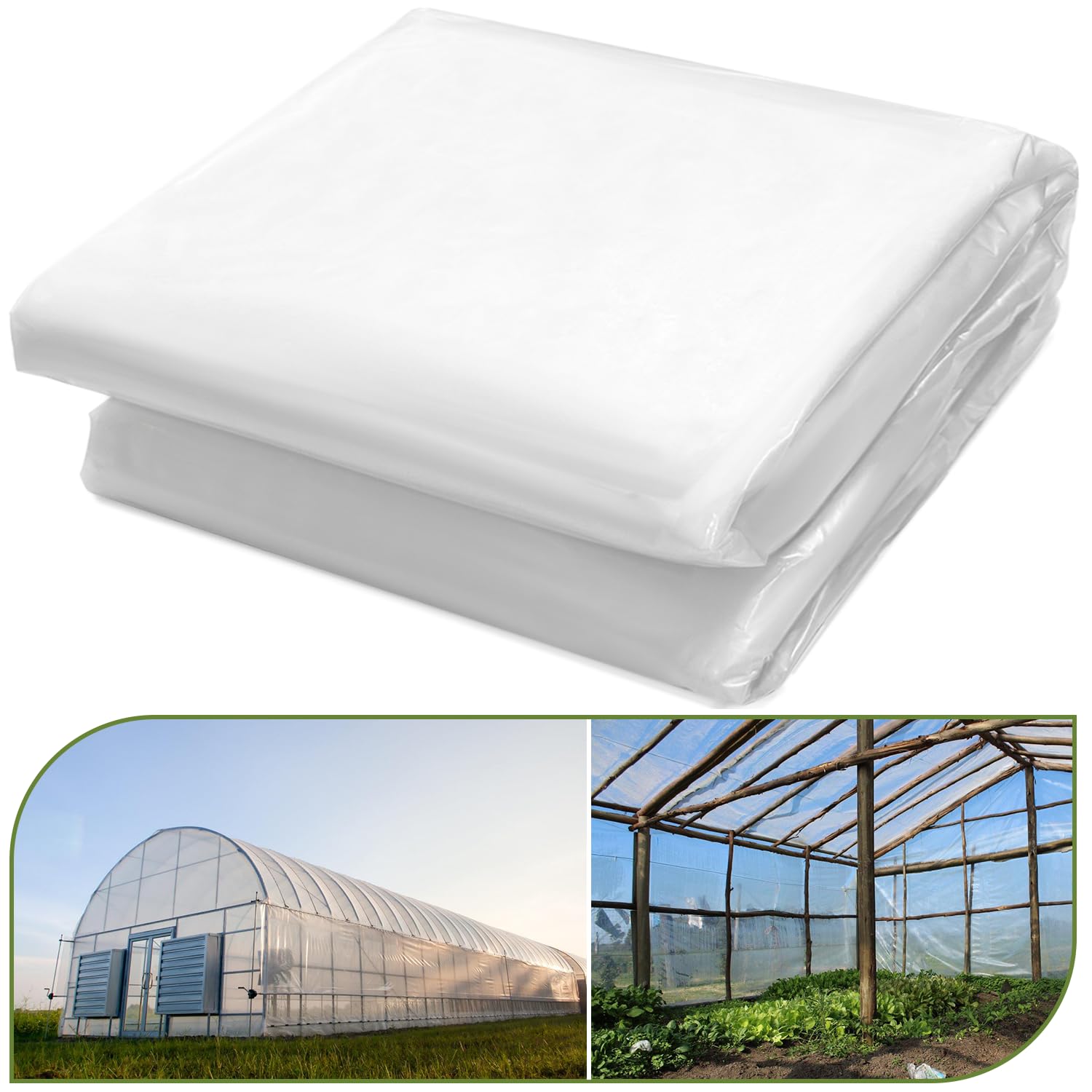
This single 24 x 25ft sheet covers wide spans without a seam — and owners mention it held up under inches of snow after the 2026 storm.
If your greenhouse has a wide span — say 12 to 24 ft across — this single 24 x 25ft sheet covers it without a seam. The film uses 5-Layer Co-Extrusion (five thin layers of polyethylene are bonded into one sheet, each layer adding a different property like UV resistance or tear strength). The manufacturer says this gives it “high mechanical strength and flexibility.” At 6.35 Kilograms (about 14 pounds), it is 7% heavier than the ToLanbbt 10 x 50 FT, but that extra weight is concentrated into a wider, thicker sheet. One owner reported it “held up through our fall and winter, even with a couple inches of snow/ice on top for several days after the 2026 storm.”
The anti-drip surface uses a hydrophobic layer (a water-repelling coating) that turns condensation into a thin sheet of water that runs down the side walls instead of dripping on your plants. The trade-off is clear in the specs: the film will be “a little hazy” due to this layer, so it does not have the crystal clarity of the Farm Plastic Supply. But for cold-frame growers and over-wintering, keeping moisture off the leaves matters more than absolute light penetration.
Buyers also report cutting this sheet in half to cover a 16×8 chicken run and noticing a “noticeable warmth increase” inside during negative temps. If you need wide-span coverage that stands up to snow loads without the cost of premium UV additives, this is your pick. The difference between this and the 20 x 25ft version is simply width — 24 ft versus 20 ft — so choose based on your frame dimensions.
What owners praise
- 24 ft width covers wide greenhouses in one sheet
- 5-Layer Co-Extrusion handles snow/ice with no tearing
- Hydrophobic drip layer protects plants from water burns
The small trade-offs
- Anti-drip coating makes the film slightly hazy — not full clarity
- Heavier than the 20 x 25ft version by about 0.5 kg, harder to lift alone
Choose this for: wide-span greenhouses where one smooth sheet and snow-load durability are the priority.
Pass on it if: crisp light transmission is critical for your crops — the drip coating dims clarity a bit.
3. chicarry – 6 mil Greenhouse Plastic Sheeting, Clear Greenhouse Film, UV (20 x 25ft)
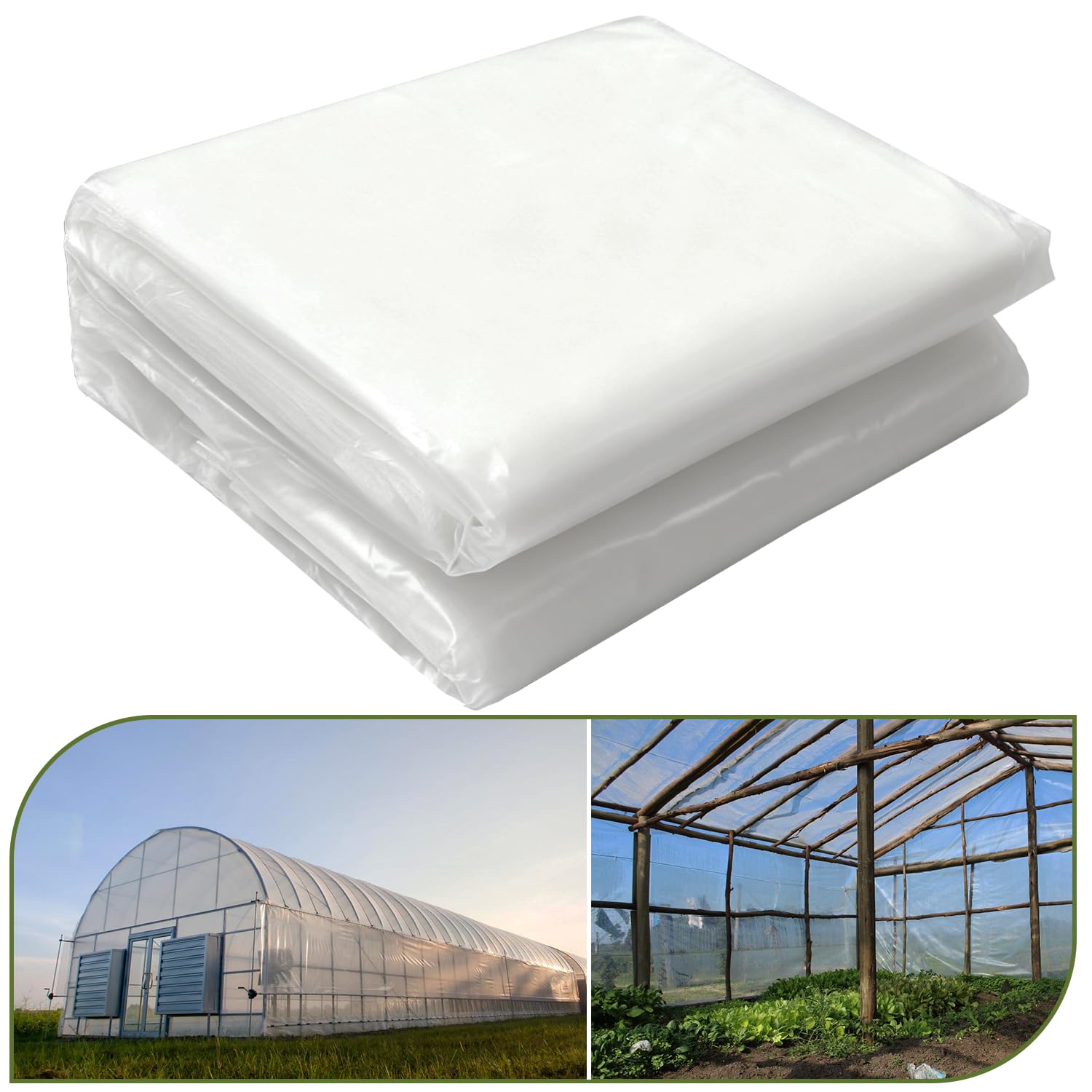
At 13.33 pounds, this 20 x 25ft sheet is easier to lift and drape alone than the 24 ft version — and still wide enough for most hoop houses.
At 20 x 25ft, this film splits the difference between the 24 ft wide sheet and the narrower 10 ft rolls. It covers a standard 10×10 greenhouse in one piece, but at 13.33 pounds it is lighter than the 24 x 25ft version by about 1 kg, making it easier to lift and drape over a frame alone. The same 5-Layer Co-Extrusion and anti-drip coating apply here, so you get the same snow-load toughness and plant protection in a smaller, more manageable sheet.
One reviewer who used this to cover a chicken run in below-freezing temps said it “blocked wind in negative temps” and kept the interior “noticeably warmer inside.” Another buyer confirmed it handled “a couple inches of snow/ice on top for several days after the 2026 storm” without tearing. The UV resistance is built into the multi-layer structure, but it does not carry a specific 4-year rating like the Farm Plastic Supply. Buyers evaluating longevity noted the film “held up through our fall and winter” but summer UV exposure is the real test.
The hazy finish from the drip coating is the same as the 24 ft version. It is not crisp, so if you need maximum light for high-yield crops in a full-sun greenhouse, you might lean toward the Farm Plastic Supply. But for a 20 ft wide hoop house or a cold frame that needs coverage now at a lower investment, this hits the balance of size, weight, and performance. One concrete number to consider: the 20 ft width is exactly double the Farm Plastic Supply’s 10 ft width, so you cover twice the greenhouse width per run.
Great balance: Wide enough for most mid-size greenhouses, light enough for one-person installation, and tough enough for winter snow.
Reality check: No multi-year UV rating means it may degrade faster than premium rolls in intense summer sun — watch for brittleness after one full season.
Buy this if: your greenhouse is between 10 and 20 ft wide and you want one sheet that pairs snow durability with a manageable weight for installation.
Consider something else if: your greenhouse is under 10 ft wide — the extra width is waste, and the 10 x 50 FT ToLanbbt gives you more length for the same or less cost.
4. ToLanbbt – 10 x 50 FT Clear Greenhouse Plastic Sheeting, 6 Mil Polyethylene Film
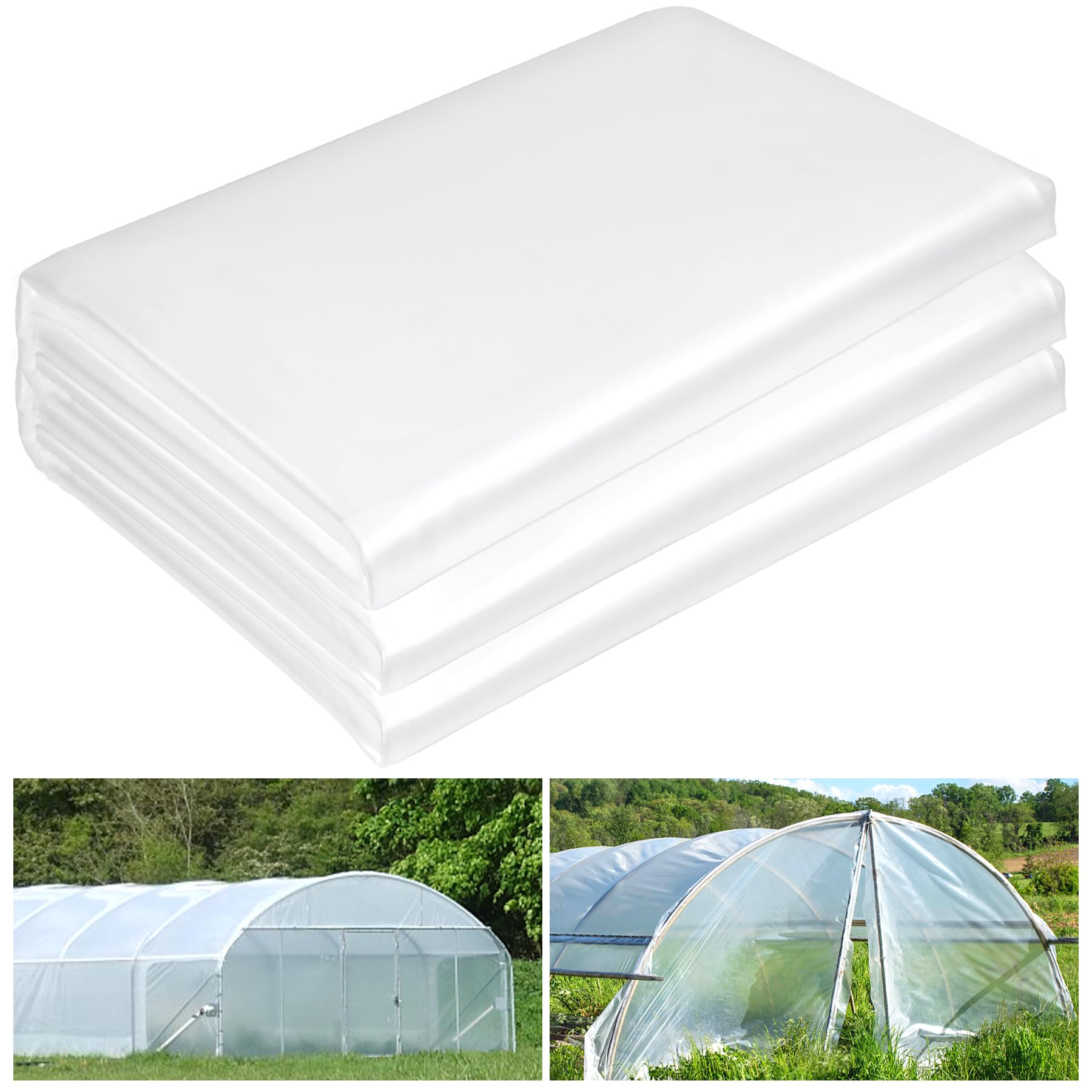
At 10 x 50 FT, this is the longest single roll here, covering 500 square feet for a budget-friendly price — but no UV additive means it may last less than one year.
At 10 x 50 FT, this is the longest single roll in this comparison, covering 500 square feet for a budget-friendly price. The manufacturer lists full technical specs: longitudinal tensile strength is 26 MPa (megapascals, a measure of how much stretch it resists before tearing), transverse is 24 MPa, and the right-angle tear strength is 129 kN/m running with the grain and 150 kN/m across it (kN/m, or kilonewtons per meter, is a unit of tear resistance — higher numbers mean the film stretches then tears less easily). These are solid numbers for a film at this tier, meaning it resists splitting in wind better than generic hardware-store plastic.
The drip-proof design works by channeling condensation down two side flows to keep dry leaves below. Light transmission is rated “up to 90%,” which competes with the premium Farm Plastic Supply >90% claim. One reviewer confirmed the “correct size, thick enough for rain, wind, rough handling” and noted “slightly tinted transparency, but effective for plant growth.” However, the honest truth is in another buyer’s review: “Longevity depends on weather conditions. Mine last less then 1 year.” Without a dedicated UV additive package, this film will show its age after a full summer in direct sun.
The weight difference tells a story: at 5.92 Kilograms (about 13 pounds), it is 7% lighter than the chicarry 10 x 50 FT competitor. The Farm Plastic Supply, at 20 pounds, is significantly heavier. Less weight means less material density and likely shorter lifespan under UV. For a temporary hoop house or a tunnel that you plan to replace annually, this is an excellent value. For a permanent greenhouse you want to cover once, spend up for the UV-stabilized roll.
Where it shines
- 50 ft length covers long tunnels without overlapping seams
- Full tensile specs (26 MPa / 24 MPa) show real tear resistance data
- Drip-proof design protects plants from condensate burns
Where it falls short
- No dedicated UV additive — customers note it lasts under 1 year
- Lighter weight (5.92 kg) means less wind resistance than premium film
Grab it for: a low-cost hoop house or season-extender tunnel where you can replace the plastic annually — the length per dollar is class-leading.
skip it if: you need a permanent greenhouse cover that survives full summer sun and multiple winters — the Farm Plastic Supply or chicarry UV options last noticeably longer.
Understanding the Specs
Tensile Strength (MPa)
Tensile strength, measured in megapascals (MPa), tells you how much pulling force the plastic can handle before it rips. A higher longitudinal number (running lengthwise) and transverse number (running widthwise) means better resistance to wind gusts and accidental snags. The ToLanbbt film lists 26 MPa longitudinal and 24 MPa transverse, which is solid for a budget film — it will handle normal wind better than cheaper 4-mil drops.
Anti-Drip vs. Light Transmission
An anti-drip coating makes water run along the plastic in a thin sheet so droplets do not bead up and fall on your plants, which can cause leaf burn. The downside is that this coating scatters light slightly, making the film hazy. You trade a few percentage points of clarity for protection against wet leaves. If you grow crops that need every lumen (a unit of light quantity) of direct light, a clear non-drip film may be preferable despite the burn risk.
FAQ
Will 6 mil greenhouse plastic survive snow loads?
How long does 6 mil greenhouse plastic last outdoors?
What is the difference between 5-Layer Co-Extrusion and single-layer plastic?
Can I use 6 mil greenhouse plastic for a chicken run or cold frame?
Is clear greenhouse plastic or white opaque better for plants?
How do I prevent the plastic from ripping in high winds?
Does greenhouse plastic block UV rays that harm plants?
What size greenhouse plastic do I need for a standard 10×10 greenhouse?
How do I clean 6 mil greenhouse plastic without damaging it?
Can I reuse greenhouse plastic after removing it?
Final Thoughts: The Verdict
If you want one dependable pick, the 6 mil plastic for greenhouse winner is the Farm Plastic Supply 10′ x 50′ because it combines a true 4-year UV rating with >90% light transmission and proven wind resistance that buyers confirm survives multiple storms. If you want wide-span single-sheet coverage with snow-load toughness, grab the chicarry 24 x 25ft. And for a long tunnel or hoop house on a tight budget, the ToLanbbt 10 x 50 FT gives you the most square footage per dollar.
How We Picked
We do not accept paid placement, and we did not hands-on test every unit. Instead, we match each pick to a real buyer and use-case by comparing the manufacturers’ published specifications against the patterns in verified customer reviews — so you get each pick’s real strengths and trade-offs instead of marketing copy.
Sources & Methodology
Specifications: manufacturer listings and product documentation. Review insights: verified customer reviews, as of July 2026. Pricing: not shown on this page (it changes often); check the current price via the retailer link.
As an Amazon Associate, Lawn Gear Lab earns from qualifying purchases. This does not affect which products we feature.