
Specs are compiled from manufacturer listings and verified buyer reviews and can change over time — please confirm the key details on the product page before buying.
Six-foot tall wire fencing sits right at the height that stops deer from leaping over while still being manageable to unroll and install by yourself. The real challenge isn’t the height though — it’s finding the right mesh size and wire thickness for whatever you’re corralling or keeping out, without overpaying for more fence than you need.
I’m Rikta — the founder and writer behind Lawn Gear Lab. This guide is built by comparing the manufacturers’ published specifications and the patterns across verified customer reviews, so you get each pick’s real strengths and trade-offs instead of marketing spin.
if you need to protect a vegetable patch, contain chickens, or block rodents from getting under a shed, this roundup of the best 6 foot wire fencing options breaks down the gauge, mesh size, and coating that actually match your project’s demands.
Quick Picks
- Metal Garden Fence, Hot Dip Galvanized After Welding, 2″x4″ 14 Gauge, 72inch H x 50ft L (Kicari) — Top Performer
- Fencer Wire 20 Gauge Galvanized Poultry Netting, 1-Inch Mesh, 6 ft x 50 ft — Best Value
- Fencer Wire 16 Gauge Green Vinyl Coated Welded Wire Mesh, 2″ x 3″, 6 ft x 50 ft — Best Blend
- Nueve Deer Hardware Cloth 1/2 inch Mesh, 72″ x 50′, 19-Gauge, Hot-Dip Galvanized After Welding — Rodent Proof
- Black PVC Coated Welded Wire Fencing, 72in x 100ft, 2″ x 3″, 16GA (HITTITE) — Long Runner
- elfinrm Chicken Wire Fencing, 6ft x 150ft Hexagonal Galvanized, 2 Inch Mesh — Budget Pick
How To Choose The Best 6 Foot Wire Fencing
The mesh size, wire gauge, and coating method are what separate a fence that lasts a decade from one that rusts through in two seasons. Here’s what to look for before you buy.
Mesh Size: The Critter Gatekeeper
The opening between wires decides exactly what gets through. A 1/2-inch mesh stops mice, snakes, and even baby chicks from squeezing past. A 2-inch or 3-inch mesh works fine for keeping out deer and dogs, but small rabbits and rodents will stroll right through it. If you are fencing a garden against groundhogs or building a chicken coop, go tight — 1-inch or smaller — so nothing wiggles through overnight.
Wire Gauge: Strength vs Flexibility
Gauge numbers work backward — lower means thicker wire. A 14-gauge fence (the thickest in this roundup) stands rigidly and takes a real beating from wind and animals, but it is also heavier and harder to cut. A 20-gauge wire is much lighter and easier to handle but won’t stop a determined large dog. For general garden protection, 16-gauge is the balance. For predator-proofing, go 14-gauge.
Galvanized After Welding vs Before: Rust Resistance
Some wire gets galvanized (coated with zinc) before the wires are welded together, leaving the weld points exposed to rust. Far better is “hot-dip galvanized after welding” — the finished fence gets dunked in molten zinc, coating every weld and joint completely. If the product says “galvanized before weaving” or “galvanized prior to twisting,” the welds will rust faster. Look for the phrase “galvanized after welding” on the spec sheet.
Quick Comparison
On smaller screens, swipe sideways to see the full table.
| Model | Best For | Wire Gauge | Mesh Opening | Length | Amazon |
|---|---|---|---|---|---|
| Metal Garden Fence (Kicari) | Deer & Dog Barrier | 14 Gauge | 2″ x 4″ | 50 ft | Amazon |
| Fencer Wire 20 Gauge Poultry Netting | Chicken Coops | 20 Gauge | 1″ Hex | 50 ft | Amazon |
| Fencer Wire 16 Gauge Vinyl Coated | Gardens & Property Dividers | 16 Gauge | 2″ x 3″ | 50 ft | Amazon |
| Nueve Deer 1/2 inch Hardware Cloth | Rodent & Critter Proofing | 19 Gauge | 1/2″ x 1/2″ | 50 ft | Amazon |
| Black PVC Coated Welded Fence (HITTITE) | Large Garden Enclosures | 16 Gauge | 2″ x 3″ | 100 ft | Amazon |
| elfinrm Chicken Wire 150 ft | Large Light-Duty Fencing | — | 2″ Hex | 150 ft | Amazon |
In‑Depth Reviews
1. Metal Garden Fence, Hot Dip Galvanized After Welding, 2″x4″ 14 Gauge, 72inch H x 50ft L (Kicari)
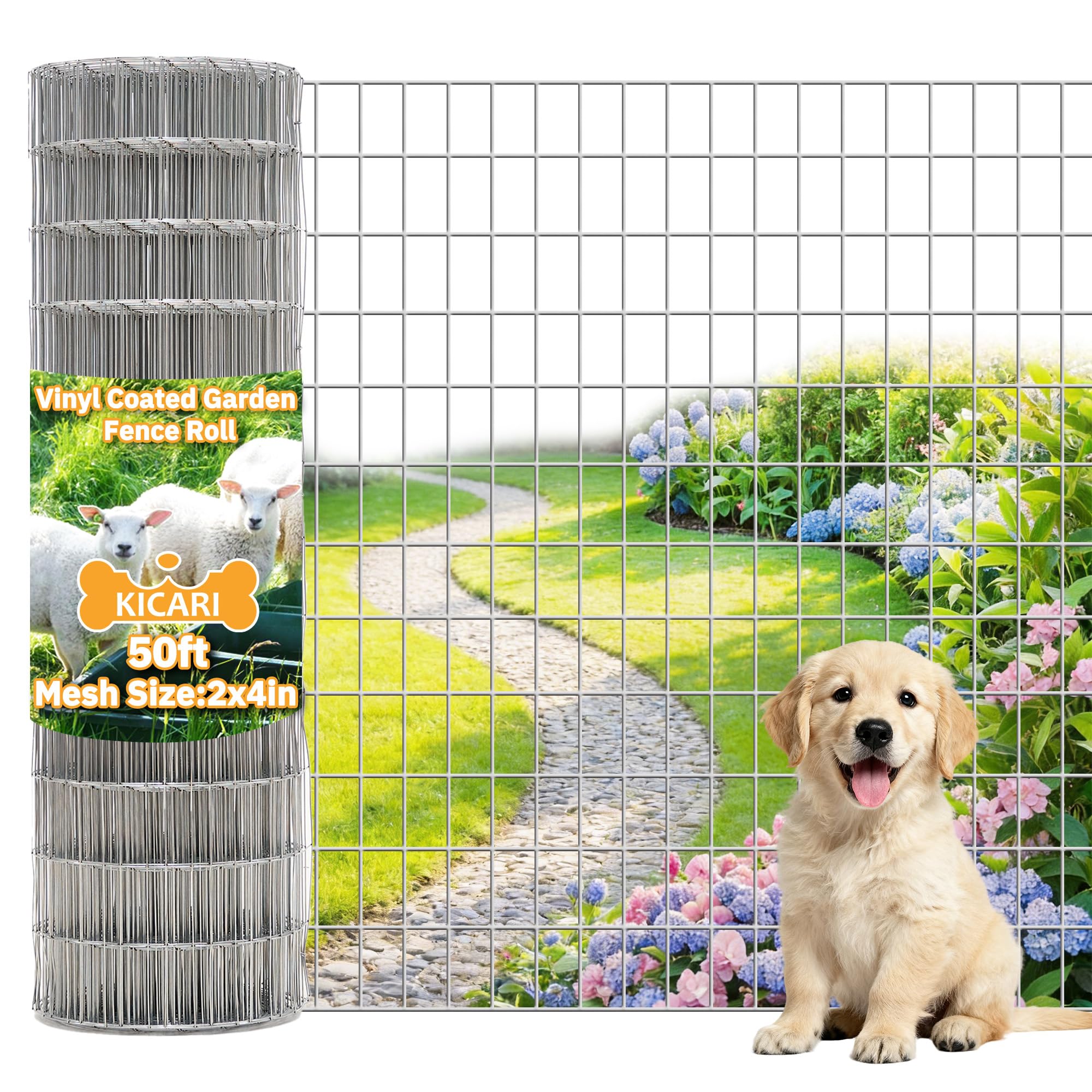
The brute-force barrier built to stop deer and dogs without buckling.
This is the thickest wire in the lineup — 14 gauge (meaning a hefty 41-pound roll) with a 2-inch by 4-inch mesh opening. “Hot-dip galvanized after welding” means every single weld joint is coated in zinc, so rust has nowhere to start compared to wire that gets galvanized before the welds are made. That is a critical difference if this fence stays outdoors year-round.
Buyers report using it as a deer barrier for a 10-foot by 20-foot garden and for wrapping tree cages. One reviewer noted it was “easy to work with despite height.” The 2-inch by 4-inch mesh stops deer and large dogs but won’t block small rabbits or rodents. You get 50 feet of length, which is less than some picks here, but the 14-gauge steel compensates with serious staying power. Unlike the elfinrm chicken wire at 19.6 pounds, this one weighs 41 pounds — noticeably heavier and more rigid.
If your main worry is four-legged pests that push and lean, this welded wire can take the abuse. Just know the open mesh means a determined rabbit can still get through to your lettuce.
Built for the long haul: Hot-dip galvanized after welding, 14-gauge steel, 2-inch by 4-inch mesh — this is the one to grab when deer and dogs are the problem and you want something that weathers years of punishment.
Reach for this if: You need a tall, thick fence that stands rigid against deer, dogs, and wind, and you want the best rust protection available in a welded wire.
Look elsewhere if: You need to keep out rabbits, chickens, or rodents — the 2×4 inch openings are too large for small critters.
2. Fencer Wire 20 Gauge Galvanized Poultry Netting, 1-Inch Mesh, 6 ft x 50 ft

The classic chicken wire that keeps the flock in and the price down.
This is a straight-ahead hexagonal poultry netting — 20-gauge wire with 1-inch hexagonal openings, covering 6 feet tall by 50 feet long. The 1-inch mesh is tighter than the 2-inch mesh on the elfinrm roll, which means adult chickens stay put and most small critters can’t squeeze through. Fencer Wire galvanizes the steel before twisting it, so the basic rust resistance is decent but not on the level of a hot-dipped weld.
Owners mention it’s “good wire” and a “great value,” with one buyer specifically mentioning they “needed more fencing for my chickens” and found it easy to work with. The wire is lightweight and pokey on the edges — you’ll want gloves. It is not meant to stop a large dog or a determined raccoon; the 20-gauge wire can be bent or cut with effort. For a mid-range price, you get a standard poultry fence that does exactly what it says on the label without any extras.
The main trade-off is that the 20-gauge steel is the thinnest in this roundup, so it works best for light-duty enclosures and critter-deterrent barriers rather than high-security fencing.
What works
- 1-inch hex mesh keeps chickens and small animals contained
- Lightweight and easy to handle at 20 gauge
- Cost-effective for large or multiple enclosures
One real limit
- 20-gauge steel is not predator-proof — raccoons and dogs can push through
Best for: Chicken keepers and light garden barriers where budget matters and the threat level is low to moderate.
skip it if: You need a fence that can resist large animals or heavy impact — the thin wire will fail under real pressure.
3. Fencer Wire 16 Gauge Green Vinyl Coated Welded Wire Mesh, 2″ x 3″, 6 ft x 50 ft
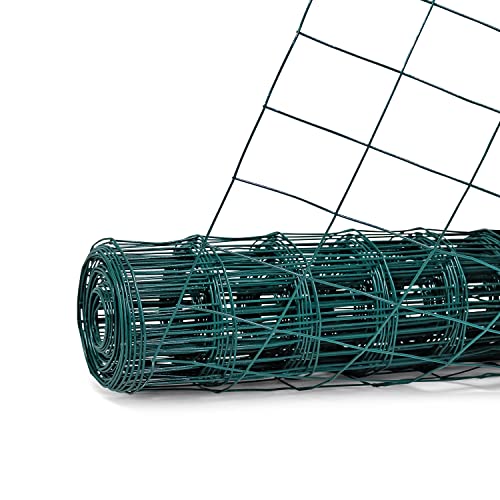
The in-between pick that disappears into the garden and stays rust-free.
This one splits the difference between the thin 20-gauge poultry netting and the stiff 14-gauge welded fence. It uses 16-gauge wire with a green vinyl coating over the galvanized steel, so you get a double layer of rust protection plus a color that blends into foliage. The mesh is 2 inches by 3 inches — rectangular and welded at each intersection, making it more rigid than the twisted hexagonal chicken wire from elfinrm.
Customers note it is “easy to work with, holds up well” and the green finish “blends in” nicely against plants. One reviewer used it for peony cages and noted the correct height supports growth without flopping over. The 16-gauge is stout enough for garden borders and keeping dogs out, but as one reviewer pointed out, the “welds could be better” — a minor quality note at this price tier. Unlike the HITTITE black fence, this one runs 50 feet rather than 100 feet, so it fits smaller plots.
If you want something that looks better than bare silver wire and won’t rust through quickly, the vinyl coating and 16-gauge core make a solid mid-range argument.
A polished performer: 16-gauge galvanized wire wrapped in green vinyl, 2×3 inch welded mesh — grabs the middle ground on strength, rust resistance, and aesthetics for most garden projects.
Grab it for: Medium-duty garden fencing where appearance matters and you want a fence that resists rust without the industrial look of bare metal.
Pass if: You need a tiny mesh for rodent control (1/2-inch or 1-inch) or you want the thickest 14-gauge for extreme conditions.
4. Nueve Deer Hardware Cloth 1/2 inch Mesh, 72″ x 50′, 19-Gauge, Hot-Dip Galvanized After Welding

The tightest weave in the lineup that turns your garden into a rodent fortress.
This is hardware cloth, not chicken wire — and the difference matters. At 1/2-inch by 1/2-inch mesh, even baby mice and snakes cannot pass through. The wire is 19-gauge, thicker than the 20-gauge poultry netting from Fencer Wire, and it is hot-dip galvanized after welding, so every weld point is sealed against rust. Nueve Deer states a 15% increase in the weld area and a 10% boost in pure zinc coverage compared to standard products, which adds meaningful longevity underground or in wet soil.
Reviewers point out it is “amazing quality for the price” and use it for chicken coops and small aviaries. The roll comes with a pair of knit gloves inside the box, a thoughtful touch since the cut edges are sharp. Unlike the HITTITE black fence at 100 feet, this one is 50 feet long — enough for a medium-sized coop or a raised bed barrier. The 19-gauge is strong enough for most critter jobs but not as rigid as the 16-gauge or 14-gauge welded panels.
If you are fighting a groundhog war or building a predator-proof coop, the 1/2-inch mesh is the only real solution here.
Why it wins
- 1/2-inch mesh stops even the smallest rodents and snakes
- Hot-dip galvanized after welding (best rust protection)
- Comes with protective gloves
The trade-off
- 19-gauge wire is not as stiff as 16-gauge or 14-gauge for free-standing fence panels
Perfect for: Chicken coops, rodent barriers, raised garden bed bottoms, and any application where you need to block the smallest pests.
Not ideal if: You are fencing a large area against deer and need maximum rigidity — the 14-gauge Kicari is a better structural choice.
5. Black PVC Coated Welded Wire Fencing, 72in x 100ft, 2″ x 3″, 16GA (HITTITE)
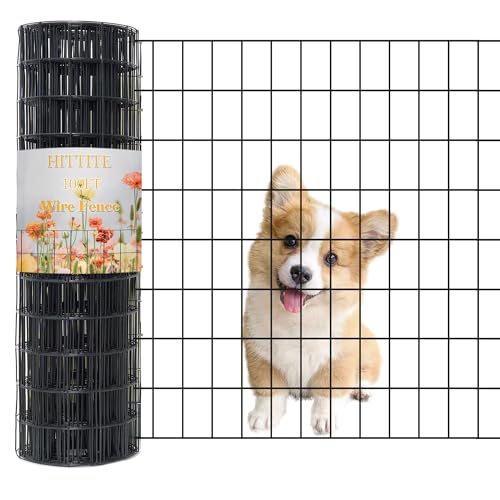
Double the length and double the coating for serious garden perimeter jobs.
At 100 feet long, this is the longest single roll in the roundup — twice the 50-foot length of the Fencer Wire and Nueve Deer options. The wire is 16-gauge (the inner wire diameter before the vinyl coating is added), with a 2-inch by 3-inch welded mesh. It gets a double coating: galvanized on the inside and a black PVC jacket on the outside, which means it resists rust from the core out and the black finish hides against fences and shadows.
Shoppers say using it to enclose part of their yard against deer and say the “durability” stands out. One buyer mentioned it works well for keeping out a 60-pound dog but cautioned it “may not be strong enough long term if you have a larger pet that climbs or will jump on it.” Another reviewer had a damaged roll on arrival — a risk with any long fence roll in shipping. The 16-gauge is a good middle-ground thickness, but at 100 feet the roll is large and heavier to maneuver alone.
This pick leads on sheer coverage area and rust resistance, but make sure you have a helper to unroll and position it cleanly.
Coverage king: 100 feet of 16-gauge, galvanized-plus-PVC coated welded wire with 2×3 inch mesh — the right choice when you have a long garden border or need one continuous run without splicing rolls.
Choose this for: Large garden enclosures, long perimeter runs, or anywhere you want black fencing that blends in and resists rust on both sides of the wire.
Be aware: The 100-foot roll is unwieldy for one person, and some shipments arrive with bent edges — inspect and return if damaged.
6. elfinrm Chicken Wire Fencing, 6ft x 150ft Hexagonal Galvanized, 2 Inch Mesh

The budget-friendly giant roll that covers a huge area for not much money.
This is the value play in both price and coverage — 150 feet of 6-foot-tall chicken wire for a relatively low cost. The mesh is hexagonal with 2-inch openings (the largest in this roundup), and the wire thickness is around 0.9mm. At 19.6 pounds versus 41 pounds for the 14-gauge Kicari fence, this roll is easier to carry around the yard and unroll solo.
The catch, as buyers report, is that the “holes in this are pretty big.” One owner reported a bunny got right through it. The 2-inch hex openings are larger than the 1-inch mesh on the Fencer Wire poultry netting, so while it works for keeping deer out of a patio garden or as a craft project base, it will not contain chickens or small pets. The wire is galvanized prior to twisting, not after welding, so the twist points are less protected against rust than a welded and dipped fence.
For the price per linear foot, this is the cheapest way to mark a large perimeter. Just know it is a visual and mild barrier, not a fortress.
The upsides
- 150 feet of coverage — the longest roll here for the money
- Lightweight at 19.6 pounds — easy for one person to carry and install
- Great for large craft projects, deer barriers, and temporary fencing
The downsides
- 2-inch hexagonal openings let rabbits and small animals pass through
- Thin wire and pre-twist galvanizing means rust will show sooner than welded alternatives
Best for: Budget-conscious buyers fencing a very large area where the goal is to deter deer, mark a boundary, or tackle craft projects — not to lock anything in.
pass on it if: You need to contain chickens, rabbits, or any animal smaller than a cat — they will find the 2-inch holes and escape.
Understanding the Specs
Wire Gauge vs Strength
Gauge numbers work inversely — 14-gauge is thicker and stronger than 20-gauge. A 14-gauge fence stands up to leaning deer and bumping dogs. A 20-gauge fence bends easily and works best for light poultry enclosures where you need flexibility. Most buyers do well with 16-gauge as a middle option: strong enough for garden borders and climbing vines, yet light enough to cut with standard wire snips.
Galvanizing Methods Explained
“Galvanized before weaving” means each wire is coated with zinc before being twisted into mesh. The twist points remain uncoated and can rust within a year or two. “Hot-dip galvanized after welding” means the entire finished fence is dipped in molten zinc. Every weld and cut edge gets sealed. This is the gold standard for rust prevention and should be your first choice if the fence will touch soil or stay outdoors in wet climates.
FAQ
Will 6-foot wire fencing keep deer out of my garden?
What mesh size stops mice and rats from getting through?
Is welded wire stronger than chicken wire?
How long does 6-foot wire fencing last outdoors?
Can I bury this fencing to stop burrowing animals?
How do I cut welded wire fencing to size?
What is the difference between 14-gauge and 16-gauge wire?
Does PVC coated wire rust inside the coating?
Final Thoughts: The Verdict
Across the board, the best 6 foot wire fencing is the Metal Garden Fence from Kicari because its 14-gauge thickness and hot-dip galvanized after welding construction give you the best strength-to-rust-resistance ratio for the money. If you need to block rodents and snakes, grab the Nueve Deer 1/2-inch Hardware Cloth for its impenetrable mesh. And for a large garden perimeter on a tighter budget, the HITTITE Black PVC Coated 100-foot roll delivers double the coverage with excellent coating protection.
How We Picked
We do not accept paid placement, and we did not hands-on test every unit. Instead, we match each pick to a real buyer and use-case by comparing the manufacturers’ published specifications against the patterns in verified customer reviews — so you get each pick’s real strengths and trade-offs instead of marketing copy.
Sources & Methodology
Specifications: manufacturer listings and product documentation. Review insights: verified customer reviews, as of July 2026. Pricing: not shown on this page (it changes often); check the current price via the retailer link.
As an Amazon Associate, Lawn Gear Lab earns from qualifying purchases. This does not affect which products we feature.