
A standard plastic nursery pot is basically a root trap. After a single season, roots hit the walls, circle around, and strangle your plant’s growth—stunting yields before you even see a sign of trouble. Moving to a fabric-based container changes that dynamic entirely by forcing air-pruning at every centimeter of the sidewall, which is why choosing the right bucket directly determines whether your tomatoes stay vigorous or stall out mid-season.
I’m Rikta — the co-founder and writer behind Lawn Gear Lab. I’ve spent countless hours comparing fabric weights, handle reinforcement methods, drainage patterns, and real-world longevity reports from thousands of home growers to assemble a guide that cuts through the commodity noise and lands on the buckets that actually deliver repeatable results.
Whether you are expanding a patio garden or running a small container farm, this breakdown of the best 5 gallon grow bucket options gives you the specific specs and trade-offs needed to match your growing style and budget.
How To Choose The Best 5 Gallon Grow Bucket
Not every black fabric bag with handles is built the same. Most budget-tier options use thin 200G or 260G nonwoven felt that disintegrates after one season or sags under the weight of wet soil. Serious growers look at three core variables that separate a one-season disposable from a multi-year workhorse.
Fabric Weight and Density
Fabric weight is the single most important durability metric. Entry-level bags often use 200G to 260G material, which feels flimsy and tends to develop holes from root pressure or regular handling. Mid-range 300G fabric provides a solid balance of breathability and structural integrity. Premium options like the AC Infinity use industry-leading 500G nonwoven fabric that resists tearing, holds its shape, and survives repeated washing cycles without losing fiber density.
Handle Reinforcement and Load Capacity
A 5-gallon bucket filled with damp soil weighs roughly 40 to 50 pounds. Handles cut from the same thin fabric as the bag walls will rip under that load. Look for handles that are either sewn with serger stitches (like VIVOSUN’s approach) or made from separate polypropylene webbing with internal lining (like OPPOLIFE’s design). The Molgoc bag adds stainless steel grommets that serve double duty as training tie-down points while reinforcing the upper edge.
Drainage and Air Pruning Design
Air pruning is what separates a grow bucket from a plastic pot. When roots hit the porous fabric wall, the air exposure dries out the root tip, forcing the plant to branch out more fibrous roots inside the container. This creates a denser root ball that uptakes water and nutrients more efficiently. The best buckets use 360-degree permeable fabric—no pre-punched holes needed. Some bags like the Molgoc include stainless steel eyelets specifically for low-stress training (LST), which also provide extra sidewall drainage points.
Quick Comparison
On smaller screens, swipe sideways to see the full table.
| Model | Category | Best For | Key Spec | Amazon |
|---|---|---|---|---|
| AC Infinity Square Heavy Duty | Premium Fabric | Long-term reusability & root space | 500G fabric / 5.39 gal true capacity | Amazon |
| VIVOSUN 5-Pack Grow Bags | Mid-Range Fabric | Balanced durability & price | 300G fabric / serger-stitch handles | Amazon |
| Gro Pro Premium Nursery Pot | Rigid Plastic | Traditional heavy-duty plastic use | Injection-molded / grip lip | Amazon |
| Molgoc 5-Pack with Holes | Training-Focused Fabric | Low-stress training & LST setups | 260G fabric / stainless steel grommets | Amazon |
| iPower Plant Grow Bag 6-Pack | Entry Fabric | High-volume starter packs | 300G fabric / nylon handles | Amazon |
| RVZHI 10-Pack Grow Bags | Budget Multi-Pack | Large scale / giveaway use | 350G fabric / plant labels included | Amazon |
| OPPOLIFE 12-Pack Grow Bags | Budget Bulk | Lowest per-unit cost for volume | 300G fabric / webbing handles | Amazon |
In‑Depth Reviews
1. AC Infinity Square Heavy Duty Fabric Pots, 5 Gallon 5-Pack

AC Infinity uses a 500G nonwoven fabric that is nearly twice as dense as the industry standard 260G–300G range, and the difference is immediately apparent when you pick up an empty bag—it holds its shape like a rigid container rather than collapsing into a floppy pile. The square design provides 360-degree surface area for root pruning while offering more usable soil volume per inch of shelf space compared to round bags.
The true capacity measures 5.39 gallons, slightly above the nominal 5-gallon rating, which means you have extra room for soil amendments without overflowing. Nylon handles are reinforced with heavy stitching, and the included fabric loops allow plant stakes to pass through without puncturing the root zone—a thoughtful detail for supporting top-heavy tomato or pepper plants.
Long-term owners report bags lasting six or more growing seasons with seasonal washing, far exceeding the typical one-to-two-year lifespan of entry-level fabric pots. The trade-off is a higher upfront investment, but the per-season cost drops dramatically when amortized over half a decade of reliable use.
What works
- Industry-leading 500G fabric density for exceptional durability
- Square shape increases root volume and shelf efficiency
- Stake loops preserve root zone while supporting tall plants
- True-to-size or slightly above-rated capacity
What doesn’t
- Premium fabric cost is higher per bag than commodity alternatives
- Gray color shows dirt and mineral stains more than all-black models
2. VIVOSUN 5-Pack 5 Gallon Grow Bags, 300G Thickened Nonwoven

VIVOSUN’s entry hits the sweet spot of the mid-range market by pairing a solid 300G nonwoven fabric with serger-stitched handles—a construction detail most budget bags skip entirely. Where cheaper pots use a single straight stitch that unravels under load, the serger stitch wraps the thread around the handle edge, distributing tension across a wider surface area.
The cylindrical shape measures 14 inches in diameter at the top and stands 10.2 inches tall, providing a classic 5-gallon footprint that fits neatly into standard saucers and raised bed frames. Drainage is passive through the entire fabric wall, so there is no standing water even after heavy rain, and the BPA-free material is safe for edible crops.
Multiple users report three to four years of seasonal use with these bags before any stitch fatigue appears. The handles support full 40-pound loads without tearing, making deck-to-ground relocation manageable. For growers who want a proven mid-range option that doesn’t require the premium budget of the AC Infinity, this pack delivers consistent performance.
What works
- Serger-stitched handles prevent rip-outs under heavy loads
- 300G fabric provides reliable multi-season durability
- Classic cylindrical shape fits standard trays and saucers
- BPA-free material suitable for vegetables
What doesn’t
- Fabric density is half that of premium 500G models
- Round shape leaves unused corner space on shelves
3. Gro Pro Premium Nursery Pot, 5 Gallon

If you prefer rigid plastic over fabric for a specific growing setup—such as deep-root tap plants that benefit from unrestricted downward growth—the Gro Pro Premium Nursery Pot offers injection-molded construction that far outlasts blow-molded alternatives. The thick walls resist cracking from UV exposure and handling, and the matte finish provides a non-slip grip even when wet.
Dimensions measure 10 inches deep by 12 inches wide, holding a full 1.5 cubic feet of soil. The integrated grip lip around the top rim is wider than typical nursery pot edges, distributing finger pressure more evenly to reduce hand fatigue when carrying a fully saturated pot. Drainage holes are pre-molded into the base with adequate spacing to prevent water pooling.
The limitation is that a rigid pot cannot air-prune roots—roots eventually circle at the wall surface, requiring manual root trimming or pot-up cycles to prevent girdling. This makes the Gro Pro better suited for short-season crops or as a propagation step rather than a long-term vegetative container. The nondetachable label is a common cosmetic complaint among buyers, but it does not affect structural performance.
What works
- Injection-molded plastic is crack-resistant and UV-stable
- Ergonomic grip lip reduces hand strain when carrying
- Full 1.5 cu ft soil capacity with ample drainage holes
- Stackable and space-efficient for nursery staging
What doesn’t
- Rigid walls prevent air pruning, leading to root circling
- Permanent label is difficult to remove for clean aesthetics
4. Molgoc 5 Gallon Plant Grow Bags 5-Pack with Holes

Molgoc differentiates itself from standard fabric pots by integrating stainless steel grommets around the upper edge, eliminating the need to cut or punch holes for low-stress training ties. Each grommet is corrosion-resistant and large enough to thread standard plant stakes or garden twine, making it straightforward to train branches outward for increased light exposure.
The fabric uses 260G nonwoven material, which is lighter than the mid-range 300G standard. This lighter weight improves breathability and accelerates drying time—soil in these pots dries out roughly every two to three days in normal conditions versus four days with thicker fabric, which can be an advantage for growers who prefer frequent feeding cycles. The trade-off is reduced structural rigidity; the bags do not stand as firmly when empty.
Handles are reinforced with polypropylene webbing rather than fabric strips, and the grommets double as additional drainage points if water pools at the rim. Multiple users note visible white salt buildup on the fabric after several feeding cycles, but the bags are fully washable for reuse the following season. The 5-pack price lands at a slight premium per bag compared to basic fabric pots, but the integrated training hardware justifies the cost for anyone using LST techniques.
What works
- Stainless steel grommets enable LST without cutting fabric
- Light 260G fabric dries faster for frequent feeding schedules
- Reinforced webbing handles hold 40–50 pounds safely
- Washable and reusable for multiple seasons
What doesn’t
- 260G fabric is less durable than 300G or 500G alternatives
- Salt and mineral buildup visible on dark fabric over time
5. iPower Plant Grow Bag 5 Gallon 6-Pack, 300G Fabric
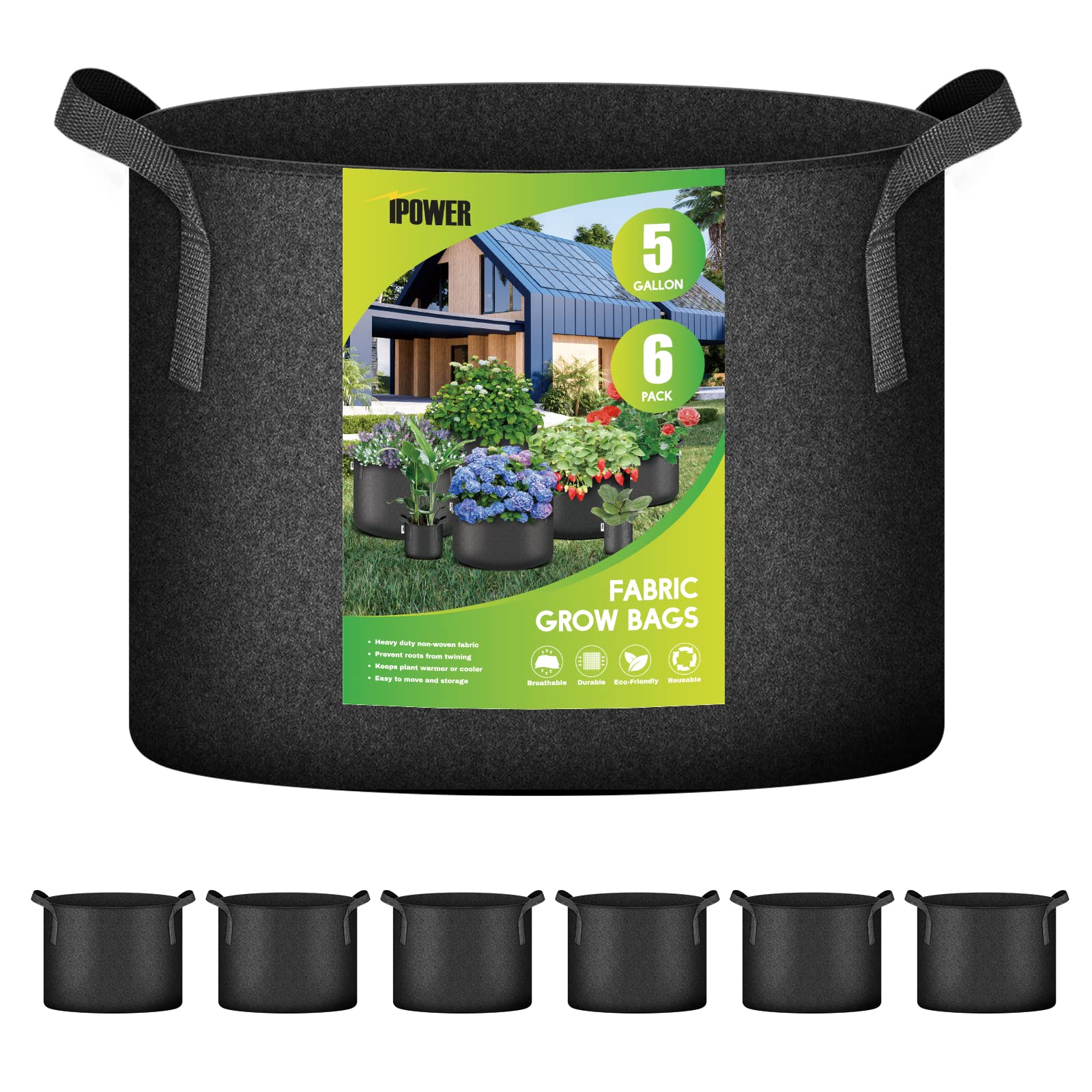
The iPower 6-pack delivers a 300G fabric pot at a per-unit cost that undercuts most similarly spec’d competitors, making it one of the strongest value propositions for growers who need volume without dropping down to flimsy 200G material. The bags measure 14 inches wide by 10.2 inches tall, and the black color absorbs heat during cooler spring days—a passive benefit for root zone temperature.
Nylon handles are sewn with double stitching, though they lack the serger wrap of the VIVOSUN model. In practice, the handles hold up well for normal movement around a patio or raised bed but may show strain under repeated heavy lift cycles. The bags stand freely when filled but collapse when empty, which is standard for this fabric weight class.
One notable advantage is the 6-count configuration—two more bags than the standard 5-pack—for only a marginal increase in total cost. Owner reports indicate three to four years of seasonal use before any significant fiber degradation, provided the bags are stored dry during winter. This is the go-to pick for building out a large container garden without overspending on fabric that exceeds the practical lifespan of the plants you intend to grow.
What works
- 300G fabric at a per-unit price that beats most 5-packs
- 6-bag count provides more capacity for the same investment
- Double-stitched nylon handles handle standard loading
- Black fabric absorbs heat for passive root warming
What doesn’t
- Handles lack serger stitching for extreme load cycles
- Bags collapse completely when empty, harder to fill alone
6. RVZHI 10-Pack 5 Gallon Grow Bags, 350G Fabric
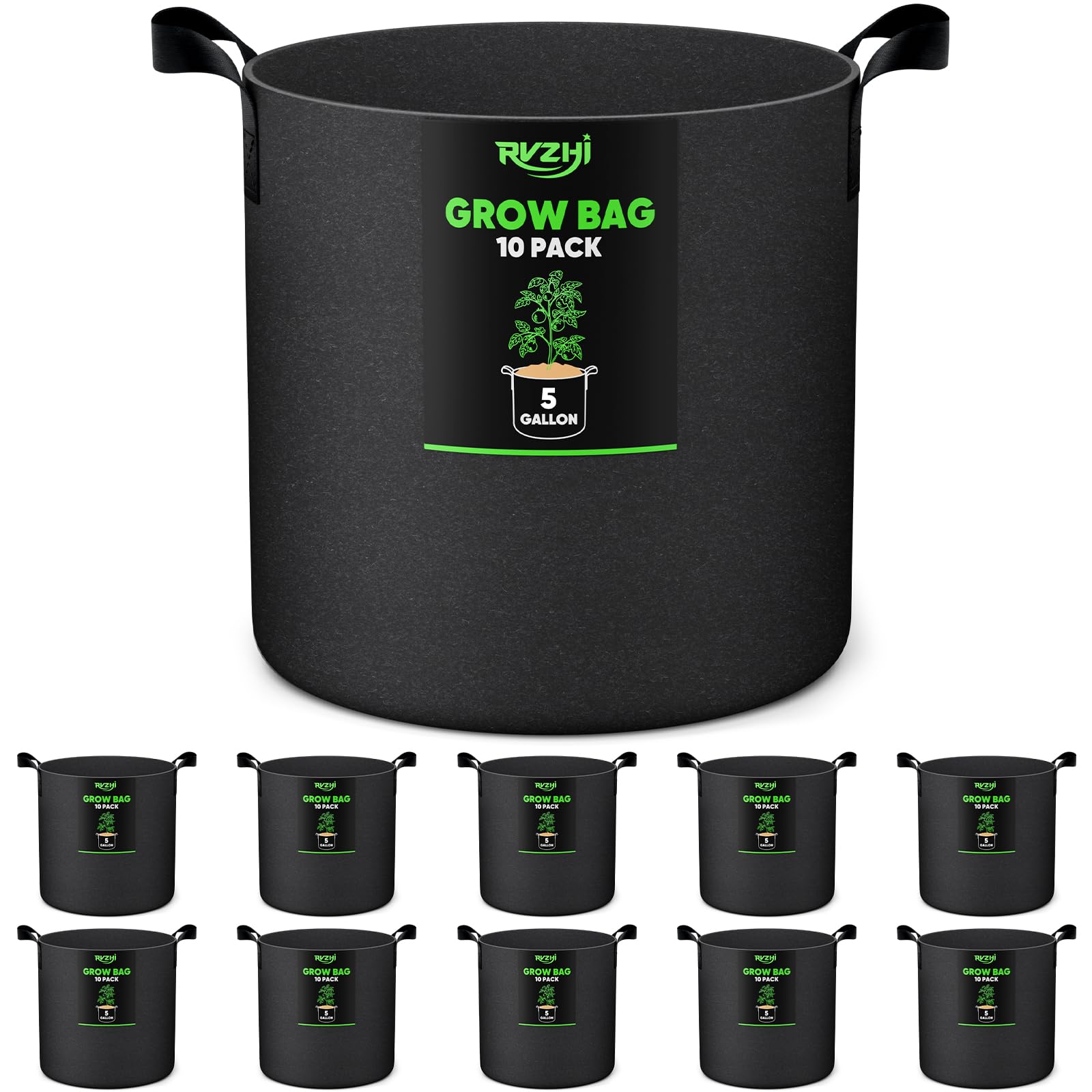
The RVZHI 10-pack uses a 350G felt fabric that is heavier than the typical 300G entry-level standard, yet the per-bag cost remains in commodity territory. This higher density means the bags hold their shape better when empty and resist sidewall bulging under the weight of mature root systems. The fabric allows natural drainage through all sides, preventing the root drowning that occurs with non-porous plastic containers.
Handles are sturdy enough for routine carrying, and the included plant labels with smiley faces are a small but useful organizational touch for anyone tracking multiple varieties. The bags are foldable for off-season storage and can be washed with a garden hose for quick cleaning between planting cycles. Some owners report using them for non-gardening purposes—laundry collection, grocery transport, garage storage—due to the durable construction.
The main consideration is the 10-count volume: unless you already need that many bags, you are committing to storage space for extras. The 350G felt is slightly less breathable than the more open-weave 260G fabric used in training-oriented models, so moisture retention is higher, which is beneficial in hot, dry climates but less ideal in consistently rainy conditions.
What works
- 350G fabric density exceeds typical budget-tier construction
- 10-count pack offers the lowest per-bag cost in this list
- Foldable design stores flat during off-season
- Included plant labels help organize multi-variety gardens
What doesn’t
- Thicker felt reduces breathability in humid climates
- 10-pack may exceed the needs of small-space gardeners
7. OPPOLIFE 12-Pack 5 Gallon Plant Grow Bags, 300G Fabric
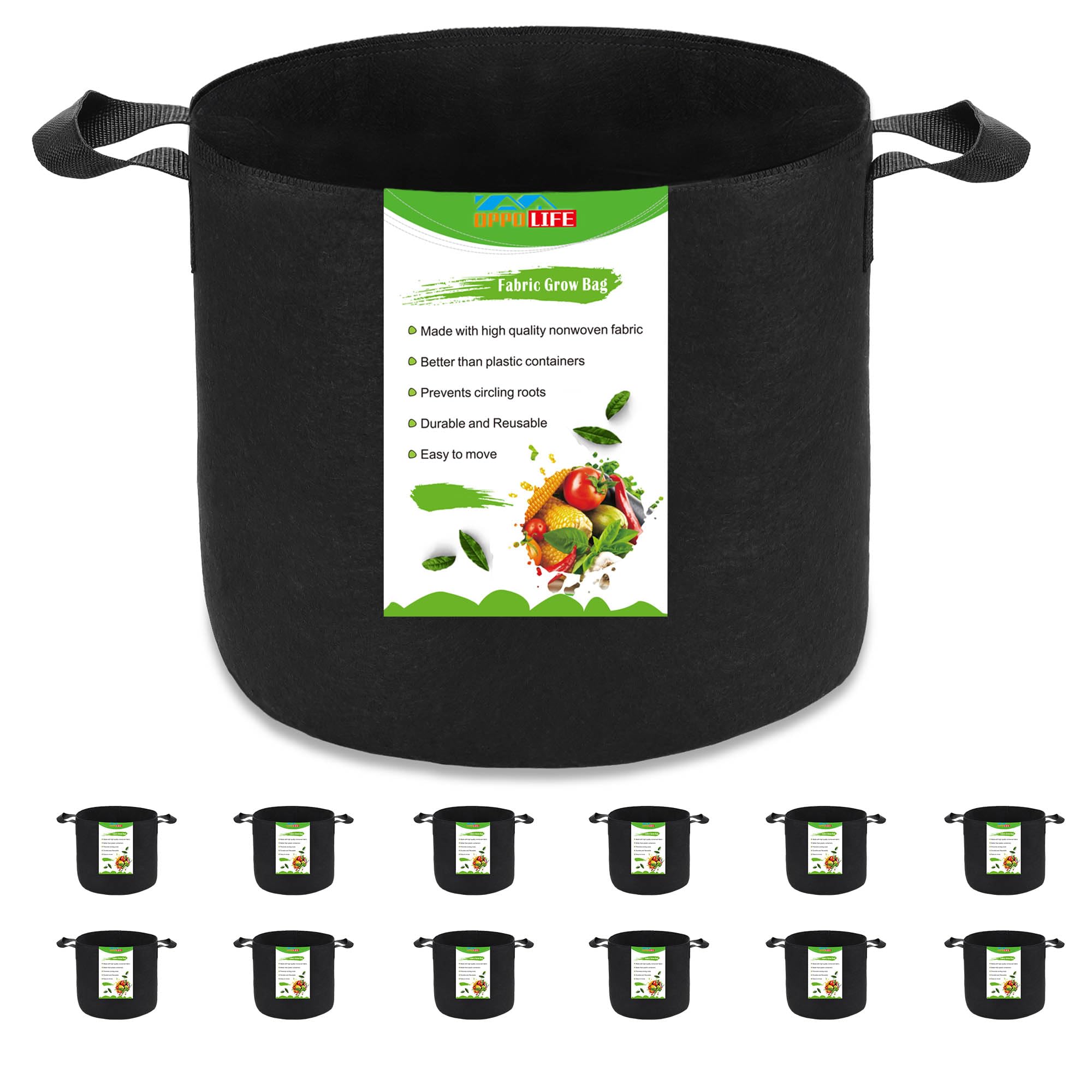
The OPPOLIFE 12-pack pushes volume pricing to the extreme, giving you a dozen 300G fabric bags at a total cost that rivals what some brands charge for half that count. Each bag measures 12 inches in diameter by 10 inches tall, providing a slightly narrower profile than the 14-inch-wide competitors, which can be beneficial for tight shelf arrangements but reduces total soil volume slightly.
The polypropylene webbing handles are widened and lined internally, giving them better tensile strength than the fabric-strip handles found on truly budget-tier options. The bags include anti-UV treatment, which helps prevent fiber degradation when left in direct sunlight for extended periods during the growing season. The manufacturer claims five years of reusability, though real-world reports suggest three to four seasons is a more realistic expectation with annual washing.
Drainage is achieved through the full fabric wall, and the bags promote air pruning similar to all fabric pots in this category. The sheer volume of 12 bags makes this the obvious choice for community garden plots, large-scale tomato operations, or any scenario where you need to pot up dozens of plants without bleeding your budget on premium fabric you do not need for short-cycle crops.
What works
- 12-pack delivers the absolute lowest per-unit cost available
- Webbing handles with inner lining outperform basic fabric handles
- Anti-UV treatment extends lifespan in full-sun conditions
- Narrower 12-inch diameter fits tight shelving racks
What doesn’t
- Smaller diameter means less soil capacity than 14-inch models
- Cost-driven construction shows stitch loosening in high-use seasons
Hardware & Specs Guide
Fabric Weight (GSM/G)
The grams-per-square-meter (GSM) rating directly correlates with puncture resistance and longevity. Entry-level 200–260G fabric works for single-season annuals, while 300G offers two to four seasons of reliable use. Premium 500G fabric, as used by AC Infinity, resists root penetration and edge fraying for five-plus years of repeated planting cycles. Always check the GSM specification before ordering—many listings omit this detail on purpose.
Air Pruning Mechanism
Fabric pots allow roots to reach the sidewall and encounter dry air, which naturally severs the root tip. This signals the plant to branch out more lateral roots inside the container, creating a dense, fibrous root system. The best air pruning occurs when the fabric is porous enough to exchange air freely but dense enough to resist fungal growth. Avoid pots with plastic liners or laminated coatings that block airflow.
FAQ
How many growing seasons can a 300G fabric grow bag last?
Should I use a saucer under a fabric 5-gallon grow bucket?
Can I wash and reuse a fabric grow bucket from year to year?
Why do some fabric grow buckets have stainless steel grommets near the rim?
Final Thoughts: The Verdict
For most gardeners, the best 5 gallon grow bucket winner is the AC Infinity Square Heavy Duty 5-Pack because its 500G fabric, square root-zone geometry, and stake-loop system provide unmatched durability and root health across multiple seasons. If you want proven mid-range value with serger-stitched handles that handle repeated heavy loads, grab the VIVOSUN 5-Pack. And for the lowest per-bag cost when potting up large volumes of annual crops, nothing beats the OPPOLIFE 12-Pack.