
Every 20-inch mower feels like it takes a dozen back-and-forths across a single strip of lawn, wasting daylight and patience. The real trick is finding one tough enough to chew through thicker grass without bogging down, yet nimble enough to maneuver around trees and beds.
I’m Rikta — the co-founder and writer behind Lawn Gear Lab. I spend my days dissecting spec sheets, crunching owner-reported reliability data, and mapping real-world deck performance across dozens of models to find the builds that hold up season after season.
If you’re hunting for a mower that actually speeds up your weekend, start with this deep-dive analysis of the 30 inch lawn mower market to find the perfect balance of cut width, power delivery, and durability.
How To Choose The Best 30 Inch Lawn Mower
Jumping to a 30-inch deck is a serious time-savings upgrade, but not every wide-deck mower is built to handle the same terrain or grass conditions. The wrong choice can mean constant clogging, uneven cuts, or a machine that’s a pain to steer. Here’s what to really look for.
Deck Construction and Material
A stamped steel deck is the standard for budget and mid-range models — it’s reliable and affordable, but can dent on hidden rocks. Fabricated decks, often found on pro-grade equipment, use thicker steel and welded seams for superior rigidity and longer life. Composite decks, like those used by EGO, offer a lightweight, rust-proof alternative that resists denting and reduces overall machine weight, making maneuvering easier on slopes.
Power Source: Gas, Battery, or Robotic
Gas engines, typically 200cc and up, provide the highest torque for thick, wet grass and never need a recharge mid-job, but come with noise, fumes, and maintenance. Battery-powered 30-inch mowers are becoming legitimate contenders — offering instant torque, quiet operation, and zero emissions — but you’ll need a pair of high-capacity batteries (at least 6.0Ah each) to finish a half-acre without a pit stop. Robotic mowers are fully autonomous, perfect for those who want to set a schedule and forget it, but they’re a significant investment and still struggle with very rough or overgrown turf.
Drive System and Traction
A 30-inch mower is heavy — often over 100 pounds — so a reliable self-propelled system isn’t a luxury, it’s a necessity. Rear-wheel drive (RWD) is the best choice for hilly properties because it pushes the mower forward, keeping the drive wheels planted on the ground. Front-wheel drive tends to lose traction on inclines. Variable-speed transmissions (CVT) give you fine-grained control of your walking pace, which is a game-changer for dense turf where you need to slow down to avoid bogging the engine.
Quick Comparison
On smaller screens, swipe sideways to see the full table.
| Model | Category | Best For | Key Spec | Amazon |
|---|---|---|---|---|
| EGO LM3004SP-2 | Electric | Time savings & quiet operation | 30″ deck w/ dual 13.2 ft-lb motors | Amazon |
| Milwaukee 2823-20 | Electric | High-torque gas replacement | 21″ steel w/ M18 Fuel power | Amazon |
| YARDMAX YG4761 | Gas | CVT speed control on slopes | 24″ seamless steel w/ 6-speed CVT | Amazon |
| SENIX G-H-FIVE | Gas | Budget-friendly self-propelled | 22″ steel w/ 201cc 4.7 HP engine | Amazon |
| PowerSmart B8622S | Gas | Entry-level rear-wheel drive | 22″ aluminum w/ 150cc B&S engine | Amazon |
| NovorikX XLLM7B50 | Electric | Variable-speed self-propel | 21″ iron w/ 1200W brushless motor | Amazon |
| AMERISUN AV8621S1 | Gas | High-wheel rough terrain | 21″ steel w/ 144cc engine | Amazon |
| Greenworks 7427202 | Electric | Riding mower for large yards | 30″ steel deck w/ 4x 8.0Ah batteries | Amazon |
| Mammotion LUBA 3 3000H | Robotic | Steep slope automation | AWD 165W motors for 80% slopes | Amazon |
| Segway Navimow X450 | Robotic | Complex obstacle navigation | 17″ deck w/ dual 180W motors | Amazon |
| Craftsman 17ARFACT093 | Gas | Zero-turn speed on 2+ acres | 46″ steel w/ 22 HP Kohler engine | Amazon |
In‑Depth Reviews
1. EGO LM3004SP-2
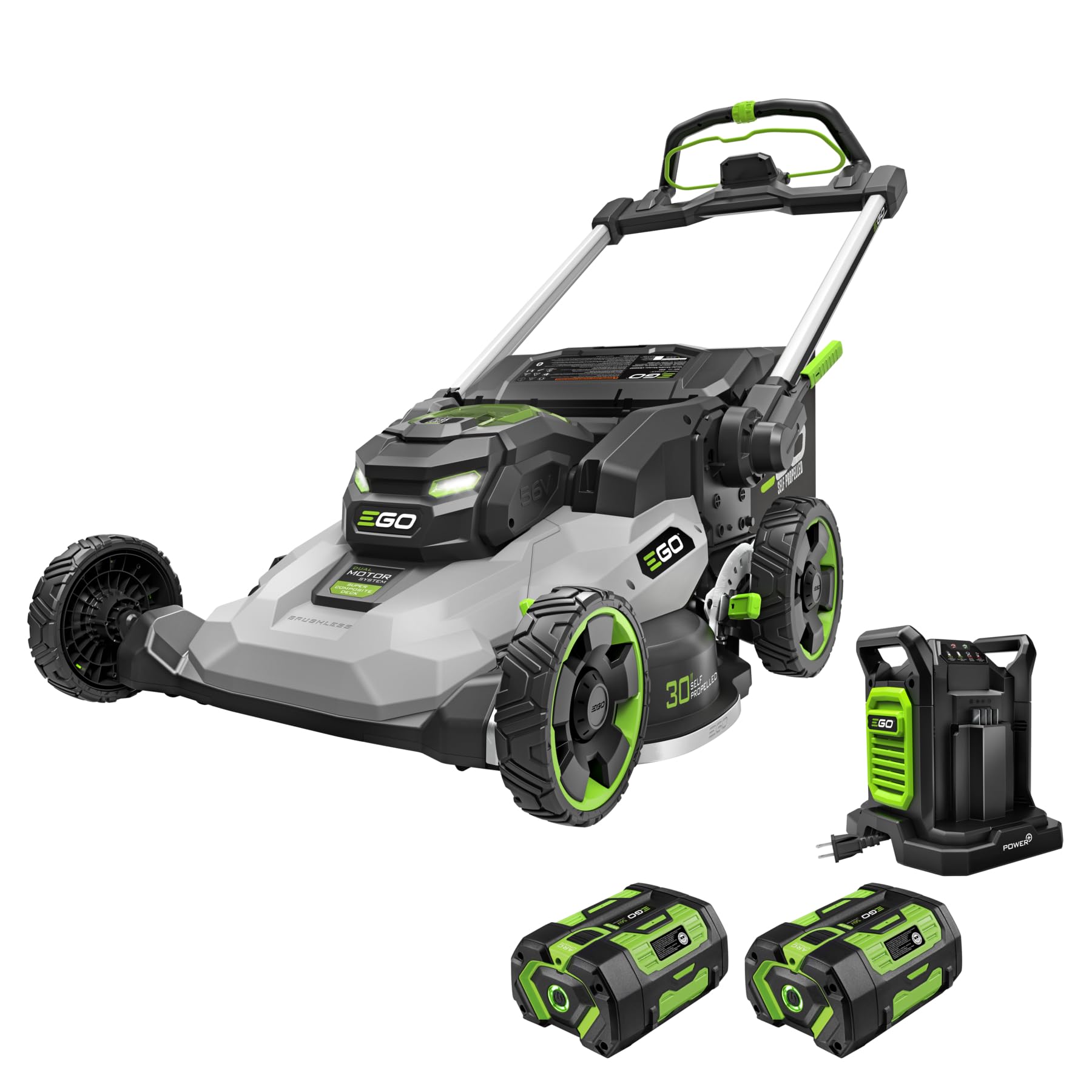
The EGO LM3004SP-2 is the machine that finally makes the argument for a 30-inch battery mower irrefutable. It packs two independent cutting blades driven by dual brushless motors that combine for 13.2 foot-pounds of peak cutting torque — enough to walk through overgrown St. Augustine that would stall a 200cc gas engine. The Super Composite deck is lightweight yet backed by a 10-year limited warranty, and it folds flat for storage that a 30-inch platform has no business achieving.
Touch Drive self-propelled technology is the standout feature here: you control the drive just by squeezing the handlebar, and the variable-speed dial at your fingertips lets you dial in your exact walking pace without a clunky lever. The mower ships with two 56V 6.0Ah ARC Lithium batteries that deliver up to 75 minutes of runtime on a single charge in normal mode — and with the optional app unlock, Turbo mode unleashes full torque for the thickest patches. Cut height spans 1 to 5 inches across nine positions, which is a wider range than any comparable gas mower.
The only real compromise is weight — at 166 pounds with batteries, this isn’t a mower you casually lift into a truck bed. Owners also note that the self-propel engages somewhat abruptly rather than ramping up gradually, which takes a few minutes of use to get comfortable with. But for anyone mowing half an acre or more who wants zero-fume, zero-belt, zero-spark-plug operation with genuine power, this is the benchmark.
What works
- Dual-motor torque shreds thick grass that stalls gas engines
- 75-minute real-world runtime covers large yards in one pass
- Folding deck saves garage space
What doesn’t
- Self-propel engages too abruptly for some users
- Heavy at 166 pounds — hard to lift for transport
2. Milwaukee 2823-20

The Milwaukee M18 Fuel dual-battery mower delivers the kind of high-RPM blade speed that Milwaukee power tool fans expect — a crisp cut that leaves a manicured finish, even in grass that’s a day overdue. The 21-inch stamped steel deck is narrower than a true 30-inch platform, but the heavy-duty blade drive and consistent torque curve make it feel more capable than the deck size suggests. It’s built for users who are already invested in the M18 battery ecosystem and want a mower that shares charging infrastructure with their drill, saw, and blower.
Owner feedback highlights the quiet operation and excellent maneuverability. The self-propelled system is responsive, and the digital speed control makes it easy to match your pace on uneven terrain. The unit weighs about 65 pounds — far lighter than the EGO — so it’s much easier to lift over curbs or load into a vehicle. Battery life is accurate to the claims; most owners report finishing a half-acre lot with a single pair of high-capacity batteries, even with self-propel active.
The main drawbacks are the narrow deck (21 inches means more passes) and the fact that the mower ships without batteries if you buy the bare-tool version. There have been occasional complaints about missing hardware in the box, though Milwaukee’s warranty support is generally responsive. If you prioritize cut quality and quiet operation over raw deck width, this is a top contender.
What works
- High RPM blade speed delivers a clean, even cut
- Lightweight for easy maneuvering and transport
- Integrates with M18 battery system
What doesn’t
- 21-inch deck is narrower than some battery competitors
- Batteries sold separately increases upfront cost
3. YARDMAX YG4761
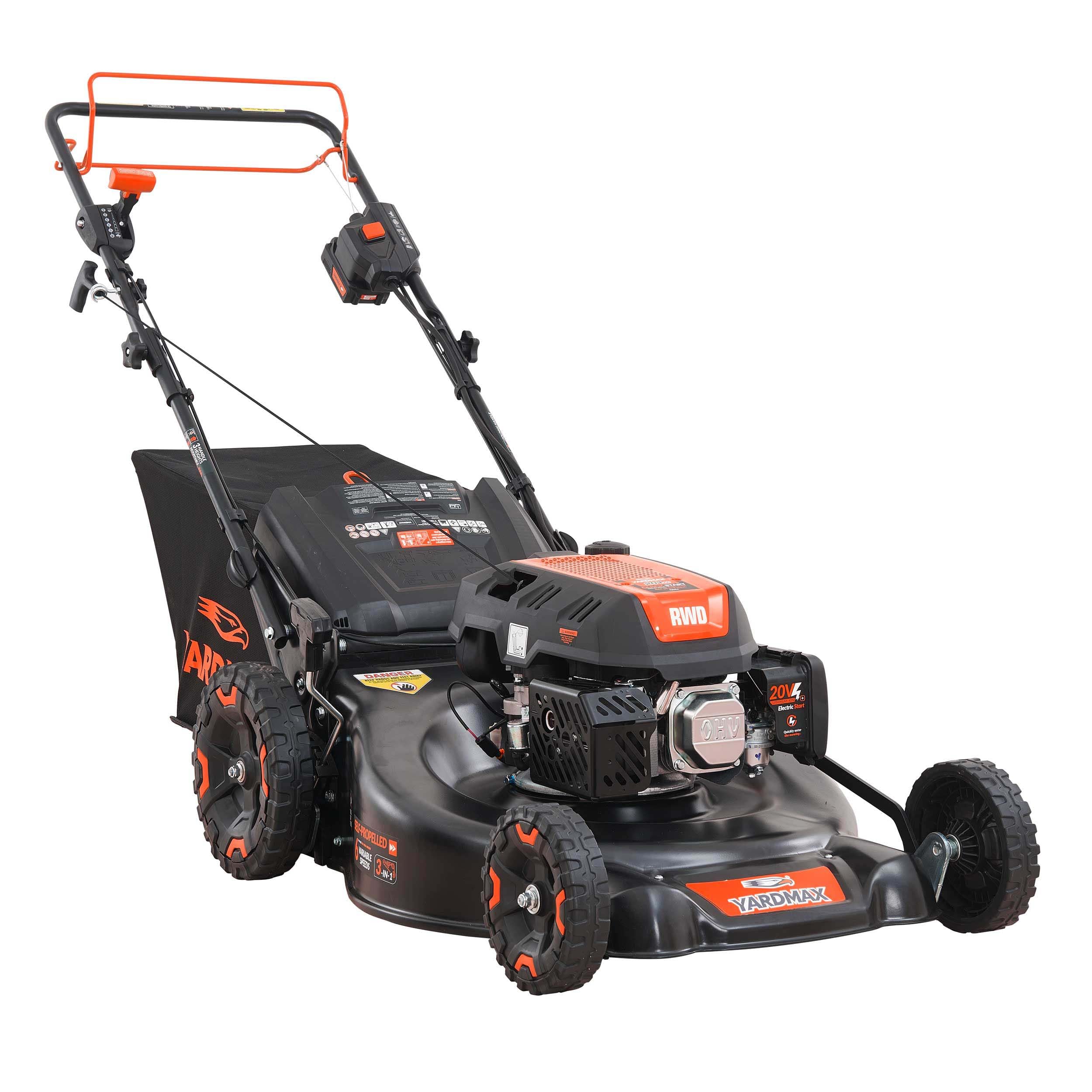
The YARDMAX YG4761 brings a continuously variable transmission (CVT) to a walk-behind mower, which is a huge deal for anyone who’s ever fought with a single-speed self-propel on a hill. This 24-inch machine lets you shift through six speed ranges seamlessly — so you can crawl through thick patches and cruise on flat straights without fiddling with a separate throttle. The electric start is genuinely convenient: push a button and the 201cc engine fires up immediately, no pull cord fatigue.
The MAXFlow deck design uses a volute spiral to keep air moving fast, which noticeably improves mulching quality even in damp grass. The single-lever height adjustment with seven positions gives you fine control from 1.57 to 3.74 inches, and the deck cleanout port makes post-mow cleanup much faster. Owners consistently report that this mower feels solid and cuts cleanly, with the wide 24-inch swath cutting mowing time significantly compared to standard 21-inch models.
The trade-off is weight — this is a heavy mower at over 100 pounds, and its bulk makes turning in tight corners a chore. A few owners also note that the CVT doesn’t offer true infinite variability within each gear; the six speeds are distinct enough to feel stepped rather than fully continuous. For flat to moderate terrain where you want maximum speed control and a wide deck, this is a strong mid-range pick.
What works
- CVT transmission provides six distinct speeds for hills
- Electric start simplifies daily use
- Deck cleanout port is a time-saver for maintenance
What doesn’t
- Heavy and bulky in tight spaces
- CVT speeds are stepped, not fully variable
4. SENIX G-H-FIVE
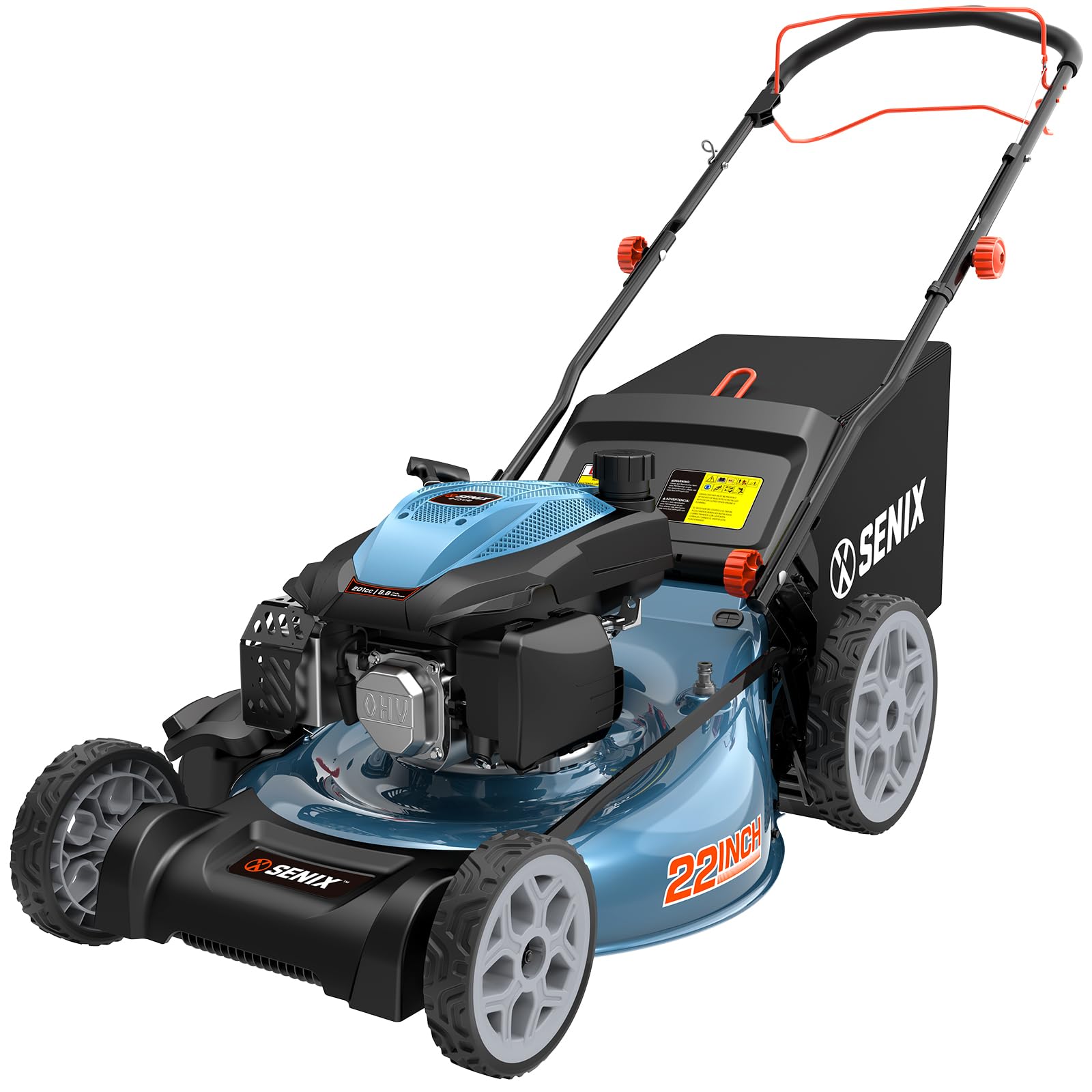
The SENIX G-H-FIVE punches above its price point with a 201cc OHV engine that churns out 4.7 horsepower — the same displacement found on mowers costing significantly more. The 22-inch steel deck is built from DC04-06 low-carbon high-strength steel, giving it extra impact resistance against hidden rocks and tree roots. The vortex tunnel airflow design helps prevent clogging in damp grass, which is rare at this price level. Assembly takes minutes with no tools required — just unfold the handle, add oil and gas, and pull the primer bulb.
Single-speed rear-wheel drive is available in this segment, and the 2.9 MPH max speed is a reasonable pace for flat lawns. The 1.25-inch minimum cut height is low enough for Bermuda lawns in summer, while the 4-inch max handles overgrown patches between cuts. Owners specifically praise how easily it starts — the vast majority report first- or second-pull starts even after sitting for weeks. It also folds for compact storage, which is welcome for smaller sheds.
However, the single-speed self-propel lacks a variable-speed adjustment, which makes it feel too fast on steep inclines. Some owners also report that the wheels feel less robust than on premium mowers, and the grass catcher information in the manual is sparse. For a budget-conscious buyer who wants genuine 201cc power and a wide-enough deck, this mower offers the best performance per dollar in its tier.
What works
- Powerful 201cc engine out-mows many pricier models
- Rear-wheel drive provides good traction on slopes
- No-tool setup and folding storage
What doesn’t
- Self-propel has only one speed, too fast on hills
- Wheels feel less durable than premium options
5. NovorikX XLLM7B50
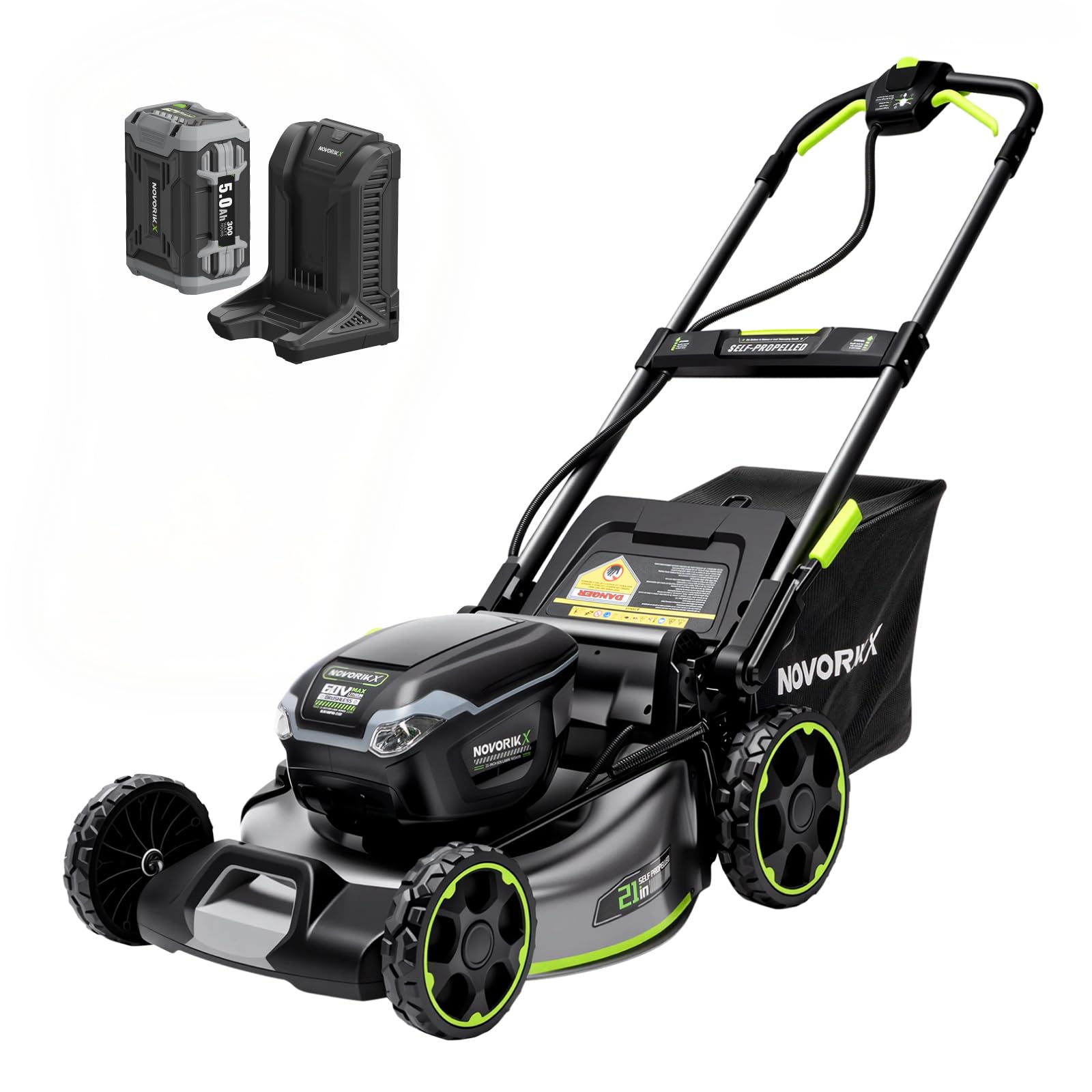
The NovorikX Obsidian series brings a 1200W brushless motor on a 60V platform to the electric mower space, promising up to 65 minutes of runtime from a single 5.0Ah battery. That’s enough juice to handle a half-acre lot on a single charge, assuming you’re not in Turbo mode the whole time. The variable-speed self-propelled drive is a highlight — you can adjust ground speed from a gentle 0.9 MPH all the way to 3.6 MPH, giving you full control regardless of grass density or grade.
The 21-inch steel deck is narrower than the true 30-inch class, but the 26-position cutting height adjustment allows for precise dialing in from 1.3 to 3.8 inches. Front LED headlights are useful for early morning or evening mows when shadows get long. Owners appreciate the quick charging — the included rapid charger tops up the battery in under an hour — and the overall assembly is straightforward. The 3-year tool warranty and 2-year battery warranty provide decent peace of mind.
There have been reports of the first unit sometimes arriving with a handle lock issue that prevents the mower from starting properly, though the manufacturer has been responsive about sending replacements. Also, the 5.0Ah battery may not be enough for a full acre if you run at higher speeds through thick grass. For smaller to medium-sized yards where you want a quiet, low-maintenance alternative to gas, this is a very strong electric option.
What works
- Variable-speed self-propel offers precise pace control
- Rapid charger refills battery in under an hour
- LED headlights extend usable mowing time
What doesn’t
- 21-inch deck requires more passes than a 30-inch model
- Some units have firmware/handle lock issues on arrival
6. PowerSmart B8622S
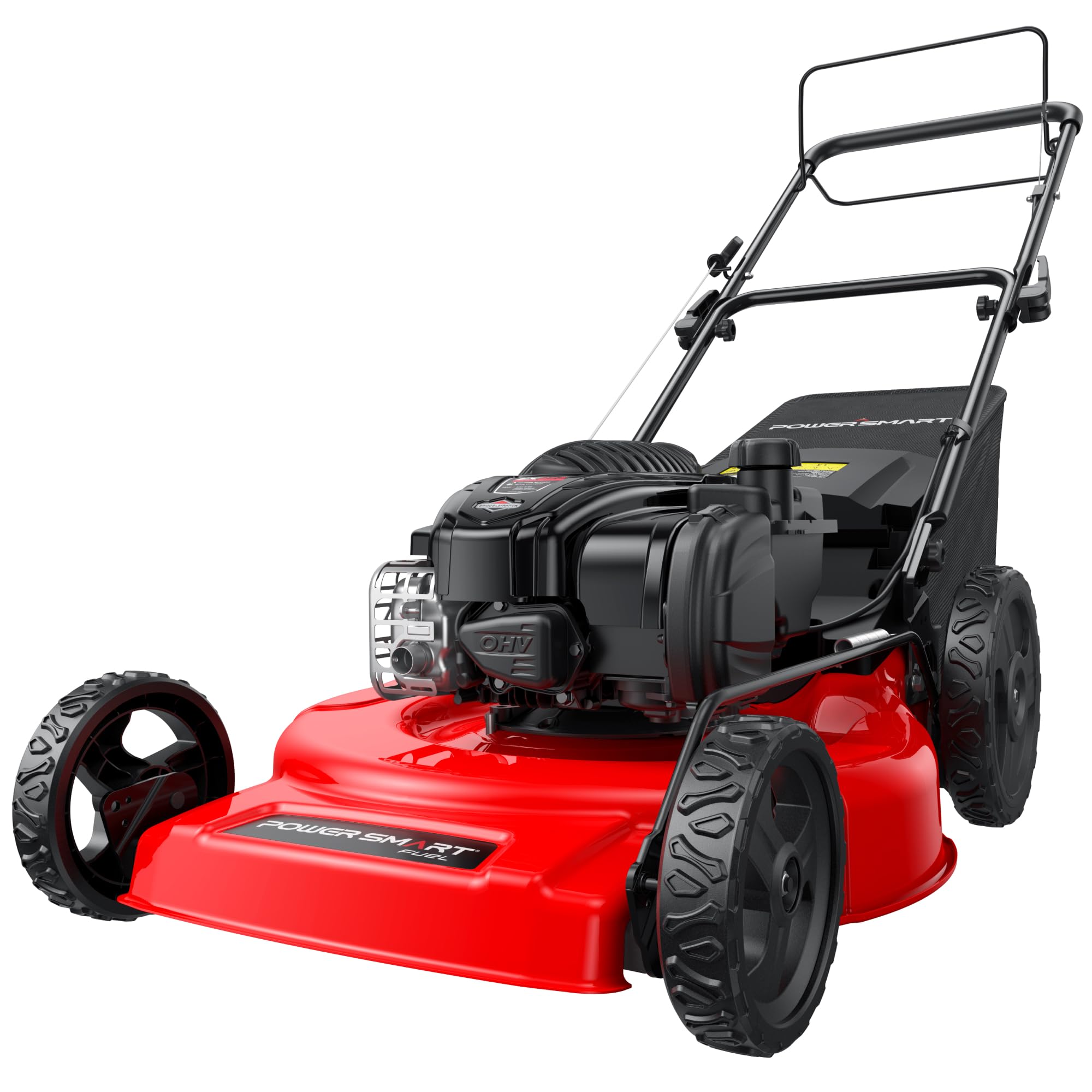
The PowerSmart B8622S is built around a USA-made Briggs & Stratton EX625 150cc engine with ReadyStart technology — meaning you don’t need to prime or choke the engine before starting. Just pull the rope and it fires, which is a genuine convenience for anyone who’s tired of flooded engines on hot start. The 22-inch rear-wheel drive system delivers solid traction on inclines, and the steel deck feels durable enough for regular use on bumpy terrain.
The 3-in-1 system works well for mulching, side discharge, and bagging. The 1.4-bushel bag is on the smaller side, but it’s easy to empty. Owners note that the single-lever height adjustment with six positions from 1.5 to 3.9 inches is quick and repeatable. Many report that the mower starts on the first pull even after sitting for weeks, and the overall build quality feels appropriate for its price point.
There are complaints about the self-propel system being too fast and lacking speed control, similar to other single-speed drive systems. A few users have reported missing bolts or parts on initial delivery, though customer service has generally replaced defective units. The lack of a hose hookup for deck cleaning is also a minor inconvenience. For a straightforward, reliable gas mower that starts easily and handles moderate hills, this is a solid entry-level pick.
What works
- ReadyStart technology eliminates prime/choke steps
- Rear-wheel drive provides uphill traction
- Single-lever height adjustment is fast to use
What doesn’t
- Self-propel is single-speed with no user control
- Some units arrive missing hardware or small parts
7. AMERISUN AV8621S1
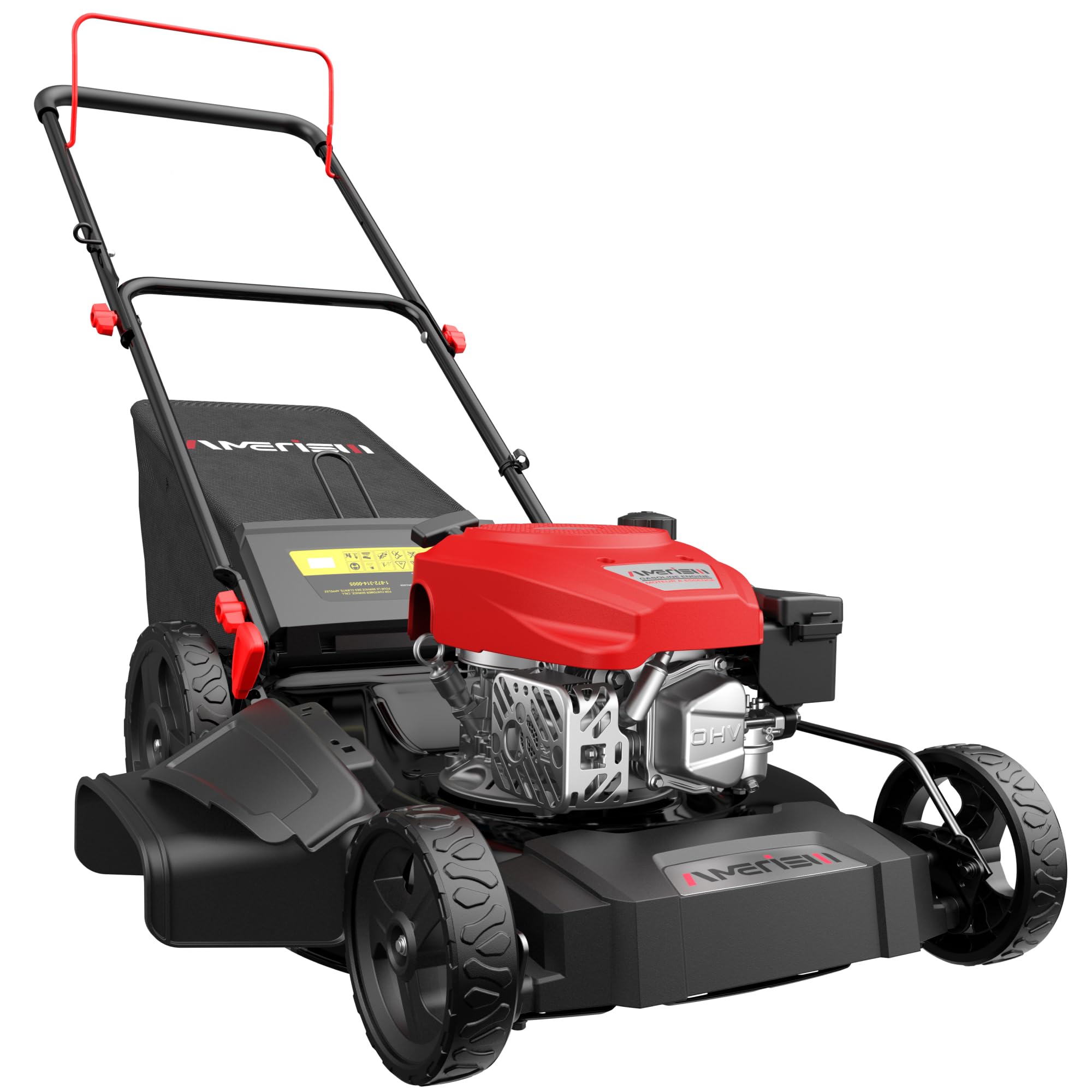
The AMERISUN AV8621S1 distinguishes itself from other budget gas mowers with its high-wheel design — 10-inch rear wheels and 7-inch front wheels that roll over bumps, ruts, and uneven terrain much more smoothly than standard-sized wheels. This makes it a surprisingly good fit for properties with rough ground, slopes, or tree roots that would cause smaller wheels to dig in. The 144cc OHV 4-stroke engine isn’t the most powerful in this lineup, but it starts reliably and provides enough torque for typical suburban grass.
The 3-in-1 mulching, bagging, and side discharge system works adequately, and the 1.4-bushel bag capacity is standard for this class. The 6-position central height adjustment lever is convenient, and the folding handle makes storage compact. Many owners report that assembly is minimal — basically unfold the handle, add oil and gas, and you’re mowing within 15 minutes. The mower cuts grass cleanly and picks up clippings well according to most feedback.
However, the self-propel system is single-speed with no speed control, and some owners find it moves too fast, especially older users. There have been isolated reports of bent wheels or non-functional self-propel on arrival, with Amazon’s non-returnable policy causing frustration for some. The engine also feels underpowered compared to the 150cc and 200cc competitors in this list. For rough terrain where wheel size matters more than raw horsepower, this mower offers unique value.
What works
- High-wheel design rolls over rough terrain smoothly
- Minimal assembly with folding handle for storage
- Reliable 144cc engine starts easily each season
What doesn’t
- Self-propel speed is fixed and feels too fast
- Less cutting power than 150cc+ competitors
8. Greenworks 7427202
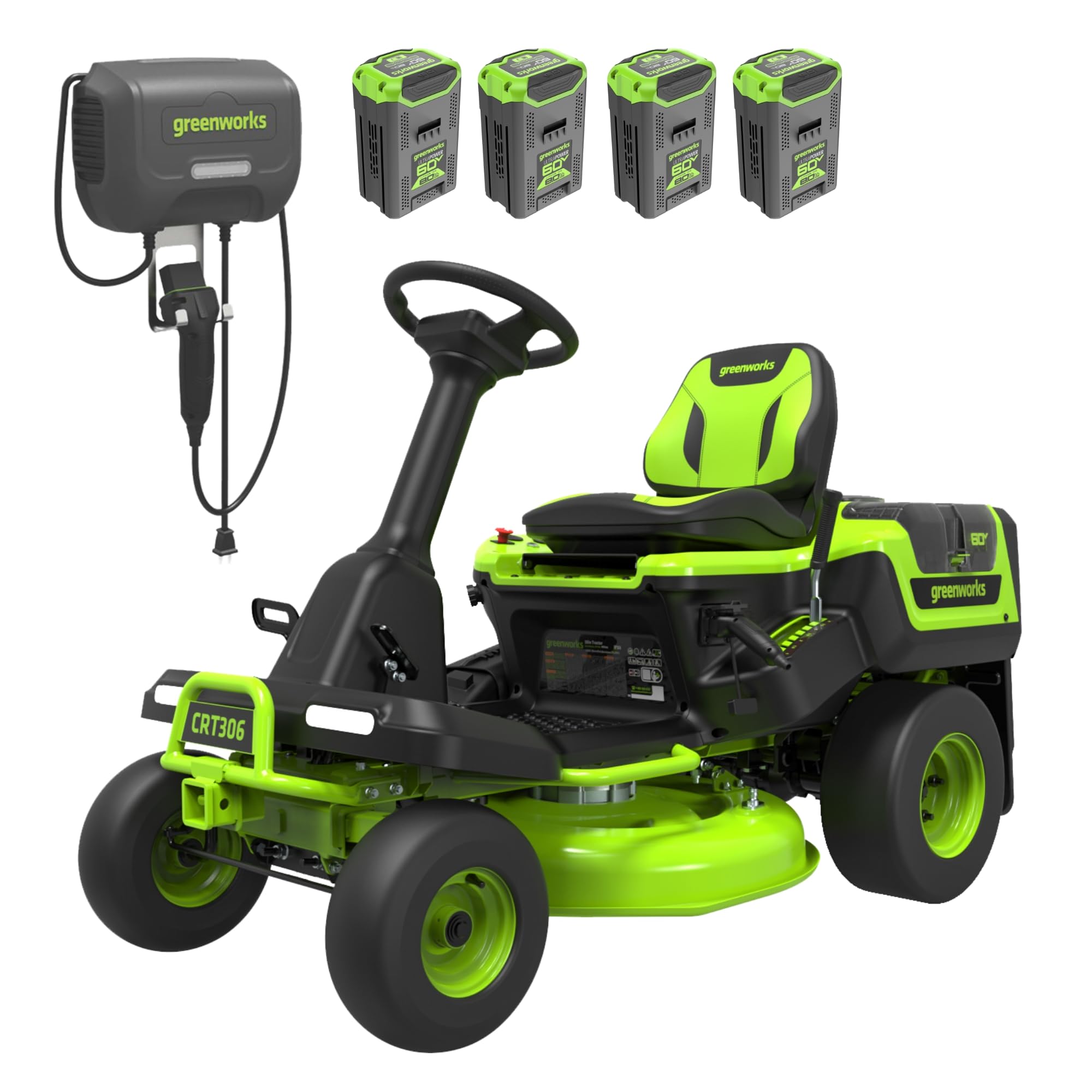
The Greenworks 60V riding mower is the most direct 30-inch answer on this list for owners who want the deck width of a ride-on without the gas and belts. Its 30-inch heavy-duty stamped steel deck uses SmartCut technology to automatically adjust the brushless motor’s torque based on grass density — meaning it speeds up in thin areas and slows down with more torque in thick patches, preventing bogging. The four 60V 8.0Ah batteries provide 1,920 watt-hours of capacity, enough to comfortably mow up to 1.25 acres on a single charge.
Traction control keeps the mower tracking straight on slopes up to 15 degrees, and the 6 MPH ground speed means you can cover a typical suburban lot in well under an hour. The single-lever 7-position height adjustment goes from 1.5 to 4.5 inches, and the integrated deck wash port makes cleaning simple. USB charging ports and cup holders add real convenience for longer sessions. Owners consistently report that the mower handles a full acre without needing a recharge, and the cut quality is even and clean.
The biggest hassle is the initial setup — the mower arrives in a heavy metal crate that’s difficult to disassemble, and some owners report missing bolts or fasteners. The side discharge chute also tends to drag on the ground at lower deck heights and can knock off on uneven terrain. For anyone tired of gas engine maintenance who wants a genuine 30-inch ride-on experience, this is the most practical electric option currently available.
What works
- 30-inch deck with SmartCut auto-torque adjustment
- Battery capacity covers 1.25 acres per charge
- Slope traction control handles 15-degree inclines
What doesn’t
- Heavy crate makes setup a two-person job
- Side discharge chute drags at lower heights
9. Mammotion LUBA 3 3000H
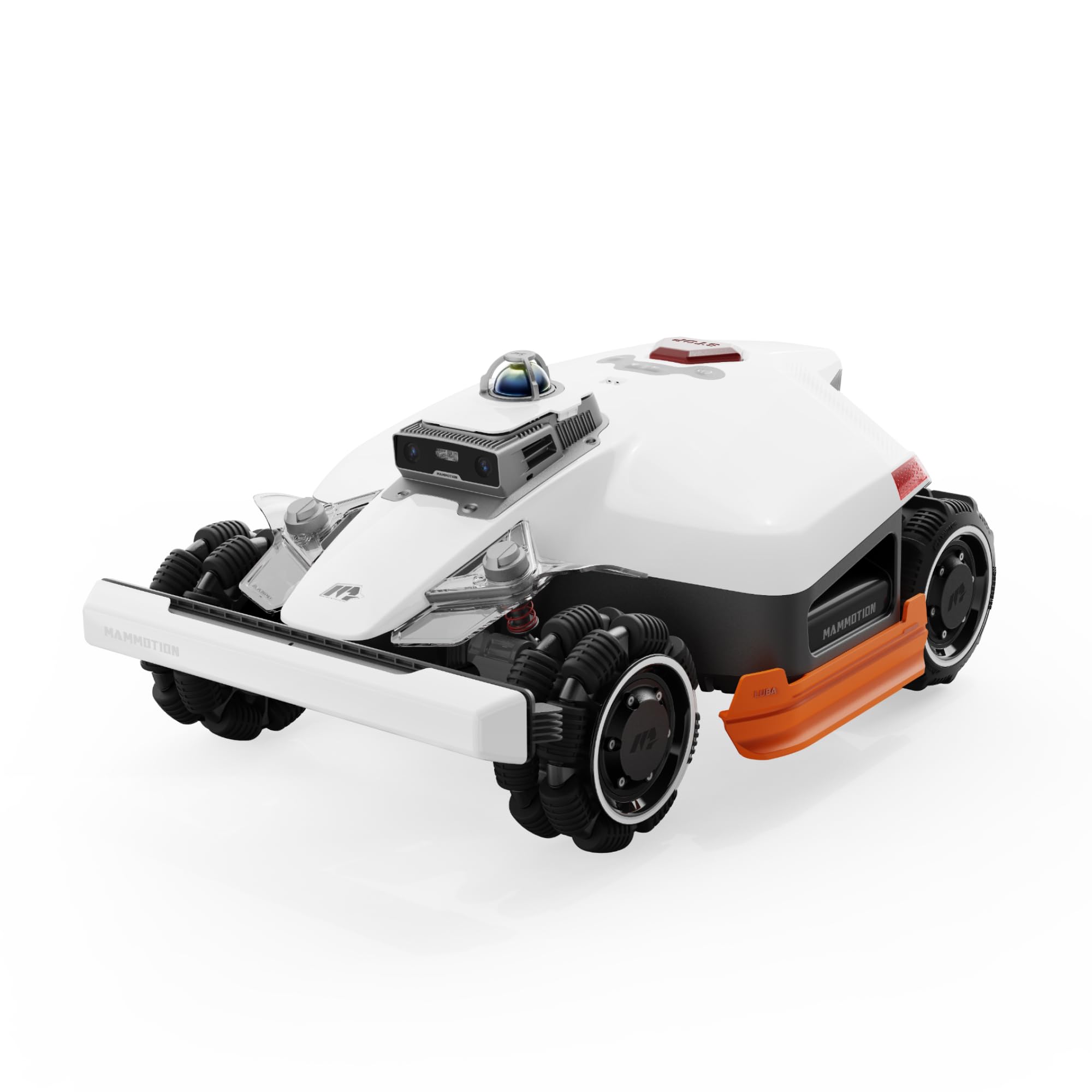
The Mammotion LUBA 3 AWD 3000H redefines what a robotic mower can handle, with four independently driven motors that climb slopes up to 80% (38.6 degrees) — terrain that would have a standard push mower sliding sideways. The Tri-Fusion navigation combines 360° LiDAR, NetRTK correction, and dual-camera AI vision to create a real-time point cloud that maps the yard, identifying obstacles like trees, garden beds, and pet toys. This system operates without boundary wires, so installation is as simple as placing the charging station and mapping the zones via the app.
Cut quality is genuinely impressive for a robot: AI vision adjusts blade speed and mower pace based on grass density, and the 165W dual motors provide enough cutting torque for most residential lawns. The mower supports up to 30 individual mowing zones, each with its own schedule, and can mow in zigzag, checkerboard, or perimeter patterns. The adaptive suspension lets it step over curbs and roots up to 50mm high, reducing the chance of getting stuck. Owners report excellent cut patterns and minimal missed spots.
The main downsides are the cutting height range — limited to 2.2 to 4.0 inches, which is too tall for low-growing Bermuda lawns — and the battery’s physical capacity; real-world coverage is closer to 60% of the rated 0.75 acre, especially on dense grass. The mower also needs periodic edge trimming since it can’t reach the absolute perimeter. For owners with steep, complex lawns who want true autonomy, this is the most capable wire-free robot available.
What works
- Climbs 80% slopes that no walk-behind can handle
- Wire-free LiDAR+RTK navigation with no boundary wires
- Supports 30 separate mowing zones with custom schedules
What doesn’t
- Cut height range too tall for low Bermuda lawns
- Real-world battery life falls short of rated coverage
10. Segway Navimow X450
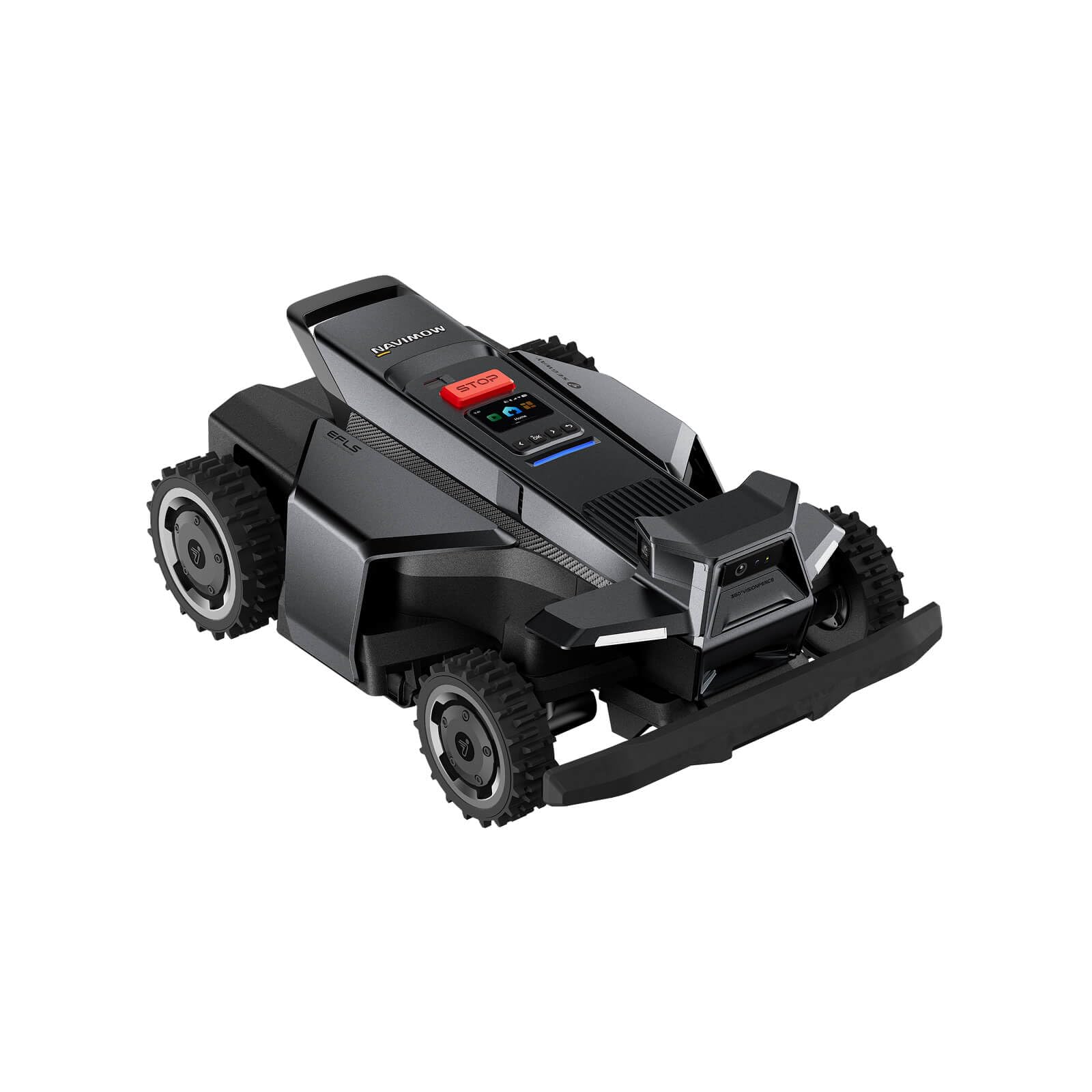
The Segway Navimow X450 takes a different approach to the robotic mower problem — instead of brute-force slope climbing like the Mammotion, it uses Xero-Turn AWD steering that lets it pivot in place without scuffing the turf. The dual 180W motors drive the cutting discs with 12 blades for a 17-inch cutting width, and the ORV-tuned dual suspension system absorbs bumps to keep the cut level on uneven ground. The EFLS tri-frequency RTK with 360° Vision and VIO provides centimeter-level positioning even under dense tree canopy.
Setup is completely wire-free: the one-tap Auto Mapping generates a map of your yard in minutes, and the GeoSketch editor lets you adjust zones and no-go areas from your phone. The AI VisionFence system identifies over 200 types of obstacles and automatically replans paths to avoid them. The mower handles slopes up to 84% (40 degrees), making it a strong choice for properties with dramatic topography. Owners praise the consistent, stripe-like cut pattern and the robust RTK signal that doesn’t drop out under trees.
However, the X450 has had some teething issues — a few units arrived with defective charging stations, and occasional firmware updates have caused navigation bugs that required rebooting. The mower is also very large and heavy, at 63 pounds, making it difficult to carry to a secondary yard. The cutting height range (0.75 to 4 inches) is better than the Mammotion but still not ideal for scalping Bermuda. For a property with complex obstacles and hills that needs a polished, automated cut, this is a top-tier choice.
What works
- Zero-turn steering scuffs turf less than conventional AWD
- RTK maintains signal under dense trees
- Slope capability up to 84% handles extreme grades
What doesn’t
- Firmware updates can temporarily cause navigation bugs
- Heavy and awkward to move between yards
11. Craftsman 17ARFACT093

The Craftsman 17ARFACT093 is a 46-inch zero-turn riding mower powered by a 22 HP Kohler 7000 series twin-cylinder engine, ideal for owners mowing two acres or more who want to finish in under an hour. The 46-inch stamped steel deck paired with the dual hydrostatic transmission provides smooth, responsive speed control with zero-turn maneuverability — meaning you can pivot around trees and obstacles without manual steering wheels. The 20×8 Turf Master tires provide excellent traction for maintaining control on slopes.
The high-back seat with three adjustable lap bar positions offers real comfort for longer mowing sessions, and the optional mulching kit lets you return nutrients to the soil. Owners consistently report that the mower cuts cleanly and leaves an even finish, even when mowing wet grass. Assembly is relatively straightforward for a zero-turn, and the overall build quality feels robust for the price point. The CRAFTSMAN warranty provides added peace of mind for a major purchase.
There have been reports of units arriving with pre-existing damage or not starting out of the crate, which is a risk with delivery of heavy equipment. Some owners also complain that the mower uses a proprietary blade design that’s harder to find replacements for than standard Craftsman blades. Additionally, a few users have reported unusual squealing noises from the front wheels after limited use. For buyers with large, open properties who want zero-turn agility and gas power, this mower delivers excellent value.
What works
- 46-inch deck and 22 HP engine mow 2+ acres quickly
- Zero-turn maneuverability around obstacles
- Comfortable high-back seat for extended sessions
What doesn’t
- Some units arrive damaged or don’t start
- Proprietary blades are expensive and hard to find
Hardware & Specs Guide
Deck Material & Construction
Deck material determines lifespan and maintenance. Stamped steel is the most common — inexpensive and workable, but prone to rust if the paint chips, and it can dent on hidden obstructions. Fabricated decks use thicker steel plates welded together; they’re heavier, more expensive, and last significantly longer under heavy use. Composite decks (polymers reinforced with fiberglass) are a compromise — lighter than steel, rust-proof, and dent-resistant — but they can crack under extreme impact and may cost more to replace.
Engine Displacement & Torque for Gas Mowers
Engine displacement in cubic centimeters (cc) gives a rough guide to raw power, but torque ratings in foot-pounds tell you how well a mower handles thick, wet grass. A 150cc engine is suitable for flat, well-maintained lawns of up to half an acre. A 201cc engine pushes into the 4.5–5 HP range, offering the torque to manage overgrown patches and moderate slopes without bogging. Electric motors are rated differently — brushless motors with 12+ foot-pounds of peak torque can match a 200cc gas engine while delivering instant torque on startup.
Self-Propelled Drive Systems (RWD, AWD, CVT)
Rear-wheel drive (RWD) is the standard recommendation for hilly properties because the drive wheels push from behind, maintaining traction. Front-wheel drive (FWD) pulls the mower and tends to lose grip on inclines as weight shifts backward. Continuously variable transmissions (CVT) allow step-less speed adjustment — you can crawl through thick patches and cruise on straightaways. Single-speed drives are simpler and cheaper but lock you into a single pace that may be too fast or too slow for your terrain.
Cutting Height Range & Adjustability
Cutting height is critical for grass health and seasonal mowing. Cool-season grasses like fescue and bluegrass do best at 3 to 4 inches in summer heat, while warm-season Bermuda and Zoysia thrive at 1 to 2 inches during growing season. A good 30-inch mower should offer at least six positions spanning 1.5 to 4.5 inches. Central single-lever adjustment is faster and more convenient than individual wheel levers, especially on a wide deck where you’d need to bend down in four spots.
FAQ
Is a 30-inch lawn mower too big for a typical residential yard?
Does a wider deck mean a heavier, harder to push mower?
How does cut quality compare between 30-inch and 21-inch mowers?
Final Thoughts: The Verdict
For most homeowners, the 30 inch lawn mower winner is the EGO LM3004SP-2 because its dual-motor torque, 30-inch composite deck, and 75-minute battery life deliver genuine time savings without gas, belts, or spark plugs. If you need electric start and CVT speed control on hills, grab the YARDMAX YG4761. And for owners with steep, complex terrain who want to reclaim every weekend, nothing beats the autonomous slope-climbing capability of the Mammotion LUBA 3 3000H.