
Specs are compiled from manufacturer listings and verified buyer reviews and can change over time — please confirm the key details on the product page before buying.
The tiniest pots hide the biggest headache. Pick the wrong 3-inch pot and your succulent rots, your seedling drowns, or your transplant stunts instead of stretches. Most beginners grab the cheapest option without realizing that drainage hole size, material breathability, and saucer fit are the three things that actually decide whether your plant lives or just survives. This guide breaks down four very different approaches to 3 inch pots for plants — plastic nursery bulk packs, clear observation pots, classic terra cotta, and glazed ceramic — so you match the pot to the plant instead of guessing.
I’m Rikta — the founder and writer behind Lawn Gear Lab. This guide is built by comparing the manufacturers’ published specifications and the patterns across verified customer reviews, so you get each pick’s real strengths and trade-offs instead of marketing spin.
Whether you are repotting fragile seedlings or displaying a tiny living stone succulent on your desk, the size, material, and drainage of your container will determine how often you water, how fast the roots grow, and how stable the whole setup feels — that is why this comparison of the best 3-inch pots for plants skips the fluff and goes straight to what works.
Quick Picks
- Riseuvo 3 Inch Terra Cotta Pots with Saucer – 12 Pack — Best Overall
- WSMKSZ 3 Inch Clear Nursery Pots – 30 Pack — Root Observation
- Seed Kingdom 50 New 3 Inch Plastic Nursery Pots – Terracotta Color — Bulk Champion
- LE TAUCI 3 Inch Mini Succulent Pots – Set of 4, Arctic White — Desktop Decor
How To Choose The Best 3 Inch Pots For Plants
A 3-inch pot is a small world for a plant. Everything you choose — the material, the drainage setup, the quantity — changes how much air gets to the roots and how often you need to water. Here are the three decisions that matter most.
Material: Clay Breathes, Plastic Retains, Ceramic Decorates
Terra cotta (unglazed clay) lets air and moisture pass through the walls, so the soil dries faster — great for succulents and cacti that hate wet feet. Plastic nursery pots hold moisture longer because they are non-porous, which makes them ideal for seedlings that need consistent dampness. Glazed ceramic pots sit in the middle: the glaze seals the clay so water only escapes through the top and the drainage hole, making them decorative options for low-water plants like lithops. Your watering schedule will change based on which material you pick.
Drainage: Holes and Saucers Work Together
Every pot in this guide has a drainage hole — that is non-negotiable for a healthy plant. But the size of the hole and whether a saucer is included matters just as much. A single small hole can still clog with soil over time, while multiple large holes (like the six found on the Seed Kingdom pots) let excess water escape fast and show you when roots are poking through. A matching saucer protects your furniture from runoff and lets you bottom-water, which is a gentler way to hydrate sensitive seedlings. Without a saucer, you will need to set the pot on a tray or move it to a sink every time you water.
Quantity and Reusability: Bulk vs. Curated Sets
If you are starting dozens of seeds or propagating succulent leaves at scale, a bulk pack of 30 or 50 plastic pots saves money and space. These thin-walled pots are stackable and often reusable for multiple seasons — buyers report the Seed Kingdom pots lasting through 3 to 4 uses without cracking. If you only need a few display-worthy pots for a desktop or a shelf, a smaller set of 4 or 12 in ceramic or clay gives you a nicer look and a heavier, more stable base. The trade-off is cost per pot and whether your setup needs quantity or quality of feel.
Quick Comparison
| Model | Best For | Material | Quantity | Drainage Setup | Amazon |
|---|---|---|---|---|---|
| Seed Kingdom 50-Pack | Bulk seedling propagation | Flexible Plastic | 50 | 6 holes, no saucer | Amazon |
| WSMKSZ 30-Pack Clear | Root observation & props | Rigid Clear Plastic | 30 | Holes + matching trays | Amazon |
| Riseuvo Terra Cotta 12-Pack | Breathable clay for succulents | Unglazed Clay | 12 | Hole + saucer per pot | Amazon |
| LE TAUCI Ceramic Set of 4 | Desktop decor for mini plants | Glazed Ceramic | 4 | Hole + saucer per pot | Amazon |
In‑Depth Reviews
1. Riseuvo 3 Inch Terra Cotta Pots with Saucer – 12 Pack
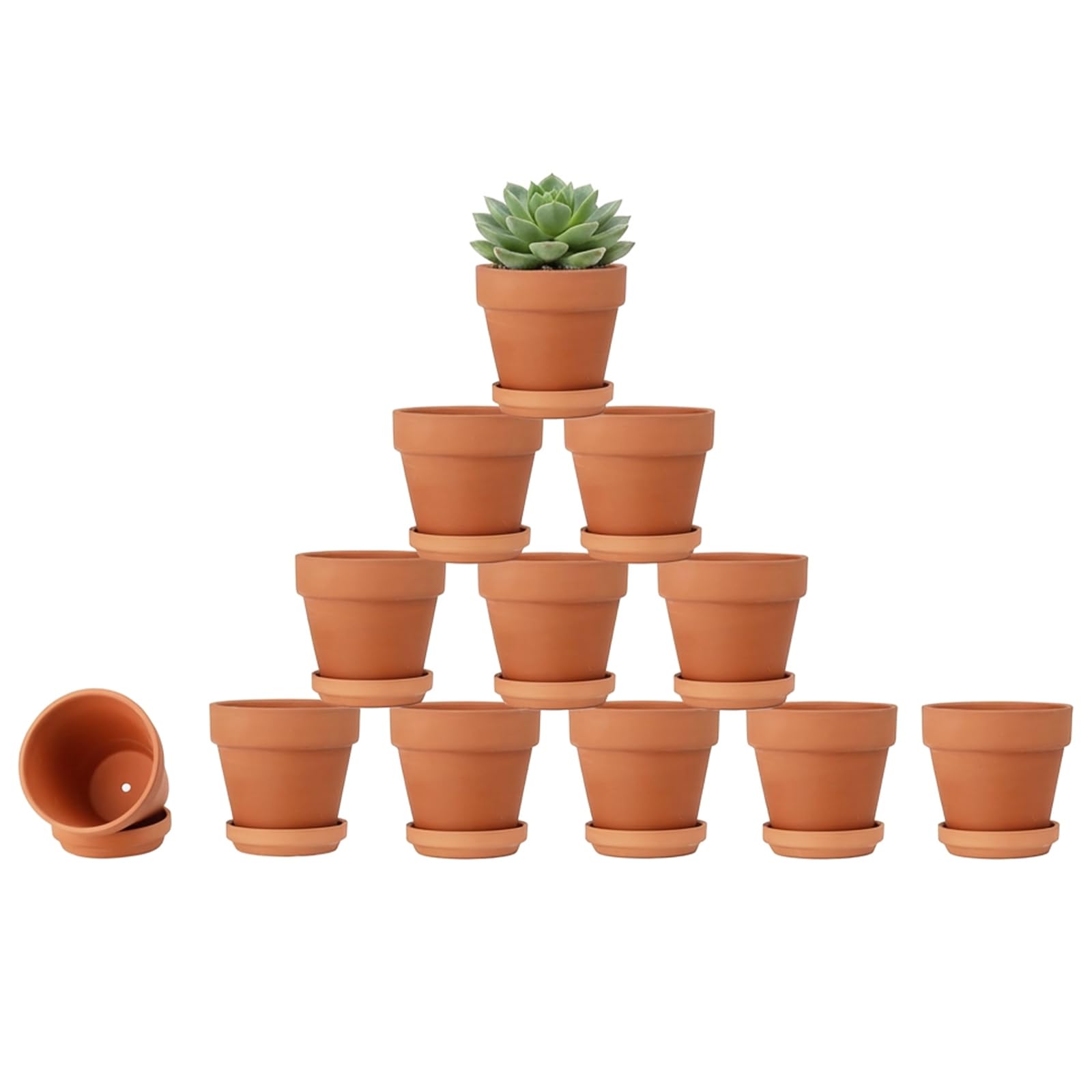
The classic clay pot that breathes naturally so your succulent roots never sit in moisture.
Unglazed terra cotta is the gold standard for plants that like dry feet. The Riseuvo set of 12 gives you a 3-inch pot with a matching saucer for each one, so you can keep succulents, cacti, and herbs on a windowsill without water rings staining the wood. The manufacturer fires each pot at 1796°F (a high kiln temperature that hardens the clay) and runs a 3-foot drop test before shipping, which is why buyers consistently report receiving every pot intact — not cracked, not chipped.
Unlike the flexible plastic of the Seed Kingdom nursery bulk pack, these clay pots are rigid and porous. That porous wall means water evaporates through the sides as well as the top, so the soil dries out faster than it would in a glazed ceramic or a plastic container. For anyone who overwaters (which is the #1 cause of death for small houseplants), that extra breathability is a safety net. Each pot has a single drainage hole, and the saucer catches runoff so you can bottom-water without making a mess.
The catch is weight and fragility. Clay is heavier than plastic and can break if dropped on a hard floor. One reviewer noted the height was listed differently than expected, but the overall quality and packaging won them over. If you are moving pots around often or have very clumsy shelves, plastic might be a more forgiving choice.
Why It Works
- Porous clay prevents overwatering by wicking moisture out the sides
- Each pot ships with a matching saucer for drip protection
- Fired at high temperature and drop-tested — owners mention none arrived broken
The Trade-Offs
- Heavier than plastic — not ideal for frequent moving
- Clay can crack if knocked off a table onto tile
Grab these if: You grow succulents, cacti, or herbs and want a breathable pot that forgives occasional overwatering — the saucer set makes it a complete system for a desk or windowsill.
Think twice if: You need a huge quantity of pots on a tight budget, because plastic packs offer more pieces per dollar.
2. WSMKSZ 3 Inch Clear Nursery Pots – 30 Pack

A see-through plastic pot that lets you spot root growth and moisture without digging.
Clear pots solve a specific problem: not knowing what is happening below the soil. The WSMKSZ 30-pack gives you transparent walls so you can watch roots spread, spot when the soil is drying out, and check for fungus gnat larvae without disturbing the plant. Unlike the flexible plastic of the Seed Kingdom pots, buyers describe these as “rigid, not flexible” — a stiffer wall that holds its shape even when full of damp soil. Each pot comes with a matching clear saucer that collects overflow, making this a two-piece system ready to set on a shelf right away.
Cuttings and propagations benefit most from clear pots because you can see root development at a glance — no pulling the stem out to check. One buyer mentioned these “were exactly what I needed to propagate my spider plant babies.” The transparent material also helps you gauge when to water: when you see condensation disappear from the inside wall, the pot is dry enough. The bottom has drainage holes, and the rigid structure means you can press the sides gently to pop out a root ball without tearing tender white roots.
The trade-off is aesthetic: clear plastic looks utilitarian, not decorative. If you want a pot that doubles as a desk ornament, the glazed LE TAUCI ceramic set is a prettier choice. But for function — especially for tracking the health of propagating cuttings and seedlings — this is the most insightful option in the lineup.
Best Feature
- Transparent walls let you see root progress and soil dryness instantly
- Rigid plastic holds its shape and resists cracking from regular use
- Matching saucers protect surfaces — ready to use from the start
What to Know
- Clear plastic is not a looker — it is utility-grade for propagation setups
- 30 pots is a lot for a casual houseplant owner; share with a friend
Reach for this if: You propagate spider plants, pothos, or succulents from cuttings and want to monitor root development without disturbing the stem.
Look elsewhere if: You need display-worthy pots for a living room shelf — clear nursery pots are tools, not decor.
3. Seed Kingdom 50 New 3 Inch Plastic Nursery Pots – Terracotta Color

A fifty-pack of flexible nursery pots that survive multiple seasons without cracking.
If you are moving dozens of seedlings from starter trays into their first real home, you need volume without sacrificing quality. The Seed Kingdom 50-pack delivers exactly that: 3-inch top diameter, 2.25-inch depth, and six large drainage holes so water escapes fast and you can see when roots are ready for the next size up. Buyers describe the plastic as “flexible yet sturdy” and report reusing them 3 to 4 times without the sides splitting — that is a real durability edge over cheaper thin-walled pots that crumble by the second use.
The terracotta color gives these plastic pots a more natural look than plain black nursery cans, though they are still lightweight and stackable. At just 2.25 inches deep, they are shallower than the Riseuvo clay pots (3 inches deep), making them better for seedlings with short root systems rather than top-heavy plants. One reviewer started succulent cuttings in them and said the fit was perfect, while another called them “the perfect next step” after the smallest restaurant-style condiment cups used for initial sprouting.
These do not come with saucers, so you will need a drip tray or a waterproof shelf underneath. If you want a set-and-forget tabletop display, the WSMKSZ clear pots with included trays are more convenient. But for sheer volume — 50 pots for a price that works out to cents per pot — this is the most affordable way to scale your spring seedling operation.
Volume Advantage
- 50 pots per pack — the lowest cost per pot of any pick here
- Six drainage holes provide excellent water flow and root visibility
- Flexible plastic bends without cracking; customers note 3-4 reuses
Missing Piece
- No saucers included — you need to buy a tray separately or use a waterproof surface
- Shallow at 2.25 inches deep — not ideal for plants with long root systems
Best for mass propagation: If you start dozens of seeds each season and need a rugged, reusable pot that costs pennies each, this 50-pack is the workhorse.
Pass if: You want a finished look with saucers — these are bare-bottom nursery pots meant for a tray, not a desk.
4. LE TAUCI 3 Inch Mini Succulent Pots – Set of 4, Arctic White
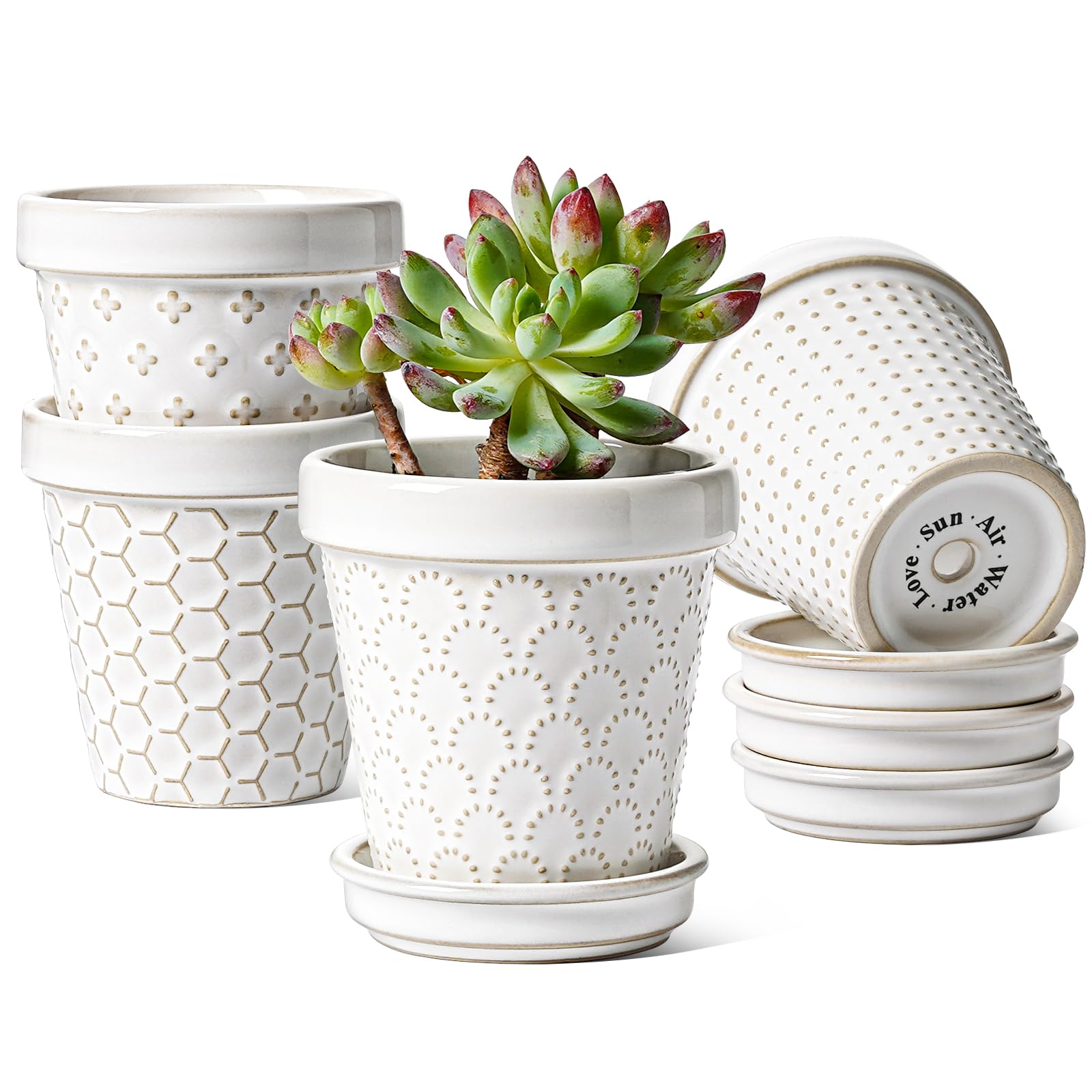
The smallest, prettiest pot in the lineup — a glazed ceramic that treats mini plants like art.
These are the pots you give as gifts or set on a bookshelf where people will actually look at them. The LE TAUCI set of 4 has a glossy arctic white glaze with raised geometric patterns that catch the light, and each pot comes with a matching saucer. At 3 inches in diameter with a 2.1-inch top opening, the manufacturer explicitly warns that these are VERY SMALL and designed exclusively for tiny plants like Lithops (living stones), mature Haworthias, or single air plants. That honesty saves buyers from buying a pot that is too small for a standard succulent.
Compared to the bulky 50-pack Seed Kingdom pots, this set is a deliberate, curated choice. Each pot weighs enough (the whole set is 2.31 pounds) to feel substantial on a desk, and the glazed surface wipes clean easily — unlike unglazed clay which collects white salt deposits over time. The ceramic holds moisture a bit longer than terra cotta because the glaze seals the pores, so you water less often, which is ideal for lithops that need very infrequent watering. Each pot has a functional drainage hole and a saucer, so you can water right on your desk without a drip tray underneath.
The catch is the quantity: 4 pots total, a 12.5x gap compared to the Seed Kingdom 50-pack. If you are starting a large collection or need pots for a garden project, this set will run out fast. But if you want a small, elegant home for a single special plant on your nightstand, no other pick here looks as polished.
Design Praise
- Glossy arctic white finish with raised geometric pattern — looks like decor, not a pot
- Includes matching saucers for each pot, so it is a complete desktop setup
- Heavy enough at 2.31 lbs (set of 4) to stay put on a shelf
Size Caveat
- Only 4 pots — a fraction of the quantity you get with plastic bulk packs
- Very small 2.1-inch top opening — only fits the tiniest plants; check your plant size first
Choose this for: A single lithops, a desk cactus, or a gift set for a friend who loves miniature plants — the ceramic glaze and saucer set make it a complete, attractive package.
skip it if: You need volume for a propagation project — 4 pots will disappear fast, and the per-pot cost is the highest here.
Understanding the Specs
Why Pot Material Changes How You Water
Unglazed clay (terra cotta) is porous — water and air pass through the walls. That means soil in a clay pot dries faster than soil in any other material, which is perfect for succulents and cacti that hate soggy roots. Plastic is non-porous, so it holds moisture longer — great for seedlings that need consistent dampness but dangerous for plants that prefer dry intervals. Glazed ceramic is sealed, so moisture only leaves through the top and the drainage hole, putting it somewhere between clay and plastic in terms of soil drying speed. Pick your material based on how often you want to water, not just how the pot looks.
Drainage Holes and Saucers Are a Team
A drainage hole lets excess water escape so roots are not sitting in a puddle. More holes (like the six on the Seed Kingdom pots) mean faster drainage and better airflow into the root zone from below. A saucer underneath catches the runoff so you do not ruin your desk or windowsill. Without a saucer, you need to move the pot to a sink every time you water or accept water rings. Saucers also let you bottom-water — filling the saucer and letting the soil absorb from below — which is gentler on delicate roots than pouring water from above, and it encourages deeper root growth.
FAQ
Can I use 3-inch pots for plants that grow larger later?
Which 3-inch pot holds moisture longest: clay, plastic, or ceramic?
Do I need a pot with a saucer or can I use a tray?
Are clear plastic pots better for monitoring root health?
Can I reuse 3-inch plastic nursery pots?
How many 3-inch pots can I fit on a standard seedling tray?
What plants actually stay in a 3-inch pot permanently?
Is terra cotta better than plastic for succulents?
Do the LE TAUCI ceramic pots have drainage holes?
Final Thoughts: The Verdict
Across the board, the 3 inch pots for plants winner is the Riseuvo Terra Cotta 12-Pack because the breathable clay and included saucers give you the best balance of plant health, durability, and display readiness at a price that is still reasonable for a set of 12. If you want to watch roots grow without guessing, grab the WSMKSZ Clear 30-Pack — the transparent walls are a genuine tool for propagation. And for mass seedling starts on a budget, the standout is the per-pot cost and reusability of the Seed Kingdom 50-Pack.
How We Picked
We do not accept paid placement. Every pick is matched to a real buyer and a real use-case; we do not hands-on test units.
Sources & Methodology
Specifications: manufacturer listings and product documentation. Review insights: verified customer reviews, as of July 2026. Pricing: not shown on this page (it changes often); check the current price via the retailer link.
As an Amazon Associate, Lawn Gear Lab earns from qualifying purchases. This does not affect which products we feature.