
Most plant owners grab the highest nitrogen number they see, hoping for faster growth. But a 3-1-2 ratio delivers a targeted, balanced nutrient profile that fuels dense foliage without sacrificing root strength or future blooms.
I’m Rikta — the co-founder and writer behind Lawn Gear Lab. I’ve spent countless hours cross-referencing NPK labels, studying soil science, and analyzing hundreds of verified buyer reports to show you which 3-1-2 fertilizers actually deliver consistent results for different growing scenarios.
After digging through the spec sheets and real-world feedback, I’ve narrowed down the standouts to help you confidently choose the best 3-1-2 fertilizer for your indoor collection or outdoor garden beds.
How To Choose The Best 3-1-2 Fertilizer
A 3-1-2 formula provides a higher proportion of nitrogen relative to phosphorus and potassium, making it ideal for promoting leafy green growth while still supporting root development and overall plant vigor. Choosing the right one depends on your specific plants and application style.
Understand Your Plant’s Growth Stage
A 3-1-2 ratio is perfect for the vegetative growth phase of many plants, including leafy greens, herbs, and houseplants like fiddle leaf figs. If you are growing fruiting plants like peppers or tomatoes, this ratio supports strong foliage before they switch to flower and fruit production, where a higher potassium blend is often used later.
Choose Between Organic and Synthetic Carriers
Organic 3-1-2 fertilizers, often derived from fish emulsion or seaweed, feed the soil microbiome and release nutrients more slowly, reducing the risk of root burn. Synthetic liquid formulas deliver nutrients in a readily available form for immediate uptake, which is useful for correcting deficiencies quickly but requires more careful dosing to avoid over-fertilization.
Check the Micronutrient Profile
Beyond the primary NPK numbers, look for added chelated micronutrients like calcium, magnesium, iron, and zinc. These secondary elements are critical for chlorophyll production, cell wall strength, and preventing common issues like leaf yellowing or weak stems, especially for indoor plants grown in soilless mixes.
Quick Comparison
On smaller screens, swipe sideways to see the full table.
| Model | Category | Best For | Key Spec | Amazon |
|---|---|---|---|---|
| Dyna-Gro Foliage Pro | Synthetic Liquid | Universal foliage & hydroponics | 3-1-2 NPK, All Chelated Micronutrients | Amazon |
| Fiddle Leaf Fig Plant Food | Liquid Blend | Fiddles & ficus varieties | 3-1-2 NPK, 3 Nitrogen Forms | Amazon |
| FOLLOWIN Fiddle Leaf Fig Food | Urea-Free Liquid | Indoor houseplants & ficus | 3-1-2 NPK, 1.8% Calcium | Amazon |
| Urban Garden Outfitters Mission | Organic Liquid | Seedlings & hot peppers | 3-1-2 NPK, Fish-Based | Amazon |
| Neptune’s Harvest Fish & Seaweed | Organic Blend | Outdoor vegetables & gardens | 2-3-1 NPK, OMRI Listed | Amazon |
| Monterey Fish & Grow | Organic Liquid | Large garden areas | 9-6-2 NPK, 4000 Sq Ft Coverage | Amazon |
| The Grow Co Fish Emulsion | Organic Fish Emulsion | Steady, organic feeding | 2-3-1 NPK, 1 Gallon | Amazon |
In‑Depth Reviews
1. Dyna-Gro Foliage Pro 32oz

Dyna-Gro Foliage Pro is the gold standard for a synthetic liquid 3-1-2 formulation. Its NPK ratio is precisely engineered for robust leaf development and lush greenery, and the formula includes every essential micronutrient in a chelated form, ensuring immediate availability for roots in both soil and hydroponic systems. This avoids the smell and variability of organic products, making it a favorite among serious indoor and greenhouse growers.
User feedback confirms that only a small amount per gallon is needed to stimulate rapid new growth and deep green coloration. The concentrated nature means a single 32-ounce bottle lasts for months, even with frequent feedings, which provides excellent value. Professionals often recommend it as the single complete nutrient source for foliage plants and tropicals year-round.
Precision is required when using this fertilizer because over-dosing can quickly damage plants. Several verified buyers noted that not following the label instructions led to severe leaf burn, requiring extensive recovery time.
What works
- Complete chelated micronutrient profile for fast absorption.
- Concentrated formula offers long-lasting use per bottle.
- Versatile for soil, soilless mixes, and hydroponic reservoirs.
What doesn’t
- Over-application can burn plants severely if not dosed carefully.
- Synthetic formulation does not feed soil biology.
2. Fiddle Leaf Fig Plant Food 8oz

This premium formula from Houseplant Resource Center is purpose-built for the specific needs of Ficus lyrata, utilizing three different forms of nitrogen to provide both immediate and extended-release nutrition. The 3-1-2 ratio is calibrated to encourage large, dark green leaves and counteract the common indoor issue of yellowing leaves caused by insufficient light and nutrients. The included care webinar and e-book are a nice touch for new fiddle leaf fig owners.
Customer reports are remarkably consistent, with numerous accounts of struggling plants producing multiple new leaves within weeks of first application. Users mention that even plants in low-winter light conditions showed significant new growth, and it has been effective at reviving plants suffering from transplant shock. The simple mixing ratio of 1 teaspoon per 2 cups of water makes it foolproof.
The 8-ounce bottle is small, though the concentrated formula still provides 6 to 12 months of feeding for a single plant. Packaging has occasionally been an issue, with some bottles arriving leaking due to a faulty induction seal during shipping.
What works
- Triple-nitrogen source sustains feeding over several weeks.
- Proven to revive and stimulate growth in struggling fiddles.
- Educational resources included for better plant care.
What doesn’t
- Small bottle volume may not suit multiple large plants.
- Packaging seal can fail during shipping, causing leaks.
3. FOLLOWIN Fiddle Leaf Fig Fertilizer 21oz

FOLLOWIN’s formulation targets a key issue for indoor fiddle leaf figs: the need for calcium to support cell wall structure and prevent leaf tip burn. This 3-1-2 fertilizer is urea-free, which reduces the risk of root burn, and is EPA-registered for indoor safety, making it a low-risk option for households with pets. The built-in graduated measuring cap eliminates guesswork and messy cleanup during mixing.
Verified buyers consistently report seeing new, larger leaves and a richer green color in their trees within a few weeks of regular use. The formula also includes 7 chelated micronutrients, which help correct deficiencies that cause dull, yellowing foliage. Many users noted that their plants responded faster to this than to generic all-purpose houseplant foods.
While the product is effective, some users found that other environmental factors like light and watering had a bigger impact on their plant’s health. The foil seal under the cap was also mentioned as being annoyingly difficult to remove.
What works
- Urea-free formula minimizes risk of fertilizer burn.
- Enriched with calcium and 7 chelated micronutrients.
- Graduated cap makes dosing accurate and easy.
What doesn’t
- Results can be limited if light and watering issues exist.
- Foil inner seal is difficult to peel off completely.
4. Urban Garden Outfitters Mission Grow 32oz
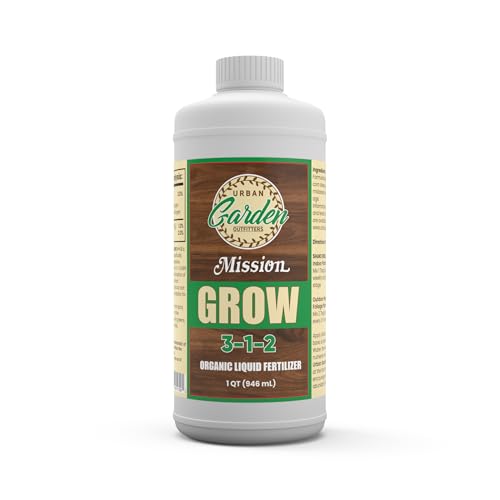
This organic liquid fertilizer from Mission delivers the exact 3-1-2 ratio using a fish tankage, beet extract, and molasses base. The organic acids in molasses feed beneficial soil microbes, which in turn make nutrients more available to plant roots over time. It is a versatile choice suitable for seedlings, leafy greens, and fruiting crops like hot peppers and tomatoes, offering a full-season feeding solution.
Experienced vegetable growers are loyal to this product, citing its effectiveness in producing heavy yields on pepper plants and lush growth on herbs. The simple mixing ratio of 1 to 2 tablespoons per gallon of water is beginner-friendly and forgiving. It works equally well in containers, raised beds, and in-ground gardens without harsh chemical side effects.
The primary drawback is the strong, pungent odor that is characteristic of authentic fish-based fertilizers. This smell makes it impractical for indoor application, as the aroma can linger in the living space for a day or more after use.
What works
- Organic ingredients build soil biology over time.
- Proven to boost yields on heavy-feeding vegetables.
- Simple, burn-resistant feeding schedule.
What doesn’t
- Very strong fishy odor unsuitable for indoor use.
- Thick liquid can be messy to measure and pour.
5. Neptune’s Harvest Fish & Seaweed 36oz
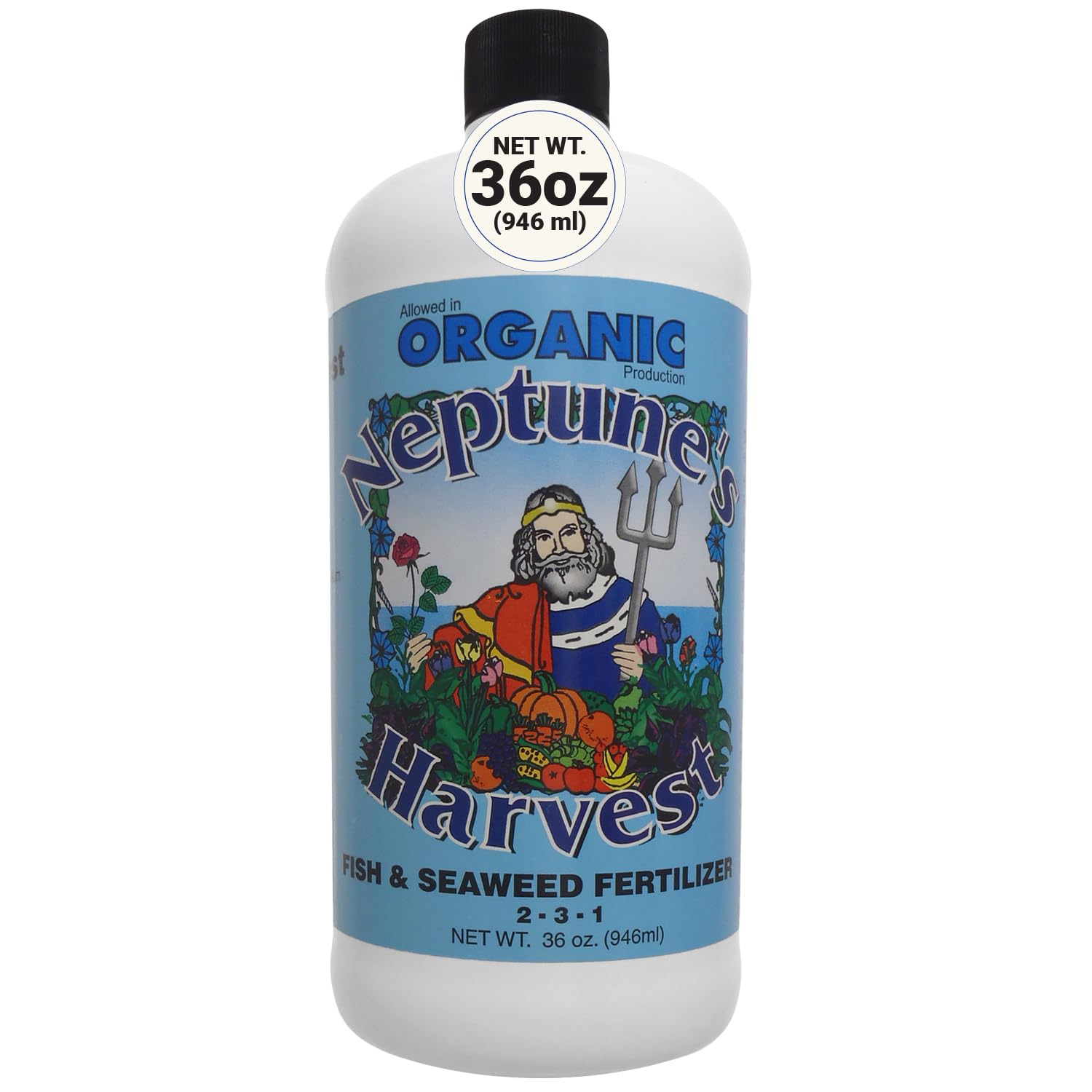
Neptune’s Harvest combines hydrolyzed fish with seaweed to create a nutrient-dense organic fertilizer that supports both plant growth and soil structure. The NPK ratio is 2-3-1, which provides slightly more phosphorus than a strict 3-1-2, making it a great choice for gardeners who want to support both foliage and early flower development in vegetables and ornamentals. It is OMRI Listed, meaning it meets strict organic production standards.
Gardeners consistently report vibrant blooms, increased crop yields, and improved soil texture after regular use. The seaweed component provides natural growth hormones and potassium that enhance root development and stress tolerance. The liquid can be used as a soil drench or a foliar feed, offering flexibility depending on the plant’s needs.
The product has a potent fishy odor, though it dissipates quickly outdoors after application. Some users also reported that the concentrated formula, if not diluted properly, can burn young or tender seedlings, so careful measurement is essential for sensitive plants.
What works
- OMRI certified for certified organic gardening.
- Dual fish and seaweed base provides wide nutrient range.
- Can be applied as a foliar spray or root drench.
What doesn’t
- Strong odor, though it fades after application.
- Concentrated formula can burn tender seedlings.
6. Monterey Fish & Grow 9-6-2 1 Quart
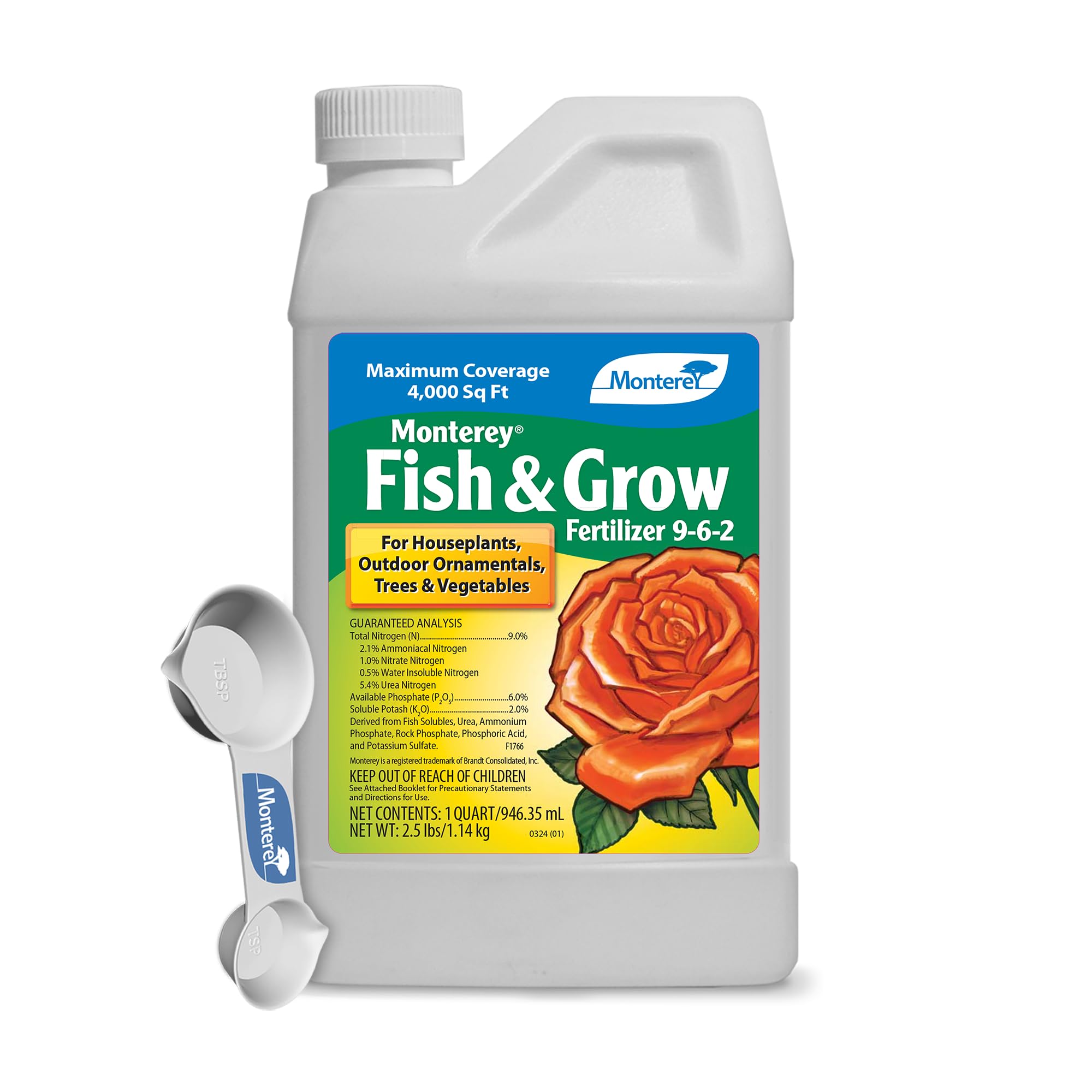
Monterey Fish & Grow delivers a potent 9-6-2 NPK ratio, which is a higher concentration version of the 3-1-2 principle. This allows a single quart to cover up to 4,000 square feet of garden space, making it a cost-effective option for large vegetable plots, flower beds, and shrub borders. It is a fish-based organic liquid that can be used as a soil drench or foliar spray, and it comes bundled with a garden measure spoon for easy dosing.
Users have observed explosive growth in plants like echinacea, daylilies, and impatiens, with some reporting that previously non-flowering plants finally bloomed after switching to this feed. It is versatile enough for both outdoor ornamentals and indoor houseplants, and many appreciate that it is an organic alternative to synthetic chemical fertilizers like standard water-soluble feeds.
The primary complaint is the smell, which reviewers describe as incredibly pungent, even for an organic fish fertilizer.
What works
- High concentration covers a vast garden area per bottle.
- Stimulates strong growth and triggers blooms.
- Organic formulation feeds soil biology.
What doesn’t
- Extremely strong fish odor during and after mixing.
- Price can feel high compared to synthetic alternatives.
7. The Grow Co Organic Fish Emulsion 1 Gallon

The Grow Co offers a full gallon of cold-pressed, hydrolyzed fish emulsion with a 2-3-1 NPK analysis, designed for light, frequent applications throughout the growing season. The large volume, when used at the recommended 1:100 dilution ratio, produces over 160 gallons of ready-to-use fertilizer, making it one of the most economical organic options for dedicated gardeners. This slow-release approach builds steady plant development without shocking the system.
Longtime organic gardeners, including those with over 50 years of experience, vouch for this brand, praising its consistent quality and value. Users note it works well in combination with other organic amendments like kelp and compost tea to create a robust feeding program. The thin consistency makes it easy to pour and mix, unlike some thicker, molasses-like emulsions.
Like all fish-based products, it carries a strong, authentic fishy smell during and immediately after application, though it fades quickly from the treated soil. The NPK ratio is 2-3-1, which contains slightly less nitrogen and slightly more phosphorus than a strict 3-1-2 ratio, making it more suitable for supporting blooms and fruiting alongside foliage growth.
What works
- Gallon size provides best cost per ounce for organic feed.
- Cold-pressed to retain amino acids and vitamins.
- Thin consistency mixes easily with water.
What doesn’t
- Strong fish odor is present before the smell dissipates.
- 2-3-1 NPK is slightly phosphorus-heavy versus a true 3-1-2.
Hardware & Specs Guide
N-P-K Ratio
The three numbers represent Nitrogen (N), Phosphorus (P), and Potassium (K) as a percentage of total weight. A 3-1-2 ratio means 3% Nitrogen for leaf growth, 1% Phosphorus for roots and flowers, and 2% Potassium for overall plant health. This ratio is ideal for vegetative growth in leafy greens and houseplants.
Urea vs. Urea-Free
Urea is a synthetic nitrogen source that is cheap but can cause root burn and salt buildup. Urea-free formulas use alternative nitrogen sources like fish emulsion, which release nitrogen more slowly and feed soil microbes. Urea-free is generally safer for indoor plants and seedlings.
Chelated Micronutrients
Micronutrients like iron, zinc, and manganese are “chelated” by bonding them to organic molecules, which prevents them from reacting with soil compounds and becoming unavailable to plants. Chelated nutrients are immediately absorbable by roots, preventing deficiencies that cause yellowing and stunted growth.
Organic Certification
OMRI (Organic Materials Review Institute) Listing indicates the product is approved for use in certified organic agriculture. OMRI-listed fertilizers are made from natural ingredients and free from synthetic chemicals and GMOs, making them suitable for organic vegetable gardens and environmentally conscious growers.
FAQ
Can I use a 3-1-2 fertilizer on flowering plants?
What is the best way to apply a 3-1-2 liquid fertilizer?
How often should I feed my plants with a 3-1-2 fertilizer?
Final Thoughts: The Verdict
For most gardeners, the best 3-1-2 fertilizer winner is the Dyna-Gro Foliage Pro because it offers a precise, chelated formula that works universally for houseplants, hydroponics, and greenhouse crops without any odor. If you need a specialized feed for a fiddle leaf fig, grab the Fiddle Leaf Fig Plant Food. And for organic vegetable gardens where you want to build soil health, nothing beats the value and versatility of the Neptune’s Harvest Fish & Seaweed blend.