
Getting the right NPK ratio for hydrangeas is non-negotiable if you want those mophead blooms to reach their full color and size. Too much nitrogen and you get a bushy green plant with few flowers; too little phosphorus and potassium, and the blooms stay small and pale.
I’m Rikta — the co-founder and writer behind Lawn Gear Lab. I pour over technical spec sheets, cross-reference NPK guarantees against application rates, and analyze hundreds of verified owner reports to separate the formulas that produce consistent bloom results from those that just make the soil wet.
This guide breaks down the top-performing hydrangea-specific and acid-loving plant foods that match or closely approximate the target analysis, so you can pick with confidence. If you are searching for the 12-4-8 fertilizer for hydrangeas that matches the exact ratio your soil test calls for, the options here represent the most reliable picks across organic, synthetic, and slow-release formats.
How To Choose The Best 12-4-8 Fertilizer For Hydrangeas
Hydrangeas are heavy feeders that respond best to a controlled nutrient release, especially when the middle number (phosphorus) stays moderate and the last number (potassium) supports cell wall strength and bloom longevity. A 12-4-8 analysis provides a 3:1:2 ratio that matches what most hydrangea varieties need during their active growing months without pushing excessive leafy growth.
NPK Ratio Precision
The first number (nitrogen) at 12% drives leaf and stem growth, but too much produces a lush bush with few flowers. A 4% phosphorus level is sufficient for root development and bloom initiation without triggering runoff concerns. The 8% potassium reinforces disease resistance and flower stem stiffness—critical for heavy-headed hydrangea varieties like Limelight and Endless Summer.
Release Mechanism and Application Frequency
Granular slow-release formulas feed over six to eight weeks and reduce the risk of salt buildup around shallow hydrangea roots. Water-soluble powders offer faster uptake but require more frequent reapplication and careful measuring to avoid overfeeding. For most gardeners, a controlled-release granular product applied in early spring and again in midsummer provides the most consistent results.
Soil pH and Acid-Loving Compatibility
Hydrangea bloom color—pink versus blue—depends on soil pH and aluminum availability. A fertilizer that includes sulfur or other acidifying agents helps maintain the acidic environment that blue hydrangeas require. If your soil test already shows a pH below 6.0, a non-acidifying 12-4-8 formula may work fine. If you are fighting alkaline soil, choose a product labeled for acid-loving plants or one that contains sulfur.
Quick Comparison
On smaller screens, swipe sideways to see the full table.
| Model | Category | Best For | Key Spec | Amazon |
|---|---|---|---|---|
| Espoma Organic Holly-Tone 4-3-4 | Organic Granules | Long-term soil health | 36 lb bag, 5% sulfur | Amazon |
| GARDENWISE 8-4-8 | Slow-Release Granules | Low-maintenance feeding | 32 oz, live microbes | Amazon |
| Hi-Yield Grower’s Special 12-6-6 | Granular All-Purpose | Budget-friendly coverage | 10 lbs, slow-release N | Amazon |
| Flora’s Market Hydrangea Fertilizer | Controlled-Release Prills | Precise per-plant feeding | 2 lb, 18-6-8 analysis | Amazon |
| Happy Hydrangeas 7-3-3 Powder | Water-Soluble Powder | Quick nutrient uptake | 12 oz, chelated minerals | Amazon |
In‑Depth Reviews
1. Espoma Organic Holly-Tone 4-3-4

Espoma’s Holly-Tone is the benchmark acid-loving plant food for a reason: the 4-3-4 analysis plus 5% sulfur delivers consistent soil acidification that blue hydrangeas need to access aluminum for those vivid blue sepals. The Bio-tone microbes in the formula continue breaking down organic matter after application, feeding the soil food web rather than just dumping synthetic salts onto the root zone. At 36 pounds, this bag covers a substantial shrub border without requiring multiple purchases per season.
Owner reports consistently mention denser foliage and more flower clusters on established hydrangeas after switching from generic 10-10-10 blends. The slow-release organic granules are difficult to over-apply, which matters for hydrangeas with shallow, sensitive root systems. Users in alkaline soil regions note that Holly-Tone helps maintain a pH drop of roughly half a point over three months when applied twice per year—enough to shift pink blooms toward purple or blue on bigleaf varieties.
The main trade-off is the lower nitrogen content compared to a 12-4-8 target, so plants in very sandy or leached soil may need a supplemental feeding in midsummer. The 4-3-4 ratio is phosphorus-light by design, which is fine for established shrubs but may not push maximum bloom size on young, first-year hydrangeas.
What works
- Organic ingredients with Bio-tone microbes improve long-term soil structure
- 5% sulfur reliably lowers pH for blue hydrangea color
- Large 36 lb bag provides excellent value for multiple plants
What doesn’t
- 4-3-4 analysis is lower in nitrogen than the exact 12-4-8 target
- Granules take several weeks to show visible results
2. GARDENWISE 8-4-8 Acidic Fertilizer
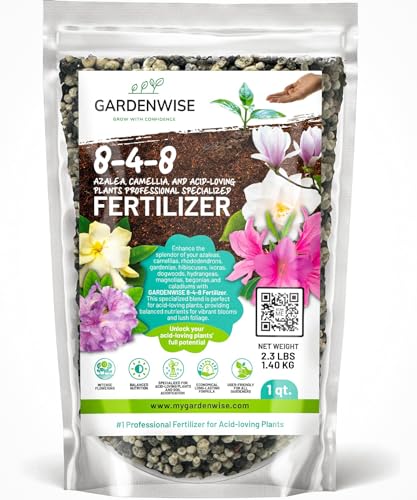
Gardenwise balances an 8-4-8 ratio that comes close to the ideal 12-4-8 target while adding iron, magnesium, and manganese to prevent the interveinal chlorosis that plagues hydrangeas in alkaline soil. The slow-release granules include live bacterial microbes that continue cycling nutrients after application—a feature usually found only in premium organic blends. A single quart bag covers five to six medium hydrangea plants with three feedings per year, which fits neatly into a low-maintenance schedule.
Verified buyers report that magnolia and rhododendron leaves greened up within a week of application, and hydrangea owners specifically note improved bloom count in the second year of use. The 8-4-8 analysis delivers a 2:1:2 ratio, which means the potassium level is high enough to strengthen flower stems against wind and rain damage. The product is also labeled for blueberries and gardenias, making it a versatile option if your garden hosts multiple acid-loving species.
The primary limitation is the slightly lower nitrogen compared to a strict 12-4-8, which means first-year hydrangeas recovering from transplant shock may need a supplemental nitrogen boost. The bag size is economical for the price, but the per-ounce cost is higher than bulk organic options like Holly-Tone.
What works
- Iron and manganese prevent chlorosis in alkaline soil
- Live bacterial microbes improve long-term soil biology
- Three feedings per year cover the entire growing season
What doesn’t
- 8% nitrogen is lower than the exact 12-4-8 target
- Smaller bag size requires more frequent repurchase for large borders
3. Hi-Yield Grower’s Special 12-6-6
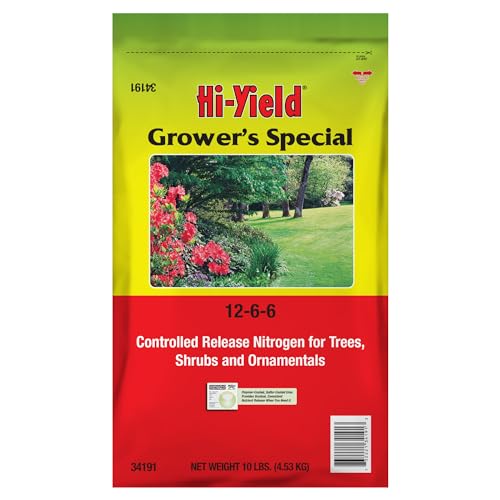
Hi-Yield’s Grower’s Special hits a 12-6-6 analysis that closely mirrors the 12-4-8 target with slightly more phosphorus, which can benefit hydrangeas grown primarily for bloom size rather than color manipulation. The slow-release nitrogen reduces the risk of leaf burn even on hot days, making it a forgiving option for gardeners who apply by eye rather than by scale. At 10 pounds, this bag goes a long way when used at the recommended rate of one teaspoon per six-inch pot or handfuls around the drip line of mature shrubs.
Customer reviews from long-time users highlight steady results on magnolias, crepe myrtles, and hydrangeas over multiple seasons. The 12-6-6 ratio delivers enough potassium to support root development but lacks the sulfur or iron that hydrangeas need for blue color expression. Gardeners aiming for blue blooms will need to supplement with aluminum sulfate or use this product in conjunction with a separate soil acidifier.
The formula is synthetic rather than organic, so it feeds the plant directly without building soil humus. Over-application can still cause salt buildup if applied too frequently, especially in container-grown hydrangeas. It is best used as a reliable, budget-friendly staple for gardeners who prioritize bloom count over soil biology.
What works
- 12-6-6 analysis closely matches the 12-4-8 target for balanced feeding
- Slow-release nitrogen prevents leaf burn in hot weather
- 10 lb bag provides excellent coverage for multiple shrubs
What doesn’t
- Synthetic formula does not improve long-term soil microbiology
- No sulfur or iron for blue hydrangea color support
4. Flora’s Market Hydrangea Fertilizer
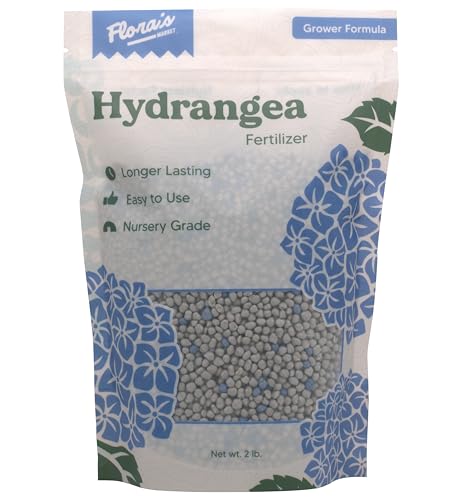
Flora’s Market uses a coated prill technology that releases nutrients slowly over the entire growing season, which eliminates the guesswork of multiple applications. The 18-6-8 analysis is nitrogen-heavy compared to the 12-4-8 target, but the controlled-release mechanism ensures that nitrogen is metered out gradually rather than hitting the plant all at once. Each 2-pound bag contains enough prills to feed three to four mature hydrangeas for one full season, and the packaging specifies exact ounce amounts per plant size.
Verified owners report that leaves greened up noticeably within 24 hours of application, and bloom size improved by the second month. The high potassium level (8%) supports strong flower stems that hold heavy mophead blooms upright even after rain. The 18-6-8 analysis is not ideal for soil with already high nitrogen levels, but the controlled-release coating reduces the risk of nitrogen burn significantly.
The biggest downside is the small bag size—2 pounds total—which means that gardeners with large hydrangea hedges will need multiple bags. The per-pound cost is higher than bulk granular fertilizers, but the convenience of a single annual application may justify the premium for smaller gardens.
What works
- Coated prill technology provides season-long feeding with one application
- High potassium strengthens flower stems
- Pre-measured ounces per plant size simplifies dosing
What doesn’t
- 18% nitrogen is higher than the 12-4-8 target for established plants
- Small 2 lb bag requires multiple purchases for large gardens
5. Happy Hydrangeas 7-3-3 Powder
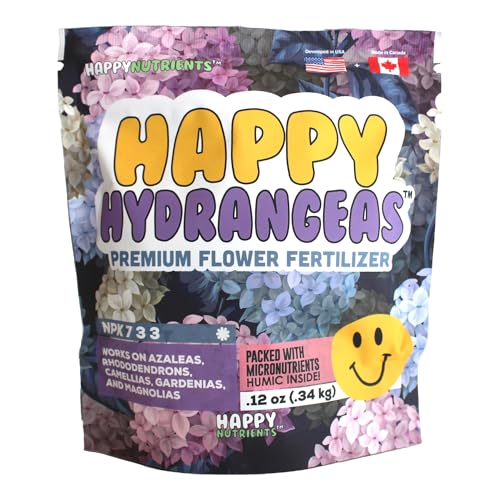
Happy Nutrients formulated this 7-3-3 powder specifically for hydrangeas, with ammonium sulfate as the nitrogen source to lower soil pH while feeding. The water-soluble format dissolves completely in water, delivering nutrients directly to the root zone without the lag time of granular products. The 7-3-3 analysis is lower in overall NPK than the 12-4-8 target, but the included humic acid and chelated minerals improve nutrient uptake efficiency—meaning less product can achieve similar results.
Owner reviews from repeat buyers note that blooms were noticeably larger in the second season of regular use compared to generic water-soluble fertilizers. The recommended schedule of every 14 days for the first month and then monthly afterward fits into a routine that complements regular watering. The pouch is compact at 12 ounces, which covers roughly 350 square feet of garden or several large containers.
The lower phosphorus and potassium numbers mean this product is better suited for hydrangeas in already fertile soil or for gardeners who supplement with a granular slow-release fertilizer in spring. The powder must be mixed fresh each time, and overwatering after application can leach nutrients below the root zone before the plant absorbs them.
What works
- Water-soluble formula provides fast nutrient uptake for stressed plants
- Ammonium sulfate helps maintain acidic soil pH
- Humic acid improves overall nutrient absorption
What doesn’t
- 7-3-3 analysis requires more frequent application than granular options
- Small pouch size may not cover large hydrangea borders
Hardware & Specs Guide
NPK Ratio Interpretation
The three numbers represent nitrogen, phosphate, and potash percentages by weight. A 12-4-8 analysis means 12% of the bag weight is nitrogen, 4% is available phosphate, and 8% is soluble potash. For hydrangeas, the 3:1:2 ratio provides enough nitrogen for leaf growth without sacrificing flower bud formation, while the potassium supports stem strength and disease resistance. Products with a 4-3-4 or 8-4-8 analysis can serve as alternatives if the exact 12-4-8 is unavailable, but application rates must be adjusted to deliver equivalent potash per square foot.
Granular vs. Water-Soluble Release
Slow-release granular fertilizers use a polymer coating or organic matter breakdown to meter nutrients over weeks or months. These are ideal for hydrangeas because they reduce the risk of root burn from salt accumulation. Water-soluble powders dissolve immediately and are absorbed within days, making them better for correcting acute deficiencies or for container-grown hydrangeas where granular prills can wash out of drainage holes. For most in-ground hydrangeas, a granular product applied twice per year produces steadier growth than weekly liquid feeding.
Soil pH and Sulfur Content
Hydrangea bloom color depends on soil pH: blue sepals require a pH below 5.5, while pink sepals develop above 6.0. A fertilizer that contains elemental sulfur or ammonium sulfate gradually lowers pH over several weeks. Products labeled for acid-loving plants typically include sulfur or iron to counteract alkaline soil conditions. If your soil test shows a pH above 6.5, choose a formula with at least 4-5% sulfur or pair the fertilizer with a separate soil acidifier like aluminum sulfate.
FAQ
Can I use a 12-4-8 fertilizer on pink hydrangeas without turning them blue?
How many times per year should I apply a 12-4-8 granular fertilizer to hydrangeas?
Is a 12-4-8 fertilizer safe for newly planted hydrangeas?
Final Thoughts: The Verdict
For most gardeners, the 12-4-8 fertilizer for hydrangeas winner is the GARDENWISE 8-4-8 because its 2:1:2 ratio closely matches the ideal target while including iron and manganese for chlorosis prevention in alkaline soil. If you want organic soil building with built-in acidification, grab the Espoma Organic Holly-Tone 4-3-4. And for a fuss-free single-application solution on a smaller collection of shrubs, nothing beats the Flora’s Market Hydrangea Fertilizer with its coated prill technology.