
Choosing the wrong container can literally strangle your plants’ root systems, stunting growth before your tomatoes or shrubs even get started. A true 10-gallon nursery pot provides the critical volume for deep root development, proper drainage, and long-term plant health, but the market is flooded with thin-walled options that crack within a season.
I’m Rikta — the co-founder and writer behind Lawn Gear Lab. To build this guide, I spent countless hours cross-referencing manufacturer material specs, analyzing injection-molding versus blow-molding processes, and studying hundreds of verified owner experiences to understand which 10 gallon nursery pots actually deliver on their promises season after season.
This guide breaks down the critical differences in wall thickness, drainage design, and material composition so you can confidently choose pots that will support healthy root systems and survive years of outdoor exposure.
How To Choose The Best 10 Gallon Nursery Pots
Not all nursery pots are created equal. The difference between a pot that lasts one season and one that lasts five comes down to four key factors. Here’s what to look for.
Material and Manufacturing Process
Injection-molded HDPE (High-Density Polyethylene) produces the thickest, most durable walls. These pots resist cracking from UV exposure, temperature swings, and accidental drops. Blow-molded or thin fabric alternatives may cost less initially but often show brittleness or tearing within a year. Always check the product description for “injection molded” — it’s the gold standard for commercial-grade durability.
Drainage and Airflow Design
Look for pots with multiple drainage holes at the bottom rather than a single central opening. The best designs also feature an elevated bottom or small feet that lift the pot slightly off the ground, allowing air to circulate underneath. This prevents water from pooling and promotes air pruning — a process where roots are naturally trimmed at the pot’s edge, encouraging a denser, healthier root ball.
True Capacity vs. Stated Capacity
Some pots advertised as “10 gallon” actually hold less liquid volume. A true 10-gallon nursery pot should have an internal volume close to that mark. Pay attention to the listed dimensions — a pot with a top diameter around 16 inches and a height of 14-16 inches is typically accurate. Pots with significantly shorter heights may only hold 8-9 gallons of soil, despite the label.
Handles and Portability
A 10-gallon pot filled with moist soil weighs approximately 80-90 pounds. Reinforced rim handles or dedicated grip lips are essential for moving pots around the garden without straining your back or damaging the pot. Fabric bags with cross-stitched handles provide an alternative for those who need to reposition plants frequently.
Quick Comparison
On smaller screens, swipe sideways to see the full table.
| Model | Category | Best For | Key Spec | Amazon |
|---|---|---|---|---|
| Pro Cal (Hydrofarm) | Premium | Heavy fruit trees & shrubs | 17″ x 17″ x 16″ round pot | Amazon |
| Green Oasis | Mid-Range | Commercial-grade value | 16″ x 15.94″ x 14.96″ | Amazon |
| RainMan S (Square White) | Mid-Range | Space-saving square layout | 14.2″ OD x 10.6″ BD x 14.6″ H | Amazon |
| labworkauto (Square Black) | Mid-Range | High-density plant organizing | 15.75″ x 15.75″ x 24.41″ | Amazon |
| elfinrm (10 Pack) | Mid-Range | Volume pack for vegetables | 16.1″ x 16.1″ x 11.6″ | Amazon |
| LiGuVCY (10 Pack) | Mid-Range | Large-volume starter pack | 11.8″ x 11.8″ x 14.6″ | Amazon |
| Gardzen (Fabric Bags) | Budget | Air pruning & easy storage | 16″ x 16″ x 12″ fabric | Amazon |
In‑Depth Reviews
1. Pro Cal 10 Gallon Premium Nursery Plastic Planter (5-Pack)

The Pro Cal from Hydrofarm is the benchmark for mid-range nursery pots. Its injection-molded walls are notably thick, providing rigidity that resists cracking even when you drag the pot across concrete. The 17-inch top diameter offers generous surface area for large tomato cages or young fruit trees, and the wrap-around rim gives you a solid grip point for lifting the 80-pound load inside.
Drainage is handled by side holes and a wide bottom base, which effectively prevents water from pooling around the root zone. The actual liquid volume is 9.6 gallons, but when packed with loose potting mix, it comfortably holds a full 10 gallons. Multiple reviewers mention using these pots for blueberries, peppers, and tomatoes over several seasons without any structural degradation.
The only downside is inconsistent packaging — a small number of customers report receiving a single pot instead of a five-pack, though Amazon rectifies the issue quickly. Additionally, the pots lack built-in feet, so you’ll want to place them on a surface that allows airflow underneath if drainage is a concern.
What works
- Thick, crack-resistant HDPE walls handle years of outdoor UV exposure
- Generous 17-inch width accommodates large root systems without binding
- Side drainage holes complement bottom openings for excellent water management
What doesn’t
- Some batches ship with only one pot instead of the advertised five-pack
- No raised bottom or feet to promote under-pot airflow
- Price has increased significantly over time, reducing long-term value
2. Green Oasis 10 Gallon Nursery Pots (5-Pack)
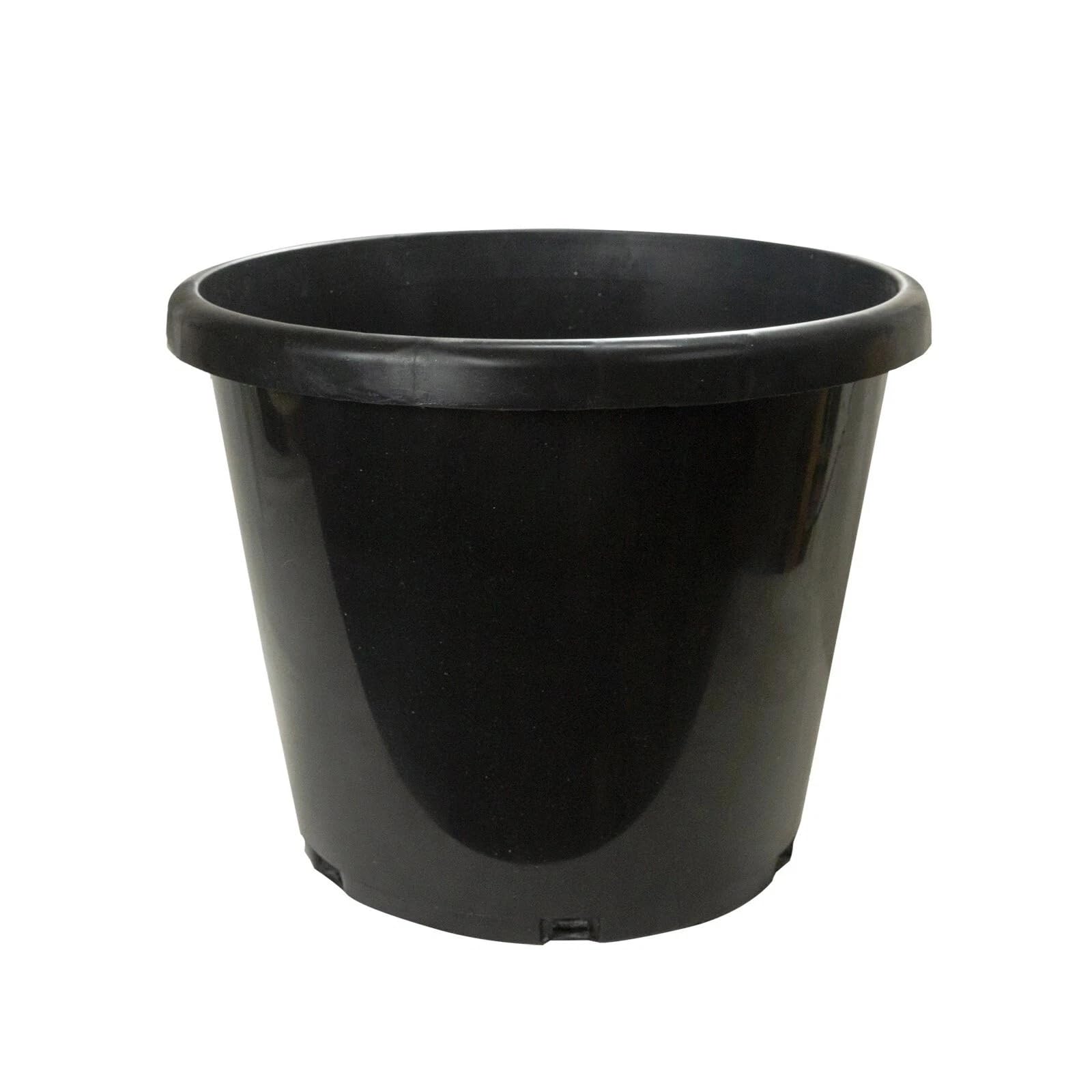
Green Oasis brings commercial-grade injection molding to a more accessible price point. The walls are ultra-dense — noticeably thicker than the generic pots you find at big-box garden centers — and the UV stabilizers are a legitimate feature, not just a marketing bullet. Owners in direct sun climates report no brittleness or fading after a full growing season.
The drainage system is a standout: five bottom holes paired with an elevated bottom foot design that lifts the pot off the ground. This creates an air gap that encourages air pruning — roots reaching the edge of the pot are naturally dried and trimmed, which forces the plant to develop a more fibrous, healthy root ball. The rolled rim provides a comfortable grip, though the pots are heavy when filled.
The main trade-off is that this is a generic-brand product, so the packaging and labeling are minimal. Some buyers mention that the “true 10-gallon” claim is accurate for volume, but the pot’s height-to-width ratio is slightly more squat than the Pro Cal. For container gardeners growing tomatoes or peppers, this shape works perfectly fine, but tall plants may need additional staking.
What works
- Injection-molded walls resist cracking, crushing, and UV damage better than most competitors
- Elevated bottom foot design improves airflow and encourages air pruning
- Five drainage holes prevent waterlogging better than single-center-hole pots
What doesn’t
- Generic brand with minimal support documentation
- Shorter height means very tall plants may need extra staking
- Bottom foot design adds slight height, making stacking less stable
3. RainMan S 10 Gallon Square Planter Nursery Pots (5-Pack)
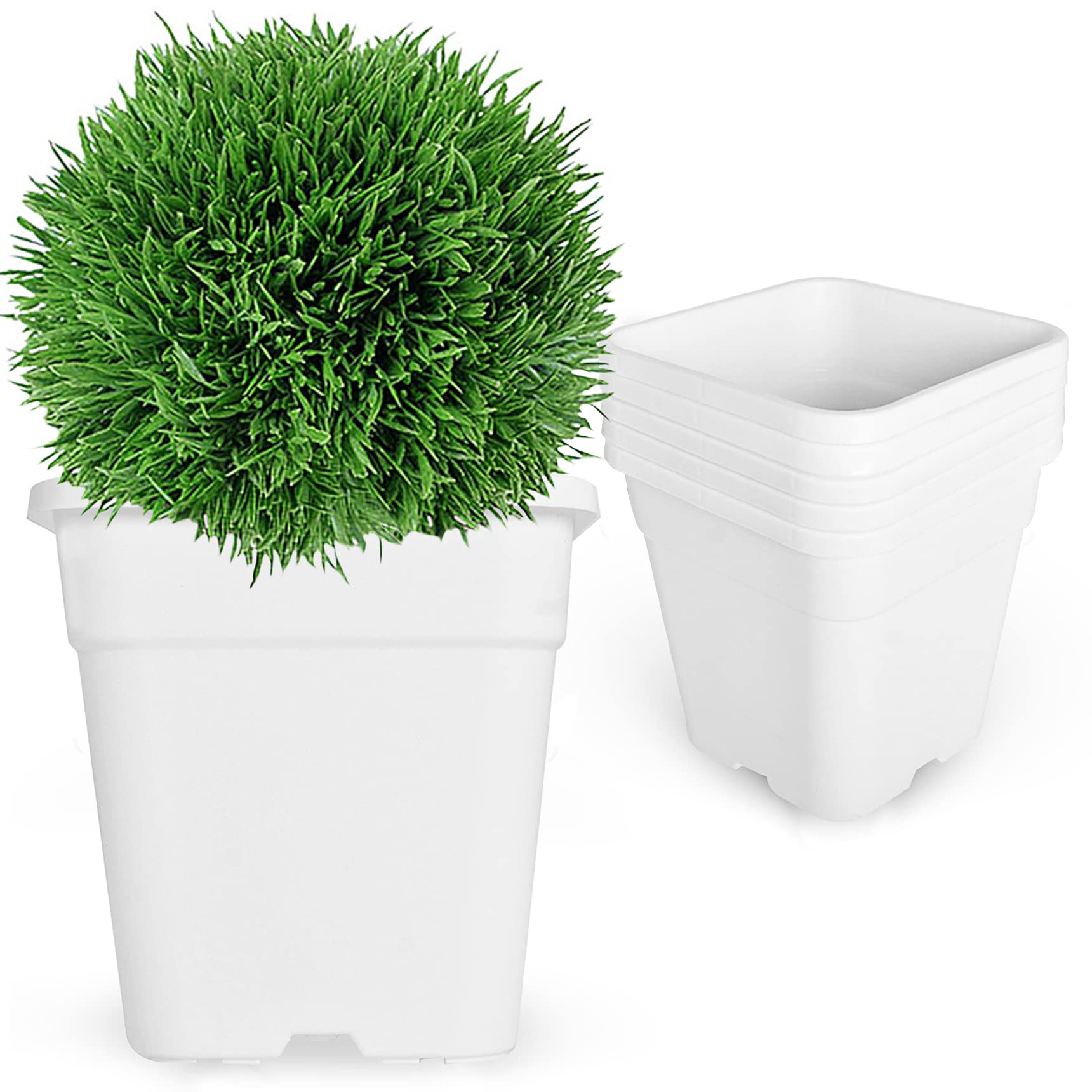
Square nursery pots are a specialized solution for growers with limited space or shelving systems. The RainMan S pots use injection-molded HDPE with a smooth white finish that reflects sunlight, keeping root temperatures cooler than black pots in hot climates. Each pot holds roughly 9.77 gallons, and the flat sides fit snugly together, eliminating the wasted gap you get with round pots.
The drainage design includes ample bottom holes for airflow, and the raised rim with a wide grip lip makes handling easy even when the pot is fully loaded. Multiple reviewers praise the white aesthetic for being easier on the eyes than standard black nursery pots, and the UV-stabilized material resists fading through long summers. Customers using these for propagating roses appreciate that the square shape is harder to knock over in wind.
A common frustration is that bottom saucers are sold separately, which means water drains directly onto whatever surface the pot sits on. Also, some users note that the square corners make transplanting slightly trickier — soil can get stuck in the corners, and root balls may crumble when removed. For permanent planting, this is rarely an issue.
What works
- Square shape saves space and fits neatly on shelving or in greenhouse trays
- White color reflects heat, keeping root temperatures lower in hot weather
- Wide rim with grip lip provides secure lifting points
What doesn’t
- Bottom saucers not included, leading to messy drainage
- Square corners can trap soil, making transplant removal difficult
- Slightly under 10 gallons at 9.77 actual capacity
4. labworkauto 10 Gallon Square Nursery Pots (10-Pack)

The labworkauto square pots are a straightforward, no-frills option for growers who prioritize durability and density. The HDPE material is noticeably thick, and several buyers report using these pots outdoors for multiple years without any cracking or deformation. The 10-pack quantity makes this a solid choice for serious vegetable gardeners or small-scale nurseries.
A unique feature is the hollow bottom design, which incorporates drainage holes while creating an air gap beneath the pot. This improves soil aeration and encourages roots to stop circling at the container edge. The reinforced rim allows for easy stacking when empty, and the square shape maximizes space on rectangular benches or in garden cells.
The main drawback is the chemical odor that some users notice during the first few weeks — this dissipates with time and washing. Also, the black color absorbs heat, which may be a concern in very hot climates; some buyers note that the white version of this pot uses a different chemical composition that feels less durable. If you live in a high-heat zone, consider placing these in partial shade.
What works
- Extremely thick HDPE walls that last for years of outdoor use
- Hollow bottom with drainage promotes strong root aeration
- Square shape stacks well and fits into concrete-block garden cells
What doesn’t
- Strong chemical smell during the first few weeks of use
- Black color absorbs heat, potentially overheating roots in direct sun
- White version reportedly uses a less durable material formulation
5. elfinrm 10 Pack Planter Nursery Pots 10 Gallon
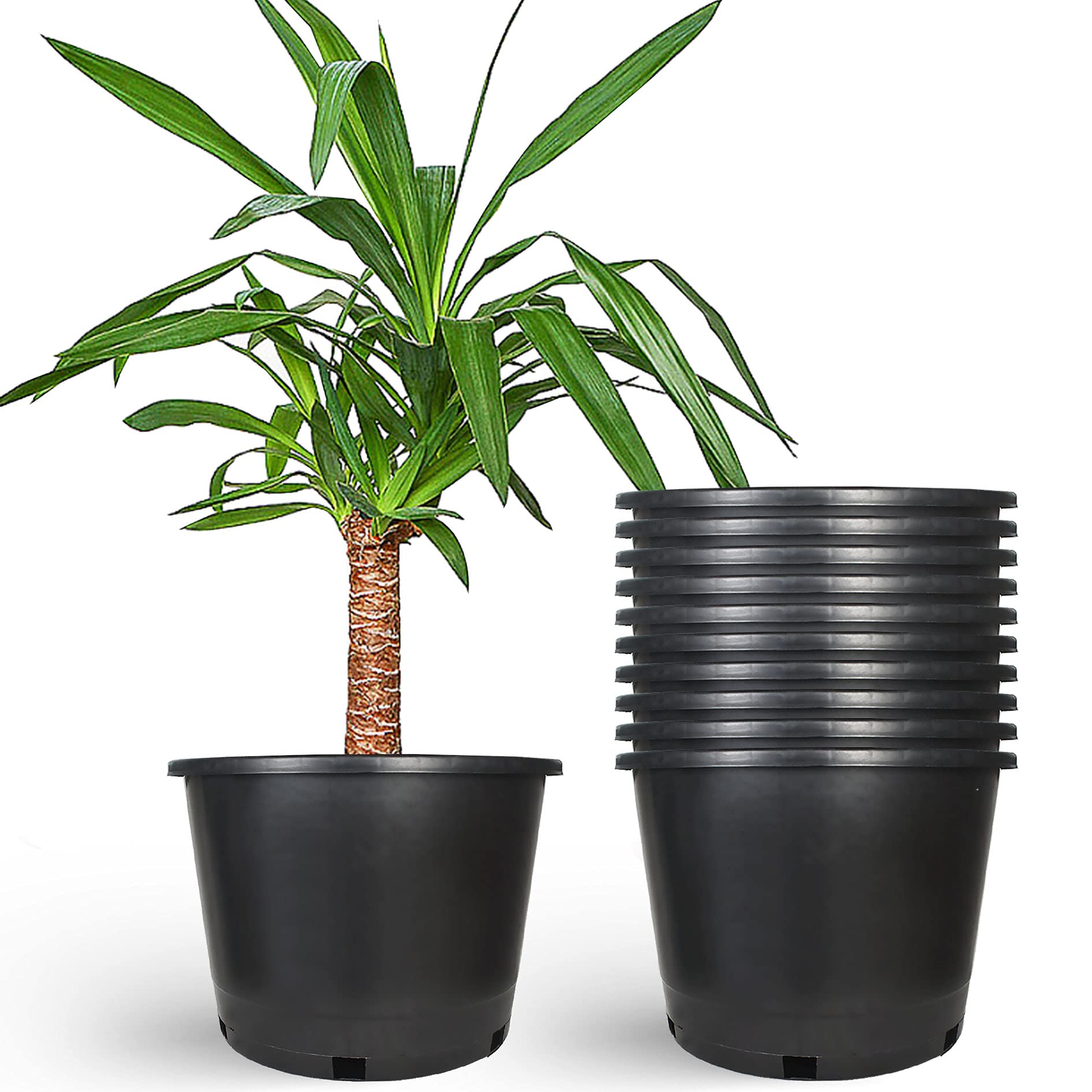
The elfinrm 10-pack is aimed at the volume buyer who needs a large quantity of sturdy pots without paying a premium per unit. The injection-molded HDPE construction is strong and flexible — not the brittle plastic that shatters in cold weather. The round shape with a 16.1-inch top diameter provides enough space for mature tomato plants or small fruit shrubs.
Drainage holes at the bottom are generous in size and quantity, though some owners note that larger holes allow soil to escape if you don’t line the bottom with landscape fabric. The wide-rimmed design makes carrying and stacking straightforward, and the BPA-free material is reassuring for anyone growing edible crops. Reviewers using these for potatoes and bougainvillea report excellent root development.
The most significant caveat is that these pots have a liquid volume of only 8.4 gallons, despite the “10 gallon” label. The manufacturer notes they can hold about 10 gallons of loose soil when compacted, but actual capacity is less than advertised. Additionally, there are no built-in handles, so moving a fully loaded pot requires a two-handed grip on the rim.
What works
- Thick, flexible HDPE resists cracking even in freezing temperatures
- Large bottom drainage holes prevent waterlogging effectively
- 10-pack provides excellent per-unit value for volume growers
What doesn’t
- Actual liquid volume is 8.4 gallons, less than the 10-gallon label suggests
- No handles make moving heavy pots awkward
- Large drainage holes can allow soil to escape without a liner
6. LiGuVCY Plant Pots Flower Pot 10-Gallon (10-Pack)

The LiGuVCY pots are a square-shaped alternative to the round norm, offering a space-efficient solution for growers organizing plants on patios or in greenhouses. The HDPE plastic is robust and lightweight, and the 10-pack comes at a competitive price point per pot. The square geometry allows pots to sit flush against each other, reducing wasted surface area.
Drainage holes at the bottom are functional and sized to prevent standing water. The pots are easy to clean and can be nested together when not in use, saving significant storage space. Buyers consistently note the sturdy construction, with several mentioning they’ve held up well through multiple seasons of outdoor use, including exposure to rain and frost.
The primary limitation is that these pots lack built-in feet or a raised bottom design, so water drainage and airflow are limited to whatever holes are present. Placing them on gravel or pot feet is advisable. Additionally, some users report a strong initial chemical odor that fades over time, and the square shape, while great for storage, can make transplanting slightly more difficult than round pots.
What works
- Square design maximizes space efficiency on shelves and patios
- Sturdy HDPE construction withstands outdoor weather across seasons
- Nestable when empty for compact off-season storage
What doesn’t
- No raised base or feet for under-pot airflow
- Chemical odor may be strong initially
- Square corners can complicate clean root ball removal during transplanting
7. Gardzen 10-Pack 10 Gallon Grow Bags (Fabric)

Gardzen’s 300G thickened nonwoven fabric grow bags represent the budget-friendly entry point for 10-gallon containers. Fabric pots offer a fundamentally different growing experience than rigid plastic — the breathable material provides maximum aeration and promotes aggressive air pruning, which prevents root circling more effectively than any plastic pot. The 10-pack at this price is an exceptional value for starting large vegetable crops.
The fabric construction allows excess water to evaporate through the sides, virtually eliminating the risk of root rot. Reinforced X-shaped stitching on the handles ensures they can support the full weight of saturated soil without tearing. Owners praise the durability for multi-season use, noting that the bags fold flat for winter storage and can be washed for reuse. The 16-inch diameter and 12-inch height provide ample room for deep-rooted plants like tomatoes and peppers.
The trade-off is that fabric bags dry out faster than plastic pots, meaning you’ll need to water more frequently, especially in hot weather. Additionally, they lack the rigid structure of plastic pots, so they won’t stand upright when empty, and they can be knocked over more easily by wind. For gardeners who prioritize root health and are diligent about watering, these are an excellent budget option.
What works
- Breathable fabric promotes superior air pruning and prevents root circling
- Reinforced X-stitched handles withstand heavy lifting without tearing
- Washable, foldable, and reusable for multiple seasons
What doesn’t
- Dries out much faster than plastic pots, requiring more frequent watering
- No rigid structure — bags collapse when empty and are prone to wind tipping
- Not suitable for plants that prefer consistently moist soil conditions
Hardware & Specs Guide
Injection vs. Blow Molding
Injection molding forces molten HDPE into a steel mold under high pressure, creating dense, uniform walls with precise detailing. Blow molding uses air pressure to expand a heated plastic tube inside a mold, resulting in thinner, less consistent walls. For 10-gallon pots that hold 80+ pounds of soil, injection molding is the only process that reliably prevents cracking. Look for “injection molded” in the product description — if it’s missing, the pot is likely blow-molded and will have a shorter lifespan.
UV Stabilizers
Pots left outdoors face constant UV radiation that breaks down plastic polymers, making them brittle and prone to shattering. UV stabilizers are chemical additives that absorb or block UV light, extending the pot’s usable life by years. Premium and mid-range nursery pots like the Green Oasis and Pro Cal explicitly list UV stabilizers in their specs. Budget options, especially fabric bags, may degrade faster under direct sun. If your pots will sit in full sunlight for more than one season, prioritize UV-stabilized plastic.
FAQ
What is the difference between a 10-gallon nursery pot and a 10-gallon grow bag?
How can I tell if a nursery pot is truly 10 gallons?
Should I choose black or white nursery pots for outdoor use in a hot climate?
Can I leave nursery pots outside over winter?
Why do some 10-gallon pots have handles and others don’t?
Final Thoughts: The Verdict
For most gardeners, the 10 gallon nursery pots winner is the Green Oasis 5-Pack because it delivers injection-molded durability, a well-designed elevated base with five drainage holes, and UV stabilizers at a price that undercuts the competition. If you want thickest walls and the largest diameter for heavy fruit trees, grab the Pro Cal from Hydrofarm. And for budget-conscious growers who need a 10-pack and prioritize root aeration over structure, nothing beats the Gardzen fabric grow bags.