
Specs are compiled from manufacturer listings and verified buyer reviews and can change over time — please confirm the key details on the product page before buying.
Getting plump, juicy tomatoes without a fuzz of yellow leaves or blossom‑end rot often depends on a balanced 10‑10‑10 ratio. The problem is many granular fertilizers hit hard, then fizzle, forcing you back out to the garden every week. The best 10‑10‑10 fertilizer for tomatoes puts out a steady stream of nutrition so your plants stay fed without you stressing about the next application.
I’m Rikta — the founder and writer behind Lawn Gear Lab. This guide is built by comparing the manufacturers’ published specifications and the patterns across verified customer reviews, so you get each pick’s real strengths and trade-offs instead of marketing spin.
Whether you grow a few patio pots or a full row of beefsteaks, the right 10-10-10 fertilizer for tomatoes can save you time and keep your harvest strong all season long.
Quick Picks
- Cz Garden Supply 10-10-10 All Purpose Fertilizer — Best Overall
- Gardenera 10-10-10 Plant Fertilizer Slow Release — Best for Small Gardens
- Bigmeta 10-10-10 Slow-Release Premium Fertilizer — Best Slow‑Release
- Lilly Miller All Purpose Planting — Best Value 4‑Pound
How To Choose The Best 10-10-10 Fertilizer For Tomatoes
A 10‑10‑10 fertilizer gives your tomato plants an equal share of nitrogen (for green leaves), phosphorus (for roots and flowers), and potassium (for fruit quality and disease resistance). That balance makes it a great all‑purpose food, but you still need to think about release speed, bag size, and extra ingredients like iron. Here is what to watch for.
Slow‑Release vs. Quick‑Release Granules
Slow‑release formulas coat each granule so nutrients break down gradually over weeks. That means fewer applications — some only need two feedings the whole season. Quick‑release granules give a fast green‑up but may need re‑applying every few weeks. If you want to set a schedule and forget it, go slow‑release.
Bag Size and How Much You Need
A 1‑pound bag is enough for a few containers or a small raised bed. A 4‑pound bag covers more ground and often costs less per ounce. Think about how many tomato plants you are feeding and whether you will use the same fertilizer on flowers or shrubs.
Extra Micronutrients: Iron and More
Some 10‑10‑10 blends add iron and a mix of micronutrients (zinc, manganese, boron). That extra iron helps prevent yellowing between leaf veins — a common sight in container‑grown tomatoes. If your soil is already rich, a plain 10‑10‑10 may be enough; if you grow in pots or sandy ground, look for added micronutrients.
Quick Comparison
| Model | Best For | Weight | Release Type | Key Additive | Amazon |
|---|---|---|---|---|---|
| Cz Garden Supply 10-10-10 | Best Overall / Large gardens | 4 lbs | Standard granular | 2% Iron + Micronutrients | Amazon |
| Gardenera 10-10-10 Slow Release | Low‑maintenance feeding | 1 lb | Slow‑release | None listed | Amazon |
| Bigmeta 10-10-10 Slow-Release | Indoor/outdoor versatility | 1 qt (32 oz) | Slow‑release (up to 8 weeks) | Natural ingredients | Amazon |
| Lilly Miller 10-10-10 4lb | Season‑long economy | 4 lbs | Slow‑release | None listed | Amazon |
In‑Depth Reviews
1. Cz Garden Supply 10-10-10 All Purpose Fertilizer (4 lbs)
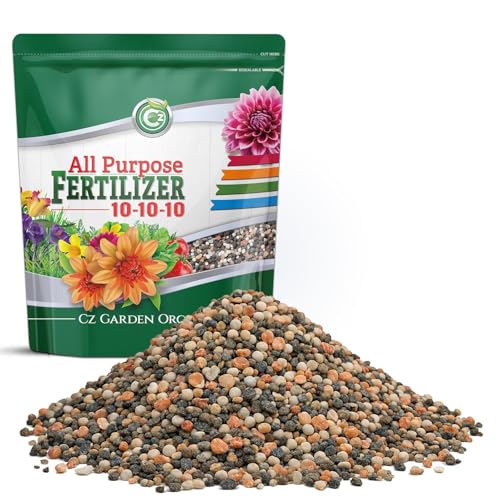
The 4‑pound pouch with 2% iron that keeps container tomatoes from turning yellow.
The Cz Garden Supply blend packs the most value per pound — at 4 pounds it holds four times the weight of the Gardenera slow‑release bag, giving you many more applications for the same price tier. That extra iron and micronutrient mix directly targets the pale leaves you often see when growing tomatoes in pots. Buyers report “great results the first time” and that the resealable heavy‑duty pouch makes pouring and storing simple, a feature the smaller bags lack.
It is a standard granular fertilizer, not labeled slow‑release. That means you will likely need to re‑apply more often than a slow‑feed product. But the balanced 10‑10‑10 NPK ratio and the added iron make this an easy choice for a whole row of tomatoes plus your flower beds and lawn.
What Stands Out
- 4‑pound bag — the largest size in the lineup, so it goes further
- 2% iron helps prevent chlorosis (yellow leaves) in containers
- Resealable pouch keeps granules dry between uses
The Trade‑Off
- Not slow‑release; expect to re‑apply every few weeks during peak growth
- A buyer noted wearing a mask and gloves is smart when applying
Grab this if: you have a large garden or multiple tomato plants and want iron‑fortified nutrition at a cost‑per‑pound that beats every other pick here.
Look elsewhere if: you prefer a set‑and‑forget slow‑release schedule and need a smaller bag.
2. Gardenera 10-10-10 Plant Fertilizer Slow Release (1 lb)
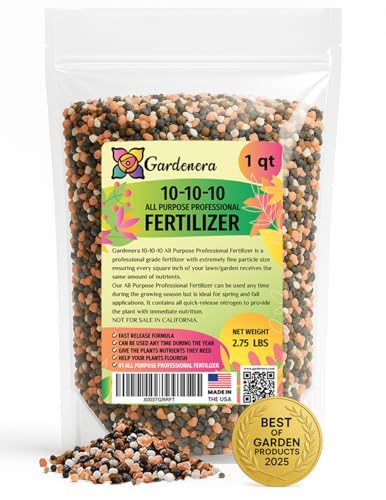
A slow‑release granule that works with just two applications per season for small tomato patches.
If your tomato garden fits in a few raised beds or containers, the Gardenera 1‑pound bag is a clean, low‑maintenance option. One buyer notes they “only have to apply twice during the season too,” meaning this slow‑release formula actually delivers on the promise of fewer feedings. At 1 pound, it is noticeably smaller than the 4‑pound options from Cz Garden or Lilly Miller, which makes it easy to store but also means you will run out faster if you have a big plot.
It is a plain 10‑10‑10 without added iron or micronutrients. For rich in‑ground soil that may be fine, but for container tomatoes that often need extra trace elements, the Cz Garden pick may give you better leaf color. Still, reviewers praise it for making flowers “look amazing” and giving vegetables “a headstart.”
Why It Wins
- True slow‑release — only needs two applications per season according to a buyer
- Small, convenient bag for storage
- Granules are easy to sprinkle around individual plants
Watch Out For
- 1‑pound bag goes fast if you have many plants
- No iron or micronutrients added; some containers may need more
Ideal for: a small raised bed or a few container tomatoes where you want to fertilize twice and be done.
Not ideal if: you need a larger quantity or iron‑fortified formula for long‑term container growing.
3. Bigmeta 10-10-10 Slow-Release Premium Fertilizer (1 qt)
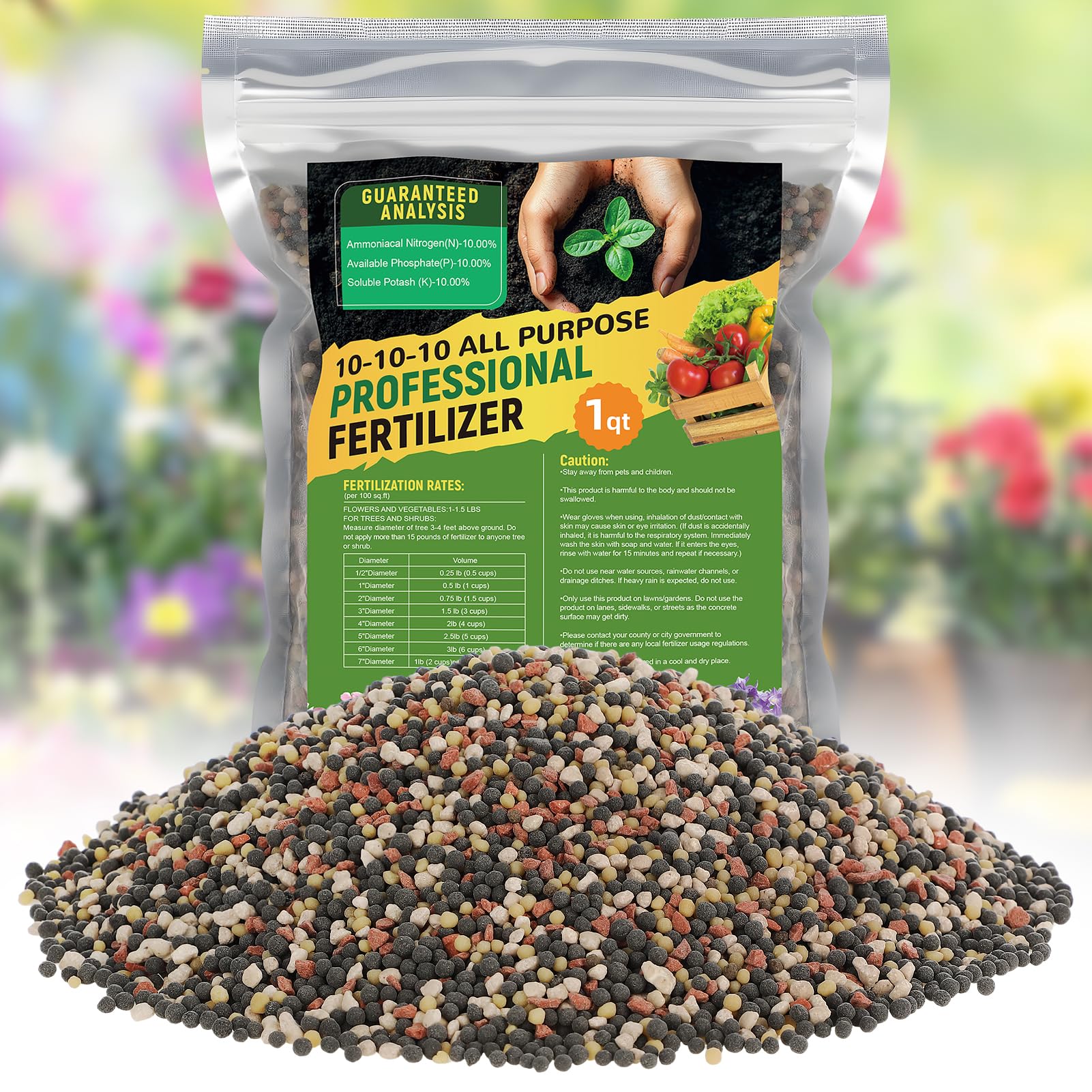
A slow‑release granule that feeds up to 8 weeks, even indoors, with a natural formula safer around pets.
The Bigmeta fertilizer stands out for its smart slow‑release technology — the maker says the advanced granular formula provides a steady stream of nutrition for up to 8 weeks, which is significantly longer than a standard granular that runs out in two or three weeks. That gradual release helps avoid the “nutrient spike” that can burn tender tomato seedlings. One reviewer noted it “helped my magnolia tree,” and another called it “a great product” on their third purchase.
It comes in a 1‑quart resealable container (32 ounces), putting it between the 1‑pound Gardenera and the 4‑pound Cz Garden in total volume. The bag is described as “smaller than anticipated” by one buyer, but the same buyer noted it is easy to handle. The natural‑ingredient pitch also means less harsh chemical odor, which matters if you keep tomato starts indoors before transplant.
Standout Features
- Slow‑release up to 8 weeks — fewer applications needed
- Natural ingredients reduce risk of leaf burn on young plants
- Resealable container for easy storage
What to Know
- Smaller bag than some options; a buyer said it was smaller than expected
- No iron or micronutrients listed
Reach for this if: you want the longest slow‑release window available and feed a mix of indoor and outdoor plants.
skip it if: you need a large bag for heavy feeding or iron‑fortified nutrition for containers.
4. Lilly Miller All Purpose Planting And Growing Food 10-10-10 (4 lb)
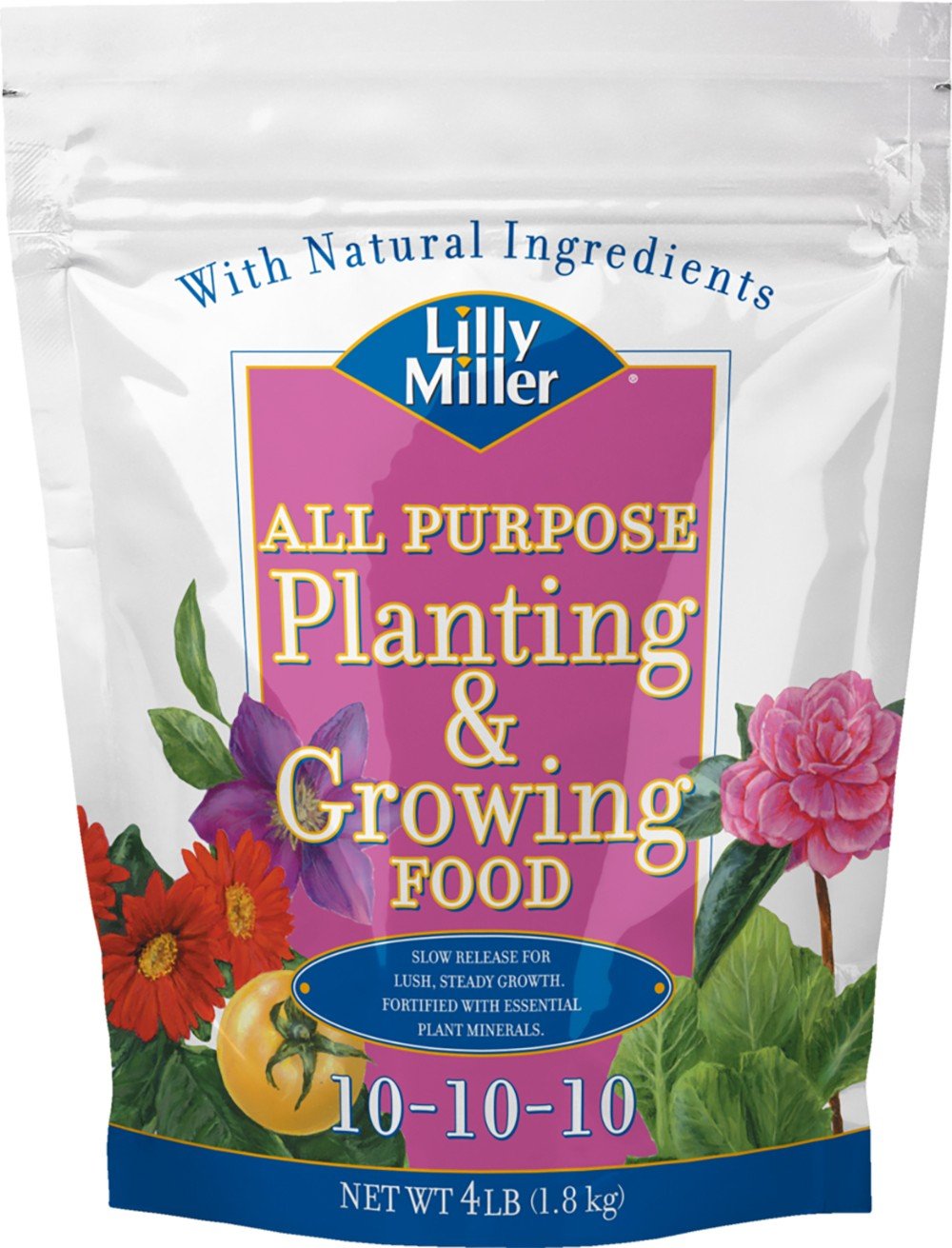
A slow‑release 4‑pound bag with decades of gardener trust and a fast‑acting formula for yellowing leaves.
Lilly Miller brings concentrated, fast‑acting ingredients in a slow‑release 4‑pound bag that many buyers consider their go‑to. One particularly detailed review stands out: “Whenever my tomato plants start to turn yellow, I feed it a liquid solution of this fertilizer, and the next day they are nice and green again.” The same reviewer said a single bag lasts forever because they mix it into a liquid solution. That flexibility — use it dry or dissolve it in water — gives you more control over feeding strength.
At 4 pounds, it ties the Cz Garden Supply bag for size, but the official item weight listed is 16 ounces (1 pound), which is likely a data discrepancy. The real bag holds 4 pounds, making it a solid value. Unlike the Cz Garden pick, it does not mention added iron or micronutrients, so container growers may still want an iron supplement.
What You Get
- 4‑pound bag — large supply for the whole season
- Can be used as a dry granule or dissolved into a liquid feed
- Buyers praise it for quickly greening up yellow tomato leaves
The Catch
- No added iron or micronutrients
- Item weight is inconsistently listed; the bag is 4 pounds
Best for: tomato growers who want a large slow‑release bag and the flexibility to make a liquid feed for a quick green‑up.
Consider another: if you specifically want iron‑fortified granules for container gardening.
Understanding the Specs
NPK Ratio — What 10‑10‑10 Means
The three numbers stand for nitrogen (N), phosphorus (P), and potassium (K). Each 10 means 10% of the bag by weight is that nutrient. That equal ratio makes 10‑10‑10 a balanced, all‑purpose food suitable for tomatoes from seedling through fruit set.
Slow‑Release vs. Quick‑Release
Slow‑release granules are coated to break down over weeks, reducing how often you need to apply. Quick‑release granules dissolve fast and give an immediate green‑up but need more frequent re‑application. For tomatoes, slow‑release saves time and lowers the risk of burning roots.
Added Iron and Micronutrients
Some 10‑10‑10 blends include iron, zinc, manganese, and other trace elements. Iron helps prevent chlorosis (yellow leaves with green veins), a common issue in container‑grown tomatoes. If you grow in pots or sandy soil, a formula with iron is a practical upgrade.
Bag Size and Coverage
Bag sizes range from 1 pound to 4 pounds. A 1‑pound bag can feed a few containers or a small raised bed for a season. A 4‑pound bag covers a larger garden and often costs less per pound. Always check the bag weight when comparing value.
FAQ
Can I use 10-10-10 fertilizer on tomato plants at all stages?
How often should I apply 10-10-10 to my tomatoes?
Is slow-release better than quick-release for container tomatoes?
What does the iron in 10-10-10 fertilizer do for my tomatoes?
Should I wear gloves and a mask when applying granular 10-10-10?
Can I use 10-10-10 on indoor tomato plants?
How long does a 1‑pound bag of 10-10-10 last?
Can I mix 10-10-10 into water and use it as a liquid fertilizer?
Is 10-10-10 safe for other plants in my garden?
Final Thoughts: The Verdict
If you want one dependable pick, the best 10-10-10 fertilizer for tomatoes overall is the Cz Garden Supply 10‑10‑10 All Purpose because its 4‑pound bag, 2% iron content, and resealable pouch give you the most versatility and value per pound. If you prefer a low‑maintenance schedule with just two feedings per season, grab the Gardenera 10‑10‑10 Slow Release. And for tomato growers who want up to 8 weeks of steady nutrition with natural ingredients, the Bigmeta 10‑10‑10 Slow‑Release is a strong choice.
How We Picked
We do not accept paid placement. Every pick is matched to a real buyer and a real use-case; we do not hands-on test units.
Sources & Methodology
Specifications: manufacturer listings and product documentation. Review insights: verified customer reviews, as of July 2026. Pricing: not shown on this page (it changes often); check the current price via the retailer link.
As an Amazon Associate, Lawn Gear Lab earns from qualifying purchases. This does not affect which products we feature.