
Specs are compiled from manufacturer listings and verified buyer reviews and can change over time — please confirm the key details on the product page before buying.
Feeding a peach tree the wrong food gives you leafy branches with hardly any fruit — or worse, you can burn the roots. A balanced 10-10-10 fertilizer delivers equal parts of the three nutrients (nitrogen for leaves, phosphorus for roots and flowers, potassium for fruit strength) your tree needs. But the right choice depends on bag size, how often you want to apply, and if you want extra micronutrients (trace minerals like boron and zinc) for better fruit. This guide walks through the top options so you pick one that fits your orchard — whether you have a single backyard tree or a dozen.
I am Rikta, the writer behind Lawn Gear Lab. This guide compares the manufacturers’ published specs and patterns in verified customer reviews, so you get each pick’s real strengths and trade-offs instead of marketing spin.
Here is what you need to choose among the best 10-10-10 fertilizer for peach trees available right now — from budget-friendly small bags to multi-pound supplies that last seasons.
How To Choose The Best 10-10-10 Fertilizer For Peach Trees
The first thing to understand: 10-10-10 is the N-P-K (nitrogen-phosphorus-potassium) ratio — the percentages of each nutrient in the bag. Nitrogen fuels leaf and branch growth. Phosphorus helps roots and flowers form. Potassium strengthens the tree’s overall health and fruit quality. Your peach tree needs all three, which makes a balanced 10-10-10 a solid all-purpose choice.
Bag Size and How Many Trees You Feed
A 4-pound bag is fine for a single young peach tree for a season or two. But if you have multiple mature trees, you will run out fast. For several trees, a 13.5-pound bag (216 ounces) or even a 35-pound bag (560 ounces) is smarter. Check the unit count in ounces to compare total volume across brands — a bigger bag almost always means a lower cost per feeding.
Granule Type and Application Style
Most 10-10-10 fertilizers come as dry granules that you broadcast around the tree’s drip line (the outer edge of the canopy) and water in. Some are fast-acting — you see results in a week or two. Others are slow-release — they feed over months with fewer applications. For peach trees, a fast-acting granular formula applied in early spring and again in late spring often works best to match the tree’s bloom and fruit-set timeline. If you prefer less frequent work, look for a slow-release product.
Extra Micronutrients and Soil Health
Some 10-10-10 blends add boron, manganese, copper, iron, and zinc — these are trace elements (minerals you need in tiny amounts) that correct common soil deficiencies. They can lead to firmer, sweeter peaches. If your soil test shows low levels, a formula with these extras can give you a noticeable fruit-quality boost without buying a separate supplement.
Quick Comparison
| Model | Best For | Unit Count (oz) | Item Weight (lbs) | Item Form | Amazon |
|---|---|---|---|---|---|
| Espoma 10-10-10 Garden Food (Pack of Two) | Best Overall for Peach Trees | 216 | 13.5 | Granules | Amazon |
| Howard Johnsons 7136 All-Purpose Fertilizer | Premium Large Orchard Supply | 560 | 36 | Granules, Powder | Amazon |
| Supply Solutions 10-10-10 Complete Lawn & Garden | Micronutrient Boost for Fruit | 160 | 5 | Granules | Amazon |
| Lebanon Seaboard / Green View No.40 | Value-Priced Single-Bag Performer | — | — | Granules, Powder | Amazon |
| Gardenera 10-10-10 Plant Fertilizer (BESTSELLER) | Small-Space Patio Tree Feeding | — | 1 | Granules | Amazon |
| Lilly Miller All Purpose Planting And Growing Food | Single Young Tree Starter Bag | — | 4 | Granules | Amazon |
| Cz Garden Supply 10-10-10 All Purpose Fertilizer | Budget Entry Point with Iron | — | 4 | Granules | Amazon |
In‑Depth Reviews
1. Espoma 10-10-10 Garden Food, 6.75-Pound Bag (Pack of Two)
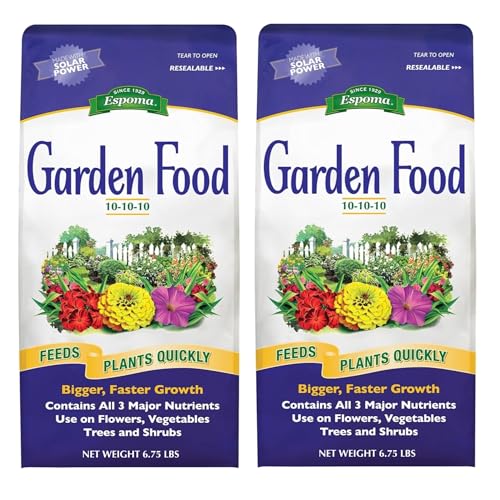
The two-bag bundle delivers 216 ounces (13.5 pounds total) — enough volume to feed a mature tree in spring and have a second bag ready for late spring without reordering.
You get two 6.75-pound bags (216 ounces total) with this Espoma pack. That means you can feed a mature peach tree in spring and have the second bag ready for a late-spring follow-up without buying again. It is a granular formula — no mixing — that you apply around the drip line (the outer edge of the canopy) and water in. The 13.5 pounds give you about 3.4 times more product than 4-pound bags from Lilly Miller or Cz Garden, making it efficient for more than one tree.
The label recommends monthly use during the growing season for flowers and vegetables, but for trees and shrubs you apply it in spring and fall. One reviewer noted their “flower garden and Magnolia tree (57 yrs old, lightning-damaged, now thriving)” improved dramatically. Another reported their fig tree produced roughly 5,000 fruits. That heavy fruit-set tells you the 10-10-10 ratio pushes energy into production, not just leaves.
Unlike the Supply Solutions bag (which adds five micronutrients), Espoma sticks to the core three nutrients — N, P, and K (nitrogen, phosphorus, potassium). For peach trees with decent soil, this simplicity is a strength because you control exactly what goes in.
What makes it worth buying
- Total 216 ounces at 13.5 pounds — a 35% larger unit count than Supply Solutions’ 160 ounces.
- Two separate bags let you apply in spring and fall without weighing anything.
- Buyers report rapid results on both flowers and old trees, including a lightning-struck Magnolia that recovered.
The one thing to know
- No added micronutrients like boron or zinc, which some peach growers want for fruit firmness — you may need a separate soil amendment if your soil is deficient.
Best for the serious home grower: If you have at least two peach trees or one large mature tree plus a vegetable garden, this two-pack gives you the volume to feed everything without buying again mid-season.
Not the right fit if: You only have a single young tree in a container — the 4-pound bags below will waste less product.
2. Howard Johnsons 7136 All-Purpose Fertilizer, 10-10-10, 35-Lbs.

A single 35-pound bag (560 ounces) — more than double the Espoma two-pack’s 216 ounces — makes this the most economical option per feeding for multiple trees.
If you have a small orchard or a row of peach trees, you want the bag that keeps going without a trip back to the store. Howard Johnsons gives you a single 35-pound bag (560 ounces) — the largest unit count here by a wide margin. That is more than double the 216 ounces of the Espoma two-pack, making this the cheapest per-feeding option for multiple trees. One buyer mentioned: “Great value. Should have enough for at least 2 seasons.”
The form is granules and powder, which means some dust when you pour, but it spreads evenly. Use it as a starter for vegetables, flowers, trees, and shrubs. A buyer said the “price is right and works well,” while another noted their “grass looks great” with slow growth. Some users reported the bag contains no weed pre-emergent (a chemical that stops weed seeds from sprouting) — that is actually good for peach trees because you want to control weeds separately.
At 36 pounds, it is the heaviest bag here. That weight means a higher shipping cost. But if you calculate cost per pound, this is the clear value champion for feeding multiple fruit trees over several seasons.
Why you would grab this bag
- Largest total volume by far — 560 ounces means fewer purchases and lower cost per feeding across a full season.
- Owners mention plants respond well and the bag lasts up to two seasons for a typical yard.
- No weed killer or pre-emergent mixed in, so you control exactly what goes around your peach tree roots.
What to watch for
- Heavy bag (36 pounds) is cumbersome to move around the yard — you will want a scoop and a bucket.
- Some buyers noted it lacks extra potassium for blooms, so peach trees in low-potassium soil may need a separate boost.
Grab this one for the orchard: Anyone with five or more fruit trees will appreciate buying once and forgetting about fertilizer for the next two seasons.
skip it if: You only have a single young tree — you would be store-opening a 35-pound bag for years.
3. Supply Solutions 10-10-10 Complete Lawn & Garden Granular Fertilizer with Micronutrients (10 Pounds)
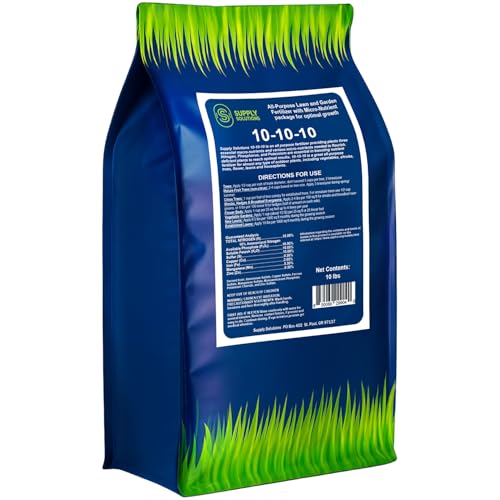
A 10-10-10 base plus five micronutrients — boron, manganese, copper, iron, and zinc — for peach trees that need targeted nutrition beyond the standard three.
Most 10-10-10 fertilizers stick to nitrogen, phosphorus, and potassium. This Supply Solutions bag adds five micronutrients (trace minerals): boron, manganese, copper, iron, and zinc. If your soil test reveals deficiencies in those, this one formula corrects them without you buying separate supplements. The brand calls it “Nutripaction Technology” — low-dust, uniform granules that release gradually into the root zone.
Customers note visible results. One owner reported “grass grew nicely in one month” after using it on a stump-grinding area. Another noted their olive trees are “doing better after fertilizing them.” A reviewer called it “a good all purpose” and said it is “not always the easiest to find.” One catch: a buyer said “it took weeks to arrive,” so plan your spring feeding ahead.
Peach trees are heavy feeders that benefit from micronutrients during fruit development. This bag is a strong choice if you want a more complete nutrient profile than a standard 10-10-10 offers. Compared to the Espoma two-pack, this has 160 ounces versus Espoma’s 216 ounces — so you get less volume but a wider nutrient spectrum.
Why this bag stands out
- Five added micronutrients (boron, manganese, copper, iron, zinc) that directly improve peach fruit quality and soil health.
- Low-dust, free-flowing granules make spreading around the root zone simple and even.
- Reviewers point out noticeable growth improvement in grass and trees within a month.
Consider before buying
- At 5 pounds it is one of the smaller bags — you will reorder sooner than with Espoma or Howard Johnsons.
- Multiple buyers reported slow shipping, so order well before your planned application date.
Choose this one if: Your soil test shows low boron or zinc levels — that micronutrient blend is exactly what peach trees need for better fruit set and firmness.
Look elsewhere if: You already have rich soil and just want a basic NPK feed — the simpler formulas cost less per feeding.
4. Lebanon Seaboard Corporation Green View No.40 10-10-10 All Purpose Fertilizer
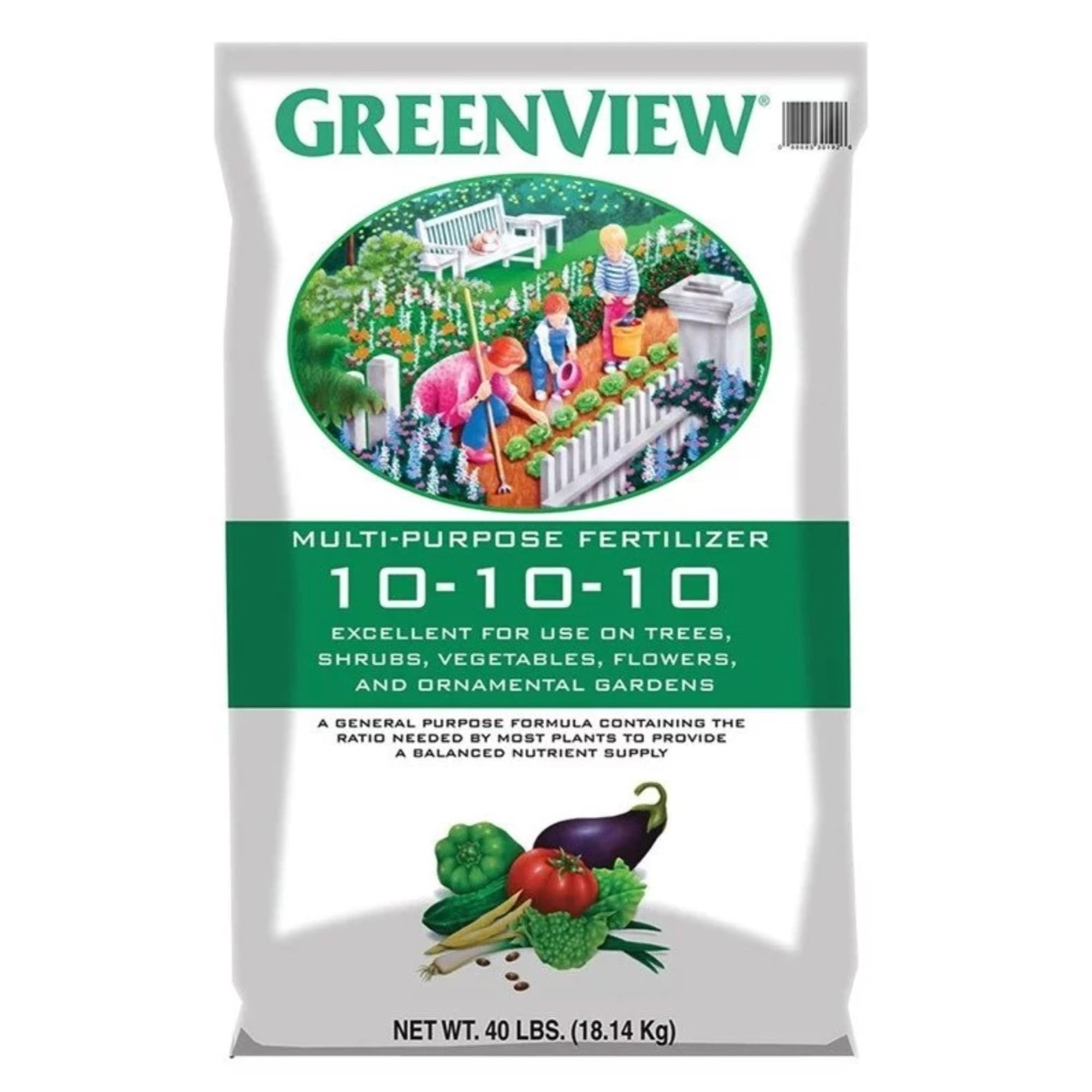
A no-nonsense 10-10-10 in granule and powder form that one buyer called “the cheapest I have found at this concentration.”
Green View No.40 keeps things simple: a balanced 10-10-10 NPK ratio for vegetables, flowers, ornamentals — and fruit trees. No added micronutrients or special coatings. You spread it and water it in. One reviewer called it a “very good all around fertilizer,” and another said it “does a great job with flowers and vegetables.” A long-time user noted the bag sometimes contains “tiny pebbles and dust,” but still called it “the cheapest I’ve found at this concentration” and said they would “buy more when I run out.”
For a single backyard peach tree, this is a perfectly adequate option. The lack of micronutrients means you pay only for the core NPK. Just note: the item weight listed is 16 ounces, which appears to be a listing error — confirm the actual bag size when ordering, because 16 ounces is tiny for a fruit tree.
It is priced near the top of the range here, so compare carefully. If you want a reliable name-brand product without extras, this one gets consistent positive feedback. However, the Howard Johnsons bag at 560 ounces costs less per ounce for orchard-scale feeding.
What works
- Clean, balanced 10-10-10 ratio that shoppers say works well on both flowers and fruit trees.
- Multiple reviewers confirm it delivers good results year after year for a reasonable price.
Be aware
- Some bags have small contaminants like pebbles — may need sifting if you use a broadcast spreader.
- No added micronutrients — if your peach tree soil needs boron or zinc, you will need a separate product.
Reach for this if: You want a basic, trusted 10-10-10 without any added complexity for a small number of fruit trees.
Consider other options if: You need the most value per pound — the Howard Johnsons bag offers more volume at a lower cost per ounce.
5. 𝐁𝐄𝐒𝐓𝐒𝐄𝐋𝐋𝐄𝐑 10-10-10 Plant Fertilizer Slow Release by Gardenera [4 Quarts]
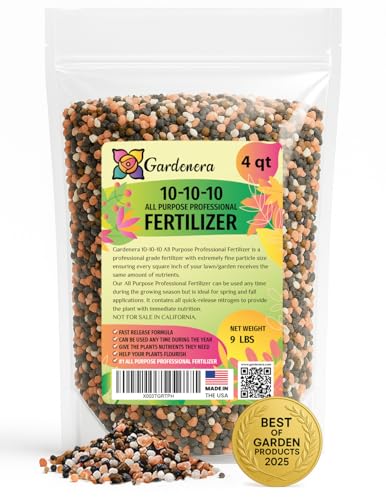
A slow-release 4-quart bag (1 pound) designed for small spaces — raised beds and container peach trees.
The Gardenera 10-10-10 is a dedicated slow-release granular fertilizer. You only apply it twice during the growing season. For a peach tree in a large container or raised bed, that means less frequent watering-in and more consistent feeding. The bag covers 100 square feet and weighs only 1 pound. One customer observed it is “the easiest fertilizer I’ve ever used” and noted “now it’s my forever fertilizer.” Two key details: the package is small (4 quarts, 1 pound), and some customers reported the bag arrived opened in transit, spilling dust.
At 1 pound, it is the lightest product here — compare that to the Espoma two-pack at 13.5 pounds. That makes sense if you have one small tree, but you will exhaust this quickly with a mature in-ground peach tree. The slow-release mechanism is the main draw: you apply pellets around the tree, and they break down gradually over months.
One reviewer using it on citrus trees noted they “must have missed the 8 oz. package size” and hoped it would be enough for four citrus trees — a caution that this is really a specialty product for small-scale growing. For container peach trees specifically, the Lilly Miller 4-pound bag offers more volume for a similar price.
What is good about it
- Slow-release formula means you only apply twice per season — less work for the same balanced nutrition.
- Buyers report “amazing” blooms and “lots of new growth” with just a few pellets per plant.
What to consider
- At 1 pound total, this bag will not last a full season for a mature in-ground peach tree.
- Some buyers received bags that opened during shipping due to lightweight packaging.
Best for patio growers: If your peach tree lives in a large container on a deck, the slow-release 4-quart bag is the right size and schedule.
Not for the orchard: Anyone with multiple ground-planted trees should step up to the Espoma or Howard Johnsons bags for better value.
6. Lilly Miller All Purpose Planting And Growing Food 10-10-10 4lb
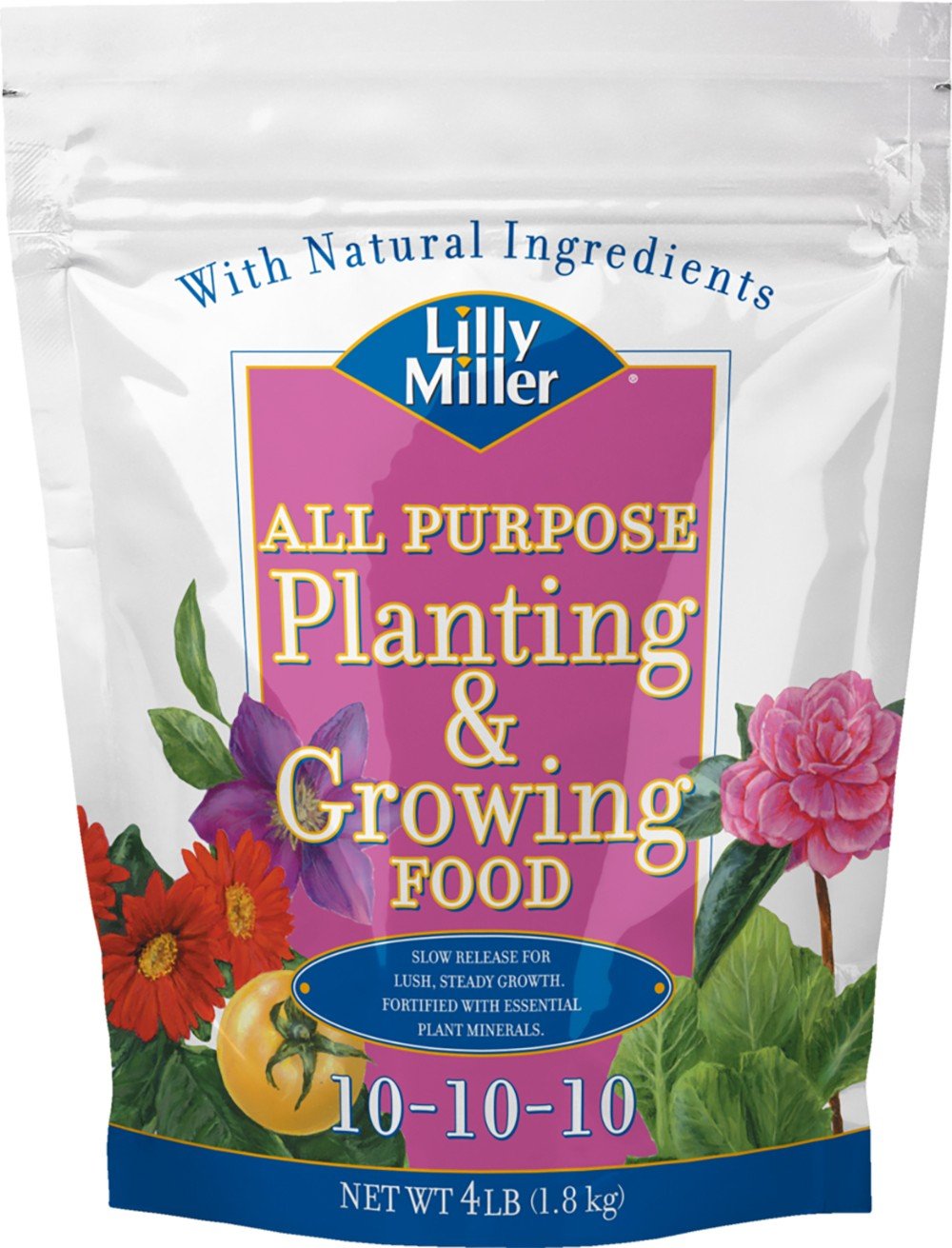
A compact 4-pound bag that one owner says “will last forever” for a single indoor or outdoor plant — and kept a tomato plant alive for two years.
Lilly Miller’s 4-pound bag is a concentrated, fast-acting granular fertilizer for plant growth, seed development, and root soil conditioning. At 4 pounds, it is the same size as the Cz Garden bag but from a well-known brand. One reviewer shared a method where they steep a few tablespoons in water to make a liquid feed for indoor tomato and basil plants — and reported keeping a tomato plant alive for two years and a basil plant for three years. That is remarkable for plants that usually last one season, and it shows how a little goes a long way.
The granules are fast-acting — you see results within days if used as a liquid drench (dissolved in water and poured onto the soil). For a peach tree, you would broadcast dry granules around the drip line. The bag has a noticeable fertilizer smell and some dust when opened. One reviewer recommended wearing a mask and gloves.
Reach for this if you have a single young peach tree and want a small bag you can also use on indoor plants. The drawback: for two or more trees, you will finish this bag quickly. Compared to the Gardenera slow-release option, this is fast-acting rather than slow-release, so you apply it more often but see faster results.
Why this bag works
- Fast-acting granules that show results in days — one owner watched yellowing tomato plants turn green again the next day.
- Small 4-pound bag is easy to store and transport, perfect for a single tree or indoor plants.
What to watch for
- Produces dust when opened; reviewers recommend wearing a mask and gloves.
- At 4 pounds, it has about 3.4 times less material than the Espoma two-pack — not economical for multiple trees.
Best for the single-tree grower: If you have exactly one young peach tree and you also keep potted plants, this bag gives you flexibility without a massive leftover.
Not ideal if: You are feeding a full garden or multiple fruit trees — the price per pound is higher than the larger bags.
7. Cz Garden Supply 10-10-10 All Purpose Fertilizer – Made in USA – 2% Iron + Micronutrients
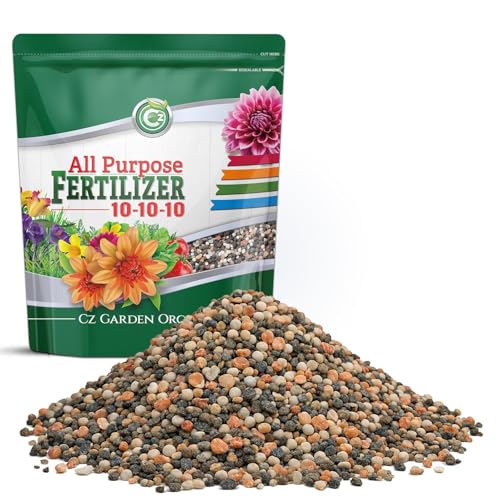
A USA-made 4-pound pouch that includes 2% iron and micronutrients — a feature that separates it from other small bags at this price.
Cz Garden’s 10-10-10 is an entry-level bag with 2% iron plus micronutrients (trace minerals). Iron helps peach trees produce greener leaves and better chlorophyll (the green pigment used for photosynthesis), which matters for fruit flavor. The packaging is a resealable heavy-duty pouch rather than a traditional bag. You pour exactly what you need and seal the rest, keeping it dry for the next application. One user highlighted: “Have gotten such great results the first time I used this product bought the larger bag for my plants.”
At 4 pounds, it is the same weight as the Lilly Miller bag. The added iron is the main differentiator. If your peach tree leaves show yellowing (a sign of iron chlorosis, which is common in alkaline soils), this bag addresses that directly. The 10-10-10 ratio is still the base, so you get balanced nutrition plus an iron boost. One caution from a buyer: they recommended wearing a mask and gloves when applying — standard for any granular fertilizer.
This is a solid starting point if you want a low price and appreciate the resealable pouch and US manufacturing. It offers a similar micronutrient benefit to the Supply Solutions bag but at a smaller 4-pound size — a good trial option before committing to a larger bag.
What stands out
- Includes 2% iron and micronutrients — a rare find in a budget-priced 10-10-10 product.
- Resealable pouch keeps the granules dry between applications, unlike open-top bags.
- Made in the USA with “premium grade” ingredients, according to the manufacturer.
The limitations
- At 4 pounds it is the lightest bag alongside Lilly Miller — you will reorder sooner for larger trees.
- Some buyers noted the need for reapplication more often than every three months to maintain results.
Best budget pick for the value-focused grower: If you want a low-cost entry with iron for greener leaves, start here and move up to a bigger bag once you see the results.
Look elsewhere if: You need to feed multiple large peach trees — the 4-pound capacity will require frequent reordering.
Understanding the Specs
N-P-K Ratio (10-10-10)
The three numbers on the bag stand for nitrogen, phosphorus, and potassium — in that order. Each number tells you the percentage of that nutrient by weight. In a 10-10-10 fertilizer, 10% of the bag is nitrogen, 10% is phosphorus (as P2O5 — a compound that makes phosphorus available to plants), and 10% is potassium (as K2O — a compound that makes potassium available). For peach trees, nitrogen fuels leaf and branch growth, phosphorus helps roots and blossoms develop, and potassium strengthens the fruit and the tree’s overall disease resistance. A “balanced” 10-10-10 gives you equal parts of all three, which works as a general-purpose feed for most soil types.
Unit Count and Item Weight
The unit count is measured in ounces and tells you the total volume of fertilizer in the bag. The item weight is measured in pounds. For example, the Espoma two-pack has a unit count of 216 ounces and a total item weight of 13.5 pounds — that is the combined weight of both bags. A higher unit count means you buy less often. For a single peach tree, a 4-pound bag (64 ounces) might last one season. For multiple trees, a 35-pound bag (560 ounces) is far more economical.
FAQ
How often should I apply 10-10-10 fertilizer to my peach tree?
How much 10-10-10 should I give a mature peach tree?
Can I use 10-10-10 fertilizer on young peach trees?
Is 10-10-10 fertilizer safe for peach trees about to fruit?
What is the difference between 10-10-10 and a fruit tree-specific fertilizer?
Should I choose granular or liquid 10-10-10 for peach trees?
Can I mix 10-10-10 with other soil amendments?
How long does a bag of 10-10-10 fertilizer last once opened?
Does 10-10-10 fertilizer have an odor?
What is the best way to apply granular 10-10-10 around a peach tree?
Final Thoughts: The Verdict
For most peach tree owners, the best 10-10-10 fertilizer for peach trees is the Espoma 10-10-10 Garden Food Pack of Two. It balances 216 ounces (13.5 pounds) of volume with proven results — one reviewer noted a 57-year-old lightning-damaged magnolia revived and a fig tree producing roughly 5,000 fruits. If you need the most economical solution for a multi-tree orchard, grab the Howard Johnsons 35-pound bag. And for a peach tree that needs a micronutrient boost including iron and boron, the Supply Solutions 10-10-10 with Micronutrients is the right call.
How We Picked
We do not accept paid placement. Every pick is matched to a real buyer and a real use-case; we do not hands-on test units.
Sources & Methodology
Specifications: manufacturer listings and product documentation. Review insights: verified customer reviews, as of July 2026. Pricing: not shown on this page (it changes often); check the current price via the retailer link.
As an Amazon Associate, Lawn Gear Lab earns from qualifying purchases. This does not affect which products we feature.