
Switching to fabric pots for your seedlings, herbs, and ornamentals means saying goodbye to the root-circling prison of plastic nursery containers. The real challenge isn’t drainage — it’s finding a bag dense enough to hold its shape through a full growing season without fraying at the handles the moment the soil gets heavy with water. A 300-gram thickened nonwoven fabric with reinforced stitching separates a bag you’ll use for years from one you’ll toss in the trash by August. Beyond material weight, the handle attachment method and the depth-to-diameter ratio determine whether your plant’s root zone stays aerated or goes anaerobic. This guide measures each contender by fabric density, stitch quality, and handle reinforcement to save you the headache of collapsing bags and waterlogged roots.
I’m Rikta — the co-founder and writer behind Lawn Gear Lab. My focus here is on comparing the measurable specs that real gardeners prioritize: the exact fabric gram weight, handle stitching patterns, and dimensional ratio of each 1-gallon grow bag, verified through technical data sheets and hundreds of verified owner experiences.
Whether you’re starting tomato seedlings, potting up pepper transplants, or building a patio herb garden, choosing the right container matters. After analyzing material thickness, handle construction, and drainage performance across six leading models, this guide delivers a clear verdict for the best 1 gallon grow bags available now.
How To Choose The Best 1 Gallon Grow Bags
Not all fabric grow pots are built alike. The three specs that separate a durable multi-season bag from a single-summer failure are fabric weight, handle reinforcement, and dimensional profile. Here’s exactly what to check before you buy.
Fabric Density and Permeability
The single most reliable indicator of longevity is the fabric gram weight. A 300G thickened nonwoven material hits the sweet spot — permeable enough to allow air pruning and excess water escape, yet dense enough to resist tearing when moved with wet soil. Budget bags often use lighter felt-like material that degrades within one season and collapses under saturated weight. Always verify the fabric weight in the specs; if it’s not listed, assume it falls below 250G.
Handle Construction and Stitch Pattern
Handles are the first failure point on a grow bag. Look for handles sewn with serger stitches or X-shaped reinforcement stitching directly into the fabric body, not simple single-needle seams or handles cut from the same lightweight fabric as the bag. Nylon webbing handles (like the iPower 24-pack offers) provide the highest tear resistance. A handle that detaches when you lift a fully drenched 1-gallon bag is the fastest way to ruin a plant and your patience.
Height-to-Diameter Ratio
A 1-gallon grow bag with too tall a profile dries out unevenly and encourages roots to grow deep rather than branching. A wider, shallower bag (roughly 7–8 inches in diameter and 6–7 inches tall) provides better lateral root development and more stable soil moisture. Bags that measure more than 8 inches tall with a narrow base can become top-heavy outdoors. Measure the base diameter and cross-check it against the height listed in the technical specs.
Quick Comparison
On smaller screens, swipe sideways to see the full table.
| Model | Category | Best For | Key Spec | Amazon |
|---|---|---|---|---|
| Gardzen 10-Pack | Mid-Range | Best Overall — balanced durability and value | 300G thick, X-stitch handles, 7.8″×5.9″ | Amazon |
| iPower 24-Pack | Premium | High volume with nylon handles + labels | 300G fabric, nylon handles, 24 labels | Amazon |
| WTREE 5-Pack | Premium | Premium small-batch starter kit | 300G, serger-stitched double handles | Amazon |
| VIVOSUN 5-Pack | Budget | Entry-level 5-pack for new growers | 300G, standard serger handles | Amazon |
| iPower 20-Pack | Mid-Range | Bulk planting with label system | 300G, reinforced handles, 20 labels | Amazon |
| Jgalnim 60-Pack | Budget | Low-cost plastic nursery pots | Thin plastic, drainage holes | Amazon |
In‑Depth Reviews
1. Gardzen 10-Pack 1 Gallon Grow Bags

The Gardzen 10-pack nails the critical balance between fabric density and durability for a 1-gallon grow bag. Using 300G thickened nonwoven material, these bags provide the aeration needed for root pruning without becoming flimsy after repeated watering cycles. The measured dimensions of 7.8 inches in diameter by 5.9 inches tall create a squat profile that holds moisture more evenly than taller bags, reducing the risk of dry pockets near the base.
Where Gardzen pulls ahead is the reinforced X-shaped stitching on the handles. Instead of a straight single-stitch line that can rip under load, the cross pattern distributes tension across more fabric surface area. Owners consistently report these bags holding up through multiple seasons with potatoes, peppers, and radishes, and the fabric remains intact after being washed and folded for off-season storage.
One trade-off is that the base is not as flat as some rigid-bottom competitors, which can cause the bag to wobble slightly on uneven surfaces. Additionally, the handles use the same fabric material rather than nylon webbing, so they will eventually wear if dragged across concrete. Still, for the price per bag, the Gardzen delivers the most consistent performance across fabric thickness, stitch precision, and dimensional stability.
What works
- 300G fabric stays rigid when wet, preventing sidewall collapse
- X-stitched handles resist tearing under full soil loads
- Wide diameter-to-height ratio promotes even moisture distribution
What doesn’t
- Fabric handles wear faster than nylon webbing alternatives
- Base lacks stiffening insert, so bags may tilt on hard surfaces
2. iPower 24-Pack 1 Gallon Grow Bags with Nylon Handles
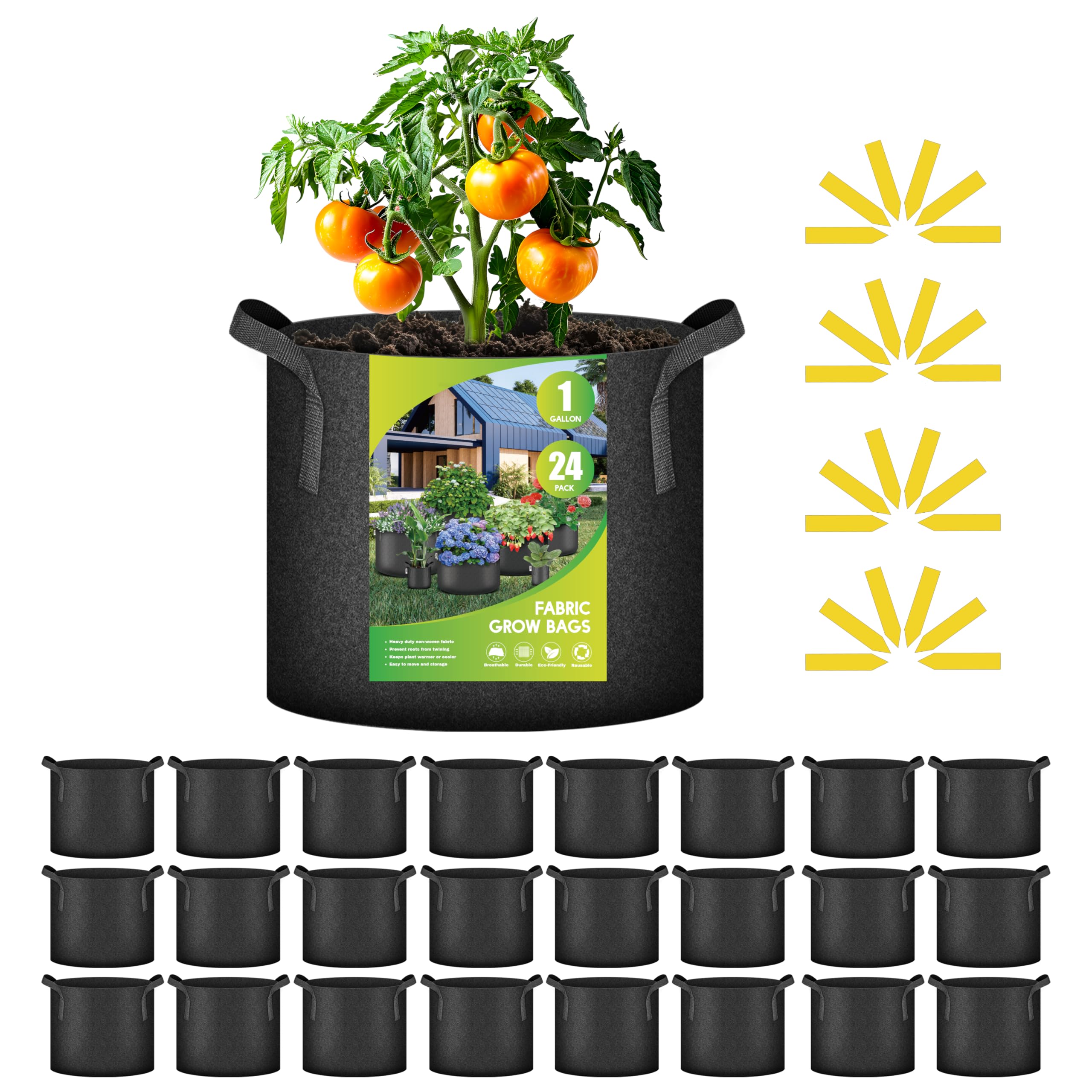
The iPower 24-pack steps up with two upgrades that matter for serious container gardeners: nylon webbing handles and a full set of plant labels. The nylon handles are a notable improvement over fabric-only loops — they don’t stretch when wet and maintain their shape through repeated lifts of saturated potting mix. The 300G thickened nonwoven fabric matches the industry standard, providing the same breathability and drainage as the Gardzen but in a higher-quantity configuration.
Adding 24 labels is a small but practical inclusion for anyone managing multiple varieties of seedlings or keeping track of different vegetable cultivars. The bags measure 7 inches in diameter by 6 inches tall, slightly smaller in diameter than the Gardzen but with a taller relative height. This shape works well for deep-rooted transplants like tomatoes and peppers, though the narrower base can make the bags slightly less stable on windy patios. Owners report the fabric holds up through two full growing seasons with proper care, and the double-stitched seams reinforce the sidewalls against bursting under pressure.
The main drawback is pack size — 24 bags is a large commitment for a grower who only needs a handful of 1-gallon containers. The fabric feels identical to the iPower 20-pack, so if you don’t need the extra four bags or the nylon handles, the 20-pack may suit you better. For high-volume growers running a greenhouse or starting dozens of transplants, the 24-pack delivers the best per-bag value among premium options.
What works
- Nylon webbing handles outperform fabric loops for tear resistance
- 24 included labels simplify plant tracking across varieties
- Double-stitched sidewalls prevent seam separation under load
What doesn’t
- Narrower 7-inch diameter reduces stability on uneven ground
- 24-count minimum may exceed needs for small patio gardens
3. WTREE 5-Pack 1 Gallon Grow Bags

The WTREE 5-pack is a tightly engineered starter set that prioritizes handle strength above all else. Each bag is built with 300G nonwoven fabric, but the differentiator is the serger-stitched handles that attach to the bag with a dense overlock pattern. This technique locks the handle fibers into the bag fabric more securely than a simple straight stitch, making the WTREE bags notably resistant to handle detachment — a common failure mode in cheaper grow bags.
The cylindrical shape with a flat base offers strong stability on decking and greenhouse benches. The material weight is identical to the Gardzen and iPower offerings, but the WTREE feels marginally stiffer out of the pack, suggesting a tighter weave. Owners using these bags for peppers and small ornamentals report the fabric holding its shape through consistent outdoor rain exposure without softening or sagging. The 5-pack size is ideal for a first-time fabric pot user who wants to test the format without a large upfront investment.
The limitation is the lack of variety — no labels, no extra features, just the bags. For the same unit price, the Gardzen 10-pack offers more bags and reinforced X-stitching, making the WTREE a harder value sell unless you specifically need the serger stitch pattern. If your primary concern is handle strength in a small purchase quantity, the WTREE delivers, but it doesn’t outclass the Gardzen on overall value.
What works
- Serge-stitched handles resist peel-away failure better than straight seams
- Stiffer fabric weave holds shape in wet conditions
- Flat base provides solid stability on hard surfaces
What doesn’t
- 5-pack offers fewer bags for the same per-unit cost as competitors
- No labels or extras included for variety tracking
4. iPower 20-Pack 1 Gallon Grow Bags
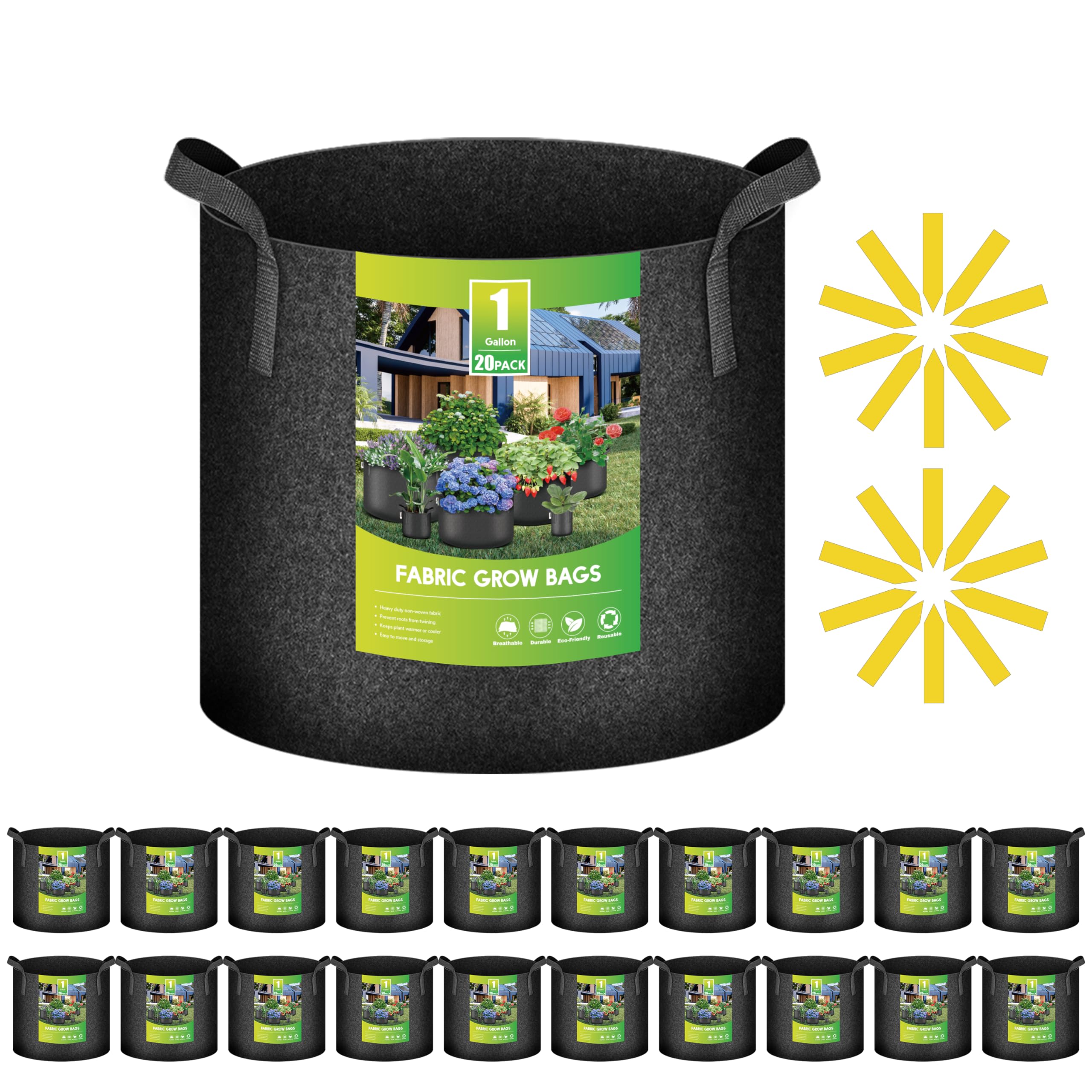
The iPower 20-pack offers the same 300G fabric quality as the premium 24-pack but uses standard fabric handles instead of nylon webbing, bringing the price per bag lower while still including 20 plant labels. The bags measure slightly shorter in height than the 24-pack version, which owners note makes them more stable outdoors because the center of gravity sits lower. The reinforced handles are double-stitched but use the same nonwoven material as the bag body, which is adequate for lifting but will wear faster than nylon.
Labeling is a genuine convenience here — each bag comes with a small white tag that you can write on and insert into the soil, helping you manage multiple plant varieties without confusion. Owners growing tomatoes, dill, and peas on apartment patios report excellent drainage performance and no issues with fabric degradation after one season. The flat base design sits squarely on surfaces, and the bag material holds up to regular watering without developing soft spots.
The chief trade-off is that the sidewalls can fold over if the bags are not completely filled to the brim. A few owners note that partially filled bags lose their structural rigidity, causing the top edge to curl inward. Fill each bag fully to maintain the vertical sidewall structure. For bulk planting with label support, the iPower 20-pack offers the best value proposition among the fabric options reviewed here.
What works
- 20-pack with labels offers strong per-unit value for bulk buying
- Shorter height improves outdoor stability compared to taller bags
- Double-stitched handles provide reliable lifting capacity
What doesn’t
- Fabric handles wear faster than nylon alternatives on 24-pack
- Sidewalls collapse if bags are not filled to the top with soil
5. VIVOSUN 5-Pack 1 Gallon Grow Bags

The VIVOSUN 5-pack is the entry-level benchmark in the 1-gallon grow bag category. Built with 300G thickened nonwoven fabric, it meets the same base material spec as more expensive packs, but the construction details reveal where corners are cut. The handles are serge-stitched, which is a step above basic single-needle attachment, but the fabric feels slightly looser than the Gardzen or WTREE equivalents, leading to more sidewall sag under saturated conditions.
Owner feedback consistently highlights the bags as a solid starter option for new growers who want to experiment with fabric pots without a major investment. The 5-pack size is perfect for testing different planting depths or comparing performance against plastic nursery pots. The bags drain well and promote air pruning effectively, but owners who move them frequently note that the handles begin showing wear after one season. The 7.9-inch height is among the tallest in this comparison, which can lead to faster drying of the topsoil layer compared to the wider, flatter Gardzen bags.
If your goal is to buy a single set of bags and use them for multiple seasons, the VIVOSUN will likely need replacement sooner than the Gardzen or iPower options. For a low-commitment introduction to fabric pot gardening, however, the VIVOSUN 5-pack gets the job done at a price that’s hard to argue with.
What works
- 300G fabric provides adequate aeration and drainage for seedlings
- Serge-stitched handles are more durable than budget straight-seam attachments
- Low price point lowers barrier to trying fabric pots for the first time
What doesn’t
- Looser fabric weave leads to sidewall sag when saturated
- Handles show wear after one active season of regular moving
- Taller profile compared to diameter increases topsoil drying rate
6. Jgalnim 60-Pack 1 Gallon Nursery Plant Pots
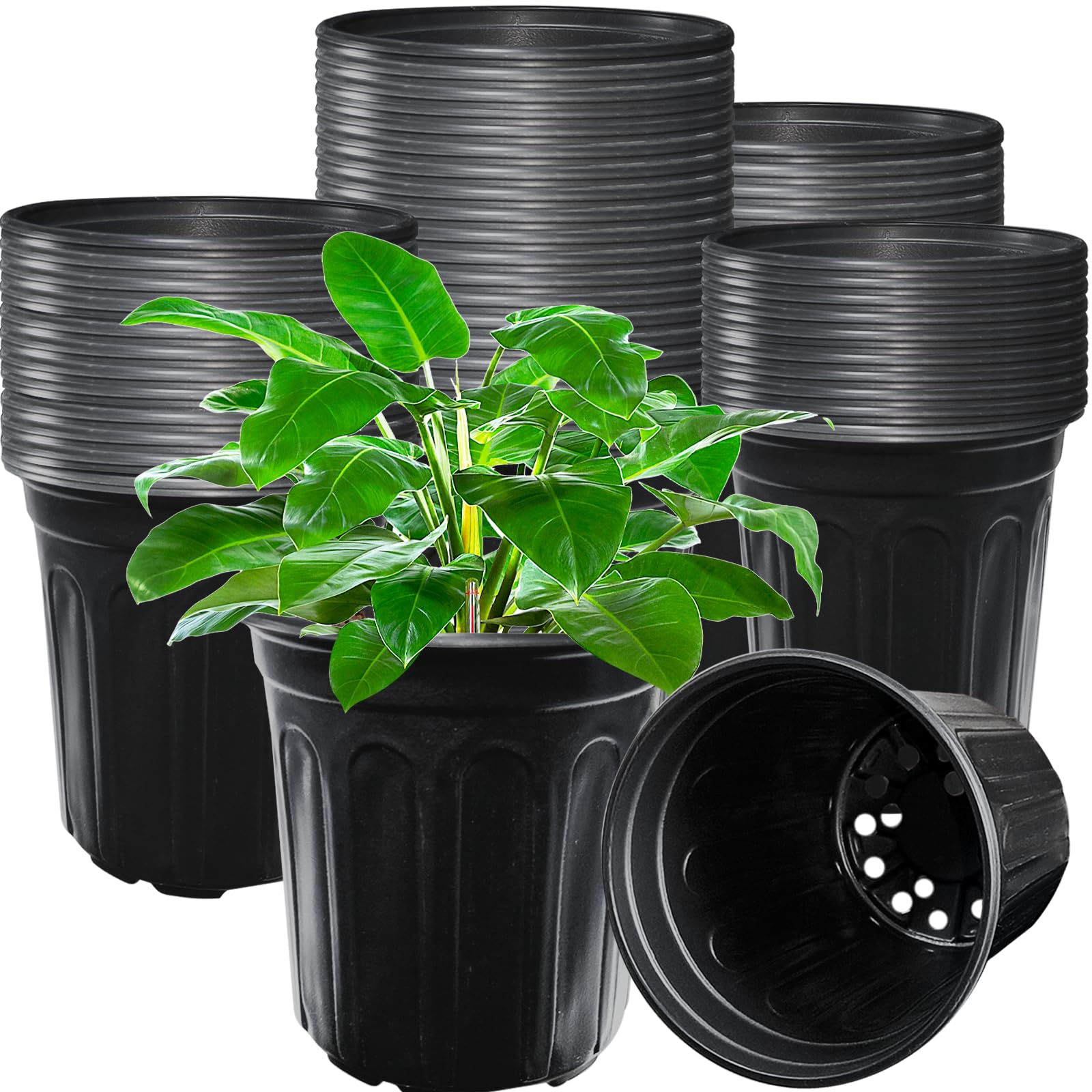
The Jgalnim 60-pack is a fundamentally different product from the fabric grow bags above — these are thin plastic nursery pots, not aeration bags. The material is soft, flexible plastic with multiple round drainage holes at the bottom, designed for temporary plant holding, seedling starts, or transplanting rather than long-term growing. The dimensions are 7.1 inches opening diameter, 5.3 inches bottom diameter, and 6.7 inches tall, providing a standard nursery pot taper.
Owners accurately describe these as thin-walled containers that function more as pot liners than standalone pots. The plastic is flexible enough to squeeze for root extraction, but it lacks the rigidity to hold its shape if dropped or bent. The drainage holes are larger and more numerous than standard, which increases aeration but also allows soil to escape easily unless a mesh liner is used. These pots work well for temporary greenhouse use or for selling plants at markets, but they do not provide the air-pruning benefits of fabric bags.
For growers specifically seeking 1-gallon grow bags for breathability and root health, the Jgalnim pots are not a suitable substitute. They are a high-quantity, low-cost option for traditional nursery operations where durability and aeration are secondary concerns. If fabric bags are what you need, skip this option. If you need bulk disposable nursery pots for short-term use, the 60-count is hard to beat on quantity.
What works
- 60-pack provides the highest quantity per purchase for mass planting
- Flexible plastic allows easy root extraction without damaging plants
- Multiple drainage holes prevent water pooling at the base
What doesn’t
- Not a fabric grow bag — no air pruning or breathability benefits
- Thin plastic walls offer minimal insulation against temperature swings
- Large drainage holes allow soil loss through the bottom
Hardware & Specs Guide
Fabric Weight and Weave
Every fabric grow bag in this review uses 300G nonwoven material, which is the minimum density for multi-season use. Lighter fabrics (200G and below) will degrade after one season, especially under UV exposure. The weave density directly correlates to how well the bag resists root penetration — a tighter weave prevents fine roots from pushing through the fabric walls, which can make separating the bag from the root ball difficult at transplant time. The Gardzen and WTREE bags exhibit the tightest weave among the reviewed options, reducing fabric stretching.
Handle Attachment Methods
Three handle types appear across these products. Fabric handles with serger stitching (VIVOSUN, WTREE) use an overlock seam that wraps thread around the handle edge, preventing fraying. X-stitch reinforcement (Gardzen) distributes tension across a wider fabric area. Nylon webbing handles (iPower 24-pack) are the most durable because the material does not absorb water or stretch, maintaining full load capacity even when wet. Straight-stitch fabric handles without reinforcement are the weakest option and should be avoided if you plan to move fully loaded bags regularly.
FAQ
How long do 1 gallon grow bags typically last?
Do I need a saucer under a 1 gallon fabric grow bag?
Can I use 1 gallon grow bags for root vegetables like carrots or potatoes?
Final Thoughts: The Verdict
For most gardeners, the best 1 gallon grow bags winner is the Gardzen 10-Pack because it delivers 300G fabric, reinforced X-stitch handles, and a stable 7.8×5.9-inch profile at a per-bag cost that undercuts the competition without sacrificing construction quality. If you need nylon handles and built-in labels for high-volume transplant management, grab the iPower 24-Pack. And for the best entry-level 5-pack to try fabric pot gardening, nothing beats the WTREE 5-Pack with its serger-stitched handles.