
Specs are compiled from manufacturer listings and verified buyer reviews and can change over time — please confirm the key details on the product page before buying.
Getting more flowers and fruit from your plants means shifting their energy away from leafy growth toward buds and roots. A 0-10-10 fertilizer — zero nitrogen, ten percent phosphate (for roots and blooms), ten percent soluble potash (for flower hardiness) — does exactly that. The question is which bottle to buy.
I’m Rikta — the founder and writer behind Lawn Gear Lab. This guide is built by comparing the manufacturers’ published specifications and the patterns across verified customer reviews, so you get each pick’s real strengths and trade-offs instead of marketing spin.
The three picks here range from a concentrated quart to a full gallon, sharing the same zero-nitrogen, high-potash chemistry. Below you will find the honest breakdown of the 0-10-10 fertilizer choices that actually deliver on their bloom promise.
Quick Picks
- Liquinox 0-10-10 Bloom, 1 gallon — Best Overall
- Alaska Morbloom Concentrate 0-10-10 Fertilizer, 1 Gallon — Organic Feel
- Liquinox 0-10-10 Bloom, 1 quart — Compact Pick
How To Choose The Best 0-10-10 Fertilizer
Choosing a bloom booster depends on how much you need to feed and how strong you want the concentrate. The N-P-K ratio (nitrogen-phosphorus-potassium) is fixed at zero nitrogen, ten phosphate, and ten soluble potash, so the real differences are in the bottle size, the brand’s base ingredients, and the way the formula acts on your soil pH.
Bottle Size and Cost Per Feed
A quart (32 fluid ounces) is enough for a season of potted flowers and a few small raised beds. A gallon (128 fluid ounces) stretches much further for full garden coverage or multiple plantings. The bigger bottle costs more upfront but delivers a lower cost per feeding if you have the space to use it before it sits too long.
Base Ingredients and pH Effect
Some 0-10-10 formulas are built on fish byproducts, giving them a strong natural odor and a tendency to lower the soil pH (a measure of acidity) sharply. Others use synthetic mineral salts that are odorless and more pH-neutral. If you are growing acid-loving plants like blueberries or azaleas, the pH drop can help — but for neutral-soil flowers, you may need to watch your buffer levels.
Concentration and Dilution
All liquid 0-10-10 products in this guide are concentrates you mix with water. That means one bottle makes many gallons of ready-to-use feed. The mixing ratio matters: a highly concentrated formula lets you fine-tune the strength, while a milder one is harder to overdo but runs out faster.
Quick Comparison
| Model | Best For | Liquid Volume | Form | Base | Amazon |
|---|---|---|---|---|---|
| Liquinox 0-10-10 Bloom 1 gal | Heavy blooming on orchids and citrus | 128 fl oz | Liquid | Synthetic mineral salts | Amazon |
| Alaska Morbloom 0-10-10 1 gal | Full garden of flowering plants | 128 fl oz | Liquid | Fish | Amazon |
| Liquinox 0-10-10 Bloom 1 qt | Small pots and first-time bloom feeding | 32 fl oz | Liquid | Synthetic mineral salts | Amazon |
In‑Depth Reviews
1. Liquinox 0-10-10 Bloom, 1 gallon

The 128-fluid-ounce jug that orchid lovers reach for season after season — and the volume champion of this guide.
You get 128 fluid ounces of zero-nitrogen, high-potash liquid concentrate that feeds flowers, fruits, and vegetables without pushing leafy growth. The N-P-K (nitrogen-phosphorus-potassium) ratio delivers ten percent phosphate — to drive root development and bud formation — and ten percent soluble potash — to help blooms last longer and improve plant hardiness. Because it is a synthetic mineral-salt formula, there is no fish odor, so you can mix and water without smelling up your space.
Buyers report that this feed produced triple the amount of blooms on moth orchids (a common houseplant orchid), with growth and flowering noticeably better after switching. One long-time user says she and her gardening friends have been using this product for decades — a strong sign of consistent results. The gallon holds 128 fl oz, while the quart holds 32 fl oz, meaning each feeding costs less if you have a full garden or multiple heavy-feed plants like citrus in pots.
A single reviewer noted that it works on lawns, trees, and larger plants when you add some iron, though that addition is your own choice based on your soil test. The product is labeled for plant growth, flowering, and fruiting, so it covers everything from vegetable beds to ornamental beds in one bottle.
What you get
- 128 fl oz — the best cost-per-feed value in this lineup
- Synthetic mineral base, no strong smell
- Proven on orchids, citrus, and general flowering plants
Consider before buying
- Not a fish-based formula, so you will not get the organic soil-microbe benefits some gardeners want
- Large jug is heavy to handle if you only have a few pots
If you have several heavy-blooming plants, this is the volume-per-dollar winner. You get 128 fl oz without fish smell, and owners mention triple the orchid blooms. If you only have one or two houseplants, the quart version below will last you longer without sitting unused.
2. Alaska Morbloom Concentrate 0-10-10 Fertilizer, 1 Gallon
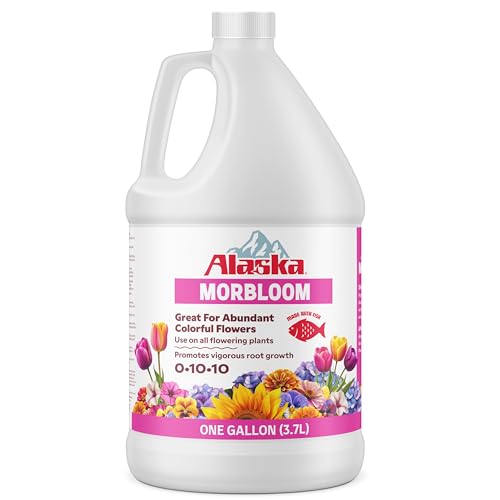
The fish-based 128-fluid-ounce concentrate that feeds soil microbes — but watch your pH closely.
Alaska Morbloom delivers the same 0-10-10 ratio in a 128-fluid-ounce concentrate, but the active ingredients come from fish. This means the mix has a natural protein base that feeds soil microbes as well as the plant, unlike the synthetic Liquinox gallon above. It is formulated to encourage budding, blooming, and vigorous root growth on all flowering plants, and buyers who rotate it with the Alaska fish fertilizer report happy, healthy gardens with abundant color.
There is an important trade-off you need to know before you buy. Customers note that this fertilizer will lower your pH (acidity level) dramatically, meaning you will go through pH buffer much faster. For acid-lovers like azaleas or blueberries, that acidity is a benefit. But for plants that prefer a balanced pH, you need to test and adjust more often than with the mineral-based Liquinox. The fish odor is also strong — one reviewer noted a shipping spill left the box soaked and smelling.
Unlike the synthetic Liquinox gallon above, the Alaska Morbloom is the choice if you want organic soil health alongside the bloom boost. The label says to dilute it with water as directed, and regular users emphasize that too much is not good, so stick to the schedule for best results without burn.
Standout strengths
- Fish-based formula feeds soil biology, not just the plant
- Gallon size (128 fl oz) lasts many seasons for a full garden
- Proven track record for vibrant, abundant flower color
Honest trade-offs
- Strong fish smell, especially during mixing and if spilled
- Dramatic pH drop means you need to test and buffer regularly
This is the organic pick if you grow acid-loving flowering plants. For azaleas, rhododendrons, or blueberries where a pH drop helps, the Alaska Morbloom is a strong choice. If you have neutral-soil vegetable beds or indoor plants where you need no odor and pH stability, stick with the mineral-based Liquinox gallon.
3. Liquinox 0-10-10 Bloom, 1 quart

The entry-level 32-fluid-ounce bottle for small pots and first-time bloom feeders — the same formula as the gallon but a quarter of the volume.
This 32-fluid-ounce bottle from Liquinox contains the same phosphate and soluble potash chemistry as the gallon version above, but in a much smaller size. It is a high-acid, no-nitrogen liquid concentrate made for flowers, fruits, and vegetables — ideal if you have a few container plants, a small raised bed, or you are experimenting with a bloom booster for the first time and do not want to commit to a huge jug.
One buyer in Houston zone 9b (a warm climate) reported pepper plants blooming after Christmas — Cayenne, Jalapeno, and Habanero all pushed blooms after a single application before Thanksgiving. Another user said it is highly concentrated, so start slow and mix your own blend. That concentration means the 32-ounce bottle can still last a while because you dilute each dose heavily, but the quart holds 32 fl oz while the gallon holds 128 fl oz — which costs less per ounce.
The same synthetic mineral base means no fish smell and no dramatic pH swing, so it works well for indoor plants and houseplant setups where odor would be a problem, unlike the Alaska Morbloom. The specific uses are listed as flowers, fruits, and vegetables, and buyers also use it on citrus in pots with good bloom results.
Why it works
- 32 fl oz is small enough to store easily and use before it expires
- No strong odor, suitable for indoor plant feeding
- Same effective formula as the gallon, just less volume
Keep in mind
- Higher cost per ounce than the gallon version — you pay more per feeding
- Runs out quickly if you have a large garden or many heavy feeders
This is for the small-space gardener. If you have a few houseplants or a single container garden, the 32-fluid-ounce bottle keeps things simple and odor-free. For a full vegetable garden or multiple fruit trees, the gallon Liquinox costs less per feeding and saves you trips to buy more.
Understanding the Specs
N-P-K Ratio – 0-10-10
This is the three-number code on every fertilizer bag or bottle. The N stands for nitrogen (nitrogen), P for phosphate (phosphorus), and K for potash (potassium). Zero nitrogen means the formula is designed not to push green leafy growth — so you avoid tall, leggy plants with fewer flowers. The first ten is phosphate, which drives root development and bud formation. The second ten is soluble potash, which helps blooms last longer and improves overall plant hardiness. Together, the 0-10-10 ratio sends a clear signal: “make flowers and fruit, not leaves.”
Liquid Volume – Quarts vs Gallons
A quart is 32 fluid ounces, a gallon is 128 fluid ounces. If you feed a dozen small pots once a week, a quart can last a couple of months. If you have a full flower garden or multiple citrus trees, the gallon saves you money per feeding and fewer trips to buy more. The choice is simple: small garden or test-run = quart; large garden or multiple seasons = gallon.
Synthetic Mineral vs Fish-Based
The Liquinox products use synthetic mineral salts (phosphate and soluble potash dissolved in water). They are odorless, pH-stable, and feed the plant directly with no soil-microbe intermediary. The Alaska Morbloom uses fish byproducts, which means it has a strong odor and can lower your soil pH dramatically — a benefit for acid-lovers but a hassle for neutral-soil gardens. Your choice depends on if you want a clean, predictable feed or an organic soil-building approach.
FAQ
Can I use 0-10-10 fertilizer on vegetables?
Will 0-10-10 fertilizer burn my plants if I use too much?
How often should I apply a 0-10-10 bloom booster?
Does 0-10-10 fertilizer lower soil pH?
Is 0-10-10 good for orchids?
Can I use 0-10-10 on citrus trees in pots?
How do I dilute a liquid concentrate 0-10-10 fertilizer?
What is the difference between 0-10-10 and 10-10-10 fertilizer?
Final Thoughts: The Verdict
For most buyers, the 0-10-10 fertilizer winner is the Liquinox Bloom 1 gallon because it delivers the most volume per dollar (128 fl oz for the price), has a neutral pH effect — no dramatic swings like the fish-based Alaska — and works on everything from orchids to citrus without a strong smell. If you want a fish-based organic feed that builds soil health and love acid-loving plants, grab the Alaska Morbloom 1 gallon. And for small pots, indoor plants, or your first bloom-booster trial, the Liquinox Bloom 1 quart is a compact, odor-free way to start.
How We Picked
We do not accept paid placement. Every pick is matched to a real buyer and a real use-case; we do not hands-on test units.
Sources & Methodology
Specifications: manufacturer listings and product documentation. Review insights: verified customer reviews, as of July 2026. Pricing: not shown on this page (it changes often); check the current price via the retailer link.
As an Amazon Associate, Lawn Gear Lab earns from qualifying purchases. This does not affect which products we feature.