
Specs are compiled from manufacturer listings and verified buyer reviews and can change over time — please confirm the key details on the product page before buying.
You put in the hours of planting, watering, and weeding, then wake up to a garden that looks like a salad bar for the local deer. The right deer netting is your best tool to turn your beds into a no-go zone for hungry hooves. The choice depends on a few specs — mesh size (the hole opening) and material weight (how thick the strands are) — that decide if the fence actually holds up or tangles into a mess by the end of the season.
I’m Rikta — the founder and writer behind Lawn Gear Lab. This guide is built by comparing the manufacturers’ published specifications and the patterns across verified customer reviews, so you get each pick’s real strengths and trade-offs instead of marketing spin.
This breakdown of the best deer netting for garden plots helps you spot the difference between a fence that works and one that just gets in your way, whether you are protecting a few tomato plants or an entire orchard.
Quick Picks
- ORIVOGAS Deer Fence Netting, 6.5x50ft — Perimeter Protector
- Vocray 7.5×100 Ft Deer Netting — Best Overall
- Tenax Deer Netting 7×100 Ft — Seasoned Returner
- FEED GARDEN Deer Netting, 7 x 200 Feet — Massive Coverage
- ORIVOGAS Plastic Mesh Fence, 4x75ft — Low-Profile Barrier
- JUNKOGO Bird Netting 7.5×100 Ft — Tangle-Free Weave
- ATICCA Heavy Duty Bird Netting 7.5×65 Ft — Versatile Shield
How To Choose The Best Deer Netting For Garden
Deer netting is a physical barrier. The two specs that determine if it works are the size of the holes (mesh size) and the strength of the material. Focus on these numbers, and you will end up with a fence that stays effective through wind, rain, and repeated animal pressure.
Mesh Size: What You Keep Out
A 1/2-inch mesh stops birds and small rodents. A 3/4-inch or 5/8-inch opening works for deer and rabbits but lets bees and pollinators pass through. If you have both deer and tiny pests like chipmunks, pick the smaller mesh. If you only need to stop deer, a larger opening saves material cost without lowering protection.
Material & Weight (gsm or oz/yd²)
Standard lightweight netting weighs around 6-10 gsm (grams per square meter) — it feels thin and tears easily. Heavy-duty options start at 25 gsm and go up to 55 gsm, compared to standard netting at 6-10 gsm. Heavier material resists UV (ultraviolet) degradation longer and survives being stretched tight over frames without ripping. Look for a higher gsm if you plan to re-use netting year after year.
Reinforced Edges & Hardware Included
Netting with reinforced channels (sewn fabric tubes) and a built-in drawstring at the top and bottom stays taut without sagging. Many kits come with ground stakes and zip ties, saving you a separate trip to the hardware store.
Quick Comparison
| Model | Best For | Mesh Size | Dimensions | Weight | Amazon |
|---|---|---|---|---|---|
| ORIVOGAS 6.5x50ft | Heavy-duty perimeter | 5/8 in | 6.5 x 50 ft | 3.64 lbs | Amazon |
| Vocray 7.5x100ft | Large coverage area | 1/2 in | 7.5 x 100 ft | 1.82 kg | Amazon |
| Tenax 7x100ft | Long-term reusability | 0.63 x 0.75 in | 7 x 100 ft | 128 oz | Amazon |
| FEED GARDEN 7x200ft | Massive coverage bundles | 3/4 in | 7 x 200 ft | 1.4 kg | Amazon |
| ORIVOGAS 4x75ft | Low garden beds | 5/8 in | 4 x 75 ft | 3.4 lbs | Amazon |
| JUNKOGO 7.5x100ft | Bird & small animal control | 1/2 in | 7.5 x 100 ft | 1.73 kg | Amazon |
| ATICCA 7.5x65ft | Small beds & fruit trees | 1/2 in | 7.5 x 65 ft | 1.48 kg | Amazon |
In‑Depth Reviews
1. ORIVOGAS Deer Fence Netting, 6.5x50ft

Heavy netting that stretches taut and stays put through a whole season.
This pick gives you a real upgrade over flimsy netting. The 55 gsm HDPE (high-density polyethylene) weave at 55 gsm versus standard lightweight netting at 6-10 gsm resists tearing and UV (ultraviolet) damage noticeably better. The 5/8-inch square mesh stops deer and rabbits while still letting pollinators reach your flowers, so you are not accidentally blocking the good bugs.
Buyers report that the reinforced channels (sewn fabric tubes) at the top and bottom, each with a built-in drawstring, let you tighten the fence like a curtain to eliminate sagging. One owner said it “stretches like spandex” around curves. Compare it to the lighter JUNKOGO netting: at 3.64 lbs for a 6.5×50-ft panel versus JUNKOGO’s 1.73 kg, this material feels substantially denser in hand.
The catch is that it needs two people to install smoothly. Some reviewers found the cut ends unravel a bit and are tough to tie off. You get 50 zip ties and 8 ground stakes in the package, which covers most basic setups without a trip to the store.
Where it shines
- Heavy 55 gsm HDPE weave resists tears and UV damage
- Reinforced channels with drawstrings prevent sagging
- Comes with zip ties and ground stakes
Where it trips up
- Needs two people during installation
- Cut ends unravel and are hard to tie off
Reach for this if: You have a medium-size garden and want one-and-done installation that stays tight without sagging all summer.
Look elsewhere if: You are a solo gardener who needs a quick, one-person setup — this fence really benefits from a second pair of hands.
2. Vocray 7.5×100 Ft Deer Netting

A generous 7.5×100-ft blanket that keeps deer and birds out without tangling.
This netting covers a lot of ground. At 7.5 x 100 ft, you can drape an entire row of raised beds, blueberry bushes, or a small orchard without running out of material. The 1/2-inch mesh is tight enough to keep out even tiny hummingbirds while still letting rain and sunlight pass straight through to your plants.
Reviewers highlight how easy it is to unroll and install compared to cheaper netting. One owner called it “a must have for chicken owners” and another praised that it “won’t tear and tangled.” The woven HDPE weighs 0.9 oz/m² (25g/m²), which is noticeably stronger than standard lightweight netting that runs at 6-10g/m². A verified buyer said it held up through seven months of brutal desert sun with no visible wear.
One unit arrived with a small torn-and-repaired section, which was the main complaint. The black color blends well into the garden, and the load-bearing capacity exceeds 100 pounds if you need to stretch it over a frame.
No-nonsense choice: For wide coverage, small mesh that stops everything from deer to chickadees, and verified durability through harsh weather, this is the most balanced option in the lineup.
Trust it for: Large gardens, blueberry patches, and chicken runs that need both overhead and perimeter protection from deer, hawks, and squirrels.
One real catch: A small number of buyers received netting with a factory defect — inspect it before you start unrolling.
3. Tenax Deer Netting 7×100 Ft
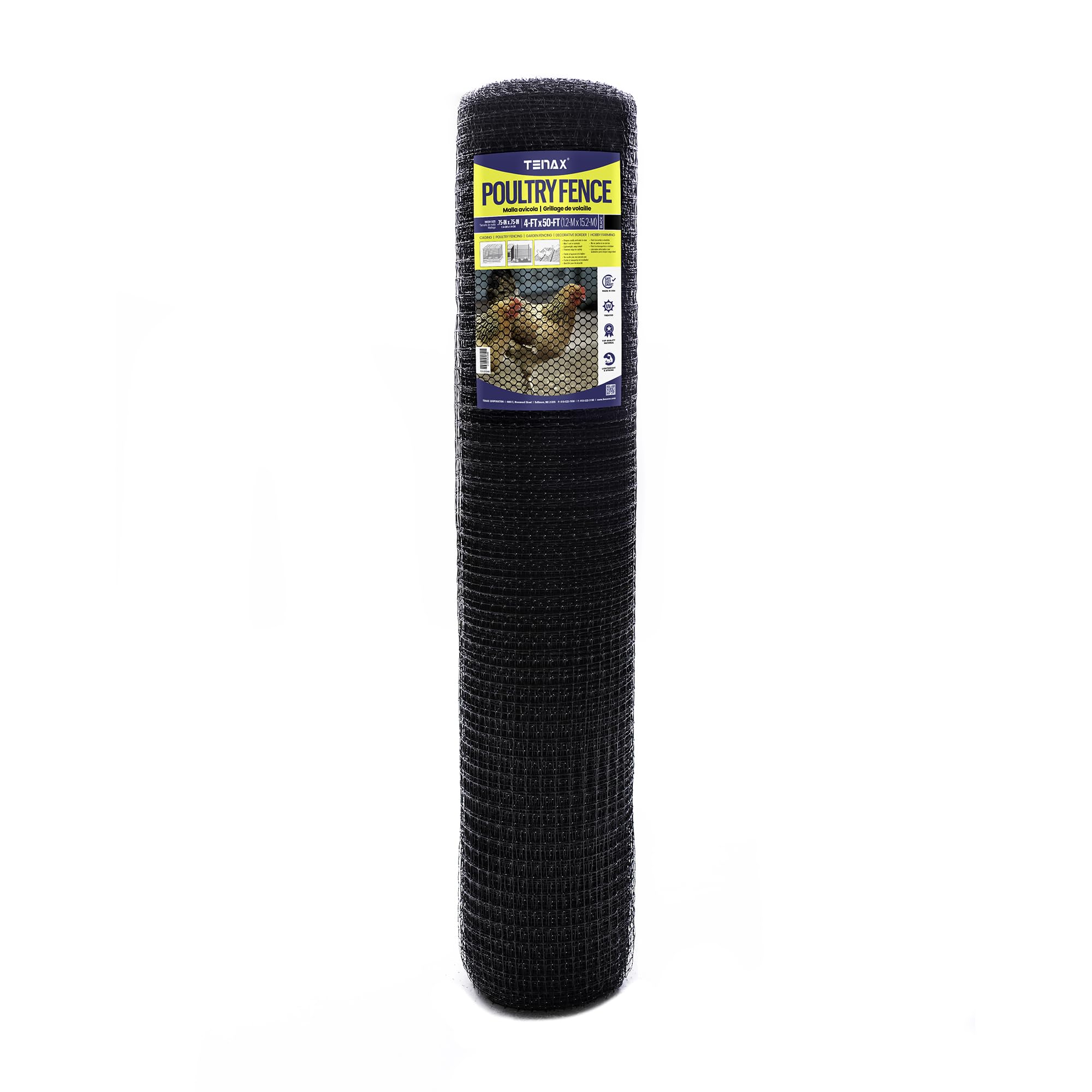
Stiff, rigid netting that you can roll up and reuse next year.
Unlike floppy nylon nets that turn into a bird’s nest when you store them, this Tenax netting is made from stiff polypropylene (a type of plastic) that holds its shape. It measures 7 ft by 100 ft with a 0.63-inch by 0.75-inch mesh. The larger openings are aimed at deer and bigger animals rather than tiny birds, so bees and pollinators have no trouble getting through.
Buyers who have used it for multiple seasons report that it is easy to roll up and reinstall each year. One reviewer called it “thicker than store-bought, easier to see and work with.” Another noted they have used the same piece for four years with 8 ft metal stakes and zip ties, and the deer have avoided their azaleas and rhododendrons the entire time. At 128 oz, it is heavier than most netting in this guide, which is a trade-off: it is sturdier but requires help to hang the full 7-ft height.
The main downside is the price, which sits at a premium compared to other options. Some owners note the cut ends are poky and need trimming to avoid snagging on plants or clothes.
Built to last
- Rigid polypropylene holds shape for easy seasonal storage
- Larger mesh openings let pollinators through
- Multiple verified 4-year stories of reusability
Tough to love
- Premium price compared to similar-sized netting
- 7-ft height requires two people to install
- Cut edges are poky and need manual trimming
Choose this for: A permanent-looking garden perimeter that you can take down, store, and reuse for 3-4 years without feeling frail.
skip it if: You need to keep out tiny birds or chipmunks — the larger mesh gaps let smaller pests in.
4. FEED GARDEN Deer Netting, 7 x 200 Feet
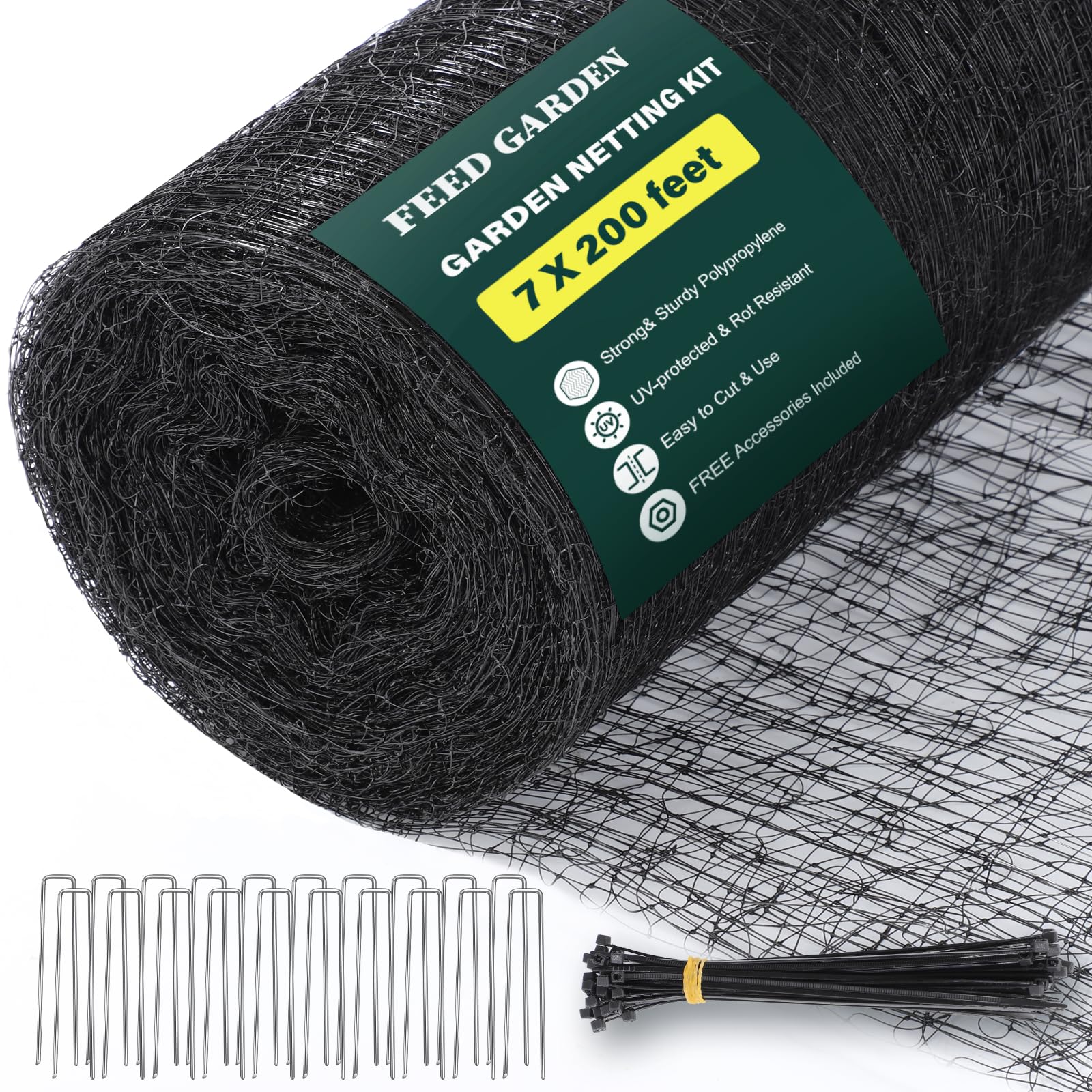
The roll that keeps unrolling — 200 feet for the gardener who hates coming up short.
If your garden runs the length of a small farm, this netting saves you from buying two rolls. At 7 x 200 ft, the FEED GARDEN netting provides a massive continuous barrier. The 3/4-inch fine mesh blocks deer and rabbits while still allowing pollinators to access your flowers. One reviewer noted it had a “practically invisible” look once installed.
According to verified reviews, it keeps deer and rabbits off peppers and tomatoes effectively. The polypropylene (PP) material is described as “durable enough that I had to cut it and it doesn’t tear easy.” The kit includes 20 metal landscape staples and 50 zip ties, which is a generous hardware bundle compared to many competitors. It weighs only 1.4 kg despite the enormous length, making it manageable to carry around the yard during setup.
One buyer mentioned it is “a little hard to work with until you get a system down.” That is typical for any large netting roll — plan for an extra 15-20 minutes of untangling and arranging on your first try.
Best for big plots: If you have a long fence line, multiple raised beds, or an orchard that needs a full wrap, this 200-ft roll eliminates patching and splicing that shorter rolls require.
Ideal for: Gardeners with large properties who want a single continuous barrier without seams where animals might squeeze through.
A heads-up: The 200-ft length is unwieldy for small beds — you will have leftover material to store if your garden is under 50 square feet.
5. ORIVOGAS Plastic Mesh Fence, 4x75ft
Short fence for low beds and tight budgets without cutting corners on strength.
At 4 ft tall and 75 ft long, this is the version of the ORIVOGAS fence for lower-lying gardens where you do not need a 6-ft wall. It uses the same premium 55 gsm HDPE weave as the taller model — at 55 gsm versus standard lightweight netting at 6-10 gsm — and the 5/8-inch square mesh keeps deer, dogs, and birds at bay. The reinforced edges with built-in ropes let you tension the fence easily, and reviewers report that no deer got in after installation.
Buyers specifically note that the heavier gauge “stretches like spandex to minimize sagging around curves.” That is a real advantage if your garden bed has an irregular shape. It covers 75 ft, which comes up short compared to the JUNKOGO at 100 ft, but the material density means you are less likely to need repairs mid-season. The kit includes 50 zip ties and 8 ground stakes.
A couple of owners noted that the netting unravels slightly when cut, so plan to use a flame or tape on the cut edge. It weighs 3.4 lbs, which is manageable but not as lightweight as cheaper polypropylene nets.
Good reasons to pick it
- Heavy 55 gsm material resists tearing through the season
- Reinforced channels with drawstrings prevent drooping
- Ideal height for most vegetable garden beds
Watch out for
- 4-ft height is too short for tall crops like sunflowers or fruit trees
- Cut edges unravel—needs extra sealing
Go with this if: Your garden is low to the ground — raised beds, strawberry patches, and compact vegetable rows fit perfectly with the 4-ft height.
Hold off if: You have tall fruit trees or need to wrap a full deer perimeter — the 4-ft wall is below a deer’s jump clearance.
6. JUNKOGO Bird Netting 7.5×100 Ft

Woven net that can handle over 100 lbs without sagging or tearing.
This netting made owners mention “20 min vs hours for cheap hardware net” during installation. The woven HDPE construction weighs 1 oz/m² (28g/m²), which is a clear step above the thin 6-8g/m² nets that feel like spiderwebs. It can support over 100 pounds and stretches with unique elasticity that keeps it tight over frames. The 1/2-inch mesh is small enough to block the majority of birds, pigeons, and even small mammals like squirrels and raccoons without trapping them.
Buyers mention it works great on blueberry bushes and is stronger than standard bird netting. One reviewer replaced a hail-damaged net on a PVC tomato cage and found this netting “doesn’t tear.” Compare the dimensions directly: the JUNKOGO measures 7.5×100 ft, compared to the ORIVOGAS option at 4×75 ft. The only durability concern is unknown long-term sun resistance, but customers note that if it lasts four seasons, it is far better than standard bird netting that gets brittle after three years.
You are paying for stronger material, not empty space.
Best for: Gardens with birds and small animals — the 1/2-inch mesh and high tear strength make it a no-fuss solution for berry bushes, fruit trees, and raised beds.
A fair warning: The diamond-shaped mesh changes dimensions depending on stretch direction, so measure your area carefully before cutting.
7. ATICCA Heavy Duty Bird Netting 7.5×65 Ft
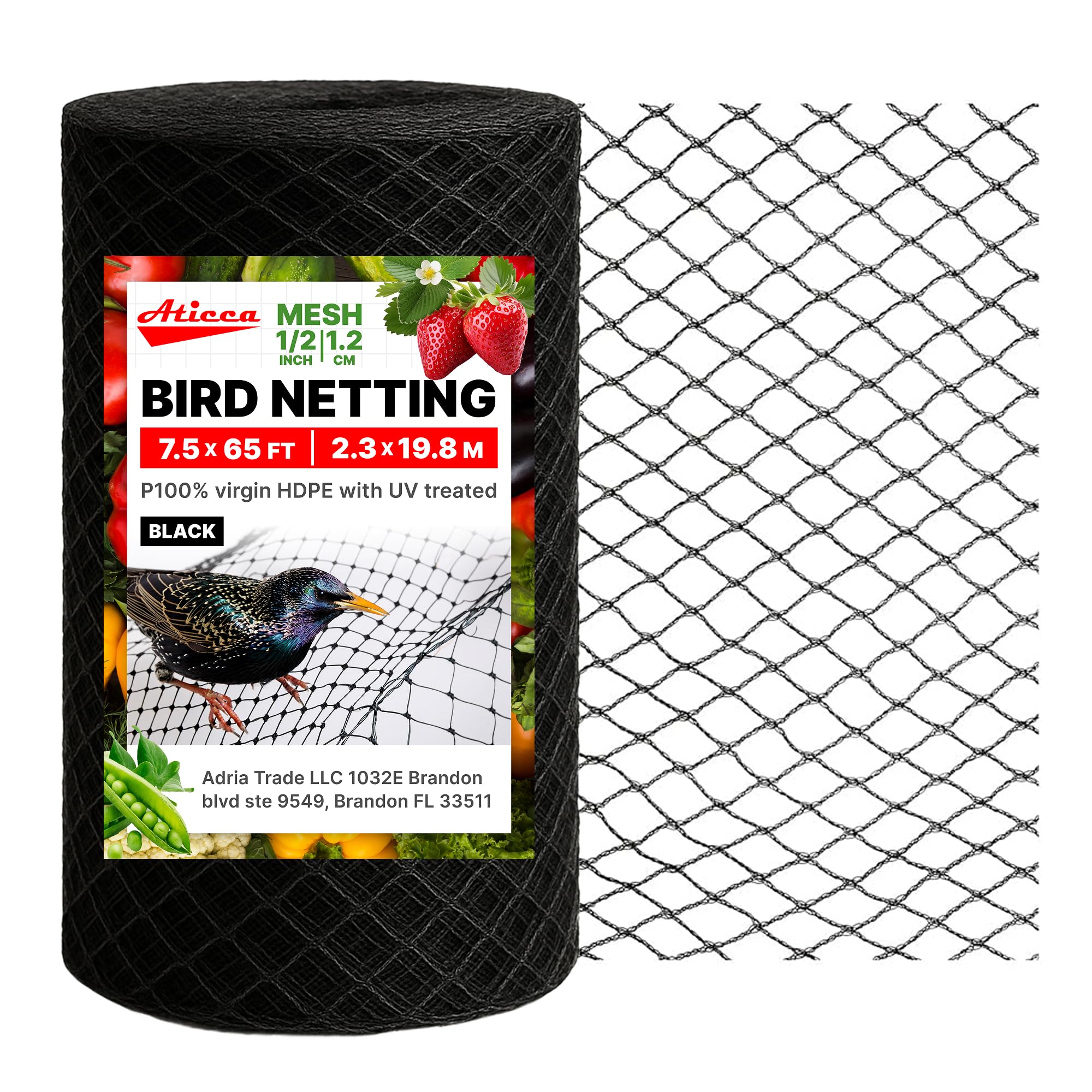
Nylon alternative that handles deer, birds, groundhogs, and squirrels out of one box.
ATICCA uses UV-resistant nylon instead of HDPE, which gives this netting a slightly different feel — it is softer and less prone to creasing during storage. The 1/2-inch mesh holes are small enough to stop even tiny birds. One owner reported that a groundhog that had been destroying seedlings was completely confused by the netting. The kit includes 10 durable plastic stakes, so you can set it up immediately without buying extra hardware.
Measuring 7.5×65 ft (2.3×19.8 meters), it covers less area than the 100-ft rolls in this guide, but the nylon material is lighter at 1.48 kg, making it easier to handle during solo installation. A reviewer who used it on fig trees called it “heavy duty, just like described.” Buyers also mention it works well on raised-bed frames because the width fits standard bed sizes without much wasted netting — one gardener called it “senior approved” for ease of use.
The one consistent complaint is that the netting tangles with everything if you are not careful — unroll it slowly and methodically. A few buyers expressed minor concern about birds potentially getting caught in the mesh, though no incidents were reported.
Why it stands out
- UV-resistant nylon is soft and easy to fold for storage
- 10 plastic stakes included — ready to install from the start
- Versatile — works for deer, groundhogs, and birds
Where it gets tricky
- Tangles very easily if not handled carefully
- Smaller coverage area (65 ft) vs competitors
Ideal for: Home gardeners with a few raised beds or fruit trees who want a lightweight, multi-pest option that includes stakes.
Not ideal for: Large perimeter fences or anyone who gets impatient with tangles — this net requires slow, careful unrolling.
Understanding the Specs
Mesh Size: The Hole That Decides Everything
This is the most important spec. The number (1/2 inch, 3/4 inch, 5/8 inch) tells you the size of the opening. A 1/2-inch mesh is small enough to stop sparrows, chipmunks, and even tiny hummingbirds. A 3/4-inch or 5/8-inch mesh stops deer and rabbits but lets bees and butterflies pass through freely. Pick your mesh based on what you are trying to keep out — if you only have deer problems, the larger holes save you money and look less obtrusive.
Material Weight (gsm or oz/yd²): The Real Durability Number
Manufacturers list a material type (HDPE — high-density polyethylene, nylon, or polypropylene) but the weight per square meter (gsm — grams per square meter) or ounce per square yard (oz/yd²) tells you how thick the strands are. Standard lightweight netting is around 6-10 gsm — it feels thin and can tear under wind or animal pressure. Heavy-duty netting runs from 25 gsm up to 55 gsm, compared to standard netting at 6-10 gsm. A higher number means better UV (ultraviolet) resistance and more seasons of use before the netting gets brittle and cracks.
FAQ
Can deer netting also keep out rabbits and birds?
Will deer netting hurt the animals?
How tall should deer netting be to stop deer from jumping over?
Does the netting block sunlight and rain from reaching my plants?
How do I install deer netting without it sagging?
Will the netting last through winter?
Can I cut the netting to fit a specific shape?
Do I need to remove the netting every time I harvest?
How do I store deer netting between seasons?
What is the difference between nylon and HDPE deer netting?
Final Thoughts: The Verdict
If you want one dependable pick, the deer netting for garden winner is the Vocray 7.5×100 Ft because it balances wide coverage, a tight 1/2-inch mesh that stops all pest sizes, and verified durability through harsh weather. If you want a net that you can reuse year after year without worrying about tangles, grab the Tenax 7×100 Ft. And for massive coverage that wraps a whole orchard in one go, the FEED GARDEN 7×200 Ft is your best bet.
How We Picked
We do not accept paid placement. Every pick is matched to a real buyer and a real use-case; we do not hands-on test units.
Sources & Methodology
Specifications: manufacturer listings and product documentation. Review insights: verified customer reviews, as of July 2026. Pricing: not shown on this page (it changes often); check the current price via the retailer link.
As an Amazon Associate, Lawn Gear Lab earns from qualifying purchases. This does not affect which products we feature.