
Specs are compiled from manufacturer listings and verified buyer reviews and can change over time — please confirm the key details on the product page before buying.
Your bougainvillea looks healthy — dark green leaves, sturdy vines — but it stubbornly refuses to bloom. Most gardeners hit this wall because standard all-purpose fertilizers push leaf growth at the expense of flowers. The right plant food for bougainvillea shifts the chemistry to deliver the specific nutrient profile needed for brilliant papery bracts.
I’m Rikta — the founder and writer behind Lawn Gear Lab. This guide is built by comparing the manufacturers’ published specifications and the patterns across verified customer reviews, so you get each pick’s real strengths and trade-offs instead of marketing spin.
Whether you prefer a ready-to-use liquid or a slow-release granular, the best plant food for bougainvillea delivers more blooms, stronger color, and vigorous growth without guesswork.
Quick Picks
- Prevegenics Bougainvillea Liquid Fertilizer (32 fl oz) — Best Value
- Earth Science Fast Acting Sulfur Granules (5 lb) — pH Fixer
- Espoma Organic Rose-Tone (4 lb, Pack of 2) — Organic Choice
- Bougainvillea Fertilizer – TPS Nutrients (32 fl oz) — Best Overall
- Bloom City Acid-Loving Plant Fertilizer (32 fl oz) — Acid Specialist
- BGI Fertilizers BOUGAIN (10 lb Bag) — Blooms Guaranteed
How To Choose The Best Plant Food For Bougainvillea
Match your fertilizer to your bougainvillea’s growth stage, soil type, and feeding frequency to save time and boost blooms.
Liquid vs. Granular Formulas
Liquid fertilizers get absorbed fast — you see results within days, but you have to apply them more often (weekly or bi-weekly). Granular formulas release nutrients slowly over weeks, so you apply less frequently (once a month is typical). If you have a large garden or multiple plants, granular saves you time. If you want precise control and quick correction of a struggling plant, liquid wins.
Iron Content Matters for Color
Bougainvillea need iron to produce deep, vibrant bract colors (what most people call the flowers). Some formulas include 5% iron or more to keep those reds, purples, and oranges intense. Low-iron fertilizers often produce pale, washed-out blooms.
Check the Target Species on the Label
Not every product lists “bougainvillea” on the bag — and that’s fine as long as it’s formulated for acid-loving, flowering plants. Look for a formula that supports bloom production rather than just leafy growth (higher phosphorus, moderate nitrogen).
Quick Comparison
| Model | Best For | Form | Weight / Volume | Unit Count | Amazon |
|---|---|---|---|---|---|
| #5 Bloom City Acid-Loving Plant Fertilizer | Acid-loving garden plants | Liquid | 1 Quart | 32 fl oz | Amazon |
| #6 BGI Fertilizers BOUGAIN | Serious bougainvillea bloomers | Granules | 10 lb | — | Amazon |
| #4 Bougainvillea Fertilizer (TPS Nutrients) | Reviving struggling plants | Liquid | 32 fl oz | 32 fl oz | Amazon |
| #1 Prevegenics Bougainvillea Liquid Fertilizer | Quick bloom boosting | Liquid | 32 fl oz (1.28 kg) | 32 fl oz | Amazon |
| #3 Espoma Organic Rose-Tone | Organic flowering plant feed | Granules | 4 lb (pack of 2) | 128 oz | Amazon |
| #2 Earth Science Fast Acting Sulfur | Lowering soil pH | Granules | 5 lb | 80 oz | Amazon |
In‑Depth Reviews
1. Prevegenics Bougainvillea Liquid Fertilizer (32 fl oz)
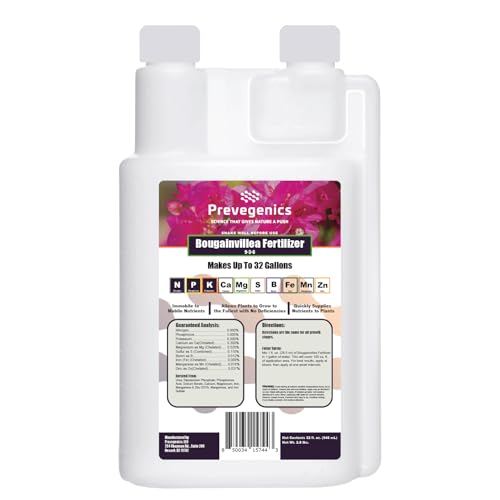
A straightforward liquid that turns green vines into bloom machines within a month.
You get a 32-fluid-ounce bottle of ready-to-use liquid that targets exactly what bougainvillea need — bigger blooms and lush growth. No mixing, no measuring guesswork: just apply and watch the change. Buyers report that “after just one month the blooms are POPPIN!”
One bottle covers a typical garden for about one to two months depending on the size of your setup, according to customer feedback. The liquid form means nutrients hit the roots fast, making it ideal if your bougainvillea is lagging behind and you want visible improvement within weeks.
The catch for heavy gardeners: at 32 fluid ounces, multiple plants will burn through it quickly, so budget for regular repurchases if you have a large collection. It’s priced for the home gardener with a few plants rather than a whole landscape.
Bloom results that speak: Five-star reviews consistently mention dramatic bloom increase within one month, making this a reliable entry-level pick for anyone who wants quick, visible payoff without complicated feeding schedules.
Reach for this if: You want a no-mix liquid that delivers more bougainvillea blooms within weeks, especially if you are new to feeding these plants.
Look elsewhere if: You have ten or more mature plants — the bottle is modest for large-scale use and you will repurchase often.
2. Earth Science Fast Acting Sulfur Granules (5 lb)

The sulfur fix when your bougainvillea turns yellow from alkaline soil.
If your bougainvillea has yellowing leaves and refuses to bloom despite regular feeding, the problem is often soil pH that is too high. This is not a fertilizer in the traditional sense — it lowers pH fast so your existing fertilizer works again. The 5-pound bag (80 ounces) is a 25% bigger volume than the Espoma Rose-Tone’s 4-pound bag, giving you more material per purchase.
Earth Science uses patented Nutri-Bond Technology, which means the granules bond with the soil to stay put rather than washing away with the first rain. Owners mention “fast-acting sulfur quickly fixes soil acidity for acid-loving plants like mountain laurel, citrus, and azaleas.” One hydrangea grower noted their plants “really perked up” after application.
Do not expect a bloom explosion from this alone — it is a soil conditioner, not a complete feed. You will still need a balanced bougainvillea fertilizer. The granules are slow to dissolve for some users (one reviewer noted “many waterings to dissolve”), so plan ahead rather than expecting an overnight pH shift.
Why reach for this
- Safe for people and pets — walk on the lawn immediately after
- Works on any grass type and acid-loving plants
One downside
- The granules can be slow to dissolve; expect a few watering cycles before full effect
Who should buy this: If you already have a good fertilizer but your bougainvillea looks off-color, fix the pH first with this sulfur treatment.
Who should skip it: If your bougainvillea already blooms well and has healthy green leaves, you do not need a pH adjuster.
3. Espoma Organic Rose-Tone (4 lb, Pack of 2)

An organic granular that feeds bougainvillea and roses with slow-release nutrition.
Espoma lists bougainvillea on the label alongside roses, viburnum, and clematis, so you know it is made for these plants. The 4-3-2 NPK (nitrogen-phosphorus-potassium ratio) is low but steady, and the added 5% calcium strengthens cell walls so stems stay sturdy. Each bag is 4 pounds, and you get two bags in this pack — 128 ounces total, compared to the Earth Science Sulfur’s 80-ounce bag, making it a bulk value buy.
The granules use Espoma’s exclusive Bio-tone formula, a blend of natural organic ingredients that feed soil microbes (tiny organisms that help roots absorb nutrients) as well as the plant. One buyer mentioned the fertilizer “improved rose health, greenness, and bud count.” Another said their roses were “growing very fast this year and starting to bloom.” Apply it once a month from May through September around the drip line (the circle under the outermost branches), then water it in — no mixing required.
It does have a noticeable odor — some buyers mention it stinks — but the bloom results seem to outweigh the smell for most gardeners.
Organic feeding made simple: This is a solid pick if you want an organic, no-mix granular that supports bougainvillea without synthetic additives. The 128-ounce total means you feed for multiple months on one purchase.
Best for: Organic gardeners who want a slow-release granular that feeds bougainvillea, roses, and other flowering plants with one product.
Skip if: The smell might bother you — also, if you prefer fast-acting liquid results, this gradual release may feel slow.
4. Bougainvillea Fertilizer – TPS Nutrients (32 fl oz)
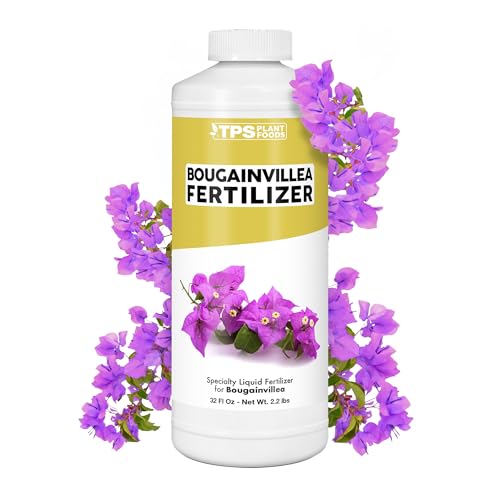
The liquid that brought a frost-damaged bougainvillea tree back to full bloom.
This is one of the few products on the market built specifically for bougainvillea by name, made by a USA-based manufacturer (TPS Nutrients). The 32-ounce liquid targets three outcomes: more blooms, brighter bract color, and fuller growth. It is designed for outdoor use on trellises, fences, containers, and garden beds — exactly where most bougainvillea live.
Customers note striking results: one said a frost-damaged tree that was “brown and near-dead after 28°F frost” revived with “green growth and many new flowers” after three treatments over six weeks. Another user had healthy green leaves but zero blooms; after 20 days of using this, they had “lots of blooms.” A third buyer bought it twice, moving to the larger size, calling it “key to vibrant blooms with daily watering and good drainage.”
If your bougainvillea is already blooming at a decent level, the improvement might not be as dramatic — this fertilizer shines brightest when a plant is struggling or has stopped flowering entirely.
Why it stands out
- Proven recovery for frost-stressed or near-dead plants — real reviews document it
- Targets blooms, color, and root growth in one formula
The nuance
- If your bougainvillea already blooms well, the change may be subtle rather than dramatic
Confident verdict: This is the pick for anyone who owns bougainvillea and wants a liquid that consistently revives bloom production, especially on stressed or non-flowering plants.
One caution: It works best with good drainage and consistent watering — it is a fertilizer, not a fix for poor growing conditions.
5. Bloom City Acid-Loving Plant Fertilizer (32 fl oz)

An acid-loving formula that revived 8-year-old blueberry bushes and works on bougainvillea too.
Bougainvillea thrive in slightly acidic soil (pH 5.5–6.5), and that is exactly the range this liquid fertilizer targets. Bloom City’s formula is designed for blueberries, azaleas, rhododendrons, grapes, and raspberries — but since bougainvillea share the same acid-loving preference, it works beautifully. The 32-ounce liquid is organic-certified and made in the USA.
One owner reported it “revived 8-year-old blueberry bushes from poor production; healthier, fuller, more vigorous growth with improved leaves and yield.” Another noted their azaleas showed visible improvement after just one use. The liquid is easy to mix (2-4 tsp per gallon of water) and the dark brown formula pours cleanly through a small puncture in the safety seal.
The main limitation: it is not bougainvillea-specific, so if you want a product that guarantees NPK ratios tuned for bloom maximization, you may find a more targeted formula elsewhere. It is an excellent general acid-loving feed but not a dedicated bloom booster.
A versatile soil acidifier + feed: If you grow a variety of acid-loving plants (blueberries, azaleas, bougainvillea), this one bottle covers all of them with one mixing ratio.
Reach for this if: You have a mixed garden of acid-loving plants and want one liquid that works for bougainvillea, blueberries, azaleas, and hydrangeas alike.
Look elsewhere if: You only grow bougainvillea and want a fertilizer specifically labeled for them with a bloom-boosting guarantee.
6. BGI Fertilizers BOUGAIN (10 lb Bag)
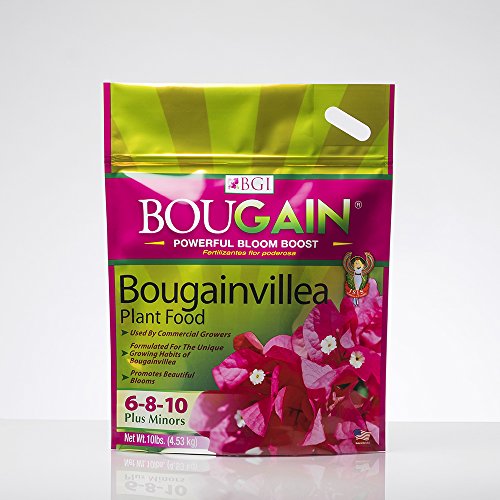
The granular from the largest bougainvillea nursery in the country — formulated by the experts.
This is the serious grower’s choice. BGI (Bougainvillea Growers International) is the largest bougainvillea nursery in the United States, and they created this 10-pound granular formula specifically for their own plants before selling it to the public. The key differentiator is 5% iron content — the highest on this list — which is what gives bougainvillea those deep, vivid bract colors that look almost unreal.
One buyer who used 1 cup per plant monthly reported: “New bougainvilleas took off with bright green leaves and heavy blooms. Old plant revived with vibrant flowers and healthy growth.” Another reviewer said “this is the ONLY bougainvillea fertilizer that works” — pruning and feeding every other month gave them “luscious blooms from April to November.” The once-a-month granular application is easy: sprinkle around the base, water it in, and let the slow release do the work. skip it if you prefer liquid feeding or need a faster-acting formula.
One important note: one reviewer applied it to 4 out of 5 bougainvilleas and saw no blooms, possibly due to too much shade or unusual year conditions. No fertilizer overcomes bad placement or extreme weather.
Why it leads
- 5% iron content directly targets bract color — the 10 lb bag lasts months
- Formulated and used by BGI, the country’s largest bougainvillea nursery
Keep in mind
- It is the most expensive upfront purchase — but per-feeding cost is lower than liquids
- Positioning and weather matter — no product forces blooms if conditions are wrong
Confident verdict: This is the premium pick for serious bougainvillea owners who want the highest iron content and a once-a-month granular schedule. The 10 lb bag feeds multiple plants for an entire growing season.
Best if: You have 3+ bougainvillea plants and want the most cost-effective, nursery-grade granular on the market.
Understanding the Specs
NPK Ratio (Nitrogen-Phosphorus-Potassium)
This three-number code tells you the relative concentration of the three major nutrients. For bougainvillea, you want a higher middle number (phosphorus) to encourage blooms rather than leaves. A 4-3-2 ratio, like the Espoma Rose-Tone, is balanced for flowering. A ratio leaning too heavily on nitrogen produces lots of green vines and few flowers.
Iron Content for Bract Color
Iron is the secret to those deep, saturated reds, purples, and oranges. Bougainvillea are heavy iron feeders — the BGI BOUGAIN formula includes 5% iron, while general-purpose fertilizers often have little or none. If your bougainvillea blooms pale or washed out, low iron is the most likely culprit.
FAQ
How often should I feed my bougainvillea?
Can I use rose food on bougainvillea?
Why are my bougainvillea leaves yellow even after feeding?
Is it better to use liquid or granular fertilizer for bougainvillea?
Will Bloom City Acid-Loving Fertilizer work on bougainvillea even though it is not labeled for them?
How much fertilizer does each bougainvillea plant need per feeding?
Can I use too much fertilizer on bougainvillea?
Do I need to stop feeding bougainvillea in winter?
Final Thoughts: The Verdict
For most buyers, the best plant food for bougainvillea winner is the Bougainvillea Fertilizer from TPS Nutrients because it combines a bougainvillea-specific liquid formula with proven real-world recovery results (including reviving frost-damaged plants). If you want a one-month granular with the highest iron content on the market, grab the BGI Fertilizers BOUGAIN. And for an organic, multi-purpose granular that feeds bougainvillea alongside roses and other flowering plants, the Espoma Organic Rose-Tone is your best bet.
How We Picked
We do not accept paid placement. Every pick is matched to a real buyer and a real use-case; we do not hands-on test units.
Sources & Methodology
Specifications: manufacturer listings and product documentation. Review insights: verified customer reviews, as of July 2026. Pricing: not shown on this page (it changes often); check the current price via the retailer link.
As an Amazon Associate, Lawn Gear Lab earns from qualifying purchases. This does not affect which products we feature.