
Specs are compiled from manufacturer listings and verified buyer reviews and can change over time — please confirm the key details on the product page before buying.
Getting heavy, sweet squash and crisp, non-bitter cucumbers starts underground — with the right balance of nitrogen for leafy growth and potassium for fruit quality. The wrong fertilizer pushes only leaves or, worse, burns roots. This guide cuts through the shelf clutter to six formulas that deliver real results for your vine crops.
I’m Rikta — the founder and writer behind Lawn Gear Lab. This guide is built by comparing the manufacturers’ published specifications and the patterns across verified customer reviews, so you get each pick’s real strengths and trade-offs instead of marketing spin.
Whether you grow in rows, raised beds, or containers, the right fertilizer for squash and cucumbers depends on your soil, your schedule, and whether you prefer a quick liquid boost or a slow-release granular feed.
Quick Picks
- Greenway Biotech, Inc. Cucumber Fertilizer 8-16-36 — Best Overall
- FoxFarm Happy Frog Tomato & Vegetable Fertilizer 5-7-3 — Top Performer
- Cz Garden Supply 5-10-10 Tomato & Vegetable Fertilizer — Best Value
- Great Big Tomatoes and Vegetables Liquid Fertilizer Booster — Premium Pick
- Alaska Fish Fertilizer OMRI Listed 5-1-1 — Organic Staple
- The Grow Co 1 Gallon Organic Fish Emulsion Fertilizer 2-3-1 — Budget Champion
How To Choose The Best Fertilizer For Squash And Cucumbers
Squash and cucumbers are heavy feeders. They pull nitrogen for big leaves, phosphorus for roots and blooms, and a lot of potassium for firm, sweet fruit without bitterness. A one-size-fits-all garden fertilizer might work, but a formula tuned to vine crops gives you better harvests with fewer problems.
N-P-K Ratio: Balance Over Blast
A ratio like 5-10-10 or 8-16-36 gives you higher phosphorus and potassium, which support flowering and fruit development. A high-nitrogen formula (like 5-1-1) drives leaf growth, which is great early in the season but can hurt fruit production if used too late.
Granules vs. Liquids
Granular fertilizers release nutrients slowly and build the soil over weeks. You apply them at planting and side-dress. Liquids (water-soluble powders or ready-to-use concentrates) feed immediately, making them ideal for a quick mid-season correction or for hydroponic setups.
Micronutrients and Calcium
Calcium helps prevent blossom-end rot in squash. Chelated micronutrients like iron, zinc, and manganese — especially in water-soluble forms — stay available to plant roots in a wide pH range (pH 4–9). This matters more for cucurbits than for many other garden vegetables.
Organic Certification
If you avoid synthetic chemicals, look for an OMRI-listed (Organic Materials Review Institute) label on the bag or bottle. Fish-emulsion and fish-hydrosylate fertilizers are a trusted natural choice, though they can have a strong smell that lasts a day before fading.
Quick Comparison
| Model | Best For | NPK Ratio | Form | Coverage | Amazon |
|---|---|---|---|---|---|
| Greenway Biotech Cucumber | Vine crop specialists | 8-16-36 | Powder | 100 sq ft | Amazon |
| FoxFarm Happy Frog | Vigorous fruit production | 5-7-3 | Granules | Full | Amazon |
| Great Big Tomatoes & Vegetables | Fruit weight and soil health | — | Liquid | Full | Amazon |
| Cz Garden 5-10-10 | Balanced phosphorus and potassium | 5-10-10 | Granules | Resealable | Amazon |
| Alaska Fish Fertilizer 5-1-1 | Organic nitrogen boost | 5-1-1 | Liquid | 1000 sq ft | Amazon |
| The Grow Co Fish Emulsion | Balanced organic feeding | 2-3-1 | Liquid | 160+ Gallons | Amazon |
In‑Depth Reviews
1. Greenway Biotech, Inc. Cucumber Fertilizer 8-16-36
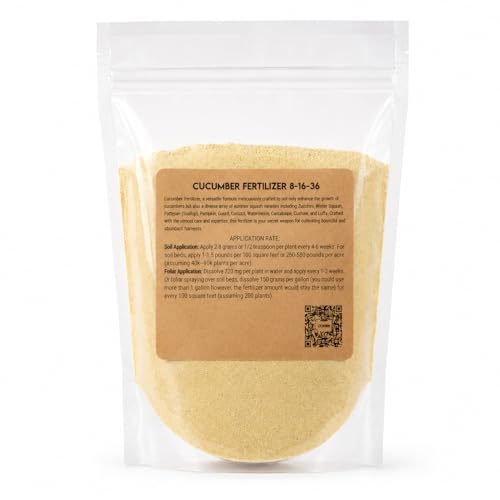
The powder that targets vine crops directly without guesswork.
This is the most targeted formula in the list — an 8-16-36 N-P-K ratio designed specifically for cucumbers, melons, squash, zucchini, and pumpkins. The very high potassium level (36%) is the key: it prevents bitter fruit and malformed cucumbers while promoting crisp texture and extended shelf life. That spec alone makes it worth a look if you have had bitter pickles or hollow squash in the past.
The powdered form dissolves fully in room-temperature water, so it works for soil drench, foliar spray, drip irrigation, and hydroponic methods like NFT (Nutrient Film Technique), DWC (Deep Water Culture), and Dutch bucket systems without clogging nozzles. The 1-pound bag covers 100 square feet — a much smaller area than the Alaska Fish Fertilizer (which covers 1000 square feet from a 115-ounce bottle), but the concentration makes up for it. The micronutrient package includes iron, manganese, zinc, and copper in EDTA-chelated form (meaning they stay available to plants across a pH range of 4 to 9), plus boron and molybdenum.
Every batch is independently tested for heavy metals and is registered with the California Department of Food and Agriculture. One formula handles slicing, pickling, and English cucumbers, plus all summer and winter squash, pumpkins, and even specialty crops like Luffa.
Where It Excels
- Potassium-heavy 8-16-36 ratio directly prevents bitter fruit
- 100% water soluble — no clogging in drip lines or sprayers
- Chelated micronutrients stay available in variable soil pH
Where It Falls Short
- Only a 1-pound bag (16 ounces) — less than the Cz Garden 5-10-10’s 64 ounces
- Requires mixing; not a grab-and-pour liquid
Reach for it if: You grow cucurbits seriously — squash, cucumbers, melons — and want a formula built for their unique potassium and micronutrient needs.
Look elsewhere if: You prefer a low-maintenance granular feed or only want organic inputs (this is a synthetic water-soluble powder).
2. FoxFarm Happy Frog Tomato & Vegetable Fertilizer 5-7-3

The granular booster that also feeds the soil biology beneath your plants.
FoxFarm’s 5-7-3 blend is designed for vigorous feeders — tomatoes, peppers, berries, and of course squash and cucumbers. what separates it is the addition of calcium (which helps prevent blossom-end rot in squash) and mycorrhizal fungi (a beneficial root fungus that improves nutrient and water uptake). It is a 4-pound bag of granules, so you apply it at planting and side-dress as the season goes.
Buyers consistently praise the results. One reviewer wrote that “it turned tiny cherry tomato sprig into a tomato-producing tree.” While that was a tomato, the same mechanism — calcium plus mycorrhizae supporting fruit development — applies directly to squash and cucumber plants that need steady nutrition through the flowering and fruiting stages.
The granular form means it releases slowly, which is great for busy gardeners who do not want to mix every week. But if you need an immediate correction for a nitrogen-starved plant, a liquid formula like the Greenway Biotech 8-16-36 would act faster.
Stands Out For
- Added calcium directly targets blossom-end rot prevention
- Mycorrhizal fungi boost root efficiency long-term
- Easy-to-apply granules — no mixing required
Not Ideal For
- Lower potassium (3) than specialty vine crop formulas
- Slower to act compared to a water-soluble powder
Choose this if: You want a single nutrient-rich granular fertilizer that builds your soil biology while feeding your squash and cucumbers through the whole season. It is better than the Cz Garden for gardeners who want root health built in.
The trade-off: If you already have blossom-end rot and need fast potassium and calcium, a liquid option will correct it faster.
3. Cz Garden Supply 5-10-10 Tomato & Vegetable Fertilizer

The budget-friendly granular that delivers extra iron and a phosphorus boost.
This 5-10-10 granular fertilizer gives you a solid mid-range ratio for flowering and fruiting vegetables. The phosphorus and potassium are both at 10, which supports root development and fruit quality. What makes it different from a basic garden fertilizer is the added 2% iron — a micronutrient that helps prevent yellowing between leaf veins (a common issue in squash plants under stress).
The 64-ounce pouch is resealable, and the manufacturer recommends 1–2 tablespoons per plant. That is a straightforward, low-maintenance routine. At this price point, you get a lot of product for the money — the 64-ounce unit count is four times larger than the Greenway Biotech 16-ounce bag. Keep in mind that this is a general vegetable formula, not specifically tailored to cucurbits like the Greenway option.
It is also made in the USA and uses granular form, so it works well for side-dressing around established plants or mixing into soil at planting time.
Why You’d Pick This
- 64-ounce bag gives generous value per pound compared to smaller specialty bags
- 2% iron helps prevent common yellowing in squash leaves
- Easy pour-and-store resealable pouch
The Catch
- No added calcium or mycorrhizal fungi for blossom-end rot prevention
- Not water-soluble; acts gradually in soil
Smart buy for: Gardeners who want a reliable all-round granular feed with extra iron, without spending for a brand name. But if bitter cucumbers are your main problem, the Greenway Biotech’s 36% potassium is a much stronger solution.
skip it if: You need a high-potassium formula specifically to prevent bitter cucumbers — the 10% potassium here is a third of the Greenway’s 36%.
4. Great Big Tomatoes and Vegetables Liquid Fertilizer Booster
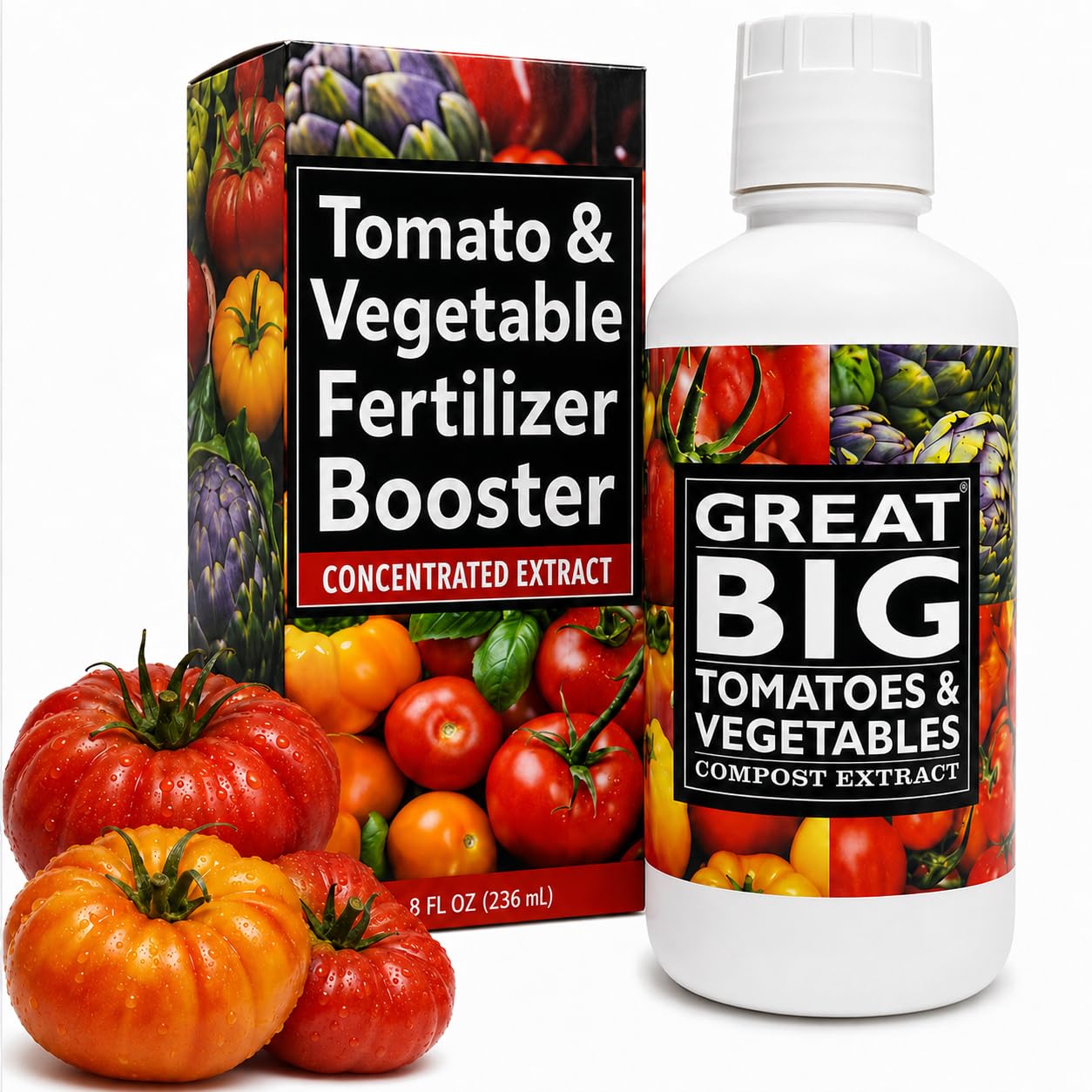
A liquid compost extract that makes soil nutrients plant-available again.
This is not a standard N-P-K fertilizer. It is an organic liquid compost extract with bioavailable humic acid (from leonardite) and kelp seaweed, delivering over 70 chelated trace minerals. Instead of feeding the plant directly with synthetic salts, it open up nutrients already in your soil. The manufacturer recommends applying one tablespoon per pint of water alongside your usual organic fertilizer.
The 32-ounce bottle is much smaller than the Alaska Fish Fertilizer’s 115-ounce jug (a 3.6x gap in liquid volume). But the focus here is on quality of ingredients, not quantity. It is registered with the California Department of Food and Agriculture as a true organic fertilizer input. The brand claims “customer harvests reach the 1-pound-plus range” for tomatoes, and the same principle applies to squash and cucumbers — bigger fruit, stronger vines.
If your squash plants are yellowing, wilting, or producing slowly despite regular feeding, this booster may restore root access to locked-up nutrients in the soil.
Key Strengths
- Humic acid and kelp boost soil microbial activity
- Works as a supplement alongside any existing fertilizer
- Certified organic input material by CDFA
Considerations
- Lower N-P-K than a stand-alone feed; you will still need a base fertilizer
- 32-ounce bottle is small relative to fish-emulsion options
Use it when: Your soil needs a biological awakening — if plants are sluggish despite feeding, this open up what is already there. It is a specialist tool, not a daily driver.
Not for: A gardener who wants a complete all-in-one bottle they can pour directly on soil without mixing.
5. Alaska Fish Fertilizer OMRI Listed 5-1-1

The 115-ounce organic nitrogen workhorse for vigorous leafy growth.
Alaska Fish Fertilizer 5-1-1 is an OMRI-listed organic liquid made from fish. It is a staple for good reason: the high nitrogen (5) drives strong stem and leaf growth, which is critical for squash and cucumbers in the early vegetative phase. The 115-ounce jug covers 1000 square feet — a 10x coverage advantage over the Greenway Biotech powder’s 100 square feet. Applied every three weeks during the growing season, it provides steady nitrogen without burning plants.
Buyers report that they “noticed stronger stems, vibrant leaf color, and faster growth on tomatoes, peppers, basil, and cucumbers after a few applications.” The fishy smell is real — multiple reviewers call it pungent — but they also say it dissipates within a day and that the results are worth it. One long-time user calls it “a garden staple I’ve used for over 10 years.”
The catch: the 5-1-1 ratio is low in phosphorus and potassium. If you rely on this alone during flowering and fruiting, you will likely see lush leaves but fewer squash and cucumbers. Many gardeners supplement with a bloom booster like the Cz Garden 5-10-10 or use this only during the early season.
Major Plus
- Large 115-ounce bottle covers 1000 square feet — great value per feeding
- OMRI-listed organic, safe around pets and kids once watered in
- Cold-processed to preserve natural micronutrients
Major Minus
- Low phosphorus and potassium mean you must supplement for fruiting
- Strong fish smell lingers for about a day after application
Best for: Early-season feeding or as a nitrogen side-dress when squash and cucumber leaves look pale — just pair it with a higher-phosphorus feed once flowers appear. For organic growers on a budget, it is the volume king.
Not for: A single-bottle solution for the entire season; you will need another fertilizer for the fruiting stage.
6. The Grow Co 1 Gallon Organic Fish Emulsion Fertilizer 2-3-1

A full gallon of fish emulsion with more phosphorus than common fish formulas.
This 2-3-1 fish emulsion is a more balanced organic option than Alaska’s 5-1-1. The higher phosphorus (3) supports bloom and fruit development, which matters directly for cucumbers and squash once they start setting fruit. The 128-fluid-ounce jug (1 gallon) covers 160+ gallons of mixed feed at a 1:100 dilution ratio, so it stretches further than its size suggests.
The brand makes a point about the smell: “This fertilizer smells like fish because it’s made from fish!” One 50-year gardener reviewer confirmed the odor is strong but said it works well when combined with kelp and other organic inputs. Another reviewer praised the NPK ratio, calling it a “great option for fertilizer for the garden” and noting it “really helps the garden to grow strong.”
It works as a soil drench to improve soil structure and feed beneficial fungi, and it is gentle enough to use as a foliar spray. If you prefer a single organic feed with more fruiting support than fish emulsion usually provides, this gallon jug is a practical choice.
Why It Works
- 128-ounce jug with a high dilution rate (1:100) — lasts a long time
- 2-3-1 ratio gives more phosphorus than standard fish fertilizers
- Sustainably sourced and cold-pressed to retain amino acids
Watch Out For
- Thin consistency; some reviewers prefer a thicker salmon emulsion
- Strong odor that attracts pets to treated soil
Go with this if: You want an organic emulsion with a better phosphorus level for fruiting, and you are comfortable with the fishy smell. For value, its dilution ratio beats Alaska 5-1-1 on total gallons mixed.
pass on it if: Odor is a dealbreaker for indoor or small-space use — Alaska’s 5-1-1 smells fishy too, but every fish-based fertilizer carries this trade-off.
Understanding the Specs
N-P-K Ratio
The three numbers on the bag stand for nitrogen (N), phosphorus (P), and potassium (K) — in that order. Nitrogen drives leaf and stem growth. Phosphorus supports root development and flower set. Potassium is crucial for fruit quality, taste, and disease resistance. For squash and cucumbers, a formula with higher middle and last numbers (like 5-10-10 or 8-16-36) is generally better than a high-first-number lawn feed once the plants are established and fruiting.
Water Soluble vs. Granular
Water-soluble powders (like Greenway Biotech’s 8-16-36) dissolve fully and feed the plant immediately, but require mixing every time. Granules (like the Cz Garden 5-10-10) release nutrients slowly over weeks as soil microbes break them down — less work but slower results. Liquid concentrates (like the fish emulsions) are a middle ground: fast-acting but still require measuring and mixing with water. Your choice depends on whether you prefer convenience (granules) or speed (soluble).
Chelated Micronutrients
“Chelated” means the micronutrients (iron, zinc, manganese, copper) are bonded to an organic molecule that keeps them soluble and available to plant roots even in high-pH or alkaline soil. Without chelation, these nutrients can become chemically locked in the soil and unavailable to the plant. For squash and cucumbers, chelated iron is especially important to prevent interveinal chlorosis (yellowing between leaf veins).
OMRI Listing and Organic Certification
OMRI (Organic Materials Review Institute) evaluates products to confirm they meet USDA organic standards. An OMRI-listed fertilizer means it contains no synthetic chemicals, sewage sludge, or prohibited additives. If you garden organically, look for this logo on the label. The Alaska Fish Fertilizer and The Grow Co fish emulsion both align with organic practices, while the water-soluble Greenway powder is a synthetic formulation.
FAQ
Can I use a tomato fertilizer on squash and cucumbers?
How often should I fertilize squash and cucumbers?
What is the best N-P-K ratio for cucumbers?
Will fish fertilizer make my cucumbers taste fishy?
What is the difference between fish emulsion and fish hydrosylate?
Can I use a water-soluble fertilizer on squash growing in containers?
How do I prevent blossom-end rot on yellow squash?
Should I use a starter fertilizer when transplanting cucumber seedlings?
What is chelated iron and does my squash need it?
Can I mix different fertilizers together?
Final Thoughts: The Verdict
For most gardeners, the best fertilizer for squash and cucumbers is the Greenway Biotech Cucumber Fertilizer 8-16-36 because its high-potassium, water-soluble formula directly targets fruit quality and prevents bitter cucumbers with minimal effort. If you prefer a granular organic approach with calcium and mycorrhizal fungi for soil health, grab the FoxFarm Happy Frog 5-7-3. And for a large-volume organic nitrogen boost early in the season, the standout is the Alaska Fish Fertilizer 5-1-1 as a complement to your bloom feed.
How We Picked
We do not accept paid placement. Every pick is matched to a real buyer and a real use-case; we do not hands-on test units.
Sources & Methodology
Specifications: manufacturer listings and product documentation. Review insights: verified customer reviews, as of July 2026. Pricing: not shown on this page (it changes often); check the current price via the retailer link.
As an Amazon Associate, Lawn Gear Lab earns from qualifying purchases. This does not affect which products we feature.