
Specs are compiled from manufacturer listings and verified buyer reviews and can change over time — please confirm the key details on the product page before buying.
You need a blade that bites deep, a handle that absorbs shock without slipping, and a head weight that matches your strength and the size of the timber you are cutting down. Choose the wrong axe, and you get blisters, extra work, and a dull edge that turns a weekend tree-felling job into a back-breaking chore. This guide breaks down a shortlist of 4 full-size axes that handle the real work of dropping trees, from mid-range workhorses to premium German steel, so you know exactly which one earns a spot in your rack.
I’m Rikta — the founder and writer behind Lawn Gear Lab. This guide is built by comparing the manufacturers’ published specifications and the patterns across verified customer reviews, so you get each pick’s real strengths and trade-offs instead of marketing spin.
Everything you are about to read centers on what matters most when shopping for a serious axe for chopping down trees: edge retention, handle length for leverage, head weight for striking power, and the real-world durability that keeps you cutting instead of sharpening.
Quick Picks
- 1844 Helko Werk Germany Classic Expedition Felling Axe (10497) — Best Overall
- COUNCIL TOOL Jersey Axe – 3.5 lbs Felling Axe with 36″ Curved Wooden Handle (SU35J36C) — Top Performer
- COUNCIL TOOL Single Bit Axe – 3.5 lb. Dayton Pattern Axe (35DR36C) — Best Value
- Fiskars 28″ Chopping Axe, Ultra-Sharp Blade for Kindling with Ease (375581-1002) — Compact Pick
How To Choose The Best Axe For Chopping Down Trees
Picking the right axe starts with the wood you are cutting and your own build. A tree-felling axe needs a sharp, wedge-shaped bit that severs fibers with each stroke, not a wide splitting wedge meant for halving rounds. Look for a head weight between 3.5 and 4.5 pounds — lighter models reduce fatigue on smaller trees, while heavier heads deliver the punch needed for thick trunks. Handle length matters a lot: a 36-inch handle gives you more leverage and a wider swing arc, but a 28-inch handle is easier to control in tight spaces. Hickory handles absorb vibration better than steel or fiberglass, though they need occasional oiling to stay secure.
Steel type and edge geometry
High-carbon steel holds a sharp edge longer and is easier to re-sharpen in the field compared to softer stainless alloys. A forged head (shaped by hammering hot steel) is denser and tougher than a cast head. You want a blade that comes with a thin, convex grind — the geometry that lets the bit slice into wood rather than bounce off. A good factory edge saves you hours of filing before your first swing.
Handle material and fit
American hickory is the gold standard because its dense grain soaks up shock instead of sending it into your palms. A well-fitted handle should feel solid with no rattles; the head should be secured by a metal wedge and a wooden wedge driven into the eye of the head. Avoid handles with visible grain runout (the grain lines running off the side), which makes the handle likely to snap under a hard swing. Check reviews for comments on grain orientation and how the handle feels after longer sessions — that tells you if the axe is built for repeated use or just looks good in the rack.
Quick Comparison
| Model | Best For | Head Weight | Handle Length | Steel Type | Amazon |
|---|---|---|---|---|---|
| 1844 Helko Werk Classic Expedition | Heavy-duty felling (premium) | 4.5 lb | 35 in | C50 High Carbon Steel | Amazon |
| COUNCIL TOOL Jersey Axe | Versatile felling & splitting | 3.5 lb | 36 in | Forged Tool Steel | Amazon |
| COUNCIL TOOL Single Bit Dayton | All-purpose general chopping | 3.5 lb | 36 in | High Carbon Steel | Amazon |
| Fiskars 28″ Chopping Axe | Portable and lightweight work | 3.5 lb | 28 in | Alloy Steel | Amazon |
In‑Depth Reviews
1. 1844 Helko Werk Germany Classic Expedition Felling Axe (10497)

The German powerhouse that chews through thick trunks with a 4.5-pound head.
If you are dropping big trees day after day, this is the axe that matches the job. The 4.5-pound head is heavier than the Fiskars 28″ Chopping Axe at 4.5 pounds versus 3.5 pounds, and that extra mass translates into real striking force on every swing — exactly what you need for serious felling or property clearing. The head is made from German C50 high-carbon steel heat-treated to 53-56 HRC (a hardness scale that measures the steel’s resistance to wear), which holds an edge well and sharpens up easily when it does dull. The 35-inch handle is sustainably sourced Grade A American hickory, sanded to a 150-grit finish and treated with linseed oil so it feels smooth and absorbs shock without slipping.
Buyers report it is a “great axe for experienced users; 4.5 lb head” and that it comes extremely sharp from the start, with a “very sharp, easy to sharpen, holds edge well” profile. The included full-grain leather sheath and a small bottle of protective oil are thoughtful touches that keep the blade protected when you are not swinging. However, some owners note the anti-rust coating can be stubborn to clean off, and the heft is genuinely intimidating for beginners or people with smaller hands — this is not a tool you toss in a backpack for a quick afternoon campfire.
The catch is the weight. At 6.5 pounds total, it will wear you out if you are just splitting a few logs for kindling, and the premium price reflects the hand-forged German manufacturing.
What puts it ahead
- The 4.5 lb head delivers the highest striking power of any axe on this list — ideal for large-diameter trunks.
- C50 high-carbon steel holds a sharp edge and is easy to re-sharpen in the field.
- Includes a premium leather sheath and protective oil, so the blade stays rust-free between uses.
What to weigh before buying
- Total weight of 6.5 lb and a 35-inch handle require upper-body strength and proper technique — beginners may struggle.
- Anti-rust coating on the head can be difficult to remove, according to customer reports.
- Premium price puts it out of reach for casual or occasional users.
Reach for this if: you are felling large trees, clearing property, or heating your home with wood, and you have the stamina and experience to handle a heavy, powerful tool.
Look elsewhere if: you are a beginner, have small hands, or only need an axe for light kindling and small logs — the heft will be more liability than asset.
2. COUNCIL TOOL Jersey Axe – 3.5 lbs Felling Axe with 36″ Curved Wooden Handle (SU35J36C)
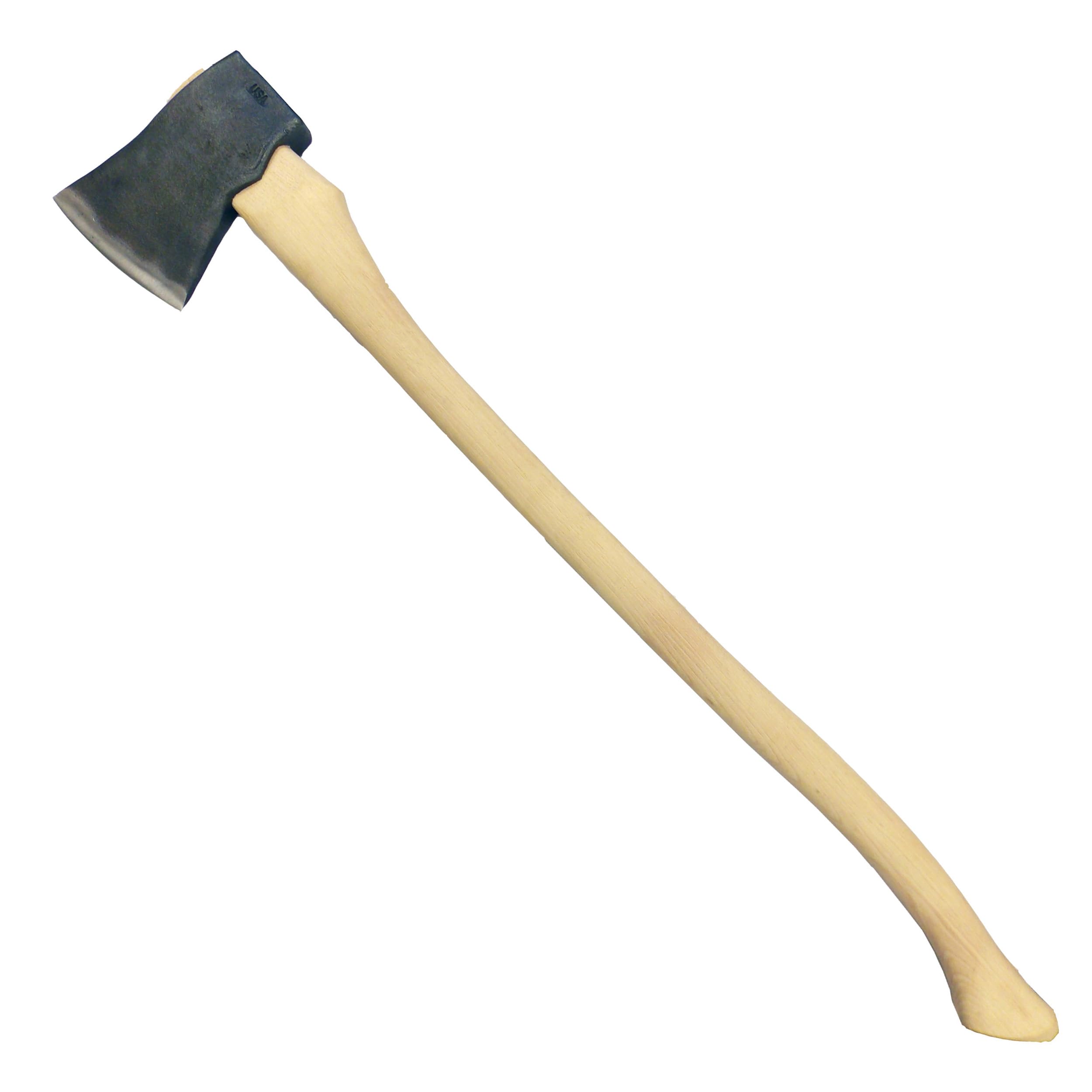
A classic Jersey pattern that balances swing speed with a serious 5-inch cutting edge.
This is the middle ground that many experienced woodcutters end up loving. The 3.5-pound forged tool steel head gives you enough weight to drop substantial trees without the all-day fatigue of a 4.5-pound monster, and the 36-inch curved hickory handle provides leverage that rivals the Helko Werk at a much lower entry cost. The Jersey pattern head (a traditional shape sometimes called the “Baltimore Jersey”) features prominent lugs that wrap around the handle, creating a stronger connection that resists loosening over years of hard swings.
One thing owners mention is that the factory edge often arrives with a rough 20° hollow grind that works fine but loses sharpness quickly on dense wood like seasoned ash. Several owners recommend taking a file to it and creating a convex 23° edge for better durability — a one-time tuning step that turns this axe into a performance beast. Another reviewer noted that after some handle conditioning and edge filing it performed “great for serious woodcutting,” with the head staying balanced and accurate during long sessions.
The honest trade-off is the edge prep. Unlike the Helko Werk which is ready to swing immediately, the Council Tool Jersey typically needs a little file work to reach its full potential. If you are comfortable with basic tool maintenance, this is an outstanding American-made axe that punches well above its price.
What it does best: The 36-inch handle gives you a longer swing arc than the Fiskars 28″ Chopping Axe, so you generate more speed at the bit — a direct advantage when felling medium to large trees.
The one thing to plan for: The rough factory edge on the 20° hollow grind means you should budget 10-15 minutes with a file before your first serious session.
Perfect for: intermediate to advanced users who appreciate a traditional forged head and don’t mind spending a little time dialing in the edge for peak performance.
skip it if: you want an out-of-the-box razor edge with zero tuning — the Fiskars or Helko are sharper on arrival.
3. COUNCIL TOOL Single Bit Axe – 3.5 lb. Dayton Pattern Axe (35DR36C)
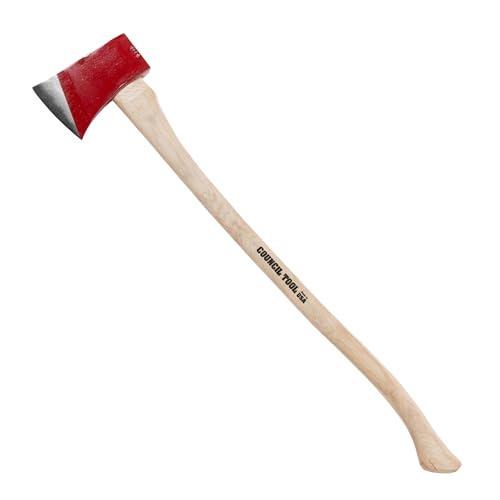
The affordable American-made Dayton that customers note felled 5 trees with barely any edge wear.
For anyone who wants a proven, USA-made axe without spending over, the Council Tool Dayton pattern is a near-perfect choice. The 3.5-pound high-carbon steel head with a hand-sharpened tapered bit bites deep on every swing, and the 36-inch curved hickory handle is kiln-dried to below 10% moisture content so it resists loosening over time. What sets this apart from many budget axes is the steel quality — one buyer specifically stated they “felled 5 trees with minimal edge degradation,” which is a strong sign that the high-carbon steel holds its sharpness well through sustained work.
The handle is coated in a red enamel and the edges are clear lacquered for rust protection, giving it a classic look that stands up to wet conditions. The Dayton head shape (a square poll with a 4.75-inch cutting edge) is designed for general-purpose chopping and felling, not for splitting firewood — buyers caution that the Dayton pattern’s geometry is ineffective for splitting logs, so keep a splitting maul on hand for that job. On the other hand, for pure tree felling and limbing, it “takes a hair-popping edge” and competes closely with axes that cost three times as much.
The main limitation is the same as the Jersey pattern above: the factory edge is good but not great, and a little belt grinder work or hand filing can make it substantially thinner and sharper. For the price, this is a remarkably capable tool that puts professional-grade steel in your hands without the premium price tag.
Where it wins: The value proposition is class-leading — high-carbon steel, a 36-inch hickory handle with excellent grain orientation, and reviews that confirm real-world durability on multiple trees without losing the edge.
Know before you buy: The Dayton head is not a splitter — you will need a separate maul for halving logs, and the factory edge benefits from light tuning for peak sharpness.
Best for: budget-conscious buyers who want an American-made felling axe with proven steel that can handle a season of heavy work while staying affordable.
Not for: anyone who needs a single tool for both felling and splitting — the Dayton head shape is purpose-built for chopping across the grain, not splitting along it.
4. Fiskars 28″ Chopping Axe, Ultra-Sharp Blade for Kindling with Ease (375581-1002)
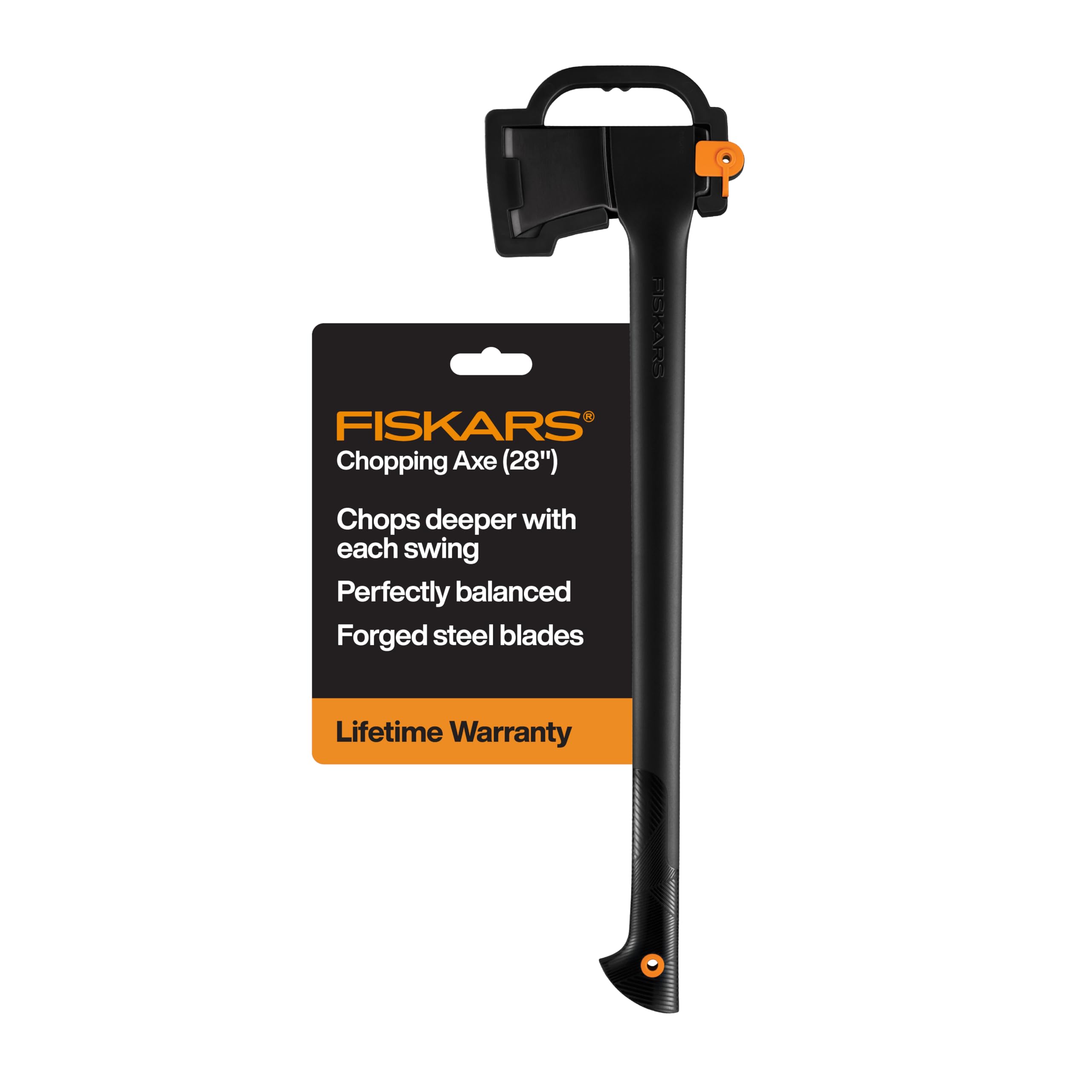
The ultra-sharp, well-balanced axe that reviewers point out is easy for smaller timber.
If you spend more time on campsite prep, clearing brush, or dropping small trees than you do felling massive oaks, the Fiskars 28″ Chopping Axe is a fast and fatigue-free choice. At 3.5 pounds with a 28-inch handle, it is noticeably shorter and more maneuverable than the 36-inch axes above — the Fiskars measures 28″L x 9.25″W, a 29% shorter overall length than the 36″L x 7″W Helko Werk, which makes it easier to swing in tight spaces or pack into a vehicle for trips. The blade comes with a low-friction coating that reduces drag and prevents the head from getting stuck in the wood — a real convenience when you are working through a pile of kindling and small logs.
Buyers consistently mention the ultra-sharp factory edge and how the balance makes the lighter weight feel easy for its size. One owner called it “very sharp, making felling of trees simple and quick,” and another noted it has “low vibration” and “great ergonomics” that keep you swinging longer without fatigue. The handle is made from a steel core overlaid with wood, so you get the grip and feel of wood with the durability of a steel-reinforced core that won’t snap under hard strikes. Fiskars backs it with a lifetime warranty, so if you do somehow break it, you are covered.
The trade-off is reach. A 28-inch handle generates less leverage and a shorter swing arc than a 36-inch handle, so you will have to swing harder and take more strokes on larger-diameter trees. This axe also lacks the classic hickory handle that traditionalists prefer — the steel-reinforced core and synthetic grip are durable but absorb less vibration than solid hickory.
What stands out
- The low-friction coating keeps the blade from binding in the cut, so you spend less time prying the axe free.
- At 3.5 lb and 28 inches, it is light enough for backpack carry and fast enough for repetitive chopping.
- Buyers confirm the factory edge is exceptionally sharp from the start, with no tuning needed before first use.
What holds it back
- The shorter 28-inch handle reduces leverage compared to a 36-inch axe, meaning you need more swings for large trees.
- Handle is not solid wood — the steel-core-and-wood construction lacks the vibration damping of a pure hickory handle.
Ideal for: campers, property owners clearing light brush and small trees, and anyone who wants an out-of-the-box sharp axe they can grab and use immediately without edge tuning.
Pass on it if: you are regularly felling trees over 10 inches in diameter — the shorter handle and lighter head will make you work harder than a longer axe would.
Understanding the Specs
Head weight (pounds)
The head weight, measured in pounds, determines how much kinetic energy your swing transfers into the wood. A heavier head (4.5 lb) cuts deeper with each stroke because more mass is moving at the same speed — great for large trees but more tiring over a long session. A lighter head (3.5 lb) is easier to swing all day and works well on smaller wood, but it lacks the punch for thick trunks. Pick a head weight that matches the average diameter of what you are cutting and your own stamina.
Handle length (inches)
Handle length controls your swing arc and leverage. A 36-inch handle gives you a longer arc, which means the blade is moving faster when it contacts the wood — you get more power without a heavier head. The trade-off is that a long handle is harder to swing in brush or overhead. A 28-inch handle is more portable and easier to control in tight spaces, but you lose that speed advantage. For a general-purpose felling axe, 35 to 36 inches is the balance that balances reach and control.
FAQ
What is the difference between a felling axe and a splitting maul?
How heavy should an axe head be for chopping down trees?
Is a longer handle always better for felling trees?
How often do I need to sharpen a felling axe?
Can I use the Fiskars 28″ chopping axe for large trees?
What does “Jersey pattern” or “Dayton pattern” mean on an axe head?
Should I choose a hickory handle or a steel/wood composite handle?
Does the COUNCIL TOOL Jersey axe need sharpening before first use?
What is a convex grind on an axe blade?
How do I maintain a wood handle so it doesn’t loosen or crack?
Final Thoughts: The Verdict
For the majority of shoppers, the axe for chopping down trees winner is the COUNCIL TOOL Jersey Axe because it blends the right head weight, leverage from a 36-inch handle, and premium forged tool steel at a price that does not break the budget. If you want raw heavy-striking power for the largest jobs, grab the 1844 Helko Werk Classic Expedition. And for a travel-friendly camp axe that comes razor-sharp from the start, the standout is the Fiskars 28″ Chopping Axe.
How We Picked
We do not accept paid placement. Every pick is matched to a real buyer and a real use-case; we do not hands-on test units.
Sources & Methodology
Specifications: manufacturer listings and product documentation. Review insights: verified customer reviews, as of July 2026. Pricing: not shown on this page (it changes often); check the current price via the retailer link.
As an Amazon Associate, Lawn Gear Lab earns from qualifying purchases. This does not affect which products we feature.