
Specs are compiled from manufacturer listings and verified buyer reviews and can change over time — please confirm the key details on the product page before buying.
Picking the right bird seed feels like a simple errand until you are standing in the aisle (or scrolling a page) staring at bags full of mystery filler that half the birds in your yard will kick out and ignore. You want more songbirds at the window and less waste on the ground. The real trick is matching the blend to the species you actually see — and skipping the cheap grains that only attract the mess.
I’m Rikta — the founder and writer behind Lawn Gear Lab. This guide is built by comparing the manufacturers’ published specifications and the patterns across verified customer reviews, so you get each pick’s real strengths and trade-offs instead of marketing spin.
From a shell-free no-mess blend that keeps patios clean to a protein-packed black oil sunflower seed for the widest variety of visitors, this guide breaks down the specs that actually decide how many birds show up and how long a bag lasts. This is your straightforward look at the best bird seed for your yard right now.
Quick Picks
- Audubon Park Waste Free Wild Bird Seed – No Mess Blend (12 lb) — Best Overall
- Wildlife Black Oil Sunflower Seeds for Birds and Wildlife (12 lbs) — Pure Protein
- Kaytee Southern Regional Wild Bird Blend (7 lb) — Regional Pick
- Cool Birds All Birds Wild Bird Seed – Classic Blend (10 lb) — Best Variety
- Kaytee Cardinal Wild Bird Seed (7 lb) — Cardinal Magnet
- Wagner’s 13008 Deluxe Wild Bird Food (10 lb) — Budget Workhorse
- Pennington Wild Bird Food – Critter-Proof Bucket (22.5 lb) — Heavy Hauler
How To Choose The Best Bird Seed
The ideal bag depends on the birds you want to invite and the mess you are willing to clean. A few specs make the difference between a feeder that empties overnight and one that gets ignored.
Know Your Feeder Birds
Check what species are common in your area before buying. Cardinals and finches love black oil sunflower and safflower, while doves and sparrows prefer white millet and cracked corn. A blend that matches your local birds means less seed gets tossed to the ground.
Filler vs. Food
Red milo and certain grains are often called “filler” because many songbirds do not eat them. A good mix keeps these to a minimum so you are not paying for waste you will rake up later. Look for bags where sunflower and safflower dominate the ingredient list.
Size of the Bag Matters
A heavier bag (20+ pounds) costs less per serving, but it takes longer to use. If you only have one small feeder, a 7 or 10-pound bag stays fresher. If you feed a crowd or refill every couple of days, the larger bucket or bag saves you trips to the store.
Quick Comparison
| Model | Best For | Weight | Key Ingredients | Feeder Types | Amazon |
|---|---|---|---|---|---|
| Audubon Park No Mess | No-Waste Cleanup | 12 lb | Sunflower Hearts & Peanuts | Tube, Tray, Hopper | Amazon |
| Wildlife Black Oil Sunflower | Pure Nutrition | 12 lb | Black Oil Sunflower Seeds | Tube, Hopper, Tray | Amazon |
| Kaytee Southern Regional | Regional Species | 7 lb | Regional Seed Blend | Tube, Hopper | Amazon |
| Cool Birds All Birds | Variety of Species | 10 lb | Sunflower, Millet, Safflower, Peanuts | Tube, Tray, Hopper, Platform | Amazon |
| Kaytee Cardinal Blend | Cardinals & Small Birds | 7 lb | Black Oil Sunflower & Safflower | Tube, Hopper | Amazon |
| Wagner’s Deluxe | Ground & Perching Birds | 10 lb | Sunflower & General Seeds | Tube, Hopper, Ground | Amazon |
| Pennington Critter-Proof Bucket | Large Volume & Storage | 22.5 lb | Sunflower Seeds & Vitamins | Hopper, Tube, Platform | Amazon |
In‑Depth Reviews
1. Audubon Park Waste Free Wild Bird Seed – No Mess Blend (12 lb)
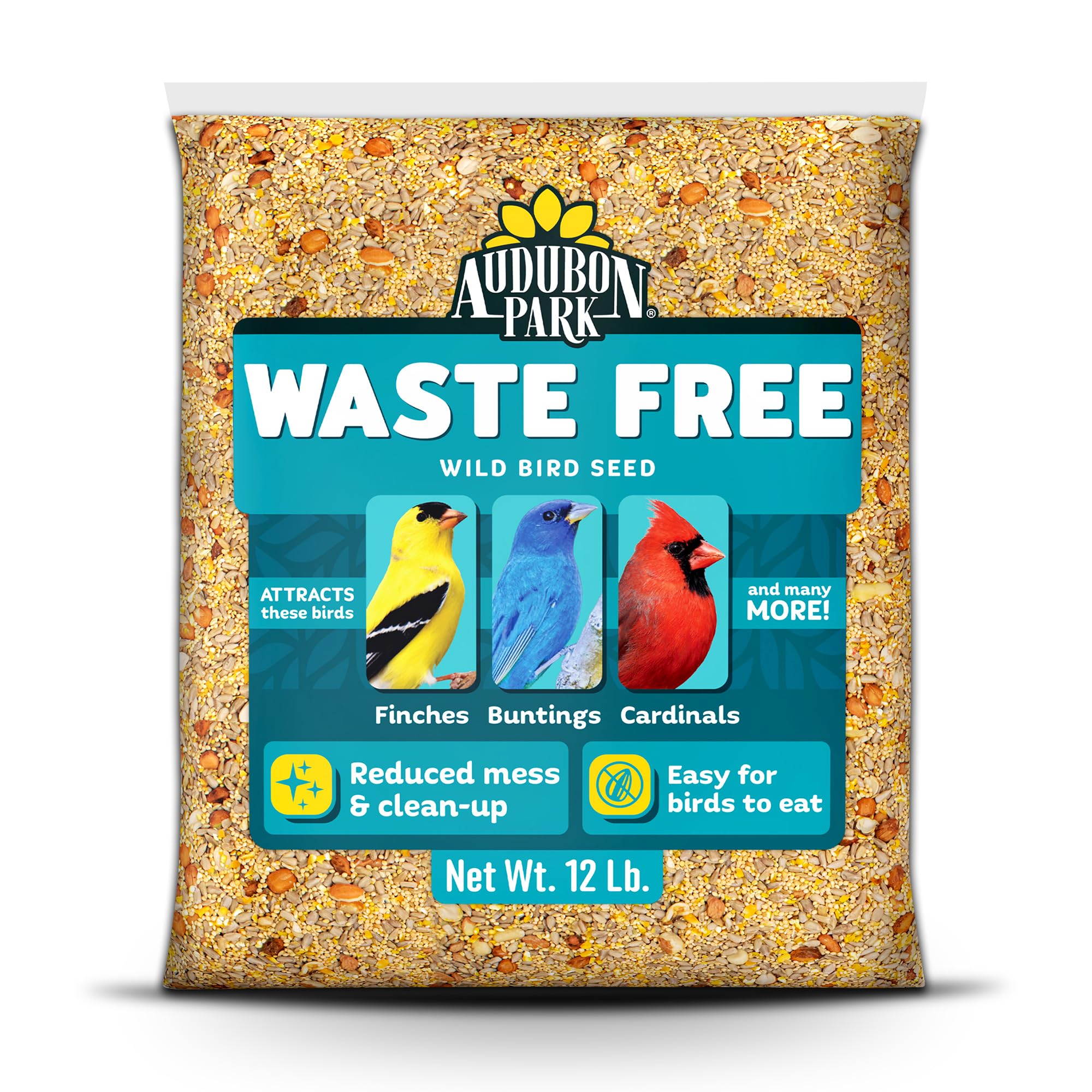
The shell-free blend that leaves your patio spotless while keeping songbirds coming back.
You get zero hulls to rake because this 12-pound bag is made entirely of sunflower hearts, chips, and peanut pieces. No shells means nothing falls to the ground and sprouts — a huge win if you feed on a deck or near a walkway. The no-mess formula is packed with high-energy nutrition that attracts finches, cardinals, thrushes, wrens, and buntings, so a single feeder pulls in a wide cast of species.
Buyers report the “15 lb bag lasts weeks; seed stays fresh stored outdoors,” which makes this a practical pick for anyone who refills frequently. At 12 pounds versus the Kaytee Cardinal bag at 7 pounds, it means fewer trips to the store.
The only trade-off is that birds can pick through the small bits to reach the larger sunflower hearts, burning through the bag a little faster than a whole-seed mix. But the convenience of a clean feeding area more than makes up for the pace.
Clean yard, happy birds: A premium mid-range pick with a no-mess formula that earns its keep in reduced cleanup.
Reach for this if: You want the least mess and the widest songbird variety from a single bag, especially on decks or patios.
Look elsewhere if: You prefer a slower-eating whole-seed mix that lasts longer per pound.
2. Wildlife Black Oil Sunflower Seeds for Birds and Wildlife (12 lbs)

The single-ingredient powerhouse that pulls the widest range of birds to your yard.
If you want one seed that virtually every songbird eats, black oil sunflower is it, and this 12-pound bag from Old Potters delivers it without filler, without GMOs (genetically modified organisms), and without mystery grains. The seed is grown on small U.S. farms and left unprocessed, so you might see a few natural twigs or bits of field debris — a sign that nothing was chemically stripped away.
The high protein content gives birds real nourishment they need, especially during cold months. Owners mention the seeds taste “so fresh that Birds feast for days on a small amount” compared to older, moldy seed from other brands. A resealable bag makes it easy to pour into your feeder without making a mess, and the small, thin shells are easy for even smaller birds to crack open.
Unlike the Kaytee Southern Regional blend that includes millet for ground feeders, this is a straight seed, so it appeals strongest to perching birds at elevated feeders. But if you want simplicity and proven results, this is the purest option.
Straight-forward powerhouse: Non-GMO, USA-grown, single-ingredient seed that is as close to a universal bird attractor as you can get.
Best choice when: You prefer a clean, single-seed ingredient with no filler and want to attract a broad mix of colorful songbirds.
skip it if: You need a mixed blend to specifically attract ground-feeding doves or sparrows alongside perching birds.
3. Kaytee Southern Regional Wild Bird Blend (7 lb)

A university-tested recipe that brings southern specialties like painted buntings to your feeder.
This 7-pound blend was designed specifically for the southeastern U.S. and independently tested by university researchers to outperform both plain black oil sunflower and standard non-regional blends. If you live in Texas, Florida, or anywhere in between, this mix targets the species that actually live in your area rather than a generic national formula.
Buyers in Texas report it more than doubles the number of birds at the feeder, noting “we’ve more than doubled in the number of birds eating from the feeder (camera) since using this feed.” One reviewer specifically mentions drawing painted buntings, which are a real treat for casual birdwatchers. The blend uses a different seed composition that stays in the feeder rather than blowing out in the wind, a common complaint with finer, cheaper seeds.
The 7-pound bag is a lot smaller than the Audubon Park 12-pound bag, so heavy-feeding yards will go through it quickly. But for the right region, the bird diversity payoff is real.
Why Southern Birders Love It
- University field-tested formula for regional birds like painted buntings
- Coarser seed that resists blowing out of feeders
- Available on autoship for regular deliveries
The One Limitation
- Only 7 pounds — will need frequent refills for busy feeders
- Region-specific; only tested for southern species
Who should buy: Southeastern birders who want to attract painted buntings and cardinals with a proven regional formula.
Who should look elsewhere: Northern or western birders, or anyone needing a larger bag to reduce refill trips.
4. Cool Birds All Birds Wild Bird Seed – Classic Blend (10 lb)
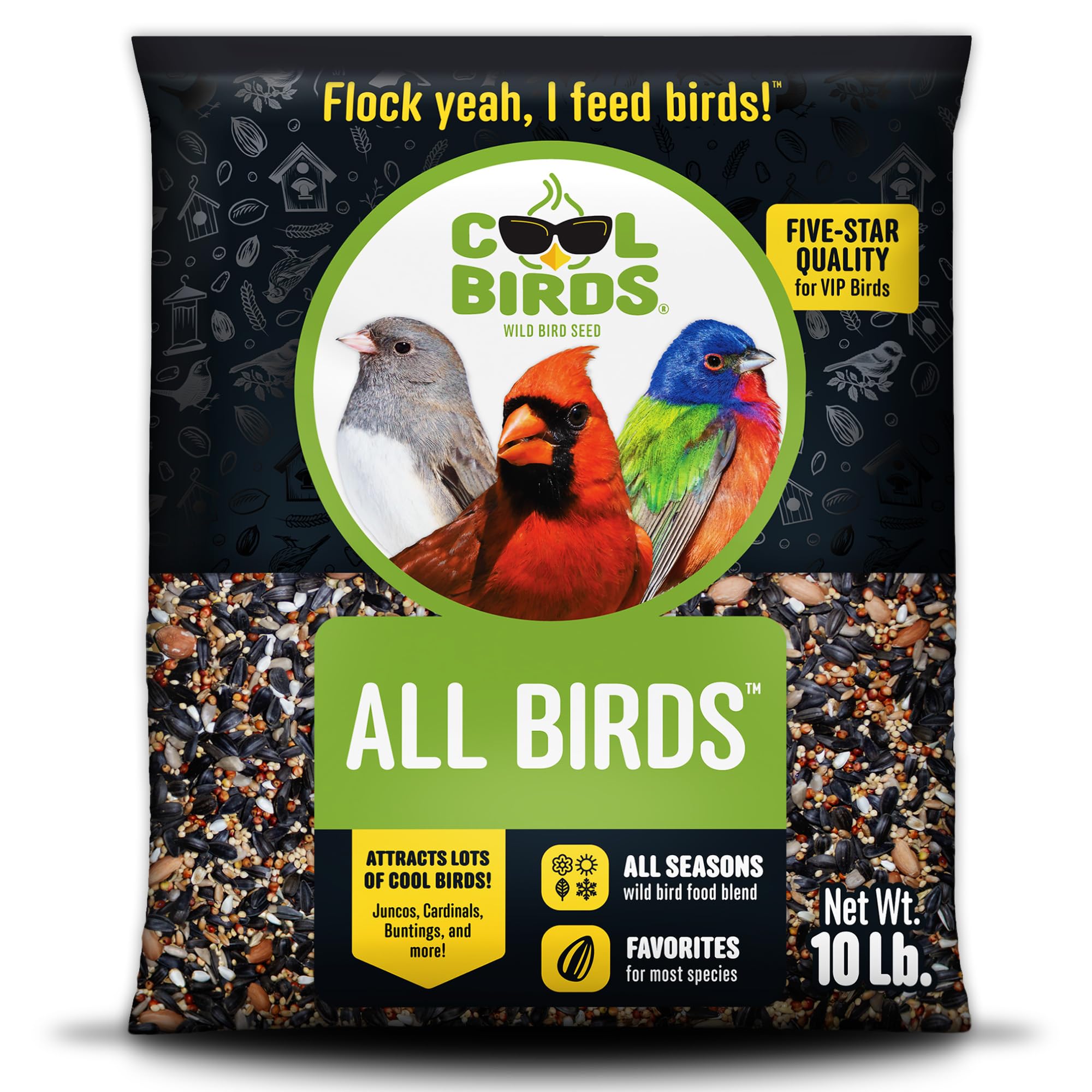
A balanced buffet that attracts every shape and size of songbird to your yard year-round.
This 10-pound bag mixes black oil sunflower, safflower, white millet, peanuts, and sunflower hearts into one blend that appeals to both perching birds at tube feeders and ground-feeding favorites like doves and sparrows. The formula is designed without artificial colors and is packed with energy and protein to support birds through all seasons.
Buyers describe it as “high-quality birdseed with fresh smell, minimal filler,” noting that it draws cardinals, sparrows, eastern bluebirds, and even a red-bellied woodpecker that had not visited before. The seeds are uniform and clean, with very little dust or sticks, which means less mess in the feeder and fewer clogs. The blend works in tray, tube, hopper, or platform feeders, so it fits whatever setup you already have.
Because it includes millet and some cracked grains for ground birds, a few perching species may kick out the smaller seeds. But if you want one bag that covers all the bases, this is a solid value.
One bag, all birds: A clean, filler-light mix that attracts a wider variety of species than most mid-range blends.
Reach for this if: You want a single blend that feeds both tube feeders and ground-eating birds without switching bags.
Look elsewhere if: You need a pure no-mess shell-free seed to keep the ground completely clean.
5. Kaytee Cardinal Wild Bird Seed (7 lb)

The dual-seed mix that packs two cardinal favorites into one bag while irritating squirrels.
Safflower and black oil sunflower are the two seeds cardinals cannot resist, so Kaytee blended them into a simple 7-pound mix that is practically a cardinal VIP list. The safflower seed has a bitter taste that squirrels tend to avoid, giving you a small edge against the furry raiders that empty other feeders. Chickadees, nuthatches, and grosbeaks also stop by.
The downside is that the bag is relatively small at 7 pounds. As one buyer put it, “I have to refill the feeder every other day, which makes this an expensive hobby.” The compact size makes it a better fit for a single small feeder that gets moderate traffic, not a high-volume feeding station.
Still, the quality is high, with minimal dust and no filler. For a dedicated cardinal feeder on your deck, this blend is tough to top.
Cardinal-focused simplicity: A two-ingredient blend that attracts bright red birds while making life harder for squirrels.
Best for: Cardinal lovers with a single feeder who want to discourage squirrels naturally with safflower.
Consider another if: You feed a large flock or need a slower-eating blend that lasts more than a day or two.
6. Wagner’s 13008 Deluxe Wild Bird Food (10 lb)

A practical all-purpose blend that attracts ground and perching birds while staying affordable.
This 10-pound bag mixes sunflower seeds with a general-purpose seed selection that appeals to cardinals, finches, blue jays, bluebirds, and quail (if you feed on the ground). The resealable Velcro closure is a thoughtful detail that keeps the seed fresh between refills and stops spills. Wagner’s uses high-quality grains and manufactures in the U.S.
A long-time buyer noted that “previous bag had 90% red milo, a fluke not new formula,” and that subsequent bags returned to normal red milo levels. Red milo is often considered a filler because many birds ignore it, so the consistency concern is real. But when the mix is right, birds strongly prefer it over cheaper store brands.
For the price, this delivers a solid mix of good seeds at a reasonable volume. It is a straightforward, no-surprises option for feeding a mix of birds without spending a premium.
Solid value, reliable brand: A moderately priced, USA-made blend with a handy resealable bag that keeps seed fresh.
Ideal for: Budget-conscious birders who want a large bag size, a resealable bag, and a dependable all-purpose mix.
Watch out: The red milo content can vary bag-to-bag; birds may ignore it if the ratio is too high.
7. Pennington Wild Bird Food – Critter-Proof Bucket (22.5 lb)

The big bucket that locks out critters and keeps 22.5 pounds of seed fresh until the last scoop.
Pennington’s 22.5-pound bucket uses a critter-proof lid that rats, raccoons, and squirrels cannot easily pry open, solving the problem of seed storage that attracts unwanted guests. The seed itself includes sunflower seeds and is coated with Bird-Kote Technology (a vitamin and nutrient coating designed to support bird health). It works with hopper, gazebo, platform, and tube feeders.
One buyer wished Pennington would sell a refill bag so they did not have to buy the bucket every time, which is a fair point about the container cost. Another noted the bucket is very tightly sealed — an 84-year-old reviewer found it took 30 minutes to open. So you may want to loosen the lid before you need to fill in a hurry.
For volume feeding with convenient storage, the bucket is tough to top for the price per pound. It avoids the mess of torn bags and keeps the seed dry through weather changes.
Bulk storage solution: A 22.5-pound bucket with a critter-proof seal and nutrient-packed Bird-Kote Technology for long-lasting freshness.
Best for: Anyone feeding a large bird population who needs a sealed storage container that keeps pests out and seed fresh.
pass on it if: You prefer buying refill bags instead of buckets, or have difficulty opening tight lids.
Understanding the Specs
Black Oil Sunflower Seeds
This is the single most versatile and popular seed among songbirds. The thin shell is easy for small birds like chickadees and finches to crack, and the high oil content provides the energy birds need, especially in cold weather. Any blend that lists this as the first ingredient is a solid foundation.
Safflower Seeds
Safflower has a slightly bitter taste that squirrels and blackbirds typically avoid, making it a natural squirrel deterrent. Cardinals, chickadees, and grosbeaks love it, so a safflower-heavy mix is a popular choice for dedicated cardinal feeders.
FAQ
What is the best bird seed for cardinals?
How do I stop squirrels from eating my bird seed?
What is no-mess bird seed?
How long does an opened bag of bird seed last?
Is red milo considered a filler in bird seed?
What is the difference between black oil sunflower and striped sunflower?
Should I use a regional bird seed blend?
How often should I clean my bird feeder when using mixed seed?
What is the biggest bag size available for bird seed?
Final Thoughts: The Verdict
If you want one dependable pick, the bird seed winner is the Audubon Park No Mess Blend because it combines a shell-free, low-waste formula with high-energy ingredients that attract the widest variety of songbirds while keeping your patio clean. If you want a pure, single-ingredient black oil sunflower seed with non-GMO certification and U.S.-grown quality, grab the Wildlife Black Oil Sunflower Seeds. And for southeastern birders who want a university-tested regional formula that draws painted buntings, the standout is the Kaytee Southern Regional Blend.
How We Picked
We do not accept paid placement. Every pick is matched to a real buyer and a real use-case; we do not hands-on test units.
Sources & Methodology
Specifications: manufacturer listings and product documentation. Review insights: verified customer reviews, as of July 2026. Pricing: not shown on this page (it changes often); check the current price via the retailer link.
As an Amazon Associate, Lawn Gear Lab earns from qualifying purchases. This does not affect which products we feature.