
Specs are compiled from manufacturer listings and verified buyer reviews and can change over time — please confirm the key details on the product page before buying.
You pull a weed and the top snaps off, leaving the root behind to grow right back. A regular leaf rake barely touches them, a standard hoe chops at the surface, and you end up on your knees digging with a hand trowel. The right tool changes all of that—it gets under the root crown, leverages the soil, and pulls the whole plant out in one clean motion. This guide breaks down the four best rakes for weeds, each one built for a different style of attack.
I’m Rikta — the founder and writer behind Lawn Gear Lab. This guide is built by comparing the manufacturers’ published specifications and the patterns across verified customer reviews, so you get each pick’s real strengths and trade-offs instead of marketing spin.
Whether you are clearing a flower bed, reclaiming an overgrown fence line, or prepping a garden patch for planting, the rake for weeds you choose determines how much grunt work you do and how clean a job you leave behind.
Quick Picks
- BARAYSTUS 15 Inch Wide Bow Rake — Best Overall
- DIIG 63” Bow Rake, 17 Tines — Premium Durability
- YEELOR Garden Rake, Heavy Duty 16-Tine Bow Rake — Adjustable Value
- Corona Tools GT 3234 Reach 7-Tine Extended Rake — Precision Pick
How To Choose The Best Rake For Weeds
Picking the right rake for weeds starts with matching the tool to the specific job you’re doing. A wide, heavy-duty bow rake will bust up compacted soil and yank out established dandelions, while a narrow tine rake slips between shrubs without damaging your perennials. Here are the factors that matter most.
Tine Count and Head Width
More tines mean you cover more ground with each pass, which is great for spreading mulch or leveling soil. For weed removal, a head width around 15 to 17 inches with 16 or 17 tines gives you enough bite to hook the root mass without being so wide that you can’t work between plants. A narrower head, like a 7-tine design, gives you precision around delicate flowers and in tight corners.
Handle Length and Adjustability
A longer handle saves your lower back by letting you stand up straight while raking. Look for a handle around 50 inches or more for comfortable posture during extended sessions. An adjustable handle is a smart upgrade if multiple people of different heights share the tool, since a few extra inches of reach can mean the difference between a comfortable pull and a strained back.
Handle and Head Material
The head needs to be steel or carbon steel to resist bending when you pry out a stubborn root. Stainless steel handles are rust-resistant and last longer than wood, and they don’t rot or splinter. A rubber or silicone grip is non-slip and helps you maintain control when your hands are sweaty or muddy.
Quick Comparison
| Model | Best For | Head Width | Weight | Tines | Amazon |
|---|---|---|---|---|---|
| BARAYSTUS Bow Rake | Best Overall | 15.9 in | 2.5 lbs | 16 | Amazon |
| DIIG 63” Bow Rake | Premium Durability | 17 in | 1.75 kg (3.86 lbs) | 17 | Amazon |
| YEELOR Garden Rake | Adjustable Value | 15.85 in | 1.1 kg (2.43 lbs) | 16 | Amazon |
| Corona GT 3234 | Precision Weed Pulling | 9.85 in | 1.6 lbs | 7 | Amazon |
In‑Depth Reviews
1. BARAYSTUS 15 Inch Wide Bow Rake

A steel-headed bow rake that digs deep without bending on you.
The head measures 15.9 inches wide with 16 sharp steel tines, so you hook into the root system of stubborn weeds instead of just scraping the surface. The head is 3mm thick, so it does not flex or snap when you lean into a clump of crabgrass. The handle adjusts to three lengths — 24 inches, 37.8 inches, or the full 51.5 inches — letting you switch from close-quarters work to a full standing posture without swapping tools. That adjustability is a big deal because one person can drop it short for precise weeding in a raised bed, then extend it long for clearing a large patch of soil.
The handle is stainless steel with a black silicone grip that stays non-slip even when your palms get sweaty. The head is triple-welded at the connection to the handle, which buyers report makes the tool feel “a lot sturdier than I expected.” At 2.5 pounds versus the Corona at 1.6 pounds, it gives you more momentum to drive into packed earth, but also means you will feel the fatigue in your arms after an hour of continuous raking. The trade-off is durability: the all-metal construction is unlikely to break or rot over a wood-handled alternative.
Assembly takes about five minutes and requires no tools, though one reviewer wished the handle sections locked together more smoothly. For the homeowner who wants one heavy-duty rake that handles weeding, leveling, and mulch spreading across a medium-to-large yard, this is the most versatile pick in the group.
What It Does Well
- Triple-welded head stays attached under hard pulls
- Adjusts from 24 inches to 51.5 inches for different users
- All-metal handle won’t rot or splinter like wood
Where It Falls Short
- At 2.5 pounds it is heavier than most competitors
- Some owners mention the handle sections could lock tighter
Who grabs this rake: Anyone who needs a single tool for serious weeding, soil prep, and yard cleanup on a medium-to-large property, and wants a steel handle that outlasts a wooden one.
Think twice if: You have a small garden or flower beds packed with delicate plants — the wide 15.9-inch head is too bulky for tight maneuvering around petunias.
2. DIIG 63” Bow Rake, 17 Tines

A 17-tine monster that cracks clay soil and hauls out rocks.
If your yard has dry, compacted clay or you find yourself fighting rocks the size of a cantaloupe, this rake is built for that punishment. The head is 17 inches wide — the widest in this lineup — with 17 tines that are each 2.5 inches long. The tines themselves are 3mm thick, and the rake head is triple-welded to the handle so it does not separate when you are applying serious leverage. The handle is fully stainless steel and extends up to 63 inches, which is the tallest handle here, making it the best option for tall users who do not want to stoop.
Customers note that it handles “dry clay and rocks up to cantaloupe size” and that the double-sided tine design gives you a 1-to-1.5-inch short claw on one side for raking and a 3-inch regular rake on the other for deeper work. The caveat is assembly: the nut tightening requires a tool, which several reviewers mention is “tricky” compared to the tool-free designs on the other rakes here. It is also the heaviest rake in the group at 1.75 kilograms (roughly 3.86 pounds) versus the YEELOR at 1.1 kilograms (roughly 2.43 pounds), which means it will fatigue your arms faster if you are raking a large area for an hour straight.
For the gardener who is rehabbing a neglected patch of ground, the extra tine count and the 63-inch handle give you both coverage and reach that nothing else on this list matches. It is a purpose-built ground-breaker, not a light touch-up tool.
The Real Strengths
- 17 tines and 17-inch wide head offer the most ground coverage per pass
- 63-inch handle saves your back during extended sessions
- Double-sided tines work for both light raking and deep soil entry
The Real Trade-offs
- Heaviest rake at 3.86 pounds — you will feel the weight
- Assembly requires a tool to tighten the nut, not tool-free
Ideal for: Heavy-duty soil prep, breaking up compacted clay, and clearing rocky ground where a lighter rake would bounce off the surface.
Pass on it if: You need a quick grab-and-go rake for light weeding around established plants — the bulk and weight will become a liability.
3. YEELOR Garden Rake, Heavy Duty 16-Tine Bow Rake

A lightweight rake that snaps together in seconds without any tools.
The head is 15.85 inches wide — nearly identical to the BARAYSTUS’s 15.9 inches — with 16 tines that are fastened with screws to prevent them from loosening or falling off during use. The handle is made of stainless steel and is adjustable by attaching different numbered poles, letting you customize the length to your height. At 1.1 kilograms (roughly 2.43 pounds), it is significantly lighter than the DIIG rake (1.75 kg), which makes it much easier to swing for long periods without your shoulders screaming at you.
The grip is rubber and ergonomically shaped, which reviewers point out feels “solid and comfortable to use.” Assembly is tool-free — the components fit together cleanly, and you can go from box to weeds in under two minutes. The lighter weight does come with a trade-off: while the steel tines are strong enough for loose soil, mulch, and surface weeds, the YEELOR is not going to punch through hard-packed clay the way the DIIG or the BARAYSTUS can. A few reviewers mentioned the head attaching with screws rather than a welded connection, which is a minor long-term durability concern if you regularly pull on rocks.
This is the smart middle-ground pick for the weekend gardener who needs one rake that does everything from weeding to leveling compost, without the back strain of a heavy tool. The adjustable length and light weight make it the best option if multiple people of different heights will be using the same rake.
What Works
- Tool-free assembly gets you working in minutes
- At 2.43 pounds, it is the lightest of the large bow rakes
- Rubber grip reduces hand fatigue during long sessions
What Doesn’t
- Screwed head connection is less durable than a welded joint
- Not heavy enough to break up hard clay or dig out large rocks
Reach for it if: You want a lightweight, adjustable rake that the whole family can use for general yard work, weeding, and leveling — and you want to avoid fussing with assembly tools.
Look elsewhere for: Breaking new ground or rehabbing a compacted garden bed — you need the weight of a heavier bow rake for that job.
4. Corona Tools GT 3234 Reach 7-Tine Extended Rake
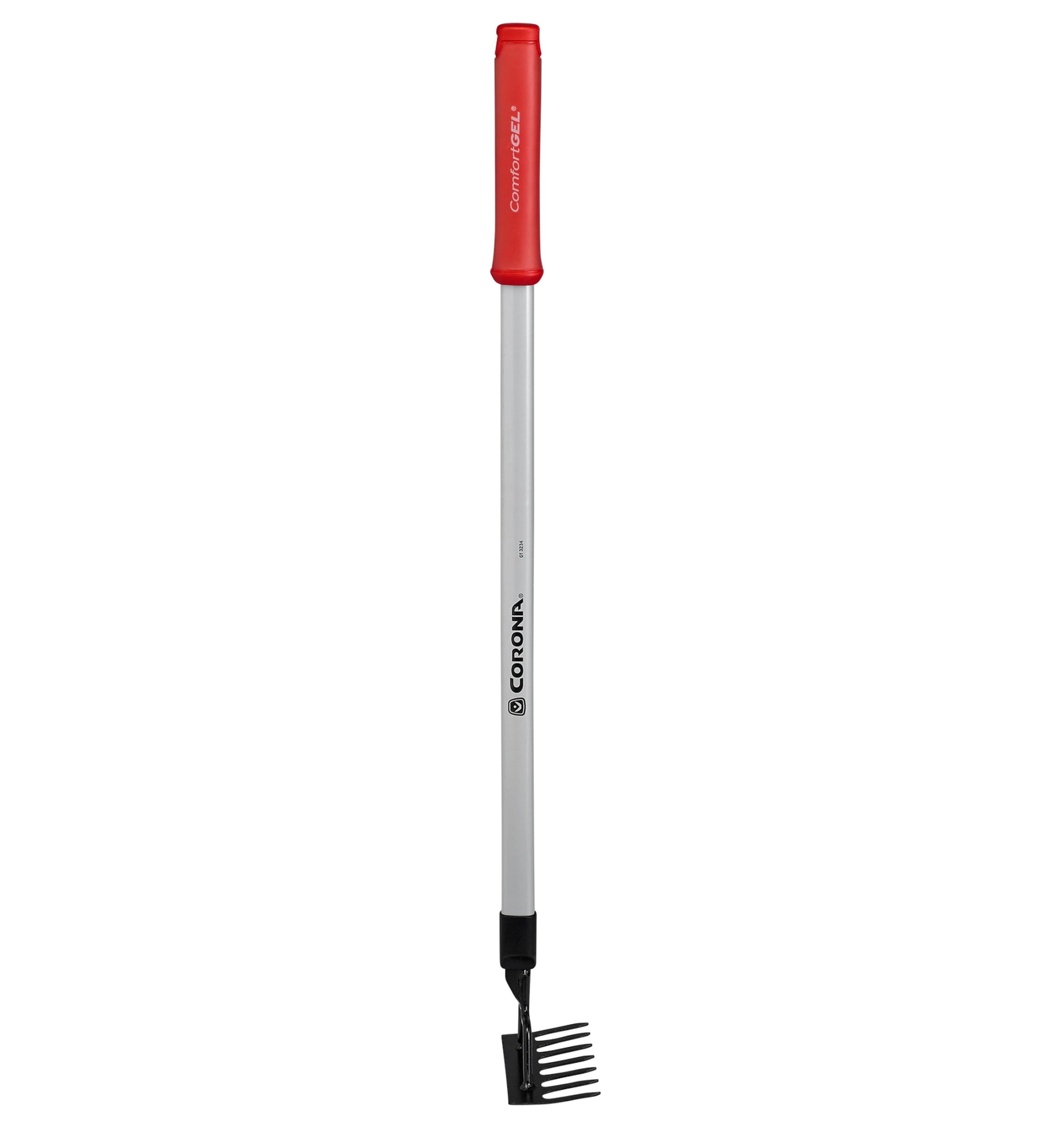
A narrow rake that slides between shrubs without harming your plants.
When your weed problem is tucked inside a flower bed or right up against a fence, a 16-inch bow rake is too wide to use without smashing your petunias. That is where the Corona GT 3234 shines. Its head is just 9.85 inches wide with only 7 steel tines, making it narrow enough to work in tight spaces. It measures 40.16 inches long versus the BARAYSTUS at 51.5 inches and weighs 1.6 pounds versus the BARAYSTUS at 2.5 pounds.
Shoppers say that it “extracts weed clumps with ease and also works well for ripping up invasive, low growing vines like wild strawberry.” That narrow tine design lets you pull creeping Charlie and chickweed out of tight spots where a standard hoe or a wide rake would rip up the good plants. The handle is made from plastic or TPE with a ComfortGEL grip that cushions your palm, and one reviewer noted at 5’3″ the length was great for both themselves and the kids while extending for taller users. The trade-off: a couple of reviewers mention the plastic handle popping off under a hard pull, and a few others felt at 40 inches the rake could be “a few inches longer to improve posture.”
This is the specialist in the group — it deliberately trades ground coverage for control. For delicate weeding around established landscaping, it is the only tool on this list that can do the job without collateral damage.
Why It Wins in Tight Spots
- Narrow 7-tine design reaches between plants without damage
- ComfortGEL grip reduces hand fatigue during precision work
- Light at 1.6 pounds for easy one-handed use
Where It Loses Ground
- Plastic handle can pop off under heavy pulling force
- At 40 inches, the handle is shorter than ideal for tall users
Use this for: Weeding around flower beds, along fences, and under shrubs where a wide bow rake would crush or uproot the plants you want to keep.
skip it if: You are clearing large open areas or breaking new ground — the 7 tines and small head will make those jobs take twice as long as a wider rake.
Understanding the Specs
Head Width and Tine Count
This is the first number to check because it tells you how much ground you cover per pass and how aggressive the rake is at hooking roots. A 15-to-17-inch head with 16 to 17 tines is the balance for general weeding and soil prep — it gives you enough tines to grab the root mass without being so wide that you cannot work around plants. A 7-tine head around 10 inches wide is a precision tool for tight spaces like flower beds and rock gardens, but it will take you noticeably longer to clear a large area.
Handle Length and Adjustability
You want a handle long enough that you can stand upright while raking. For most people that means at least 50 inches. An adjustable handle is a real convenience because it lets one tool fit different heights and tasks — shortened for close detail work, extended for full-posture sweeping. Look for a telescoping or multi-section handle system where the locking mechanism is sturdy; a joint that slips mid-stroke is frustrating to work with. Stainless steel handles last longer than wood because they do not absorb moisture, rot, or splinter.
Weight and Material
Heavier rakes (over 2.5 pounds) drive deeper into compacted soil and handle rocks better, making them the right choice for breaking new ground. Lighter rakes (under 2 pounds) are easier to swing for long periods and better for surface weeding and leveling. The head material should be steel or carbon steel with an anti-rust coating — avoid painted heads that chip and rust, or aluminum heads that can bend under heavy leverage. The connection between the head and handle matters: a triple-welded joint is stronger than a single-weld or screw-tightened connection.
FAQ
Can I use a bow rake for weeds or is it only for soil?
How many tines do I need for good weed removal?
Is a stainless steel handle better than wood for a weed rake?
How long should the handle be to avoid back pain?
Does a wider rake head make weeding faster?
Should I get a rake with a welded or screwed head connection?
Can this rake replace my hoe for weeding?
How do I assemble a multi-section garden rake?
Is a 1.1 kg rake too light for serious yard work?
Final Thoughts: The Verdict
For most buyers, the rake for weeds winner is the BARAYSTUS 15 Inch Wide Bow Rake because it pairs a triple-welded steel head with an adjustable handle that fits users from 5’0″ to 6’4″, all at a weight that balances durability with manageability. If you need brute force for compacted clay and rocky ground, grab the DIIG 63” Bow Rake. And for precision weeding around flower beds and tight landscaping, the standout is the Corona Tools GT 3234 Reach Rake.
How We Picked
We do not accept paid placement. Every pick is matched to a real buyer and a real use-case; we do not hands-on test units.
Sources & Methodology
Specifications: manufacturer listings and product documentation. Review insights: verified customer reviews, as of July 2026. Pricing: not shown on this page (it changes often); check the current price via the retailer link.
As an Amazon Associate, Lawn Gear Lab earns from qualifying purchases. This does not affect which products we feature.