
Specs are compiled from manufacturer listings and verified buyer reviews and can change over time — please confirm the key details on the product page before buying.
Stink bugs don’t bite or damage your home’s structure, but they ruin the peace of a quiet evening when they buzz around your lights or land on your curtain. The real headache starts when you squash one — that sharp, grassy odor fills the room and takes forever to air out. The best defense is a spray that kills them fast, before they release that smell, and keeps new ones from marching in through your window frames and door gaps.
I’m Rikta — the founder and writer behind Lawn Gear Lab. This guide is built by comparing the manufacturers’ published specifications and the patterns across verified customer reviews, so you get each pick’s real strengths and trade-offs instead of marketing spin.
Below we break down seven of the most effective sprays on the market to help you find the right insecticide for stink bugs that fits your home, garden, and how much effort you want to put into application.
Quick Picks
- Fipronil Plus-C Insecticide Concentrate — Colony Killer
- BUGGSLAYER Insecticide Concentrate — Residual Power
- Bonide Japanese Beetle Killer Ready-to-Use Spray — Versatile Defender
- Safer Brand Garden Insect Control and Killer Spray — Gentle on Edibles
- Donaldson Farms Stink Bug Killer Spray — Indoor Barrier
- Wondercide Ant & Roach Aerosol Spray — Pet-Safe Aerosol
- EcoPest Stink Bug Spray — Natural Spot-Treat
How To Choose The Best Insecticide For Stink Bugs
Picking the wrong spray often means you end up with a house full of buzzing bugs and a bottle that did nothing. Three things matter most: how the spray kills, where you will use it, and how long it keeps working after it dries.
Contact Kill vs. Residual Barrier
A contact-kill spray works the moment it hits the bug — great for a bug you see right now. A residual barrier spray dries on surfaces (window sills, door frames, foundation walls) and kills bugs that walk over it hours or weeks later. If bugs are already inside your living space, you want a fast contact spray. If you are trying to stop them from entering, you want a residual concentrate.
Active Ingredient: Natural Oils vs. Synthetic
Natural-oil sprays (clove oil, cottonseed oil, lemongrass) are gentler around kids and pets, but they break down faster and often need direct contact to work. Synthetic actives like deltamethrin or fipronil last longer outdoors, resist rain, and kill bugs that simply walk across a treated surface. The trade-off is that synthetics require careful handling and a longer wait before you can let kids or pets near the area.
Ready-to-Use vs. Concentrate
You can grab a ready-to-use bottle and spray a stink bug on your kitchen wall or a few window frames right away — no mixing needed. Concentrates, on the other hand, require you to mix the liquid with water in a garden sprayer, but one small bottle makes many gallons of finished spray, so it is the right choice for treating the entire perimeter of a house or a large garden.
Quick Comparison
| Model | Best For | Volume | Active Ingredient | Form | Amazon |
|---|---|---|---|---|---|
| Fipronil Plus-C | Whole-home barrier | 16 oz (makes 21 gal) | Fipronil (0.65%) | Concentrate | Amazon |
| BUGGSLAYER | Outdoor perimeter | 16 oz (concentrate) | Deltamethrin | Concentrate | Amazon |
| Bonide Japanese Beetle Killer | Garden & foliage | 32 oz | Pyrethroid-based | Ready-to-Use | Amazon |
| Safer Brand Garden Insect | Edible plants & indoor | 24 oz | Natural oils | Ready-to-Use | Amazon |
| Donaldson Farms Stink Bug Spray | Indoor barrier defense | 16 oz | Plant/mineral-based | Ready-to-Use | Amazon |
| Wondercide Aerosol | Kitchen & pet-safe areas | 10 oz (2-pack) | Lemongrass & geraniol | Aerosol | Amazon |
| EcoPest Stink Bug Spray | Natural indoor spot-treat | 22 oz | Clove & cottonseed oil | Ready-to-Use | Amazon |
In‑Depth Reviews
1. Fipronil Plus-C Insecticide Concentrate
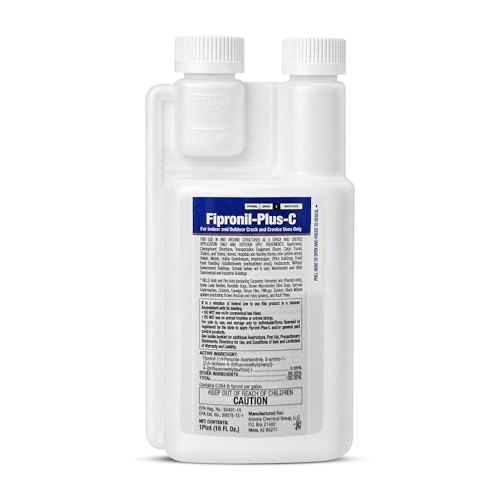
The heavy artillery that wipes out the whole hideout, not just the stragglers.
This is a concentrate built around fipronil — the same active ingredient used in professional-grade termiticides, now at a homeowner-friendly strength of 0.65%. Unlike sprays that kill on contact and stop there, this formula is non-repellent, so stink bugs and ants unknowingly track it back to the nest after walking through a treated zone. The treated population can collapse within days because the poison spreads after bugs walk through the treated zone.
A single 16 oz bottle makes up to 21 gallons of treatment-ready spray. Three dilution rates let you tailor the dose: 0.25 oz/gal for maintenance, 0.75 oz/gal for initial treatments, and 1.5 oz/gal for severe infestations. Buyers report that a heavy ant problem inside the house was solved by spraying a 1.5 oz/gal mix at the outer base of the foundation, with ants gone by day three and no recurrence by day ten.
The trade-off is patience — you will see bug activity for the first 24–36 hours after spraying, because the slow-acting formula is designed to let them carry the poison back before they die. It is also toxic to aquatic life, so you need to keep it away from ponds, streams, and drainage ditches.
Why it dominates
- Non-repellent, so stink bugs don’t avoid treated areas
- Makes 21 gallons — far more coverage per bottle than a ready-to-use
- Residual protection lasts longer than a typical contact spray
Real trade-offs
- Slow kill time (24–36 hours) feels wrong if you want instant results
- Highly toxic to aquatic life; strict handling required near water
Best for heavy perimeter defense: Reach for this if you are tired of re-spraying every week and want a single thorough treatment that lasts for months.
Skip it for quick cleanups: This is not the spray to grab when you see a single bug on your living room wall — reach for the EcoPest or Wondercide for those spot kills.
2. BUGGSLAYER Insecticide Concentrate
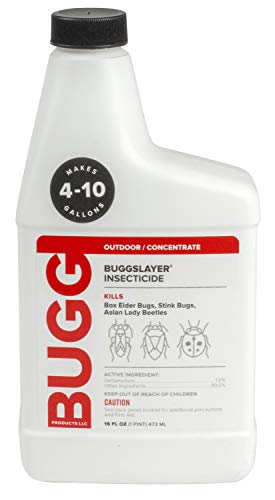
A weather-resistant barrier that keeps stink bugs out for months on a single mix.
This concentrate is built around deltamethrin, a synthetic pyrethroid that forms a long-lasting, odorless, non-staining shield around your home’s foundation, windows, and doors. Unlike the Fipronil Plus-C above, this is a residual spray — bugs must come into contact with the dried treated surface for it to work, but it is not a repellent, so they don’t avoid the barrier.
The water-based formula is weather-resistant and, according to reviewers, did not wash away in the rain. One buyer who had a severe boxelder bug infestation that resisted other professional treatments reported that two applications of BUGGSLAYER reduced the population to zero. Another reviewer in Ohio noted that spraying the window perimeters dramatically reduced stink bug numbers immediately when warm weather arrived.
At 1 pound for the 16 oz bottle, it is the lightest concentrate on this list by weight and requires you to mix it yourself with standard spraying equipment. The manufacturer says it is not a quick-kill knock-down product — expect a slower kill rate compared to contact sprays, but the trade-off is longer protection that can last for months rather than hours.
What stands out
- Odorless and non-staining — no chemical smell around the house
- Weather-resistant — works even after rain
- One buyer’s treatment lasted months after just two applications
What holds it back
- Not a quick-kill spray; slower knockdown than contact formulas
- Requires a separate pump sprayer; not grab-and-go
Great for outdoor perimeters: If you want to treat the outside of your house once and mostly forget about stink bugs for the rest of the season, this is your product.
Not for indoor spot-treating: Skip this if you need a can to kill a bug you can see right now — reach for a ready-to-use aerosol instead.
3. Bonide Japanese Beetle Killer Ready-to-Use Spray

A budget-friendly spray that covers more ground than most in this price range.
You get more applications per purchase without mixing a concentrate because the Bonide bottle holds 32 fluid ounces and weighs 2.4 pounds, versus the 22 oz EcoPest bottle. It is a ready-to-use contact spray labeled for stink bugs, Japanese beetles, aphids, flea beetles, leafhoppers, caterpillars, moths, and Colorado potato beetles, so it is a strong option if you are fighting multiple pests on your ornamentals, vegetables, and shrubs.
The spray is designed for indoor and outdoor residential use, including greenhouses. One reviewer noted they had to reapply after rain, which is typical for contact sprays that don’t have a strong residual barrier. Others report excellent results on fruit trees and grape vines where Japanese beetles were ruining the crop.
One buyer mentioned that after spraying it on plants, Japanese beetles did not die within an hour, which suggests that for some surface types or beetle sizes, the spray may need to hit the bug directly rather than relying on a dried residue.
Why it works
- Large 32 oz bottle — noticeably more volume than similar ready-to-use sprays
- Works on vegetables, flowers, trees, and shrubs, not just hard surfaces
- Ready to use from the start — no mixing, no measuring
Where it falls short
- Washes off in rain — needs reapplication after wet weather
- Some owners mention it does not kill instantly on all plant types
Good for garden multi-pest duty: Reach for this if you are already dealing with Japanese beetles or aphids on your plants and want a single spray that also covers stink bugs.
Not a long-term perimeter barrier: This is a spray for what you see now, not a weeks-long shield around your home’s foundation.
4. Safer Brand Garden Insect Control and Killer Spray

A natural-oil spray that stays gentle on your harvest but tough on stink bugs.
At 1.7 pounds and 24 fluid ounces, the Safer Brand spray is lighter than the 2.4-pound Bonide bottle, which makes it easier to hold during a long garden session. It uses natural oils rather than synthetic chemicals, and the manufacturer says it is safe to use up until the day of harvest on fruits, vegetables, roses, flowers, houseplants, trees, shrubs, and ornamentals. There is no unpleasant odor and no nasty film residue, according to buyers.
The spray kills a wide list of pests — aphids, beetles, boxelder bugs, caterpillars, earwigs, spider mites, and stink bugs — and one owner reported that a single spray eliminated gnats from a houseplant with no return after a month and no harm to the plant. Another buyer noted it killed garden insects almost instantly. You apply it every 5-7 days as long as insects are present.
The catch is that natural oils break down faster than synthetic insecticides, so you need to stay on top of the reapplication schedule. One buyer gave it 3 stars because a week after spraying, the plant had not improved or died, which suggests it may not be strong enough for heavy, established infestations.
Why choose it
- Natural oils — no synthetic pyrethroids, safe around children and pets when used as directed
- Can be used up until the day of harvest on edibles
- No unpleasant odor or filmy residue on plants
Real trade-offs
- Needs reapplication every 5-7 days — no long residual
- May not be strong enough for heavy, stubborn infestations
Built for the organic gardener: Choose this if you are growing vegetables or herbs you plan to eat soon and want a spray that won’t leave synthetic residue on your food.
Not for a major stink bug invasion: If bugs are pouring in through every window crack, you will be frustrated by needing to spray every week.
5. Donaldson Farms Stink Bug Killer Spray

A nature-derived formula that buys you three weeks of quiet per spray on windows and skylights.
This 16 oz spray uses plant- and mineral-based ingredients to create a durable barrier around entry points. The maker says it targets stink bugs on contact and then keeps working to limit future activity. One customer observed that spraying the skylights and windows eliminated the daily 4–10 bugs and the effect lasted for over three weeks.
There is no synthetic pyrethroid smell — buyers describe the scent as toothpaste-like, which fades after half a day. The formula is designed to be safe on counters, floors, bedding, furniture, and clothes, and it leaves no residue to wipe up.
The honesty trade-off: some customers note it only works when you soak the bug directly and does not repel new bugs from entering. One reviewer went through the entire bottle in two days on the same area, which means the barrier is not as long-lasting for everyone as the positive reviews suggest.
What works
- Nature-derived — no harsh chemicals, safe on most household surfaces
- Some reviewers point out 3+ weeks of protection on windows and skylights
- Scent fades quickly — does not leave a strong chemical smell indoors
What doesn’t
- Mixed reviews on how long the barrier actually lasts
- Does not repel bugs — only kills on direct contact with soaking
Nice for light indoor defense: Grab this if you see a handful of stink bugs around windows each day and want a gentle spray that won’t stain your curtains or smell like a chemistry lab.
Not for a full-scale outdoor perimeter: If bugs are marching in by the dozen, you need a heavier-hitting concentrate like the BUGGSLAYER or Fipronil Plus-C.
6. Wondercide Ant & Roach Aerosol Spray

A plant-powered aerosol that kills stink bugs on contact without worrying about dogs or kids licking the floor.
This is a 10-ounce aerosol 2-pack with natural essential oils of lemongrass and geraniol as the active ingredients. Unlike the spray bottles on this list, the aerosol format lets you point and blast a bug from a distance, which is useful when a stink bug is crawling on a ceiling corner or behind a curtain. It is proven to kill over 20 common household bugs including ants, roaches, spiders, fleas, carpet beetles, earwigs, silverfish, and stink bugs.
The plant-powered formula is lab-tested and safe around pets and family when used as directed. Buyers appreciate that they don’t have to worry about residue on the floor where their small dogs walk. However, some shoppers say that the aerosol can has a design flaw — the nozzle tends to clog permanently halfway through the can, wasting product. Another buyer said it works for about 24 hours before needing a re-spray and that it leaves a slippery surface.
If you want a quick-kill aerosol for kitchen and living room spot-treating, this is a solid choice, but you might be better off buying the hand-spray bottle version to avoid the nozzle problem.
Highlights
- Aerosol format — easy to aim at bugs on high ceilings or in tight corners
- Plant-based with lemongrass — smells pleasant, no harsh chemical odor
- Safe around pets when used as directed — no worries about floor residue
Downsides
- Aerosol nozzle frequently clogs halfway through the can
- Only lasts about 24 hours — needs frequent reapplication for ongoing control
Right for quick indoor spot-kills: Use this when you see a single stink bug on your kitchen counter or behind a curtain and want it dead fast without drenching the area in chemicals.
Not a perimeter solution: This won’t keep bugs from entering your home — you need a residual concentrate for that.
7. EcoPest Stink Bug Spray
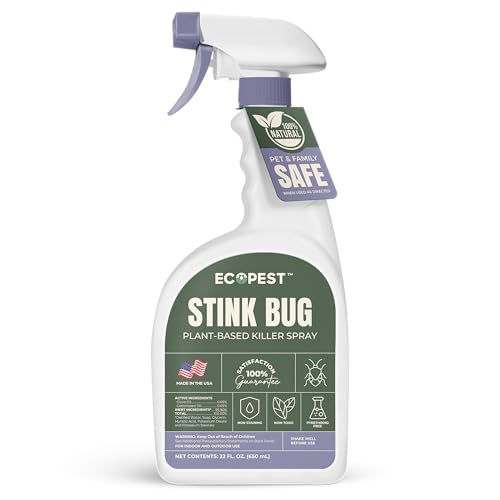
A clove-oil spray that kills on contact but divides reviewers on real-world reliability.
At 22 fluid ounces, this is the second-largest ready-to-use bottle on the list after the Bonide. The formula uses natural essential oils — clove oil and cottonseed oil — and is tested by entomologists. The manufacturer says it is non-toxic and non-staining on counters, floors, bedding, furniture, and clothes, and it requires no cleanup after spraying. You simply shake, hold the bottle 8-12 inches from the bug, and spray directly until wet.
The honest reality from reviews is mixed. One buyer says it is the only product that kills stink bugs for them and that it works instantly. But another reviewer reports that bugs return within 1-2 hours after the spray dries and that a direct spray on the bug did not kill it, leading them to return the bottle. A third review notes that it requires 4-5 close-range sprays to kill a single bug and that the bottle leaks at the sprayer top.
If you are committed to a natural, plant-based formula and are willing to test it yourself, this spray may work well in your specific situation. But the inconsistent reviews suggest it is the most gamble-heavy pick on this list — you might love it or you might be frustrated.
What it offers
- Natural clove and cottonseed oil — no synthetic pyrethroids
- 22 oz bottle with an ergonomic handle and precision spray nozzle
- 100% satisfaction guarantee from the manufacturer
The real trade-offs
- Some buyers report it does not kill stink bugs even with direct spray
- Bugs may return within 1-2 hours after the spray dries
- Multiple close-range sprays needed for a single bug
Perhaps for the natural-first buyer: Try this if you refuse to use synthetic chemicals and want a clove-oil spray that is safe on upholstery and bedding.
Hard to recommend for guaranteed results: Given the number of reviews saying a direct spray did not kill the bug, you may end up frustrated and reaching for a different product anyway.
Understanding the Specs
Barrier vs. Contact Kill
The biggest decision you make is if you want a spray that kills a bug you see right now or one that leaves a dried film that kills bugs later. Contact sprays (like the Wondercide aerosol or the EcoPest spray) work the moment the wet spray hits the bug — but once dry, they offer little future protection. Barrier sprays (like the BUGGSLAYER or Fipronil Plus-C concentrates) form a residual film on surfaces that keeps killing for weeks or months after drying, but they don’t work instantly.
Concentrate vs. Ready-to-Use
A concentrate (like the Fipronil Plus-C or BUGGSLAYER) is a small bottle of undiluted insecticide that you mix with water in a pump sprayer. A ready-to-use spray (like the Bonide or Safer Brand) comes premixed in a trigger-spray bottle and needs no preparation. Concentrates cost less per gallon of finished spray and let you cover a much larger area, but they require a separate sprayer and careful measuring. Ready-to-use bottles are simpler but run out faster on big perimeter jobs.
FAQ
What kills stink bugs instantly on contact?
How long does insecticide last against stink bugs after it dries?
Can I use stink bug spray on my vegetable garden?
Will a natural-oil spray kill stink bugs as well as a synthetic one?
How do I spray around windows and doors without staining the paint?
Is it safe to use stink bug spray indoors with pets and kids?
How many stink bugs will a single bottle treat?
Does rain wash away stink bug spray?
What is the difference between a repellent and a non-repellent insecticide?
Final Thoughts: The Verdict
If you want one dependable pick, the insecticide for stink bugs winner is the BUGGSLAYER Insecticide Concentrate because it balances long-lasting outdoor protection, an odorless non-staining formula, and a price that works for a full perimeter treatment. If you want a longer-lasting residual treatment and are willing to wait 24–36 hours for results, grab the Fipronil Plus-C. And for a simple ready-to-use spray that covers your garden without harsh chemicals, the Safer Brand Garden Insect Control is a solid pick.
How We Picked
We do not accept paid placement. Every pick is matched to a real buyer and a real use-case; we do not hands-on test units.
Sources & Methodology
Specifications: manufacturer listings and product documentation. Review insights: verified customer reviews, as of July 2026. Pricing: not shown on this page (it changes often); check the current price via the retailer link.
As an Amazon Associate, Lawn Gear Lab earns from qualifying purchases. This does not affect which products we feature.