
Specs are compiled from manufacturer listings and verified buyer reviews and can change over time — please confirm the key details on the product page before buying.
You want clean lines between your lawn and flower beds, but the wrong edging turns into a war with creeping grass and bent strips. The key is matching the material to what your ground and your tools can handle — steel for permanence, plastic for curves, and resin for looks.
I’m Rikta — the founder and writer behind Lawn Gear Lab. This guide is built by comparing the manufacturers’ published specifications and the patterns across verified customer reviews, so you get each pick’s real strengths and trade-offs instead of marketing spin.
Whether you are edging a vegetable garden, defining a curved walkway, or bordering a long driveway, the right landscaping edging makes the difference between a weekend project that holds up for years and one you redo next spring.
Quick Picks
- Worth Garden 10-Pack Galvanized Steel Landscape Lawn Edging — Best Overall
- Edge Right Hammer-in Landscape Edging 5-Pack — Built to Last
- Land Guard Corrugated Garden Edging Border 6″×50′ — Massive Coverage
- Master Mark Terrace Board Landscape Coiled Edging — Curve Master
- Beuta Landscape Edging Faux Stone Blocks 4-Pack — Stone-Like Finish
- AGTEK Garden Edging 49FT Landscape Edging Kit — Budget Champion
How To Choose The Best Landscaping Edging
Before you pick a product, three decisions define whether your edging looks good on day one and still looks good three years later: the material, the height, and how you plan to install it. Here is what to look for in each.
Material: the durability equation
Your edging material decides how long it lasts and how much work it needs. Galvanized steel (steel coated with a protective zinc layer to prevent rust) handles weather well and resists damage from weed trimmers, but thicker steel like 16-gauge COR-TEN (a special alloy that forms a protective rust layer instead of deteriorating) can last over a century in the ground. HDPE plastic (a dense, flexible plastic that won’t crack or rot) is lighter and cheaper, but it won’t survive a direct hit from a lawnmower. Resin faux stone blocks give a high-end look but cost more per foot.
Height: what hides below matters
An edging strip that stands 2 inches above ground looks fine, but if it only extends 1 inch below the surface, creeping grass and weeds will tunnel right under it. Look for a buried depth of at least 3 to 4 inches for reliable root-blocking — a 6-inch-tall strip buried 2 inches deep leaves 4 inches underground, which is enough to stop most runners.
Installation style: permanent vs. flexible
Hammer-in steel strips with sawtooth spikes are great for straight lines and gentle curves — you drive them directly into the ground with a mallet. No-dig plastic edging unrolls like a ribbon and uses stakes to hold it in place, making it ideal for tight curves and soft soil. Heavy stone-look panels require digging a trench and hammering spikes, which is more work but gives a very rigid, permanent border. Match the method to your soil: rocky or clay-heavy ground makes hammer-in strips harder to seat without bending.
Quick Comparison
| Model | Best For | Height | Material | Total Length | Amazon |
|---|---|---|---|---|---|
| Worth Garden 10-Pack | Best Overall | 4.5 in | Galvanized Steel | 33 ft | Amazon |
| Edge Right 5-Pack | Heavy-Duty Longevity | 6 in | COR-TEN Steel | 20 ft | Amazon |
| Land Guard 6″×50′ | Value & Coverage | 6 in | Galvanized Steel | 50 ft | Amazon |
| Master Mark Terrace Board | Flexible Curves | 5 in | HDPE Plastic | 40 ft | Amazon |
| Beuta Faux Stone Blocks | Premium Appearance | 6.5 in | Resin | 16 ft | Amazon |
| AGTEK 49FT Kit | Quick No-Dig Install | 3 in | Plastic | 49 ft | Amazon |
In‑Depth Reviews
1. Worth Garden 10-Pack Galvanized Steel Landscape Lawn Edging

Galvanized steel that bends to your curves without bending out of shape.
This 10-pack of hammer-in strips gives you 33 feet of edging in total, with each individual piece measuring 40 inches long. The galvanized steel core — rust-resistant from the zinc coating — plus a powder-coated black finish means you can hit it with a weed trimmer and it will survive. The 4.5-inch height puts 2 inches above ground while the remaining 2.5 inches of sharp sawtooth spikes anchor below the surface, blocking grass runners at the root zone so you spend less time pulling invaders.
Buyers report the metal edging is durable, bends easily for curves, and cuts cleanly with a hacksaw if you need a custom length. The kit includes 11 clips and gloves, so you have everything to link the strips into a continuous line. Unlike the Master Mark plastic option below, this steel edging won’t flex from frost heave or soften in summer heat, making it a more stable border year-round.
The powder-coated black finish has a natural rust-like patina that some buyers actually like — one reviewer noted the rust is evident but they preferred the look. If a uniform matte black is critical, be aware the coating can wear where it contacts tools.
Why It Stands Out
- Galvanized steel with powder coating resists corrosion and trimmer damage
- Sharp sawtooth spikes drive into soil easily without pre-digging a trench
- Flexible enough to form curves but rigid enough to hold a straight line
The Trade-Offs
- Powder coating can show scuffs or rust spots over time in wet soil
- At 4.5 inches total height, the buried depth is shallower than 6-inch options like the Land Guard
Pick this for: a weekend install that handles gentle curves and stays put. It is the best balance of metal durability and easy setup without trenching. If you need a deeper underground barrier to stop aggressive grass, go with the 6-inch Land Guard instead — but you will have to dig a trench for that one.
2. Edge Right Hammer-in Landscape Edging 5-Pack

16-gauge COR-TEN steel that develops a patina, not a problem.
This is the edging you install once and forget about. The Edge Right strips are made from heavy-duty 16-gauge COR-TEN steel, a weathering alloy that forms a stable rust layer on the surface instead of flaking away — so it gets tougher, not weaker, as it ages. Each strip is 48 inches long and 6 inches deep, giving you a full 6 inches of below-ground barrier that stops even the most determined grass rhizomes (underground stems). The 5-pack covers 20 linear feet, and the manufacturer claims this steel can last well over 100 years in the ground.
Unlike the Worth Garden pick above, which uses thinner powder-coated steel, Edge Right relies on the COR-TEN material itself to resist corrosion. The 6-inch depth matches the Land Guard roll edging, but this is a rigid hammer-in strip you drive directly into the soil — no trenching, no backfilling. The 1/4-inch rounded top means no sharp edges for weed trimmers to snag on, and the maker says it can take unlimited abuse from a weed eater without damage.
The natural patina (rust-like surface) develops if you want it or not. Some buyers seal it to preserve a gray look, but the natural finish will shift to a warm brown-orange over time. At a per-foot cost higher than any other option here, it is a buy-once investment for a permanent border.
Standout Strengths
- 16-gauge COR-TEN steel is thicker and more abuse-resistant than standard galvanized strips
- 6-inch full depth blocks deeper root systems
- Rounded top edge eliminates sharp trimmer-snag points
Consider This
- Patina develops naturally and unevenly unless you seal it immediately
- Only 20 feet of coverage in the 5-pack for a higher per-foot cost
This is for you if: you own your property and want a border that outlasts you. The 16-gauge COR-TEN steel is the toughest material here — it will shrug off hits that would dent the thinner Land Guard or Worth Garden strips. Pass it up if: you need tight curves (these strips are stiff) or you dislike any rust-like appearance at all — the natural patina is unavoidable without sealing.
3. Land Guard Corrugated Garden Edging Border 6″×50′
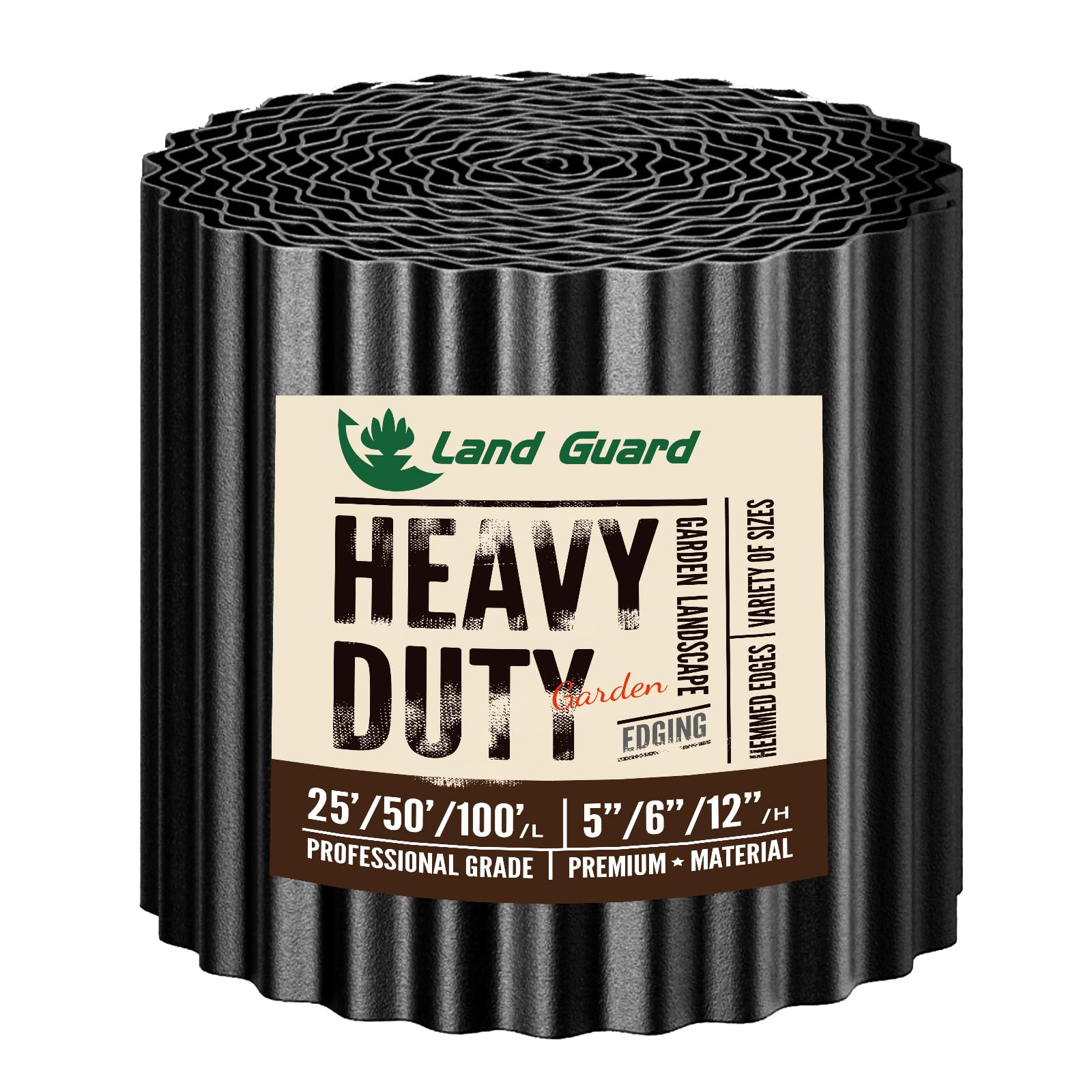
50 feet of corrugated steel that covers a long border for less.
When your border runs the length of a driveway or wraps a large flower bed, this roll gives you the most linear footage for your money at 50 feet total. It stands 6 inches tall and is made from galvanized metal with a 3D ripple pattern that adds structural rigidity — so the strip resists bending under soil pressure better than a flat ribbon. The 600-inch length means you can edge a very long run without splicing joints.
Installation requires digging a shallow trench and backfilling — it is a lay-in-and-cover system, not a hammer-in strip like the Worth Garden or Edge Right picks. The 6-inch height gives you a deeper buried barrier than the 4.5-inch Worth Garden strips, which helps in loose soils where grass runners travel deeper. The corrugated surface also creates a more decorative look above ground compared to a flat metal band, so it doubles as visible trim.
One real difference from the shorter packs is weight: at 4.78 kilograms (about 10.5 pounds), the roll is manageable for one person to carry and uncoil. Owners mention it can kink if you try to reposition it after laying it flat, so you should clear the entire path before unrolling. The 6-inch height is the same as the Edge Right, but this thinner-gauge steel is less resistant to trimmer hits than that 16-gauge COR-TEN option.
Perks of This Roll
- 50 feet of continuous edging minimizes joints and weak points
- Corrugated 3D ripple design looks more intentional than flat strips
- 6-inch buried depth stops deeper weed roots than 4.5-inch options
Potential Hurdles
- Requires trenching and backfilling — not a quick hammer-in job
- Thinner gauge steel than the Edge Right; less resistant to trimmer hits
The budget-savvy choice for: long straight borders where you want maximum coverage and a 6-inch buried depth at a low cost per foot. Skip it for: tight curves, rocky soil that is hard to trench, or anyone wanting a quick hammer-in installation — the Worth Garden is faster if you do not mind the shorter 4.5-inch height.
4. Master Mark Terrace Board Landscape Coiled Edging

HDPE plastic that bends like a ribbon but holds like a board.
For meandering garden paths, circular tree rings, and any border that needs to snake around obstacles, this is your best bet. It is made from HDPE (high-density polyethylene) — the same tough plastic used in cutting boards and outdoor furniture — so it flexes without cracking, and the manufacturer says it won’t chip, fade, rot, or peel for years. The coil is 5 inches tall and 40 feet long, giving you generous coverage in a single roll that handles tight curves better than any steel option here.
Unlike the steel options above, this plastic edging installs by laying it in a shallow trench and pounding the included stakes through the pre-formed holes. The 10 stakes keep it in place, though the maker notes you might need extras in loose soil. The 5-inch height with 1.5 inches buried leaves 3.5 inches above ground — enough to block creeping grass but less below-ground deterrent than the 6-inch steel strips from Land Guard or Edge Right.
The textured wood-grain look is a deliberate design choice that mimics natural bender board, which blends well into rustic or woodland gardens. At 3.59 kilograms (about 7.9 pounds), it is lighter than the Land Guard roll, so it is easy to carry and uncoil. Customers note it cuts easily with a utility knife for custom lengths.
Why It Works for Curves
- HDPE plastic flexes into tight curves without kinking or cracking
- Lightweight coil (3.59 kg / 7.9 lb) is easy to carry and position
- Textured finish looks more natural than plain black plastic
Where It Falls Short
- Does not survive weed trimmer or lawnmower contact — plastic can gouge
- 5-inch height provides less root barrier than 6-inch steel options
Reach for this if: your garden has sweeping curves, multiple tree rings, or soft soil where hammer-in steel would be hard to drive. The flexibility is class-leading by any steel pick here. Look elsewhere if: you want a permanent, trimmer-proof border or need deeper below-ground protection against aggressive creeping grasses — the Land Guard or Edge Right steel strips are far tougher.
5. Beuta Landscape Edging Faux Stone Blocks 4-Pack

Resin blocks that mimic stone but install without mortar.
If appearance is your top priority, these Beuta panels look like real stacked stone from a distance. Each 48-inch-long section is molded into six faux stone blocks in a greystone finish, and the system includes five different block types — Start, Stop, Turn Right, Turn Left, and Extender — so you can build corners and endpoints without visible gaps. The 6.5-inch height is taller than any other pick here, giving you a more substantial visual border and extra mulch-holding capacity to keep deep beds contained.
Reviewers point out the 6.5-inch height works well in deep mulch beds, and one buyer mentioned the sandstone color looks realistic. However, multiple owners caution that this is strictly a straight-line product; you cannot bend it for curves, unlike the flexible Master Mark. For 90-degree corners, one reviewer used cable ties to hold the joint, while the system’s own turn blocks are meant for angles. The included 8 spikes per pack securely anchor each section.
The trade-off is clear: at a per-section cost higher than any other option, this is a premium visual upgrade. Each of the 4 panels covers a 48-inch section, totaling 16 linear feet, so a long border will need multiple packs. The resin material is weather-resistant — rust, fade, and corrosion-resistant — but it is hollow behind the stone face, so heavy impacts from a weed trimmer could crack the outer shell.
Visual Highlights
- Authentic faux stone appearance upgrades any garden bed or walkway
- 5 different block types for clean starts, stops, and corners
- Tallest edging here at 6.5 inches — great for deep mulch beds
Real Limitations
- Straight-line only — no curves, unlike the flexible Master Mark or steel options
- High per-foot cost; a long border needs several packs
- Hollow resin construction is less impact-resistant than solid steel
Choose this for: front-yard flower beds, driveway borders, or any spot where the edging is highly visible and you want a natural stone look without the weight and cost of real stone. Skip it for: long curving borders, high-traffic zones where edging gets hit by tools, or budget-conscious projects needing maximum linear coverage — the Land Guard or AGTEK give you far more feet per dollar.
6. AGTEK Garden Edging 49FT Landscape Edging Kit
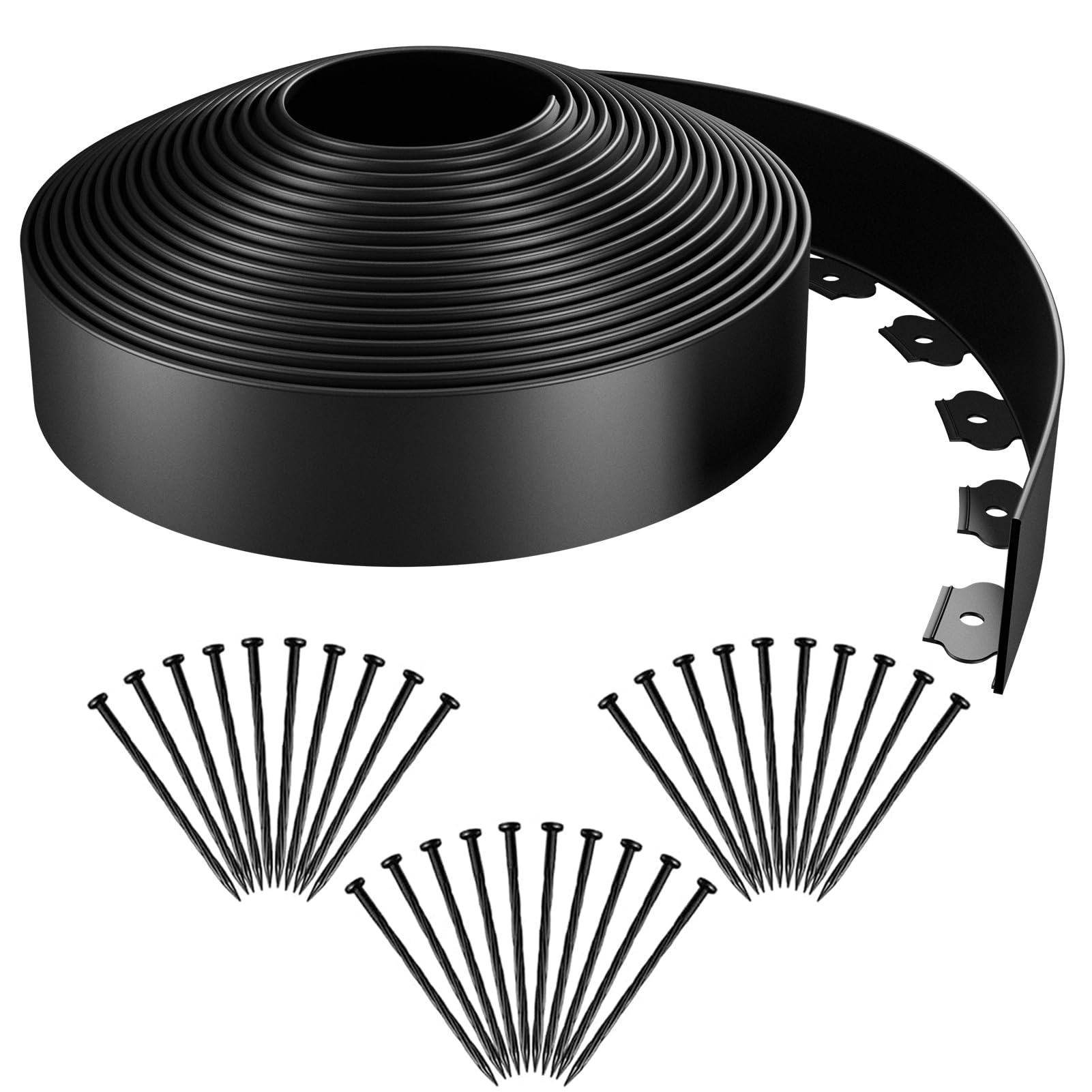
A 49-foot no-dig kit that gets the job done without trenching.
For a quick weekend refresh that does not demand digging, this kit is the simplest install in the lineup. The 3-inch-tall plastic strip unrolls to 49 feet, and you tap it into the soil with a rubber mallet — no trench, no backfill, no stakes beyond the 30 included. The flexible plastic bends easily into curves and right angles, making it the most adaptable pick for irregular garden shapes, even tighter than the Master Mark can handle.
At 3 inches tall, it is by far the shortest option here — the 49-foot length is impressive, but the above-ground height is about half that of the steel options. This matters for two reasons: it will not stop taller grass types from spilling over, and the shallow buried depth means aggressive rhizomes (underground stems) can crawl underneath. Shoppers say it is best used as a visual separator for bark, gravel, or mulch rather than a root barrier for invasive grass.
The AGTEK kit is also the lightest and easiest to handle — the 30 pieces (edging sections plus stakes) weigh very little compared to the 10.75-kilogram Beuta panels or the steel strips. For a container vegetable garden, a small flower bed border, or a temporary edge that you might relocate next season, it is a practical no-regret buy that beats the Master Mark on ease and coverage.
Quick-Hit Perks
- No digging required — tap in with a mallet and you are done
- 49 feet is huge coverage for the money
- Flexible plastic follows any curve or angle
Real Trade-Offs
- Only 3 inches tall — half the height of steel or stone options
- Plastic is vulnerable to trimmer damage and UV brittleness over time
- Shallow root barrier may not stop creeping grasses
Good for: renters, temporary borders, veggie gardens, or anyone who wants a fast, cheap visual boundary for mulch or gravel without hard labor. Not for: permanent installations, aggressive grass-blocking, or areas where the edging will face heavy tool contact — the Worth Garden or Edge Right steel strips will outlast this many times over.
Understanding the Specs
Height and Buried Depth
The total height of an edging strip is split between what you see above ground and what sits below. A 6-inch strip buried 2 inches leaves 4 inches below the surface — that buried portion is what stops grass roots and rhizomes from tunneling under. Short edging (3 inches) is fine for light mulching, but for perennial beds or lawns with aggressive runners like Bermuda grass, aim for a buried depth of at least 4 inches.
Material vs. Lifespan
Standard galvanized steel (zinc-coated) resists corrosion for years but can rust at cut ends or scratch points. COR-TEN steel goes a step further: it forms a protective patina when exposed to the elements and is rated to last over 100 years. HDPE plastic is rot-proof and flexible, but UV exposure can make it brittle after a few seasons, and it melts under a weed trimmer. Resin faux stone stands up to the weather as long as it is not cracked.
Installation Methods Explained
Hammer-in edging uses sharp spikes or sawtooth edges along the bottom — you drive it directly into the ground with a mallet, no digging. This works best in soft, loamy soil. Trench-and-backfill edging (like the Land Guard roll) requires you to dig a shallow slot, place the edging, and refill the soil around it — more work but a more secure hold, especially in heavy clay. No-dig plastic edging taps into the surface layer and uses separate stakes; it is the easiest but least permanent method.
Continuous Length vs. Segments
Edging comes in rolls (continuous strip) or as individual segments. Rolls give you one smooth line with no joints for weeds to penetrate, but they must be unrolled carefully to avoid kinking. Segments or packs of strips (like the Worth Garden 10-pack) let you add more later or replace a damaged section without redoing the whole border. Each approach works best for different projects: rolls for long straight borders, segments for curved or incremental installations.
FAQ
Will landscaping edging stop Bermuda grass from spreading into my flower beds?
Can I use metal edging on a curved garden path?
How deep should I bury landscape edging for best results?
Does COR-TEN steel rust and will it stain surrounding soil or concrete?
What is the difference between HDPE plastic edging and the recycled rubber type?
How much edging do I need for an average garden bed?
Can I cut metal landscape edging to a shorter length?
Will plastic edging crack in freezing winter temperatures?
How do I install edging in hard or rocky soil?
Is faux stone edging as durable as real stone?
Final Thoughts: The Verdict
For the majority of shoppers, the landscaping edging winner is the Worth Garden 10-Pack because the galvanized steel gives you the best balance of durability, easy hammer-in installation, and realistic cost per foot. If you want the absolute toughest material that will look better as it ages, grab the Edge Right 5-Pack for its 16-gauge COR-TEN steel. And for a fast, no-regret budget option or a temporary border, the standout is the AGTEK 49FT kit in sheer value and simplicity.
How We Picked
We do not accept paid placement. Every pick is matched to a real buyer and a real use-case; we do not hands-on test units.
Sources & Methodology
Specifications: manufacturer listings and product documentation. Review insights: verified customer reviews, as of July 2026. Pricing: not shown on this page (it changes often); check the current price via the retailer link.
As an Amazon Associate, Lawn Gear Lab earns from qualifying purchases. This does not affect which products we feature.