
Specs are compiled from manufacturer listings and verified buyer reviews and can change over time — please confirm the key details on the product page before buying.
Stop mulch from washing onto the lawn. Keep grass roots from invading your flower beds. Give your yard a crisp, polished line that plastic edging just can’t hold — that is what metal landscape edging does. The trick is picking the right height, length, and install style for your specific soil and project size.
I’m Rikta, the founder behind Lawn Gear Lab. This guide is built by comparing manufacturers’ published specs and patterns across verified customer reviews, so you get each pick’s real strengths and trade-offs.
Whether you are edging a vegetable plot, outlining a gravel path, or locking back aggressive bermudagrass, the right metal landscape edging blends fast DIY installation with years of weather-beating durability.
Quick Picks
- Corrugated Garden Edging,12″×20Ft Galvanized Steel Landscape Edging & Lawn Edging Border — Root Blocker
- 33ft. Galvanized Steel Landscape Edging (10-Pack) – 40″ Metal Edging for Landscaping with 11 Stakes — Low-Profile Pro
- Worth Garden 10-Pack Galvanized Steel Landscape Lawn Edging – 4.5in H Black Powder Coated Bendable Metal Strips — Path Performer
- Land Guard Corrugated Garden Edging Border, 6″×50′ Landscape Paver Edging — Best Overall
- 20ft. 6-Pack Galvanized Steel Landscape Edging – 40″ L x 6″ H Lawn Edging with 6 Stakes — Precision 6-Pack
- 50FT Black Corrugated Metal Landscape Edging – Flexible & Rustproof Garden Edging Border — Budget Roll
- Quibbay Corrugated Metal Garden Edging, 4″×100Ft Landscape Edging Border for Lawn, Flower Bed and Garden — Max Coverage
How To Choose The Best Metal Landscape Edging
Metal edging is simpler than it looks: you match the height to what you are blocking and the length to your yard. Three things separate a weekend success from a frustrating re-do.
Height Matters — 4 Inches vs. 12 Inches
Short edging around 4 inches works fine for defining a flower bed border or keeping mulch off the sidewalk. But it won’t stop aggressive rhizome grasses like bermudagrass — a grass that spreads underground through stems called rhizomes. You need at least 8 or 12 inches to block those roots below the surface, as one reviewer confirmed after testing an 8-inch height against bermudagrass. Taller edging also holds back more soil erosion on sloped beds.
Continuous Rolls vs. Hammer-In Panels
A continuous roll (50 or 100 feet) gives you a smooth, uninterrupted line without joints — great for long, curving borders. Individual hammer-in panels (each around 40 inches long) are easier to handle solo, come with stakes for anchoring, and let you replace one section if it gets damaged. Choose rolls for smooth, long runs; choose panels for straight beds or projects where you might want to adjust the layout later.
Coating and Material — Galvanized + Powder Coat Wins
Plain galvanized steel — steel coated with a layer of zinc to prevent rust — resists corrosion on its own. But a powder-coated finish on top adds another layer of protection against scratches, UV rays, and freeze-thaw cycles. The black powder coat also blends into soil and mulch better than bare silver metal. If your yard gets heavy rain or snow, spend the small premium on a coated product — it will look new years longer.
Quick Comparison
| Model | Best For | Height | Total Length | Style | Amazon |
|---|---|---|---|---|---|
| GTSABWAY 12″×20′ | Root blocking | 12 in | 20 ft | Continuous roll | Amazon |
| STIRLINGEAR 33ft Panel Kit | Clean low-profile borders | 5 in | 33 ft | 10 panels + stakes | Amazon |
| Worth Garden 4.5in Panel Kit | Flexible path edging | 4.5 in | 33 ft | 10 panels + clips | Amazon |
| Land Guard 6″×50′ | All-around value | 6 in | 50 ft | Continuous roll | Amazon |
| STIRLINGEAR 6-Panel 6in | Precise small beds | 6 in | 20 ft | 6 panels + stakes | Amazon |
| STIRLINGEAR 50’×5.5″ | Budget large runs | 5.5 in | 50 ft | Continuous roll | Amazon |
| Quibbay 4″×100′ | Max coverage per dollar | 4 in | 100 ft | Continuous roll | Amazon |
In‑Depth Reviews
1. Corrugated Garden Edging,12″×20Ft Galvanized Steel Landscape Edging & Lawn Edging Border
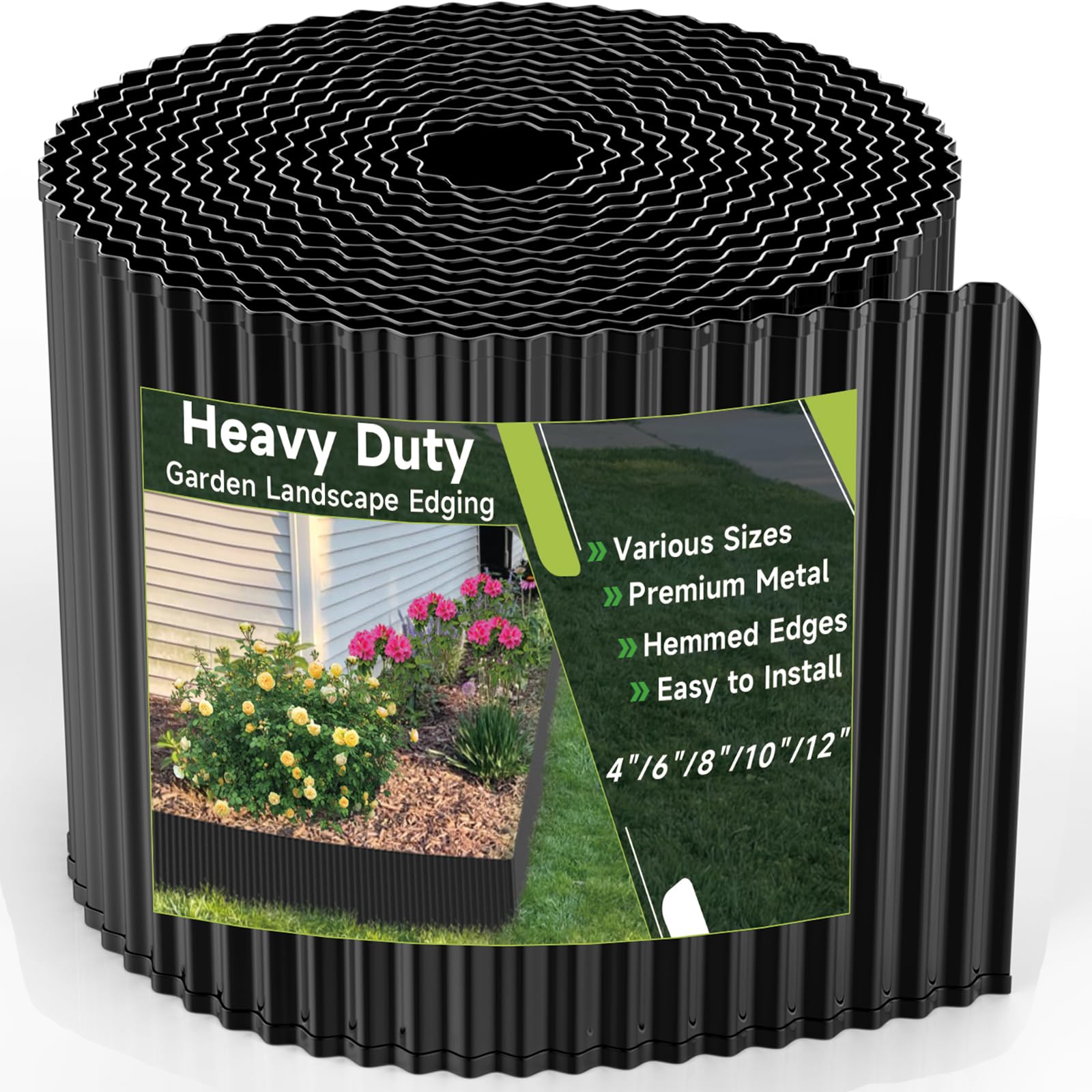
The tall barrier that buries deep to stop the toughest runners.
At 12 inches tall, this is the only pick that gives you serious below-ground reach — enough, buyers report, to actually block bermudagrass roots if kept weed-eaten. That is 12 inches versus the Quibbay 4-inch roll and 12 inches versus most 6-inch options, so you are getting deep-root protection that short edging simply cannot provide. The 12-inch height means about 10 inches can sit underground to stop rhizomes, so those invasive stems stay out of your bed.
Made from premium galvanized steel with rolled top and bottom edges, it bends into curves without cracking and has no sharp edges — one reviewer specifically called out the lack of sharp edges as a plus. Installation is straightforward: cut the ground with a flat shovel, then pound it in with a mallet and a 2×4. The 20-foot length works well for a single long bed or a few smaller enclosures.
The trade-off is length — at 20 feet, this covers far less ground than the 50-foot Land Guard roll (6 inches tall) or the 33-foot panel kits. If you are edging a large perimeter, you will need multiple rolls. But for a flower bed that actually needs root containment, nothing else here goes as deep.
What makes it exceptional
- 12-inch height blocks aggressive roots (tested against bermudagrass)
- Rolled edges keep installation safe — no sharp metal cuts
- Galvanized steel is thick yet flexible for smooth curves
The one limit to know
- Only 20 feet per roll — large projects need multiple units
Reach for this if: your yard has invasive grass or you need a 12-inch barrier to stop soil erosion on a slope.
Look elsewhere if: you need to edge a long driveway or a full lawn perimeter — the short roll length makes that expensive.
2. 33ft. Galvanized Steel Landscape Edging (10-Pack) – 40″ Metal Edging for Landscaping with 11 Stakes

A panel system that stays put with stakes and sits low enough to mow right over.
Each of the 10 panels is 40 inches long and 5 inches tall, with 3 inches of that designed as underground stakes — so only 2 inches of powder-coated black steel sits visible above the soil. That is a notably clean, low profile that runs a mower blade right over without resistance, unlike taller continuous rolls that force you to weed-eat along the top edge. Buyers confirm the powder coating (a baked-on protective paint layer) resists rust and scratches.
The kit includes 11 stakes for anchoring, and the galvanized steel with powder coating gives long rust resistance. Buyers praise the easy installation — “no cutting, no nothing hard” — and the included gloves are a nice touch since metal edges can be sharp. At 17 pounds total, it is a substantial kit that feels built to last.
Unlike the Worth Garden 4.5-inch panel kit, this one offers a 5-inch height. That extra half-inch means a slightly deeper anchor without raising the visible profile above 2 inches. If you prefer a more pronounced border, the 6-inch Land Guard roll shows more metal above the soil.
Solid decision: best for anyone who wants a mow-over border that does not require digging a trench — just hammer, stake, and move on.
Grab this for: a clean modern edge along a driveway, pathway, or patio where you want a subtle separation that the lawnmower won’t fight.
skip it if: you need a visible tall border to contain deep mulch or block creeping grass roots below 3 inches.
3. Worth Garden 10-Pack Galvanized Steel Landscape Lawn Edging – 4.5in H Black Powder Coated Bendable Metal Strips

A hammer-in border that bends tight curves without fighting you.
The 4.5-inch height is split so 2 inches stays above ground while the 2.5-inch sharp saw teeth anchor below — a design that makes installation as simple as tapping it into place with a rubber mallet. Buyers confirm the metal is durable yet flexible enough to shape around decorative curves, and it cuts cleanly with a hacksaw for custom lengths.
You get 10 panels (33 feet total installed) with 11 seven-inch clips for extra stability between sections, plus gloves in the box. The powder-coated black finish on alloy steel resists rain and snow corrosion. Compared to the STIRLINGEAR 33-foot kit, this one uses a clip system instead of separate stakes — some users find clips easier to align, while others prefer stakes for raw holding power.
Just note the 4.5-inch height: it is great for defining a path or garden bed edge, but it will not stop deep rhizomes. One reviewer noted the metal has a rust-like appearance that they liked, but the brand notes that is the natural patina, not a sign of failure.
Why it stands out
- Sharp 2.5-inch saw teeth bite into soil for instant hold
- Flexible enough for tight-radius curves and circles
- Includes 11 clips and gloves — everything in one box
Where it is limited
- 4.5-inch height is too shallow to block invasive grass roots
Best fit for: curved pathway borders, front-yard flower beds, and any DIY project that needs a flexible, easy-to-install edging without digging.
Not for: anyone fighting bermudagrass or needing a tall visible barrier — step up to the 12-inch GTSABWAY roll.
4. Land Guard Corrugated Garden Edging Border, 6″×50′ Landscape Paver Edging
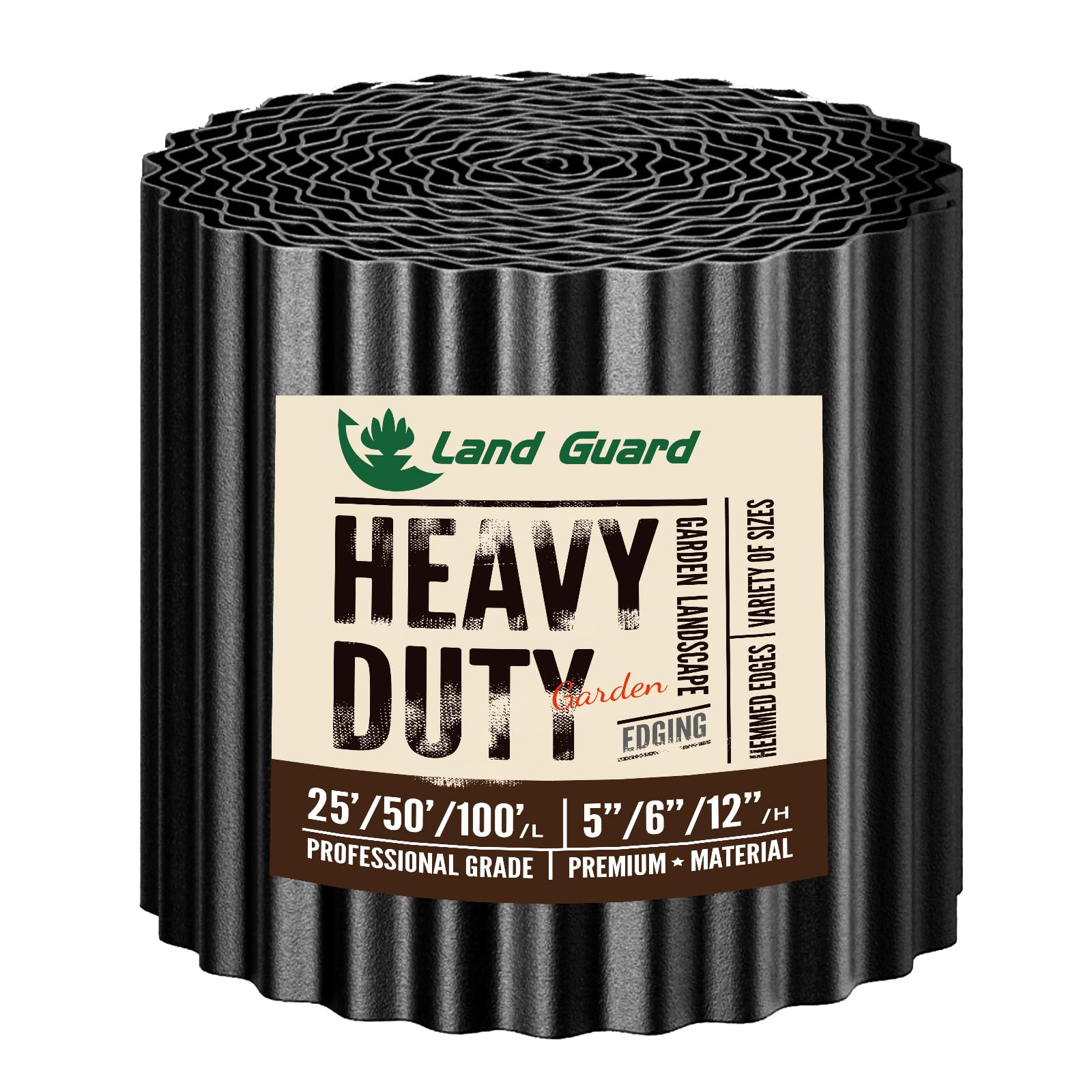
the balance of height, length, and price — a smooth 50-foot roll that does it all.
For most yards, 6 inches tall and 50 feet long is the just-right combination: tall enough to hold back mulch and common grass roots, short enough to install without a major excavation. The Land Guard roll hits that mark exactly, using high-precision CNC-formed (computer-controlled cutting) galvanized steel with a 3D ripple design that adds structural strength while looking modern. At 6 inches, it stands taller than the 4.5-inch Worth Garden and the 4-inch Quibbay options, giving noticeably better soil retention.
Buyers call it “sturdy and easy to install” — one reviewer used a piece of wood and a rubber mallet to tap it into soft soil, while another found it worked perfectly as a chicken barrier thanks to the flexible, durable design. Installation varies by ground: push into soaked soft soil, or dig a narrow trench for firm earth and backfill. The 4.78-kilogram weight (about 10.5 pounds) is manageable for one person to unroll and position.
Unlike the 4-inch tall Quibbay 100-foot roll, the Land Guard’s 6-inch height gives it a much more substantial presence. It is the pick that satisfies the largest number of landscaping needs — edging, containment, decoration — without the premium price of the panel kits.
One-line verdict: the best balance of coverage, ease, and price for a mid-size yard project — a confident choice for most buyers.
Reach for this if: you have a single large bed or a few medium borders and want a smooth look without joints.
pass on it if: you need deep root-blocking (12 inches required) or prefer a hammer-in panel system with stakes.
5. 20ft. 6-Pack Galvanized Steel Landscape Edging – 40″ L x 6″ H Lawn Edging with 6 Stakes
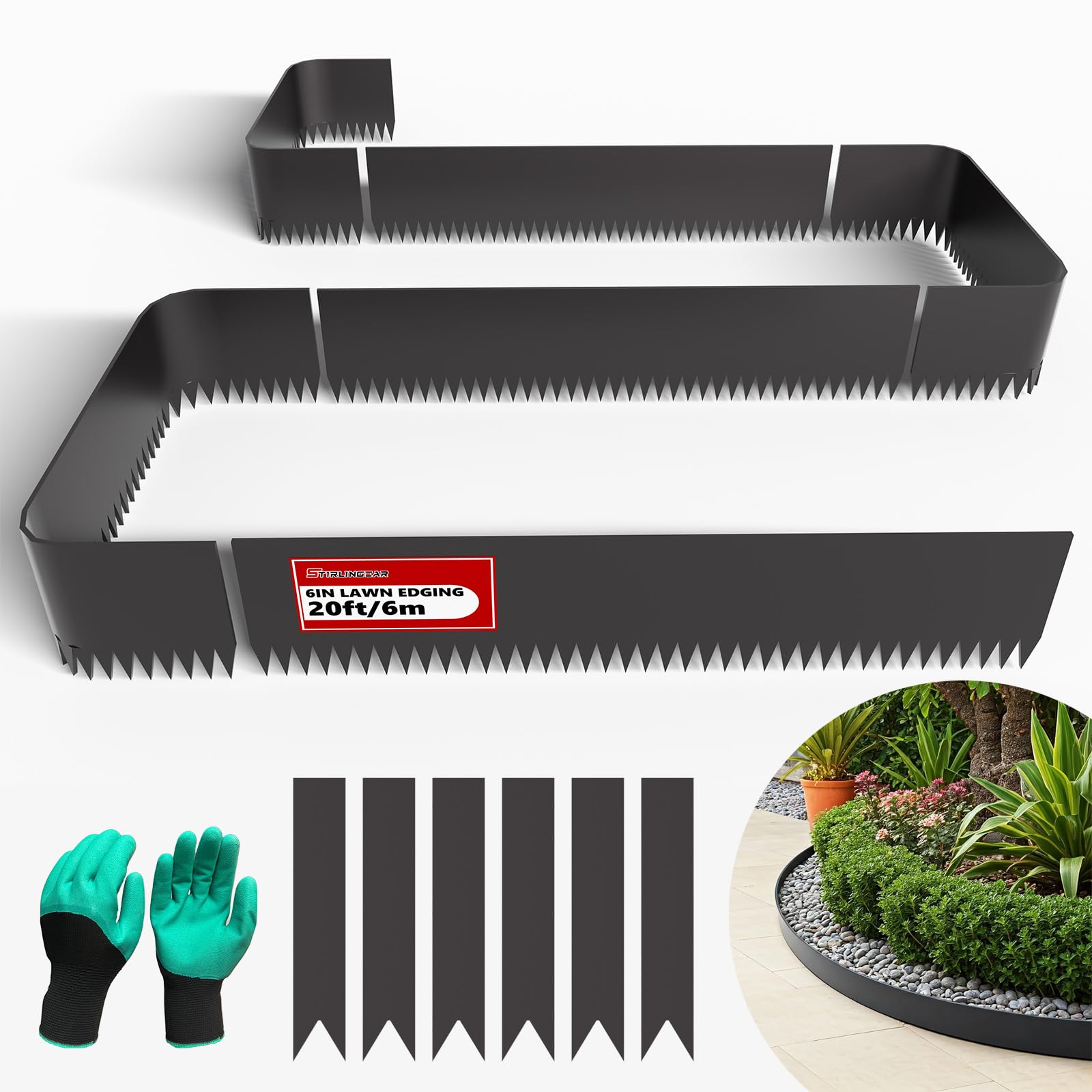
Six interlocking panels that connect smoothly for a continuous, clutter-free border.
Each 40-inch panel is 6 inches tall and made from rust-resistant galvanized steel — and the standout design feature is the smooth connection system that eliminates gaps between panels. That means no weak spots where grass can squeeze through, unlike clip-together kits that sometimes leave small openings. Buyers confirm the installation is straightforward: secure the connectors with a rubber mallet, and the border stays uniform and polished. One buyer mentioned it was “the easiest edging to install” and looked much better than plastic alternatives.
At 20 feet total, this 6-pack is sized for a single garden bed, tree surround, or small pathway. It is flexible enough to curve around planters, yet sturdy enough to hold its shape once set. The stakes are integrated into the design, giving each panel a solid anchor without needing extra hardware.
Compared to the continuous Land Guard 50-foot roll, this panel system gives you a more defined, uniform edge with no risk of the metal curling during installation. The trade-off is shorter total length — at 20 feet versus the Land Guard’s 50 feet, budget buyers may want more coverage per dollar.
What makes it click
- smooth connectors create one clean, continuous line
- Stakes hold each panel firmly — no digging required
- Flexible steel bends easily for curves without losing shape
The shortfall
- 20 feet is a short run — you may need two packs for a full perimeter
Best for: creating a high-end border around a single prominent bed or tree ring without dealing with a long roll.
Consider a longer option if: you need to edge half a football field of beds — the Land Guard roll gives 50 feet at a better cost-per-foot.
6. 50FT Black Corrugated Metal Landscape Edging – Flexible & Rustproof Garden Edging Border
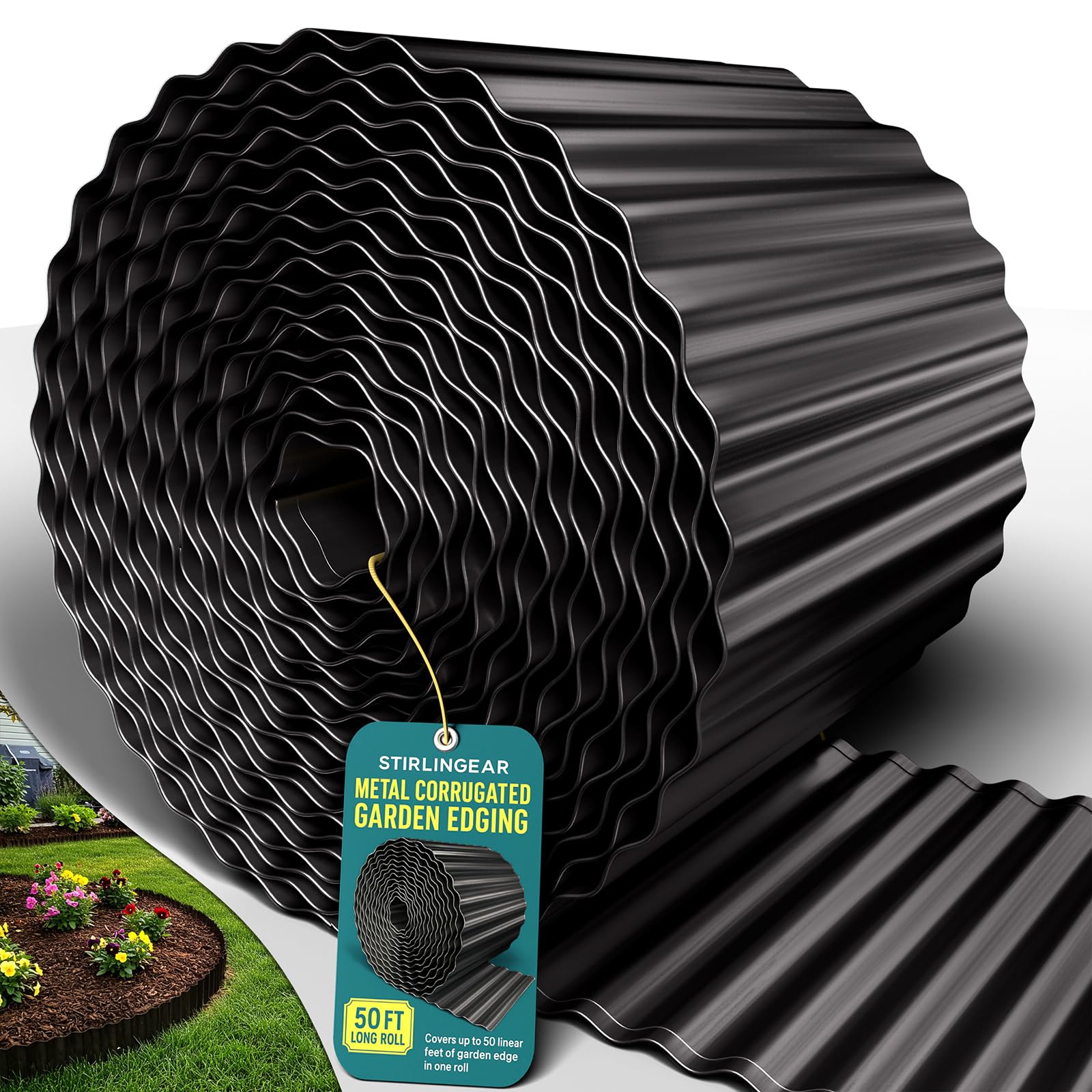
A 50-foot roll at an entry-level price that covers large areas for less.
At 5.5 inches tall and 50 feet long, this is the most affordable way to edge a big yard without buying multiple packs. The corrugated galvanized steel with a black coating resists rust across all seasons, and the flexible design lets you shape it around beds, trees, or driveways. Owners mention good results using it to divert gutter water and create tree rings — one reviewer dug a shallow trench with a pick axe and found it worked well for 3-foot circles around shrubs.
However, the tool-free “press or lightly hammer” installation that the listing promises can be optimistic in real-world soil. One owner reported that “the method of hammering didn’t work as well as I’d hoped,” and they ended up digging a trench with an edging tool instead — and even then, wind storms still blew sections out of the ground. In soft soil, you will likely need to trench for a snug fit; in firm clay, hammering works better.
Compared to the Land Guard roll, this one is 5.5 inches tall versus 6 inches and comes from a less specialized brand. The Land Guard also has a slightly heavier-duty feel in reviews, so if you can stretch the budget, it is the upgrade.
Bottom line: a solid budget option if you are patient with trenching, but be ready to dig if your soil is loose or sandy.
Choose this for: large-area edging on a tight budget — 50 feet covers a lot of ground cheaply.
Pass on this if: you want a true hammer-in install or need a taller barrier — the 6-inch Land Guard or 12-inch GTSABWAY are better bets.
7. Quibbay Corrugated Metal Garden Edging, 4″×100Ft Landscape Edging Border for Lawn, Flower Bed and Garden
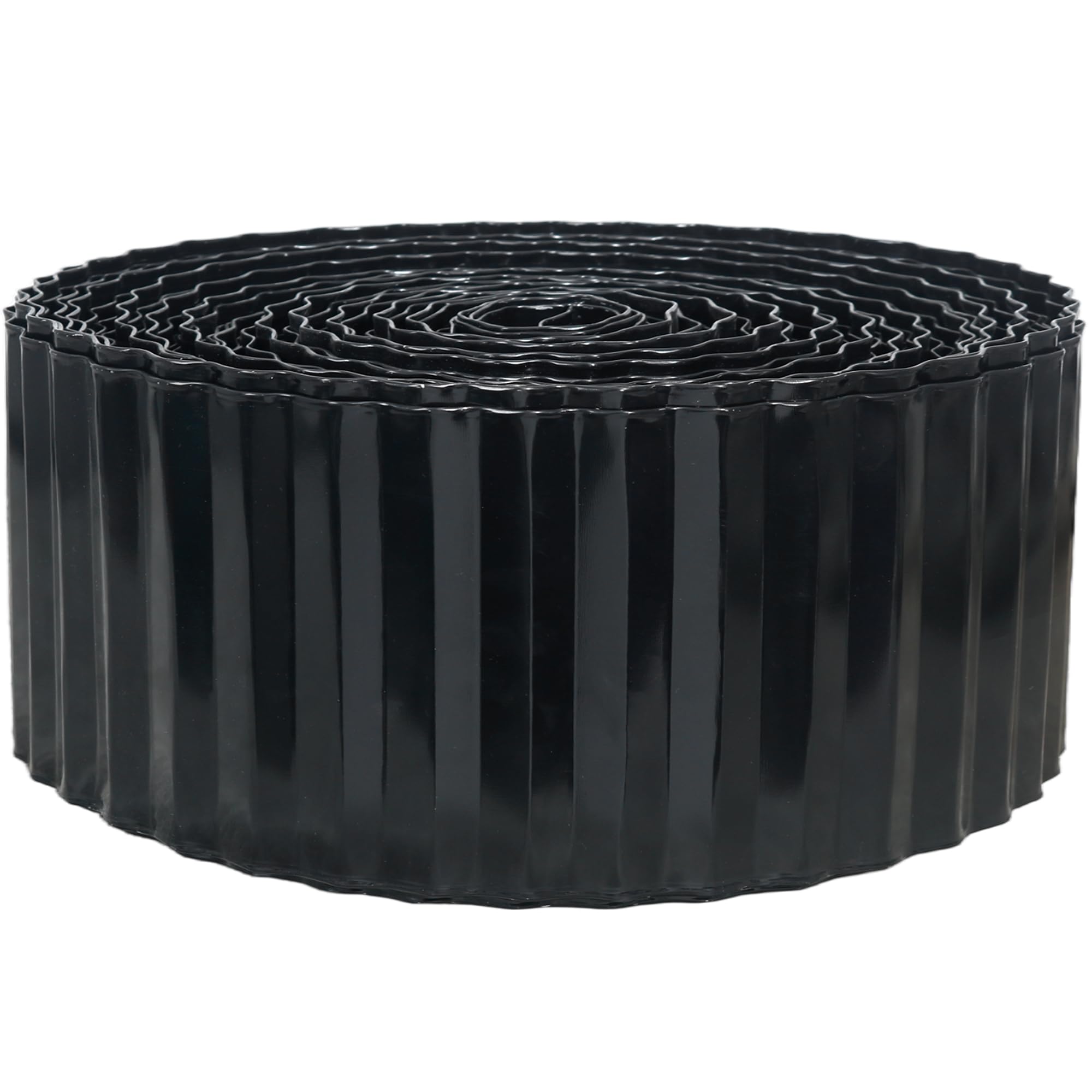
The longest single roll — 100 feet — for defining large perimeters without a single joint.
If you need to edge a long driveway, a massive garden, or an entire yard, this is the only 100-foot roll in the lineup — 100 feet versus the 50-foot Land Guard and STIRLINGEAR rolls. At just 4 inches tall, it keeps a low profile that is perfect for a subtle border between lawn and pathway, where you want separation without a visible wall. Buyers confirm the hemmed edges (folded over to eliminate sharpness) make it “safe and easy to handle” and that it “installed easily, even in the heavy soil.”
The corrugated design adds a modern look, and the 7.28-kilogram weight (about 16 pounds) feels substantial. One customer observed it works well for containing decomposed granite, though it can bend when stepped on — so it is better for low-traffic edges than for high-traffic walkways. A freeze-thaw cycle can push it out of the ground in a few spots, meaning it needs some annual maintenance, unlike the deeper-anchored panel systems.
At 4 inches, this is the shortest edging in the roundup — compare that to the 12-inch GTSABWAY or the 6-inch Land Guard. If you just need to mark a boundary and keep mulch off the grass, 4 inches is fine. If you need to stop weeds or soil movement, you will want something taller.
Why it stands out
- 100 feet of continuous coverage — no joints, no gaps, one install
- Hemmed edges are truly safe to handle without gloves
- Flexible steel bends into shapes like hearts, ovals, and circles
The two catches
- 4-inch height is too short for root-blocking or tall mulch retention
- May shift out of ground during freeze-thaw cycles — plan for touch-ups
Perfect for: outlining a winding gravel path, tree rings, or a large flower bed where seamlessness matters more than height.
Not the right pick if: you have aggressive bermudagrass or need a strong barrier — step up to a taller option like the Land Guard or GTSABWAY.
Understanding the Specs
Height (Inches)
This is the single most important spec for how your edging will perform. A 4-inch height is fine for marking a boundary or keeping light mulch in place, but will not stop aggressive grass roots. At 6 inches, you get decent root resistance and good soil retention for most beds. An 8 to 12-inch height is what you need for deep-rooted invaders like bermudagrass or for sloping areas where soil erosion is a problem — the extra depth gives you a real underground barrier.
Total Length (Feet)
Rolls range from 20 feet up to 100 feet, and panel kits usually cover 20 to 33 feet. Before buying, measure the perimeter of the bed you want to edge and add 10 percent for overlap and waste. A 50-foot roll is the most practical middle ground for a typical suburban bed or two. Continuous rolls give you a smooth line without gaps, while panel kits (each piece is about 40 inches) are easier to install alone but have visible joints.
Coating & Material
Galvanized steel is the baseline — a zinc coating that resists rust. A powder-coated layer on top adds extra protection against scratches, UV rays, and winter salt. Black powder coating is the most common and blends into soil and mulch. Some edging develops a natural rust patina over time that some buyers like, but a powder-coated finish keeps the original color much longer. If you live in a wet or snowy climate, spend the small extra for powder-coated steel.
Install Style: Continuous Roll vs. Panel Kit
Continuous rolls (like the Land Guard or STIRLINGEAR 50-foot) are trench-and-hammer — you dig a narrow slit, insert the metal, and backfill. The result is a single unbroken line. Panel kits (like the Worth Garden or STIRLINGEAR 33-foot) come as individual strips with stakes or clips. You hammer each panel into the ground and connect them. Panel kits are easier to transport and replace, but have visible seams. Rolls look cleaner but take more precision to lay straight.
FAQ
How deep should I bury metal landscape edging?
Will metal landscape edging rust over time?
Can I cut metal edging to a custom length?
How do I install metal edging in hard or rocky soil?
Is metal edging better than plastic or rubber edging?
What is the difference between corrugated and smooth metal edging?
How do I connect two pieces of metal edging together?
Will metal edging keep out creeping grass like bermudagrass?
Can I use metal edging around trees without damaging the roots?
How do I straighten metal edging if it gets bent during shipping or installation?
Final Thoughts: The Verdict
For most buyers, the winner is the metal landscape edging winner: the Land Guard 6″×50′. It blends the best height (6 inches), a smooth 50-foot length, and easy installation at a fair price. If you need to stop aggressive grass roots, grab the GTSABWAY 12″×20′ for its deep underground barrier. And for a clean, low-profile edge that the mower can roll over, the STIRLINGEAR 33ft Panel Kit keeps only 2 inches above the soil.
How We Picked
We do not accept paid placement. Every pick is matched to a real buyer and a real use-case; we do not hands-on test units.
Sources & Methodology
Specifications: manufacturer listings and product documentation. Review insights: verified customer reviews, as of July 2026. Pricing: not shown on this page (it changes often); check the current price via the retailer link.
As an Amazon Associate, Lawn Gear Lab earns from qualifying purchases. This does not affect which products we feature.