
Specs are compiled from manufacturer listings and verified buyer reviews and can change over time — please confirm the key details on the product page before buying.
If your aloe vera keeps turning to brown mush at the base, the problem is almost certainly the soil. Aloe roots are desert roots — they need to breathe and dry out fast, not sit in a damp, dense mix that holds water like a sponge. The single biggest mistake is grabbing any old potting bag, and that is exactly what you should stop doing today. This guide cuts through the marketing to show you exactly which aloe soil mixes actually drain fast enough and which ones you need to fix before using.
I’m Rikta — the founder and writer behind Lawn Gear Lab. This guide is built by comparing the manufacturers’ published specifications and the patterns across verified customer reviews, so you get each pick’s real strengths and trade-offs instead of marketing spin.
Aloe vera needs a gritty, fast-draining mix that lets water run straight through and dries out within a day or two. The six products here cover the range from budget-friendly blends you must amend to premium options you can pour straight from the bag and trust immediately.
Quick Picks
- Soil Sunrise Cactus and Succulent Potting Mix (8 Quarts) — Best Overall
- Rosy Soil Cactus & Succulent Potting Mix, 8 Quarts Total (Pack of 2) — Peat-Free Pick
- Hoffman 10404 Organic Cactus and Succulent Soil Mix, 4 Quarts — Pest Buster
- Midwest Hearth Cactus & Succulent Potting Soil Mix, 4 Dry Quarts — USA Blend
- Potting Soil for Aloe Vera Plants (NOVA-TERRA), 2.4 Quarts — Budget Bag
- Miracle-Gro Succulent Potting Mix, 4 Quarts — Beginner Fix
How To Choose The Best Aloe Soil
Your aloe vera will rot if its roots stay wet, so the soil must drain fast. You want a mix that feels coarse, chunky, and light in your hand — not dense or muddy.
The One Rule: It Must Drain Fast
A mix with large particles like pine bark, pumice, perlite, or sand creates air pockets that let water flow through quickly. If the fine print lists “sphagnum peat moss” as the first ingredient, that mix will hold water too long for aloe and needs extra perlite or pumice added.
Peat vs Peat-Free
Peat moss acts like a sponge — great for moisture-loving ferns, bad for aloe. Peat-free mixes using coco coir, pine bark, or calcined clay drain more freely and are less likely to compact over time. If you see “peat moss base” in a review, plan to amend it.
Quick Comparison
| Model | Best For | Volume | Item Weight | Base Ingredients | Amazon |
|---|---|---|---|---|---|
| Rosy Soil Cactus & Succulent Potting Mix | Peat-free premium ready-to-use | 8 Quarts | — | Peat-free, worm castings, microbes | Amazon |
| Soil Sunrise Cactus and Succulent Potting Mix | True gritty mix, no amendments | 8 Quarts | — | Pine bark, silica sand, calcined clay, pumice | Amazon |
| Hoffman 10404 Organic Cactus and Succulent Soil Mix | Lightweight, pest-gnat control | 4 Quarts | 1 Pounds | Compost and peat moss | Amazon |
| Midwest Hearth Cactus & Succulent Potting Soil Mix | Ready-to-use USA-made | 4 Quarts | — | Peat moss, perlite, vermiculite | Amazon |
| Potting Soil for Aloe Vera Plants (NOVA-TERRA) | Single-container budget bag | 2.4 Quarts | 2.08 Pounds | Course sand, canadian peat, pinebark | Amazon |
| Miracle-Gro Succulent Potting Mix | Beginners mixing familiar brand | 4 Quarts | 0.79 Kilograms | Sphagnum peat moss, processed forest products | Amazon |
In‑Depth Reviews
1. Soil Sunrise Cactus and Succulent Potting Mix (8 Quarts)
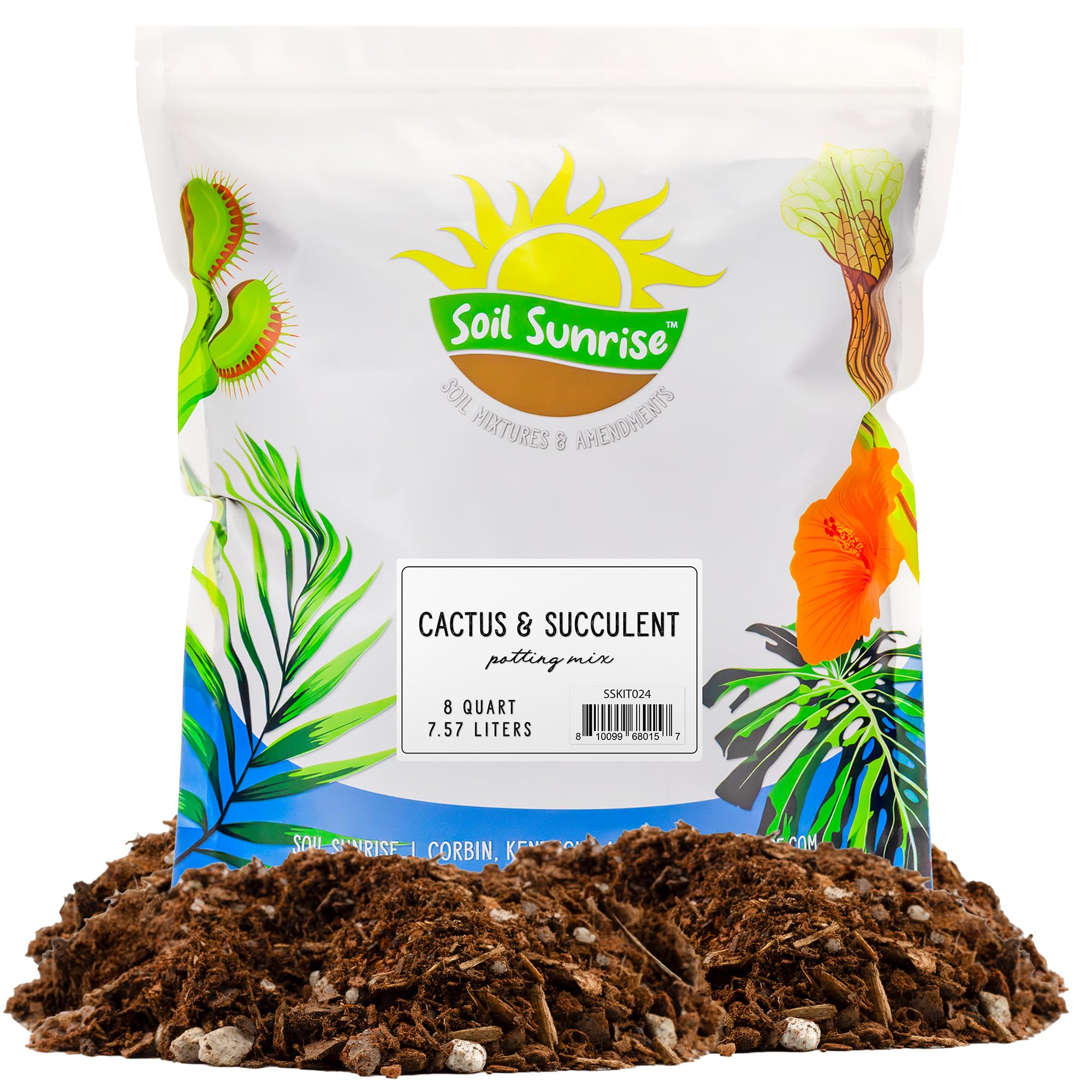
The bag that feels like actual desert ground, not damp potting fluff.
Open this bag and you see the difference immediately — pine bark, silica sand, calcined clay, and pumice, not a brown sludge. It is a genuine gritty mix that drains fast and stays chunky, meaning your aloe roots get the air they need right out of the bag. Buyers report it needs no amendments, unlike many big-brand bags that require extra perlite.
At 8 quarts, you have enough to fill a big 12-inch pot, giving you double the volume of the 2.4-quart NOVA-TERRA bag without needing a second purchase. The hand-mixed quality gets consistent praise: owners mention no smells, no gnats, and a visible and tactile quality difference compared to standard topsoil mixes.
What it does right
- True chunky gritty texture — pine bark, silica sand, calcined clay, and pumice
- Requires zero amendments; pour and plant
- 8 quarts fills a big 12-inch pot in one go
One note
- Premium price reflects the hand-mixed small-batch nature
Who it wins for: Anyone who wants a true gritty mix ready from the bag without buying extra perlite or sand. No fuss, no guesswork.
Look elsewhere if: you need the cheapest bag possible — the budget NOVA-TERRA bag saves money upfront but needs amendments.
2. Rosy Soil Cactus & Succulent Potting Mix, 8 Quarts Total (Pack of 2)
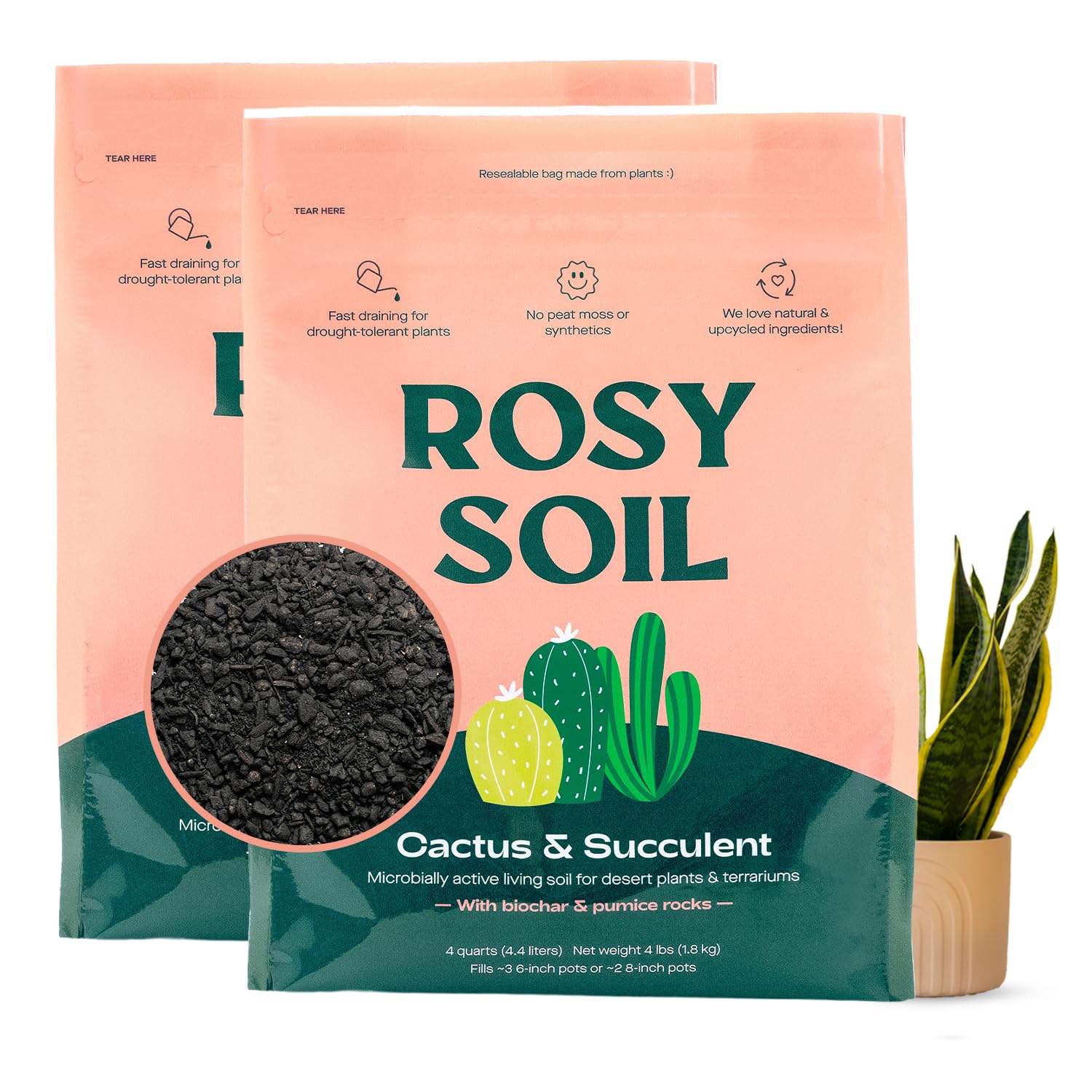
A chunky, living mix that skips peat entirely and feeds roots without synthetic fertilizers.
This is the only peat-free pick in the lineup, which matters because peat moss holds moisture like a sponge and leads to soggy aloe roots. Rosy Soil replaces peat with a loose, chunky texture that buyers describe as clean, dark, and even, with zero bugs across multiple bags. Each bag comes pre-loaded with beneficial fungi, microorganisms, and organic worm castings — a “living soil” that builds a healthy underground ecosystem.
One buyer did note it needs extra perlite and bonsai soil for a proper succulent mix, and the resealable bag can be hard to close. But for aloe owners who want an eco-friendly, peat-free base that drains freely and feeds naturally, this mix is a standout. At 8 quarts total (two 4-quart bags), the volume is on par with Soil Sunrise, but the living-soil angle adds something the others lack.
Living soil advantage: Pre-loaded worm castings and microbes feed aloe without synthetic fertilizers — the other mixes here need added nutrients over time.
Heads-up: A few buyers still add a bit of gravel or perlite for very mature aloes. Check your plant’s root density.
Reach for this if: you prioritize a peat-free, sustainable mix with built-in root-boosting microbes that also drains fast.
Choose something else if: you want the cheapest route — the Rosy Soil pack costs more than budget single bags.
3. Hoffman 10404 Organic Cactus and Succulent Soil Mix, 4 Quarts

The lightweight mix that turned one buyer’s persistent fungus gnats into a memory.
At just 1 pound for 4 quarts, this is the lightest mix here, versus the NOVA-TERRA bag at 2.08 pounds for 2.4 quarts. That feathery feel comes from being primarily compost and peat moss, which drains well but is noticeably lighter than gritty options. One reviewer noted it eliminated persistent fungus gnats and root rot in snake plants after other mixes failed, because it contains minimal dead organic matter and no wood chips that attract bugs.
It is pH balanced and formulated for both jungle and desert cacti, so it works for a wide range of plants. Buyers praise it as their favorite succulent/cactus soil. The catch is that, like other peat-based mixes, a buyer with extra-picky aloes may want to add some perlite or pumice to boost drainage further.
Why it stands out
- Lightweight at 1 lb — easy to handle and mix
- Minimal organic matter reduces gnats and root rot risk
- pH balanced and ready to use for desert plants
What to watch
- Peat moss base means it may hold moisture longer than gritty mixes
Best for: aloe owners who have battled fungus gnats or root rot and want a mix that starves out pests.
Not ideal if: you want a peat-free, chunky gritty mix without additives — go with Rosy Soil or Soil Sunrise instead.
4. Midwest Hearth Cactus & Succulent Potting Soil Mix, 4 Dry Quarts
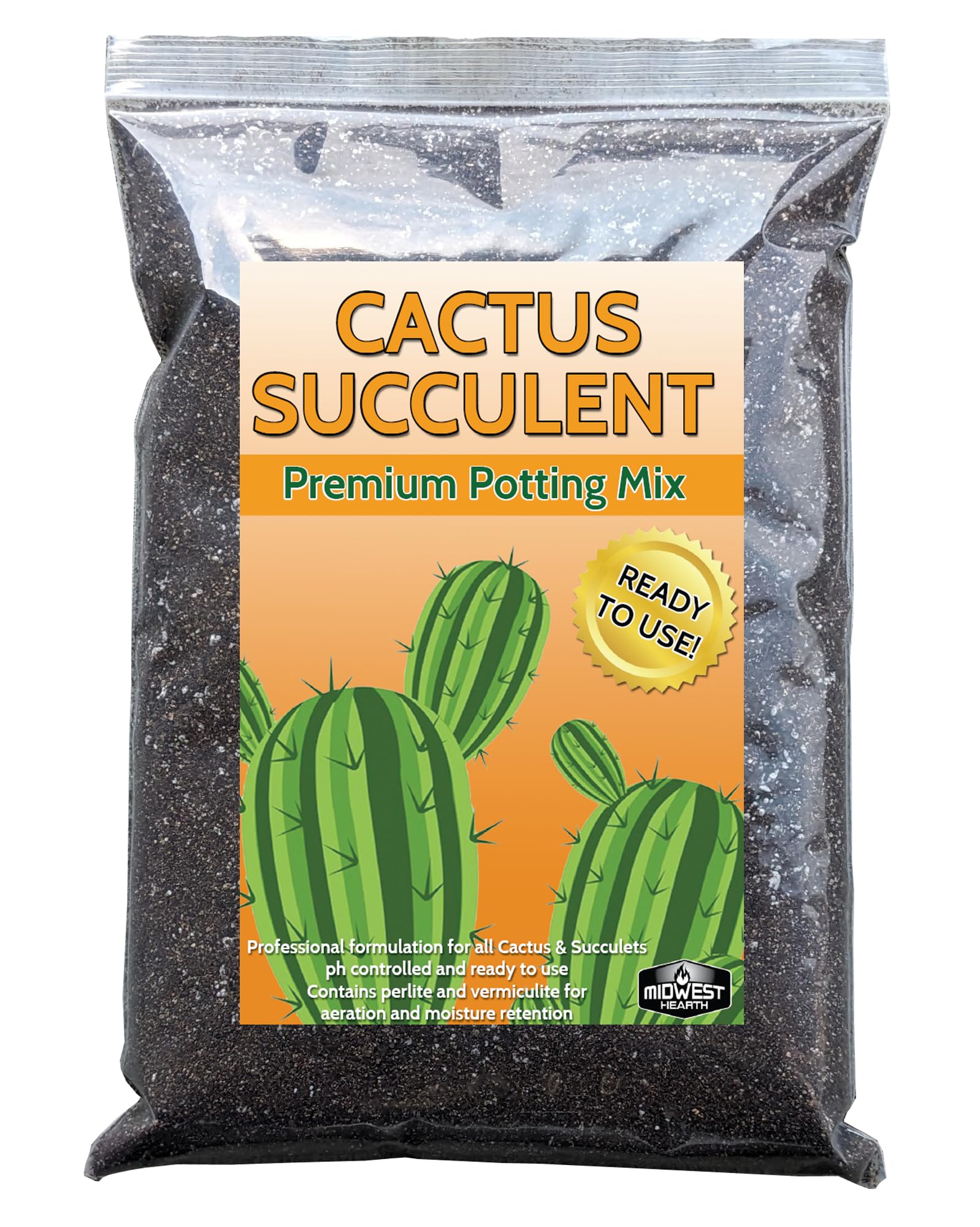
A straightforward peat-perlite-vermiculite blend made in the USA, ready to use straight from the bag.
Midwest Hearth blends peat moss, perlite, and vermiculite for fast drainage and aeration — the three ingredients that keep desert plant roots from drowning. It is pH controlled for succulents and comes ready to use with no mixing required. Buyers have planted multiple succulent dish gardens and note the plants seem happy with it.
One reviewer flagged a real-world quirk: the dry top particles can blow everywhere if you have an open window, creating a daily mess that needs vacuuming. That aside, this is a solid US-made option for aloe, jade, and Christmas cactus. The 4-quart bag fills 2-3 standard pots, and an 8-quart size is available if you have a larger collection.
Solid and simple: A reliable peat-perlite-vermiculite mix that drains well — good for aloe owners who want a straightforward, made-in-USA option without exotic ingredients.
Downside: The lightweight particles become airborne near a drafty window, so use it in a spot without a breeze.
Grab this for: a no-nonsense US-made mix that is ready out of the bag for a few small aloe pots.
Pass if: the fine dust from dry particles will annoy you — the gritty options (Soil Sunrise, Rosy Soil) are chunkier and less messy.
5. Potting Soil for Aloe Vera Plants (NOVA-TERRA), 2.4 Quarts
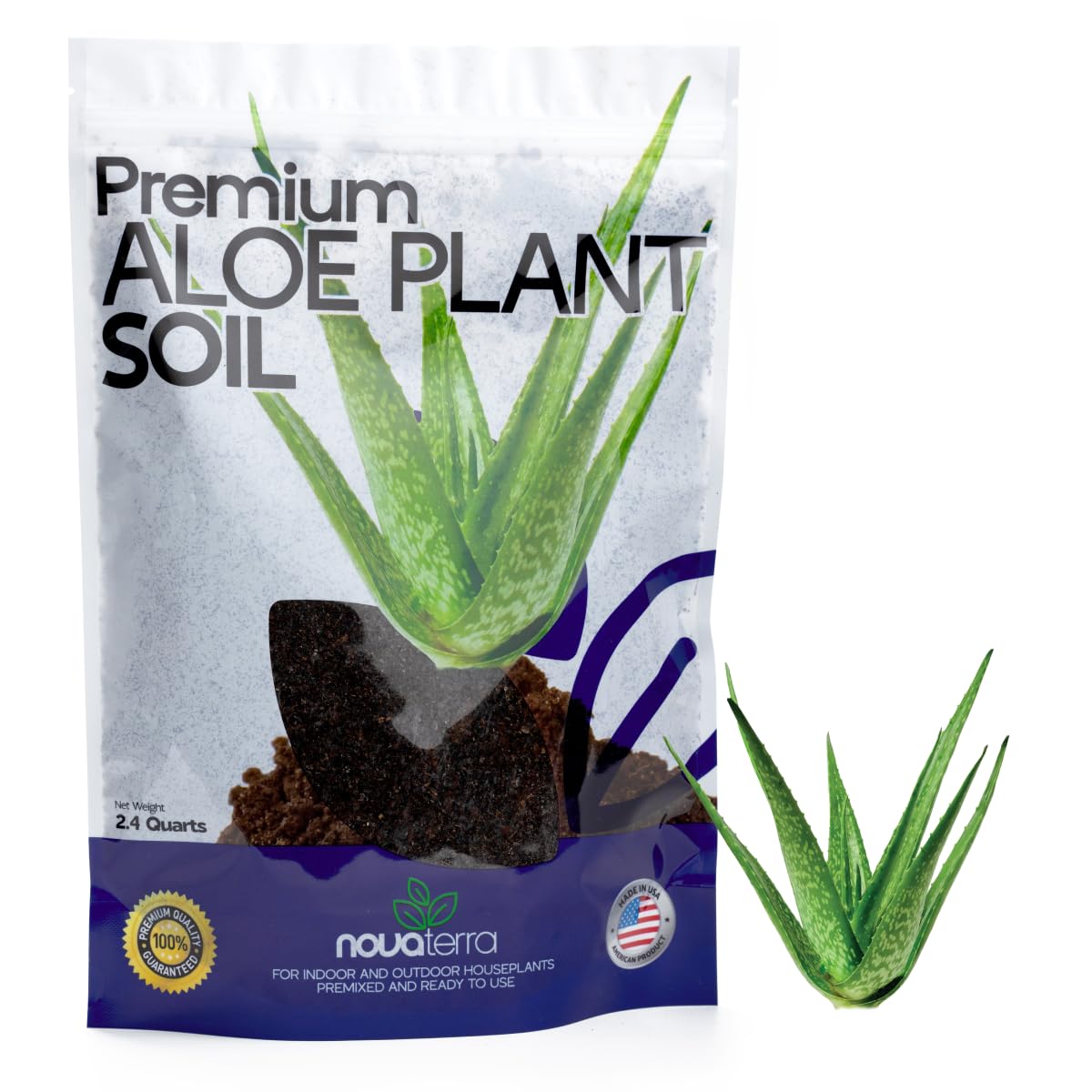
A compact bag with coarse sand, canadian peat, and pinebark — just enough for one medium container.
This is the smallest-volume option at 2.4 quarts, and it weighs 2.08 pounds, while the Hoffman bag is 1 pound for 4 quarts, signaling a denser, less airy texture. The blend uses course sand, canadian peat, and pinebark, which is a decent start for aloe drainage. Customers note it is enough for one medium-size container, which makes it a convenient single-plant purchase.
The standup sealed bag is a nice touch for storage. But with only a handful of reviews and the peat base, you will likely need to add extra perlite or pumice to reach the fast-draining standard aloe demands. If you are potting one aloe and want the lowest upfront cost, this does the job as a base mix to amend.
What works
- Coarse sand and pinebark improve drainage over standard potting soil
- Sealed standup bag keeps the mix fresh between uses
- Cheapest entry point for a single container
What to fix
- Dense texture (2.08 lbs for 2.4 quarts) — add perlite or pumice for aloe
- Only enough volume for one medium container
Ideal if: you need a low-cost base mix for exactly one aloe pot and are comfortable mixing in extra drainage material.
Skip it for: a ready-to-use mix that needs no amendments — the Soil Sunrise or Rosy Soil options save you the extra step.
6. Miracle-Gro Succulent Potting Mix, 4 Quarts

The household name that comes with a catch — a peat moss base that holds water days longer than aloe likes.
Miracle-Gro adds its branded plant food to a blend of sphagnum peat moss and processed forest products. For a beginner, this is the most recognizable bag on the shelf. But here is the critical trade-off: reviewers point out it is basically peat moss and retains too much moisture, with one reviewer saying the soil was still wet 4 days after watering. That is a death sentence for aloe roots.
The fix is straightforward: mix in extra perlite or pumice before potting, and only water when the soil is fully dry. One reviewer used this bag for English Lavender and found it absorbed water well. But for aloe, consider this a base that needs amendments, not a ready-to-use solution. The bag fills one 8-inch container.
Brand power, but not ready: The Miracle-Gro name is familiar, but the peat-dominant, moisture-retentive texture means you must amend it for aloe — otherwise you risk root rot.
Shoppers say: After adding perlite, it works. Without it, the mix still holds water after 4 days.
Good for: a beginner who wants a name they trust and does not mind buying perlite separately to fix the drainage.
Not for: anyone who wants a pour-and-plant bag that is safe for aloe immediately — that is the Soil Sunrise or Rosy Soil territory.
Understanding the Specs
Drainage & Texture (Grit vs Peat)
The most important factor. Chunky particles like pine bark, pumice, calcined clay, and silica sand create air pockets so water runs through quickly. Fine peat moss and compost hold water like a sponge — great for ferns, bad for aloe. If the bag lists “sphagnum peat moss” first, plan to add perlite or pumice to speed up drainage.
Volume (Quarts) & Bag Count
Tells you how many pots one bag fills. A 2.4-quart bag fits one medium container. A 4-quart bag fills 2-3 standard pots. An 8-quart bag fills a big 12-inch pot. Some premium options come as a pack of two 4-quart bags, giving you 8 quarts total across two sealed packages.
FAQ
Can I use regular potting soil for aloe vera?
How many quarts of aloe soil do I need for one plant?
What is the difference between peat-based and peat-free succulent soil?
Should I add perlite to my aloe soil mix?
Why does my aloe soil smell bad after watering?
Can I use cactus soil for aloe vera?
How often should I water aloe vera in this type of soil?
Is Miracle-Gro Succulent Potting Mix safe for aloe vera?
Final Thoughts: The Verdict
For most people, the aloe soil winner is the Soil Sunrise Cactus and Succulent Potting Mix because it is a true gritty mix that needs zero amendments and drains exactly as aloe demands. If you want a peat-free living soil with built-in microbes, grab the Rosy Soil Cactus & Succulent Potting Mix. And for a budget-friendly bag that has helped buyers eliminate fungus gnats, the Hoffman 10404 Organic Cactus and Succulent Soil Mix is a solid lightweight choice.
How We Picked
We do not accept paid placement. Every pick is matched to a real buyer and a real use-case; we do not hands-on test units.
Sources & Methodology
Specifications: manufacturer listings and product documentation. Review insights: verified customer reviews, as of July 2026. Pricing: not shown on this page (it changes often); check the current price via the retailer link.
As an Amazon Associate, Lawn Gear Lab earns from qualifying purchases. This does not affect which products we feature.