
Specs are compiled from manufacturer listings and verified buyer reviews and can change over time — please confirm the key details on the product page before buying.
The secret to a heavy harvest of crisp, spicy peppers is not just sunlight and water — it is the exact nutrient mix that tells the plant to push out flowers and then turn those flowers into fruit. Pick the wrong plant food for peppers and you get a leafy bush with no peppers, or worse, fruit that rots on the vine before it ripens. This guide lays out the best options, from gentle organic granules for the soil to water-soluble feeds for hydroponic setups, so you know exactly what to grab for the biggest yield.
I’m Rikta — the founder and writer behind Lawn Gear Lab. This guide is built by comparing the manufacturers’ published specifications and the patterns across verified customer reviews, so you get each pick’s real strengths and trade-offs instead of marketing spin.
Whether you grow in a raised bed, a container on the balcony, or a full hydroponic system, the right fertilizer makes the difference between a few sad peppers and bags full of them. This is your head‑to‑head look at the best plant food for peppers sorted by what actually works in the real world.
Quick Picks
- FoxFarm Happy Frog Tomato & Vegetable Fertilizer — Best Overall
- Down To Earth All Natural Fertilizers Organic All Purpose Tomato & Veg — Best Organic Enrichment
- Espoma Organic Garden‑Tone 3‑4‑4 (2‑Pack) — Premium Organic Value
- MasterBlend 4‑18‑38 Tomato & Vegetable Fertilizer — Best for Hydroponics
- Growth Technology GT Chilli Focus Liquid Plant Food — Liquid Boost Specialist
- Jobe’s Organics Granular All Purpose Fertilizer — Budget Champion
- Lilly Miller Morcrop Tomato & Vegetable Food 5‑10‑10 — Fruit‑Focus Pick
How To Choose The Best Plant Food For Peppers
Peppers are heavy feeders, meaning they pull a lot of nutrients from the soil over a season. If the balance is off, you will see the problem in the fruit — or in the lack of it. Here are the three things to check before you buy.
The N‑P‑K ratio — what those three numbers actually mean
Every fertilizer label shows three numbers, like 5‑10‑10 or 4‑4‑4. The first is nitrogen (N) — that pushes leaf and stem growth. Too much nitrogen and your pepper plant looks huge but refuses to flower. The second is phosphorus (P), which is the flower and fruit trigger. The third is potassium (K), which supports overall plant health and disease resistance. For peppers, you want a formula where the middle number (phosphorus) is equal to or higher than the first number (nitrogen). That tells the plant to stop making leaves and start making fruit.
Granular vs liquid — slow release versus instant feed
Granular fertilizers, like the Down To Earth or Espoma picks on this list, are worked into the soil and break down over weeks. You apply them once a month and let the soil microbes do the work. They are harder to overdo and feed steadily. Liquid fertilizers, like the Growth Technology GT Chilli Focus, mix with water and hit the roots immediately. They are perfect for a quick boost during flowering, but they wash out faster, so you need more frequent applications. Choose granules for set‑and‑forget feeding and liquid for a targeted push when the plant is setting fruit.
Organic vs synthetic — what your soil needs
Organic fertilizers (Jobe’s, Espoma, Down To Earth) feed the soil life — the bacteria and fungi that then deliver nutrients to the roots. They are gentle and won’t burn the plant even if you misjudge the dose. Synthetic or water‑soluble fertilizers (MasterBlend) deliver nutrients in a form the plant can absorb immediately. They are more concentrated and more precise, making them the standard for hydroponic systems. If your soil is already rich in organic matter, you may prefer the fast results of a synthetic blend. If you are building weak, sandy, or compacted soil, go organic.
Quick Comparison
On smaller screens, swipe sideways to see the full table.
| Model | Best For | N‑P‑K Ratio | Form | Item Weight | Amazon |
|---|---|---|---|---|---|
| FoxFarm Happy Frog Tomato & Vegetable | Preventing blossom‑end rot | 5‑7‑3 | Granules | 4 lb | Amazon |
| Down To Earth All Natural Tomato & Veg | Organic soil enrichment | 4‑6‑2 | Granules | 5 lb | Amazon |
| Espoma Organic Garden‑Tone | Monthly organic feeding | 3‑4‑4 | Granules | 4 lb | Amazon |
| MasterBlend 4‑18‑38 | Hydroponic & water‑soluble | 4‑18‑38 | Powder | 16 oz | Amazon |
| Growth Technology GT Chilli Focus | Liquid boost in soil or hydro | 5 ml/L dilution | Liquid | 8.5 fl oz | Amazon |
| Jobe’s Organics All Purpose | Budget all‑around feeding | 4‑4‑4 | Granules | 4 lb | Amazon |
| Lilly Miller Morcrop Tomato & Vegetable | Fruit‑focused granular | 5‑10‑10 | Granules | 4 lb | Amazon |
In‑Depth Reviews
1. FoxFarm Happy Frog Tomato & Vegetable Fertilizer

Turns a pepper plant from a leafy waste into a fruit machine without the rot.
What makes this the top pick is its 5‑7‑3 ratio — you get a phosphorus bump that tells the plant to flower heavily, plus built‑in calcium that stops the dreaded blossom‑end rot before it starts. The calcium is the key here: blossom‑end rot is a calcium deficiency that shows up as a black, sunken spot on the bottom of the pepper, and most general‑purpose fertilizers do not include this. FoxFarm does. It also contains mycorrhizal fungi (beneficial root fungi that help roots absorb more water and nutrients from the soil), so each feeding builds better root efficiency.
Buyers report that this fertilizer corrected non‑producing tomato plants and boosted squash size and yield in bag‑grown plants. The granules have no chemical or fish smell, which is a relief if you are growing right outside your kitchen door. Unlike the Espoma or Jobe’s choices, FoxFarm includes calcium directly in the mix, so you do not have to add a separate supplement. Owners mention it is odorless and water‑soluble, meaning it does not burn plants even if you apply a little extra.
What makes it worth the price
- Calcium included — directly prevents blossom‑end rot in peppers
- 5‑7‑3 ratio pushes fruit production without excess leaf growth
- Mycorrhizal fungi improve root efficiency and water absorption
- No unpleasant chemical or fish smell
Before you buy
- 4‑lb bag covers a medium garden but runs out faster for heavy feeding
- Pricier than basic 4‑4‑4 blends like Jobe’s
Reach for this if: you grow peppers in containers or raised beds and want to stop blossom‑end rot without buying a separate calcium spray. The 5‑7‑3 ratio delivers noticeably more fruit than the 4‑4‑4 blends lower down this list.
Look elsewhere if: you need a strictly organic input for certified organic soil — FoxFarm uses natural ingredients but is not OMRI‑listed like the Down To Earth pick.
2. Down To Earth All Natural Fertilizers Organic All Purpose Tomato & Veg

The organic blend that rebuilds your soil while feeding the peppers.
If you want to improve your garden’s soil over time rather than just force‑feeding the plant, this 5‑lb box is the best choice. The 4‑6‑2 ratio has 6 phosphorus versus 4 in the Espoma 3‑4‑4 blend, giving your pepper flowers a bigger fruit‑setting push. It is also a 5 lb box versus Jobe’s 4 lb bag. The ingredient list reads like a soil‑builder’s checklist: fish bone meal, blood meal, feather meal, rock phosphate, langbeinite, greensand, humates, and kelp meal. Those are not synthetic salts — they are natural mineral and protein sources that feed the microbes in the soil, which then feed the roots.
Customers note that this fertilizer “transformed pale, flimsy tomato plants into healthy ones within two weeks.” Because it is OMRI‑listed (the Organic Materials Review Institute certifies it for organic production), you can use it in certified organic beds without worrying about synthetic inputs. Reviewers warn that it has an unpleasant smell for a few days after application, but that dissipates once worked into the soil. That smell is the price you pay for real organic ingredients instead of synthetic granules.
The case for natural feeding
- OMRI‑listed for certified organic production
- 4‑6‑2 ratio (6 phosphorus versus 4 in Espoma 3‑4‑4) for heavier fruiting
- 5 lb bag — a pound more than most competitors
- Ingredients like kelp meal and greensand build long‑term soil health
The one drawback
- Strong organic smell for a few days after application
- Granules need to be worked into soil and watered in — not a sprinkle‑and‑forget formula
Grab this for: organic gardeners who want to feed the soil, not just the plant. The 4‑6‑2 ratio delivers a stronger fruit push than the balanced 3‑4‑4 of Espoma, and the OMRI certification is a hard requirement for certified organic beds.
Pass on it if: you are growing in a hydroponic system — this is a granular soil feed only. For hydroponics, the MasterBlend or Growth Technology liquid is the right match.
3. Espoma Organic Garden‑Tone 3‑4‑4 (2‑Pack)

Two bags of organic power from a brand trusted since 1929.
Espoma’s Garden‑Tone comes as a pack of two 4‑lb bags, which is about 8 lb total for roughly the same price as a single 5‑lb bag of Down To Earth. That is a strong value for monthly feeding across a medium‑sized garden. The 3‑4‑4 ratio is slightly lower in phosphorus than the 4‑6‑2 Down To Earth blend, so you may see slightly less aggressive fruit‑setting, but it includes 5% calcium, which helps prevent blossom‑end rot without a separate supplement. The Bio‑tone formula is Espoma’s proprietary blend of beneficial microbes that help roots access nutrients — similar to the mycorrhizal fungi in FoxFarm but delivered through a different microbial pathway.
One reviewer noted harvesting 400 lb of tomatoes and 100 lb of carrots in an urban setting using Garden‑Tone, which is an extraordinary yield for a small space. The granules are ready‑to‑use with no mixing required — you sprinkle it around the drip line of the plant, scratch it in, and water. Reviewers point out that the product has a smell, but that it works well without burning plants even if you over‑apply. This is an excellent choice if you have both warm‑season peppers and cool‑season leafy greens in the same bed, because the 3‑4‑4 ratio is balanced enough for both.
Two‑bag boost: The 2‑pack means you can feed a large garden for a full season without reordering. The 5% calcium is a real advantage over basic 4‑4‑4 blends — it addresses blossom‑end rot directly, though not as strongly as the dedicated calcium in FoxFarm.
Ideal for: organic gardeners who want a balanced, calcium‑rich feed that works across peppers, tomatoes, and leafy greens. The 2‑pack lasts longer than any single‑bag option here.
Not the best fit for: hydroponic systems or growers who need a very high phosphorus kick for maximal fruit set — the 3‑4‑4 ratio is gentler than the 4‑6‑2 Down To Earth.
4. MasterBlend 4‑18‑38 Tomato & Vegetable Fertilizer
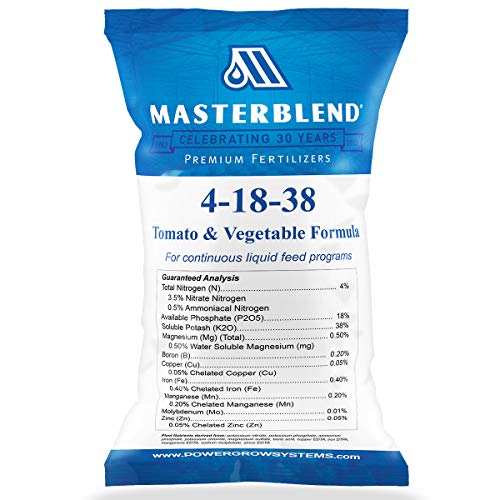
The concentrated powder that hydroponic pepper growers swear by.
This is a completely different animal from the granular feeds above. MasterBlend is a 100% water‑soluble powder with a very high phosphorus ratio: 4‑18‑38. That second number (18) is dramatically higher than any other pick on this list, making it the strongest flower‑and‑fruit trigger available here. It is designed specifically for hydroponic systems (growing plants in nutrient‑rich water rather than soil), but it also works in soil if you dissolve it in your watering can. Because it is super‑concentrated, a 1‑lb bag lasts a long time — one buyer mentioned it lasted over a year for their hydroponic setup.
Shoppers say that this is the go‑to for peppers in hydroponics and that it is easy to mix in a 5‑gallon bucket. The high phosphorus pushes fast flower development, and the formula includes all the trace minerals peppers need. Buyers report that the instructions specify dilutions in teaspoons and grams, so you will need a small scale or measuring spoon to get the mix right. The catch: this is a synthetic mineral blend, so it does not build soil life the way organic granules do. It is a direct root feed, not a soil builder. If you are growing in soil, you will also need to add calcium nitrate separately because the 4‑18‑38 formula does not include calcium.
Why hydroponic growers choose it
- 4‑18‑38 ratio — the highest phosphorus content for maximum fruit set
- 100% water soluble, works in hydroponic, Kratky, and soil watering
- 16 oz bag lasts over a year for most home systems
- Contains all trace minerals peppers need
What you need to know
- Synthetic — does not contribute to soil organic matter
- Requires precise mixing; no calcium included (must buy calcium nitrate separately)
- Not suitable for certified organic production
Perfect for: hydroponic or Kratky method growers who want a precise, high‑phosphorus feed that makes pepper plants flower aggressively. One owner reported: “I’ve been using this for the peppers in my hydroponics system.”
skip it if: you are a set‑and‑forget soil gardener who wants a single organic product — the MasterBlend needs mixing and a separate calcium source for soil use.
5. Growth Technology GT Chilli Focus Liquid Plant Food
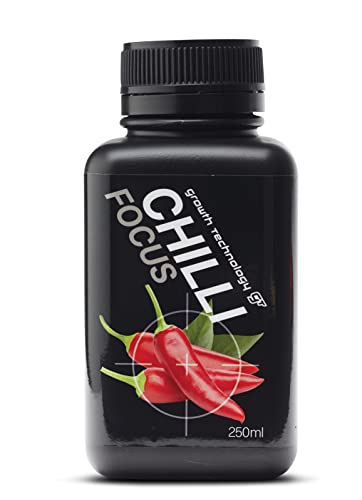
A liquid concentrate that targets chilli and pepper plants specifically.
While most of these picks are general tomato‑and‑vegetable fertilizers that happen to work on peppers, GT Chilli Focus is formulated specifically for chilli and pepper plants. It is a liquid concentrate, so you dilute it at a rate of 5 ml per liter of water, and it works in both soil and hydroponic systems. The liquid form means the nutrients hit the roots immediately — great for a mid‑season boost when your pepper plants are covered in flowers and need fast phosphorus. It is compatible with hydroponic reservoirs and routine watering schedules, making it the most versatile pick for growers who switch between soil and hydro.
Owners mention that their plants show “healthier foliage, stronger growth, and vibrant leaves” and that it is “super easy to use and mix.” One reviewer called it “the best stuff I’ve found” for hydroponic growth. The 250 ml bottle (8.5 fl oz) is small — enough for about 50 liters of mixed feed — so it is best for container gardens and small indoor setups rather than large outdoor rows. Reviewers caution that the bottle can leak in transit, so check the seal on arrival.
Targeted nutrition: Designed specifically for chillies and peppers rather than general vegetables, so the mineral balance is tuned for the flowering and fruiting stages of these plants. The liquid format gives you precise control over the dose, unlike the fixed‑release granules.
Best for: indoor pepper growers, small container gardens, and anyone who wants a liquid feed that works in both soil and hydroponics. The chilli‑specific formula is unique on this list.
Not ideal for: large outdoor gardens where the small 250 ml bottle runs out quickly — you would need multiple bottles to match the value of a 5‑lb granular bag.
6. Jobe’s Organics Granular All Purpose Fertilizer

The budget organic feed that revived dying seedlings in days.
If you are on a tight budget but still want an organic formula, Jobe’s 4‑4‑4 is the most affordable entry point into the category. The 4‑4‑4 ratio is balanced — not high enough in phosphorus to trigger massive fruit set the way the 4‑6‑2 Down To Earth does, but it will support steady growth without burning the plant. It contains billions of archaea (a type of beneficial microorganism) that break down organic materials for faster results compared to basic compost. The resealable bag is a nice convenience for storing in a shed or garage.
Customers note that this fertilizer “revived slow‑growing, pale seedlings within a week” and produced “greener leaves, abundant flower buds, and plentiful, flavorful harvests with only two applications.” The smell is a common complaint — multiple buyers mention it smells bad when applied, though it fades once worked into soil. One buyer with nitrogen‑deficient soil called it the solution to a “bed of death” where stunted plants revived after mixing in 1/3 of the box. Basil, peppers, and beans all grew tall and healthy. At 4 lb for the lowest price on this list, it is the most accessible organic option for new pepper growers.
Why it is the smart budget buy
- Lowest price in the category while still being OMRI‑listed organic
- Fast‑acting organic formula with beneficial archaea microbes
- Resealable bag — easy to store between feedings
- Gentle 4‑4‑4 ratio won’t burn plants if over‑applied
Trade‑offs to know
- 4‑4‑4 ratio is lower in phosphorus than the 4‑6‑2 Down To Earth — less aggressive fruit push
- Strong smell during application that pets may find attractive
- 4 lb bag is lighter than the 5 lb Down To Earth box
Reach for this if: you need an affordable, organic granular feed that gets results fast. The archaea microbes give it a speed advantage over standard organic blends, and the price makes it a low‑risk first purchase for new gardeners.
Pass if: you want a high‑phosphorus formula specifically for maximizing pepper yield — the 4‑4‑4 is a generalist, not a fruit specialist.
7. Lilly Miller Morcrop Tomato & Vegetable Food 5‑10‑10

The granular formula built for heavy fruit, not just green leaves.
Lilly Miller’s 5‑10‑10 ratio is the second‑highest phosphorus content on this list, behind only the hydroponic MasterBlend. The first number (5) is relatively low nitrogen, which means the plant channels energy into flowers and fruit rather than foliage. This is a classic fruit‑focused formula — exactly what you want when your pepper plants are already established and you want them to set as many fruit as possible. The granules are easy to sprinkle around the base, and the 4‑lb bag covers a decent medium‑sized garden.
Reviewers point out that it “really made a difference with my tomato plants and sweet potato plants this year” and that it works better than other tomato and pepper foods they have tried. One reviewer could not find this specific formula at local big‑box stores, so Amazon was the only source. The catch: like many high‑phosphorus granular fertilizers, it has a strong smell — one buyer described it as “horrible.” It also lacks added calcium, so you may need a separate calcium supplement if you are growing in low‑calcium soil. Compared to the FoxFarm pick, Lilly Miller offers a higher phosphorus ratio (10 vs 7) but misses the calcium and mycorrhizal fungi that make FoxFarm a more complete package.
The fruit‑setting advantage
- 5‑10‑10 ratio — very high phosphorus for aggressive fruit development
- Low nitrogen prevents excessive leaf growth at the expense of peppers
- Granules are easy to apply and fortified with essential plant minerals
What is missing
- No added calcium — may need separate supplement to prevent blossom‑end rot
- Strong smell during and after application
- Harder to find in physical stores
Best for: established pepper plants where you want to maximize fruit set. The 5‑10‑10 ratio is a phosphorus powerhouse that pushes flowers fast. One customer observed it “really made a difference with my tomato plants.”
Not the best if: you want an all‑in‑one formula that prevents blossom‑end rot — the FoxFarm pick includes calcium, this one does not. You will need to add a calcium source separately.
Understanding the Specs
N‑P‑K Ratio — what those numbers really mean
Every fertilizer label shows three numbers separated by dashes, like 5‑10‑10 or 4‑4‑4. N stands for nitrogen, which drives green leaf and stem growth. P is phosphorus, which triggers flower and fruit development. K is potassium, which supports overall plant health, root strength, and disease resistance. For peppers, you want a P number that is equal to or higher than the N number — otherwise you get a big bushy plant with few peppers. The ratios on this list range from 4‑4‑4 (balanced, gentle) to 4‑18‑38 (extreme fruit push for hydroponics).
Granular vs liquid — different speeds for different needs
Granular fertilizers (like Jobe’s, Espoma, and Down To Earth) are sprinkled onto the soil and break down over weeks as microbes digest them. They provide a steady, slow feed and are harder to over‑apply. Liquid fertilizers (like GT Chilli Focus) or water‑soluble powders (MasterBlend) dissolve in water and deliver nutrients to the roots immediately. Liquids are faster but need more frequent applications because they wash out of the soil quicker. If you are forgetful, choose granules. If you want to respond to a plant that is stalling mid‑flower, choose liquid.
Organic vs synthetic — what your garden needs
Organic fertilizers (Down To Earth, Espoma, Jobe’s) are derived from plant or animal materials like bone meal, feather meal, or kelp. They feed the soil food web — the bacteria and fungi that then deliver nutrients to the plant. They are gentle and improve soil structure over time. Synthetic fertilizers (MasterBlend) are mineral salts that feed the plant directly, bypassing the soil life. They are more concentrated and give faster results, but they do not build long‑term soil fertility. For pepper plants in containers or hydroponics, synthetic is often easier. For in‑ground beds you plan to use year after year, organic builds better soil.
Calcium and blossom‑end rot — the pepper killer
Blossom‑end rot is a dark, sunken spot on the bottom of the pepper caused by a calcium deficiency during fruit development. It is not a disease — it is a nutrient delivery problem. Fertilizers that include calcium (FoxFarm at 5‑7‑3 with calcium, Espoma at 3‑4‑4 with 5% calcium) help prevent this directly. The MasterBlend and Lilly Miller formulas do not include calcium, so you may need to add a calcium nitrate supplement in low‑calcium soil or hydroponic systems. If you have had blossom‑end rot in previous seasons, choose a calcium‑included formula like the FoxFarm pick.
FAQ
What is the best N‑P‑K ratio for pepper plants?
Can I use tomato fertilizer on pepper plants?
How often should I fertilize pepper plants?
What causes blossom‑end rot in peppers and how do I stop it?
Is organic or synthetic fertilizer better for peppers?
Can I use pepper fertilizer in a hydroponic system?
How much fertilizer does a single pepper plant need?
Will too much nitrogen kill my pepper plants?
What is the difference between 4‑4‑4 and 5‑10‑10 fertilizer?
Can I mix different pepper fertilizers together?
Final Thoughts: The Verdict
For most people, the plant food for peppers winner is the FoxFarm Happy Frog Tomato & Vegetable Fertilizer because its 5‑7‑3 blend includes calcium and mycorrhizal fungi to prevent blossom‑end rot while pushing heavy fruit production. If you want an organic soil‑builder that is OMRI‑listed, grab the Down To Earth 4‑6‑2. And for hydroponic or water‑soluble feeding, the standout is the concentrated phosphorus punch of the MasterBlend 4‑18‑38.
How We Picked
We do not accept paid placement, and we did not hands-on test every unit. Instead, we match each pick to a real buyer and use-case by comparing the manufacturers’ published specifications against the patterns in verified customer reviews — so you get each pick’s real strengths and trade-offs instead of marketing copy.
Sources & Methodology
Specifications: manufacturer listings and product documentation. Review insights: verified customer reviews, as of July 2026. Pricing: not shown on this page (it changes often); check the current price via the retailer link.
As an Amazon Associate, Lawn Gear Lab earns from qualifying purchases. This does not affect which products we feature.