
Specs are compiled from manufacturer listings and verified buyer reviews and can change over time — please confirm the key details on the product page before buying.
Bougainvillea plants are tough—they thrive on neglect, heat, and full sun. But the one thing they absolutely cannot tolerate is soggy roots. If you have ever watched a beautiful bougainvillea turn yellow, drop its leaves, or simply rot away, the problem almost certainly started below the soil line. The right mix has one job: drain fast enough that the roots never sit in water, even after a heavy rain or a deep watering session.
I’m Rikta — the founder and writer behind Lawn Gear Lab. This guide is built by comparing the manufacturers’ published specifications and the patterns across verified customer reviews, so you get each pick’s real strengths and trade-offs instead of marketing spin.
Whether you are repotting a mature plant or starting from a cutting, the best soil for bougainvillea needs to be gritty, fast-draining, and lean on organic matter—and these six mixes deliver exactly that, each with a different balance of ingredients and bag size.
Quick Picks
- Soil Sunrise Cactus and Succulent Potting Mix (8 Quarts) — Best Overall
- Midwest Hearth Cactus & Succulent Potting Soil Mix (4 Quarts) — Best Value
- Rosy Soil Cactus & Succulent Potting Mix (4 Quarts) — Premium Pick
- Spike & Bloom High Drainage Cactus Soil with Mycorrhizal Fungi (8 lbs / 4 Qt) — Top Performer
- Hoffman 10404 Organic Cactus and Succulent Soil Mix (4 Quarts) — Budget Champion
- Tinyroots Succulent Soil – Cactus Soil Potting Mix (2.25 Quarts) — Compact Pick
How To Choose The Best Soil For Bougainvillea
Bougainvillea is native to arid, rocky regions where water runs through the ground fast. Recreate that in a pot, and you are halfway to success. Here is what to check on the bag before you buy.
Drainage speed is everything
This is the single most important factor. A mix that holds water for days will rot bougainvillea roots. Look for ingredients like perlite (a lightweight volcanic glass that creates air pockets), pumice (a porous volcanic rock), calcined clay (clay that is baked hard so it holds its shape and drains fast), coarse sand, or pine bark fines (small, chunky pieces of bark). These create air pockets and let water flow through in seconds rather than minutes. If the bag lists peat moss as the first ingredient and nothing gritty after it, put it back.
Gritty texture, not fine dirt
Your fingers are the best test tool. A good cactus or succulent mix should feel coarse and chunky, not like fine powder or smooth topsoil. Bougainvillea roots need to grab onto particles, not suffocate in mud. The chunkier the mix, the more oxygen reaches the root zone.
Organic matter balance
Bougainvillea does not need rich, compost-heavy soil. Too much organic matter holds moisture and encourages fungus gnats (tiny flies that live in wet soil). A lean mix with a small amount of compost or worm castings (earthworm manure that adds nutrients gently) is plenty. Peat-free blends drain better long-term because peat breaks down and gets soggy over time.
Quick Comparison
On smaller screens, swipe sideways to see the full table.
| Model | Best For | Volume | Key Ingredient | Texture | Amazon |
|---|---|---|---|---|---|
| Soil Sunrise Special Blend | Best Overall for large pots | 8 Quarts | Pine bark, silica sand, pumice | Gritty | Amazon |
| Midwest Hearth Potting Mix | Ready-to-use value | 4 Quarts | Peat moss, perlite, vermiculite | Loose | Amazon |
| Rosy Soil Organic Mix | Peat-free with microbes | 4 Quarts | Worm castings, chunky media | Chunky | Amazon |
| Spike & Bloom Desert Blend | Premium with mycorrhizae | 8 Liters (≈8.5 Qt) | Clays, sands, mycorrhizae | Gritty fine | Amazon |
| Hoffman Organic Mix | Budget-friendly starter | 4 Quarts | Peat moss, compost, perlite | Light | Amazon |
| Tinyroots Succulent Soil | Small pots & tiny plants | 2.25 Quarts | Pine bark, calcined clay, pumice | Finer grain | Amazon |
In‑Depth Reviews
1. Soil Sunrise Cactus and Succulent Potting Mix (8 Quarts)
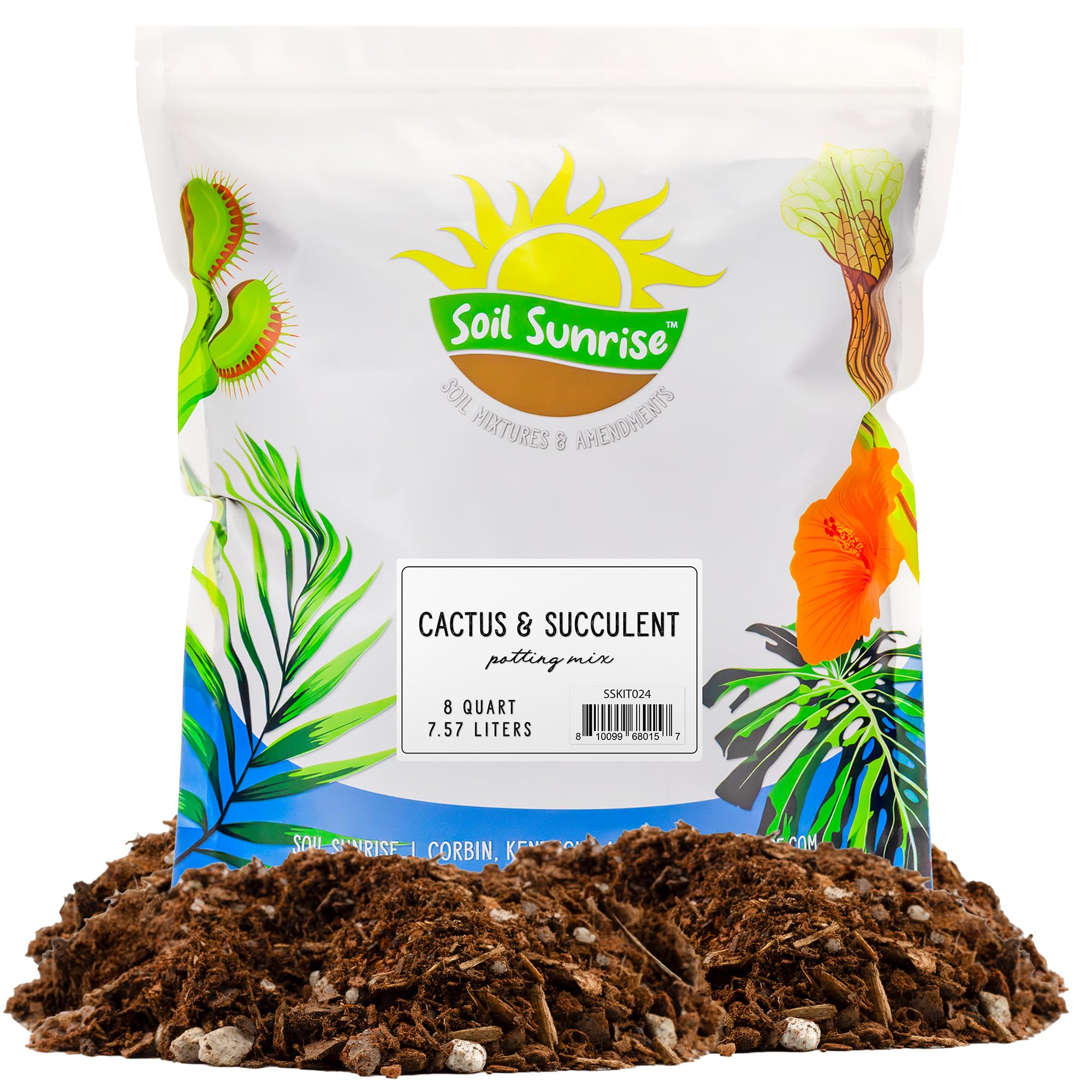
The hand-blended gritty mix that skips the peat and goes straight to drainage.
This is the bag you reach for when you want a true cactus-style soil without having to mix your own. Soil Sunrise uses pine bark, silica sand (a coarse, gritty type of sand), calcined clay, and pumice—no artificial ingredients at all. The texture is visibly coarse, with gravel and sand you can feel as soon as you open the bag. Buyers report that a 50/50 mix using this as a base dried in about eight days, which is exactly the kind of fast cycle bougainvillea roots need to avoid rot.
At 8 quarts, it fills a big 12-inch pot easily, putting it well ahead of the Tinyroots bag (which holds just 2.25 quarts) for the same kind of gritty base. Reviewers specifically note it drains perfectly without needing amendments (extra ingredients you add yourself), unlike bagged soils from big box brands. If you have a mature bougainvillea or multiple containers, this bag saves time and money in one scoop.
One reviewer called it the “best gritty mix” they had ever bought, praising the visible difference in texture compared to mass-market cactus soils. No smell, no bugs, and a fresh hand-mixed appearance round out the package.
Fast-draining all-rounder
- 8 quarts of true gritty mix—enough for a large pot or multiple containers
- Hand-blended with pine bark, silica sand, calcined clay, and pumice
- Drains perfectly without any added perlite or amendments
Holds less water
- Premium price compared to 4-quart bags, though the per-quart cost is competitive
Best for beginners: you have a large bougainvillea or several pots and want a single bag that works straight out of the package.
Not for moisture lovers: your space is extremely tight or you only need enough for a single small cutting—the 8-quart bag may be more than you need.
2. Midwest Hearth Cactus & Succulent Potting Soil Mix (4 Quarts)
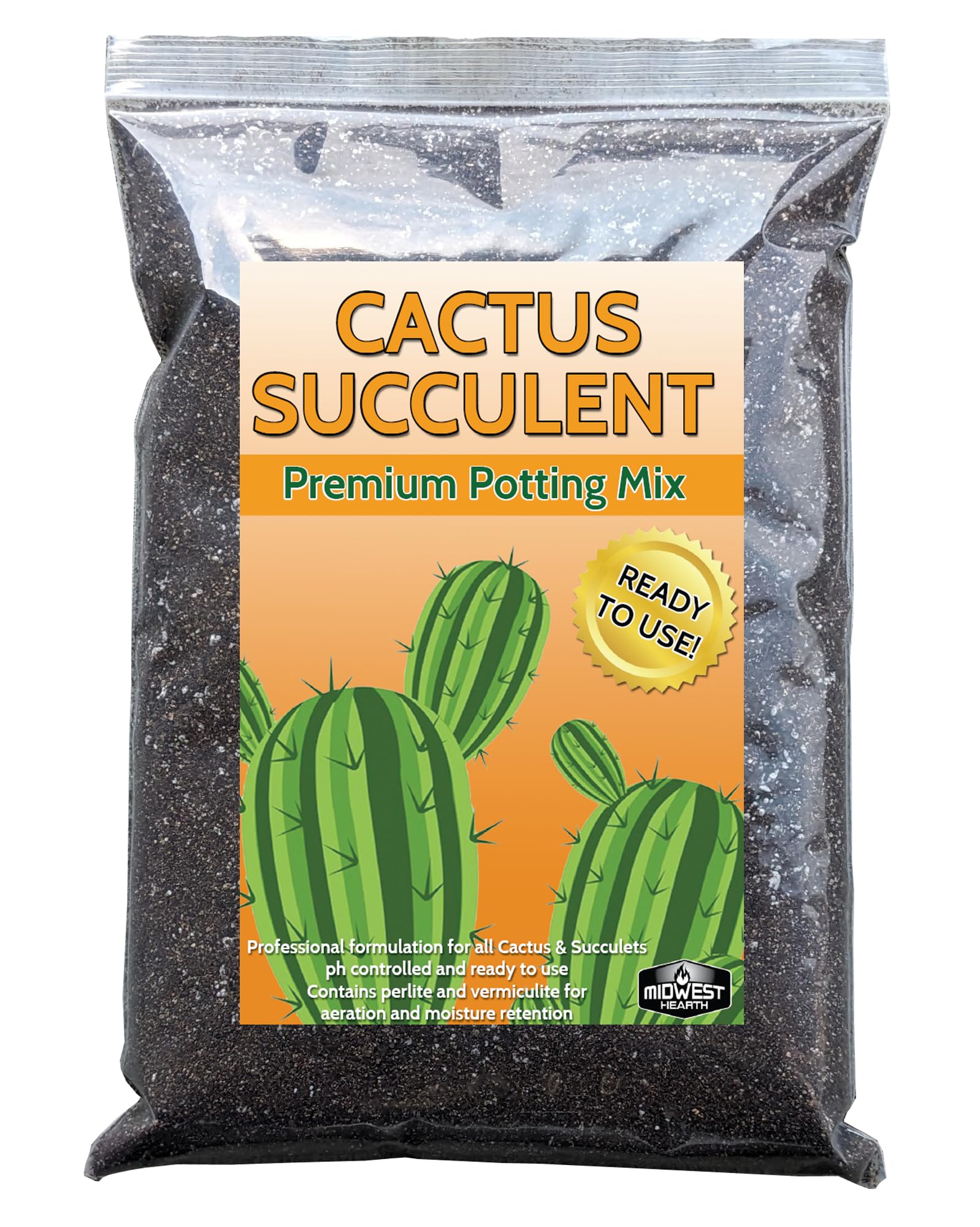
A ready-to-use formula that costs less per quart than most premium blends.
Midwest Hearth blends peat moss, perlite, and vermiculite (a mineral that helps hold a little moisture without getting soggy) into a mix that is fast-draining straight from the bag—no mixing or amending needed. The texture is lighter and looser than the gritty Soil Sunrise bag, but the pH (a measure of acidity or alkalinity) is balanced for cacti and succulents, meaning bougainvillea roots get the drainage they need without sitting in soggy soil. The 4-quart bag fills two to three standard pots, which is enough for a few repotting jobs.
It is made in the USA and the company also sells an 8-quart size if you need more volume. A few buyers noted that the dry top particles can blow away if the pot sits near an open window, requiring some cleanup. But for the price, this is a solid mid-range option that does exactly what it says on the bag—drain fast and keep roots healthy. One reviewer’s wife used it to repot her “treasured little plant babies” and reported succulents doing better than ever.
If you are comparing it to the Hoffman mix below, the Midwest Hearth formula is slightly more refined with added vermiculite for aeration (air pockets in the soil), while Hoffman leans more on compost and peat moss.
Fine texture blend
- Ready straight from the bag—no mixing required
- pH balanced specifically for drought-tolerant desert plants
- Resealable bag keeps leftover soil fresh between uses
Dries very quickly
- Dry top particles can be messy if the pot is near a draft or open window
Grab for small pots: you want a dependable, no-fuss mix for a few pots without spending on a premium bag.
Skip for deep watering: you prefer an ultra-gritty, peat-free texture—this uses peat moss as a base, which some growers avoid.
3. Rosy Soil Cactus & Succulent Potting Mix (4 Quarts)
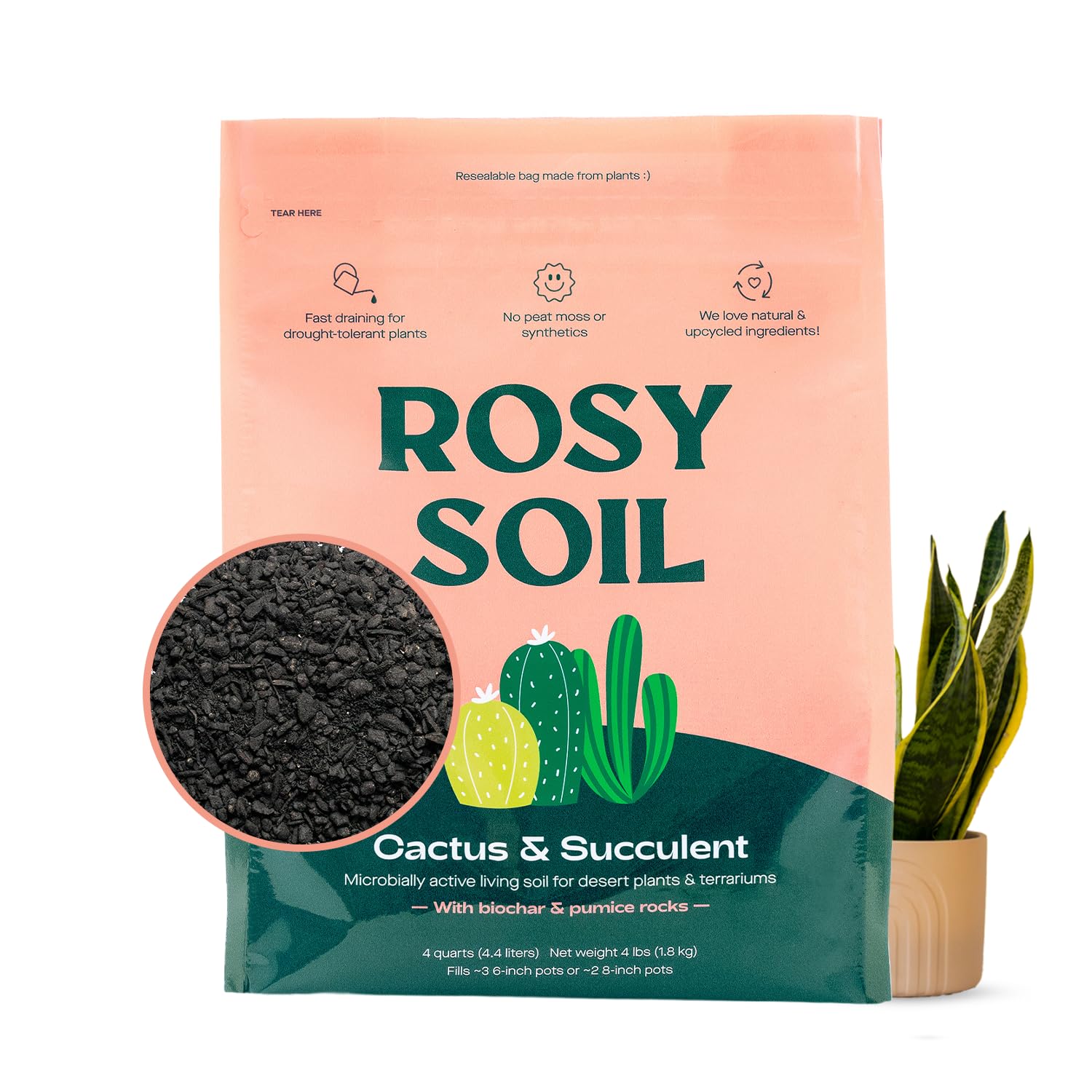
A chunky, peat-free mix that feeds roots with living microbes and worm castings.
Rosy Soil skips peat moss entirely, which is a smart move for long-term bougainvillea health—peat breaks down and holds water as it ages. Instead, this bag uses a chunky texture with pre-loaded beneficial fungi (tiny organisms that help roots absorb nutrients), microorganisms, and organic worm castings that build a small underground ecosystem. The result is a loose, airy mix that lets excess moisture drain fast and prevents compaction, which is exactly what a bougainvillea’s touchy root system needs.
The 4-quart resealable bag fills two to three plants, and the packaging is plastic-neutral (the company claims it offsets the plastic used) and made in the USA. Owners mention that their succulents were still healthy after one month, and the Christmas Cactus they potted in it did well. One reviewer noted that for older plants, adding a bit of gravel helps, but the mix works great for rooting new pups right out of the bag. The bag arrived slightly moist but without any bugs—a common concern with organic mixes.
Compared to the Hoffman budget mix, Rosy Soil is more expensive per quart but offers a peat-free, microbe-rich formula that requires less future amending. It is a middle-ground choice that balances sustainability with performance.
Organic enriched mix
- Peat-free formula drains more freely and stays loose over time
- Pre-loaded with beneficial fungi, microorganisms, and worm castings
- Resealable plastic-neutral bag with planting instructions printed on it
Slightly clumpy
- Some buyers add extra perlite or bonsai soil for a grittier texture with older plants
Choose for eco-growers: a sustainable, peat-free root environment with built-in biology that feeds without synthetic fertilizer.
Not for precision drainage: you want an ultra-gritty mix straight from the bag—this works best with a small amendment for older bougainvillea.
4. Spike & Bloom High Drainage Cactus Soil with Mycorrhizal Fungi (8 lbs / 4 Qt)

A slightly acidic, high-drainage blend with mycorrhizae for bigger blooms.
Spike & Bloom takes a more scientific approach. This mix is custom-formulated with a blend of clays, sands, and a small amount of organic matter to hit a pH of 6.5, which is the balance for drought-tolerant plants like bougainvillea. The big addition here is mycorrhizae powder—a beneficial fungus that attaches to the plant’s roots and effectively extends their reach, helping them take in more water and nutrients. The brand claims this can lead to bigger blooms, which bougainvillea owners want.
The texture is loose, airy, and gritty. Reviewers call it “excellent for smaller exotic cacti” and note that plants show new growth within weeks. One buyer specifically mentioned it worked well for a red fishhook barrel cactus in a terracotta pot, with water draining quickly every time. The bag is 8 pounds, which translates to about 8 liters or roughly 8.5 quarts of volume—comparable to the Soil Sunrise bag in size but denser due to the sand and clay content.
At the premium end of the price spectrum, this is a specialized product. Several reviewers mention it is worth the cost for smaller, sensitive plants where root rot is a constant fear, but it is overkill for a large saguaro or common landscape cactus. Bougainvillea, being a moderately fussy root plant, fits right into that balance.
Mycorrhizae boost
- Slightly acidic pH of 6.5 matched to the needs of drought-tolerant plants
- Mycorrhizae powder promotes healthy root growth and potentially larger blooms
- Loose, gritty texture that prevents water-logging and root rot
Higher cost
- Expensive per bag—best reserved for smaller pots and special plants
Best for root health: bougainvillea in smaller pots where you want to maximize bloom potential and root health.
Not for budget buys: large landscape plantings or huge containers where the premium cost adds up fast.
5. Hoffman 10404 Organic Cactus and Succulent Soil Mix (4 Quarts)

A low-cost, ready-to-use organic mix that saved one buyer’s snake plants from root rot.
Hoffman’s Organic Cactus and Succulent Soil Mix is the entry-level bag that punches above its price. The formula is pH balanced and designed to encourage bloom and root development for jungle and desert cacti, which makes it a reasonable match for bougainvillea. It is ready to use straight from the bag, with a light texture that drains well—mostly peat moss and compost with perlite and sand mixed in.
One buyer mentioned that this mix solved a fungus gnat infestation (tiny flies attracted to wet soil) and root rot problem in their snake plants after other mixes failed, specifically noting the low dead organic matter content and the absence of wood chips. That is a strong sign for bougainvillea owners who have struggled with pests or soggy soil. Another reviewer described it as lighter than big box cactus soil and said it revived their ivy plants with wet roots in days after they added extra perlite.
The catch is that the texture is not as gritty as the premium Soil Sunrise or Spike & Bloom mixes. For bougainvillea, you may want to mix in some extra perlite or pumice to push the drainage speed higher. But at this price point, it leaves room in the budget for amendments.
Organic certified
- Lowest price per quart in this lineup—great for beginners on a budget
- Light texture with low organic matter content reduces fungus gnat risk
- Ready to use with no mixing required
Dense consistency
- Not as gritty as premium blends; may need added perlite for optimal bougainvillea drainage
Grab for indoor use: you are on a tight budget and are comfortable adding a handful of perlite to dial in the drainage.
Avoid for heavy watering: you want a true gritty mix straight out of the bag with no amendments needed.
6. Tinyroots Succulent Soil – Cactus Soil Potting Mix (2.25 Quarts)

A finer-grain gritty mix that makes overwatering nearly impossible.
Tinyroots is aimed at the grower who has killed succulents by overwatering and wants a safety net. The blend uses double-sifted pine bark fines, calcined clay, pumice, and lava rock—each chosen to handle a specific job: sand boosts drainage, clay manages water retention, and bark stabilizes roots. The grain size is finer than the Soil Sunrise or Spike & Bloom mixes, which makes it perfect for tiny succulents like lithops (small, stone-like plants) and for small bougainvillea cuttings or pots under four inches.
Buyers are clear about one thing: this mix makes it almost impossible to overwater your plants. One reviewer described a simple weekly routine where they fill the pot to saturate it, let the water drain, and put it back on the windowsill—no worry, no root rot. Another said they finally saw blooms on a cactus after switching to Tinyroots, which they called the best soil for succulents and cacti they had ever used.
The main limitation is the bag size. At just 2.25 quarts, it is the smallest option here—the Soil Sunrise bag holds 3.6x more volume. For a single small repotting job, it is exactly enough. For anything larger than a six-inch pot, you will need multiple bags or a different product.
Compact bag size
- Professional-grade ingredients in a finer grain ideal for small pots
- Heavy-duty mix lasts multiple seasons and prevents overwatering reliably
- No perlite, no mess, and excellent drainage for sensitive roots
Needs frequent watering
- 2.25-quart bag is small—best for one or two small containers only
Reach for small plants: you are potting a small bougainvillea cutting or a single plant in a pot under six inches.
Pass for large pots: you have multiple pots or a mature bougainvillea in a large container—you will need a bigger bag.
Understanding the Specs
Volume (Quarts vs Liters)
Bag size tells you how many pots you can fill. A 4-quart bag typically fills two to three standard 6-inch pots. The Soil Sunrise bag at 8 quarts handles a large 12-inch pot or multiple smaller pots. Tinyroots at 2.25 quarts is enough for one small repotting job. If you see liters instead of quarts, know that 1 quart is roughly 0.95 liters—close enough to treat them as nearly equal for potting purposes.
Texture & Ingredients
The ingredients list tells you everything about drainage. Pine bark fines, pumice, calcined clay, and coarse sand create air pockets and fast drainage. Peat moss and vermiculite hold some moisture but can become soggy over time. Peat-free mixes like Rosy Soil drain more consistently long-term. Mycorrhizae (a beneficial fungus) and worm castings add nutrients and root support without the water retention of compost. For bougainvillea, the grittier the ingredient list, the better the match.
FAQ
Can I use regular potting soil for bougainvillea?
What happens if the soil does not drain fast enough?
Should I mix my own soil or buy a pre-made mix?
Is peat moss good for bougainvillea?
How often should I repot bougainvillea with fresh soil?
Can I use succulent soil for bougainvillea?
Does bougainvillea need acidic soil?
How much soil do I need for a 12-inch pot?
Final Thoughts: The Verdict
For most growers, the best soil for bougainvillea winner is the Soil Sunrise Special Blend because it gives you 8 quarts of true gritty mix that drains perfectly without any amendments. If you prefer a peat-free, microbe-rich formula with eco-friendly packaging, grab the Rosy Soil Organic Mix. And for a small cutting or a single pot on a budget, the Tinyroots Succulent Soil is the compact choice that makes overwatering a thing of the past.
How We Picked
We do not accept paid placement, and we did not hands-on test every unit. Instead, we match each pick to a real buyer and use-case by comparing the manufacturers’ published specifications against the patterns in verified customer reviews — so you get each pick’s real strengths and trade-offs instead of marketing copy.
Sources & Methodology
Specifications: manufacturer listings and product documentation. Review insights: verified customer reviews, as of July 2026. Pricing: not shown on this page (it changes often); check the current price via the retailer link.
As an Amazon Associate, Lawn Gear Lab earns from qualifying purchases. This does not affect which products we feature.