
Specs are compiled from manufacturer listings and verified buyer reviews and can change over time — please confirm the key details on the product page before buying.
Regular potting soil holds too much water for a bonsai tree, quickly leading to root rot and a dead plant. The secret to a thriving miniature tree is a soil mix that drains fast, breathes well, and provides just the right anchor for those delicate roots — and the right bag makes all the difference between a bonsai that survives and one that truly flourishes.
I’m Rikta — the founder and writer behind Lawn Gear Lab. This guide is built by comparing the manufacturers’ published specifications and the patterns across verified customer reviews, so you get each pick’s real strengths and trade-offs instead of marketing spin.
Whether you are repotting a juniper or starting seeds for a new ficus, choosing the wrong mix is the fastest way to kill your tree. We looked at the most popular bags to find the absolute best bonsai tree soil for different trees, budgets, and skill levels.
Quick Picks
- Bonsai Jack 2 Quarts Universal Organic Bonsai Soil Mix #221 — Best Overall
- Akadama 2.25qt Bonsai Soil, Sifted Through 1/8 Inch Mesh Then Through 1/16 Mesh — Premium Akadama
- Bonsai Outlet Premium Bonsai Soil – Tinyroots 2.25 Quart Soil Blend — Trio Blend
- Harris Bonsai Soil, All Purpose Premium Blend for Outstanding Growth, 2qt — Versatile Formula
- NOHOBE 2.5lb Hard Akadama Bonsai Soil 1/8-1/4 inch Small Grain — Budget Friendly
- Hoffman 10708 Bonsai Soil Mix, 2 Quarts — Beginner Pick
How To Choose The Best Bonsai Tree Soil
Bonsai soil is not just dirt — it is a structured blend of hard, porous particles that create air pockets and fast drainage while holding onto a little moisture and nutrients. Choosing the wrong mix is the single most common mistake beginners make.
Particle Size and Sifting
The ideal particle size for most bonsai is between 1/8 inch and 1/4 inch. Smaller particles and dust fill the air gaps, turning your mix into mud. A good bag has been sifted to remove that fine powder, so water flows freely through the pot.
Ingredients: Akadama vs. Inorganic Blends
Akadama is a fired clay from Japan that absorbs water and then releases it slowly, but it can break down over a couple of years. Inorganic blends of pumice, lava rock, and calcined clay last longer and are often cheaper. Many professionals use akadama for finished trees and inorganic blends for development.
Pre-Mixed vs. DIY
A quality pre-mixed bag saves you the trouble of sourcing and mixing three separate components. The catch is that some “pre-sifted” bags still contain dust, so you may need to sift them again at home before using them on your tree.
Quick Comparison
On smaller screens, swipe sideways to see the full table.
| Model | Best For | Volume | Weight | Key Ingredient | Amazon |
|---|---|---|---|---|---|
| Bonsai Jack Universal #221 | Best Overall | 2 Quarts | — | Bark & Soil Mix | Amazon |
| Tinyroots Akadama Sifted | Premium Akadama | 2 Quarts | 2 Pounds | Akadama | Amazon |
| Bonsai Outlet Tinyroots Premium | Ready-Blended Trio | 2 Quarts | — | Akadama, Lava, Pumice | Amazon |
| Harris Bonsai Soil | Widest Species Support | 2 Quarts | 1.2 Kilograms | Forest Humus & Pumice | Amazon |
| Hoffman Bonsai Soil Mix | Beginner-Friendly | 2 Quarts | 4 Pounds | General Mix | Amazon |
| NOHOBE Hard Akadama | Budget Akadama | 2.5 Liters | 1 Kilograms | Akadama | Amazon |
In‑Depth Reviews
1. Bonsai Jack 2 Quarts Universal Organic Bonsai Soil Mix #221
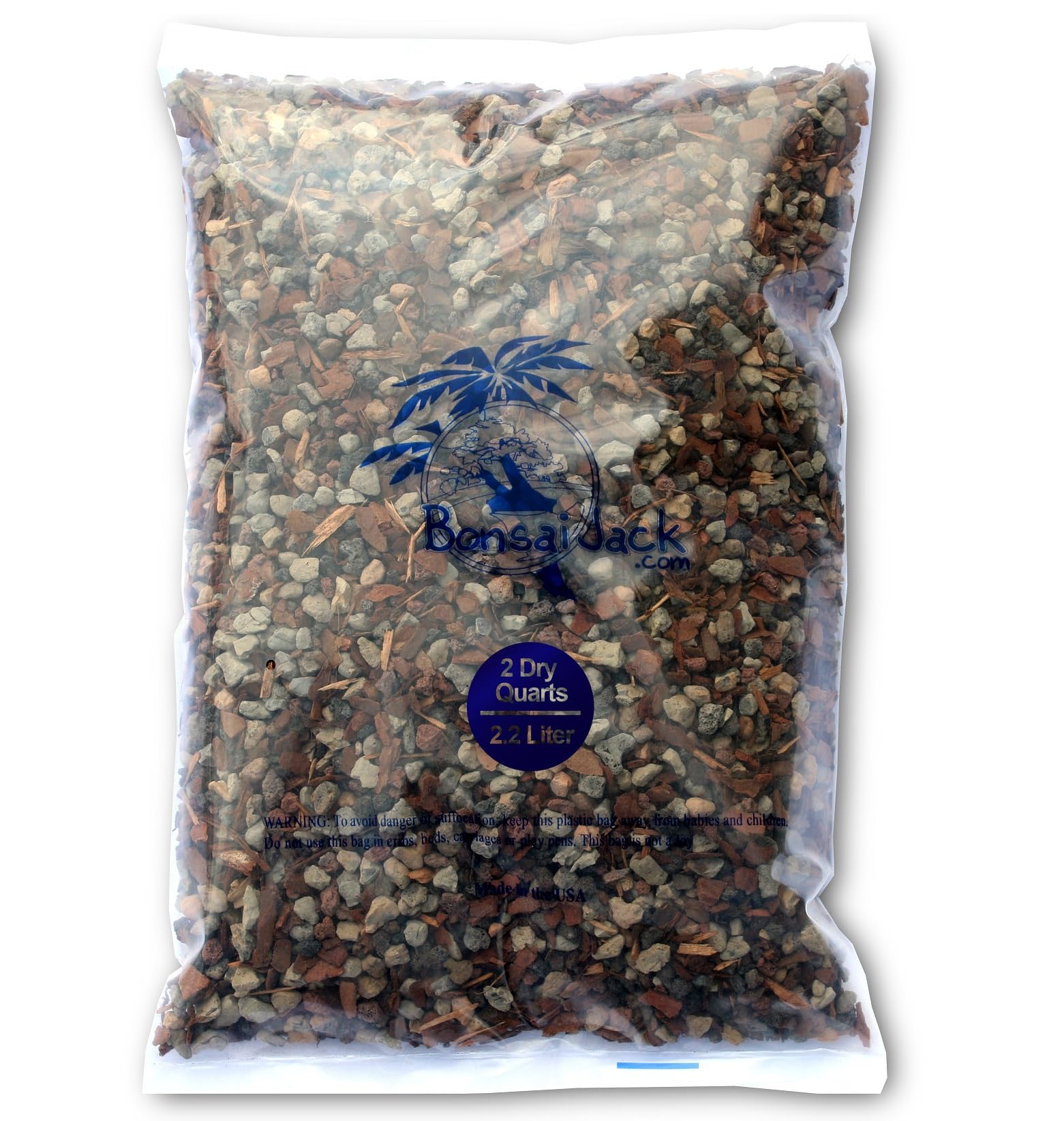
The proven all-rounder that works as soon as you open the bag.
This mix from Bonsai Jack comes screened and pre-washed, so you do not have to do extra work at home. It holds a pH of 6.4, which is ideal for tropical bonsai like ficus and schefflera. At 74.0 fluid ounces versus the NOHOBE akadama bag’s 40.0 fluid ounces, it gives you a larger bag for filling several pots.
Buyers report it “holds water well for full-sun trees” and that the particles do not break down significantly, even after a few seasons. Unlike some akadama-heavy blends that can turn to mush in a year, this bark-and-mineral mix stays open and airy. It is also cheaper and more consistently available than quality akadama, as one long-time user noted.
The trade-off is that for mature trees in the refinement stage, this mix may not produce the same root ramification as a pure akadama blend. For the vast majority of bonsai growers — especially those with tropicals or younger trees — this is the easiest and most reliable option on the shelf.
One-bag solution: Pre-washed, pH-balanced, and ready to use straight from the bag — no mixing or sifting required.
Not for refinement: One experienced grower noted root development is not as good as quality akadama for trees in their final stage.
Reach for this if: you want a single bag that works for most bonsai trees without extra effort or extra cost.
Look elsewhere if: you are growing a mature show tree that needs precise root control — you may want a purer akadama mix.
2. Akadama 2.25qt Bonsai Soil, Sifted Through 1/8 Inch Mesh Then Through 1/16 Mesh

Hard, sturdy granules from Japan that barely crumble.
This Tinyroots akadama is sifted twice — first through a 1/8-inch mesh, then through a 1/16-inch mesh — which removes the dust that plagues cheaper akadama bags. Compared to the NOHOBE akadama, this one is noticeably heavier at 2 pounds for a 2-quart volume versus 1 kilogram for 2.5 liters, and owners mention the granules “are very sturdy and produce minimal dust.” That matters because weak akadama turns into mud and suffocates roots.
Akadama is the gold standard for bonsai in Japan because it changes color when wet — staying dark when moist and lightening as it dries — so you know exactly when to water. This sifted version gives you that visual indicator without the sediment clogging your pot. One buyer used it mixed with Tinyroots tropical blend for a royal poinciana and reported good growth.
The catch is that some shipping dust still accumulates, so a quick pass through a sieve at home is recommended before you use it. But that is a minor step for real akadama that holds its shape for years.
Why it stands out
- Double-sifted to eliminate fine dust
- Sturdy granules that do not easily crumble
- Color-change indicator helps you water correctly
One thing to know
- Some dust appears during shipping — re-sift before use
Perfect for purists: Go with this if you want traditional Japanese akadama that performs reliably and shows you when to water.
skip it if: you are on a tight budget or you need a large volume for multiple trees — this bag is relatively small.
3. Bonsai Outlet Premium Bonsai Soil – Tinyroots 2.25 Quart Soil Blend

Three proven ingredients already blended — just open and pot.
This pre-mix from Tinyroots combines akadama, red lava rock, and pumice at a ratio trusted by the Kaikou School of Bonsai. Instead of buying three separate bags and learning how to mix them yourself, you get a professional-grade blend right away. The akadama provides water retention, the lava rock adds weight and structure, and the pumice ensures fast drainage.
One reviewer noted that after repotting, their plant was healthier and showed noticeable root spread. Another long-time grower said the mix does not compact and provides “great drainage” for conifers like juniper and pine. The bag is double-sifted and comes in a resealable pouch so it stays fresh between uses.
The honest catch: one buyer mentioned the “pre-sifted claim” is misleading because “sifted before firing, leaving fine powder.” You should plan to sift it again at home before using it on finished bonsai, which adds a step that the Bonsai Jack mix avoids.
Ready-to-use blend: Three major components already mixed to a professional standard — no guesswork involved.
Needs a second sift: Despite the label, you will find fine powder in the bag that you should remove at home.
Best for: intermediate growers who want a proven three-ingredient blend and are happy to do a quick sift themselves.
Not for: beginners who want a truly no-work, open-and-pour bag — the extra sifting may be a hassle.
4. Harris Bonsai Soil, All Purpose Premium Blend for Outstanding Growth, 2qt

A seven-ingredient blend made in the USA for almost any species.
Harris uses forest humus, pumice, calcined clay, organic amendments, basalt rock dust, and lime — a wider mix of components than most competitors. The lime is notable because it helps balance pH for species that prefer a neutral environment, which many pre-mixed bonsai soils overlook. At 1.2 kilograms versus the NOHOBE akadama bag’s 1 kilogram, it reflects the denser organic content.
Customers note it is an “excellent pre-blended bonsai soil with lime” and that drainage and water retention are ideal. One reviewer germinated bonsai seeds in December, moved the seedlings to this soil in January, and saw them thriving with no transplant shock. The bag is designed for a single bonsai container or several smaller pots.
Because it includes organic matter like forest humus, this mix will break down faster than a fully inorganic blend. If you are growing a tree that will stay in the same pot for more than two years without repotting, you may find the soil compressing more quickly than an akadama-based alternative.
What it does well
- Includes lime for pH balance — rare in pre-mixed soils
- Suitable for juniper, pine, ficus, fir, and many others
- Buyers praised its drainage and water retention
What to watch for
- Organic components will break down sooner than pure akadama or pumice
Grab this if: you want one bag that works across many tree species and includes pH-adjusting lime built right in.
Pass if: you are building a long-term soil that will stay open for years without repotting — go inorganic instead.
5. NOHOBE 2.5lb Hard Akadama Bonsai Soil 1/8-1/4 inch Small Grain

A cheap entry into real Japanese akadama for experimenting beginners.
This is genuine fired akadama from volcanic soil — no fillers, no dyes, no chemicals — at a price that undercuts nearly every other akadama bag on the market. It comes in a reusable sealing bag that is easy to open and close between uses. At 2.5 liters and 40.0 fluid ounces versus the Bonsai Jack mix’s 2 quarts and 74.0 fluid ounces, the lower price is less surprising when you see the actual bag.
Reviewers point out it is “good quality and priced right” and that it blends perfectly with pumice and lava rock for a custom mix. One rose propagation enthusiast even reported a reduction in fungus gnats after switching to this akadama. That said, one reviewer pointed out the main limitation: “Only reason I’m not giving 5 stars is the size and amount of what you get,” noting that akadama is heavy and 2.5 pounds goes fast.
This is not a complete bonsai soil — akadama is rarely used alone. You need to mix it with pumice or lava rock for proper drainage. If you are already planning to buy separate components and want the cheapest quality akadama base, this is your bag.
Budget akadama base: Genuine Japanese fired clay at the lowest price per bag — great for custom mixing.
Small bag: At 40 fluid ounces and just 2.5 pounds, it disappears fast if you are repotting more than one tree.
Good for: DIY mixers on a budget who want real akadama without paying premium-brand prices.
Not for: beginners who expect a complete ready-to-use soil — this needs blending with other components.
6. Hoffman 10708 Bonsai Soil Mix, 2 Quarts

A simple, no-fuss mix that takes the guesswork out of your first repot.
Hoffman’s mix is a classic starter bag: pre-mixed, ready to use, and formulated for evergreen and other bonsai plants. It weighs 4 pounds for the 2-quart volume, versus 1.2 kilograms for Harris and 1 kilogram for NOHOBE, which suggests a denser composition of sand and aggregate. This weight also means a little goes a long way in keeping the tree stable in its pot.
Buyers consistently describe it as “fast draining” and note it makes care easier for beginners. One owner reported root growth was “astonishing” after repotting, and the color change of the soil when wet helped them know when to water. The bag is resealable, which reviewers appreciated for storing leftover mix.
The main caveat: this is a general-purpose mix, so you may need to add amendments for acid-loving species. It also comes in a single 2-quart bag, and if you are working on multiple trees, you will need more than one bag.
Why beginners like it
- Fast-draining and simple to use — no mixing required
- Color-change indicator helps with watering
- Resealable bag for easy storage
One limitation
- Needs pH amendments for acid-loving bonsai species
Ideal for first-timers: Open the bag, pot your first bonsai, and learn the watering rhythm without worrying about complex mixes.
Not ideal for: experienced growers who want a precise, species-specific blend with known particle sizes.
Understanding the Specs
Particle Size vs. Drainage
The size of individual grains determines how much air reaches the roots. Particles between 1/8 inch and 1/4 inch create microscopic air pockets that let oxygen in and excess water out. If the particles are too small or the bag contains lots of dust, those air gaps fill up and the soil turns into a waterlogged paste that rots the roots.
Akadama vs. Inorganic Aggregates
Akadama is a fired clay particle that absorbs water like a sponge and releases it slowly, making it ideal for trees that need consistent moisture. Inorganic aggregates like pumice and lava rock do not absorb water — they simply create structure and drainage. Most professional bonsai soils use a blend of both to balance water retention against fast drainage.
FAQ
Can I use regular potting soil for a bonsai tree?
How often do I need to repot with fresh bonsai soil?
Do I need to sift bonsai soil before using it?
What is the difference between akadama and pumice?
Is akadama reusable?
Which bonsai soil is best for junipers?
How can I tell if my bonsai soil has gone bad?
Does bonsai soil need fertilizer?
What does “double-sifted” mean in bonsai soil?
Can I mix my own bonsai soil from scratch?
Final Thoughts: The Verdict
For most buyers, the best bonsai tree soil winner is the Bonsai Jack Universal Organic Mix #221 because it is pre-washed, pH-balanced at 6.4, and ready to use without any extra sifting. If you want traditional Japanese akadama that shows you exactly when to water, grab the Tinyroots Double-Sifted Akadama. And for a ready-blended trio of akadama, lava rock, and pumice that takes the guesswork out of mixing, the Bonsai Outlet Tinyroots Premium Blend is a close call for the intermediate grower.
How We Picked
We do not accept paid placement, and we did not hands-on test every unit. Instead, we match each pick to a real buyer and use-case by comparing the manufacturers’ published specifications against the patterns in verified customer reviews — so you get each pick’s real strengths and trade-offs instead of marketing copy.
Sources & Methodology
Specifications: manufacturer listings and product documentation. Review insights: verified customer reviews, as of July 2026. Pricing: not shown on this page (it changes often); check the current price via the retailer link.
As an Amazon Associate, Lawn Gear Lab earns from qualifying purchases. This does not affect which products we feature.