
Specs are compiled from manufacturer listings and verified buyer reviews and can change over time — please confirm the key details on the product page before buying.
Finding a greenhouse that can handle freezing winters, heavy snow, and strong winds without collapsing is the real challenge for cold-climate gardeners. You need a structure that traps heat, sheds snow, and stands firm against gale-force gusts, not a flimsy tent that will blow away. This guide focuses on eight polycarbonate and wood greenhouses built to survive winter and extend your growing season.
I’m Rikta — the founder and writer behind Lawn Gear Lab. This guide is built by comparing the manufacturers’ published specifications and the patterns across verified customer reviews, so you get each pick’s real strengths and trade-offs instead of marketing spin.
After analyzing the insulation, frame materials, snow load ratings, and real-world durability of each model, these are the top-rated options to consider when shopping for the best greenhouses for cold climates.
Quick Picks
- HOWE 14×9.5×9 FT Polycarbonate Greenhouse — Best Overall
- Backyard Discovery Willow 9′ x 6′ Cedar Wood Greenhouse — Premium Wood Build
- HOWE 10x14x8.4FT Polycarbonate Greenhouse — Spacious Multi-Vent
- HOWE 8x10x7.5 FT Polycarbonate Greenhouse — Mid-Size Value
- FLY BY YAN 8×14 FT Polycarbonate Greenhouse — Budget Large Space
- WUKHG 10X12FT Greenhouse with Electronic Thermometers — Snow Load Spec
- Palram Canopia 6×8 Greenhouse — Compact Starter
- VEIKOU 6’x12’ Greenhouse — Budget Winter Runner
How To Choose The Best Greenhouses For Cold Climates
A greenhouse that thrives in mild weather can be a disaster in the snow. Focus on three things: the glazing material, the frame’s strength, and the structure’s ability to handle a heavy snow load without collapsing.
Glazing: Twin-Wall Polycarbonate is the Standard
Unlike single-pane glass or thin plastic sheeting, twin-wall polycarbonate panels trap air between two layers, creating an insulating barrier. This keeps the interior warmer on freezing nights and reduces heat loss. The panels are also shatterproof, so they will not break under a pile of snow or from an accidental bump. Look for a thickness of at least 4mm; 6mm or 8mm panels offer even better insulation for very cold zones.
Frame: Aluminum is Lightweight and Rust-Free, Cedar is Heavy and Strong
Aluminum frames are the most common choice because they resist rust and are light enough for a DIY build. Powder-coated aluminum adds extra weather protection. Cedar wood frames, found on premium models, offer natural rot resistance and superior structural rigidity, but they are much heavier and require a more permanent foundation. Steel frames are strong but prone to rust unless they are galvanized.
Structure: Snow Load and Wind Rating
A greenhouse for cold climates must have a stated snow load capacity, measured in pounds per square foot (psf). For moderate snowfall, 20 psf is a good baseline; for heavy snow zones, look for 30 psf or higher. The wind rating, measured in mph, tells you how well the frame will resist gusts. A strong wind rating (60+ mph) combined with a good anchoring system—using ground anchors or a concrete foundation— is what keeps your greenhouse from becoming a pile of kindling after a winter storm.
Quick Comparison
On smaller screens, swipe sideways to see the full table.
| Model | Best For | Glazing (Thickness) | Frame Material | Snow Load | Amazon |
|---|---|---|---|---|---|
| HOWE 14×9.5×9 FT | Maximum Snow & Wind | 6mm Twin-Wall PC | Aluminum | 30 psf | Amazon |
| Backyard Discovery Willow 9×6 FT | Year-Round Wood Construction | 4mm Quad-Wall PC | Cedar Wood | 2800 lbs / 30 in | Amazon |
| HOWE 10x14x8.4 FT | Large Multi-Vent Setup | 6mm Twin-Wall PC | Aluminum | 30 psf | Amazon |
| HOWE 8x10x7.5 FT | Solid Mid-Size Value | 6mm Twin-Wall PC | Aluminum | 18 psf | Amazon |
| 8×14 FT FLY BY YAN | Budget Large Space | 4mm Twin-Wall PC | Aluminum | Not Stated | Amazon |
| 10X12FT WUKHG | Snow Load Spec (20psf) | 4mm Twin-Wall PC | Aluminum | 20 psf | Amazon |
| Palram Canopia 6×8 | Compact Starter | 4mm Twin-Wall PC (Roof) | Aluminum | Not Stated | Amazon |
| VEIKOU 6×12 | Budget Winter Runner | 4mm Twin-Wall PC | Aluminum | Not Stated | Amazon |
In‑Depth Reviews
1. HOWE 14×9.5×9 FT Polycarbonate Greenhouse

The biggest, strongest workhorse for zones with punishing winters.
The HOWE 14×9.5×9 FT is built to survive, not just stand. With a 30 psf snow load capacity and a 70 mph wind rating, this aluminum-framed greenhouse laughs at the type of snowstorms that flatten cheaper models. It uses 6mm twin-wall polycarbonate panels with 99.99% UV protection, which create an insulating air pocket that keeps heat inside on cold nights. The interior is cavernous—with a 9-foot peak and a 6-foot wall height you can walk in without bending over—giving you room for tall plants, staging, and even a small bench.
The dual 8-level adjustable side vents and two wide swing doors let you manage the heat on unexpected warm winter days. Buyers in Michigan report that on a 15°F winter day, the inside temperature can reach 81°F when the sun is out. The structure includes 4 corner posts and 2 middle posts designed to be buried deep in soil or set into concrete, plus drainage pipes at each corner for connecting rain barrels. Assembly is a serious project—buyers report it takes two people about 25 hours—and the picture-based instructions can be imprecise, but the final structure is undeniably solid.
One owner mentioned the window locking mechanism is poorly designed, and the gutters have gaps that are hard to seal. For its size, snow load rating, and build quality, however, this is the top pick for serious cold-climate gardeners who need a true four-season room.
What Stands Out
- 30 psf snow load and 70 mph wind rating make it tough enough for heavy snow zones.
- 6mm twin-wall polycarbonate provides superior insulation for winter growing.
- 9 ft peak height and 6 ft wall height mean you can stand and work comfortably.
The Hard Parts
- Assembly is a 25-hour project that requires two patient people.
- Instruction manual is picture-only and lacks precision, causing errors.
- Window locking mechanism and gutter gaps have been flagged by owners.
Reach for this if: You live in a zone with heavy snowfall and need a large, walk-in greenhouse that can handle a 30 psf snow load and 70 mph winds.
Look elsewhere if: You want a simpler, faster setup or only need a compact structure for a few starter plants.
2. Backyard Discovery Willow 9′ x 6′ Cedar Wood Greenhouse
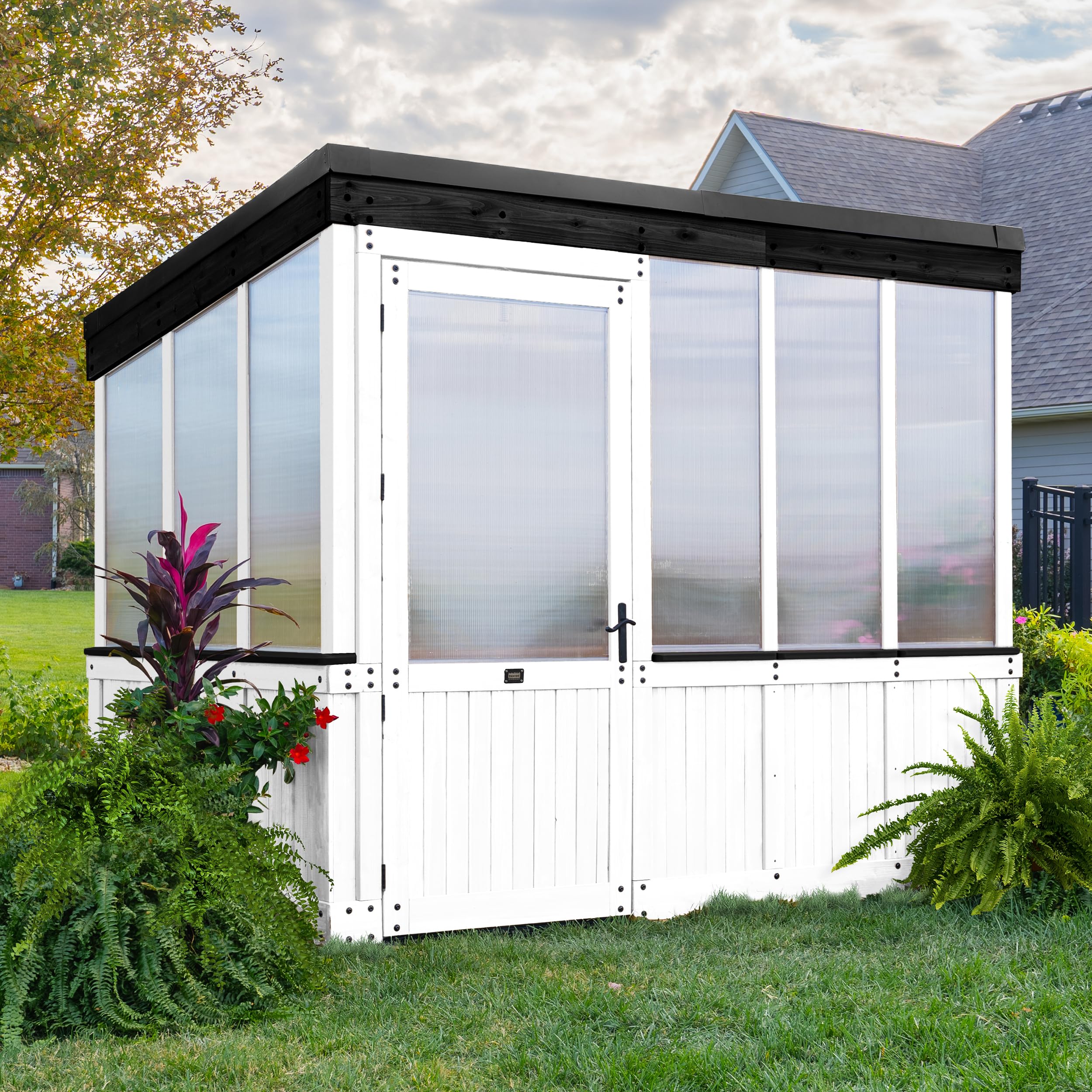
A cedar beauty that marries old-school craftsmanship with modern insulation.
If you want a greenhouse that looks like a garden structure rather than a metal shed, the Backyard Discovery Willow is it. The frame is made from 100% cedar wood, which naturally resists decay and provides a rigid base that feels more like a small building than a kit. It uses commercial-grade 4-wall polycarbonate panels on the roof and windows, which the maker claims improves heat retention by 30% compared to standard double-wall polycarbonate. Pro-Tect tested the Willow to withstand up to 2,800 pounds of snow load (30 inches) and winds up to 100 mph—making it the most wind-resistant model on this list—when anchored per the manual.
The included features go beyond a basic shell. It comes with a temperature-activated exhaust fan for automatic ventilation, a built-in PowerPort with 3 electrical outlets and 3 USB ports, plus both interior and exterior hose hook-ups for watering. The interior is 54 square feet with 13 linear feet of fixed staging shelves. Owners mention the BILT assembly app is helpful, though the build takes one person about 21 hours or a weekend for two. One reviewer noted the protective blue film on the polycarbonate panels is annoying to remove, and the door panel arrived damaged in shipping for a few buyers, though the manufacturer quickly sent free replacements.
Why It Works in Winter
- Cedar wood frame provides natural rot resistance and a rigid, strong structure.
- 4-wall polycarbonate panels improve heat retention for colder months.
- Includes a powered exhaust fan and electrical ports for heaters and lights.
What to Know
- Weight of 571 lbs makes this a permanent, non-portable installation.
- Assembly is time-consuming and requires a solid, level foundation.
- Some owners reported damaged panels during shipping, though support resolved it.
Your pick if: You value a beautiful, natural aesthetic and want a wood-framed greenhouse with a 100 mph wind rating and built-in power and water hookups.
skip it if: You need a larger footprint or prefer a lighter, more portable aluminum frame.
3. HOWE 10x14x8.4FT Polycarbonate Greenhouse
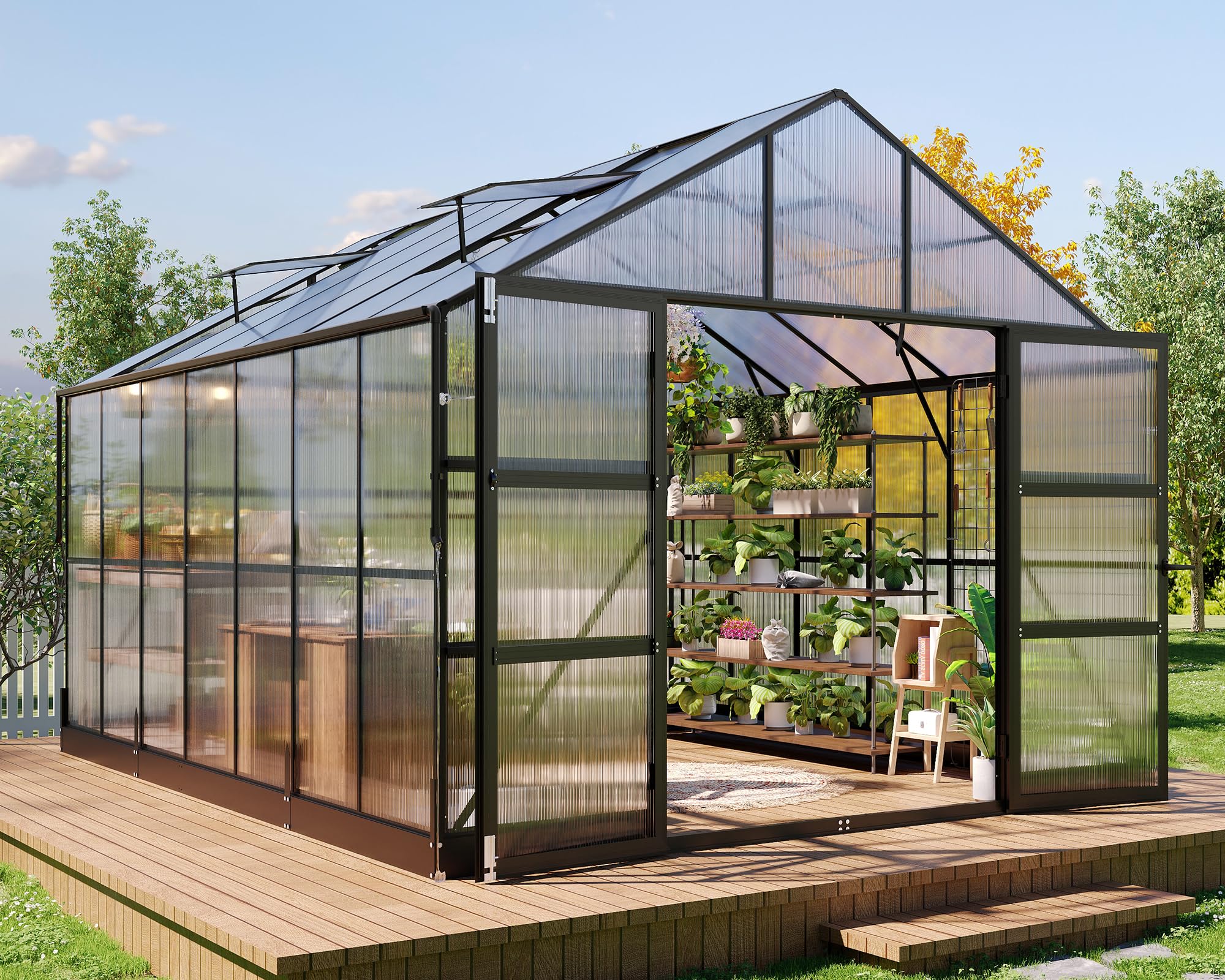
Four vents and a strong frame for serious all-season growers.
You get better control over humidity and temperature with the HOWE 10x14x8.4 FT because it has four vent windows, not just two—critical when the greenhouse traps heat on sunny winter days. It splits the difference between the massive 14-foot model and the mid-size 8-foot version, offering a roomy 782-cubic-foot interior with 5.6-foot-high walls and double hinged doors. Like its bigger sibling, it uses 6mm twin-wall polycarbonate panels (two layers of plastic with a gap for insulation) and carries the same heavy-duty specs: a 70 mph wind rating and a 30 psf (pounds per square foot) snow load capacity, so it stands up to heavy snow and strong gusts.
The frame is reinforced with aluminum brackets and expansion screws, and it includes ground anchors for securing it to the earth. One reviewer in New Hampshire (zone 5b) described it as a solid build that handled heavy snow well, noting they added weight to a window that blew off in wind. Another buyer found the instructions lacking detail and the hardware mixed metric and standard sizes, which made the build frustrating. Still, owners who stuck with it were pleased, with one calling it an excellent greenhouse after a year of use, especially after adding automatic vent openers.
The Vent Advantage
- Four adjustable vent windows provide superior airflow and temperature control.
- 30 psf snow load and 70 mph wind rating match the top-tier model.
- Spacious 782 cu.ft. with 5.6 ft walls for comfortable movement.
The Build Challenge
- Assembly is complex and requires carefully studying the instructions.
- Hardware mix of metric threads and English heads can be confusing.
- A few customers note windows are drafty and the design feels under-engineered.
Best for: The dedicated gardener who needs the snow load of the top model but wants more ventilation options in a slightly more compact footprint.
Not for you if: You want a simple, quick assembly or are on a tight budget.
4. HOWE 8x10x7.5 FT Polycarbonate Greenhouse

Thick panels and a 60 mph wind rating at a mid-range price.
The HOWE 8x10x7.5 FT brings the same 6mm twin-wall polycarbonate panels and rust-resistant 1.5mm aluminum frame found on the larger HOWE models, but in a smaller, more affordable package. It is rated for 60 mph winds and an 18 psf snow load—a step behind the 30 psf of the bigger units, but still capable for many zones with moderate snowfall. The 5.2-foot added wall height means you get nearly full standing room, and the double swing doors and two adjustable roof vents provide decent airflow for its size.
Builders note that the instructions lack orientation detail, and the “posts” are actually 6-inch brackets that are ineffective without a concrete base; a solid foundation with anchors is a must. One owner in South Carolina successfully used a railroad tie foundation and added automatic roof vent openers to manage summer heat. Assembly is a 1-2 person job that can take a full day or longer. Despite the quirks—some roof leakage near windows and a hardware set that mixes metric and standard sizes—buyers generally agree the final structure is sturdy and a strong value for the price.
Solid Foundation
- 6mm twin-wall polycarbonate provides excellent insulation for its price tier.
- 1.5mm aluminum frame is thicker than many budget models.
- Double swing doors make access easy, even with tools in hand.
Watch Out For
- 18 psf snow load is lower than the premium HOWE models.
- Short “post” brackets require a concrete or wood foundation for stability.
- Instructions are unclear and hardware uses mixed wrench sizes.
Choose this for: A well-insulated, mid-size greenhouse that doesn’t break the bank, especially if you can provide a proper foundation.
Pass on it if: You face heavy snow loads or want a simpler, faster assembly.
5. FLY BY YAN 8×14 FT Polycarbonate Greenhouse
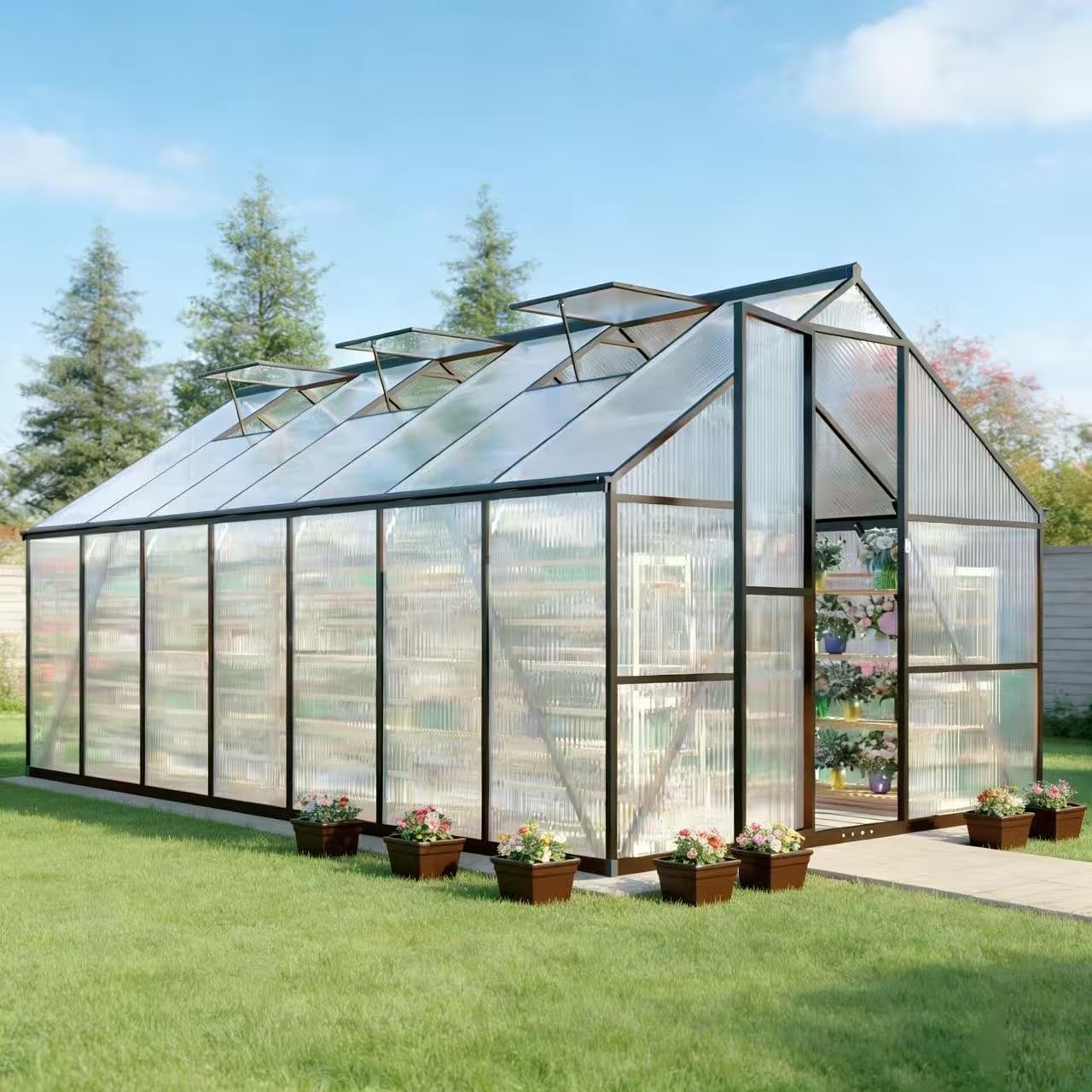
The most floor space for the money, if you can handle the assembly.
At 166.1 inches long by 97 inches wide, the FLY BY YAN 8×14 FT is the longest greenhouse in this lineup, giving you a massive 8×14-foot footprint for a mid-range price. The maker claims a quick-setup slide-in system perfected over 500 tests that boosts speed by 40% and stability by 35%. It uses 720g/m² double-wall polycarbonate panels with UV coating and a reinforced aluminum frame. Reviewers point out that with proper anchoring, this structure “withstood 60 mph winds with minor damage” and was “surprisingly sturdy for cost.”
However, size brings complexity. Assembly requires 4 to 5 people and takes at least 6 hours, according to owners. One reviewer who built it solo in 5 hours after organizing parts found the structure survived two storms when anchored well. Another had severe issues with misaligned roof panels and questioned storm durability. The interior gets very hot quickly in direct sun, so the three roof vents are essential. The single lockable door and rain gutter system are welcome features, but you will need to carefully plan your anchoring strategy.
Size Advantage
- 8×14-foot footprint is the largest in this guide, great for volume growing.
- 720g/m² polycarbonate panels provide decent insulation for the price.
- Withstood 60 mph winds in one owner’s real-world test.
The Catch
- Assembly is difficult and requires 4-5 people or a very patient solo builder.
- No published snow load rating, making it a gamble for heavy snow zones.
- Roof panel alignment issues reported by some buyers.
Go for it if: You need the biggest possible growing area on a budget and have helpers for assembly.
pass on it if: You face heavy snow loads or prefer a simpler build with clearer instructions.
6. WUKHG 10X12FT Greenhouse with Electronic Thermometers
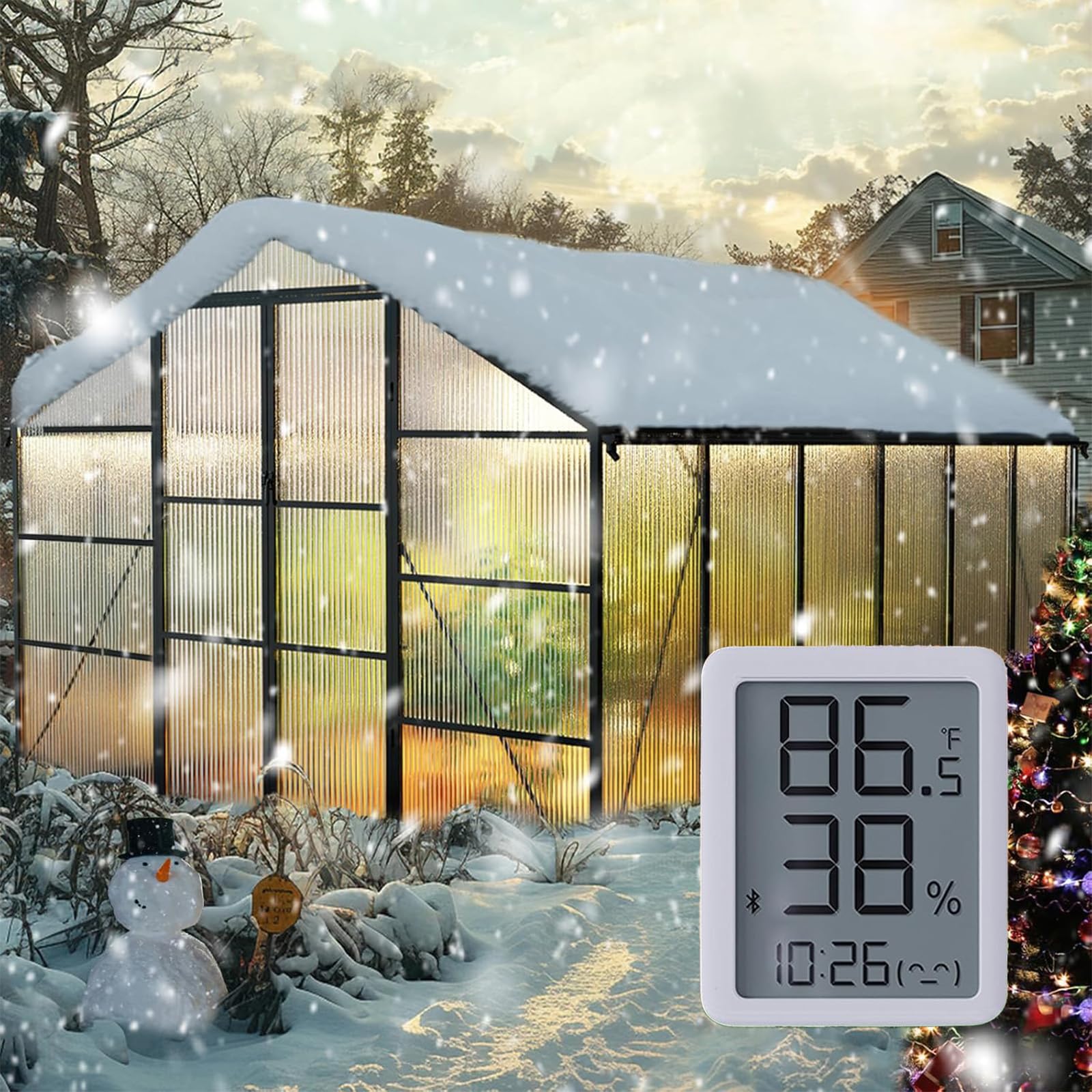
A rare budget model that quotes a snow load rating.
The WUKHG 10X12 FT stands out because it is one of the few mid-range greenhouses that actually gives you a snow load spec: 20 psf, with a wind rating of 35 mph. It uses 5mm twin-wall polycarbonate panels and a heavy-duty aluminum alloy frame. The panels are rated to block harmful UV rays while diffusing light for even plant growth. The 10×12-foot size offers a generous 122 by 145 inches of floor space, and the three adjustable vents and two lockable doors provide good access and airflow.
Buyers give mixed feedback. Reports say it heats up quickly—one owner measured 100°F inside when it was 40°F outside, though it cooled to ambient by midnight. Another noted the roof window blew out on the first night, and the panels feel thin and cheap to some. Assembly is a 3-person job that some call tricky, with mislabeled parts reported. It does include an electronic thermometer, which is a nice touch for monitoring conditions, but you will need to anchor it aggressively and seal the window openings.
Honest Specs
- 20 psf snow load rating is a useful baseline for moderate snowfall zones.
- 5mm panels are slightly thicker than standard 4mm budget offerings.
- Includes an electronic thermometer for monitoring interior conditions.
Downsides
- 35 mph wind rating is low compared to other models on this list.
- Thin, cheap-feeling panels and poor window seals reported.
- Tricky assembly with potential for mislabeled parts.
It works for: Gardeners in areas with light to moderate snow who want a clear, published spec and a roomy interior.
It does not work for: High-wind zones or anyone who wants a year-round, heavy-duty structure.
7. Palram Canopia 6×8 Greenhouse

A tidy, well-designed starter kit chosen by Better Homes and Gardens.
Better Homes and Gardens selected the Palram Canopia 6×8 as the Best Overall Greenhouse Kit of 2024. It uses a smart hybrid approach: twin-wall polycarbonate roof panels (two layers with an air gap) protect against strong sunlight, while crisp polycarbonate wall panels allow over 90% light transmission, so your plants get plenty of sun even in winter. The frame is powder-coated aluminum with a galvanized steel base (steel coated with zinc to resist rust) for added stability. A magnetic door catch and lockable handle keep the door where you want it, and the built-in rain gutters channel water away from the base to prevent puddling.
This is a compact unit at 97 by 73 by 82 inches, so it fits in smaller yards but lacks the interior volume for serious winter growing. One buyer in the Northeast reported it withstood multiple Northeastern winters when set on a wood frame with lag bolts, though the roof panel came half-off in 30+ mph winds, requiring a fix with steel cable net and caulk. Assembly is straightforward if you are patient, with owners reporting it takes about a day. The galvanized base has pre-drilled holes for anchoring, but anchors are not included—you will need to buy them separately.
Design Highlights
- Hybrid roof/wall panels balance light transmission with insulation.
- Galvanized steel base with pre-drilled anchor holes adds stability.
- Magnetic door catch and lockable handle are convenient.
Winter Limits
- Small size (6×8 ft) limits plant capacity and interior movement.
- No published snow load rating; roof panel can detach in high winds.
- Assembly requires careful attention to part numbering.
Best for: The first-time greenhouse owner who wants a well-reviewed, compact kit for starting seedlings and protecting a few plants through milder winters.
Not the one for: Heavy snow zones or anyone needing a large, walk-in workspace.
8. VEIKOU 6’x12’ Greenhouse

A budget-friendly 6×12 with wind-resistance that surprised owners.
The VEIKOU 6×12 uses 4mm twin-wall polycarbonate panels and a powder-coated aluminum frame with a nominal wall thickness of 0.15748 inches. It offers a unique pole-less roof vent with a pulley system that you can adjust without reaching overhead. The sliding panel assembly system is designed for easier sealing and a faster install. One buyer mentioned that “with wind gusts up to 30 mph it didn’t come apart,” though they strongly recommend adding anchors, as the greenhouse will move or blow away in winds over 15 mph without them.
Assembly is generally rated as easy, with a decent finish on the frame. The lockable door and sliding panels are appreciated, but there are notable trade-offs. Some owners found the vent holders ineffective and made their own wood stops, while others used a solar fan to manage heat buildup. The included 4mm panels are basic—adequate for fall and spring extension but not enough for deep winter in zone 5 or colder without supplemental heating. A few owners had nightmarish assembly experiences with bent pieces and panels that eventually blew out, so check that all parts are straight before starting.
Budget Benefits
- Pole-less roof vent with pulley system is easy to adjust from below.
- Good value for a 6×12 foot size with a powder-coated aluminum frame.
- Several shoppers say it withstood 30 mph winds when anchored.
Affordable Limits
- 4mm panels are thin and provide limited insulation in deep cold.
- It requires aftermarket anchors or tie-downs for stability.
- Quality control issues reported, from bent parts to panels blowing out.
Consider it if: You are on a tight budget and want a large 6×12 greenhouse for extending your growing season in a mild-to-moderate winter zone.
Do not buy it if: You face heavy snow loads or need a structure you can rely on for years of winter use without modifications.
Understanding the Specs
Twin-Wall vs. Quad-Wall vs. Single-Wall Polycarbonate
Twin-wall polycarbonate (two layers with a gap) traps air for insulation, acting like double-pane windows. Quad-wall (four layers) increases that gap for even better heat retention, but is heavier and more expensive. Single-wall polycarbonate is just a sheet—no insulation value at all. For a cold-climate greenhouse, always choose twin-wall at minimum; 6mm thickness is a strong baseline for moderate cold, while 8mm or quad-wall is ideal for extreme zones.
Snow Load Rating
Measured in pounds per square foot (psf), this tells you how much weight the roof can hold before collapsing. Light snow zones need around 15 psf; moderate zones require 20-25 psf; heavy snow areas should look for 30 psf or higher. If a greenhouse does not publish this number, assume it is not designed for snow and plan to clear the roof manually after every storm to prevent collapse.
FAQ
What is the best type of glazing for a cold climate greenhouse?
How much snow load do I need for my area?
Do I need a foundation for a greenhouse?
Can I use a heater in a polycarbonate greenhouse?
What is the difference between 4mm and 6mm polycarbonate?
Will my greenhouse need ventilation in winter?
How long does a polycarbonate greenhouse last?
Is a wood or aluminum frame better for cold climates?
How do I anchor a greenhouse to prevent it from blowing away?
Can I assemble the largest greenhouses by myself?
Final Thoughts: The Verdict
For most buyers, the best greenhouses for cold climates winner is the HOWE 14×9.5×9 FT because it offers the highest snow load (30 psf) and wind rating (70 mph) in a spacious, walk-in design. If you want the beauty of natural wood with the best wind protection on the list, grab the Backyard Discovery Willow 9×6. And for a budget-friendly option that still offers good size and surprising wind resistance, the VEIKOU 6×12 is a solid entry-level choice.
How We Picked
We do not accept paid placement, and we did not hands-on test every unit. Instead, we match each pick to a real buyer and use-case by comparing the manufacturers’ published specifications against the patterns in verified customer reviews — so you get each pick’s real strengths and trade-offs instead of marketing copy.
Sources & Methodology
Specifications: manufacturer listings and product documentation. Review insights: verified customer reviews, as of July 2026. Pricing: not shown on this page (it changes often); check the current price via the retailer link.
As an Amazon Associate, Lawn Gear Lab earns from qualifying purchases. This does not affect which products we feature.