
Specs are compiled from manufacturer listings and verified buyer reviews and can change over time — please confirm the key details on the product page before buying.
You want huge, colorful blooms and a bumper crop of vegetables. That almost always depends on one thing: phosphorus. The right best phosphorus fertilizer pushes past leafy growth and sends energy into flowers, fruit, and strong roots. But picking the wrong source can leave you with more green and less of what you actually planted for. This guide matches the right formulation, concentration, and application method to your specific garden needs, not just the biggest number on the bag.
I’m Rikta — the founder and writer behind Lawn Gear Lab. This guide is built by comparing the manufacturers’ published specifications and the patterns across verified customer reviews, so you get each pick’s real strengths and trade-offs instead of marketing spin.
Whether you are coaxing tomatoes to a record harvest or stubborn shrubs into flowering for the first time, understanding the N-P-K ratio (the three numbers on a bag that stand for Nitrogen, Phosphorus, and Potassium) along with the source material (rock phosphate, bone meal, or triple super phosphate) is the difference between a good season and a disappointing one. This article breaks down the top phosphorus fertilizers by their actual plant-available content, how fast they feed, and what real buyers report about their results, across every common use case.
Quick Picks
- Triple Super Phosphate 0-46-0 (Cz Garden Supply) — Top Performer
- Espoma Triple Phosphate Fertilizer 0-45-0 — Best Overall
- Hi-Yield Super Phosphate 0-18-0 — Budget Champion
- Espoma Organic Bone Meal Fertilizer 4-12-0 — Organic Choice
How To Choose The Best Phosphorus Fertilizer
Phosphorus is the middle number in the N-P-K ratio (Nitrogen-Phosphorus-Potassium), and it is the most important one for flowering, fruiting, and strong root systems. Grabbing a bag without understanding the concentration, the source, and how your soil behaves is a common mistake that leads to disappointing harvests or even nutrient run-off. Here are the key specs that separate an effective phosphorus supplement from a waste of money.
Understanding the N-P-K Ratio
The three numbers on every fertilizer bag stand for Nitrogen (N), Phosphorus (P), and Potassium (K). For a phosphorus-focused fertilizer, you want the middle number to be the highest. Products like 0-45-0 or 0-46-0 deliver almost pure phosphorus with minimal nitrogen, which is perfect for pushing blooms without encouraging excessive leafy growth. A lower ratio like 4-12-0 still gives you phosphorus, but delivers it alongside some nitrogen, making it a better fit for building soil organic matter while feeding flowers.
Source Matters: Rock Phosphate vs. Bone Meal vs. Triple Super Phosphate
The “source” of the phosphorus changes how fast plants can use it. Triple super phosphate and super phosphate are mined and processed into granules that dissolve quickly in water, making phosphorus available to roots within days. Bone meal (ground animal bones) is a slower, organic source that releases phosphorus over months as soil microbes break it down, which makes it a great pre-plant amendment but a poor choice for a mid-season rescue. Your choice depends on if you want a quick bloom surge or a long-term soil-building program.
Granules vs. Powder vs. Liquid
Granules are the most common format for phosphorus fertilizers because they are easy to spread and do not blow away. Some products come as a powder, which dissolves faster but can be messy to handle and needs to be watered in immediately to avoid dust. The format you choose dictates how you apply it — granules work best when scratched into the top inch of soil, while powders are better for dissolving in water for a fast-acting soil drench or foliar feed (spraying the leaves). Consider your comfort with measuring and mixing before you buy.
Quick Comparison
On smaller screens, swipe sideways to see the full table.
| Model | Best For | N-P-K Ratio | Weight | Form | Amazon |
|---|---|---|---|---|---|
| Triple Super Phosphate (Cz Garden) | High-efficiency blooming | 0-46-0 | 10 lb | Granules (resealable pouch) | Amazon |
| Espoma Triple Phosphate | Root & bloom booster | 0-45-0 | 6.5 lb | Granules | Amazon |
| Hi-Yield Super Phosphate | Value-priced bloom boost | 0-18-0 | 3 lb | Granules | Amazon |
| Espoma Organic Bone Meal | Organic long-term feeding | 4-12-0 | 24 lb | Powder | Amazon |
In‑Depth Reviews
1. Triple Super Phosphate 0-46-0 (Cz Garden Supply)
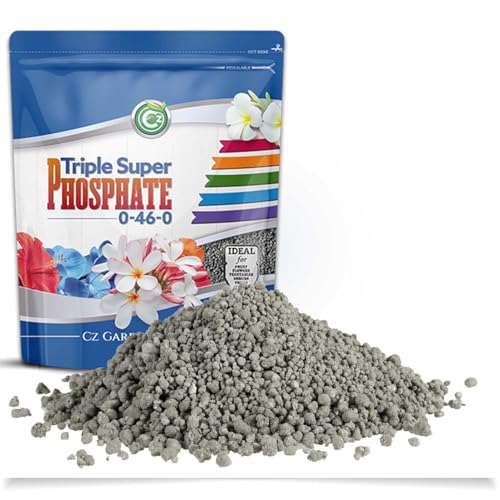
The highest phosphorus concentration in the lineup, built for a serious bloom push.
If you want the purest phosphorus punch possible to trigger massive flowering and heavy fruit set, this 0-46-0 blend delivers the strongest ratio here. That means every handful gives you nearly half a pound of phosphorus, with zero nitrogen to distract the plant into making leaves instead of flowers. The granules come in a heavy-duty, resealable pouch that makes re-closing easy — a design detail you appreciate if you have ever wrestled with a torn multi-layer paper bag in a damp garage.
Owners mention serious results: one owner noted that their “orchids bloom … and blooms are beautiful,” which is the kind of direct evidence this category needs. Because it is a straight phosphorus source without any filler, you can pair it with a separate nitrogen and potassium source to build a perfect custom blend for specific crops. The catch is that at this concentration, over-application is a real risk — excess phosphorus can lock up other nutrients like iron and zinc in the soil, so a soil test before application is strongly recommended, not optional.
Bloom Power
- Highest P ratio reviewed at 0-46-0 — maximum bloom/fruiting response
- Resealable pouch keeps product dry and stored cleanly
- Made in the USA from premium ingredients
Smart Use
- Easy to over-apply without a soil test
- One reviewer noted a label misprint about potassium
- Granular form requires watering in for uptake
Who needs this: Gardeners who want the highest-efficiency phosphorus booster for custom fertilizer blending or a targeted bloom surge on flowering shrubs, fruit trees, and vegetables.
One caveat: Do not apply without knowing your current soil phosphorus level — at this concentration, the line between feeding and nutrient lock-up is thin.
2. Espoma Triple Phosphate Fertilizer 0-45-0

A trusted brand with a high phosphorus ratio and zero filler or sludge.
Espoma is a name people in gardening circles recognize immediately, and this 0-45-0 triple phosphate lives up to the reputation. It provides a near-pure phosphorus hit that promotes root growth and blooming across all flowering plants, trees, shrubs, and vegetables. The ingredients list is refreshingly simple — 100% triple phosphate — so you know exactly what you are putting on your soil, which is especially important if you are managing a custom feeding schedule and want no secondary nutrients or sludges confusing the picture.
Customers note it works as advertised, with one reviewer simply saying, “If you have plants that don’t bloom you need this stuff!” The granules require no mixing; you just sprinkle on the soil around the drip line (the area under the outer edge of the plant’s branches) and water in. Because the phosphorus ratio is only one point lower than the Cz Garden pick (0-45-0 vs 0-46-0), the real difference here is the brand trust and the slightly smaller 6.5-pound bag, which makes it a more manageable size for the home gardener who does not need a 10-pound supply. One reviewer did note that their bag arrived split, so packaging for delivery is a potential weak point.
Blue-Chip Dependability
- 100% triple phosphate, no fillers or sludges
- Ready to use — no mixing required
- Effective on flowers, vegetables, trees, and shrubs
Delivery & Size
- Paper bag can split in transit
- 6.5 lb bag is smaller than some alternatives for large garden applications
What it earns: The best pick for the typical gardener who needs a concentrated, reliable phosphorus source from a brand with decades of trust, without having to handle awkward resealable pouches or extra-large bags.
What to watch for: If you need to cover a very large area at once, the 6.5-pound bag might mean a repeat purchase, and the paper bag is vulnerable to moisture damage during shipping.
3. Hi-Yield Super Phosphate 0-18-0

A lower concentration phosphate that still delivers real results at a great price.
Not every garden needs a 45% phosphorus blast — sometimes all you want is a reliable, budget-friendly phosphate source that gives you plenty of blooms without the risk of overdoing it. At 0-18-0, this Hi-Yield product has a phosphorus percentage that is much lower than the triple phosphate options like the Espoma 0-45-0, but reviewers point out that it still makes a dramatic difference. One verified owner wrote, “Almost 100 pounds harvested from 9 plants,” which is on par with many higher-concentration results.
The granules are easy to apply because the lower concentration means you can spread a bit more without worrying about burning roots. The 3-pound bag is a small commitment, which makes it a good starter fertilizer if you are experimenting with phosphorus for the first time. The downside is that you need to apply more of it to match the same phosphorus delivery as the concentrated products like the Cz Garden 0-46-0 — if you are covering a large garden bed, a single bag will not go as far. One buyer did note that the product can stain concrete, so keep it off driveways and patio slabs.
Entry-Level Winner
- Great price point for trying phosphorus first time
- Lower concentration means safer, more forgiving application
- Real results: big bloom and harvest increases reported
Capacity & Handling
- 3 lb bag is small for larger garden jobs
- Can stain concrete if spilled
- Lower P ratio means you need more product per square foot
Who it fits: Beginner gardeners, container growers, or anyone who wants a cheap but effective phosphorus source for a small-scale bloom boost without the precision required by high-concentration products.
Who should pass: If you are feeding a large garden or need a precise high-P blend for a heavy-feeding crop like tomatoes or squash, the 0-45-0 or 0-46-0 options will cost less per pound of actual phosphorus delivered.
4. Espoma Organic Bone Meal Fertilizer 4-12-0

The slow-release organic option that builds soil while feeding bulbs and flowers.
If your gardening philosophy leans organic or you are planting bulbs that need a gentle, long-term phosphorus release, this 24-pound bag of bone meal is a serious investment in soil health. At 4-12-0, it provides a much lower phosphorus percentage than the synthetic options like the Espoma 0-45-0, but it also delivers nitrogen and calcium — calcium is a crucial element that prevents blossom end rot (a black, sunken spot on the bottom of tomatoes) and supports strong cell structure in fruits. Because it is an all-natural domestic bone meal with no fillers, microbial activity in the soil slowly breaks it down over months, creating a sustained feed that you do not have to reapply frequently.
Shoppers say it is especially effective for transplanting seedlings and fixing yellowing leaves, and one gardener noted they “applied to fruit trees damaged by cicadas” and saw good results. The 24-pound bag is the heaviest in this lineup — at 8.0x the weight of the Hi-Yield Super Phosphate (24 lb vs 3 lb) — which gives you the best unit price for large-scale organic feeding. The primary catch is that bone meal is a powder, not granules, and can get messy if the bag breaks in transit. Additionally, because it is organic and slow-release, it will not give you the instant bloom surge that a 0-46-0 product provides. Pair it with a liquid fertilizer if your plants need a quick rescue.
Organic Edge
- Approved for organic gardening with no synthetic fillers
- Provides calcium to prevent blossom end rot
- 24 lb bag offers the best unit price for large areas
Organic Trade-offs
- Slow release cannot provide a quick fix for phosphorus deficiency
- Powder form can be messy and bags can break during shipping
- Alkaline soil can lock up bone meal’s phosphorus if pH is too high
Who should choose this: Organic gardeners, people planting bulbs or perennials in the fall, and anyone who wants to feed fruit trees and shrubs with a long-lasting amendment that also builds soil organic matter and supplies calcium.
Who should skip: If your plants need a rapid phosphorus boost mid-season or you are trying to force a quick second flush of blooms, go with a concentrated triple super phosphate instead — bone meal is a marathon, not a sprint.
Understanding the Specs
N-P-K Ratio: The Middle Number is King
The three numbers on a fertilizer bag tell you the percentage by weight of nitrogen (N), phosphorus (P), and potassium (K). For a phosphorus fertilizer, the middle number is what matters. A product labeled 0-46-0 means it is 46% phosphorus by weight, with zero nitrogen and zero potassium. You use this when you want a concentrated bloom booster. A product like 4-12-0 has 12% phosphorus but also includes some nitrogen, so it can support leafy growth and blooming at the same time — ideal for organic feeding where the nitrogen helps build green tissue while phosphorus drives root and flower development. The higher the middle number, the less product you need to apply to deliver the same amount of phosphorus.
Source Type: Synthetic vs. Organic
Where the phosphorus comes from dictates how fast plants can use it and how it affects your soil biology. Synthetic sources like triple super phosphate (0-46-0) and super phosphate (0-18-0) are processed rock minerals that dissolve quickly in water, making phosphorus available to roots within days. Organic sources like bone meal (4-12-0) are ground animal byproducts that release phosphorus over months as soil microbes and natural acids break them down. The synthetic option is best for a quick corrective application mid-season; the organic option is best for pre-planting soil preparation and long-term maintenance, but it will not fix a sudden deficiency fast enough to save a crop.
FAQ
What is the best N-P-K ratio for blooming flowers?
Can I use triple super phosphate on all types of plants?
How is bone meal different from super phosphate?
Should I apply phosphorus fertilizer before planting or during growth?
What happens if I use too much phosphorus fertilizer?
Will phosphorus fertilizer fix blossom end rot?
Can I mix phosphorus fertilizer with other fertilizers?
How long does it take for phosphorus fertilizer to work in the garden?
What is the difference between super phosphate and triple super phosphate?
Final Thoughts: The Verdict
For the majority of shoppers, the best phosphorus fertilizer winner is the Espoma Triple Phosphate 0-45-0 because it combines a high-efficiency phosphorus concentration with the trust of a brand that has been making garden products for decades, all in a straightforward, no-mix granular format. If you want the absolute highest efficiency per pound for a custom blend, grab the Cz Garden Triple Super Phosphate 0-46-0. And for organic, slow-release feeding with the bonus of calcium, the standout is the Espoma Organic Bone Meal 4-12-0.
How We Picked
We do not accept paid placement, and we did not hands-on test every unit. Instead, we match each pick to a real buyer and use-case by comparing the manufacturers’ published specifications against the patterns in verified customer reviews — so you get each pick’s real strengths and trade-offs instead of marketing copy.
Sources & Methodology
Specifications: manufacturer listings and product documentation. Review insights: verified customer reviews, as of July 2026. Pricing: not shown on this page (it changes often); check the current price via the retailer link.
As an Amazon Associate, Lawn Gear Lab earns from qualifying purchases. This does not affect which products we feature.