
Specs are compiled from manufacturer listings and verified buyer reviews and can change over time — please confirm the key details on the product page before buying.
A dull shear crushes bonsai branches instead of slicing them. That leaves ragged wounds that heal slowly and invite disease. A sharp, properly shaped shear makes clean concave or flush cuts that nearly vanish as they heal. This guide picks the seven shears that actually do that, for every budget and skill level, using published specs and real buyer reviews — not marketing claims.
I’m Rikta — the founder and writer behind Lawn Gear Lab. This guide is built by comparing the manufacturers’ published specifications and the patterns across verified customer reviews, so you get each pick’s real strengths and trade-offs instead of marketing spin.
If you trim buds from a Satsuki azalea or remove a branch flush against the trunk, the right tool matters. Here is an honest look at the best bonsai pruning shears for every grower and every budget.
Quick Picks
- Wazakura Hand Forged Bonsai Concave Branch Cutter — Top Performer
- TONMA Ashinaga Bonsai Scissors [Made in Japan] — Best Value
- Wazakura Yasugi Steel Twig Bonsai Scissors — Top Craftsmanship
- SenkichiKin Bonsai Scissors 7in (180mm) — Premium Detail
- KAKURI Satsuki Bonsai Scissors Made in Japan 7″ — Ultra-Precise
- VOUIU 8inch Concave Cutter Bonsai tools — Budget Concave
- Bonsai Concave Cutter, 8.4 Inch Manganese Steel Alloy — Best Entry
How To Choose The Best Bonsai Pruning Shears
Not all garden shears are suited for bonsai. A standard pair of hedge clippers will crush a twig instead of snipping it. Here are the three factors that separate a true bonsai tool from an ordinary pruner.
Blade Shape: Concave vs. Straight
A concave cutter has a scoop-shaped blade that digs into the branch, leaving a hollow wound. This shape allows the tree’s healing resin to fill the cavity quickly, creating a smooth surface with almost no visible scar. A straight-blade shear, like the KAKURI Satsuki Scissors, is made for detail trimming of buds and thin branches where a concave jaw is too bulky. So if you are removing a branch near the trunk, you want a concave cutter for a clean healing wound. If you are snipping shoots and leaves, a long-handled straight shear gives you reach and control.
Steel Types: Carbon vs. Stainless
Japanese carbon steel (like Yasugi White Steel or S55C) takes an exceptionally sharp edge and holds it for many cuts. But it will rust if you do not keep it dry and oiled. Stainless steel (like AUS-8) requires far less maintenance and is more forgiving in humid conditions. You cannot sharpen it to the same razor-fine edge as carbon steel. Your choice depends on how much upkeep you want: a patina-prone carbon steel blade for peak sharpness, or a low-maintenance stainless blade that still cuts cleanly.
Handle Length and Weight
Longer handles give you better leverage and reach into dense foliage, but they add weight. A heavy shear at 6.8 ounces, like the TONMA Ashinaga, can fatigue your hand during a long session of shaping a large tree. A lighter pair around 3.1 ounces, like the KAKURI, is easier to control for fine detail work. Wrap your hand around the grip requirements: rubber-coated handles offer more comfort for long periods, while all-steel handles are more durable but can be slippery.
Quick Comparison
On smaller screens, swipe sideways to see the full table.
| Model | Best For | Blade Material | Item Weight | Length | Amazon |
|---|---|---|---|---|---|
| Wazakura Concave Cutter | Branch removal up to 13mm | S55C Carbon Steel | 6.7 oz | 7.87″ | Amazon |
| TONMA Ashinaga | Heavy-duty stainless steel | AUS-8 Stainless Steel | 6.8 oz | 8″ | Amazon |
| Wazakura Twig Scissors | Narrow space trimming | Yasugi Steel | 5.22 oz | 8.27″ | Amazon |
| SenkichiKin | Fine detail & arthritic hands | Yasuki White Steel #2 | 5.64 oz | 7″ | Amazon |
| KAKURI Satsuki | Ultra-fine tip trimming | Carbon Steel | 3.1 oz | 7″ | Amazon |
| VOUIU Concave Cutter | Budget branch pruning | Stainless Steel | 8.11 oz | 8.27″ | Amazon |
| Haosie Concave Cutter | Entry-level beginner tool | Manganese Steel Alloy | 3.52 oz | 8.27″ | Amazon |
In‑Depth Reviews
1. Wazakura Hand Forged Bonsai Concave Branch Cutter

The serious bonsai grower’s choice for clean, flush branch removal that heals fast.
This is the tool you reach for when you need to remove a branch up to 13mm thick right at the trunk. The concave-shaped jaw (a scoop-like blade) creates an elongated hollow cut that fills over quickly with healing resin, leaving minimal to no scarring. The blade is forged from S55C carbon steel and hand-shaped by artisans in Sanjo, Japan, using centuries-old blacksmith methods similar to those used for samurai swords.
Buyers report that the blades are exceptionally sharp from the start and that the solid feel inspires confidence when cutting even large, established branches. One reviewer noted that the pre-oiled finish is a nice touch but warned that because it is not stainless steel, you absolutely must dry it and apply blade oil after every use to prevent rust. At 6.7 oz, it is weighty but well-balanced, and it arrives in an elegant black gift box.
Depth charge: If you are shaping a tree where branch stubs are not an option, this concave cutter is the pick that delivers professional-grade results without the professional price tag.
Grab this for: Removing branches 8mm to 13mm from the trunk with the cleanest possible wound for fast healing.
Know before you buy: The black-coated carbon steel will rust if left wet — you must dry and oil it after each use, just like the factory pre-oils it before shipping.
2. TONMA Ashinaga Bonsai Scissors [Made in Japan]
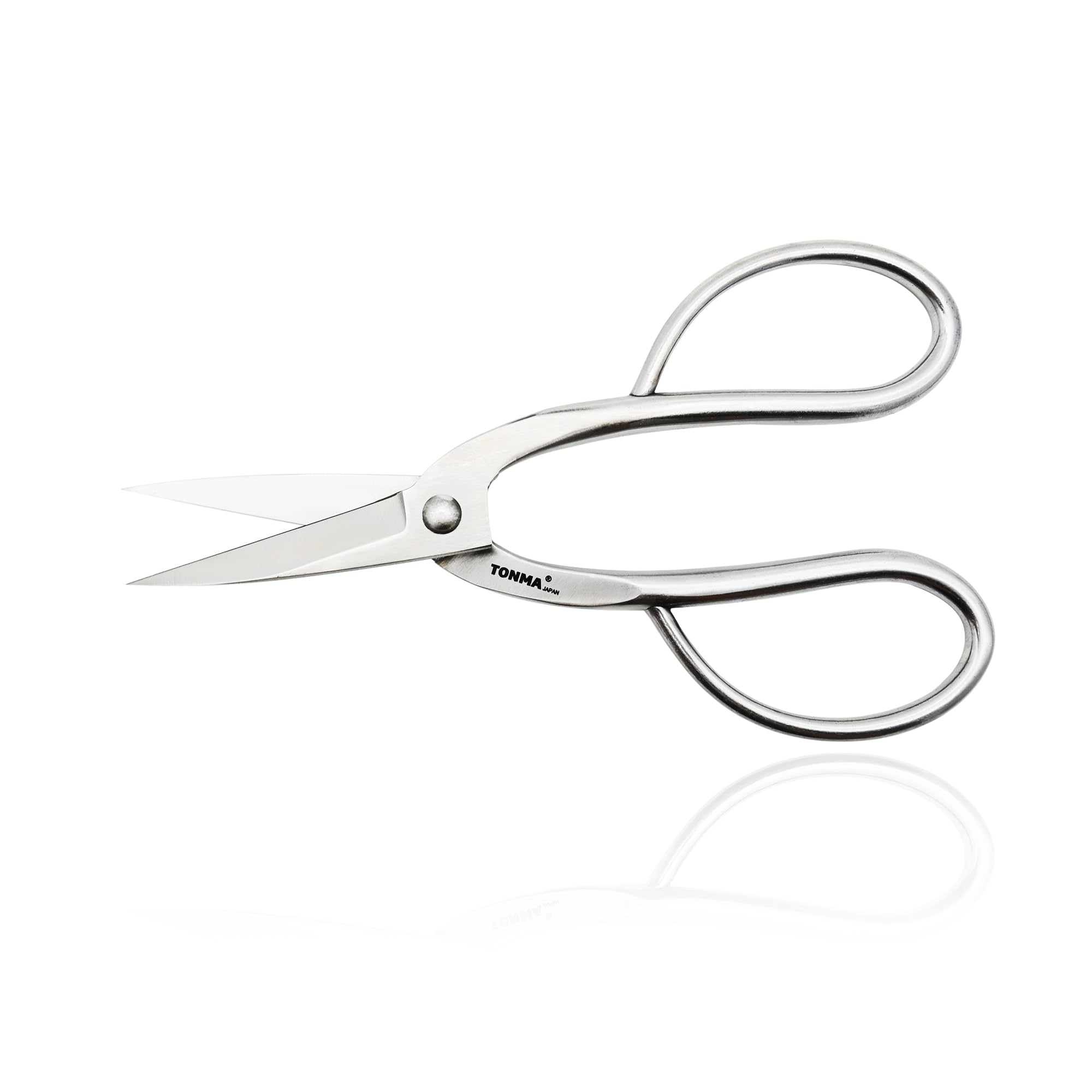
A heavy-duty stainless steel shear that shrugs off tough tubers and stubborn branches.
Unlike the KAKURI above, which weighs just 3.1 oz and is suited for delicate tips, the TONMA Ashinaga is a full 6.8 oz and built from one solid piece of Japanese AUS-8 stainless steel. The 4.5mm thick blades have a hardness of HRC 59±1, which means they hold a sharp edge through demanding work like cutting dahlia tubers or thick bonsai roots. The all-steel ergonomic non-slip handles give you excellent leverage, and because it is stainless, rust maintenance is practically zero — just wash with water and dry.
Owners mention that after multiple uses on tough materials, the blades show no sign of wear or loosening. One buyer specifically mentioned they still seem “very sharp” after repeated use on tubers. It lacks a concave profile, so it is not ideal for flush branch removal near the trunk, but for general pruning, stem snipping, and heavier cutting tasks where stainless convenience matters, this is a top contender.
The trade-off: At 6.8 oz you get a rugged, rust-proof tool, but it is noticeably heavier than the KAKURI (3.1 oz) — so your hand may feel it during very long detail sessions.
Reach for this if: You want a single, low-maintenance pair of shears that will not rust and can handle everything from bonsai trimming to cutting tough tubers and roots.
Look elsewhere if: You need a concave blade for scar-free branch removal, or if you prefer the lightest possible tool for intricate tip work.
3. Wazakura Yasugi Steel Twig Bonsai Scissors

A slim, long-reach twig shear forged from steel that only comes from one region of Japan.
This shear is designed specifically for reaching deep into tight, narrow spaces without damaging surrounding foliage — exactly what you need when trimming buds, twigs, and small branches inside a dense bonsai canopy. The Yasugi Specialty Steel (made in the Proterial plant in Shimane prefecture) is known for its low impurities and high wear resistance, which means the blade stays sharp for a very long time. The tool measures 8.27 inches long but weighs just 5.22 oz, so you get good reach without much fatigue.
Buyers consistently praise the build quality and sharpness. One buyer mentioned that the all-steel construction feels “comfortable and lightweight” and that the shears came pre-oiled from the factory. Another pointed out that the pivot has a slight amount of play, which can make tip cutting a tiny bit less precise for the most meticulous work. For its price point and the quality of the Yasugi steel, this is an outstanding value for a tool made by third-generation artisans in Sanjo. The listed weight here is 5.22 oz (148 g).
Smart buy: If you want a long-handled twig shear that matches the precision of more expensive models, the Wazakura Yasugi delivers with a steel grade that is genuinely special.
Perfect for: Trimming dense foliage and reaching between branches where a shorter tool would knock against leaves.
Single caveat: A few users mention minor play in the pivot joint, so if you need absolute zero-wobble tip precision, test before committing.
4. SenkichiKin Bonsai Scissors 7in (180mm)
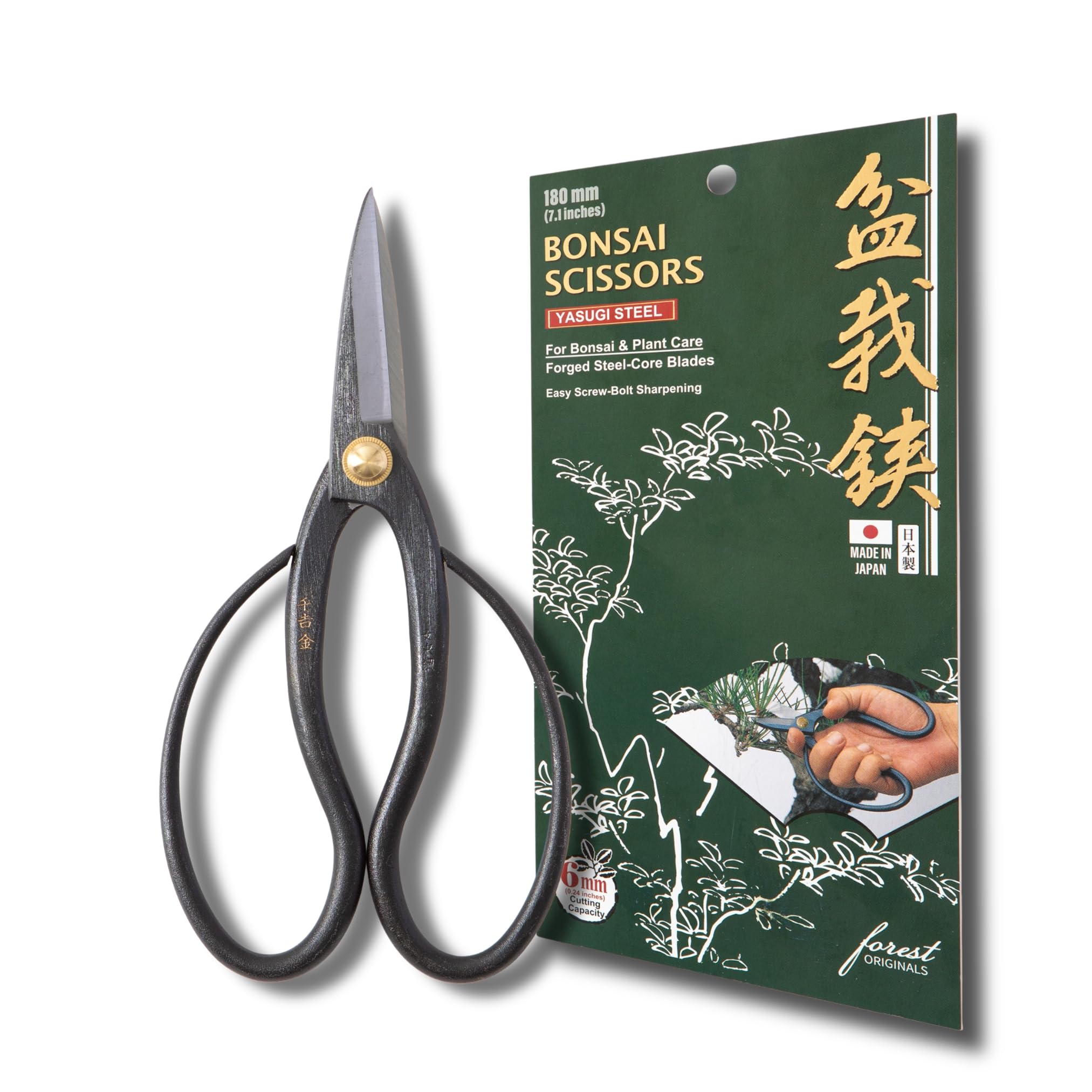
Forged from Yasuki White Steel with removable blades for easy, long-term sharpening.
What sets the SenkichiKin apart from almost every other shear on this list is the bolt-fastened, removable blade design. You can detach the blades to sharpen them properly on a stone, which extends the life of the tool far beyond a fixed-blade shear that gets thrown away when dull. The Yasuki White Steel #2 (a premium Japanese carbon steel) takes an incredibly sharp edge, and the satin finish and nashiji (pear-skin) texture give it a refined, traditional look.
A reviewer who bought these for a relative with arthritic hands reported they “are excellent for her,” thanks to the balanced, comfortable handling. The tool cuts fresh wood up to 6mm thick, which is perfect for thinning growth and shaping silhouettes on bonsai, flowers, and houseplants. One owner reported that while the steel is fantastic for cutting, it requires cleaning and food-grade oil after each use to prevent rust — typical maintenance for a high-carbon blade.
The standout feature: Removable blades mean you can sharpen this shear season after season instead of replacing it — a smart investment for serious hobbyists.
Pick this for: The combination of a legendary Japanese steel and a serviceable design that keeps the tool cutting like new for years.
skip it if: You do not want to oil a carbon steel blade after every use, or you only cut once every few months.
5. KAKURI Satsuki Bonsai Scissors Made in Japan 7″

The go-to scissor for painstakingly precise bud and ultra-thin branch work.
If you work on Satsuki azaleas or any bonsai where you need a razor-sharp tip to reach into tight, intricate spaces without mangling foliage, this is the tool. The KAKURI Satsuki has a slim, pointed tip (the cutting width is just 0.75 inches) and long 7-inch handles that give you excellent control for detail trimming. The blade is made from premium Japanese carbon steel and hand-forged by skilled artisans, so it takes and holds a very fine edge.
One reviewer stated plainly: “Sharp tip for detailed bonsai trimming; well-made; avoids mangling foliage unlike other brands with dull tips.” Another buyer said this scissor is “versatile in use and comfort in hand.” At only 3.1 oz, compared with the TONMA at 6.8 oz, it feels almost weightless in the hand, which helps you stay steady during long trimming sessions. The trade-off is the narrow 0.75-inch cutting width — do not use this for cutting branches thicker than a pencil.
Light and lethal: The KAKURI weighs 3.1 oz versus the TONMA’s 6.8 oz, making it the clear choice if hand fatigue is your primary concern during detail work.
Ideal for: Pinching buds, trimming fine leaves, and working in dense branch clusters where a bulky tool would cause damage.
Not meant for: Cutting branches larger than about the width of a chopstick — this is a precision scissor, not a branch cutter.
6. VOUIU 8inch Concave Cutter Bonsai tools

An entry-level concave cutter that gets the shape right at a very accessible price.
The most affordable concave cutter on the list, the VOUIU is made from stainless steel and has a 8.27-inch cutting width that opens wide for branch removal. While the Wazakura Concave Cutter above uses hand-forged S55C carbon steel, the VOUIU uses a simpler stainless construction that still delivers a concave-shaped jaw for reduced scarring. The cutting edge has an offset design, which makes it easier to keep the cut clean in one motion.
Customer reviews are solid for the price point. One buyer described the VOUIU tools as “good size, function well, easy to use” and noted it “includes storage bag.” The handles are a little long by some standards, and the stainless steel is not as hard as carbon steel, so you may need to sharpen it sooner than the premium picks. For occasional use or for someone just starting out with bonsai and unsure about committing to a premium tool, this represents a very practical starting point.
Bottom line: The VOUIU has an 8.27-inch listed cutting width, while the KAKURI is listed at 0.75 inch, so it is built for branch removal, not fine tip trimming.
Go with this if: You want a functional concave cutter for occasional branch work without spending for a hand-forged premium model.
Consider upgrading if: You prune weekly and need a steel that holds a sharp edge for longer between sharpenings.
7. Bonsai Concave Cutter, 8.4 Inch Manganese Steel Alloy

A beginner-friendly concave cutter that punches above its price with surprising sharpness.
If you are just entering the bonsai hobby and are not ready to invest heavily, this 8.27-inch concave cutter made from manganese steel alloy is a safe starting point. The manganese alloy is wear-resistant and rust-resistant, with good hardness and toughness for its cost. The ergonomic handle is comfortable to grip for extended periods, and the concave blade shape helps the incision heal smoothly — just like the more expensive versions.
A reviewer raved that “the blade curve and sharpness are perfect, and the hinge joint is just stiff enough to hold position without being clunky.” Another buyer, a beginner, praised the tool because it “made the cuts I needed and the cost was very reasonable without sacrificing quality.” At 3.52 oz it is light enough to not strain your hand, though the manganese steel will not hold an edge as long as carbon or premium stainless. For occasional trimming and learning the basics, this is a very capable tool.
The catch: For the same price point, the VOUIU and this cutter are very close in quality — pick the Haosie if you prioritize a stiffer hinge and a slightly lighter build.
Who it fits: A beginner who wants a functional concave cutter at the lowest price without sacrificing good sharpness and a proper blade curve.
Who should pass: Anyone needing a tool for weekly heavy branch removal — the edge wears faster than higher-end steel options.
Understanding the Specs
Blade Material: Carbon Steel vs. Stainless Steel
The steel directly determines how sharp the blade gets and how often you need to maintain it. Japanese carbon steel (such as Yasuki White Steel or S55C) can be honed to a razor edge that holds for many cuts, but it will rust if you leave it wet or do not oil it — same as a chef’s carbon steel knife. Stainless steel (like AUS-8) is much more resistant to rust, so you can wash it and dry it without oiling, but it cannot take quite as fine an edge. Manganese steel is a budget-friendly alternative that resists rust and wear, but it will not hold an edge as long as higher-carbon options.
Blade Shape: Concave vs. Straight
A concave cutter has a scoop-shaped blade that makes a “U” shaped cut, which allows the tree’s healing resin to fill the wound quickly and heal smoothly with minimal scarring. These are essential for removing branches near the trunk. A straight-blade shear has flat edges that make a straight cut — ideal for trimming buds, leaves, and small twigs where precision matters more than wound shape. A twig shear has a slim, long profile for reaching into dense growth. For your first tool, most growers benefit from having one of each type.
FAQ
What is the difference between a concave cutter and a regular pruner for bonsai?
Should I get carbon steel or stainless steel bonsai shears?
Can I use regular garden shears for bonsai pruning?
How often do I need to sharpen bonsai pruning shears?
What does “Made in Japan” mean for bonsai tools?
How do I prevent my bonsai shears from rusting?
What size bonsai pruning shears do I need?
Can I cut wire with bonsai pruning shears?
What is the best bonsai pruning shear for a beginner?
How do I know if my bonsai shears are sharp enough?
Final Thoughts: The Verdict
For most growers, the bonsai pruning shears winner is the Wazakura Hand Forged Bonsai Concave Branch Cutter because it delivers professional-grade branch removal with minimal scarring, hand-forged craftsmanship, and a steel that holds a sharp edge when properly maintained. If you want a low-maintenance stainless steel tool that shrugs off rust, grab the TONMA Ashinaga. And for ultra-fine detail work on delicate buds and thin branches, the featherlight KAKURI Satsuki Bonsai Scissors is the pick for precision over power.
How We Picked
We do not accept paid placement, and we did not hands-on test every unit. Instead, we match each pick to a real buyer and use-case by comparing the manufacturers’ published specifications against the patterns in verified customer reviews — so you get each pick’s real strengths and trade-offs instead of marketing copy.
Sources & Methodology
Specifications: manufacturer listings and product documentation. Review insights: verified customer reviews, as of July 2026. Pricing: not shown on this page (it changes often); check the current price via the retailer link.
As an Amazon Associate, Lawn Gear Lab earns from qualifying purchases. This does not affect which products we feature.