
A weeding hoe that doesn’t feel like a workout is a rare find. The wrong one leaves you wrestling with the soil or bending over until your back aches. This guide compares seven different designs — from lightweight push-pull models to commercial-grade chopping blades — so you can match the tool to your type of weeds, soil, and garden size without guessing.
I’m Rikta — the co-founder and writer behind Lawn Gear Lab. This guide is built by comparing the manufacturers’ published specifications and the patterns across verified customer reviews, so you get each pick’s real strengths and trade-offs instead of marketing spin.
Whether you need a blade that slices through rocky clay or a lightweight tool for raised beds, the right weeding hoe saves your back and cuts your garden chore time in half.
How To Choose The Best Weeding Hoe
Every weeding hoe works differently depending on your garden’s soil type and the kind of weeds you face. Here are the three decisions that matter most.
Blade Design: Draw Hoe vs Scuffle Hoe vs Triangle Hoe
The blade shape defines what you can do. A draw hoe (a traditional garden hoe that you pull toward you) chops into soil to break up compacted ground and cut deep roots. A scuffle hoe (also called a stirrup hoe) cuts on both the push and pull strokes just below the surface, making it faster for light weed maintenance. A triangle hoe has three sharp edges that you can scrape against the soil, great for getting into tight spots between plants.
Handle Length and Weight
A handle between 54 and 66 inches lets you stand upright while working, saving your lower back from constant bending. But length adds weight — a tool heavier than 2.5 pounds can become tiring after 20 minutes of use. Finding the balance between reach and fatigue is key; reviewers consistently report that a 60-inch handle under 3 pounds is the sweet spot for all-day comfort.
Steel Gauge and Blade Hardness
The thickness of the steel (measured in gauge — lower numbers mean thicker steel) determines whether the blade bends on a rock or cuts through it. A 12-gauge head (about 2.7 mm thick) is commercial-grade and will handle rocky clay without warping. Thinner carbon steel (around 1.5-2 mm) is lighter and easier to sharpen, but more likely to dent against heavy roots. Most buyers prefer thick steel for tough ground and carbon steel for soft garden beds.
Quick Comparison
On smaller screens, swipe sideways to see the full table.
| Model | Category | Best For | Key Spec | Amazon |
|---|---|---|---|---|
| YEELOR Triangle Garden Hoe | Mid-Range | Light garden beds & small weeds | 1.85 lbs, 57-inch handle | Amazon |
| YEELOR Long Handle Garden Hoe | Mid-Range | All-day weeding with back comfort | 2.4 lbs, 60-inch handle | Amazon |
| Draw Hoe Heavy Duty | Mid-Range | Large areas of tough soil | 3.5 lbs, 66-inch handle | Amazon |
| 2-in-1 Hoe and Weed Puller Rake | Mid-Range | Driveway cracks & brick joints | 3.08 lbs, 60-inch handle | Amazon |
| Gardena combisystem Draw Hoe | Premium | Modular system & roofless storage | 12 cm blade, 0.83 lbs | Amazon |
| Bully Tools Warren Hoe | Premium | Commercial use & rocky soil | 12-gauge head, 3.07 lbs | Amazon |
| Xtreme Weeder Scuffle Hoe | Premium | Crabgrass & gravel beds | 1.8 lbs, 54-inch handle | Amazon |
In‑Depth Reviews
1. YEELOR Triangle Garden Hoe, Carbon Steel Push-Pull Weeding Tool

1.85 pounds — the lightest full-size hoe in this roundup — makes it the top pick for anyone who gardens on softer soil or tends raised beds and wants to save energy for the weeds, not the tool. The YEELOR Triangle’s 57-inch stainless steel handle lets you stand up straight while working, and reviewers report “minimal soil drag” even when they push and pull the blade through loose dirt.
The carbon steel triangular head has three sharp edges (each can be filed for a razor-like cut), and buyers report that the anti-rust coating lets it handle rain and humidity without corrosion. One reviewer wrote, “Long, lightweight, minimal soil drag; ideal for garden beds; handles small grass/weeds easily; sturdy and tight after one use.” The stainless steel handle screws together tightly, and the padded end cover gives you a comfortable grip even after an hour of weeding.
It does arrive a bit dull out of the box — a few reviewers sharpened all three edges with a file before their first use. If you want something ready to chop the moment it arrives, this will need a quick touch-up. Verdict: the best all-around pick for light weeding and seed furrows without straining your back.
Why it’s great
- Very light (1.85 lbs) so you don’t tire quickly
- 57-inch handle lets you stand upright while weeding
- Three sharp edge design works on push and pull strokes
- Anti-rust coating extends lifespan in wet weather
Good to know
- Blade is dull from the factory and needs sharpening before first use
- Handle threads can loosen during work without thread-lock compound
2. YEELOR Garden Hoe, Long Handle Hoe with Non-Slip Soft Grip
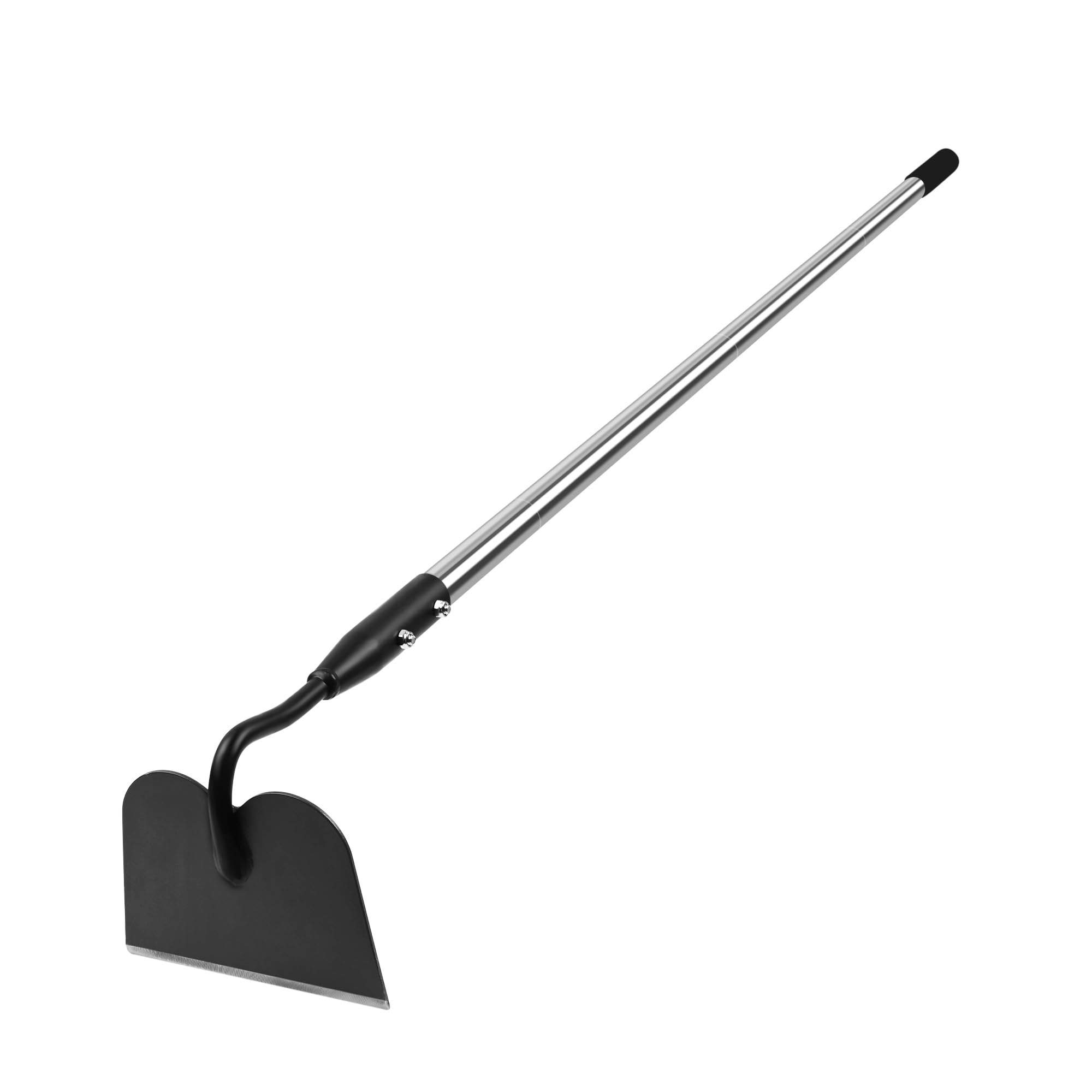
The extra 3 inches over the Triangle model means you can stand taller and keep your back straighter. This YEELOR model beats the lighter Triangle hoe on handle reach (60 inches vs 57 inches) and adds a soft non-slip grip that owners mention gives them better control when digging into compact soil. It weighs 2.4 pounds — about 0.55 pounds more than its triangle sibling — but that extra heft actually helps the forged steel head cut into harder ground without you having to lean your weight into it. For gardeners with clay soil or lots of ground-covering weeds, this trades a small weight increase for noticeably less effort per stroke.
Customers note it is “long-handled, lightweight, minimal soil drag; perfect for garden beds; easily cuts small grass and ground-covering weeds” and that the lathe-threaded handle connections stay tight even after repeated use. The 60-inch handle is three inches longer than the Triangle hoe, which makes a real difference for taller people (over 5 feet 10 inches) who want to avoid hunching. One reviewer noted that the blade is dull on arrival and requires sharpening, but after a quick file pass they described it as “the only garden tool I use now.”
If your garden has a mix of light, loose soil and occasional patches of harder ground, this hoe gives you the reach and comfort of a long handle without the weight penalty of a full commercial tool. Choose this over the top pick if you value grip comfort and a slightly more substantial blade feel.
Where it shines
- 60-inch non-slip handle is great for tall gardeners or those with back issues
- Forged steel head with rust-proof coating is still only 2.4 lbs
- Soft grip reduces hand fatigue during long sessions
Worth noting
- Blade arrives dull and requires sharpening before first use
- Handle sections can unscrew during aggressive work without securing with thread-lock
3. Draw Hoe Garden Tool, Heavy Duty Garden Hoes for Weeding Long Handle
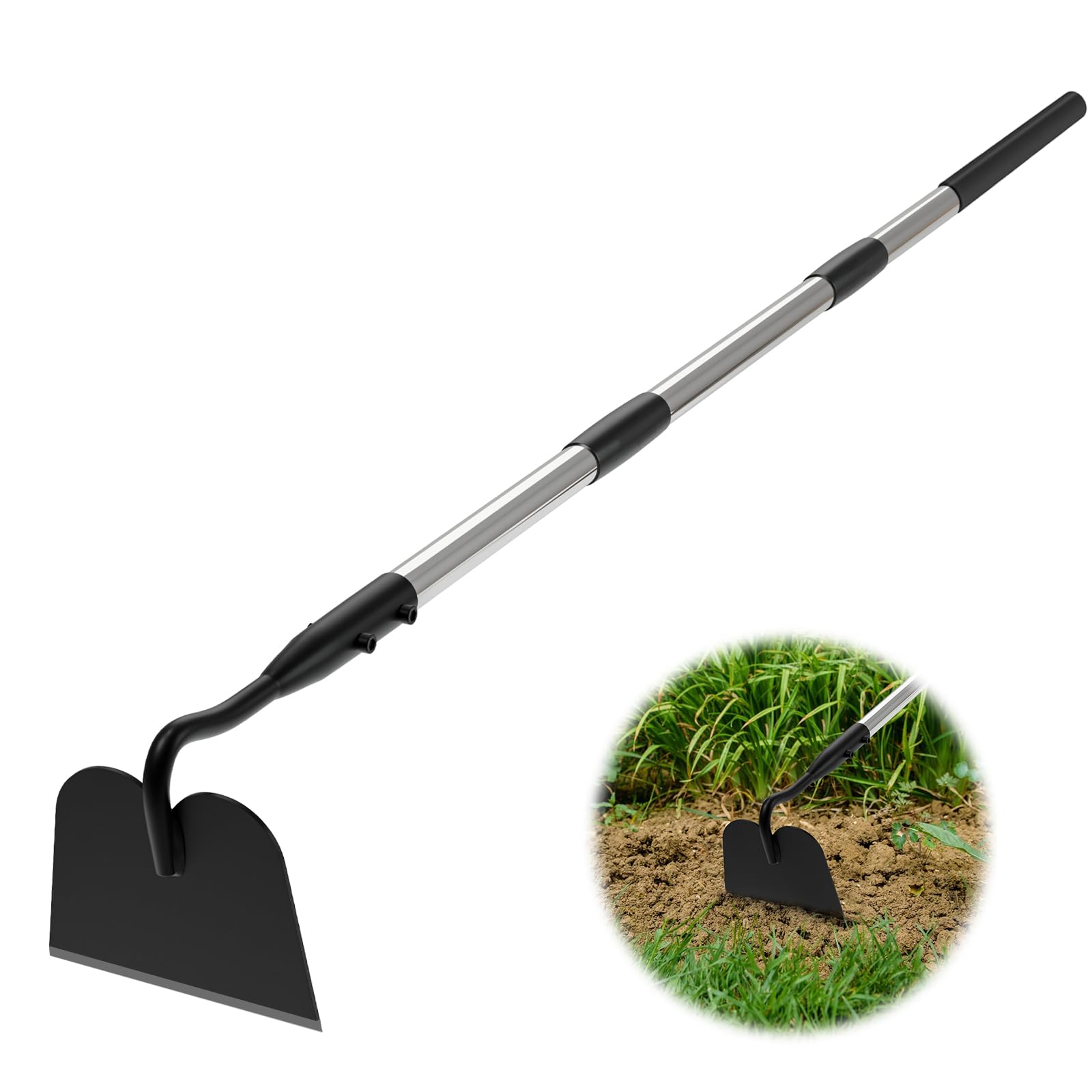
You are staring down a patch of hard-packed clay that has defeated every other hoe you own. The heavy 3.5-pound forged steel head lets you break ground without bouncing off rocks. If you face hard-packed soil, rocky beds, or deep-rooted perennial weeds, this hoe’s weight does the work for you. The wide 6.5-inch blade is the largest in this roundup (the YEELOR Triangle is just under 4 inches wide at its widest), so each pull covers more ground when you are creating furrows or clearing heavy brush. This is the tool for the person who isn’t afraid of a bit of heft because they need raw chopping power.
The stainless steel handle extends to a generous 66 inches — the longest in this comparison — which means you can stand fully upright even if you are over 6 feet tall. Reviewers point out it is “very sturdy once tightened properly” but one reviewer cautioned, “This is a sturdy hoe, but quite heavy. This is not for longer hoeing unless you’re very strong.” The double bolt and nut structure that holds the head to the handle keeps it from loosening, even after hitting rocks, and the multi-section pole design lets you take it apart for storage.
The catch is clear: you get unmatched chopping force for hard soil, but at 3.5 pounds it will fatigue your arms faster than any sub-2-pound model. This is the one to reach for when you need to break ground or dig out stubborn roots, not for quick maintenance weeding. No other hoe in this guide packs a 6.5-inch forged steel head that weighs 3.5 pounds.
What stands out
- Wide 6.5-inch blade clears more ground per pull than any other pick here
- 66-inch handle is the longest in this roundup for maximum upright reach
- Double bolt and nut attachment prevents head loosening during heavy use
The trade-offs
- At 3.5 lbs it is noticeably heavier than others and will tire you out quicker
- Handle sections can unscrew if not tightened very firmly during assembly
4. 2-in-1 Garden Hoe and Weed Puller Rake, 60 Inch Adjustable Long Handle
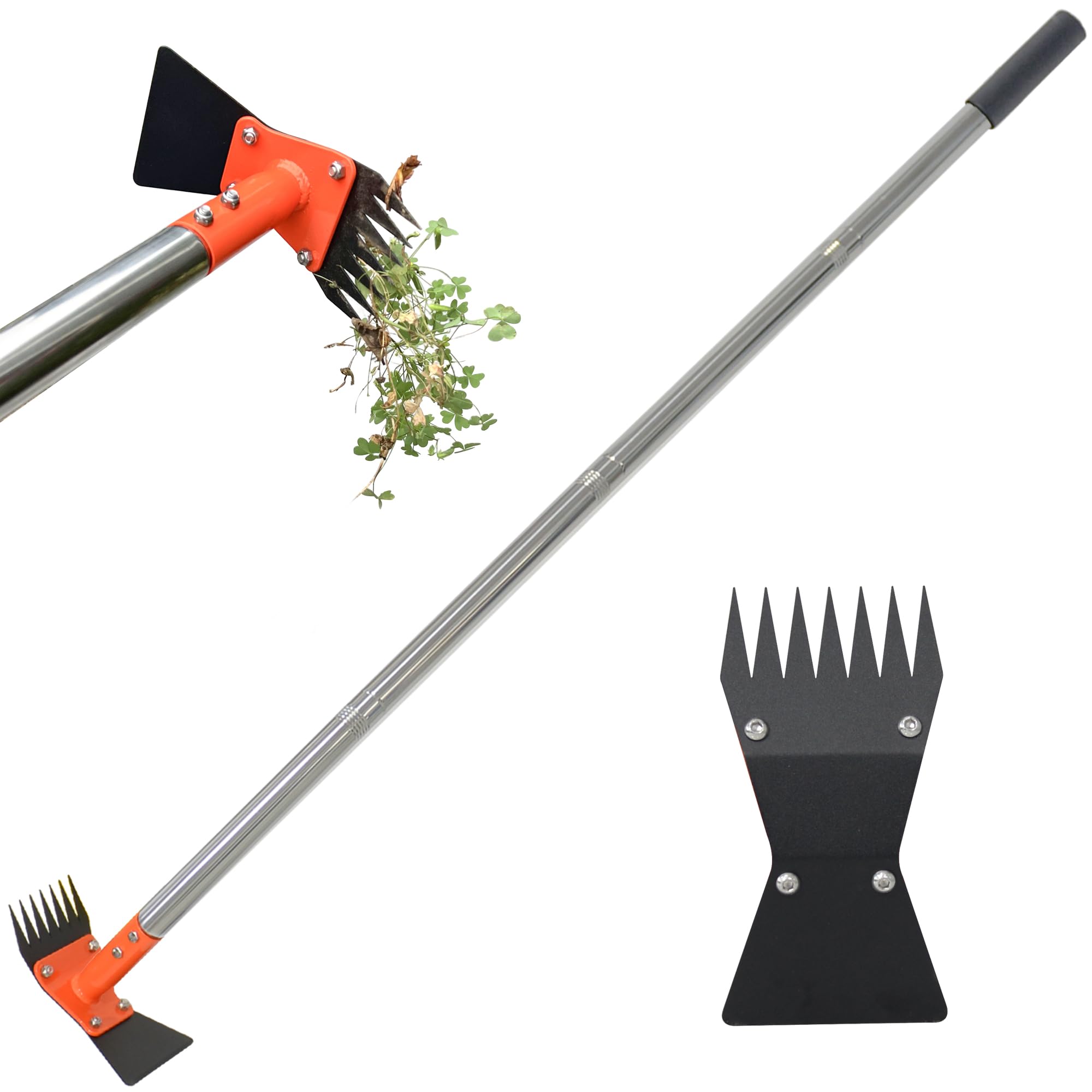
Weight: 3.08 pounds — lighter than a heavy-duty Draw Hoe (3.5 pounds) but heavier than any YEELOR model, splitting the difference between power and portability.
The 60-inch handle adjusts into four sections, so you can shorten the tool for raised beds or close-up work, then extend it back for full-standing use. Shoppers say the “sharp blade, good with bigger weeds” and that the sand-texture finish on the heads provides good grip and corrosion resistance. However, one buyer mentioned that the “handle wouldn’t stay together” and that the rake teeth bent on a rock (they were using it in a rocky driveway). The manufacturer sent a replacement handle, and the customer then rated it 5 stars, saying “excellent for grass/weeds.”
If your garden is a mix of loose soil, patios, and brick walkways, this dual-head tool is a more practical investment than buying a separate hoe and rake — a solid price-to-value read for multi-surface yards, provided you avoid bashing the rake teeth into rocks.
The upsides
- 2-in-1 head (hoe + rake) eliminates tool switching for mixed-surface gardens
- Adjustable 60-inch handle shortens for raised beds or extends for full standing
- Sand-texture finish on heads prevents rust and improves grip in wet soil
Keep in mind
- Rake teeth can bend when hitting rocks or very hard ground
- Some buyers had handle connection issues that required a replacement screw
5. Gardena combisystem Draw Hoe

You get a lightweight 0.83‑pound (376‑gram) draw‑hoe head made of rust‑free stainless steel with a Duroplast coating, plus the modular flexibility to attach it to any Gardena combisystem handle (sold separately). The double‑bow construction keeps the blade stable under load while the narrow 12‑cm (4.7‑inch) working width lets you weed precisely around delicate plants.
The blade’s coating resists corrosion even if left in damp soil, and one long‑term reviewer reported their previous Gardena hoe lasted more than 30 years. The 4.7‑inch width is narrower than the 6.5‑inch Draw Hoe above, so you make more passes per row, but you gain maneuverability in tight beds and between seedlings.
This is the perfect pick for the organized budget buyer who already owns Gardena handles or wants to store multiple tool heads on one pole to save shed space — just remember the handle is extra, so the upfront cost is higher than it first appears.
Why we’d pick it
- Weighs only 0.83 lbs which makes it extremely nimble for detailed work
- Rust-free stainless steel blade with Duroplast coating won’t corrode
- Modular design saves storage space by using one handle for multiple heads
A few caveats
- Handle sold separately, which increases total cost and requires a purchase decision
- 12 cm blade is narrower than most American-style hoes, taking more passes per row
6. BULLY TOOLS Warren Hoe Professional 12-Gauge 6.25-Inch Garden Hoe
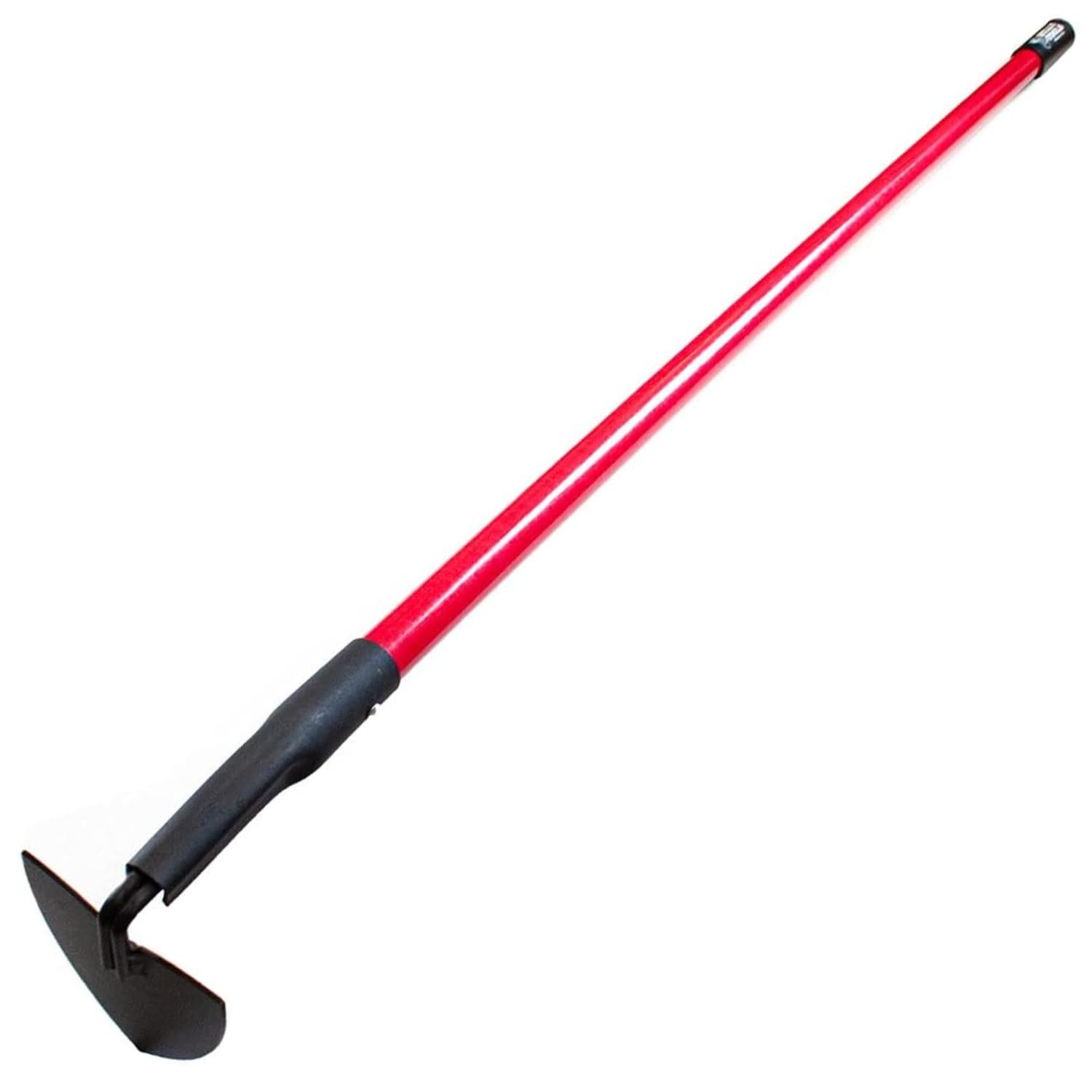
This hoe is perfect for the gardener or landscaper who regularly battles rocky, compacted soil and needs a tool that can take a beating without bending or warping. The 12-gauge steel head (about 2.7 mm thick) is thicker than the carbon steel on the YEELOR models (roughly 1.5-2 mm), so it cuts through compacted soil and roots without flexing. The Bully Tools weighs 3.07 pounds with the fiberglass handle, which is right in line with the heavy-duty Draw Hoe (3.5 pounds), but the fiberglass handle uses a triple wall construction that absorbs more vibration on impact.
Buyers report that one Bully Tools warren hoe “lasted 4 years of heavy use” and when it finally needed replacing, the limited lifetime warranty was honored with a hassle-free replacement. The extended steel ferrule (the collar that connects head to handle) adds extra structural strength at the most common breaking point. The 6.25-inch blade is slightly narrower than the heavy-duty Draw Hoe’s 6.5-inch blade, but it is noticeably more rigid and less likely to flex against roots.
The honest trade-off is that at 3.07 pounds, this is a heavy tool — one owner reported “maybe too much hoe for what I need” — and when you factor in the premium price, it is only worth the investment if you genuinely work in rocky, stubborn soil or need commercial-grade reliability. For occasional flower bed weeding, a lighter model will serve you better.
Strong points
- 12-gauge steel head (2.7 mm thick) won’t bend or warp on rocks and roots
- Fiberglass handle with triple wall construction absorbs shock and reduces fatigue
- Limited lifetime warranty with reported hassle-free replacement from the manufacturer
Before you buy
- At 3.07 pounds it is heavy for all-day use on soft garden soil
- Premium price tag is only justified if you work in hard, rocky ground consistently
7. Xtreme Weeder (Scuffle Hoe Cultivator, 54″ Fiberglass Handle with Grips)
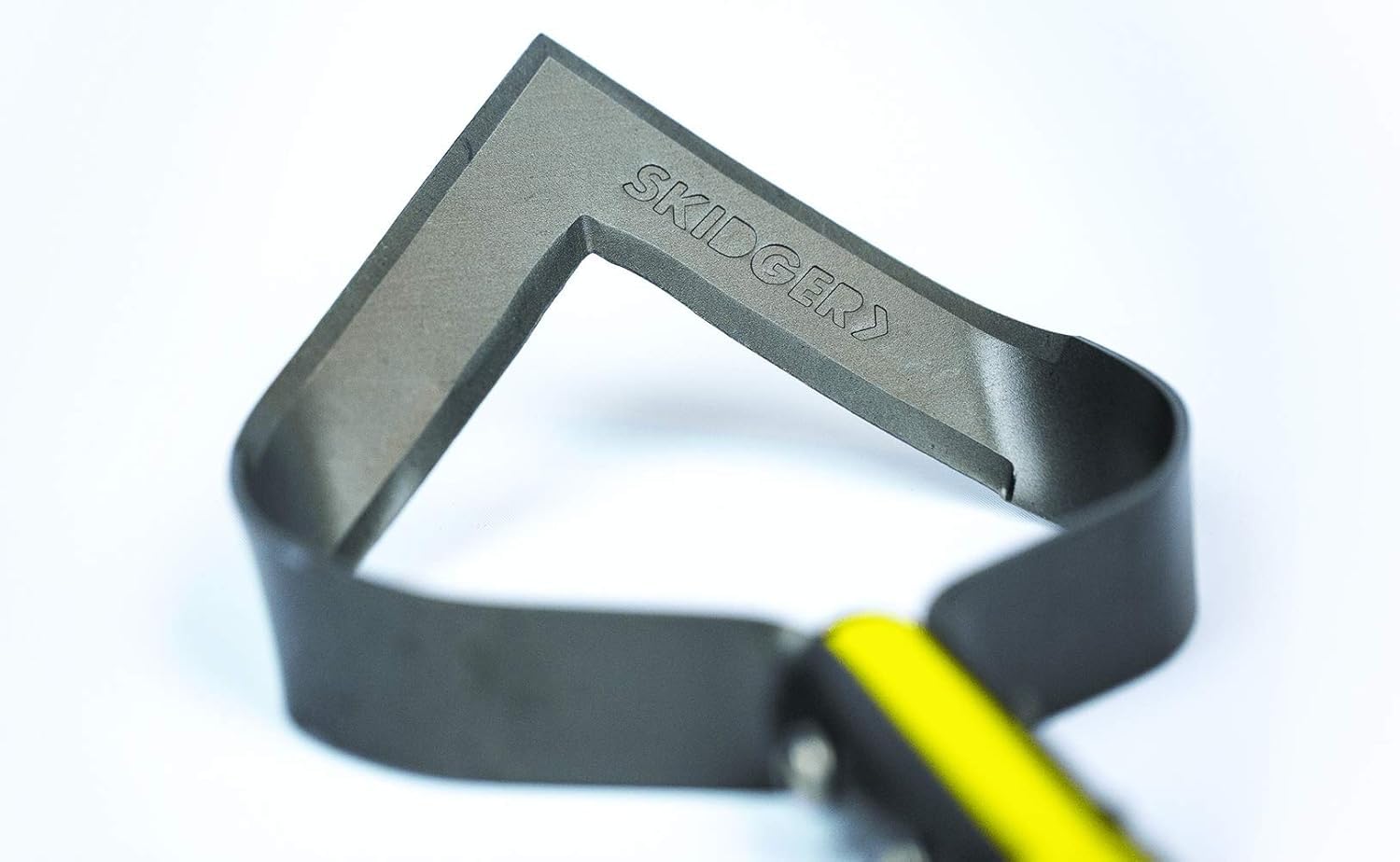
Priced below the premium YEELOR and Nisaku models, the Xtreme Weeder offers the best value in the guide for gardeners who prioritize speed over brute force. At 1.8 pounds, it is the second-lightest scuffle hoe in the roundup (only the 0.83-lb Gardena head is lighter), making it the fastest tool for skimming weeds off the surface of loose soil, gravel, bark, and flower beds. The V-shaped open design cuts on both the push and the pull stroke — so you don’t have to flip the tool or change your grip between strokes — which means you can clear a large bed twice as fast as a draw hoe.
Buyers rave about it for crabgrass: “Best thing I’ve ever used for weeds” and “sharp, angled blades cut on push and pull for weeding; doubles as edger and for slicing tree suckers.” The 54-inch fiberglass handle (3 inches shorter than the 57-inch YEELOR) is fine for average-height users (about 5 feet 8 inches), but taller users may wish it was a few inches longer. One reviewer found that the packaging arrived open with a chipped point, but the tool still worked perfectly, and they praised the seller’s service.
If your garden has loose soil, gravel paths, or mulch beds, and you want to shave off baby weeds before they take hold, this scuffle hoe does the job faster than anything else here. The one clear reason to choose it is that its lightweight, dual-action design clears large beds in half the time of a draw hoe.
What we like
- V-blade cuts on push and pull strokes for faster weeding
- Open design works in loose soil, gravel, bark, and mulch without clogging
- Pointed tip reaches between plants and around drip systems without damage
The downsides
- Not ideal for hard-packed clay or breaking new ground — meant for surface skimming
- 54-inch handle may feel short for users over 6 feet tall
- Packaging in some cases arrives damaged; check point for chips on delivery
Understanding the Specs
Steel Gauge (Thickness)
Steel gauge tells you exactly how thick the blade is — lower numbers mean thicker steel. A 12-gauge head (about 2.7 mm) is used in commercial and construction tools because it resists bending when it hits a rock. Most home-garden hoes use steel between 1.5 mm and 2 mm thick, which is lighter and easier to push through soft soil but will dent or warp if you hit buried stones. If you have rocky soil, look for 12-gauge or a “heavy duty” label. If you garden in sandy or raised beds, standard gauge is fine and saves you from lifting extra weight.
Handle Material and Length
The handle material affects both grip comfort and tool longevity. Stainless steel handles (found on the YEELOR and Draw Hoe models) are the most rigid and resist rot, but they can feel cold in winter and transmit more vibration to your hands. Fiberglass handles (on the Bully Tools and Xtreme Weeder) are lighter, absorb more shock, and provide a warmer grip, but they can splinter over years of exposure to sunlight. Wood handles (traditional) are the lightest and most comfortable, but they rot quickly if left in damp soil. For length, the ideal range for a standing position is 54 to 66 inches — shorter than 54 inches and you risk back strain; longer than 66 inches and the tool becomes unwieldy in tight spaces.
FAQ
Should I get a draw hoe or a scuffle hoe for my garden?
How much should a weeding hoe weigh for comfortable all-day use?
Why does the blade need to be sharpened before first use on some models?
Can I use a weeding hoe on concrete or brick driveway cracks?
How do I keep the handle sections from unscrewing during use?
Final Thoughts: The Verdict
For the majority of shoppers, the weeding hoe winner is the YEELOR Triangle Garden Hoe because it combines an ultra-light 1.85-pound weight with a 57-inch handle and three sharp edges that make quick work of loose soil and baby weeds without back strain. If you want an even longer 60-inch handle with a soft grip for all-day comfort, grab the YEELOR Long Handle Garden Hoe. And for breaking hard-packed ground or clearing rocky soil, the standout is the commercial-grade 12-gauge steel of the Bully Tools Warren Hoe.