
Gardenias drop buds and turn leaves yellow when the soil lacks acid and the specific nutrients they crave. You need a fertilizer that lowers soil pH (a measure of acidity versus alkalinity) to the 5.0–6.5 range and delivers iron, magnesium, and other micronutrients (trace elements needed in tiny amounts)— the wrong food will make the problem worse fast. These five proven formulas let you pick the one that keeps your gardenias deep green and covered in fragrant flowers.
I’m Rikta — the co-founder and writer behind Lawn Gear Lab. This guide is built by comparing the manufacturers’ published specifications and the patterns across verified customer reviews, so you get each pick’s real strengths and trade-offs instead of marketing spin.
Finding the best fertilizer for gardenias means matching a formula’s N-P-K (nitrogen-phosphorus-potassium) ratio and release speed to your plant’s growth stage and your own schedule.
How To Choose The Best Fertilizer For Gardenias
Buying the right plant food starts with knowing that gardenias are picky about soil acidity. They need a fertilizer that lowers soil pH to the 5.0–6.5 range and delivers nutrients in a form their roots can absorb. Here are the factors that separate an effective product from a waste of money.
N-P-K Ratio: What Those Three Numbers Actually Mean
Every fertilizer label shows three numbers separated by dashes — for example, 8-4-8 or 4-3-4. The first number is nitrogen (N) for leaf growth, the second is phosphorus (P) for root development and flower production, and the third is potassium (K) for overall plant health and disease resistance. For gardenias, you want a formula that is slightly higher in nitrogen and potassium than phosphorus, with the middle number staying low to moderate. An 8-4-8 or 4-3-4 blend works beautifully because it pushes green growth and blooming without overloading phosphorus, which can interfere with iron uptake in acidic soil.
Release Speed: Liquid vs. Granular vs. Powder
Liquid fertilizers like the HiThrive 16oz Gardenia Fertilizer give you fast results — the nutrients are available to roots within hours, which makes them ideal for reviving yellowing leaves quickly. Granular slow-release products like the GARDENWISE 8-4-8 or Espoma Holly-Tone feed the plant steadily over weeks or months, meaning fewer applications. Water-soluble powders like the Miracle-Gro Azalea, Camellia, Rhododendron Plant Food sit in the middle: you mix them with water and apply every 7 to 14 days, giving you control over the feeding schedule without the daily work of a liquid.
Micronutrients: Iron, Magnesium, and Manganese
Gardenias commonly show yellow leaves with green veins — a classic sign of chlorosis (a nutrient deficiency that turns leaves yellow) caused by an iron deficiency in alkaline soil. A good fertilizer for gardenias includes chelated iron, magnesium, and manganese to prevent this. Products that list these micronutrients on the label, like the HiThrive liquid and the GARDENWISE granules, directly address the most frustrating symptom you will see.
Quick Comparison
On smaller screens, swipe sideways to see the full table.
| Model | Category | Best For | Key Spec | Amazon |
|---|---|---|---|---|
| GARDENWISE 8-4-8 | Granular Slow-Release | Steady season-long feeding | N-P-K 8-4-8 | Amazon |
| Miracle-Gro Water Soluble | Water-Soluble Powder | Quick recovery and frequent feeding | 80 oz powder, makes 80 gal | Amazon |
| HiThrive 16oz Liquid | Liquid Concentrate | Fast-acting fix for yellow leaves | Makes 96 gallons | Amazon |
| SouthernGRO 04-08-08 | Granular | Flower production boost | N-P-K 04-08-08 | Amazon |
| Espoma Organic Holly-Tone | Organic Granules | Large gardens and organic care | 36 lb bag, feeds year-round | Amazon |
In‑Depth Reviews
1. GARDENWISE 8-4-8 Acidic Fertilizer
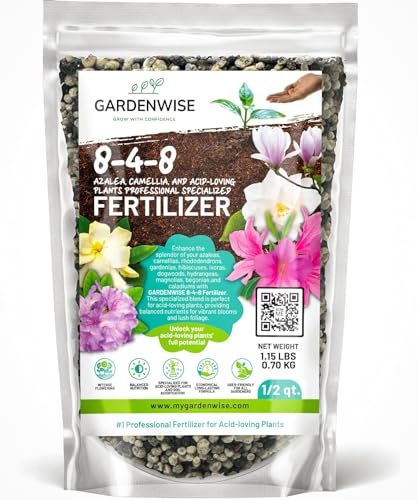
The 8-4-8 N-P-K ratio makes GARDENWISE 8-4-8 the top pick for gardeners who want a balanced, slow-release granular that feeds acid-loving gardenias just three times per year with no weekly mixing. At 16 ounces (1 pound), this iron-rich formula covers a surprising amount of ground—one reviewer noted a newly planted rhododendron “has doubled in size” after using it.
These slow-release granules contain live bacterial microbes that improve soil health over time, providing steady nutrition plus better root conditions. The catch: granular formulas work slower than liquids when your plant is in distress, so badly yellowing gardenias will recover over several weeks rather than days. It is the pick for gardeners who want great results without mixing liquid every week.
This GARDENWISE 8-4-8 is sharper for maintenance than the Miracle-Gro Water Soluble because you sprinkle and walk away for months instead of mixing biweekly. skip it if you need a fast emergency fix for already-yellow leaves—reach for a liquid concentrate instead.
Why it’s great
- Requires only 3 feedings per year
- 8-4-8 ratio is perfect for gardenias
- Contains iron, magnesium, and manganese to prevent yellow leaves
Good to know
- Works slower than liquid formulas for fixing deficiencies
2. Miracle-Gro Water Soluble Azalea, Camellia, Rhododendron Plant Food

Faster results than the GARDENWISE granules? The Miracle-Gro water-soluble powder delivers nutrients to gardenias within hours of watering, and its 5-pound bag (80 ounces) makes 80 gallons of feed—that is 5.0x more product by weight than the 16-ounce GARDENWISE bag. You mix 1 tablespoon of powder per gallon of water for outdoor plants and apply every 7 to 14 days. One buyer mentioned it “truly helped our rhododendron to recover and look stunning this summer.”
The formula is gentle enough that it will not burn foliage when used correctly, and it works on gardenias, azaleas, camellias, hydrangeas, and even orchids. The downside is the extra effort: you need to mix and apply every week or two, whereas the GARDENWISE granules work for months after a single sprinkling. This is the product for gardeners who like a hands-on feeding routine and want the flexibility to adjust dosage per plant.
Where it shines
- Fast-acting — visible results often within a week
- Safe for foliage, won’t burn when used as directed
- Large 5 lb bag feeds a big garden for months
Worth noting
- Requires mixing and applying every 7-14 days
3. HiThrive 16oz Liquid Gardenia Fertilizer
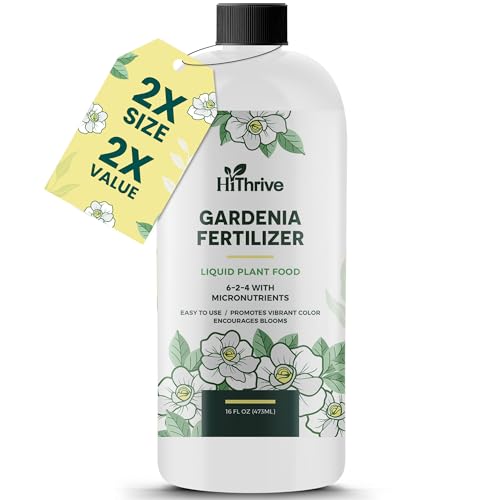
When your gardenia leaves have already turned yellow and you need a rescue plan, the HiThrive 16oz liquid fertilizer is the fastest-acting fix on this list. One owner reported that their gardenias “went from yellow to green in 10 days” after using it—the kind of turnaround you want when your plant looks sick. The 16-ounce bottle makes 96 gallons of feed at the standard rate (1 teaspoon per gallon), and it contains calcium, magnesium, iron, copper, manganese, and zinc—every micronutrient (trace element) that gardenias typically lack in alkaline soil.
This broad-spectrum liquid feed works on hydrangeas, azaleas, and jasmine as well. Despite weighing just 1.2 pounds, the concentrate stretches further than many bags of granules because of how little you use per watering. No other product here matches its recovery speed or value per gallon of feed. But you do have to apply it with every watering to keep plants fed—choose this over the GARDENWISE granules if you are fighting active yellowing and want results in days, not weeks.
One 16-ounce bottle makes 96 gallons of feed at the standard rate of 1 teaspoon per gallon.
What stands out
- Fast turnaround — yellow to green in 10 days
- 16 oz makes 96 gallons, excellent value
- Includes all key micronutrients for gardenias
The trade-offs
- Must be applied with every watering for best results
4. SouthernGRO Azaleas, Camellia, Gardenia Fertilizer 04-08-08
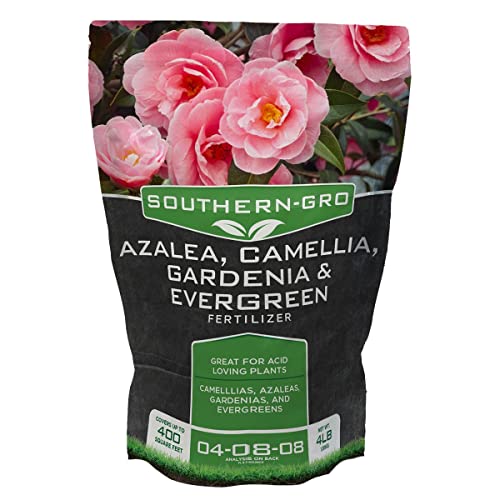
The single number that matters most in this category is the phosphorus value of 08, and this product scores the highest phosphorus ratio of any pick here—04-08-08 N-P-K—which means this formula is specifically optimized for flower production rather than foliage growth. If your gardenias are lush and green but refusing to bloom, this granular 4-pound bag is the booster you need. One customer observed it produced the “best display of flowers this year.”
The trade-off is that a higher phosphorus ratio does nothing to fix yellow leaves caused by iron deficiency—it simply has a narrower job. This is an excellent second fertilizer to have on hand if you already use a balanced feed for general health. Use the SouthernGRO in early spring and again just before the bloom cycle to push out the most flowers your gardenias can produce. It is for bloom-maxxers, not for fixing sick plants.
The price-to-value read is that this 4-pound bag delivers a targeted bloom-boosting punch at a cost that makes sense as a supplemental purchase for gardeners who already own a balanced feed.
The upsides
- High-phosphorus 04-08-08 targets maximum blooms
- 4 lb bag covers a large area for the cost
- Easy sprinkle-and-water application
Keep in mind
- Does not address yellow leaves or nutrient deficiencies
5. Espoma Organic Holly-Tone 4-3-4 (36 lb Bag)

At 36 pounds, the Espoma Organic Holly-Tone 4-3-4 gives you a single bag that can cover two to three seasons of feeding for a large yard. This organic granular formula has a 4-3-4 analysis and 5% sulfur to naturally acidify the soil (lower its pH), and it is OMRI-listed (Organic Materials Review Institute-certified for organic use) with Bio-tone microbes that feed the soil.
One long-time user said “you will never have so many blooms on your azaleas” after switching to Holly-Tone. Apply it in spring and fall, and it keeps acid-loving plants healthy year-round without synthetic chemicals. One limitation: if you have only one or two gardenia bushes, a 36-pound bag is overkill—you would be better off with a smaller bag like GARDENWISE or SouthernGRO.
But if you have a garden full of azaleas, rhododendrons, hydrangeas, and blueberries, this is the most economical and natural option per pound of feed—making it the perfect budget buy for the gardener with a large, acid-loving landscape to feed.
Why we’d pick it
- Organic and OMRI-listed for natural gardening
- 36 lb bag provides exceptional long-term value
- Contains sulfur to lower soil pH naturally
A few caveats
- Too large for small gardens with just a few plants
Understanding the Specs
N-P-K Ratio
The three numbers on a fertilizer bag tell you the percentage of nitrogen (N), phosphorus (P), and potassium (K) by weight. Nitrogen pushes green leafy growth, phosphorus encourages roots and flowers, and potassium strengthens the plant overall. For gardenias, you generally want a higher first and third number and a low-to-moderate middle number — something like 8-4-8 or 4-3-4. A high-phosphorus formula like 04-08-08 is useful only if your plants are healthy but not blooming.
Release Speed: Liquid vs. Granular
Liquid fertilizers like the HiThrive 16oz are absorbed by the roots within hours, making them the fastest option for correcting yellow leaves or nutrient deficiencies. Granular products like GARDENWISE 8-4-8 and Espoma Holly-Tone release nutrients slowly over weeks or months as the granules break down in moist soil, which means fewer applications. Water-soluble powders like the Miracle-Gro 5 lb sit in between — you mix them fresh each time and get a fast-acting feed with the convenience of dry storage.
Micronutrients: Iron, Magnesium, and Manganese
Gardenias are prone to chlorosis — yellow leaves with dark green veins — when the soil lacks iron or becomes too alkaline. A good gardenia fertilizer will list chelated iron, magnesium sulfate, or manganese sulfate on the label. These micronutrients are what turn yellow leaves green again and keep the plant producing dark glossy foliage. If a product does not mention these, you may need to add a separate supplement.
Organic vs. Synthetic
Organic fertilizers like Espoma Holly-Tone are derived from natural materials like feather meal, bone meal, and sulfate of potash. They feed the soil microbes as well as the plant and release nutrients slowly without risk of chemical burn. Synthetic fertilizers like Miracle-Gro are manufactured to deliver precise nutrient ratios and are absorbed faster, but they can build up salts in the soil over time if overused. Both types work for gardenias — the choice depends on whether you prioritize speed or long-term soil health.
FAQ
How often should I fertilize my gardenias?
What does the 8-4-8 number mean on a gardenia fertilizer?
Can I use a regular all-purpose fertilizer on my gardenias?
Why are my gardenia leaves turning yellow even after fertilizing?
Should I choose liquid or granular fertilizer for gardenias?
Final Thoughts: The Verdict
For the majority of shoppers, the fertilizer for gardenias winner is the GARDENWISE 8-4-8 because it combines a perfect N-P-K ratio, essential micronutrients, and slow-release convenience with just three feedings per year. If you want the fastest recovery for yellowing leaves, grab the HiThrive 16oz Liquid. And for organic gardeners with a large yard full of acid-loving plants, the standout is the sheer value and natural formula of the Espoma Organic Holly-Tone 36 lb bag.