
Your feet are the most important tool you own for lawn care, and soggy socks or a rolled ankle will shut down your day faster than a broken mower blade. The best work boots for lawn care handle three things at once: keeping water out when the morning dew is heavy, gripping wet grass on a slope without slipping, and letting you walk 12-hour days without your arches screaming.
I’m Rikta — the co-founder and writer behind Lawn Gear Lab. This guide is built by comparing the manufacturers’ published specifications and the patterns across verified customer reviews, so you get each pick’s real strengths and trade-offs instead of marketing spin.
Whether you are running a zero-turn on a commercial route or spending Saturday wrangling a flymo on a bumpy lot, work boots for lawn care are the only piece of gear that touches the ground with every single step you take, so getting them right means less fatigue and fewer wet feet.
How To Choose The Best Work Boots For Lawn Care
Lawn care is a unique mix of wet grass, uneven ground, and long hours on your feet. The wrong boot will leave you with blisters, wet feet, or a sore back. Here are the three things to focus on.
Waterproofing that survives standing water
Morning dew is not the problem — puddles and wet turf after a rain shower are the real test. Look for a boot that uses thick rubber or neoprene (a synthetic rubber that stretches and holds heat) rather than just a spray-on coating. Buyers report spending 12-hour days in 2 to 7 inches of water and staying dry in rubber boots, which is the level of waterproofing you need for serious lawn care.
Sole grip on wet grass and mud
Work boots for lawn care need deep treads (the grooves on the bottom of the sole) that push water and mud out from under your foot, not flat or shallow patterns designed for concrete. A rubber outsole with a pronounced self-cleaning tread pattern gives you the best chance of staying upright on a damp slope. An EVA midsole (a lightweight foam layer under your foot) adds shock absorption so your knees do not take the punishment on every step.
Insulation and breathability for changing seasons
A boot that traps too much heat will cause heavy sweating in summer, while a boot with no insulation leaves your feet cold on early spring mornings. The sweet spot for lawn care is a boot with a moderate insulation layer — 200 grams of Thinsulate or a 6mm neoprene lining — that keeps you comfortable in cool weather but does not turn your feet into a sauna when temperatures climb above 65°F.
Quick Comparison
On smaller screens, swipe sideways to see the full table.
| Model | Category | Best For | Key Spec | Amazon |
|---|---|---|---|---|
| Hunthor Rubber Work Boots | Best Overall | All-day wet conditions | 6mm neoprene, 800g Thinsulate | Amazon |
| Trudave Rubber Boots | Best Value | Cold-weather active use | 6mm neoprene, steel shank | Amazon |
| TIDEWE Work Boots | Budget Pick | Affordable daily driver | 6mm neoprene, Steel Toe | Amazon |
| Georgia Boot Logger | Premium Pick | Long-term durability on rough terrain | GORE-TEX, 200g Thinsulate | Amazon |
| Carhartt Ground Force | Top Performer | Comfort on 12-hour shifts | Storm Defender, Composite Toe | Amazon |
| Ariat Workhog | Best for Big Calves | Pull-on ease with calf room | 4LR Technology, Waterproof | Amazon |
In‑Depth Reviews
1. Hunthor Rubber Work Boots

The Hunthor Rubber Work Boot is the top pick because its 3M 800g Thinsulate insulation is the thickest warmth layer in this guide, making it ideal for lawn care workers who face frosty mornings and muddy afternoons while needing reliable steel-toe protection.
At 4.41 pounds per boot it is not the lightest option, but that weight comes from a steel shank (an internal support bar that keeps the arch stable on uneven ground) and a steel toe that meets safety standards for impact from falling objects. Owners mention spending full 12-hour days in deep water with totally dry feet, and the extra thick, pliable rubber sole resists cracking even when you drag your feet all day.
One honest limit: some buyers received boots that arrived with minor cosmetic glue marks or discoloration on the back, though the waterproofing and comfort were unaffected. Choose the Hunthor if you want one boot that handles water, cold, and rough terrain without spending premium money.
Why it’s great
- 800g Thinsulate insulation keeps feet warm in sub-freezing temps
- Steel toe and steel shank provide complete underfoot protection
- Buyers confirm dry feet after 12 hours in 7 inches of water
Good to know
- Runs heavy at 4.41 pounds per boot
- Some cosmetic imperfections reported on the rubber exterior
- Size up if you wear half sizes
2. Trudave Rubber Boots
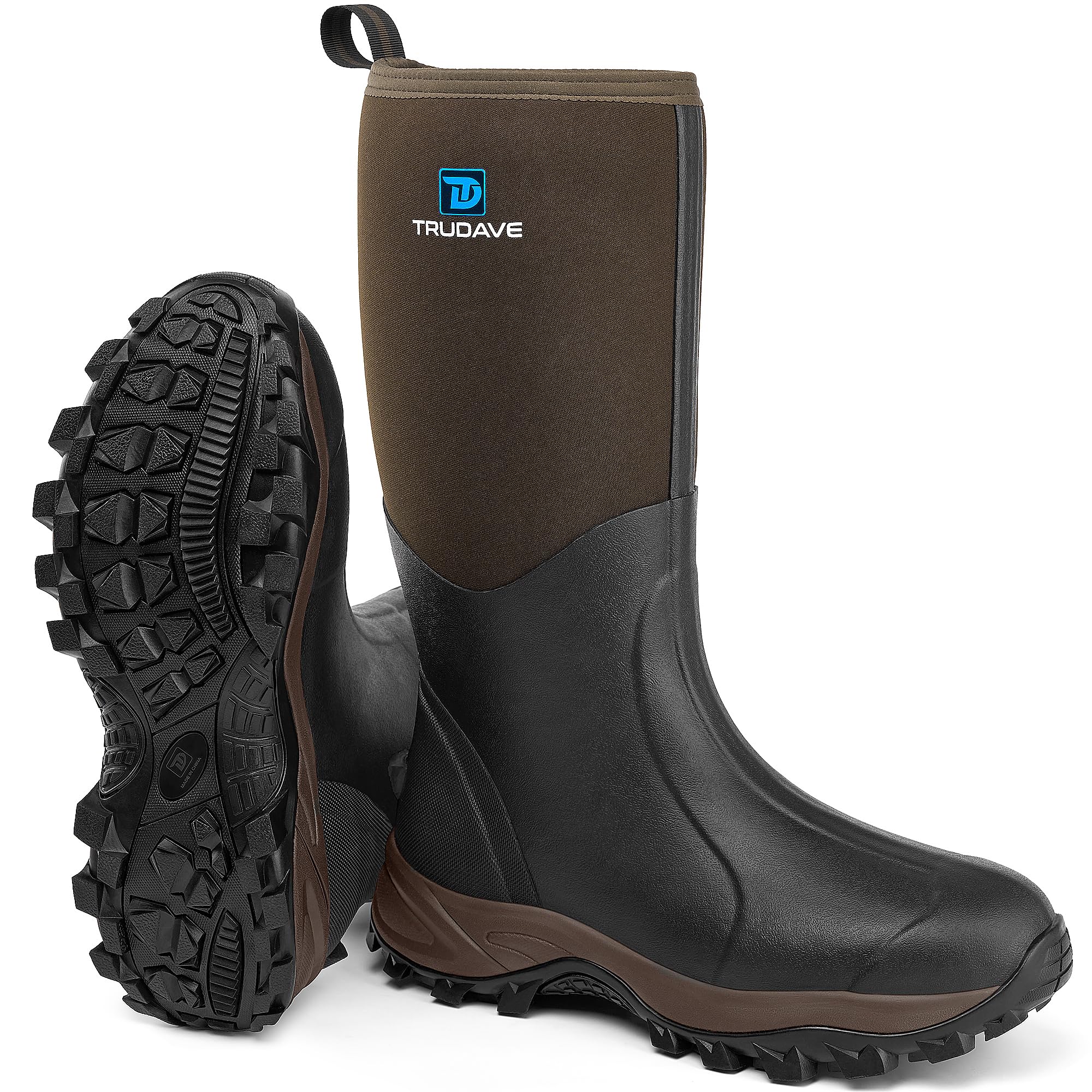
The Trudave Rubber Boot beats the Hunthor on one important front: it is noticeably lighter and more flexible, making it the better choice for active lawn care where you walk, bend, and move constantly rather than stand in one spot. It uses 6mm neoprene that customers note stays warm at -20°F with thick socks yet does not get too hot for summer use — a versatility that suits three-season lawn care perfectly.
Reviewers point out that these are the most comfortable rubber boots they have ever worn, with a tread pattern that resists debris buildup (so you are not walking on clumps of wet mud) and a steel shank that keeps your arch stable on sloped lawns. One reviewer noted that after 6 months of heavy use, the boots remained warm, water-tight, and fit perfectly without the stretching issues common in cheaper rubber boots.
If you want a single pair that works across spring, summer, and fall without your feet sweating out or freezing up, choose the Trudave over the Hunthor. The catch is slightly less extreme cold protection, but for lawn care, the breathable mesh lining (a fabric layer that lets air circulate inside the boot) is worth the swap. skip it if you need maximum arctic-grade warmth for full winter conditions.
Where it shines
- Breathable mesh lining reduces foot sweat compared to insulated boots
- Buyers confirm warmth at -20°F without overheating in summer
- Steel shank adds arch support for uneven lawn terrain
Worth noting
- Less insulated than heavy-duty winter boots
- Some buyers noted a mild foot odor after extended use
- Top edge may feel stiff when wearing the boot fully unfolded
3. TIDEWE Work Boots
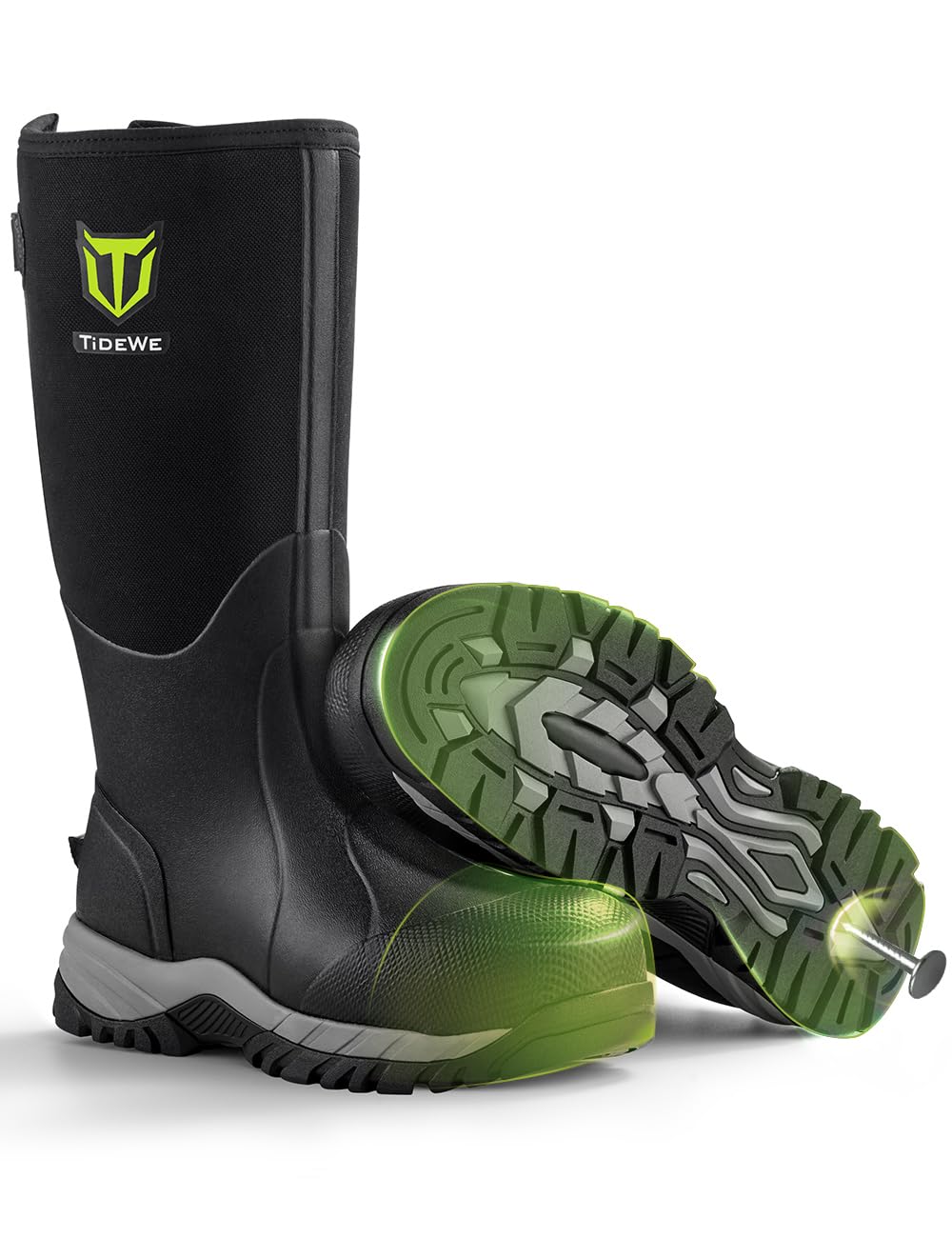
Imagine arriving at a morning commercial route with wet grass and a steep slope — you need a boot that is affordable enough to replace without crying but tough enough for the daily grind. The TIDEWE Work Boot fits that exact scenario with a steel toe, a puncture-proof sole (a steel shank between the insole and outsole that stops nails or sharp twigs from poking through), and a 100% waterproof rubber and neoprene construction that handles morning dew and puddles alike.
Shoppers say these boots keep feet dry and warm all day, with good tread traction on wet surfaces, though one reviewer notes that the grip is not perfect — they slipped a few times on standing water. The major size caveat is real: one buyer who normally wears a men’s 9 had to order a men’s 8 and still had plenty of room, so check the insole length chart carefully rather than trusting your usual size.
The standout spec here is the puncture-proof protection at a budget price point — a feature usually reserved for boots that cost significantly more.
What stands out
- Puncture-proof steel shank protects against sharp debris on the ground
- Waterproof rubber and neoprene construction keeps feet dry
- Very affordable price for a steel-toe work boot
The trade-offs
- Runs very large — order at least one full size down
- Grip on wet surfaces is only average compared to premium boots
- Can cause foot sweating in warm weather
4. Georgia Boot Men’s Low Heel Logger
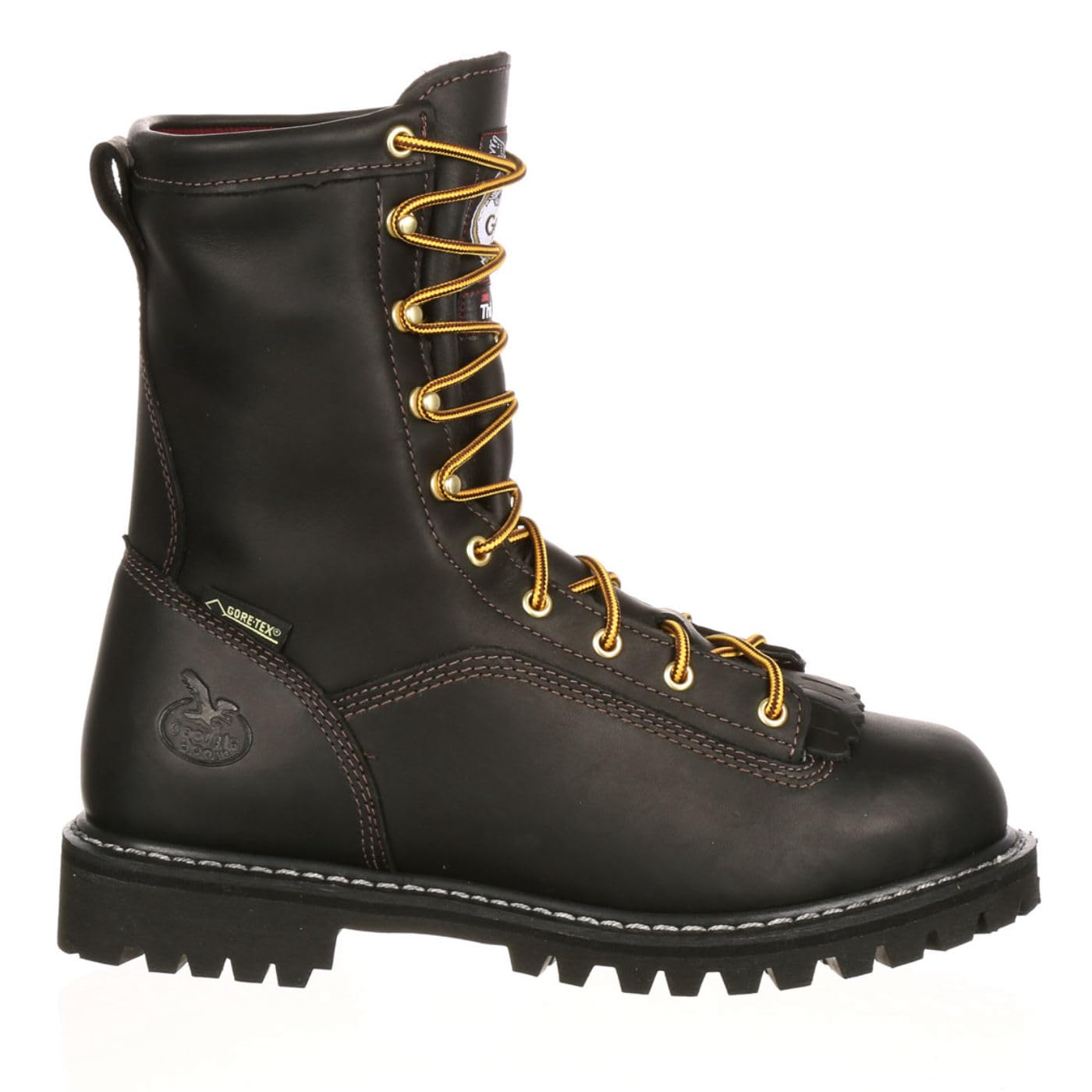
The single number that matters most in this category is 200 grams of 3M Thinsulate insulation, and this boot scores a full point for offering it in a waterproof package. The Georgia Boot Logger stands apart from every other boot here with a GORE-TEX membrane (a waterproof yet breathable liner that stops water from the outside while letting sweat vapor escape), a full-grain leather upper, and a Vibram rubber outsole that resists oil, chemical, and heat damage. This boot is built to last several seasons of heavy lawn care, not just one.
The downside you accept is a long break-in period: buyers report that the ankle area is very stiff and takes about two weeks of daily use before it softens up, and the boot is noticeably heavy at 4.5 pounds per boot. Once broken in, however, the 200 grams of 3M Thinsulate insulation keeps you warm in cold weather, and the Goodyear welt construction (a method where the sole is stitched to the upper rather than just glued) means you can resole the boot when the tread wears out, adding years to its life.
This is a price-to-performance winner for the buyer who wants true heirloom-quality construction — it will outlast two pairs of budget boots combined, and the Vibram sole provides significantly better traction on wet grass than the TIDEWE’s rubber outsole. pass on it if you cannot tolerate a stiff ankle for two weeks or if you work mainly in temperatures above 68°F where the GORE-TEX membrane traps too much heat. For the money, this boot delivers a price-to-value read that favors longevity over instant comfort.
The upsides
- GORE-TEX membrane provides waterproofing that breathes
- Goodyear welt construction allows resoling for multi-year life
- Vibram outsole offers excellent traction on mud and wet grass
Keep in mind
- Very stiff ankle requires 2-week break-in period
- Heavy at 4.5 pounds per boot
- Feet get hot in temperatures above 68°F
5. Carhartt Ground Force 10” Waterproof Wellington

At this lower price you get a boot that owners mention is comfortable straight out of the box with no break-in pain, thanks to a FastDry lining that wicks moisture away from your skin and an Insite footbed with arch contouring that reduces foot fatigue during 12-hour days.
The Carhartt is also the only boot here with a composite toe — it meets the same ASTM impact safety standards as steel but does not conduct cold, so your toes stay warmer in early morning frost. What you give up is extreme ruggedness: the cement construction (where the sole is glued to the upper instead of stitched) means this boot cannot be resoled like the Georgia Boot Logger, so when the tread wears down after a year or two of heavy use, the whole boot is done. Customers note the boots last longer than Red Wings in oilfield conditions, but the EVA midsole (a lightweight foam shock absorber) compresses over time and reduces cushioning.
You can pull them on in the dark, work a full shift without your feet aching, and trust the electrical hazard rating (EH rated) for work near underground cables or outdoor power equipment. The 10-inch shaft height also gives you extra protection against wet grass brushing against your ankles. The Carhartt is perfect for the budget buyer who prioritizes instant comfort and a warm composite toe over maximum durability and resoling ability.
Why we’d pick it
- No break-in required — comfortable from the first wear
- FastDry lining actively pulls sweat away from your skin
- Composite toe is lighter and warmer than steel in cold weather
A few caveats
- Cement construction cannot be resoled when the tread wears out
- EVA midsole loses cushioning over time
- Some buyers received the wrong size on delivery
6. Ariat Men’s Workhog Wide Square Toe
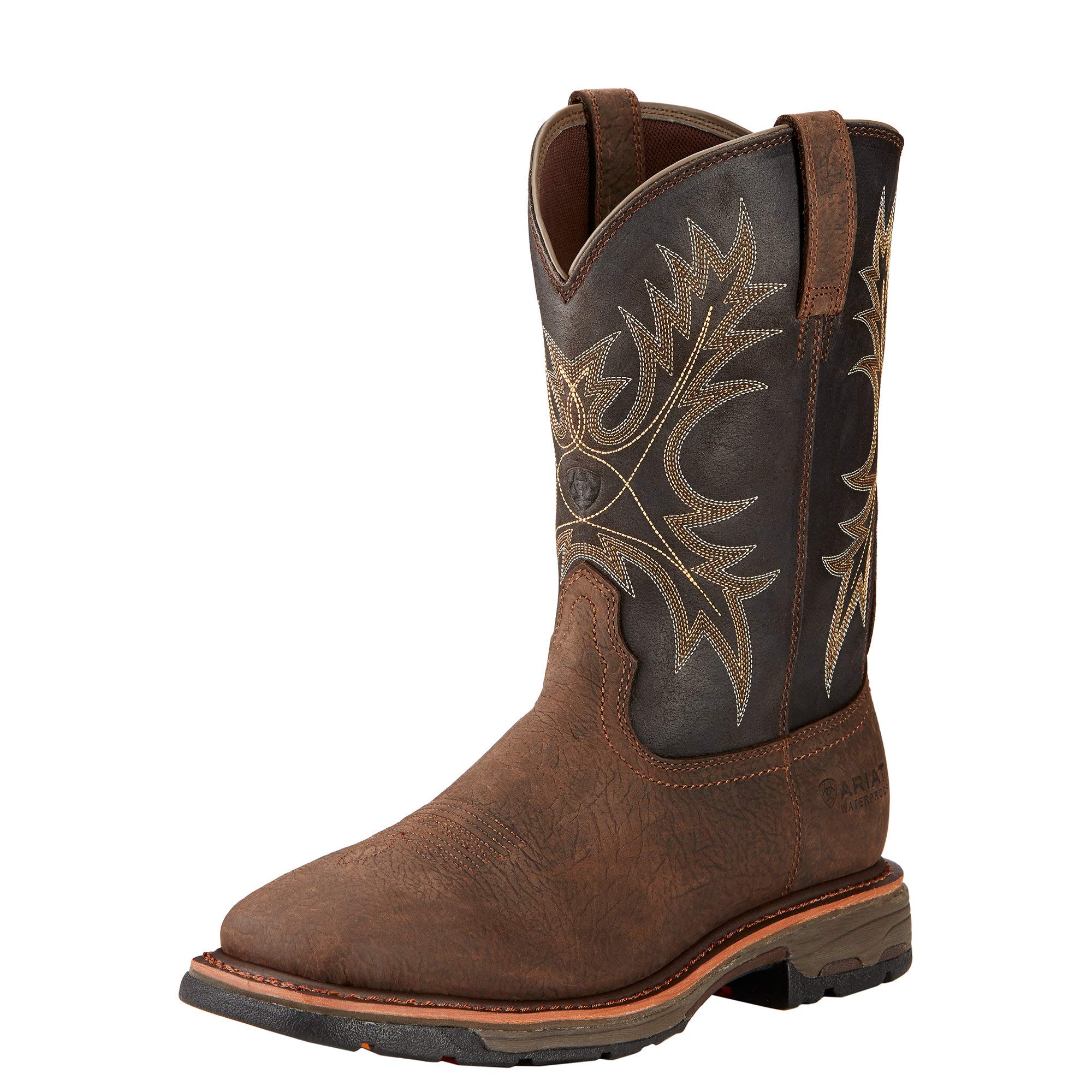
The Ariat Workhog is the go-to boot if you have struggled with rubber rain boots that cut into your calves or if you prefer a traditional pull-on western-style profile over a lace-up logger. It costs more upfront than the Georgia Boot Logger, but offers a faster break-in and a pull-on design with a wide shaft circumference (13 inches at the top) that buyers specifically praise for fitting large calves without rubbing or pinching.
Reviewers point out that the 4LR technology (Four Layer Rebound system that combines a gel cushioning pad, a shock-absorbing foam, and a supportive shank) provides excellent stability through long days on uneven ground. The oiled leather resists scuffs from kneeling on concrete or dragging hose lines across wet grass. One reviewer with large calves calls these the best boots they have found for fit — no digging or pressure points at the top edge even after full-shift wear.
An honest limit: shoppers say the leather scuffs easily on rough surfaces, though the marks can be rubbed out, and the boot runs a half size small — order a half size up if you plan to wear thick socks. The Ariat Workhog is the right choice if you need a generous calf opening and prefer a slip-on design, but the price-to-value ratio is weaker than the Hunthor for pure wet-condition performance.
Strong points
- Excellent fit for larger calves with no rubbing at the top edge
- 4LR technology provides stable arch support on sloped lawns
- Resoleable construction extends the boot’s usable life
Before you buy
- Runs about a half size small — size up
- Oiled leather scuffs easily during work
- Premium price point is the highest in this lineup
Understanding the Specs
Waterproofing Membrane
The waterproof layer inside the boot — typically GORE-TEX (a thin, waterproof, breathable membrane that blocks liquid water while letting sweat vapor escape) or a rubber/neoprene shell (a thick synthetic rubber that simply blocks water entirely). For lawn care, a rubber shell is the most reliable because it has no thin membrane that can puncture, but it breathes less than GORE-TEX, so your feet may sweat more in warm weather.
Steel Shank vs No Shank
A steel shank (a rigid metal strip running from your heel to the ball of your foot inside the midsole) provides arch support and prevents the boot from bending too much when you step on a rock or a lump of turf. Without a shank, your arch collapses over the course of a long day on uneven ground, leading to foot pain. Every boot in this lineup includes a steel shank except the budget models — check the spec before buying.
Insulation Weight (Grams of Thinsulate)
The amount of synthetic insulation inside the boot, measured in grams. 200 grams (the lightest option here) keeps feet warm down to about 30°F but allows breathability for active work. 800 grams (the heaviest in this guide) handles sub-freezing temperatures but makes your feet sweat heavily in any weather above 50°F. For three-season lawn care, 200 grams is ideal — you can add wool socks for cold mornings and remove them when the sun warms up.
Outsole Material: Vibram vs Rubber
Vibram is a specific brand of high-performance rubber compound known for superior grip on wet and oily surfaces, longer tread life, and better flexibility in cold temperatures. Generic rubber outsoles are cheaper but tend to harden in cold weather, reducing traction on wet grass. If you work on steep slopes or wet turf, a Vibram outsole (found on the Georgia Boot Logger) gives you noticeably better grip than standard rubber.
FAQ
Can I wear regular work boots on wet grass without slipping?
How often should I replace work boots used for lawn care?
Are steel toe boots necessary for lawn care work?
What is the ideal boot height for lawn care?
Final Thoughts: The Verdict
For most people, the work boots for lawn care winner is the Hunthor Rubber Work Boot because it combines steel toe protection, 800g Thinsulate warmth, and proven waterproofing from 12-hour days in standing water at a mid-range price that outperforms options costing twice as much. If you want lighter, more versatile three-season comfort with less foot sweat, grab the Trudave Rubber Boot. And for the professional landscaper who values out-of-the-box comfort and a composite toe for cold mornings, the standout is the Carhartt Ground Force Wellington.