
Your tomato plants need a steady diet of nutrients to go from spindly vines to baskets full of ripe fruit. The right compost delivers that nutrition, holds moisture in the soil, and improves the structure so roots get both air and water. This guide compares five proven organic composts, each one chosen for a different growing style.
I’m Rikta — the co-founder and writer behind Lawn Gear Lab. This guide is built by comparing the manufacturers’ published specifications and the patterns across verified customer reviews, so you get each pick’s real strengths and trade-offs instead of marketing spin.
To help you choose with confidence, we analyzed the specs and real-world results from gardeners who have used these products, bringing you a clear look at the compost for tomato plants that actually delivers on its promise.
How To Choose The Best Compost For Tomato Plants
Not all compost is created equal, and tomato plants have unique needs. Here is what you should look for before you buy a bag.
Source of Organic Matter
The base material — manure, plant matter, or seafood byproducts — determines the nutrient release pattern. Manure-based composts are rich in nitrogen (which fuels leafy growth), while plant-based composts offer a more balanced profile. Seafood-enriched composts add trace minerals and calcium, which is essential for preventing blossom end rot in tomatoes.
Texture and Moisture Retention
Tomato roots need a balance of air and water. A compost that is too dense can suffocate roots, especially in containers. Look for a fine, crumbly texture that mixes easily into existing soil. Compost that retains moisture without becoming waterlogged reduces how often you need to water, a major advantage during hot summer weeks.
Composting Completeness
Raw manure will burn tender tomato roots. A fully composted product will have an earthy smell (not an ammonia smell) and a uniform dark color. Verification like OMRI (Organic Materials Review Institute) certification tells you the compost has met organic standards and is safe for edible crops.
Quick Comparison
On smaller screens, swipe sideways to see the full table.
| Model | Category | Best For | Key Spec | Amazon |
|---|---|---|---|---|
| R&M Organics Premium Compost | Mid-Range | All-around tomato revival | 10 lb bag / 160 oz unit count | Amazon |
| Brut Cow Compost | Mid-Range | Fast seedling growth | 10 qt volume / 192 oz unit count | Amazon |
| Charlie’s Vegan Compost | Mid-Range | Vegan / animal-free gardens | 10 lb bag / 10 liters volume | Amazon |
| Espoma Land and Sea Compost | Premium | Nutrient-dense soil boost | 24 lb bag / 1 cubic foot volume | Amazon |
| Ribbon Organics Premium Compost | Premium | Ultimate soil quality upgrade | 7.9 gallons / 32-35 lb bag | Amazon |
In‑Depth Reviews
1. R&M Organics Premium Organic Compost
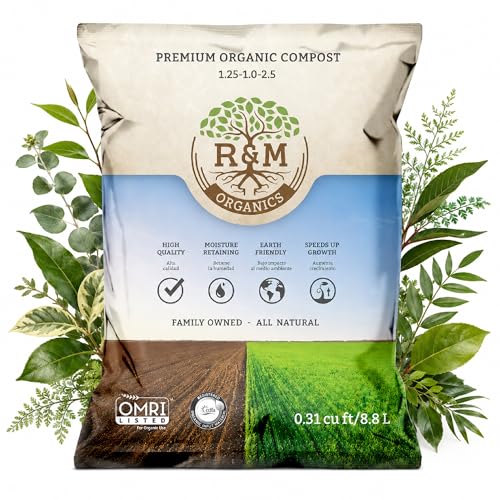
The single spec that makes this the top choice is its proven impact on struggling tomatoes: buyers report that within a week of mixing it into a 27-gallon planter, yellow leaves turned green and flower buds appeared. This compost is for the gardener who wants a reliable, fast-acting solution for both in-ground beds and containers.
What it does best is deliver a balanced nutrient boost without the smell. At 10 pounds per bag with a unit count of 160 ounces, it is lightweight enough to carry from the car to the garden. Owners mention it has a “texture like fine top soil” that is easy to spread and work in, and it is fully composted so there is no risk of burning your plants.
The catch is the bag size: at 10 pounds, you will need multiple bags for large raised beds. But for the gardener with a handful of tomato plants in containers or a small plot, this is the most direct path to stronger, greener plants. The verdict: this compost earns its place as the top all-around pick for tomato growers.
Why it’s great
- Proven to revive ailing tomato plants quickly
- Fine, clump-free texture spreads easily
- Very low odor, suitable for indoor use
Good to know
- Small bag size requires multiple purchases for large gardens
- On the pricier side per pound
2. Brut Cow Compost

Where this compost beats the R&M Organics pick is in volume and value: at 192 ounces unit count, it gives you 20% more material than the R&M bag’s 160 ounces for about the same money. It also leads on pure simplicity — this is 100% pure composted cow manure with no additives, which appeals to growers who want a single-ingredient soil booster.
The real-use strength here is seedling acceleration. One reviewer noted planting tomato seeds on March 1st and by April 22nd had vigorous plants after using a 3:2 ratio of this compost to soil. The finely sifted texture means it mixes evenly with potting soil, and the OMRI certification gives organic gardeners peace of mind.
Choose this over the R&M Organics pick if you are starting tomatoes from seed and want a compost that fuels fast early growth. The extra material in the bag also makes it a smarter buy for gardeners who need to fill multiple containers or top-dress a larger bed.
Where it shines
- 20% more compost per bag than the 160-ounce alternatives
- OMRI certified for certified organic gardening
- Fine sifted texture perfect for mixing with seed-starting soil
Worth noting
- Manure-based, so not suitable for vegan gardeners
- Some users may prefer a more diverse nutrient source
3. Charlie’s Vegan Compost

Imagine you have a tomato patch in a small backyard and you care deeply about avoiding animal products in your soil. This is the scenario Charlie’s Compost was made for: it is made entirely from hay, cover crops, crop residue, composted forest products, and clay dirt — no manure, no animal byproducts, nothing that conflicts with a vegan lifestyle.
How it handles that scenario is impressive. One gardener mixed just 1 cup of this concentrate with 4 parts dirt in a 10-gallon bag for potato plants and saw a clear growth spurt. At 10 pounds for 160 ounces, it is also odorless, which reviewers consistently praise, saying it “looks and smells like rich dirt” with no foul odors whatsoever.
The standout spec here is the 10-liter volume in a 10-pound bag — the light, fluffy texture means you get more volume per pound than the denser manure-based options, covering more soil area despite the same bag weight.
What stands out
- 100% plant-based, cruelty-free compost
- Odorless, perfect for indoor or close-to-house use
- Light, fluffy texture covers more volume per pound
The trade-offs
- May need more frequent reapplication than manure-based options
- Mix ratio is concentrated, so follow instructions carefully
4. Espoma Organic Land and Sea Gourmet Compost

The number that sets this apart is bag weight: this Espoma compost delivers a massive 24 pounds per bag — a 2.4x gap compared to the 10-pound competitors like R&M Organics and Charlie’s Compost. For serious tomato growers with large raised beds, this means fewer trips to the store and more soil coverage per purchase.
The downside is ingredient complexity. This compost is enriched with lobster and crab meal (for calcium and trace minerals) plus a proprietary mycorrhizae (beneficial soil fungi) blend called Myco-Tone, which helps roots absorb more nutrients. It is a premium formula, and some simple-soil gardeners may find the seafood meal a bit unusual for a tomato bed.
For price-to-performance, this is the best value for bulk coverage. One loyal buyer reports using it for three years straight with consistent results. If you have a large vegetable garden and want a single bag that covers serious ground, this is the most economical premium choice.
The upsides
- 24-pound bag offers the most material per purchase in this guide
- Contains lobster and crab meal for calcium and trace minerals
- Includes mycorrhizae to enhance root nutrient uptake
Keep in mind
- Seafood meal may attract pests if not properly mixed into soil
- Not suitable for vegan or plant-based gardening
5. Ribbon Organics OMRI Certified Organic Compost

At a 7.9-gallon volume and weighing in at 32 to 35 pounds, what you actually get at this lower price is “black gold” — buyers consistently describe it as the richest, darkest, and most odorless compost they have ever used, with live worms and bugs proving the quality.
What you give up is budget flexibility. It handles beautifully: it is easily moistened, mixes well with perlite (a volcanic glass that improves drainage) and orchid bark for containers, and avoids the water-repellent issues some users report with cheaper brands.
This is for the dedicated tomato gardener who has a small raised bed or a few large containers and wants to give their plants the best possible start — and is willing to pay for that quality. One review sums it up simply: “worth the cost; ideal for augmenting raised beds.” This is the exact budget buyer it is perfect for: the grower who prioritizes top-tier soil quality over volume and price.
Why we’d pick it
- Top-quality dark, earthy compost with live soil biology
- OMRI certified for organic use at any concentration
- No debris or water-repellent issues
A few caveats
- Higher cost per bag than mid-range options
- Smaller bag volume compared to price point
Understanding the Specs
Nutrient Source
The base material — whether it is cow manure, plant residue, or seafood meal — determines what your tomato plants get fed. Manure-based composts are high in nitrogen, which fuels leafy growth before fruit sets. Plant-based composts offer a more gradual, balanced release. Seafood-enriched composts add calcium and trace minerals, which help prevent blossom end rot (a dark, sunken spot on the bottom of the fruit) in tomatoes. All of these are organic, meaning they feed the soil microbes that convert nutrients into forms roots can absorb.
Bag Weight vs. Volume
Compost bags are sold by both weight (pounds) and volume (cubic feet, gallons, or quarts). A 24-pound bag of Espoma is dense with moisture, while a 10-pound bag of Charlie’s may have a larger volume because it is dry and fluffy. For spreading on tomato beds, volume matters more — a bag with 10 liters of volume covers more area than a denser 10-pound bag with lower volume. Always check the volume spec to understand how far a bag will go.
OMRI Certification
OMRI (Organic Materials Review Institute) certification means the product has been reviewed and approved for use in organic agriculture. For tomato growers, this is important because it guarantees no synthetic chemicals, sewage sludge, or prohibited additives are in the bag. Brut Cow Compost and Ribbon Organics Compost carry this certification, giving you a clear label to trust if you prioritize organic gardening.
Texture and Odor
Fully composted material should smell earthy, not like ammonia or barn waste. A fine, crumbly texture that breaks apart easily in your hands is ideal — it mixes into soil without creating clumps, which improves root spread and moisture distribution. Odorless or low-odor options like R&M Organics and Charlie’s Compost are preferred if you are working in a garage, near a patio, or indoors.
FAQ
Can I use any compost for tomato plants in containers?
How much compost should I mix into the soil for a single tomato plant?
Is it safe to use cow manure compost on tomato plants?
What is the difference between compost and fertilizer for tomatoes?
Final Thoughts: The Verdict
If you want one dependable pick, the compost for tomato plants winner is the R&M Organics Premium Compost because it combines proven fast plant revival with a fine, low-odor texture that works in any garden setting. If you want a bigger volume bag for the same price and are starting tomatoes from seed, grab the Brut Cow Compost. And for a premium, large-bag option that covers serious ground, the standout is the Espoma Organic Land and Sea Compost.