
You stand in the garden center staring at a wall of soil bags, and one wrong pick means leggy seedlings, skimpy harvests, and a whole season of regret. The best organic soil for a vegetable garden holds enough moisture so you water less often, drains well so roots never rot, and comes packed with natural nutrients from the start. Here are five proven options, so you can match the right bag to your tomatoes in containers or a full raised bed, based on real specs and real grower feedback.
I’m Rikta — the co-founder and writer behind Lawn Gear Lab. This guide is built by comparing the manufacturers’ published specifications and the patterns across verified customer reviews, so you get each pick’s real strengths and trade-offs instead of marketing spin.
By the end, you will know which bag gives you the best balance of nutrition, weight, and value for your specific garden — backed by exact numbers and real grower experience with organic soil for vegetable garden.
How To Choose The Best Organic Soil For Vegetable Garden
The right organic soil saves you time, money, and disappointment. Here are the few things you need to check before opening that first bag.
Volume vs. Bag Weight — The Real Cost
A 2-cubic-foot bag can weigh anywhere from 15 to 40 pounds depending on moisture and density. Check the volume (cubic feet or quarts) rather than the bag weight alone — a lighter bag often means better aeration and easier handling, while a heavy bag may be waterlogged or packed too tight for delicate root systems.
Water Retention and Drainage Balance
The best vegetable soils hold moisture without staying soggy. Ingredients like sphagnum peat moss or coco coir (coconut husk fibers) keep water available between waterings, while perlite (volcanic glass) and biochar (charcoal-like organic matter) create air pockets so roots can breathe and excess water drains away.
Pre-Charged Nutrition vs. Feeding Later
Some soils come with slow-release nutrients already mixed in — kelp meal, bone meal, worm castings — so you can plant right away without adding fertilizer for the first four to six weeks. Other soils are more neutral and require you to add your own amendments. For beginners, a pre-charged mix reduces guesswork.
Quick Comparison
On smaller screens, swipe sideways to see the full table.
| Model | Category | Best For | Key Spec | Amazon |
|---|---|---|---|---|
| Coast of Maine Tomatoes & Veggies | Mid-Range | Heirloom tomatoes in containers | 20 Quarts | Amazon |
| Espoma Organic Vegetable & Flower | Mid-Range | In-ground garden beds | 1 Cubic Foot | Amazon |
| Wakefield Biochar Blend | Mid-Range | Amending clay-heavy native soil | 4 Quarts | Amazon |
| Coast of Maine Castine Blend | Premium | Large raised beds | 2 Cubic Feet | Amazon |
| Gaia Green Organic Living Soil | Premium | Indoor and outdoor containers | 1.5 Cubic Feet | Amazon |
In‑Depth Reviews
1. Coast of Maine Organic & Natural Planting Soil for Vegetables & Tomatoes (20 Qt)

20 quarts of organic planting soil that holds moisture yet drains well — this is the top pick for home gardeners who grow heavy feeders like tomatoes in containers or raised beds. The Coast of Maine bag earns the top spot because it nails the balance between water-holding and air for heavy feeders like tomatoes. With 20 quarts, it holds enough moisture that you do not water daily, yet buyers report it “holds moisture well yet drains well” — meaning the sphagnum peat moss and composted manure work as intended, so roots stay moist but never soggy.
You will notice it is lighter than dense bargain soils, which makes hauling it to a raised bed far easier. Reviewers praise it for heirloom tomatoes that need good drainage to avoid root rot, and the cedar and aromatic wood chips naturally repel soil insects without chemicals.
The honest downside is that some buyers found fungus gnats in the bag and had to disinfect the soil before use. Pick this if you grow a few prized tomato plants in containers — the moisture balance beats the Espoma mix for potted plants by keeping the soil airy. For container-grown tomatoes that need steady moisture without waterlogging, this is the bag to buy.
Why it’s great
- Balances moisture retention and drainage perfectly
- Lightweight mix with composted manure and peat moss
Good to know
- May contain fungus gnats; pre-treat if using indoors
2. Espoma Organic Vegetable & Flower Garden Soil (1 Cubic Foot)

Compared to the top-pick Coast of Maine, the Espoma bag delivers higher nutrient richness and biological activity thanks to its proprietary Myco-tone blend — a mix of endo and ecto mycorrhizae that attach to roots and boost water and nutrient uptake. Owners mention that “plants potted in this mix significantly outperformed those in a store-bought organic alternative.”
At 1 cubic foot, this bag covers about half the volume of the Castine Blend. But its job is to improve native soil, not replace it. Mix it into your garden bed at transplant time, and the earthworm castings release nitrogen gently so tender seedlings do not burn.
Choose this over the top pick for planting directly into the ground — it works as an in-ground amendment, not a standalone potting mix. Skip it for pure containers; the Coast of Maine or Gaia Green works better there.
Where it shines
- Myco-tone mycorrhizae boost root health naturally
- Nutrient-dense with earthworm castings
Worth noting
- Some indoor pots developed fungus gnats after use
3. Wakefield Biochar Blend with CarbonBoost Technology (4 Qt)
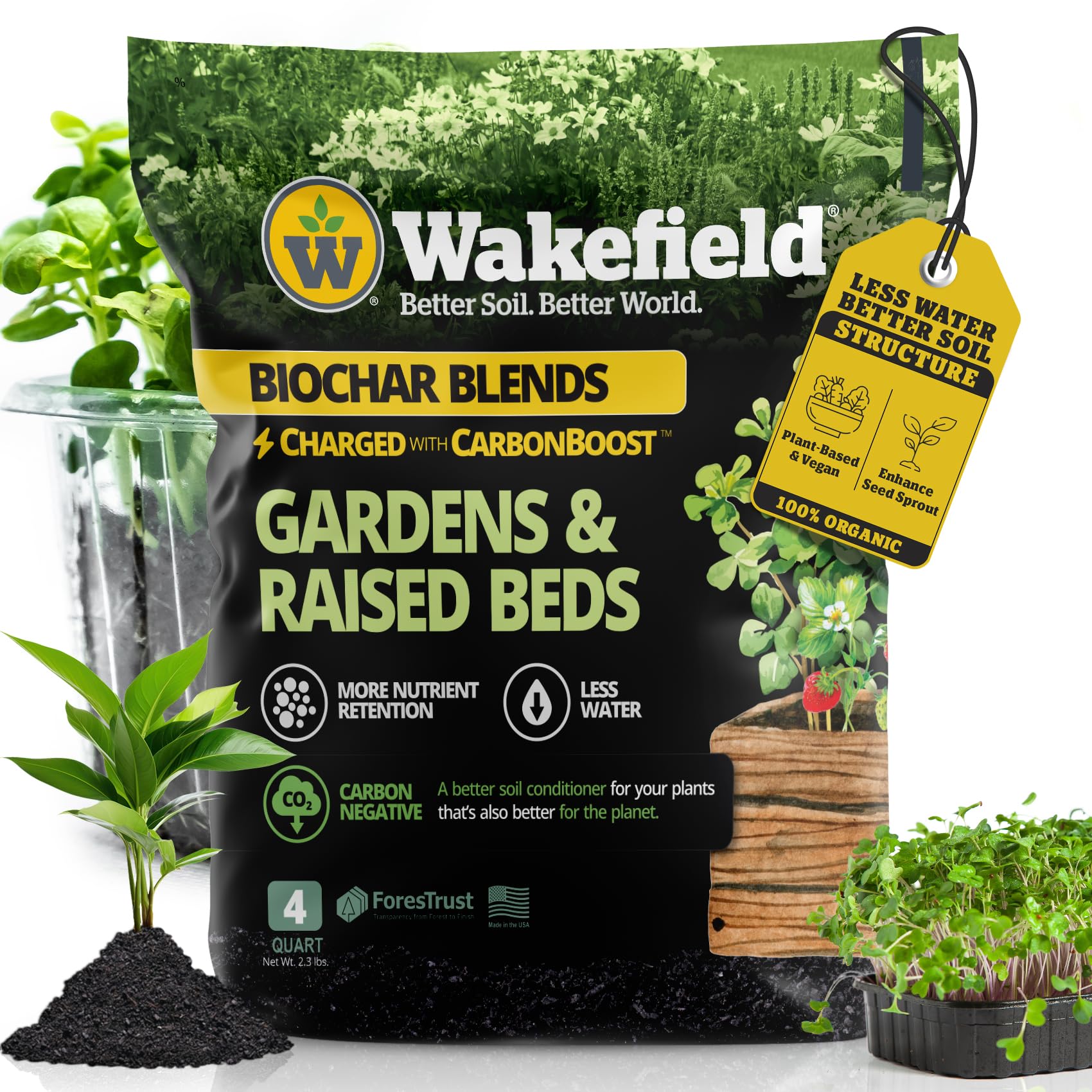
If you already have decent garden soil but it drains too fast or stays waterlogged, this 4-quart bag is the targeted fix. The biochar (a charcoal-like material made from organic waste) acts like a sponge inside the soil — it holds water and nutrients until roots need them, then releases on demand. Customers note it is “great for water retention in soil, lets plants need less watering, as the soil retains more water.”
Its size is small — 4 quarts compared to 20 quarts for the Coast of Maine mix, so it is an amendment, not a main fill. Mix it into clay-heavy native soil or add it to existing raised beds as a supplement. The carbon-negative formula traps carbon in the ground, which matters if you are aiming for a more sustainable garden.
At just 3.75 pounds, it is incredibly light — 10.7 times lighter than the Castine Blend — so you can easily carry and mix it into any bed. This bag is for the grower who wants to fix existing soil without replacing it all.
What stands out
- Biochar reduces watering frequency noticeably
- Carbon-negative, eco-friendly ingredients
The trade-offs
- Small bag size means it is an amendment, not a main fill
4. Coast of Maine Organic & Natural Castine Blend Soil (2 Cubic Feet)
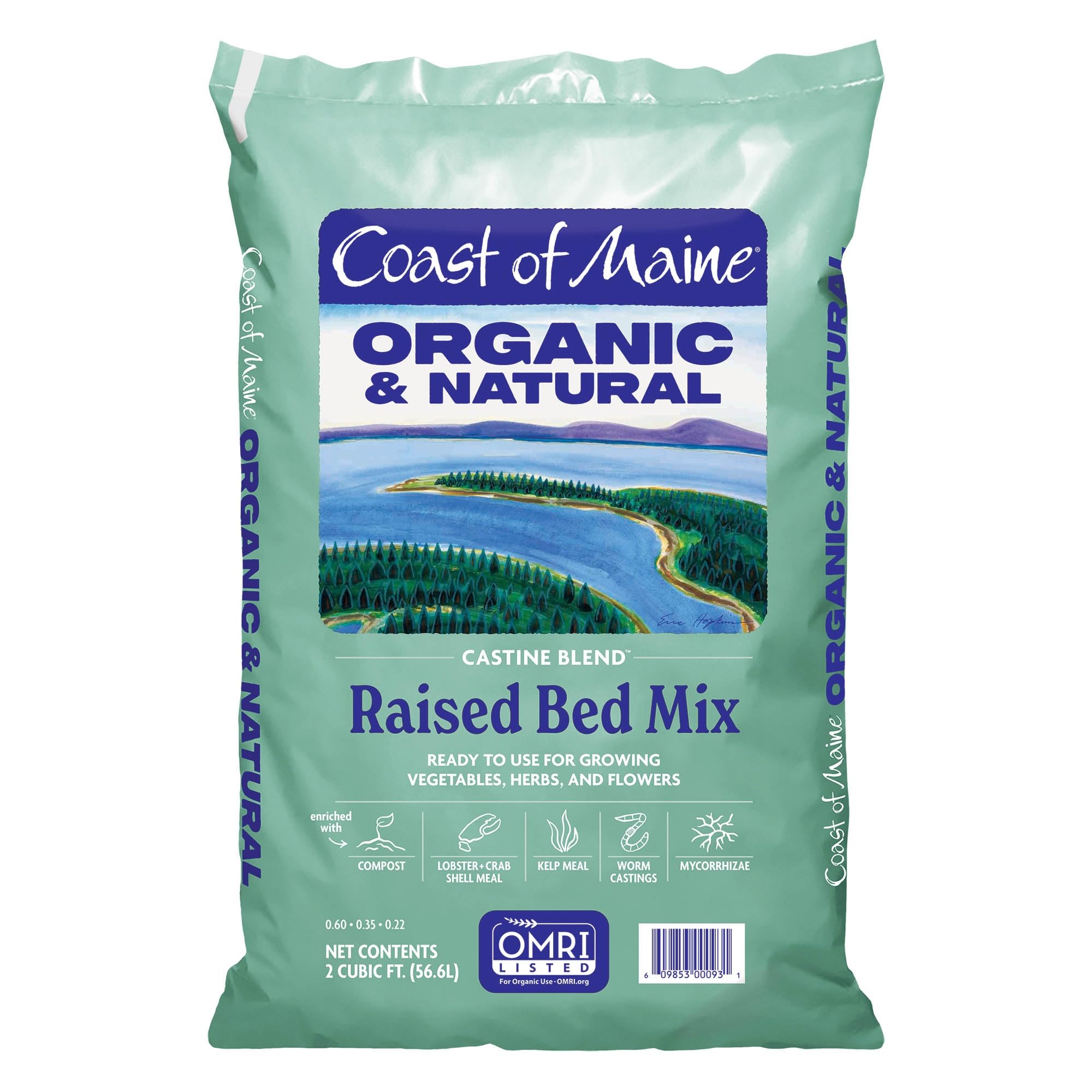
The single number that matters most in this category is 2 cubic feet — the Castine Blend delivers exactly twice the volume of the Espoma bag and weighs 40.3 pounds. Buyers describe it as “dark, rich, soft dirt. No twigs or bugs,” a relief after bags full of bark chunks.
The catch is the weight: at 40.3 pounds, it is 10.7 times heavier than the Wakefield amendment, so you will not want to carry it far. But once it is in the bed, the mix of worm castings, mycorrhizae, biochar, green sand, kelp meal, and lobster and crab shell meal feeds vegetables from day one without extra fertilizer.
For price-to-value, this is the volume champion — you get more soil per dollar than the smaller premium bags, and the nutrient profile supports heavy feeders like tomatoes and peppers through the whole season. Pick this over the Gaia Green if you need to fill a big bed; skip it if you cannot lug 40.3 pounds.
The upsides
- Rich, dark texture with no debris
- Loaded with lobster and kelp meal for long-lasting nutrition
Keep in mind
- Very heavy at 40.3 pounds; plan your carrying route
5. Gaia Green Organic Living Soil (1.5 Cubic Feet)

What you actually get at this lower price is a pre-charged living soil packed with slow-release nutrients like kelp meal, alfalfa, bone meal, glacial rock dust, and oyster shell — open the bag, fill your pot, plant, and water. No measuring, no mixing, no guessing which fertilizer to add later. At 1.5 cubic feet, it sits neatly between the small amendment bags and the huge Castine Blend.
The downside is that the Castine Blend gives you more cubic feet for a similar price. But the Gaia Green includes worm castings and insect frass (insect droppings that act as a gentle, natural fertilizer), which builds a biologically active living soil that container growers love. Reviewers point out “plants love it” and call it “one of the best out of the bag soils on the market.”
This bag is for the home grower with a few large containers on a patio or deck — you get a clean, ready-to-use mix that produces strong results without fussing with separate amendments, and it is lighter than the Castine Blend at 1.5 cubic feet, so carrying it upstairs or around the yard is manageable. It is the perfect bag for the budget buyer who wants a no-fuss living soil for a small container garden.
Why we’d pick it
- Pre-charged with kelp meal, bone meal, and glacial rock dust
- Biologically active with worm castings and insect frass
A few caveats
- Less volume per dollar compared to the Castine Blend
Understanding the Specs
Bag Volume — Cubic Feet vs. Quarts
Garden soil is sold in either cubic feet or quarts. One cubic foot equals 25.7 dry quarts. A 2-cubic-foot bag fills a standard 4×4-foot raised bed to about 6 inches deep, while a 20-quart bag is better for three to four large containers. Always check the volume rather than the bag size — some bags look big but are mostly air.
Biochar — The Sponge for Your Soil
Biochar is a lightweight, charcoal-like material made from burning organic matter without oxygen. It holds water and nutrients inside its porous structure and only releases them when plant roots need them, which means fewer waterings and less fertilizer runoff. It also sequesters carbon in the ground, making it an eco-friendly choice.
Mycorrhizae — The Root Helpers
Mycorrhizae (pronounced my-ko-RYE-zee) are beneficial fungi that form a partnership with plant roots. The fungi grows long threads that reach far beyond the root zone, pulling in water and nutrients (especially phosphorus) in exchange for sugars from the plant. Soil mixes that include these fungi can make your vegetables grow noticeably larger and more resistant to drought.
OMRI Listed — What It Means
OMRI (Organic Materials Review Institute) listing means the product has been independently reviewed and found to meet USDA organic standards. It does not mean the soil is “certified organic” itself — that is a separate farm-level certification — but it means every ingredient in the bag is allowed for use in certified organic production. For most home gardeners, an OMRI-listed soil is a strong guarantee of clean, chemical-free ingredients.
FAQ
How much organic soil do I need for a 4×8 raised bed?
What is the difference between potting mix and garden soil?
Can I reuse organic soil from last year’s vegetable garden?
What does “pre-charged” mean in organic soil?
Final Thoughts: The Verdict
The organic soil for vegetable garden winner is the Coast of Maine Tomatoes & Veggies because it nails moisture and drainage in a lightweight 20-quart bag — a hard combo to find. If your garden is in the ground, grab the Espoma Vegetable & Flower Garden Soil for its root-boosting mycorrhizae. For large raised beds that need serious volume and a nutrient-packed mix, the Coast of Maine Castine Blend with its 2-cubic-foot bag and dark, debris-free texture delivers the most soil per dollar.